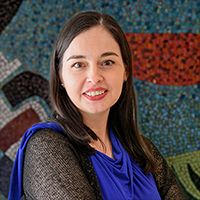
Adriana FiroozniaView profile
Lecturer
Dr. Adriana Firooznia serves as a Lecturer in the Department of Chemistry and Physics at The Dorothy and George Hennings College of Science, Mathematics and Technology, Kean University. Her teaching portfolio spans foundational to advanced coursework including Biochemistry, Organic Chemistry, and General Chemistry lecture-laboratory sequences. Her academic credentials: Ph.D. in Biochemistry M.S. in Chemistry Dr. Firooznia's research expertise centers on protein biochemistry with dual emphases: structural enzymology (particularly glucoamylases) and molecular mechanisms of cellular processes (meiosis, spermiogenesis). Her work integrates protein engineering, structural analysis, and functional studies to explore chromosome dynamics, RNA regulation, and enzyme-substrate interactions. This interdisciplinary approach bridges fundamental biochemical principles with applications in reproductive biology and industrial biotechnology. Publication analysis (1996-2009) reveals an evolutionary trajectory from recombinant protein production and structural characterization toward complex biological systems. Early work established methodologies for enzyme expression and structural analysis, while later studies investigated protein functions in meiosis and spermatogenesis. This progression demonstrates increasing biological complexity in her research focus, consistently leveraging international collaborations across European institutions. Scientific recognition: No major awards or fellowships documented Her teaching-centered role emphasizes laboratory-based learning across eight undergraduate courses. While no dedicated research lab exists, course-integrated laboratories provide hands-on biochemistry training. She mentors students through laboratory instruction and potential independent studies, prioritizing development of analytical skills applicable to health, environmental, and medical challenges as articulated in her teaching philosophy. Research infrastructure utilizes departmental teaching laboratories rather than a dedicated research facility. Collaborative networks established through past publications may facilitate specialized student projects, though current research activity appears secondary to pedagogical responsibilities.