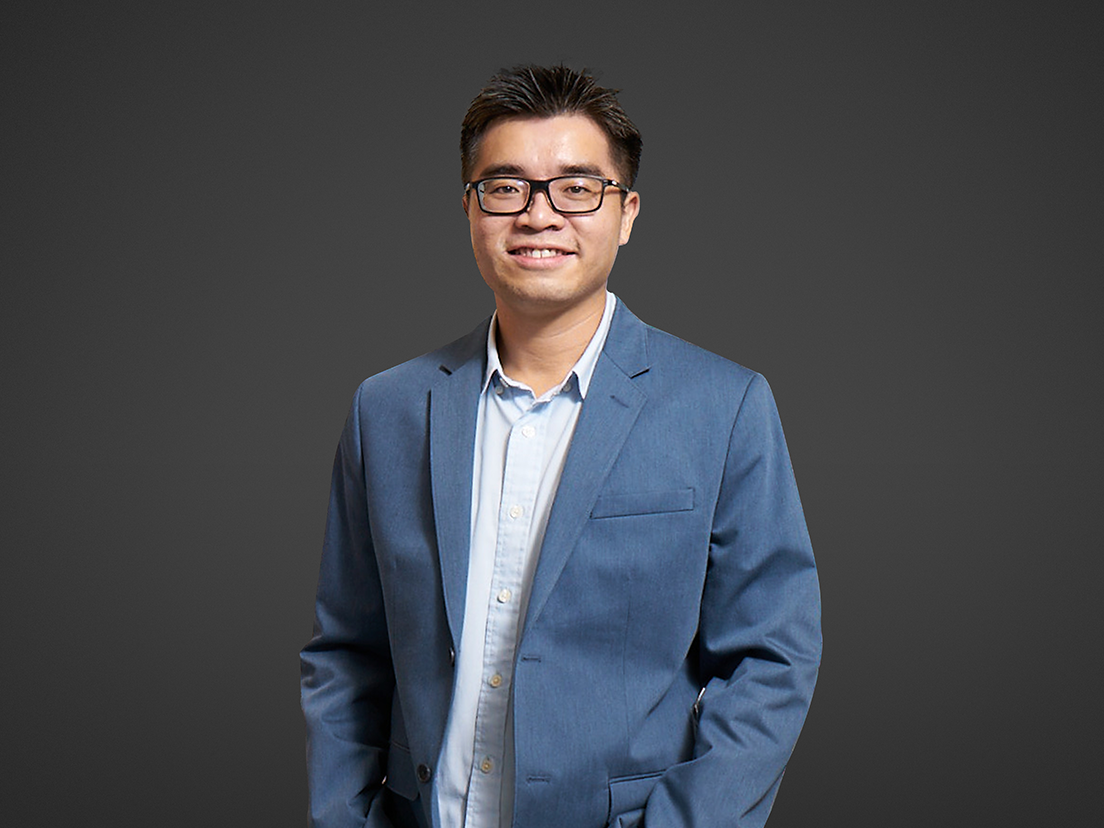
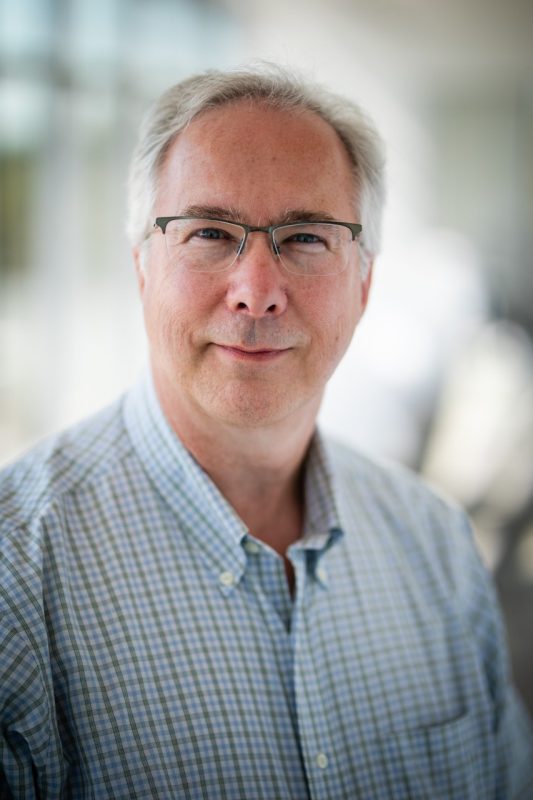
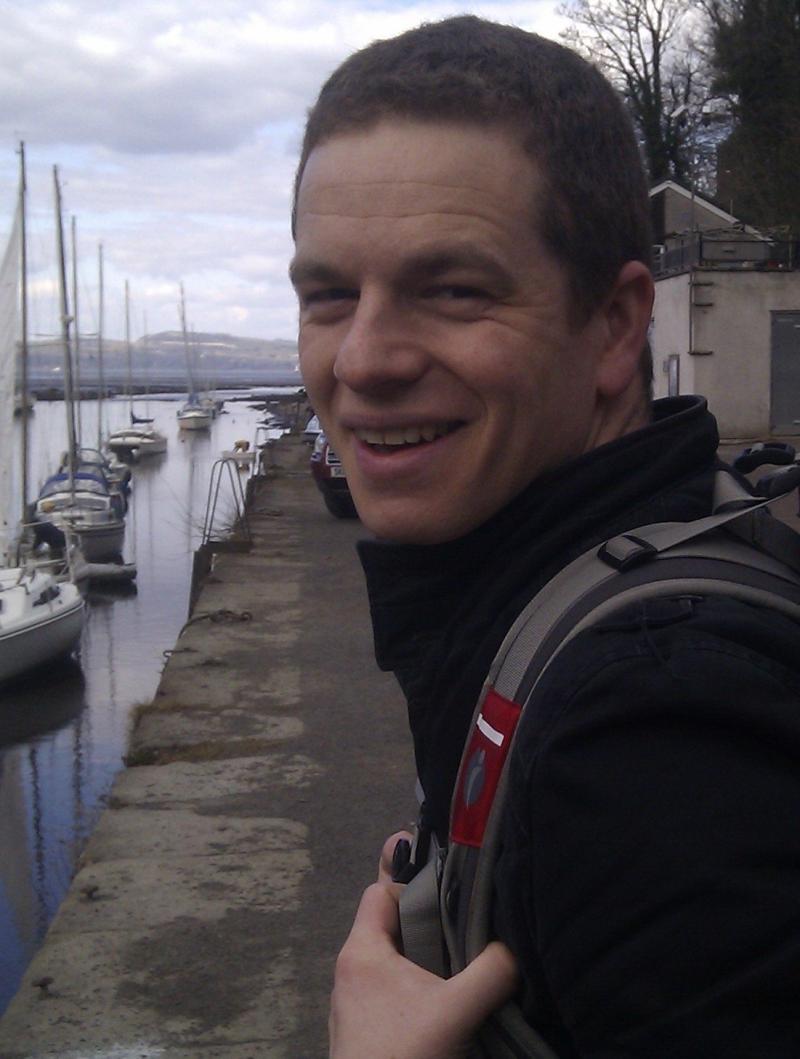
Prof. Dr. Markus Zimmermann leads the Chair of Product Development and Lightweight Design at the Technical University of Munich (TUM). With a background in mechanical engineering from TU Berlin and the University of Michigan, and a doctorate from MIT on solid-state singularities, he bridges academic rigor with industrial application. His career spans 12 years at BMW focusing on vehicle development before transitioning to academia. Specializes in solution space engineering for robust design Expert in additive manufacturing and systems engineering Develops methodologies for managing design complexity and uncertainty His research focuses on multidisciplinary design optimization and lightweight structures , particularly in robotics and automotive systems . His team applies digital twin frameworks and attribute dependency graphs to enhance design processes. Recent publications emphasize topology optimization in robotic systems and thermal management for medical X-ray sources. Key trends in his 2024-2025 publications include: Topological optimization for additive manufacturing and robotics Application of solution spaces to manage design uncertainty Development of compact X-ray systems for medical therapy Integration of digital twin technologies in industrial contexts
Dr. Foong Shaohui is an Associate Professor and Associate Head at the Engineering Product Development (EPD) pillar of the Singapore University of Technology and Design (SUTD), with prior experience as a Visiting Assistant Professor at MIT's Mechanical Engineering department (2011). He leads the Aerial Innovation Research (AIR) Laboratory @ SUTD and actively collaborates with Singapore's Ministry of Defence (MINDEF) and medical institutions like National University Hospital (NUH) and Changi General Hospital (CGH). PhD, MS, and BS in Mechanical Engineering from Georgia Institute of Technology (2005-2010) Research Interests span multiple domains: Robotics & UAVs : Nature-inspired aerial craft design (Project MONOCO), hybrid flight dynamics, and transformable rotorcraft Medical Device Innovation : Magnetic localization systems for nasogastric tubes and ventriculostomy procedures Engineering Education : Design-Centric pedagogy and pre-university Aerial Craft Workshops Autonomous Systems : Deep tunnel sewer inspection drones (NRF/PUB funded) and soft robotics Scientific Contributions include patented magnetic localization technologies (licensed to Medergo Pte. Ltd.), over 20 peer-reviewed publications, and 5 granted patents. His work bridges aerospace engineering with biomedical applications through innovative mechatronic solutions. Best Application Paper Award at SCIS & ISIS (2014) Research Grants include projects funded by Singapore's National Research Foundation (NRF), Public Utilities Board (PUB), and National University Hospital partnerships. He mentors PhD/Master's students through interdisciplinary research in aerial robotics and medical device development.
Kevin A. Shinpaugh is Collegiate Professor in the Department of Aerospace and Ocean Engineering at Virginia Tech’s College of Engineering. Since 2019 he has led instruction and research in spacecraft design and propulsion, leveraging decades of experience in high-performance computing and space-systems engineering. Education Ph.D., Aerospace Engineering, Virginia Tech (1994) M.S., Aerospace Engineering, Virginia Tech (1989) B.S., Aerospace Engineering, Virginia Tech (1986) Research Focus Dr. Shinpaugh’s scholarship centers on the intersection of high-performance computing (HPC) and space systems engineering . He develops and applies advanced computational techniques to spacecraft design, propulsion analysis, and mission planning. His work spans numerical simulation of complex aerospace systems, optimization of propulsion architectures, and creation of scalable HPC frameworks that enable rapid design iteration for spacecraft and launch vehicles. Publication Trends Across more than thirty refereed papers and design-competition reports, a clear trajectory emerges: early contributions in experimental fluid-mechanics instrumentation (laser-Doppler velocimetry, fiber-optic sensors) evolved into large-scale computational studies of space systems, and most recently into student-led mission-concept designs for CubeSats, lunar exploration, and interplanetary missions. Keywords consistently include spacecraft design, propulsion, deployable structures, and mission architecture. Service & Committees Chair, Virginia Tech HPC User Committee (2004–2011) Member, VT HPC Advisory Board (2007–present) NSF TeraGrid/XSEDE Campus Champion for Virginia Tech (2006–2013) IBM HPC/AI Customer Advisory Council DC (2019–present) Member, VT AOE Seminar Committee (2019–present) Laboratory & Computing Resources Dr. Shinpaugh has long stewarded Virginia Tech’s high-performance computing ecosystem. He directs students and collaborators in leveraging the university’s Advanced Research Computing (ARC) clusters, as well as national facilities through XSEDE and DoD HPCMP, to execute spacecraft-design simulations and propulsion analyses at scale.
Dr. Farhad Aslani is an Associate Professor in the Department of Civil, Environmental and Mining Engineering at the University of Western Australia (UWA), serving as Director of the Materials and Structures Innovation Group. He leads the $250M Australian Composites Manufacturing CRC and co-leads UWA's Engineering Materials Research Cluster. His research focuses on innovative construction materials, including self-sensing concrete, 3D-printed composites, and fire-resistant materials. He has secured over $20M in CRC funding and holds leadership roles in national/international conferences. Key awards include the 2024 Concrete Institute WA Rising Star Award and multiple citation milestones. His work aligns with sustainable development goals, emphasizing eco-friendly materials and infrastructure resilience. Education: PhD in Structural Engineering, University of Technology Sydney (2014) Certificates in Leadership, Research Commercialization, Public Policy, and Project Management from Curtin University, Queensland University of Technology, RMIT, and UTS. Research Interests: Smart materials, sustainable concrete technologies, additive manufacturing, blast/fire resistance, and composites for infrastructure. His lab develops self-sensing concretes, lightweight engineered composites, and electromagnetic shielding materials. Grants & Projects: $4.3M ACM CRC project on composite repairs ARC grants for nanocomposite coatings and fire facilities Main Roads WA funding for timber bridge strengthening Expertise: Structural design, composite materials, and industrial collaborations (e.g., Woodside, Holcim). He advises on major projects like the Morley Ellenbrook Rail Line and Forrestfield Airport Link. Awards: 2024 Concrete Institute WA Rising Star Highly Cited Scholar (ScholarGPS, 2024) Most Cited Paper Awards (2018–2020)
Jan Knippers is a Professor and Institute Director at the University of Stuttgart's Faculty of Architecture and Urban Planning , leading the Institute of Building Structures and Structural Design (ITKE) . He co-founded Knippers Helbig Advanced Engineering and established Jan Knippers Ingenieure in 2018 to focus on innovative fiber composite and timber structures. Key roles: Deputy Executive Director of Cluster of Excellence IntCDC , former Vice-Rector for Research (2019-2021), and Dean of Faculty of Architecture (2021-2023) Technical focus: Hybrid FRP-Timber systems, computational design, and biomimetic principles His projects include the 2024 Hybrid Flax Pavilion , Urbach Tower (2024), and BUGA Fiber Pavilion (2019). He contributes to European standardization committees and serves as 2024 Leverhulme Visiting Professor at University College London.
Professor Alasdair McDonald holds the Chair in Renewable Energy Technology at the School of Engineering, University of Edinburgh . His work focuses on the integrated electrical-magnetic-mechanical modeling and design of large electrical machines for offshore renewable energy systems , particularly wind turbine powertrains . He previously served as a Lecturer, Senior Lecturer, and Reader in Wind Turbine Technology at the University of Strathclyde. Education: PhD in Structural Analysis of Low-Speed, High-Torque Generators (University of Edinburgh, 2008) MEng (Hons) in Integrated Electrical & Mechanical Engineering (University of Durham, 2004) Research Interests: Design of permanent magnet electrical machines for wind and marine energy Lightweight generator structures and advanced manufacturing methodologies Condition monitoring using SCADA and vibration data Cost of energy optimization for offshore renewables Projects: STREAM 1: Innovations in Forth/Tay Offshore Wind Clusters (EPSRC, 2025-2029) Wind2DC: Medium Voltage DC Power Take-Off Systems (EPSRC, 2023-2026) PV054: Modular Generators for Floating VAWTs (EPSRC & SeaTwirl AB, 2023) Media Contributions: Quoted in research media about floating hydrogen production systems (2025)
HAN Song is a Research Professor at the School of Innovation and Entrepreneurship, Southern University of Science and Technology (SUSTech), where he has been working since 2017. He also serves as deputy director of the Aerospace Technology Innovation Center and deputy director of the Unmanned Aerial Vehicle Design and Navigation Control Technology Engineering Research Center (Shenzhen Engineering Research Center). Prior to joining SUSTech, he held various positions at China Aerospace Science and Technology Corporation (CASC), including Professor, Associate Professor, and engineering roles from 2005-2017. Professor Han Song's research focuses on advanced aircraft design and autonomous navigation and control technology. His work spans UAV system development, aircraft aerodynamic layout design, precision guidance systems, and multi-sensor information fusion. He has achieved breakthroughs in high-lift-to-drag aerodynamic layouts, modular composite structures, integrated avionics, and fault-tolerant flight control systems. His research has direct applications in military and civilian unmanned systems with emphasis on practical implementation and technological innovation. 2010 Aerospace Contribution Award of China Aerospace Science and Technology Corporation 2011 Eleventh Five-Year Plan Science and Technology Innovation Award 2016 Twelfth Five-Year Plan Science and Technology Innovation Award First prize for National Defense Science and Technology Progress 5 invention patents in flight control and navigation guidance Professor Han has extensive experience leading major aerospace projects, having served as chief designer for multiple UAV systems including short-range, high-altitude, and medium-range general-purpose platforms. His designs participated in significant national events - a short-range UAV in the 70th anniversary of the Anti-Fascist War parade (2015) and a high-altitude UAV in the 70th National Day parade (2019). He has written nearly 100 technical reports and secured funding for numerous research projects through China Aerospace Science and Technology Corporation. At SUSTech, Professor Han leads research activities at the Aerospace Technology Innovation Center and the Unmanned Aerial Vehicle Engineering Research Center. His team has made notable progress in aerial remote sensing image feature extraction using lightweight convolutional neural networks and underwater bionic flapping wing propulsion technology. He teaches Product Innovation and Design Development Methods and Aviation Vehicle Innovation Design, with his 2020 research group producing four Outstanding Master's Graduates of SUSTech.
Dr. Andrew Lacey is a Lecturer at the School of Civil and Mechanical Engineering, Curtin University (Perth campus), within the Faculty of Science and Engineering. He holds a BE(Hons) from the University of Western Australia and a PhD from Curtin University. He is a Chartered Professional Engineer (CPEng) and a Member of Engineers Australia (MIEAust). His research focuses on affordable, resilient, and environmentally friendly structural systems, particularly in modular steel construction, sustainable materials, and structural response to dynamic loads. Key areas include prefabricated modular structures, inter-module connections, CO2 mineralization concrete, and lightweight wall panels. His work bridges experimental testing, numerical modeling, and practical applications in sustainable infrastructure development. Dr. Lacey’s publications emphasize modular building systems’ structural performance under wind, earthquake, and other dynamic loads. Notable 2025 contributions include reviews on volumetric mining structures and CO2-mixing concrete optimization. His research also addresses challenges in delignification detection in timber components and GFRP connector performance in composite panels. He teaches engineering mechanics, structural analysis, and structural dynamics. His professional networks include ORCID (0000-0003-1171-5282), Google Scholar, and LinkedIn profiles.
Ruben Martins is an Assistant Professor at Carnegie Mellon University's School of Computer Science and serves as the program director of the Master of Science in Computer Science (MSCS) . His research focuses on the intersection of constraint programming, program synthesis, analysis, and verification, with recent work aiming to make formal methods tools more accessible through automated reasoning. Ruben earned his Ph.D. with honors from the Technical University of Lisbon, Portugal (2013) , followed by postdoctoral research at the University of Oxford (2014-2015) and UT Austin (2015-2017) . Research Interests : Ruben's work bridges constraint programming and program synthesis , with applications in software verification , optimization , and automated reasoning . He has developed award-winning tools like Open-WBO , a modular MaxSAT solver that has won gold medals in international competitions. His publications span top-tier venues such as POPL , PLDI , FSE , SAT , and CP , often addressing real-world challenges from program analysis to network security. Scientific Awards include: Distinguished Paper Award at PLDI 2018 Distinguished Paper Award at FSE 2021 Distinguished Paper Award at SAT 2022 Gold medals for Open-WBO in MaxSAT competitions Teaching & Advising : Ruben mentors Ph.D., Master’s, and undergraduate students in research projects related to program synthesis, formal methods, and constraint solving. He teaches courses such as Bug Catching: Automated Program Verification and Advanced Topics in Logic: Automated Reasoning and Satisfiability , emphasizing hands-on experience with tools like Why3. His advising spans topics from AI-driven program repair to network protocol verification , fostering collaboration across disciplines.
Henry Corrigan-Gibbs is an Assistant Professor at the Massachusetts Institute of Technology (MIT) in the Department of Electrical Engineering and Computer Science. He is affiliated with the Computer Science and Artificial Intelligence Laboratory (CSAIL) and collaborates with the PDOS and CSS research groups. Henry co-hosts the MIT Security Seminar series. Education : PhD in Computer Science from Stanford University (advisor: Dan Boneh), Postdoc at École polytechnique fédérale de Lausanne (EPFL) (host: Bryan Ford), and B.S. in Computer Science from Yale University . Research Interests Henry focuses on computer security , cryptography , and systems research , building technologies that: Empower end users through privacy-preserving design Implement strong cryptographic security in real-world deployments Scale to millions of users while maintaining security Key projects include: Tiptoe for private web search Prio for privacy-preserving aggregate statistics used by Apple and Google Express for metadata-hiding communication SafetyPin and True2F for secure authentication Scientific Contributions Standards Influence : IETF and NIST standards recommend his private-aggregation systems Industry Impact : Deployed in Apple iOS , Google Android , and Mozilla Firefox Non-profit Deployment : Co-founder of Divvi Up for real-world Prio implementations Academic Recognition 2023 MIT EECS Jerome Saltzer Award for teaching excellence 2020 ACM Doctoral Dissertation Honorable Mention 2016 Caspar Bowden Award for PET research 2015 IEEE Security & Privacy Distinguished Paper Award Multiple IACR Best Young Researcher Paper Awards (2015–2018) Advising and Collaborations Current advisees include: PhD students: Alexandra Henzinger , Ryan Lehmkuhl Postdoc: Emma Dauterman Collaborates with industry (Apple, Google, Mozilla) and standards bodies (IETF, NIST) to translate research into practice.
Professor Geraint Jewell is affiliated with the University of Sheffield , serving as Director of the Rolls-Royce University Technology Centre in Advanced Electrical Machines (since 2006) and Director of the EPSRC Future Electrical Machines Manufacturing Hub (since 2019). He is a graduate of the university (BEng 1988, PhD 1992) and has held academic roles since 1994. EPSRC Advanced Research Fellowship (2000-2005) Royal Society Industry Fellowship at Rolls-Royce (2006-2008) Former Faculty Director of Research and Innovation (2008-2011) Former Head of Department (2013-2019) His research focuses on power-dense electrical machines for aerospace applications , including permanent magnet machines , switched reluctance machines , and linear actuators . He has supervised ~20 PhD students and led collaborations with Rolls-Royce on high-temperature devices (up to 800°C) and aero-engine starter-generators. Recent publications analyze stator insulation thermal degradation , eddy current control in additively manufactured materials , and magnetic loss prediction in silicon steel. His work spans electromagnetic modeling , core loss calculation , and advanced manufacturing techniques for electrical machines. EPSRC Advanced Research Fellowship (2000-2005) Royal Society Industry Fellowship (2006-2008) He has advised PhD students across topics like consequent-pole PM machines , doubly salient SynRMs , and core loss characterization . His Electrical Machines and Drives Research Group explores modular motor design and magnetic material optimization for aerospace and electric vehicles.
William Stewart is an Assistant Professor in the Department of Mechanical Engineering at Stony Brook University. He joined the university in 2022 and leads the Soft Flyers Group laboratory. His research focuses on multimodal robotics, particularly in developing robots that integrate principles from soft robotics, biology, and science fiction to enhance capabilities in challenging environments. He holds a Ph.D. in Aerospace Engineering from North Carolina State University (2018) and has postdoctoral experience at École Polytechnique Fédérale de Lausanne (2018–2022). Prof. Stewart's work emphasizes practical modeling, rigorous experimentation, and full vehicle validation. His research interests include eclectic robot design, energy-efficient perching mechanisms, bio-inspired systems, and resilient multi-modal drones. He actively reviews for journals such as Bioinspiration and Biomimetics, Robotics and Automation Letters, and Springer Nature Applied Sciences. His educational background includes degrees from North Carolina State University: a B.S. (2012), M.S. (2014), and Ph.D. (2018), all in Aerospace Engineering. His professional experience combines academic leadership with advanced robotics research, contributing to innovations in aerial, ground, and underwater robotics.
Nele Mentens is a full professor at both KU Leuven and Leiden University, where she leads cutting-edge research in applied cryptography, hardware security, and secure embedded systems. At KU Leuven, she is affiliated with the Faculty of Engineering Technology and the Electrical Engineering Department (ESAT), leading the Emerging Technologies, Systems & Security (ES&S) research group at the Diepenbeek campus. Simultaneously, she holds a full professorship at Leiden University’s Leiden Institute of Advanced Computer Science (LIACS), focusing on applied cryptography and security. She has been instrumental in numerous national and international research initiatives, including Horizon Europe and NWO-funded projects. Full Professor, KU Leuven (since 2023) Full Professor, Leiden University (since 2020) Associate Professor, KU Leuven (2014–2023) Post-doctoral Researcher & Lecturer, KHLim / KU Leuven (2007–2014) Ph.D. in Engineering Science, KU Leuven (2007) M.Sc. in Electrical Engineering, KU Leuven (2003) Her research focuses on secure and efficient hardware design, particularly for cryptographic applications on FPGAs, reconfigurable architectures, IoT security, and neuromorphic computing. She explores physical attack resistance, side-channel analysis protection, and trusted computing architectures, with applications in healthcare, industrial monitoring, and endpoint AI. Her work bridges theoretical cryptography with practical hardware implementations, emphasizing energy efficiency and real-time performance. The 15 most recent publications reflect a strong trend toward secure, energy-efficient, and intelligent embedded systems. Topics include neuromorphic AI accelerators, trusted IoT architectures, dynamic reconfiguration for side-channel protection, and secure medical data processing. These works span disciplines such as computer architecture, cybersecurity, digital design, and embedded systems, with a focus on hardware-software co-design and real-world deployment. Nele Mentens has received recognition for her contributions, including: Best Paper Award, DATE'16 Best Paper Nomination, AsianHOST'17 Best Paper Award, CHES'19 She has supervised over 15 Ph.D. students and post-docs, both current and former, and has served as principal investigator in approximately 25 funded research projects. Her work has attracted significant grants from Horizon Europe, NWO, FWO, and national innovation programs. She actively contributes to the academic community through editorial roles in top journals and leadership in major conferences. Nele Mentens leads the ES&S research group at KU Leuven and collaborates closely with LIACS at Leiden University. Her team includes Ph.D. students, post-docs, and research experts working on projects like NimbleAI, NeuroSoC, and TrustedIoT. She has also established secure electronics labs through infrastructure grants and maintains strong international ties with institutions such as EPFL, Ruhr University Bochum, and ETH Zurich.
Prof. Dr.-Ing. Werner Homberg is Chair holder and Vice Dean at the Faculty of Mechanical Engineering, University of Paderborn. He leads Subproject C03 "Forming and Machining Technology" within Collaborative Research Center Transregio 285 and serves as Dean of Research at the Institute for Lightweight Construction with Hybrid Systems (ILH). Research focus areas: Deep drawing process optimization with intrinsic lubrication Modular 3D roller straightening systems for spring steel wires Forming-based manufacturing of lightweight joining elements Tool life improvement in thermomechanical forming Flow forming of metastable austenitic steel with phase transformation monitoring Recent publications demonstrate expertise in advanced forming technologies, hybrid material processing, and sensor-based monitoring systems. His work addresses both theoretical process understanding and practical implementation for sustainable manufacturing solutions. Contact: wh@luf.uni-paderborn.de | Office: Pohlweg 53, 33098 Paderborn | Space: IW1.801
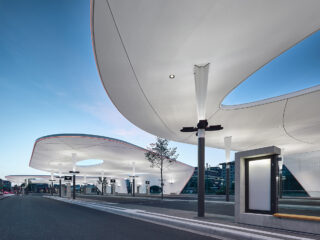
Prof. Dr.-Ing. Stephan Engelsmann is Professor of Structural Design and Structural Mechanics in the Department of Architecture at the State Academy of Fine Arts Stuttgart since 2002 and Deputy Chairman of the Architecture Study Commission. He also serves as President of the Baden-Württemberg Chamber of Engineers since 2014 and co-founded Engelsmann Peters GmbH Consulting Engineers in 2006. His career uniquely bridges academic excellence and professional engineering practice across multiple disciplines. His educational journey includes: Civil Engineering degree from Technical University of Munich (Dipl.-Ing., 1991) Research assistant at University of Stuttgart (1993-1998), earning Dr.-Ing. with dissertation on 'Integral concrete bridges' Architecture studies at University of Bath, UK (1998-1999), completing Master of Arts in Architectural Design with dissertation 'Rethinking the urban bridge as public space' Prof. Engelsmann's research focuses on the creative intersection of structural engineering and architectural design, where he emphasizes that 'constructive design is a controlled interaction between reason and emotion.' His work spans structural theory, innovative construction methods, and the integration of artistic expression with technical precision. He specializes in lightweight structures, bridge design, and the use of advanced materials including plastics, glass, and concrete, with particular emphasis on sustainable building practices and resource efficiency. His recent publications reveal a strong focus on innovative structural solutions for public infrastructure, particularly gridshell structures for shopping centers, elegant bridge designs, and sustainable construction methods. His work consistently explores the potential of unconventional materials and construction techniques, demonstrating how aesthetic considerations can be seamlessly integrated with structural efficiency in projects ranging from bus stations to cultural buildings. His numerous awards reflect excellence across engineering and architectural design disciplines: Multiple Hugo Häring Auszeichnungen (2020) for library and military facility projects Staatspreis Baukultur Baden-Württemberg (2020, 2016) German Design Gold Winner (2018) Preis des Deutschen Ingenieurbaus (2016) Iconic Design Award (2016) Red Dot Award (2015) Elias-Holl-Preis (1986) Throughout his career, Prof. Engelsmann has guided numerous student projects that bridge theory and practice, from the AKA seesaw (2011) to the UC°A Mobile climate adaptation project (2023). His teaching methodology emphasizes hands-on learning, with students developing and constructing innovative structures using materials ranging from traditional wood to advanced plastics. He has secured significant funding from organizations including the Baden-Württemberg Foundation to support research in sustainable construction and climate-adaptive architecture. Prof. Engelsmann leads the 'Class for Structural Design and Structural Engineering' at the State Academy of Fine Arts Stuttgart, where he and his team explore the boundaries between architecture and engineering. His consulting firm, Engelsmann Peters GmbH, works on sophisticated structural projects worldwide. Current research focuses include pneumatic structures for sun protection systems, experimental clay construction, and innovative approaches to urban climate adaptation through structural design, continuing his decades-long commitment to merging artistic expression with engineering precision.