Ricardo Soares de Oliveira is a Professor of International Politics of Africa at the Department of Politics and International Relations, University of Oxford, and Full Professor of Political Science at CERI Sciences Po. He is an Official Fellow at St Peter's College, University of Oxford, and a Fellow with the Global Public Policy Institute, Berlin. His work spans comparative politics, political economy, and global governance, with a focus on African states and their interactions with offshore economies. BA, MPhil, PhD in Political Science His research explores the international political economy of African states, particularly extractive industries, financial sector dynamics, conflict/post-conflict reconstruction, and African-Asian relations. He investigates transnational kleptocracy, authoritarianism's influence on the global economy, and offshore finance's impact on African politics. Recent publications analyze trends in kleptocratic networks, offshore finance, and authoritarian economic strategies. His work underscores the role of global financial systems in enabling corruption and the challenges of statebuilding in resource-rich contexts. Leverhulme Trust/British Academy Senior Research Fellowship (2023–24) British Academy Senior Research Fellowship (2023) Leverhulme Trust Fellowship (2011) Soares de Oliveira advises PhD students and has secured grants from the Leverhulme Trust, ESRC, DFID/FCDO, and the Calouste Gulbenkian Foundation. He co-directs the Oxford Martin Programme on African Governance and collaborates with institutions like the European Commission, World Bank, and UNCTAD. His media commentary appears in the Financial Times , Foreign Affairs , and Times Literary Supplement .
Jocelyn Alexander is Professor of Commonwealth Studies and Head of Department at the University of Oxford's Department of International Development (ODID). She teaches primarily on the MPhil in Development Studies and the DPhil in International Development, and serves on the editorial board of the Journal of Southern African Studies and the publications committee of the International Africa Institute. Her research interests include: Southern African social and political history Liberation movements and their legacies Violence and memory Political imprisonment Rural politics and state-making Political & International Dimensions of Development Sub-Saharan Africa Professor Alexander is currently working on a Leverhulme-funded collaborative research project titled 'Global Soldiers in the Cold War: Making southern Africa's liberation armies', and writing a history of political imprisonment in Zimbabwe. Her research uses qualitative methodologies, notably oral history and archival research, and she is interested in cross-disciplinary approaches combining history, anthropology, politics, and literature. Her recent publications demonstrate a strong focus on transnational histories of Southern African liberation movements, political imprisonment in Zimbabwe, and the legacies of violence in post-colonial states. She has made significant contributions to understanding the connections between liberation movements, the Cold War context, and the formation of post-colonial states in Southern Africa. Scientific awards: Leverhulme grant for project on Cold War-era 'global soldiers' (2019) Professor Alexander has supervised numerous doctoral students working on topics related to Southern African politics, history, and development. She has also co-authored important works including 'Violence and Memory: One Hundred Years in the 'Dark Forests' of Matabeleland' (2000) and authored 'The Unsettled Land: The Politics of Land and State-making in Zimbabwe, 1893-2003' (2006). She has taught at Sussex and Bristol Universities and has been a Research Associate at the University of Zimbabwe, bringing extensive regional experience to her academic work.
Dr Jared Holley is a Lecturer in Political Theory at the University of Edinburgh's School of Social and Political Science. He specializes in the history of political thought, focusing on modern concepts of freedom, domination, and their global intellectual histories. As Co-Director of the Centre for Ethics and Critical Thought (CRITIQUE), he explores how historical ideas inform contemporary resistance movements. His current research examines anticolonial solidarity, grounded in the global history of anticolonial political thought and debates across the global North and South. He teaches courses including 'Political Thinkers and Histories' and 'Theories of Solidarity,' and supervises PhD students in political thought history. His 2024 book, Rousseau’s Politics of Taste , analyzes Enlightenment political aesthetics. Holley’s work bridges Western/European traditions and non-Western world philosophies, emphasizing decolonial thought and racial equality. Research interests include global intellectual histories, anticolonial solidarity, and the intersection of political theory with decolonial frameworks. He regularly teaches 'Anticolonial Political Thought' and contributes to interdisciplinary dialogues on ethics and critical theory through CRITIQUE. His publications explore themes like metropolitan domination, solidarity practices, and the legacy of thinkers like Anténor Firmin. Holley’s scholarship aims to connect historical ideas with contemporary struggles for justice and equality.
Dr. Sarah Crook is a Senior Lecturer in the Department of History at Swansea University, Faculty of Humanities and Social Sciences. She specializes in modern British history with a focus on women's history, student mental health, and the history of medicine. PhD in History from Queen Mary University of London MSt in Women's Studies from Keble College, Oxford Bachelor's degree in History from University of Sussex Her research explores histories of feminism , LGBTQ+ activism , motherhood , university communities , and mental health from postwar Britain to the 1980s. She is the director of GENCAS (Centre for Research into Gender and Culture in Society), an interdisciplinary research center. Recent publications analyze: Gendered undercover policing in the 1970s Humor as feminist resistance Neoliberalism and academic compassion Student loneliness across decades She has secured grants from Wellcome Trust , Arts and Humanities Research Council , and Medical Research Council (U-Belong project). Her teaching includes modules on Radical Histories , History of Sex and Gender , and Making History .
Dr. Lucy Mayblin is a Senior Lecturer in Sociology at the School of Sociological Studies, Politics and International Relations at the University of Sheffield. She serves as Co-Director of the Migration Research Group and is actively engaged in research on borders, human rights, policy-making, and the legacies of colonialism. Dr. Mayblin's research focuses on how policymakers imagine the world and how this shapes bordering projects with significant social justice implications. A central theme in her work examines how the legacies of 500 years of European colonialism continue to shape contemporary Britain. Her work spans postcolonial theory, migration studies, asylum policy, and the political sociology of borders. She is particularly interested in the relationship between colonial history and current border enforcement practices. Her extensive publication record demonstrates a consistent focus on the intersection of colonialism, borders, and asylum policy. Recent work has increasingly addressed contemporary issues surrounding Channel crossings, border security, and the 'border-industrial complex' that has emerged in UK border policy. Her research shows a clear trajectory from theoretical examinations of colonial legacies to applied research on current border enforcement practices and their human consequences. Dr. Mayblin has received significant recognition for her scholarly contributions: British Sociological Association's Philip Abrams Memorial Prize (2018) for 'Asylum After Empire: Postcolonial Legacies in the Politics of Asylum Seeking' Philip Leverhulme Prize for Sociology (2020) Dr. Mayblin has successfully secured substantial research funding, including an ESRC Project Grant (£585,000) on Channel Crossings and a Philip Leverhulme Prize (£100,000). She serves as Principal Investigator on multiple projects and has supervised numerous PhD students. Her research partnerships extend beyond academia to include collaborations with campaigning groups and NGOs at local, national, and international levels. She is also a trustee for the Sheffield-based charity ASSIST. As Co-Director of the Migration Research Group, Dr. Mayblin helps lead one of Sheffield's key research centers focused on migration studies. The group is committed to creating spaces for conversations within the university where community learning and thinking between and across the university/non-university divide can take place.
London School of Economics and Political Science (LSE)United Kingdom
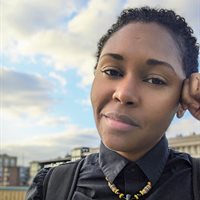
SM Rodriguez is an Assistant Professor of Gender, Rights and Human Rights at the London School of Economics and Political Science (LSE), Department of Gender Studies. They hold affiliate roles at the Mannheim Centre for Criminology and lead initiatives like Black Queer Movements and The Black Professors Pipeline. Their work integrates scholar-activism focused on penal abolition, anti-violence strategies, and the intersections of race, gender, and disability. Research expertise includes anticarceral feminism, transnational social movements, and the impact of criminalization on African diasporic communities. They have authored a monograph on Ugandan LGBTI rights advocacy and are currently writing on global abolitionist movements. Rodriguez’s methodologies emphasize engaged scholarship and transformative justice. Recent publications explore abolitionist futures, Black safety in carceral contexts, and queer anti-violence organizing. They have been awarded the AAUW American Postdoctoral Fellowship (2020-21) and contributed to organizational practices through their activism. Teaching includes LGBTQ+ Studies program leadership at Hofstra University and current roles at LSE. Rodriguez’s work bridges academia and grassroots movements, prioritizing marginalized voices in scholarship and policy.
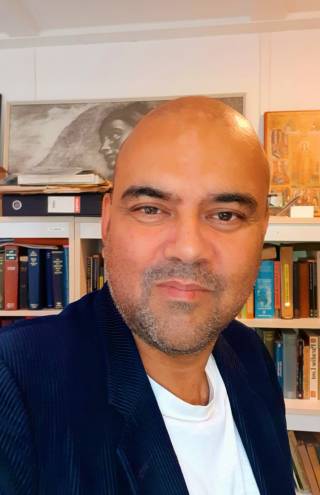
Dr. Mark R. Frost is an Associate Professor of Public History at University College London (UCL), specializing in war, empire, and decolonization in modern Asia, and their intersections with popular memory. He joined UCL in 2020 after roles at the Asia Research Institute (Singapore), University of Hong Kong, and University of Essex. Educated at the University of Oxford (First Class Honours) and the University of Cambridge (PhD, 2002), Frost has pioneered public history initiatives such as the award-winning Singapore History Gallery (2006–2015) and authored Singapore: A Biography (2009), winner of the Asia Pacific Publishers’ Gold Medal. His research explores transnational memoryscapes, wartime legacies, and colonialism’s cultural impacts. Current projects include the War Memoryscapes in Asia Partnership (WARMAP) and Living with Violent Heritage in post-war Sri Lanka. Frost has also produced documentaries like Scene Unseen (2021), examining music and memory, and co-developed historical films such as I Remember the Fall of Singapore (2017). Frost’s academic contributions span colonial governance, humanitarianism, and transnational networks. His awards include the CHOICE Outstanding Academic Title (2010) for his biography and a documentary prize at BKK Docs (2022). He supervises PhD students focusing on public history, war remembrance, and European colonialism in Asia, including notable works on the East India Company in the Persian Gulf and the Special Operations Executive in Malaya. His publications bridge historiography and public engagement, with recent works on Asia’s WWII memory boom and geocultural power dynamics. Frost’s interdisciplinary approach integrates museum curation, film, and scholarly writing to interrogate how historical narratives shape contemporary identities.
Dr. Bashir Abu-Manneh is Reader in Postcolonial Literature at the School of English, University of Kent. He is the founder of the Centre for the Global Study of Empire and a leading scholar in postcolonial literary studies, Marxism, and critiques of imperialism. His research bridges literary analysis with political theory, focusing on Palestinian literature, British interwar culture, and global capitalism. His research interests include: Postcolonial Literature and Theory Marxist Literary Criticism Literary Realism and Modernism Palestinian and Middle Eastern Literatures Global Capitalism and the Novel Anti-Imperialism and US Empire Abu-Manneh’s publications reveal a consistent engagement with figures such as Edward Said, Frantz Fanon, and Michel Khleifi, analyzing their work through Marxist and anti-colonial frameworks. His recent articles in journals like Catalyst , Modernism/Modernity , and Race & Class explore themes of defeat, resistance, and the ideological functions of literature under empire. He has also edited influential volumes that reorient postcolonial studies toward materialist and global perspectives. His notable works include: The Palestinian Novel: From 1948 to the Present (2016) Fiction of the New Statesman, 1913–1939 (2011) After Said: Postcolonial Literary Studies in the Twenty-First Century (2018, edited) Dr. Abu-Manneh supervises PhD and research projects on British interwar culture, postcolonial literature, and Marxist theory. He teaches courses on Postcolonial Literature and theory, as well as global capitalism and Marxism. He is based in Rutherford College at the University of Kent and can be contacted at b.abu-manneh@kent.ac.uk .
Alice Wilson is an Associate Professor in Anthropology at the University of Sussex, UK, affiliated with the School of Global Studies. She holds a PhD in Social Anthropology from the University of Cambridge (2011) and is a Fellow of the Higher Education Academy. Her research spans political and economic anthropology, focusing on revolutionary movements, liberation struggles, and their post-conflict legacies in Southwest Asia and North Africa. Key roles include convening modules on 'Thinking Like an Anthropologist' (MA), 'Practising Anthropology' (UG), and courses on North African and Arabian geopolitics. Her work interrogates the enduring social values of defeated revolutions, particularly in Oman's Dhufar region and Western Sahara's refugee camps. Wilson's 2023 book Afterlives of Revolution (Stanford University Press) won critical acclaim for rethinking revolutionary legacies beyond military defeat. She has held prestigious fellowships including a Leverhulme Research Fellowship (2019-2020) and a Derek Brewer Visiting Fellowship (2022). Her 2016 book Sovereignty in Exile received an Honorable Mention from the American Anthropological Association Middle East Section. Current research explores comparative studies of abolitionism in Arab liberation movements and the political implications of migratory aspirations in post-revolutionary contexts. Scientific Awards: Honorable Mention, AAA Middle East Section Book Award (2017) Students Supervised: Anahita Hosseini-Lewis Nerouz Satik Laura Shewan
Ludivine Broch is a Professor of History at the University of Westminster's School of Humanities, specializing in twentieth-century French history with particular focus on societal and cultural aspects of World War II France. Born in France and raised in both Pittsburgh and Paris, she completed her DPhil at the University of Oxford in 2010. Before joining Westminster in 2014, she taught at Birkbeck and the University of Bristol and held prestigious fellowships at the Pears Institute for the Study of Antisemitism and the European University Institute in Florence. At Westminster, she coordinates the Humanities Programme for Study Abroad and Summer Schools and is deeply involved in outreach initiatives connecting academic research with public understanding. Her educational background includes: DPhil in History from the University of Oxford (2010), funded by the Arts and Humanities Research Council Previous academic training in France and the United States Professor Broch specializes in Vichy France, the history and memory of the world wars, modern France, the Holocaust and genocide, the history of material culture, and the history of emotions and sensory history. Her research uniquely examines how ordinary people navigated life under occupation through their thoughts, feelings, and interactions with material objects. She challenges conventional narratives about French resistance and collaboration, offering nuanced perspectives on complex moral choices made during the Holocaust while recovering marginalized voices, particularly those of colonial subjects in the French resistance. Her scholarly trajectory demonstrates consistent innovation in historical methodology, particularly through material culture approaches that reveal emotional landscapes and social dynamics during wartime. Broch's work bridges French historical experiences with broader global contexts, most notably in her groundbreaking research on the French Gratitude Train to America, which examines how 52,000 personal objects gifted from French citizens to Americans in 1949 reveal post-war emotional and diplomatic connections. Professor Broch's significant scholarly recognition includes: Fellowship in the Royal Historical Society Early Career Research Fellowship at the Pears Institute for the Study of Antisemitism Prestigious Max Weber Fellowship at the European University Institute in Florence Associate Fellowship at the Birkbeck Institute for the Study of Antisemitism Major research funding from AHRC, British Academy-Leverhulme, SSFH-ASMCF, and Westminster-Smithsonian Partnership As an educator, Professor Broch supervises multiple doctoral candidates working on diverse historical topics spanning British aviation history, Sephardi Jewish heritage, and colonial resistance movements. Her grant portfolio demonstrates sustained institutional support for innovative research projects examining transnational connections and material culture approaches to history. She actively collaborates with major cultural institutions including the Imperial War Museum (for Holocaust Galleries renovation), Arizona State Museum (Merci Train exhibit), and Smithsonian's National Museum of American History (upcoming 2027-28 exhibit on transatlantic gratitude). Professor Broch maintains active leadership roles in academic communities as co-convenor of the Modern French History seminar at the Institute of Historical Research, co-founder of the French History Network, Conference Officer of the Society for the Study of French History, and editorial board member for Contemporary European History and other significant publications. Her current projects include public engagement initiatives with the Smithsonian and ongoing research challenging established historical narratives about WWII France.
Dr Emil Archambault is an Addison Wheeler Research Fellow in Government and International Affairs at Durham University’s School of Government & International Affairs and an affiliate of the Institute of Advanced Study (IAS). Since January 2024 he has been investigating the political dynamics of remoteness and war, focusing on democratic contestation around military drones and infrastructure. Education BA (Hons) Western Society & Culture (Political Science), Concordia University, 2010–2014 MPhil International Political Theory, University of St Andrews, 2014–2016 PhD Government and International Affairs, Durham University, 2017–2021 Research Interests Dr Archambault’s work is positioned at the intersection of International Security and International Political Theory. His current projects examine how liberal democracies justify and contest remote forms of violence—especially drone warfare—while tracing how non-state actors innovate with similar technologies. Central themes include the temporal/spatial logic of remoteness, the political thought of Carl Schmitt, and the ethics of targeted killing. Publication Trends Across more than fifteen outputs from 2018-2025, his scholarship moves from conceptual genealogies of drone warfare to empirical studies of ISIS drone adoption and comparative analyses of right-wing extremist mimicry. Collectively, these works chart the diffusion of remote-war technologies among state and non-state actors and interrogate the normative frameworks that legitimise or constrain their use. Advising & Grants While no doctoral students are currently listed, his research has been supported by the Addison Wheeler Fellowship and previously by the MINDS-SSHRC postdoctoral fellowship at the University of Ottawa. Affiliated Labs & Centres He is an active member of Durham’s Institute of Advanced Study (IAS) and participates in the International Politics research cluster within the School of Government & International Affairs.
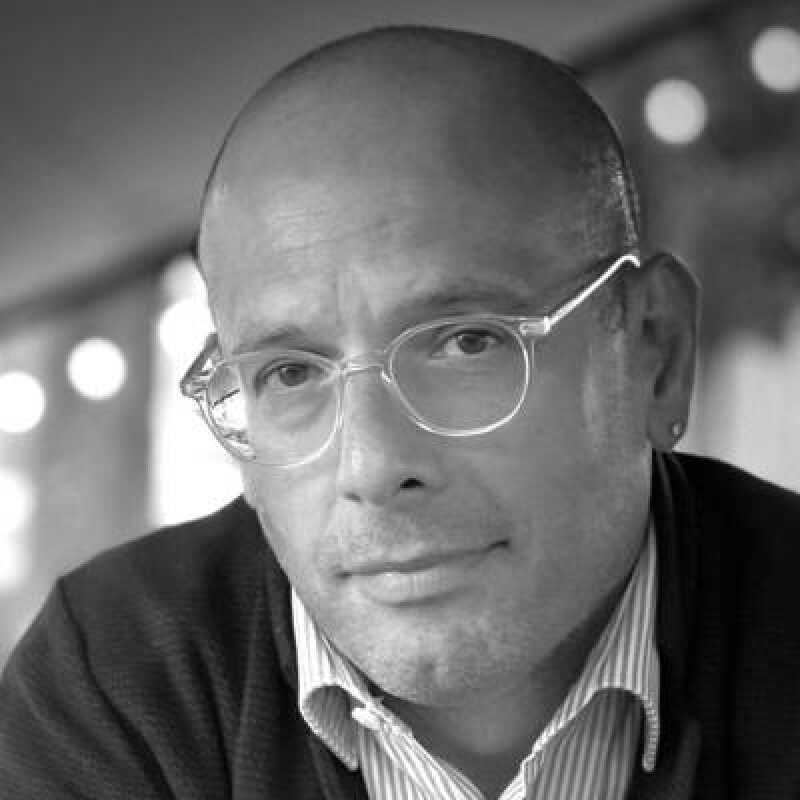
Dr. Guy Stevenson is a lecturer in English Literature at Queen Mary and Goldsmiths, University of London, and an adjunct faculty member at Goldsmiths. His research focuses on literary modernism of the early 20th century and the 1960s counterculture, with a particular emphasis on the political dimensions of both movements. He authored Anti-Humanism in the Counterculture (2020) and edited a special issue on Anti-Humanist Modernisms for Textual Practice . Stevenson’s work bridges modernist avant-garde aesthetics with postwar countercultural movements, challenging assumptions about their progressive narratives. His teaching spans modules such as London Global , Romantics and Revolutionaries , and American Money Novels . Stevenson has organized major conferences including From Modernism to the Counterculture and A Gob of Spit in the Face of Art , reflecting his commitment to interdisciplinary dialogue. His research explores intersections between economic theory, sexual politics, and media studies, with recent projects analyzing Marshall McLuhan’s media philosophy and the Alt-Right’s use of avant-garde tactics. Stevenson’s publications critique the ideological underpinnings of modernist and countercultural movements, exposing tensions between anti-humanist aesthetics and political outcomes. His work highlights how figures like Ezra Pound and Henry Miller influenced later movements while navigating complex relationships with fascist and reactionary ideologies.
David Gellner is Professor of Social Anthropology at the University of Oxford, jointly affiliated with the Institute of Social and Cultural Anthropology and All Souls College. His distinguished career centers on South Asia—particularly Nepal—where he examines the interplay of religion, caste, and political transformation through ethnographic and historical lenses. His research spans anthropology of South Asia , Buddhist and Hindu traditions , ritual symbolism , and ethnic activism , with current projects focusing on Dalit emancipation, migration-state relations, and post-monarchy political restructuring. Gellner’s work uniquely bridges traditional urbanism studies with contemporary social movements, revealing how religious healers navigate modernity and how caste hierarchies persist amid democratic transitions. Analysis of his 15 most recent publications shows escalating emphasis on Dalit experiences in education , religious hybridity in diaspora communities , and Nepal’s constitutional evolution after monarchy. His scholarship consistently challenges simplistic secularization narratives while documenting grassroots activism reshaping South Asian societies. Scientific recognition includes: Fellow of the British Academy (FBA) Gellner leads major research initiatives on Nepali social change, securing substantial grants for comparative studies of caste dynamics and religious politics. His mentorship has cultivated a generation of anthropologists specializing in Himalayan societies, though specific student names aren’t publicly cataloged. Collaborative projects with Nepali scholars demonstrate his commitment to decolonizing knowledge production through equitable North-South partnerships.
Professor David Stack is a faculty member at the University of Reading, holding the position of Professor in the School of Humanities. He serves as Founding Co-Director of the Centre for Health Humanities and is a Fellow of the Royal Historical Society and Senior Fellow of the Higher Education Academy. His research focuses on 19th and early 20th century intellectual history, particularly the history of the left (Chartism, radicalism), John Stuart Mill, and the history of science (phrenology, Darwinism, eugenics). His work emphasizes contextualizing ideas within their historical moments to understand their modern relevance. Teaching responsibilities include undergraduate courses on 19th-century thought and postgraduate modules on nature vs. nurture debates. He supervises PhD students on topics like transgender identities, eugenics history, and facial disfigurement in WWI veterans. Awards include British Academy and Wellcome Trust fellowships, and he contributes to public engagement through media appearances (BBC, Open University) and collaborations with institutions like the Natural History Museum. Key achievements include interdisciplinary teaching innovations, leadership in widening access to higher education (Reading Scholars program), and steering roles in History UK and university initiatives. His publications span academic journals and edited volumes, reflecting his commitment to bridging humanities and sciences.
Dr Claire Norton is a Reader in History at St Mary's University, specialising in historical narratives and their socio-cultural roles. Her work focuses on identity formation, interfaith interactions, and Ottoman history, particularly in early-modern Mediterranean border areas. She has authored/co-authored books like Plural Pasts (2017) and Liberating Histories (2018), and edited volumes such as Conversion and Islam in the Early Modern Mediterranean (2017). A leading scholar in Ottoman textual practices and historiography, she co-leads the AHRC-funded Christian-Muslim Relations: A Bibliographical History (1500–1900) project and collaborates on educational materials derived from its findings. She co-edits Anatolian Studies and serves on editorial boards for Rethinking History and Studies in Religion . Dr Norton teaches modules on Ottoman Empire, global exploration, and the socio-cultural role of history. Her research bridges academia and activism, addressing ethical issues in historical representation and anti-colonial resistance through art and pedagogy.