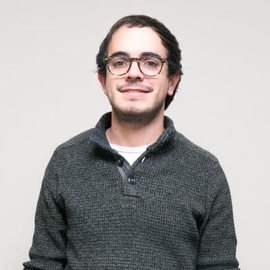
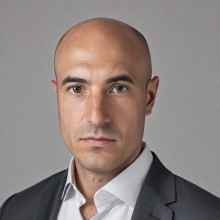
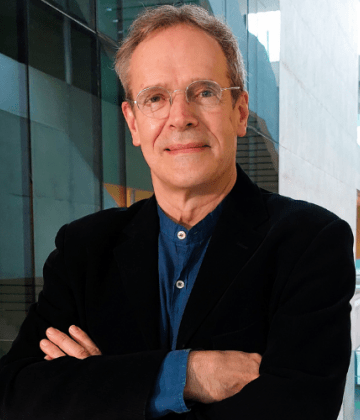
Corrado De Sio is a Fixed-term Researcher at the Department of Control and Computer Science (DAUIN) , Politecnico di Torino , affiliated with the College of Computer, Film, and Mechatronics Engineering . His academic roles include course instruction and collaboration for Reconfigurable Computing , High Performance Computing (HPC) , and Operating Systems for High-Performance Supercomputers across multiple academic years (2020-2025). Research Interests focus on: Reliability of reconfigurable systems and FPGAs under radiation effects Hardware-software co-design for fault tolerance Embedded systems in aerospace and safety-critical applications Machine learning acceleration on reconfigurable hardware Radiation effects on real-time operating systems and CNN implementations Recent publications address: 2025: Selective hardening of RISCV soft-processors for space applications 2025: Real-time 'signal for help' gesture recognition systems 2024: Reliability analysis of RISC-V processors and CNN placement algorithms 2023: Fault tolerance in FPGA-based CNNs and radiation effects on RTOS Patents include: PyXEL - Python Toolkit for Reconfigurable Hardware Surveillance Software for Real-Time Violence Detection Academic Supervision : Co-supervisor for PhD candidate Arash Amini Bardpareh in Computer and Systems Engineering .
Stefano Grivet-Talocia is a Full Professor at the Department of Electronics and Telecommunications at the Polytechnic University of Turin, where he also serves as Director of the Doctoral School and President of the Doctoral School Council. He is a member of the Interdepartmental Center SmartData@PoliTO - Big Data and Data Science Laboratory, the University Committee for Research, Technology Transfer and Services to the Territory, and the Commission for the Promotion of Library, Archive and Museum Heritage. His academic career spans over two decades at Politecnico di Torino, where he has established himself as a leading researcher in electromagnetic modeling and signal integrity. Grivet-Talocia earned his Laurea degree (summa cum laude) in Electronic Engineering in 1994 and his Ph.D. in Electronic and Communication Engineering in 1998, both from the Polytechnic University of Turin. Between 1994 and 1996, he conducted research at NASA/Goddard Space Flight Center in Greenbelt, Maryland. His educational background laid the foundation for his expertise in electromagnetic modeling, wavelet analysis, and signal processing. His research focuses on behavioral modeling, electromagnetic compatibility, macromodeling, model order reduction, numerical modeling, passivity, power integrity, signal integrity, transmission lines, and wavelets . Grivet-Talocia is particularly renowned for his work on passive macromodeling of interconnect structures, development of the TOPLine technique for transmission line simulation, and pioneering contributions to passivity enforcement algorithms. He has co-authored the first book entirely dedicated to Macromodeling (2016) and developed innovative approaches to waveform relaxation and wavelet-based signal processing. His recent publications (2024-2025) demonstrate continued leadership in model order reduction, with significant contributions to data-driven modeling of linear and nonlinear systems, power integrity analysis, and electromagnetic compatibility. His work spans both theoretical advances in numerical methods and practical applications in circuit design, with strong industry relevance particularly for semiconductor and electronic design automation companies. IEEE Fellow (2018-present) Three Intel SRS Grants (2022-2024) Three IBM SUR Grant Awards (2007-2009) Best Associate Editor Award - IEEE Transactions on Components, Packaging and Manufacturing Technology (2020) Multiple Best Conference Paper Awards (2006-2020) URSI Young Scientist Awards (1999) Ranked among the "top 2% worldwide researchers" (Stanford) since 2019 Grivet-Talocia actively supervises doctoral students including Michele Cusano, Sara Paknezhad Panahi, Antonio Carlucci, and Kun Zhao. He has secured numerous research grants from competitive national calls (PRIN) and commercial contracts with industry partners including Intel, IBM, Nokia, Hitachi, Infineon, and Cadence. His technology transfer activities include co-founding the spin-off IdemWorks (2007-2016), which was acquired by CST in 2016. He also developed the autoCircuits web service for automated circuit problem generation, widely used in electrical engineering education. He leads the EMC Group (Electromagnetic Compatibility) at DET and has been instrumental in establishing the Compact Dynamical Modeling research area. His work has practical applications in high-speed electronics design, with algorithms embedded in commercial tools like IBM PowerSPICE. Grivet-Talocia maintains strong industry connections through his research projects and serves as Associate Editor for IEEE Transactions on Components, Packaging and Manufacturing Technology.
Nicola Capodieci is an Associate Professor at the Department of Physical, Computer and Mathematical Sciences at the University of Modena and Reggio Emilia, specializing in Information Processing Systems (IINF-05/A). He actively teaches multiple courses including Object-Oriented Programming, Web Technologies, and General Computer Science across Computer Science and Mathematics degree programs. His research interests focus on GPU acceleration for embedded systems, autonomous vehicles, and real-time computing. Dr. Capodieci's work addresses critical challenges in heterogeneous computing platforms, particularly for automotive applications and smart city infrastructure. His research bridges theoretical computer science with practical applications in autonomous driving and urban mobility systems. Analysis of his recent publications reveals a strong focus on optimizing GPU performance for latency-sensitive applications, particularly in autonomous vehicles. His work spans path planning algorithms, memory interference management, and real-time scheduling on heterogeneous platforms. A significant portion of his research addresses practical implementation challenges in embedded systems where computational resources are constrained but timing predictability is critical. Dr. Capodieci's teaching portfolio demonstrates expertise in both foundational programming concepts and advanced topics in web technologies. His courses emphasize practical implementation skills while covering theoretical foundations of object-oriented programming, web development frameworks, and computational thinking.
Andrea Santilli is a Research Scientist at Nous Research and holds a PhD in Computer Science from GLADIA at Sapienza University of Rome. His research focuses on large language models (LLMs), robustness, reliability, and multimodal learning. He previously worked at Apple MLR, Hugging Face’s BigScience, and Pi School. He earned his MSc and BSc in Computer Science from Tor Vergata University and Sapienza. Education: PhD in Computer Science, Sapienza University of Rome (2024) MSc in Computer Science, University of Roma Tor Vergata (2020) BSc in Computer Science, University of Roma Tor Vergata (2018) Research Interests: Santilli’s work spans LLM robustness , mechanistic interpretability , multimodal neural databases , and instruction-tuning . He introduced Parallel Jacobi Decoding and contributed to projects like BLOOM, Camoscio, and Fauno. His research bridges syntax-aware NLP, privacy-preserving LLMs, and cross-modal alignment. Publications: His work includes advancements in 3D-text latent space alignment (CVPR 2025), evolutionary merging (ICML 2025), and efficient decoding (ACL 2023). Over 15+ peer-reviewed papers span venues like ACL, CVPR, and ICLR. Awards: Received the Emanuele Pianta Award for his MSc thesis on continual language learning with syntax-based episodic memory. Grants & Projects: Winner of ‘Machine Learning Algorithms for Translation’ grant (2022), developing Parallel Decoding Co-PI for ‘Multimodal AI for 3D Analysis’ (2021) with Ecole Polytechnique Labs & Teams: Active in GLADIA (Sapienza), Apple MLR, and Hugging Face’s BigScience initiative. Core contributor to open-source projects like PromptSource and BLOOM.
Igor Simone Stievano is a Full Professor at the Polytechnic University of Turin , affiliated with the Department of Electronics and Telecommunications (DET) and the Interdepartmental Center Ec-L - Energy Center Lab . He holds a PhD in Electrical Engineering and has supervised numerous students in disciplines spanning electromagnetic compatibility, machine learning, and multi-energy networks. His research interests include: Modeling and simulation of integrated circuits Machine learning for signal integrity Multi-energy network resilience Stochastic analysis of electrical systems Electromagnetic compatibility Key projects include the EU-funded SHIMMER initiative on hydrogen injection in gas networks and commercial contracts for high-speed I/O macromodeling. He serves as a chair and committee member at major conferences like the IEEE Workshop on Signal and Power Integrity. Scientific recognitions : IEEE Senior Member Recipient of the 2013 Futuro in Ricerca grant Editorial Board member of ENERGIES (2020-) Stievano actively participates in PhD college evaluations for Mathematical Sciences and Metrology programs at Politecnico di Torino, while teaching courses in Electrical Engineering and Digital Technologies across biomedical, computer, and media engineering curricula.
Hugo Georges Victor Lavenant serves as Assistant Professor in the Department of Decision Sciences at Bocconi University, Milan, where he has held a faculty position since 2020. Previously, he completed a postdoctoral fellowship at the University of British Columbia (2019-2020) under the Pacific Institute of Mathematical Sciences and earned his PhD in Mathematics from Université Paris-Sud (2016-2019) under Filippo Santambrogio's supervision. His academic foundation includes: PhD in Mathematics, Université Paris-Sud (2016-2019) Studies at École Normale Supérieure (2012-2016) covering mathematics, physics, history, and philosophy of science Classes préparatoires in mathematics and physics (2010-2012) Lavenant's research centers on optimal transport theory and its applications across mathematical disciplines. He investigates geometric structures in Wasserstein spaces, develops numerical methods for dynamical optimal transport, and bridges theoretical advances with Bayesian statistics. His work demonstrates particular innovation in trajectory inference for biological data and dependence measures for random measures, connecting pure mathematics with computational statistics. Recent publications reveal accelerating interdisciplinary impact, with 2024-2025 works extending optimal transport to machine learning (kernel methods, variational inference) and data science (opinion dynamics, single-cell analysis). This trajectory shows increasing methodological sophistication in handling measure-valued mappings and non-smooth geometries while maintaining computational tractability. Award recognition includes: Pacific Institute of Mathematical Sciences Postdoctoral Fellowship Lavenant actively mentors early-career researchers through formal advising relationships and collaborative projects. He currently supervises two PhD candidates (George Kanchaveli and Francesco Mascari, co-advised with Marta Catalano) and has guided Master's students including Mathis Hardion and Niccolò Bargellini. His teaching portfolio spans advanced analysis, optimization, and real analysis courses at Bocconi, reflecting his commitment to mathematical rigor in education. He operates within Bocconi's Decision Sciences ecosystem while maintaining international collaborations with researchers at UBC, Université Paris-Sud, and statistical groups worldwide. Current projects focus on entropy-based transport methods and geometric approaches to nonparametric statistics, positioning his work at the intersection of theoretical mathematics and data-driven applications.
Marco Maggini is a Full Professor in the Department of Information Engineering and Mathematics at the University of Siena, a position he has held since joining the university in 1996. His academic career spans over 25 years with foundational expertise in computer engineering and artificial intelligence, focusing on theoretical and applied machine learning research. His educational background includes: Laurea degree (cum laude) in Electronics Engineering from the University of Florence (1991) Ph.D. in Computer Engineering and Control Systems from the University of Florence (1995) Prof. Maggini's research encompasses machine learning, neural networks, kernel machines, and the integration of symbolic and sub-symbolic knowledge systems. He extends these foundations into practical applications including web mining, search engine technology, pattern recognition, natural language processing, and computer vision. This interdisciplinary approach bridges theoretical computer science with real-world implementation challenges across multiple domains. Analysis of his 15 most recent publications (2023-2025) reveals a dominant focus on multilingual NLP applications, particularly educational puzzle generation for low-resource languages (Italian, Arabic, Persian, Turkish) using LLMs. His work demonstrates consistent innovation in named entity recognition, commonsense reasoning evaluation, and cross-lingual adaptation techniques. Secondary research threads include medical imaging segmentation, molecular property prediction, and AI security vulnerabilities, reflecting his broad technical mastery across computer vision, bioinformatics, and adversarial machine learning. No specific scientific awards were mentioned in the provided documentation, though his editorial roles indicate peer recognition within the academic community. While student mentoring details are absent from the source material, his position as Full Professor and leadership of SAILab imply active graduate supervision. His extensive publication record (120+ papers) and editorial service suggest significant research grant involvement, though specific funding sources remain undocumented. He directs the Siena Artificial Intelligence Laboratory (SAILab), which serves as an interdisciplinary hub for advancing machine learning theory and applications. The lab's current projects emphasize educational technology, multilingual NLP systems, and the integration of symbolic reasoning with neural architectures, maintaining strong industry and international academic collaborations.
Andrea Vinci is an accomplished researcher with 66 publications and 1,261 citations, specializing in the intersection of quantum computing, edge-cloud architectures, and Internet of Things (IoT) systems. His work demonstrates significant contributions to solving complex computational problems through innovative approaches that bridge theoretical quantum algorithms with practical distributed computing applications. His research interests span quantum computing applications for resource management, multi-density clustering techniques for urban analytics, and platform-independent IoT application development. Vinci has pioneered work in variational quantum algorithms for cloud/edge resource allocation, quantum kernels for IoT data classification, and distributed AI for cognitive building systems. His research demonstrates a consistent focus on addressing NP-hard problems through quantum-classical hybrid approaches. Analysis of Vinci's publication trends reveals a strategic research trajectory moving from foundational work in smart city analytics and crime prediction toward cutting-edge quantum computing applications for IoT and edge-cloud systems. His recent publications (2023-2025) show increasing focus on quantum machine learning techniques specifically tailored for IoT data processing, with significant attention to practical implementation challenges. Vinci maintains an extensive collaborative network, frequently publishing with researchers including Fabrizio Marozzo, C. Mastroianni, J. Settino, and Antonio Guerrieri across multiple high-impact venues including IEEE Transactions, ACM conferences, and specialized journals in quantum computing and distributed systems. His technical contributions include the development of the COGITO platform for cognitive buildings, novel approaches to multi-density crime prediction, and significant advancements in quantum kernel methods for IoT data analysis. Vinci's tutorial publications indicate his role in educating the broader research community about emerging quantum computing applications for distributed systems.
Marco Russo is a PhD Student in Computer and Systems Engineering (38th cycle, 2022-2025) at the Department of Automatic Control and Computer Science (DAUIN) of the Polytechnic University of Turin. He serves as an external teacher/teaching assistant in DAUIN and holds a Contract Professor position at the Center for Autonomous Management of the Interfaculty University School of Strategic Sciences (SUISS) from November 2023 to October 2024. His research focuses on Quantum Computing, Quantum Machine Learning, and Quantum Simulations, with ERC sectors emphasizing machine learning and quantum computing formal methods. He teaches Computer Architecture courses for Computer Engineering Master's students. Russo's recent publications explore cutting-edge applications in quantum control, embedded systems integration with quantum algorithms, quantum security protocols, and neural-symbolic AI for puzzles. His work bridges theoretical advancements in quantum computing with practical implementations across gaming, communications, and aerospace domains. His academic roles include collaboration with PhD guardians Bartholomew Montrucchio and Olivier the Third. While no formal awards are listed, his contributions span interdisciplinary research areas at the intersection of quantum technologies and classical engineering systems.
Salvatore Ivan Trapasso is a Fixed-term Assistant Professor at the Department of Mathematical Sciences "GL Lagrange" (DISMA) , Polytechnic University of Turin , and a member of the SmartData@PoliTO - Big Data and Data Science Laboratory . His research focuses on Applied Harmonic Analysis , Fourier Analysis , Machine Learning , and Quantum Theory , with expertise in Mathematical Analysis (MATH-03/A) and Theoretical PDEs (PE1_11). Education : Implied PhD in Mathematics. Research Areas : Phase Space Analysis, Time-Frequency Methods, and Applications to Quantum Mechanics. His recent publications investigate phase space techniques for Feynman Path Integrals , Twisted Laplacian , Compressed Sensing , and Stability of Scattering Transforms . His work bridges Harmonic Analysis with Machine Learning and Quantum Dynamics . Notable scientific awards include the Axioms Young Investigator Award (2022) , Best Paper Award (ICGF 2020) , and the Quality Award 2019 from Polytechnic University of Turin. He serves on the Editorial Board of Advances in Operator Theory and as Associate Editor for University Texts in the Mathematical Sciences . Teaching roles include Lecturer for Mathematical Principles in the College of Architecture and Design , Collaborator for Mathematical Analysis I/II in Biomedical and Aerospace Engineering, and Contributor to advanced mathematical methods in Computer Science Engineering.
Riccardo Trinchero is an Associate Professor at the Department of Electronics and Telecommunications (DET) within Politecnico di Torino. He actively contributes to the College of Electronic, Telecommunications and Physics Engineering as a course instructor and to the College of Computer, Film and Mechatronics Engineering as a member. His research focuses on circuit modeling, electronic simulation, and machine learning applications. Academic Appointments 2025/26: Spectral and machine learning methods for uncertainty quantification (Main Teacher) 2023/24: Electronic Circuit Modeling (Main Teacher) Research Interests Compact dynamical modeling Stochastic circuit analysis High-speed link optimization via ML Electromagnetic compatibility (EMC) PhD Supervision Marco Atlante (since 2024) Nazanin Soleimani (since 2024) Dilyorjon Yuldashev (since 2024) Minzhou Liu (2020-2024) Yuan Yan (2020-2024) Nastaran Soleimani (2019-2023) Research Projects AI4FREIGHT (2025-2029) - Scientific Manager Physical simulation models for grounding contacts (2020-2021) - Scientific Manager Recent Publications 2025: SPICE modeling with ML kernels 2025: Multi-output active learning for PCB uncertainty 2025: Electromagnetic field analysis for transmission lines 2025: Digital twins in train dynamics 2024: Compressed SPICE-ML IC models
Dr. Niki Martinel is Associate Professor of Computer Vision and Machine Learning at the University of Udine's Department of Mathematics, Computer Science and Physics. His research advances machine learning methodologies with applications spanning medical imaging, underwater enhancement, and anomaly detection. Research specialties include deep learning architectures (Capsule Networks, Mamba models), self-supervised approaches, and feature representation techniques. Recent work focuses on improving robustness in challenging imaging conditions through physics-informed models and domain adaptation techniques. Publications demonstrate consistent innovation in imaging applications, particularly medical artifact reduction and underwater enhancement. Recent work shows strong emphasis on efficient architectures for mobile deployment and physics-aware models for scientific applications. Research collaborations extend to healthcare diagnostics, sports analytics, and marine robotics, showcasing cross-disciplinary applications of computer vision technologies.
Marc Mezard is a Professor of Theoretical Physics at Bocconi University, where he leads the newly established Department of Computational Sciences. Previously, he served as Research Director at CNRS in Paris and held roles at Université Paris Sud. He earned his PhD in Physics from École Normale Supérieure in Paris in 1984. His research focuses on statistical physics of disordered systems, with applications to machine learning, information theory, computer science, and biophysics. His work bridges theoretical physics and interdisciplinary fields, including neural networks and deep learning, where he explores the impact of data structure on learning strategies. He teaches undergraduate courses in statistical and quantum physics and a doctoral course on complex systems. Key research themes include emergent phenomena in complex systems, with contributions to spin glass theory, compressed sensing, and algorithmic solutions for random satisfiability problems. His publications span foundational topics in statistical mechanics and modern applications in data science. Marc Mezard has collaborated extensively with institutions and researchers globally, contributing to the theoretical foundations of computational and physical sciences. His academic leadership includes directing École Normale Supérieure from 2012 to 2022, fostering interdisciplinary research initiatives.
Enrico Blanzieri is an Associate Professor at the University of Trento's Department of Information Engineering and Computer Science. His research focuses on artificial intelligence, bioinformatics, quantum computing, machine learning, and computational biology. He actively contributes to interdisciplinary projects such as Vitis OneGenE for gene network analysis and quantum machine learning pipelines. His teaching includes courses like Algorithms for Bioinformatics, Quantum Machine Learning, and Data Mining. Blanzieri's work bridges theoretical foundations and practical applications, with notable contributions in quantum annealing-based algorithms, gene network expansion using distributed computing, and socially-competent artificial agents. His research integrates computational methods with biological systems, addressing challenges in precision agriculture and systems biology. His recent publications emphasize quantum machine learning advancements, causal role attribution in gene networks, and ethical AI frameworks for language models. Collaborative projects include the GENE@HOME volunteer computing initiative for bioinformatics tasks. Blanzieri also engages in educational activities, supervising courses that blend theoretical computer science with real-world applications.
Luciano Rolando is an Associate Professor at the Department of Energy (DENERG) in Politecnico di Torino. He is a member of the CARS@PoliTO Interdepartmental Center for Automotive Research and Sustainable Mobility. His academic roles include teaching Hybrid Propulsion Systems at the PhD level and various undergraduate/graduate courses such as Thermal Machines and Structural Mechanics and Fluid Machines across Chemical, Mechanical, and Energy Engineering programs. As Scientific Director and Manager of competitive and commercial research projects like OpThermEV (2021-2022) and Alternative Fuels: Large Bore Ammonia Combustion (2024-2025), he focuses on optimizing thermal management systems, hydrogen combustion, and emission reduction technologies. His research group E3 (DENERG) explores synergies between hybrid propulsion, renewable fuels, and predictive control algorithms. His recent publications highlight advancements in deep reinforcement learning for energy management, hydrogen-fueled powertrains, and dual-diluted combustion systems. Collaborations include industry partnerships and supervision of seven ongoing PhD students. He holds a national patent for predictive thermal control systems in electric vehicles, aligning with SDG goals 7, 12, and 13.