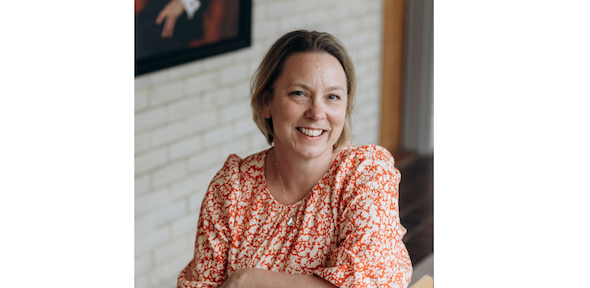
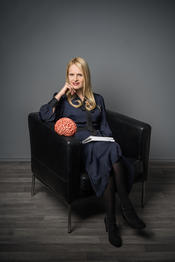
Professor Miranda Griffin is a medieval French literature scholar at the University of Cambridge, affiliated with the Faculty of Modern and Medieval Languages and Linguistics and Murray Edwards College. Her research focuses on landscape representation, manuscript culture, and ecocritical approaches to medieval texts. Professor of Medieval French Literature Fellow at Murray Edwards College Researcher in medieval manuscript studies and ecocriticism Contributor to BBC Radio 4's In Our Time Her work explores medieval theories of temporality, text-image relationships in manuscripts, and the intersection of gender studies with literary analysis. She has published extensively on Ovid's influence, metamorphosis themes, and bestiary studies. Recent research highlights include analyses of medieval ecologies, spatial narratives, and manuscript materiality. Her contributions span academic publications, educational outreach, and media collaborations like the Netflix documentary on fabulous beasts. Professor Griffin supervises PhD students in medieval French literature and actively participates in academic societies and teaching initiatives within the Faculty.
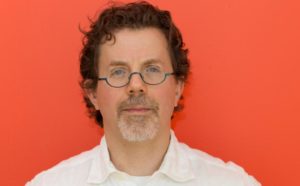
Reeve Huston is an Associate Professor of History at Duke University's Arts & Sciences school. His scholarship focuses on U.S. political history and the history of capitalism, with particular emphasis on the evolution of democratic practices and land distribution conflicts during the Antebellum period. Ph.D. in History from Yale University (1995) B.A. and M.A. from Wesleyan and Yale Universities His research examines: Two-party democracy formation (1790s-1840s) Land policy conflicts in early America Democratization processes and competing political practices Global capitalism history frameworks Recent publications analyze: Jacksonian democracy's institutional foundations Land policy's role in political development Democratization debates during political transitions Key honors include: 1999 Dixon Ryan Fox Prize 2000 Theodore Saloutos Prize His teaching employs flipped classroom models with emphasis on discussion-based learning.
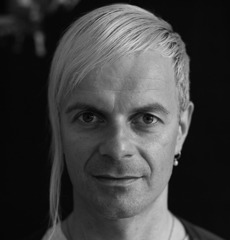
Wolfgang Mayer is a Professor for Performative Practice at the State Academy of Fine Arts Stuttgart , teaching collaborative artistic processes. He co-founded the art group Discoteca Flaming Star (DFS) in 1998 with Cristina Gómez Barrio, focusing on performative works that challenge memory and institutional frameworks. 1990–1995: Studied at Academy of Fine Arts Munich 1996–1997: DAAD scholarship at School of Visual Arts NYC 2005–2006: Whitney ISP participant Mayer’s research integrates performative practice , body theory , and collaborative art . His works interrogate memory , feminist narratives , and public space dynamics through sculptures , performances , and experimental music . Recent projects like Momentum:synthesize.r (2024) and Love Any Out of (90 Seconds) End (2023) explore temporal structures and emotional labor . Scientific honors include: 2013 Fundacion Estrenos Grant 2006–2007 Pollock-Krasner Scholarship 1993 Salzburg Summer Academy scholarship He emphasizes non-formalized artistic development through Sound & Body modules, public space interventions , and critical response protocols . Mayer’s DFS collective has shown globally at institutions like The Kitchen , Whitney Museum , and Tate Modern , often collaborating with figures like Rita McBride and Jeremiah Day.
Wang Yingji is a tenured professor and doctoral supervisor at the School of Art and Media, Tongji University. He holds a PhD in Literary Studies and has served as director of the China Culture and Art Communication Research Center, member of the China Artists Association, and editorial board member of "Media Criticism" journal. BA: Chinese Language and Literature, Renmin University of China (1995) MA: Journalism, Beijing Normal University (2004) PhD: Literary Studies, Beijing Normal University (2007) His research focuses on the intersections between Journalism and Communication, Media Phenomenology, Philosophy of Technology, and Traditional Chinese Culture. His work explores embodied cognition in media interaction, technological mediation of human perception, and historical epistemology of media systems. The articles demonstrate his expertise in media phenomenology (Hubert Dreyfus analysis), digital reading behavior studies, VR technology ideologies, and historical reconstruction of Chinese communication theories. His publications span from 2016-2022 with consistent CSSCI indexing. National Social Science Fund General Project: "Chinese Modern Public Opinion Thought History" (2021) Major Project Subtopic: "Chinese Media Archaeology in Civilizational Diversity" (2020) Ministry of Education Project: "Husserl's Media and Communication Thought" (2020) Completed NSFC Project: "Rumor Propagation and Governance in Public Emergencies" (2011) As educator, he teaches courses like "Chinese Classical Media Art", "Media Research Methods", and "Communication Theory". His administrative roles include leadership positions in the Chinese Society of Journalism History and multiple journal editorial boards.
Oreet Ashery is Professor of Contemporary Art at the Ruskin School of Art, University of Oxford, where she serves as Director of the MFA programme and Director of Studies in Fine Art at Exeter College. A visual artist whose practice navigates both institutional and grassroots contexts, Ashery's work engages with bodies, worldbuilding, autoethnography, gender and technology through multiplatform projects spanning video, 2D image-making, performance and assemblage. Her research focuses on the intersection of digital culture and mortality, speculative fiction, and gender politics. Characterized by the use of speculative fiction and humor, her work often occupies utopian, discursive and incongruous spaces. She has developed significant projects exploring digital death, grief, and the politics of representation, particularly through her award-winning web-series Revisiting Genesis and her film Dying Under Your Eyes which documents her father's passing. Her practice bridges academic research and public engagement through projects like Death Cafés that bring conversations about mortality into community spaces. Ashery's artistic output shows a consistent trajectory from early performance works exploring identity and cultural politics to more recent projects examining digital legacy and mortality. Her work increasingly engages with medical humanities and the representation of illness, as evidenced by the Wellcome Collection-commissioned Misbehaving Bodies: Jo Spence & Oreet Ashery exhibition (2019-2020) which examined illness representation through collaborative work with the late photographer Jo Spence. Oxford- UdK Berlin Award (2022) Turner Prize Bursary (2020) 10th Jarman Film Award (2017) As a supervisor, Ashery guides doctoral students working at the intersections of performance, visual art, and critical theory. She has secured significant commissions from institutions including KW Institute for Contemporary Art, Wellcome Collection, and Stanley Picker Gallery. Her leadership of the MFA program at the Ruskin School of Art demonstrates her commitment to developing the next generation of artists while maintaining an active studio practice that informs her pedagogical approach.
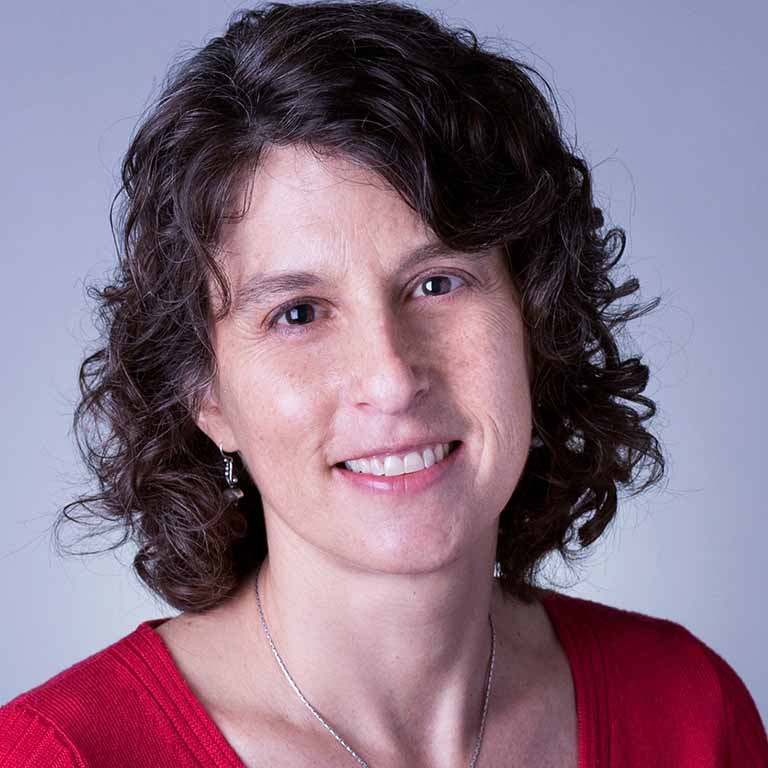
Sara Friedman is a Professor of Anthropology and Gender Studies at Indiana University Bloomington, affiliated with the Department of East Asian Languages and Cultures. She holds a Ph.D. in Anthropology from Cornell University (2000), an M.A. from Cornell, and a B.A. in East Asian Studies from Yale. As Director of Graduate Studies in Anthropology, she oversees academic and research initiatives within the department. Her research examines intersections between intimate life and political/legal domains in China and Taiwan, focusing on state power, migration, gender, and non-heteronormative families. Current projects include comparative studies of LGBT family formation in Taiwan/China and middle-class Chinese families rejecting urban lifestyles for rural alternatives. These projects address legal reforms, kinship transformations, and evolving ideals of the 'good life.' Recent work includes publications on LGBT reproductive rights, cross-border migration sovereignty debates, and legal recognition struggles. Her books include *Exceptional States: Chinese Immigrants and Taiwanese Sovereignty* (2015) and *Intimate Politics: Marriage, the Market, and State Power in Southeastern China* (2006). Awards include a Fulbright Fellowship and a Chiang Ching-kuo Foundation Grant. Her research bridges gender/sexuality studies, legal anthropology, and East Asian studies, emphasizing ethnographic engagement with marginalized communities. Current projects explore how state policies shape family structures and how non-traditional families navigate bureaucratic and social challenges in rapidly changing sociopolitical contexts.
Mark Harris is a Professor at Monash University's School of Philosophical, Historical and International Studies (SOPHIS). His research focuses on historical anthropology, ethnohistory, and Latin American societies, particularly in the Amazon region. He has held academic positions in the UK, US, Brazil, and Australia, and his work emphasizes interdisciplinary approaches to Indigenous studies, colonialism, and decolonization. Education: PhD in Anthropology (London School of Economics and Political Science, 1998), BSc in Anthropology/Psychology (University of London). Research interests include the intersection of environment and society in Amazonian contexts, Indigenous knowledge systems, and transatlantic histories. Recent projects include studies on Brazilian Amazonian cultures and Jesuit documentary sources. He has contributed to over 30 research outputs since 1998, emphasizing riverine societies, seasonal rhythms, and Indigenous histories. Notable awards include the British Academy Postdoctoral Fellowship (1996), Phillip Leverhulme Prize (2004), and Warren Dean Memorial Prize (2011). His funded projects explore Indigenous experiences in Brazil and Australia, aiming to create socially responsible knowledge communities. Advising and grants focus on fostering global interdisciplinary collaboration. His work aligns with UN SDGs related to education and sustainable development, emphasizing socially responsible research practices.
Professor Jo Fox serves as Pro Vice-Chancellor (Research & Engagement) and Dean of the School of Advanced Study at the University of London. She previously held leadership roles at Durham University, including the first female Director of the Institute of Historical Research and first female Professor of Modern History. Her research focuses on 20th-century propaganda, psychological warfare, and disinformation, with notable projects on WWII British-German propaganda dynamics and contemporary fake news analysis. Education and Career: Completed PhD in History at Durham University (1999 onward). Key roles include Chair of the Wellcome Trust Early Research Panel and Honorary Communications Director of the Royal Historical Society. Research Interests: Specializes in historical and modern disinformation campaigns, propaganda’s impact on public opinion, and the intersection of media and conflict. Active in projects like the Leverhulme-funded 'Political Warfare Executive' study and AHRC’s 'COVID-19 Rumours' research. Key Projects: Leading collaborative initiatives on covert propaganda’s role in British culture and historical context of disinformation during crises. Formerly examined Nazi cinematic propaganda and WWII documentary film strategies. Awards: National Teaching Fellow (2007), Fellow of the Royal Historical Society, and Fellow of the Royal Society of Arts. Grants and Consultancy: Secured major funding from the Leverhulme Trust and AHRC. Engages in media commentary on historical and contemporary misinformation. Currently chairs Wellcome Trust panels and advises on historical media studies. Labs/Teams: Collaborates with Durham University researchers on propaganda and cultural history projects. Oversees interdisciplinary teams in historical research initiatives.
Univ.-Prof. Dr. Michaela Sambanis is a Professor of English Didactics at the Institute of English Philology within the Department of Philosophy and Humanities at Freie Universität Berlin. She has held this position since 2011 and previously served as the managing director of the Institute from Winter semester 2017/2018 to October 2019. Her academic journey includes research work at the Transfer Center for Neuroscience and Learning at the University of Ulm (2008-2011), completion of her habilitation in 2006, and her promotion in 2001. Professor Sambanis's research centers on the innovative intersection of educational neuroscience and language teaching methodology. Her work pioneers the field of Positive Foreign Language Didactics, connecting positive psychology with language education. She investigates embodied cognition approaches, particularly movement-based learning, and explores theater methods and arts integration in language instruction. Her research also addresses teacher well-being and health, multilingualism in educational settings, and the application of neuroscience findings to practical classroom situations. The k2teach project represents her current focus on teaching-learning labs in English teacher education. Her scholarly output demonstrates a consistent trajectory toward integrating neuroscience with language pedagogy, with recent publications increasingly addressing mental health, digital transformation in education, and positive psychology applications. The evolution of her work shows a progression from practical teaching methods to increasingly sophisticated neurodidactic frameworks that bridge scientific evidence with classroom practice. Professor Sambanis serves on multiple scientific advisory boards including the Goethe Institut in Munich, the Transfer Center for Neuroscience and Learning at the University of Ulm, and the Schlözer Program for Teacher Education. She is also the founding chair of the cross-state E&M Berlin-Brandenburg section and a member of the German Society for Foreign Language Research (DGFF). Her editorial work includes the SELT book series on English Language Teaching. Her teaching responsibilities include supervising master's theses in English teaching, and she has developed numerous teaching-learning laboratories that connect theoretical knowledge with practical application in teacher education. Her work demonstrates a strong commitment to evidence-based foreign language didactics that incorporates insights from neuroscience, psychology, and educational research.
Professor Steve Simpson is a leading marine biologist and fish ecologist at the University of Exeter's Biosciences department. He serves as Professor of Marine Biology & Global Change and leads a dynamic research group focused on understanding marine ecosystems, particularly in the context of climate change and human impacts. His work has been prominently featured in Blue Planet II and he actively engages with industry, policy makers, and the public through media appearances and outreach activities. Education PhD, University of York, UK (2000-2004) MRes Marine & Coastal Ecology & Environmental Management, University of York, UK (1998-1999) BSc Marine Biology (Hons), University of Liverpool, UK (1995-1998) Professor Simpson's research centers on the behavior of coral reef fishes, bioacoustics, and the effects of climate change on marine ecosystems. His approach uniquely combines fieldwork in remote environments with laboratory experiments, data-mining, and computer modeling. He has pioneered new methods for listening to ocean soundscapes and understanding fish communication, revealing how anthropogenic noise disrupts natural behaviors and ecological processes. His work on climate change impacts examines shifting fish distributions and their implications for fisheries management and conservation. Analysis of Simpson's recent publications reveals two dominant research themes: the impacts of anthropogenic noise on marine life and climate change effects on fisheries. His work demonstrates how underwater noise from boats and industrial activities impairs fish hearing, disrupts predator-prey relationships, and affects reproductive success. Simultaneously, his climate change research tracks how warming seas are altering fish distributions, creating 'mackerel wars' and requiring fisheries adaptation. These research strands converge in his innovative work on developing solutions like bubble curtains to mitigate noise impacts. Scientific Awards FSBI Medal (2016) NERC Knowledge Exchange Fellowship (2011-2014) NERC Postdoctoral Research Fellowship (2004-2007) Royal Society International Fellow (2007-2008) EPHE Postdoctoral Fellow (2007-2008) Professor Simpson leads a thriving research group of approximately 10 postdocs, PhD, and Masters students. His grant portfolio includes major NERC funding for projects on marine noise impacts and climate change effects on fisheries. He has developed strong industry partnerships through a Knowledge Exchange Fellowship, working with Cefas, the Met Office, Sustainable Marine Energy Ltd, and HR Wallingford Ltd. His research has directly informed policy through contributions to Marine Climate Change Impacts Partnership reports and presentations to European Parliament. Simpson has also created innovative knowledge exchange initiatives including the 'Vision of Sustainable Fisheries in 2050' thinktank. Simpson has developed specialized research infrastructure including a mobile lab with Ecocean in Montpellier for assessing marine noise impacts, and has conducted large-scale acoustic experiments in dry docks. His work on underwater acoustics was prominently featured in Blue Planet II, and he maintains active engagement with media through TEDx talks, BBC appearances, and public lectures to schools and community groups. He serves on the International Quiet Ocean Experiment Science Committee, helping shape global research on ocean noise.
Dmitri Tymoczko is a Professor of Music at Princeton University, where he has taught composition and theory since 2002. His work bridges the gap between academic music theory and contemporary composition, creating a unique interdisciplinary approach that has earned him recognition as a leading figure in modern music scholarship and creation. Tymoczko's research interests focus on the geometric modeling of musical structures, polystylistic composition that draws from genres spanning Renaissance to rock, and the mathematical foundations of tonality. His theoretical work explores how harmonic structures can be represented geometrically, revealing fundamental patterns that connect diverse musical traditions. He approaches composition as 'a logical deduction from absurd premises,' blending rigorous structural thinking with playful musical exploration. His scholarly publications and compositions reveal a consistent interest in the intersection of mathematical precision and expressive freedom. The articles demonstrate expertise across music theory, composition, and the cognitive aspects of musical perception, with recurring themes of geometric modeling, tonal structure, and genre hybridization. His work often challenges traditional boundaries between academic and popular music forms. Guggenheim fellowship Rhodes Scholarship Leonard Bernstein fellowship from Tanglewood Fellowship from the Radcliffe Institute for Advanced Study Block lectureship from the Society for Industrial and Applied Mathematics First music-theory article published in Science magazine Tymoczko maintains an active performance career alongside his academic work, with his compositions performed by leading ensembles including the Brentano Quartet, Newspeak, and Roomful of Teeth. His teaching integrates theoretical insights with practical composition, fostering a generation of musicians who understand music's structural foundations while embracing creative freedom. He has developed innovative tools like the musical programming language 'arca' to explore new compositional possibilities.
Serge CARDINAL is a Full Professor at the Department of Art History, Cinema, and Audiovisual Media at Université de Montréal. His research focuses on the intersections of sound, music, and cinema, blending philosophical inquiry with creative practice. He leads projects exploring musicality in film, interdisciplinary analysis methods, and the legacy of cinema through installations and exhibitions. Education: The text does not explicitly detail his formal education, but his extensive academic output and professorial role suggest advanced degrees in cinema studies and related fields. Research Interests : Musicality in film, research-creation, Deleuzean philosophy applied to cinema, actor studies, and interdisciplinary audiovisual practices. His work bridges theory and practice, using soundscapes, installations, and performances to analyze cinematic material. Recent Projects : Includes installations like Tombeau de Gilles Groulx (2019) and The Political Glenn Gould (2024), as well as collaborative research networks like the OICRM. He has explored digital tools for cinematic analysis (Numalyse, 2025) and sound transcription in intermedia contexts (Studio Glenn Gould, 2021). Grants & Funding : Recipient of grants from FRQSC and SSHRC for projects on sound in Quebec cinema, research-creation methodologies, and interdisciplinary music-cinema studies. Leads teams in strategic research programs and individual creation grants. Labs/Teams : Member of the Observatoire interdisciplinaire de création et de recherche en musique (OICRM) and the research-creation lab La création sonore: cinéma, arts médiatiques, arts du son .
Maria Gabriela Nouzeilles is the Emory L. Ford Professor of Spanish and Director of the Program in Latin American Studies (PLAS) at Princeton University. She holds dual appointments in the Department of Spanish and Portuguese and the Council of the Humanities. Her roles include Director of Princeton in Argentina (summer study abroad program), former Department Chair (2008–2015), and Director of Graduate Studies (2004–2008). Nouzeilles has taught at the University of Buenos Aires, Nottingham University (UK), and Duke University. Education: B.A. from Buenos Aires University, Argentina; Ph.D. from University of Michigan, Ann Arbor. Research focuses on literary fictions of pathology, modern travel cultures, photography, and documentary film. Her work examines intersections between medical narratives, visual arts, and cultural memory. Key projects include Ficciones somáticas (2000), analyzing disease narratives in Argentine culture, and Of Other Places: Patagonia and the Production of Nature (forthcoming), exploring Patagonia’s constructed geographies. She co-founded the interdisciplinary journal Nepantla Views from South and led the international research project The Itinerant Languages of Photography (2010–2014). Her service includes roles on the PLAS Executive Committee and Council of the Humanities. Current projects include The Afterlife of Images , examining Latin American writers/artists’ use of photography and media. Labs/Teams: Collaborations with global institutions like Instituto Moreira Salles (Brazil), Biblioteca Nacional (Rio), and Mexico’s SINAFO. Active in international academic networks through PLAS and Duke University partnerships.
Guillaume Soulez is a Professor of Cinema, Audiovisual Studies, and Communication at the Sorbonne Nouvelle - Paris 3 University, specializing in the Department of Cinema and Audiovisual. He holds an HDR (2009) and a PhD in Rhetorical Mediation (1998). His research focuses on the 'deliberation of images,' analyzing how audiences interpret cinematic and audiovisual works through formal and pragmatic frameworks. He leads the 'Renaissance of Television' research group at IRCAV and co-directs the international 'Cinema and Visual Culture Colloquium Series' with institutions like NYU and Duke University. Recent projects include Innov'zone (Labex ICCA) exploring experimental zones in cinema and the Pierre Schaeffer Archive Project. His work bridges media morphology, reception studies, and intermediality, with publications in Théorème , CiNéMAS , and Communication & Langages . Key research themes include: the fragmented cinema, media formats, TV series seriality, and the legacy of the ORTF Research Service (1960-74). He has directed the Cinema and Audiovisual Department (2014-2016) and IRCAV (2016-2021), fostering collaborations with institutions like the Ministry of Defense and La Poste. His publications emphasize theoretical models like 'format analysis,' 'pragmatic interpretation,' and 'intermedial dialogue.' Recent works include Uses of Interpretation, Interpretations of Use (2023) and Le Cinéma Éclaté (2018). He actively engages in public scholarship through radio interviews and educational outreach.
François Robinet serves as a Lecturer in Contemporary History at the University of Versailles Saint-Quentin-en-Yvelines (UVSQ), where he is an elected member of the Council of the Institute of International Cultural Studies. He concurrently directs the Graduate School of Humanities and Heritage Sciences at the University of Paris-Saclay and holds appointments with the Laboratory Center for the Cultural History of Contemporary Societies (CHCSC) and the 22nd section of the CNU. Education: Doctor of History (2012) Robinet's research centers on 20th-21st century cultural and political history, with concentrated expertise in the Rwandan Tutsi Genocide, post-colonial Franco-African memory politics, and media history since 1990. His work critically examines French journalistic coverage of African conflicts, international information manufacturing during wartime, and the cultural history of colonial and post-colonial societies. He employs interdisciplinary approaches bridging media studies, genocide research, and digital humanities to analyze historical narratives and memory construction. His 15 most recent publications (2016-2023) reveal consistent thematic focus on Rwandan genocide documentation, Franco-Rwandan historical accountability, and media's role in shaping political memory. Key trends include digital methodologies for genocide archives, analysis of French state-media interactions during crises, and evolving commemorative practices through digital platforms. The work demonstrates increasing engagement with digital humanities tools while maintaining rigorous historical analysis of colonial legacies. No scientific awards were documented in the source material. Robinet coordinates the international RwandaMAP2020 research network mapping genocide documentation sites and serves as Vice-president of the Association for the Development of Cultural History. He is an active member of the Society for the History of Media (SPHM) and editorial board of Le Temps des Médias , demonstrating significant scholarly leadership beyond traditional academic advising. His institutional presence spans laboratory governance (CHCSC), university administration (UVSQ Board of Directors), and major conference organization including the 2014 Rwanda international conference and 2022 International Communication Association pre-conference on empires in media history.