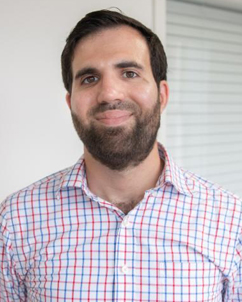
Daniel Greene is an Associate Professor in the College of Information at the University of Maryland , and serves as Vice President of the campus chapter of the American Association of University Professors. His work focuses on the futures of work , privacy, surveillance, and organizational change through interpretive social science methodologies. He holds a Ph.D. in American Studies from the University of Maryland. Research interests include technology and work dynamics, privacy governance, information institutions, race/gender inequality, and critical design ethics. His landmark book The Promise of Access (MIT Press, 2021) won the McGannon Book Award for its analysis of how poverty is framed through technological solutions like 'learn to code' initiatives. Current projects explore organizational exclusion via performance metrics and resistance strategies. Publications span topics from gig economies to AI ethics in policing, reflecting his interdisciplinary approach bridging information studies, sociology of work, and critical theory. He maintains an active online presence at dmgreene.net and is not currently accepting Ph.D. students.
Hans-Wolfgang Loidl is an Associate Professor at the School of Mathematical and Computer Sciences, Heriot-Watt University, Edinburgh. His primary research areas include functional programming, parallel computation, program analysis, symbolic computation, and high-performance machine learning with applications in embedded systems, FinTech, and health informatics. He leads the dependable systems group and serves as Senior Programme Director for Computer Science, chairing the Undergraduate Board of Studies and leading the 2025 Academic Review. Member of dependable systems group Coordinated SICSA MultiCore Challenge Hosted 2nd International Summer School on Advances in Programming Languages in 2014 He designs and implements programming languages for easy-to-use parallelism (Glasgow Parallel Haskell, Glasgow Distributed Haskell, mobile Haskell) and focuses on formal guarantees for resource bounds. Recent expansions include computer security (Secrious project EP/T017511/1) via serious games, high-performance machine learning for FinTech (BA grant + industry PhD), and Brain-Computer Interfaces (EPSRC proposal). His research output spans 1999–2025, including 64 peer-reviewed publications and 5 datasets. Notable works include articles on parallel Haskell dialects (PAEAN), NUMA performance analysis, unikernel benchmarking, and playful learning exercises for security education. He offers PhD projects in functional programming, parallel programming, and high-performance machine learning applications. His teaching vision emphasizes strategic focus in software engineering education, with courses on industrial programming, hardware-software interfaces, and parallel/distributed technology.
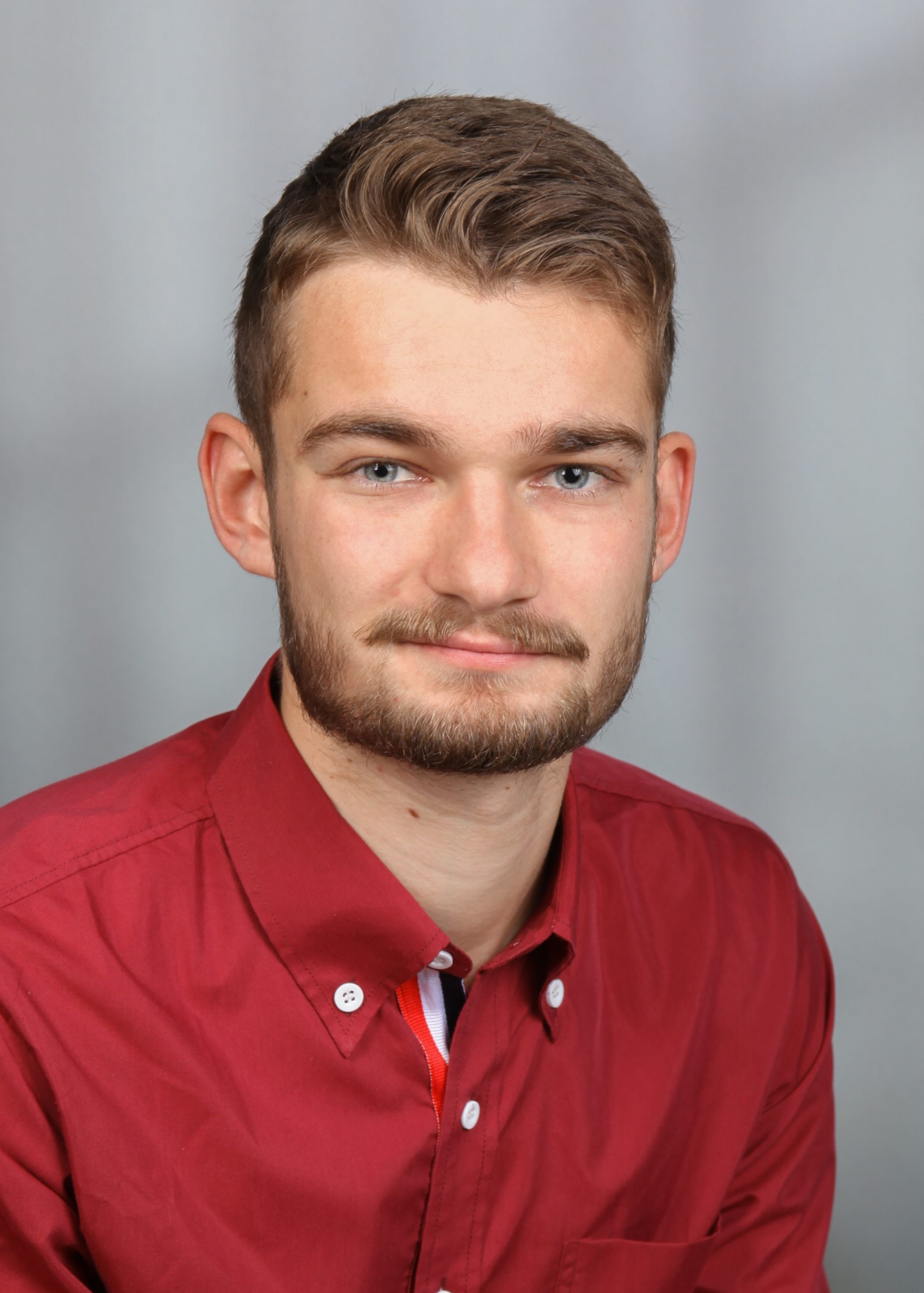
Tobias Kögel is a doctoral candidate and researcher at the Institute of Microwaves and Photonics (LHFT) within the Department of Electrical-Electronic-Communication Engineering at Friedrich-Alexander-Universität Erlangen-Nürnberg (FAU). His work focuses on advanced radar systems, signal processing, and RF technologies. Kögel holds an M.Sc. in Electrical Engineering and Information Technology (EEI) and has been actively engaged in research since 2020. His research interests span radar localization, radar signal processing in FPGAs, software-defined radio, switched injection-locked oscillators (SILOs), and UHF-RFID systems. He seeks students for projects involving hardware development, FPGA programming (VHDL/Verilog), and Python-based simulation of radar algorithms using Kalman filters. Kögel has contributed to over a dozen peer-reviewed publications since 2019, addressing topics like bistatic radar networks, time-frequency synchronization, and hybrid RFID-odometry localization. His work frequently appears in IEEE journals and conferences such as IEEE Radar Conference and International Microwave Symposium. He advises students on hardware design, FPGA implementation, and algorithm development. His lab (LHFT) focuses on microwave photonics, radar systems, and RFIC design.
Ayman Eltantawy is an Adjunct Assistant Professor at the University of Waterloo. His affiliations include membership in the Adjunct faculty and Faculty groups. His research focuses on advancing smart grid technologies, particularly in hybrid AC-DC distribution systems, renewable energy integration, and energy storage solutions. Key areas of interest include stochastic planning frameworks, load flow analysis, and optimization algorithms for improving grid reliability and efficiency. His work emphasizes practical applications such as PATREM (Performance Assessment Tool for Remote Electrical Microgrids), flywheel storage enhancement, and online DG connection assessments. The articles highlight trends in hybrid system configurations, renewable resource management, and grid modernization strategies. Notably, his research bridges theoretical models with real-world implementation challenges in smart grid infrastructure. While no specific advising or grant information is provided, his contributions to grid optimization and energy storage indicate active engagement in collaborative academic and industrial projects. His publications span from 2011 to 2019, reflecting sustained focus on evolving smart grid challenges.
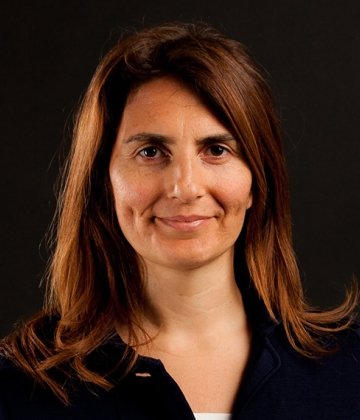
Valentina Mele is an Associate Professor in the Department of Social and Political Science at Bocconi University. She specializes in public administration, focusing on innovation in government, cross-sector governance, and civil servant conduct. Her research has been published in leading journals like Journal of Public Administration Research and Theory and Public Administration Review . She has received prestigious awards, including the International Geneva Award (2012 and 2016) and the Best Published Paper Award (OMT, 2016). She also serves as a Visiting Lecturer at the University of Geneva and a Senior Fellow at ESADE’s Center for Public Governance. Her editorial roles include Senior Executive Editor of the Journal of Public Policy and membership on editorial boards of top journals. Previously, she directed the MSc in Economics and Management of Government and International Organizations at Bocconi and is now part of the Bocconi Evaluation Unit. Her research interests include global governance, telework in public organizations, and technological innovation in healthcare. She has conducted comparative studies on international organizations and public-private partnerships, with a focus on policy implementation challenges in transitional economies.
Ignacio David Lopez Miguel is a PreDoc Researcher at the Cyber-Physical Systems department of Vienna University of Technology (TU Wien). His research focuses on formal verification techniques for safety-critical systems, particularly in the context of Programmable Logic Controllers (PLCs) used in industrial and high-stakes environments like CERN's Large Hadron Collider (LHC) cooling systems. Current projects include TAIGER (2023–2027), addressing neural network verification for PLC code. Collaborates with institutions such as CERN, GSI, and NASA on safety-critical control systems. Research Themes : Integration of formal verification with AI/ML components Runtime enforcement in cyber-physical systems Ethical considerations in engineering design Automated translation of natural language requirements to formal specifications His work spans interdisciplinary domains, connecting computer science, control theory, and engineering ethics through rigorous verification methodologies.
Henderik Proper is a Full Professor of Business Informatics at TU Wien's Faculty of Informatics, leading the Research Unit in Business Informatics. He holds roles as Head of Research Unit, Faculty Council Substitute Member, and Curriculum Commission Principal Member. His expertise spans enterprise architecture, digital transformation, and conceptual modeling. Education: Holds a PhD and has held academic positions at TU Wien and previously at the University of Nijmegen. Research focuses on enterprise modeling, AI-driven systems, and governance frameworks. He leads projects like INTEND (2024–2026) and MFP 4.2 (2022–2023), emphasizing digital twin integration and low-code applications. Publications: Over 50 peer-reviewed articles in top venues like Springer and IEEE, focusing on enterprise engineering, process mining, and AI applications. His work bridges theory and practice, addressing challenges in digital transformation and model-driven architectures. Grants: Active in EU-funded projects (INTEND) and national initiatives (MFP 4.2). Advises on doctoral theses and teaches courses like 'Enterprise & Process Engineering' and 'Ontology-Driven Conceptual Modeling'. Labs/Teams: Leads research groups on enterprise architecture and digital systems within TU Wien's Informatics department, collaborating internationally on standards like ArchiMate extensions.
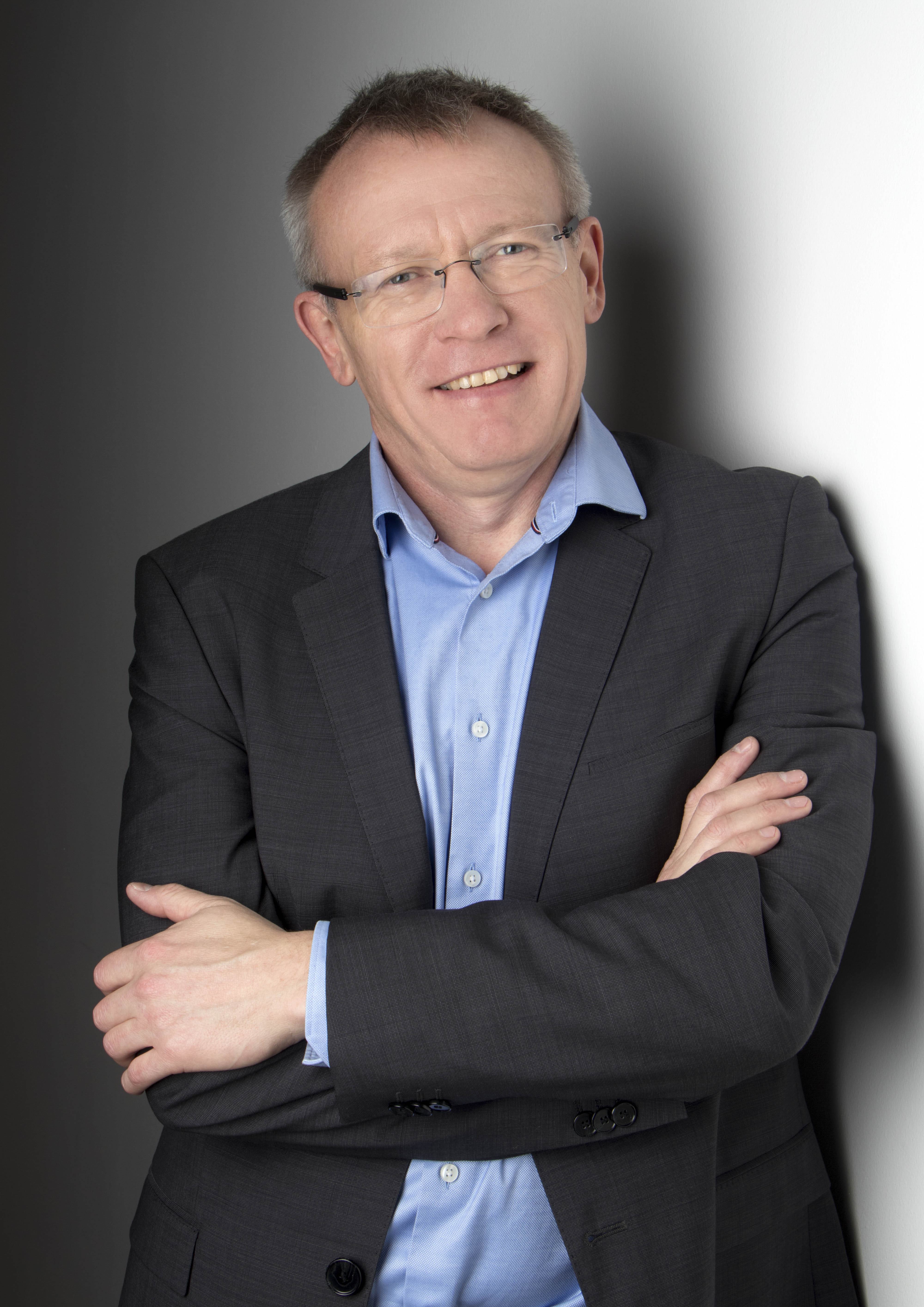
Overview Peter Puschner is a full Professor at the Faculty of Informatics at TU Wien, specializing in Computer Engineering and Real-Time Systems. He serves as Faculty Representative for Research and Infrastructure, overseeing strategic initiatives in informatics research and infrastructure development. His academic role also includes leading the Service Unit Infrastructure (E199-02) and heading the Cyber-Physical Systems department (E191-01). Education and Roles Puschner holds a Diplom-Ingenieur (Dipl.-Ing.) and a Dr.techn. from TU Wien, alongside the title Ao.Univ.Prof. His roles include teaching and supervising students in advanced topics such as Operating Systems, Real-Time Systems, and Scientific Research methodologies. He has been actively involved in curriculum design for Computer Science and Business Informatics programs. Research Interests His research focuses on: Timing Analysis: WCET analysis for real-time systems, especially in multi-core and mixed-criticality environments. Embedded Systems: Designing time-predictable architectures for safety-critical applications. Communication Networks: Time-triggered protocols for automotive and industrial systems. Publications and Tools Puschner has authored over 160 publications, including seminal work on the Platin WCET analysis tool and the T-CREST multi-core architecture. His recent work emphasizes compiler-driven timing predictability and dual-path code paradigms. Grants and Awards Recipient of the Marie-Curie Fellowship (2003) and a founding member of the IFIP 10.2 WG on Embedded Systems. His projects have been funded by the EU (e.g., T-CREST, Multicores Partitioning), FWF, and industry collaborations. Students and Supervision He has supervised numerous PhD and Master’s students, including Elias Maroun (2024), Matthias Platzer (2022), and Bledar Cilku (2018). Key topics include WCET analysis, memory hierarchy design, and secure communication protocols. Labs and Teams Puschner leads the Real-Time Systems Lab, collaborating with industry partners (e.g., automotive, aerospace) to develop safety-critical embedded systems. His team contributes to open-source tools like Platin and the Patmos processor.
Assoc. Prof. Dr. Beyza Taskin is a faculty member at Istanbul Technical University (ITU), serving in the Faculty of Civil Engineering's Civil Engineering Department. She holds the rank of Associate Professor and has extensive experience in academia, including roles as Deputy Director of Research and Application Center (2024–present), Vice President of Department (2023–present), and Head of Department (2019–2020). Her primary research interests are Reinforced Concrete Structures, Structural Dynamics, and Earthquake Engineering. Her educational background includes a PhD in Structural Engineering from ITU (1994–2001) and a bachelor's degree in Civil Engineering (1988–1992). She has conducted visiting research at the University of California, Berkeley (2003–2004) and Aalborg University (1997). Taskin’s research focuses on seismic performance evaluation of buildings, structural rehabilitation, and advanced analysis methods. She has supervised numerous PhD and master’s theses on topics like base isolation, nonlinear dynamics, and earthquake-resistant design. Her work often addresses Turkish seismic codes and real-world earthquake case studies, such as the 1999 İzmit and 2011 Van earthquakes. She is a member of prominent organizations including EERI, ASCE, and the Turkish National Committee for Earthquake Engineering. Her recent projects include developing vulnerability functions for RC buildings and applying machine learning to seismic displacement analysis (2022). Taskin has contributed over 30 peer-reviewed articles, with recent work focusing on Hazus capacity curves, earthquake epicenter forecasting, and NDT techniques for rapid building assessment. Her research bridges theoretical analysis and practical applications in disaster-resilient infrastructure.
Marianne Gullberg is a Professor of Psycholinguistics at Lund University, where she serves as Director of the Lund University Humanities Lab and Director of Huminfra , Sweden's national infrastructure for humanities research. She leads the research programs TEAM (Transdisciplinary Approaches to Learning, Acquisition, Multilingualism) and LAMiNATE (Language Acquisition, Multilingualism, and Teaching) , and previously co-founded the Nijmegen Gesture Centre at the Max Planck Institute for Psycholinguistics. Research Focus : Adult second language acquisition, bilingual processing, gesture production/comprehension, and multimodal communication. Leadership : President of the International Society for Gesture Studies , Vice-president of the European Second Language Association (2000-2007), and active in national and international academic societies. Honors : 2019: European Second Language Association Distinguished Scholar Award 2019: Swenson Prize in Humanities 2014: Rausing Prize in Humanities 2013: Wallenberg Scholar 2010: Lars & Eva Gårding’s Prize in Linguistics Multiple academy memberships including Academia Europaea and Royal Swedish Academy of Sciences Editorial Roles : Editor/Associate Editor for Language Learning , Frontiers in Psychology: Language Sciences , Gesture , and others.
Mittul Vahanvati is a Senior Lecturer in the Sustainability and Urban Planning discipline at RMIT University's School of Global, Urban and Social Studies (GUSS). She is a Chief Investigator in the 'Solomon Islands Shelter Guide' project and a lead member of the 'Climate Resilient Honiara' initiative funded by the UNFCCC Adaptation Fund. Her work emphasizes bridging short-term disaster shelter needs with long-term resilience strategies, particularly for vulnerable communities in informally settled areas across Australasia and the Pacific. Education: Bachelor of Architecture from CEPT University, India (2000) Masters in Sustainable Development from UNSW Sydney (2005) PhD in Architecture from RMIT University (2012) Research Interests: Mittul's research focuses on disaster resilience in housing and urban systems, climate change adaptation, and participatory methodologies like co-design and knowledge co-production. She explores how government programs and grassroots community actions can synergize to enhance risk-informed decision-making, with a particular emphasis on vulnerable populations in developing countries. Her work spans architectural practice, sustainable urban design, and policy frameworks for equitable recovery. Industry Collaborations: UN bodies: UN-Habitat, UNEP, UNFCCC Australian Government: DTP, DECCA, Loddon Shire Council, Merri-Bek Council, Campaspe Shire Council Pacific Island Government: Ministry of Land, Housing and Survey (MLHS), Honiara City Council (HCC) Nonprofits: Habitat for Humanity, Red Cross International Universities: Solomon Islands National University (SINU) Research Trends: Her recent publications (2022–2025) highlight cross-cultural comparative studies of post-disaster housing recovery, nature-based solutions for climate resilience, and socio-spatial conflicts in urbanization. A key theme is the integration of community-led approaches with policy design to ensure equitable and sustainable outcomes, particularly in flood-prone regions like Bihar, India, and the Chancay-Lambayeque subbasin in Peru. Awards: 2022: Best Paper Awards at World Building Congress in Future-Proof Cities and Urban Resilience 2021: C40 International Competition Winning Student Team Supervision 2015: Best PhD Research Paper Award at Building Resilience Conference 2012: RMIT PhD Scholarship 1999: CEPT Scholarship for ZHW Exchange Program Advising & Grants: Mittul currently supervises six PhD candidates investigating topics like socio-spatial disorders in Indonesia, flood mobilities in India, and climate adaptation strategies in Peru. She has secured grants for projects such as 'Climate Resilient Honiara' (since 2018) and co-developed climate resilience action plans with Victorian communities. Her teaching includes core urban design courses for Planning Institute of Australia (PIA) accreditation. Labs & Teams: Mittul co-leads RMIT's Climate Change Transformations Research Group and collaborates with the Centre for Urban Research and Circular Economy Hub. These platforms drive interdisciplinary research on resilient urban systems, fostering partnerships between academia, governments, and NGOs to address climate challenges.
Christian Frier is an Associate Professor at the Department of the Built Environment, Aalborg University, within the Faculty of Engineering and Science. His research focuses on structural engineering, with particular emphasis on footbridge vibrations, stochastic load modeling, and the interaction between pedestrians and structures. He leads or participates in projects such as 'Urban Tranquility' and 'Stochastic Modeling of Pedestrian-Induced Loads,' addressing dynamic behavior and design optimization. Frier has contributed to over 69 publications since 1996, emphasizing probabilistic analysis and vibration mitigation strategies. In 2024, he received the prestigious 'Årets Underviser' award for outstanding teaching in Civil Engineering. His work bridges theoretical analysis and practical applications, influencing sustainable structural design and maritime policy. Research interests include stochastic methods in structural dynamics, pedestrian-structure interaction, and regulatory frameworks for maritime safety. Key contributions involve probabilistic modeling of chloride ingress in concrete and co-regulatory approaches to cyber security in maritime systems. Frier’s projects often combine experimental validation with computational simulations, ensuring robust solutions for complex engineering challenges.
Pedro Lomonaco is a Professor and Director of the O.H. Hinsdale Wave Research Laboratory at Oregon State University’s College of Engineering. He specializes in coastal and ocean engineering, focusing on wave-structure interactions, tsunami resilience, and offshore renewable energy systems. Prior roles include leading Spain’s Hydraulics, Coasts and Offshore Laboratory (2007–2014) and research at Canada’s National Research Council. Education: Ph.D. (Civil Engineering, University of Cantabria, 1999), M.Sc. (Coastal Engineering, IHE-Delft, 1994), B.Sc. (Civil Engineering, National University of Mexico, 1991). Research interests include physical and numerical modeling of wave dynamics, coastal infrastructure resilience, mangrove ecosystems’ protective roles, and floating offshore wind technologies. His work emphasizes disaster mitigation through hybrid green-gray infrastructure, debris dynamics in tsunamis, and scour protection for marine energy foundations. Key projects involve large-scale experimental facilities to study tsunami forces on bridges and buildings, wave attenuation by vegetation, and energy absorption systems. Advising and grants: While specific student names are unstated, his lab supports numerous graduate researchers. Major projects include NHERI-funded studies on coastal hazards and DOE-backed offshore wind initiatives. The Hinsdale Lab serves as a flagship facility for tsunami and wave research. Notable labs/teams: Leads the Hinsdale Wave Research Laboratory, a NSF-funded National Hazards Engineering Research Infrastructure (NHERI) site, enabling large-scale physical modeling of coastal hazards and renewable energy systems.
Rakesh Goel is the Dean of the School of Engineering at the University of California, Merced. His research focuses on seismic design standards for marine structures, nonlinear systems analysis, and infrastructure resilience. Key areas include seismic force provisions for nonstructural systems in marine terminals, fault-rupture bridge response, and dynamic interaction modeling between primary and secondary systems. Research emphasizes validation of methodologies like the Substitute Structure Method for MOTEMS and ASCE/COPRI codes. His work addresses challenges such as nonlinear soil-pile interactions, code compliance for harbor infrastructure, and accurate displacement demand estimation. Notable contributions include comparative studies of seismic displacement procedures for concrete piers and wharves. Publications span 20 years, demonstrating sustained expertise in earthquake engineering, structural dynamics, and geotechnical analysis. His interdisciplinary approach bridges civil engineering with geophysics, particularly in low-frequency seismic data applications for hydrocarbon exploration.
Carlos 'Lobo' Cruz Noguez is a Professor in the Department of Civil and Environmental Engineering at the University of Alberta's Faculty of Engineering. He concurrently serves as Associate Dean of Education in the College of Natural and Applied Sciences, where he leads initiatives to enhance interdisciplinary educational programs addressing global challenges like sustainability and AI. His research focuses on masonry structures, seismic engineering, nonlinear modeling, and innovative materials. He holds the MCAA Endowed Chair of Masonry Structures, driving advancements in high-performance masonry systems. He teaches CIV E 676: Behavior and Design of Masonry Structures , offered alternate years, covering masonry mechanics, reinforced design, and code applications. His work blends experimental testing, computational modeling, and material innovation to address structural resilience and thermal performance. Dr. Cruz Noguez’s research spans structural simulation, damage mitigation, and large-scale testing of masonry and reinforced concrete systems. His recent studies explore seismic response, thermal resistance of cavity walls, and cross-border standards for masonry walls. His contributions emphasize practical applications of advanced materials for safer, durable infrastructure. Prospective graduate students are invited to apply via email with a cover letter, resume, and transcripts. While no specific awards are listed, his endowed chair highlights his leadership in masonry research. Advising and grants are central to his role, though specific grants are not detailed here. His interdisciplinary approach bridges education, research, and industry collaboration.