Carlo Marcati is a Researcher in the Department of Mathematics at the University of Pavia, specializing in numerical methods and scientific computing. His research develops advanced finite element methods for fractional partial differential equations and investigates approximation theory for neural operators. Recent work focuses on hp-FEM techniques for integral fractional Laplacians, optimization methods for physics-informed neural networks, and expression rates of deep learning operators for elliptic PDEs in polyhedral domains.
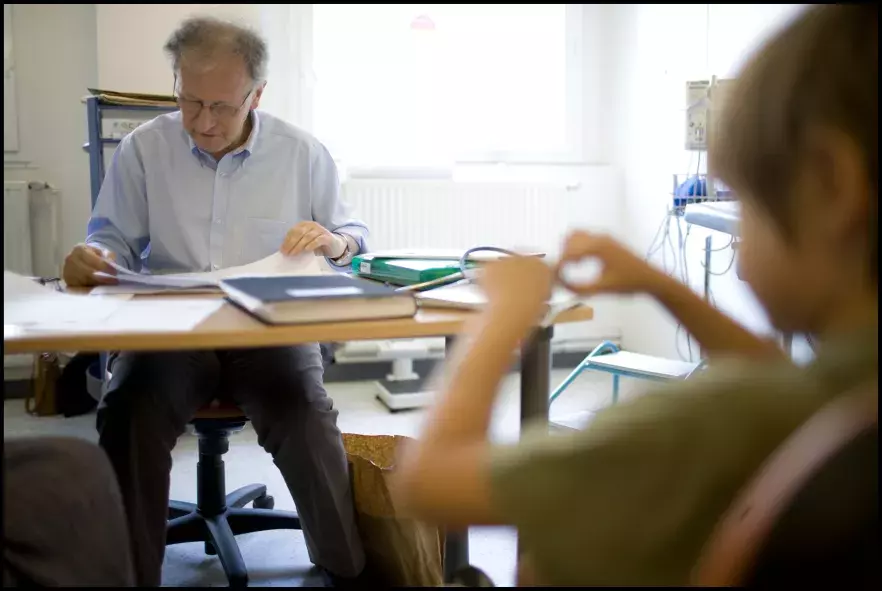
Alain Fischer is a renowned Professor of Experimental Medicine at the Collège de France and a founding member of the Imagine Institute, dedicated to rare genetic diseases. He is celebrated for pioneering gene therapy research, particularly in treating severe combined immunodeficiencies (SCID). His work bridges clinical practice and scientific discovery, emphasizing the interplay between immunology and medicine. Education and early career included training under immunology pioneer Claude Griscelli at Necker-Enfants Malades Hospital (AP-HP), leading to his focus on pediatric immunodeficiencies. Key contributions include developing gene therapy techniques, though his team faced challenges like leukemia risks from early viral vector use, prompting refined methods. Research interests span immunodeficiency mechanisms, gene therapy applications, and rare disease insights into broader medical knowledge. Awards include the Japan Prize (2015) for revolutionizing genetic disease treatments and membership in the French Academy of Sciences. He advocates for scientific literacy, combating vaccine hesitancy, and promotes interdisciplinary collaboration through the Imagine Institute and his Collège de France lectures. Current efforts include advancing gene therapy protocols and exploring novel therapeutic avenues in immunology.
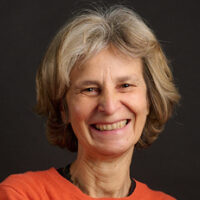
Prof. Anne-Catherine Bachoud leads the Interventional Neuropsychology (NPI) team at Université Paris-Est Créteil (UPEC) and Ecole Normale Supérieure . The team operates across two sites: Mondor Institute of Biomedical Research (clinical focus) and Department of Cognitive Studies (neuroscience and cognitive sciences). Research focuses on neurodegenerative diseases (Huntington's, Parkinson's), vascular pathologies , and interventional neuropsychology . The team develops digital cognitive monitoring systems for home use, combining language processing , social cognition , and neuroimaging (fMRI, EEG) with gene therapy and cell transplantation approaches. Collaborations include NeurATRIS (innovative therapies) and FHU SENEC (aging-related cognitive tools). Key affiliations: National Reference Centre for Huntington's , Parkinson's Expert Centre , and AP-HP patient cohorts.
Dr. Arash Ghasemi serves as an Adjunct Faculty member in the Department of Engineering Management and Technology within the College of Engineering and Computer Science at the University of Tennessee at Chattanooga (UTC). His academic role bridges computational mathematics and engineering applications through teaching and research activities focused on advanced numerical methods. His research spans computational mathematics, numerical analysis, and scientific computing with emphasis on high-order spectral/finite element methods, mesh generation, and preconditioning techniques. Key application areas include computational fluid dynamics (particularly compressible flow), structural engineering (crane mechanisms, non-destructive testing), climate modeling for infrastructure, and electromagnetic simulations. His methodological innovations consistently target improved accuracy, efficiency, and stability in engineering computations across civil, mechanical, and aerospace domains. Dr. Ghasemi's publication trajectory from 2006 to 2024 reveals sustained contributions to computational methods. Early work established foundations in wireless sensor networks for infrastructure and high-order ODE solvers, while his 2016 'spectral hull' breakthroughs revolutionized degree-of-freedom reduction in conservation laws. Recent publications (2021-2024) demonstrate expanding applications in polynomial approximation, data interpolation, and climate modeling, maintaining his signature focus on mathematical rigor coupled with practical engineering impact across fluid dynamics, structural mechanics, and environmental systems.
Xiaoliang Wan is a Professor in the Department of Mathematics at Louisiana State University (LSU), with an affiliation at the Center for Computation and Technology (CCT). His research focuses on Scientific Machine Learning, Stochastic Modeling, Numerical Methods for Partial Differential Equations (PDEs), and the Minimum Action Method for Large Deviation Principles. He has developed software tools such as the Multi-Element Probabilistic Collocation Method (ME-PCM) and the hp-adaptive Minimum Action Method for computational physics and uncertainty quantification. Wan has taught numerous advanced courses, including Numerical Analysis, Numerical Linear Algebra, and Stochastic PDEs. His work bridges computational mathematics with applications in fluid dynamics, oceanography, and climate modeling. Key contributions include integrating machine learning with traditional numerical methods to solve high-dimensional PDEs and stochastic systems. His research emphasizes adaptive algorithms, rare event simulation, and parameterization techniques for complex systems. Recent work includes applications of deep learning to ocean turbulence modeling and the development of hybrid FEM-PINN methods for time-dependent PDEs.
Gianfranco Ciardo is a Professor in the Department of Computer Science at Iowa State University. He previously held faculty positions at the University of California, Riverside, and the College of William and Mary. His research focuses on algorithms and tools for logic and stochastic analysis of discrete-state models, decision diagrams, performance evaluation, and reliability analysis of complex systems. He has also held visiting roles at the University of Torino and Technical University of Berlin, and industry research positions at HP Labs, NASA ICASE, and others. Education: Ph.D., Computer Science, Duke University, 1989 Laurea in Informatica, University of Torino, Italy, 1982 Research Interests: Ciardo's work spans symbolic model checking, Petri nets, Markov models, and decision diagrams. His contributions include advancements in state-space exploration, formal verification, and applications to hardware/software systems. He emphasizes scalable solutions for complex system analysis through efficient data structures like Binary Decision Diagrams (BDDs). Awards & Grants: While specific awards are not listed, his extensive publications and industry collaborations reflect sustained academic and industrial recognition. His work has been supported through grants and collaborations with institutions like NASA and HP Labs. Labs/Teams: Leads research on decision diagram technologies and Petri net analysis within Iowa State's Department of Computer Science, contributing to tools like SMART for stochastic model checking.
Dr. Stefan Robila is a Professor of Computer Science and Director of the Computational Sensing Laboratory (CSL) at Montclair State University, where he leads research in computational sensing, cybersecurity, and hyperspectral data analysis. He holds a PhD from Syracuse University and has held visiting scholar positions at prestigious institutions including Cambridge and Oxford Universities. Roles: NSF Program Director (2018-2021), Director of CSL, Undergraduate Research Mentor Affiliations: Member of ACM and IEEE (Senior Member since 2003) His research spans computational sensing applications such as hyperspectral imaging, energy-efficient data centers, and cybersecurity. Notable projects include NSF-funded work on cyberinfrastructure development and a $2.5M HP grant for tablet integration in computer science education. Research interests include: Unsupervised feature extraction algorithms for large datasets High-performance computing for environmental modeling Green computing and data center sustainability Recent work focuses on STEM education initiatives, including K-12 data science curricula and interdisciplinary robotics projects. Dr. Robila has secured over $5.25M in external funding from NSF, HP, PSEG, and SPIE, supporting projects ranging from MRI instrument development to undergraduate research experiences.
Dr. Simon Wilson is a Computational Scientist affiliated with the National Centre for Atmospheric Science (NCAS) and the Department of Meteorology at the University of Reading. His role focuses on computational aspects of meteorological research. He can be reached at simon.wilson@ncas.ac.uk and is located in Office HP 113 (Harry Pitt Building). The position highlights expertise in atmospheric science and computational methods. While specific research interests are not detailed in the text, his affiliation with the Department of Meteorology and role as a Computational Scientist suggest a focus on advanced modeling, climate systems, and data-driven approaches in meteorology. No academic awards, grants, or student advisement are explicitly mentioned. He contributes to the broader research ecosystem through NCAS collaborations and institutional ties at the University of Reading.
Dr. Laelia Benoit is a Clinical Fellow (PGY-3) in the Solnit Integrated Training Program in Child, Adolescent, and Adult Psychiatry at the Yale Child Study Center. She is a French and Brazilian Child and Adolescent Psychiatrist who completed her medical training in France and came to the U.S. in 2021 as a Fulbright Visiting Research Scholar. Dr. Benoit maintains dual affiliations with Yale University and the French NIH (Inserm, CESP, Centre de Recherche en Epidémiologie et Santé des Populations) and serves as co-director of the QUA Lab, a collaborative research initiative between the Yale Child Study Center and CESP in France. Dr. Benoit's educational background includes: PhD from Paris-Cité University (2020) Residency in Public Health and Sociology from Paris Saclay University (2018) MA from Greater Paris Public Hospitals (2016) MSc in Sociology of Health from Ecole des Hautes Etudes en Sciences Sociales (2015) MSc in Psychology (Child and Adolescent Development; Transcultural Psychology) from Université Paris Nord (2015) MD from Paris Sorbonne University (Pierre et Marie Curie School of Medicine) (2011) Dr. Benoit's research program centers on the intersection of youth mental health and environmental challenges, with particular emphasis on how climate change impacts the psychological wellbeing of children and adolescents across different cultural contexts. Her work employs qualitative (Grounded theory), social science, and mixed-methods approaches to understand school refusal, access to care for minorities, and early intervention strategies for conditions like autism and psychosis. She advocates for citizen research approaches that actively involve adolescents, parents, professionals, and family support groups in the research process to ensure relevance and applicability of findings to real-world settings. Her current project assesses climate change's impact on children's mental health across three countries (US, Brazil, and France). Her scholarly contributions demonstrate a clear trajectory toward understanding ecological mental health impacts, with recent publications focusing on climate emotions, anxiety, and actions among youth across different cultural contexts. Her methodological innovations include developing "selfie" video interventions to address climate anxiety among adolescents and employing sequence analysis to understand trajectories of school refusal. Dr. Benoit's research excellence has been recognized with several prestigious awards: Yale International Physician-Scientist Resident and Fellow Research Award (2023) Fulbright Scholarship (2021) Monahan Foundation Award (2021) Inserm Award (2016) Paris Public Hospital AP-HP Award (2016) As an educator, Dr. Benoit teaches qualitative methods for researchers and psychological/social science skills for caregivers and school professionals at Yale University, Universidade de São Paolo, and the University of Paris, with a focus on reducing health care inequities. Her work extends beyond traditional academic boundaries through media engagement, including features in Le Monde and the Montreal Gazette discussing how to talk with children about climate change. As co-director of the QUA Lab (Qualitative and Mixed Methods Lab), Dr. Benoit leads a collaborative research initiative between Yale Child Study Center and CESP in France. The lab focuses on developing and applying qualitative research methodologies to address complex questions in child and adolescent psychiatry, with particular attention to approaches that capture the nuanced experiences of young people facing mental health challenges in the context of global environmental changes.
Bernard Grodzinski is a retired Professor and Adjunct Professor in Plant Agriculture at the University of Guelph. He specializes in plant physiology, particularly photosynthesis and carbon partitioning, with a focus on applications in controlled environments like space agriculture and commercial greenhouses. His research integrates plant biology, environmental science, and engineering to optimize plant productivity. Dr. Grodzinski holds a Ph.D. from York University and is affiliated with the SALSA (Space and Life Support Agriculture) team, collaborating with NASA’s Kennedy Space Centre and the European Space Agency (ESA). His work addresses challenges in sealed environments, including CO₂ scrubbing, O₂ production, and water purification using plants as bioregenerative systems. Key research themes include: (1) Photosynthetic efficiency under varied light conditions, (2) Non-invasive disease detection via gas exchange profiling, and (3) LED lighting optimization for crop production. He has pioneered methods to quantify carbon export and growth using whole-plant gas exchange analysis. Recent publications emphasize LED spectral effects on tomato and cucumber yields, circadian rhythm entrainment, and thylakoid structure-function relationships. His interdisciplinary approach bridges plant biology with aerospace and agricultural engineering. Dr. Grodzinski has led grants exploring light interception strategies, hydroponic disease control, and plant stress responses. The SALSA team’s work supports both space missions and terrestrial greenhouse industries through sustainable crop systems. He is a co-developer of the Leafweb dataset and has contributed to advancements in 3D plant phenotyping using computer vision. His legacy includes over 150 peer-reviewed publications and innovations in controlled environment agriculture.
Prof. Rainer Grauer is a Professor of Theoretical Physics at Ruhr University Bochum, specializing in computational plasma physics. His research focuses on numerical simulations of magnetized plasmas, magnetic reconnection, turbulence, and adaptive grid refinement techniques. He leads the research group FOR 1048 on cosmic magnetic fields and has held roles such as spokesperson of the Simulation Laboratory Plasma Physics and organizer of international academic events. Education: 1976–1983: Studies in Physics at University of Düsseldorf 1983: Diploma in Physics (Title: MHD stability of tokamaks with elliptical cross-section) 1988: PhD in Physics (Title: Interaction between tearing modes near a bifurcation point) 1994: Habilitation in Physics (Title: Singularities in ideal incompressible flows with swirl) Research Interests: His work spans plasma dynamics, high-performance computing, and astrophysical applications. Key areas include cache-coherent parallel computing, penalty methods for complex geometries, and Vlasov simulations on GPU clusters. Theoretical contributions to turbulence modeling in both Eulerian and Lagrangian frameworks are central to his research. Awards & Recognition: Recipient of the Bennigsen Promotion Prize (1992) Intel/HP IPF Award (2001) XXL Project Award for BlueGene CPU hours (2009) Professional Activities: Organized DPG Spring Conference on Plasma Physics (2002) Member of the Board of Directors at Ruhr University Computing Centre (since 2003) Co-organizer of academic schools on computational astrophysics and MHD dynamos Labs & Collaborations: Leads the Chair of Computational Plasma Physics and collaborates with institutions like FZ Jülich through the Simulation Laboratory Plasma Physics.
Lothar Thiele is a Full Professor of Computer Engineering at the Swiss Federal Institute of Technology (ETH Zurich), where he leads the Computer Engineering and Networks Laboratory (since 1994). His academic career includes professorships at the University of Saarland (1988-1994), sabbatical stays at HP Research Labs (1999) and National University Singapore (2004), and research associate roles at Stanford University (1987) and IBM Research (1991). He is actively involved in academic governance, serving on the Foundation Board of the Hasler Foundation (since 2009) and as a member of the Academia Europaea (since 2010). PhD in Electrical Engineering, Technical University Munich (1985) Habilitation Thesis, Technical University Munich (1987) Research Interests : Thiele specializes in embedded systems design, bio-inspired optimization techniques, and wearable/mobile computing systems. His work focuses on models and software tools for embedded systems, with applications in distributed computing and sensor networks. Current projects involve bio-inspired multi-objective optimization and mobile information systems. Scientific Awards : 2005: Honorary Blaise Pascal Chair, University Leiden 2004: Member, Leopoldina Academy of Sciences 2001 & 2000: IBM Faculty Achievement Awards 1988: IEEE's Browder J. Thompson Memorial Prize 1986: Best PhD Thesis Award, TU Munich Thiele has led large-scale research initiatives like ARTIST2 European Network of Excellence, PREDATOR (FP7), and MICS Mobile Information and Communication National Research Program. He serves on editorial boards for journals including IEEE Transactions on Industrial Informatics and INTEGRATION, the VLSI Journal .
Jennifer E. Graham-Engeland serves as Professor of Biobehavioral Health and Associate Director of the Center for Healthy Aging at Penn State University's College of Health and Human Development. Her research program examines psychosocial stress pathways in aging-related health outcomes through the MESH Lab , with particular focus on inflammation-cognition links and stress response mechanisms. PhD in Social/Health Psychology from Stony Brook University Postdoctoral training in Psychoneuroimmunology at Ohio State University Research Themes include psychoneuroimmunology ( PMID 32215283 ), stress and cognitive aging ( BBR 2020 ), and social determinants of inflammation ( HP 2020 ). Recent publications demonstrate temporal relationships between acute stress and inflammatory markers ( BBR 2020 ), with special attention to gender differences ( Psychoendocrinology 2021 ) and racial disparities ( J Behav Med 2021 ). Publications Trends show consistent investigation of: Stress-inflammation-cognition nexus Social-environmental health determinants Gender-specific biological pathways Ecological momentary assessment methods Family stress transmission models Biological aging metrics Key Grants include: NIH R01 HL167642 (2023-2027): Pandemic stress and CVD risk P01 AG003949-38 (2022-2027): Depression and dementia pathways R03 AG081719 (2023-2025): Loneliness and dementia progression
Spencer Sherwin is Professor of Computational Fluid Mechanics and Head of the Department of Aeronautics at Imperial College London, Faculty of Engineering. He leads a prominent research group focused on high-order spectral/hp element methods and their applications in aerospace and biomedical engineering. He is Principal Investigator of the EPSRC-funded Platform for Research In Simulation Methods and has extensive collaborations with industry leaders such as McLaren Racing, Airbus, and Rolls-Royce. Ph.D., Mechanical and Aeronautical Engineering, Princeton University M.S.E., Mechanical and Aerospace Engineering, Princeton University B.Eng., Aeronautical Engineering, Imperial College London His research centers on computational fluid dynamics , particularly the development and application of high-order spectral/hp element methods (Nektar++) for complex flows. Key areas include vortical and bluff body flows , biomedical modeling of the cardiovascular system , and industrial aerodynamics . His work spans both fundamental numerical method development and real-world applications in Formula 1, turbomachinery, and vascular science. The recent articles (2024–2025) highlight a strong trend in high-fidelity simulations using spectral/hp and discontinuous Galerkin methods, with emphasis on compressible and incompressible LES/DNS , turbomachinery flows , aeroacoustics , biomedical hemodynamics , and mesh generation . There is growing integration of machine learning for turbulence closure and industrial application of high-order methods, particularly in automotive and aerospace contexts. Scientific awards include: Fellow of the Royal Academy of Engineering (FREng) Professor Sherwin has supervised numerous students and leads an active research group. He has secured significant funding, notably as Principal Investigator of the EPSRC Platform for Research In Simulation Methods. His work bridges academia and industry, with projects involving McLaren Racing, Airbus, and Rolls-Royce, focusing on aerodynamics, flow control, and simulation technology development. His research group is associated with multiple interdisciplinary networks including the Biological Fluid Mechanics , Biomedical Flows , Centre for Cardiac Engineering , ElectroCardioMaths Programme , Computational Fluid Dynamics , Space Lab , and Vascular Science Network . The group develops and maintains the Nektar++ and NekMesh open-source software platforms for high-fidelity simulation.
Andrea Reichenberger is a visiting professor in the history of technology at the Department of Science, Technology and Society (STS) at the Technical University of Munich (TUM). She holds a PhD in philosophy of technology from the University of Paderborn and has held roles including research group leader at the University of Siegen and visiting professor at TUM. Her research focuses on women and gender in STEM, history and philosophy of mathematics/physics/CS/AI, and ethical dimensions of science. Currently, she leads a DFG project on women in quantum physics history and another on visual-spatial communication (ViCom SPP 2329). Her awards include a Best Paper Award (2009) and certificates from mathematical logic institutions. She actively organizes events like the 2025 workshop on ethics and computer science at the Deutsches Museum. She has authored a monograph on Émilie du Châtelet (Springer 2016) and over 50 articles, including peer-reviewed contributions to journals like *Physics Today* and *History and Philosophy of Logic*. Education: PhD in Philosophy of Technology (University of Paderborn) Grants: DFG projects (2022-2025; 2025-2028) Publications: 50+ articles, 2 books, edited volumes on women in science Teaching: Develops digital methods for HPS education, leads courses on technology history and gender studies Her work bridges history of science with contemporary ethical challenges, emphasizing sustainability through historical inquiry.