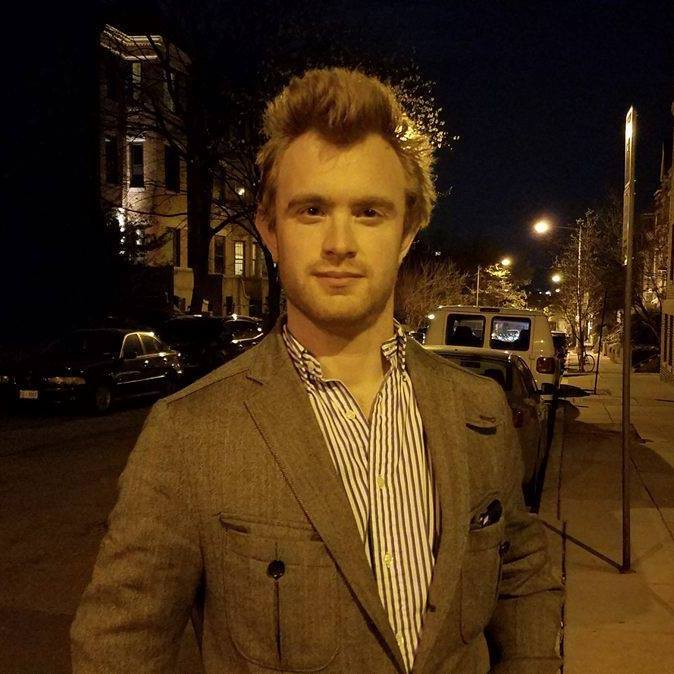
Sinead O'Keeffe is a Research Fellow at the University of Limerick in the Faculty of Science and Engineering , specifically within the Department of Electronic and Computer Engineering . Her research bridges the technical domain of optical fiber sensor development with critical applications in radiation therapy and sports medicine. Primary Research Themes Medical radiation dosimetry using optical fiber sensors Brachytherapy dose monitoring systems Sports injury prevention in Gaelic football and running Mental health literacy in rural farming communities Key Technical Contributions Development of scintillation-based dosimeters Characterization of perfluorinated polymer fibers 3D printed sensor systems for clinical and rehabilitation applications Interdisciplinary Applications Prostate cancer radiotherapy dose measurement Mental health intervention programs for athletes Work-family conflict analysis in Irish farming Email: sinead.okeeffe@ul.ie
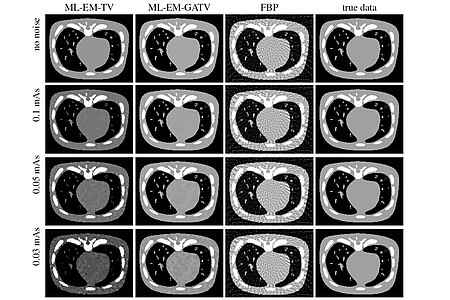
Jürgen Hesser is a Professor at the Mannheim Medical Faculty , Heidelberg University, specializing in Experimental Radiotherapy and Medical Imaging . His research focuses on solving inverse problems in imaging, particularly for CT reconstruction , brachytherapy planning , and low-dose imaging . Current affiliations: Clinic for Radiotherapy and Radiooncology, Mannheim University Hospital Collaborative ties: Interdisciplinary Center for Scientific Computing (IWR) and Center for Bioinformatics (ZITI) at Heidelberg University Research interests center on anisotropic total variation techniques for medical and industrial applications, including MR-guided interventions and real-time radiation therapy . His work has led to a 1000x speed improvement in brachytherapy planning algorithms. Recent publications highlight expertise in image reconstruction (CT/X-ray), noise optimization , machine learning for cancer classification, and big data management solutions. His methods are applied to both clinical and industrial imaging challenges. Additional contributions include scientific data infrastructure development and variance stabilization techniques for medical sensors. The research group maintains strong interdisciplinary links with Physics, Mathematics, and Computer Science faculties.
Eugene Y. Vasserman is an Associate Professor in the Department of Computer Science at Kansas State University's College of Engineering, where he also serves as Director of the Center for Cybersecurity and Trustworthy Systems. His office is located in 2171 Engineering Hall, and he holds office hours on Tuesdays from 2:30 pm to 4:00 pm and Wednesdays from 11:30 am to 1:00 pm during the Fall 2025 semester. Dr. Vasserman's research spans multiple critical areas of cybersecurity including network and distributed system security, privacy and anonymity, censorship resistance, operating system security, medical and IoT security, usable security, and applied cryptography. His work bridges theoretical security concepts with practical implementations, addressing real-world challenges in diverse domains from medical systems to blockchain technologies. His recent publications reveal a research trajectory that has evolved from foundational network security work to increasingly interdisciplinary research intersecting with artificial intelligence, medical systems, and cybersecurity education. The 15 most recent publications demonstrate his ongoing commitment to both theoretical advances and practical security solutions across multiple domains. Outstanding short paper award for 'Hypersparse Traffic Matrix Construction using GraphBLAS on a DPU' at IEEE HPEC 2023 Best graduate student poster award for 'Empowering pre-service teachers to utilize programming in the classroom' at ASEE Midwest Conference 2013 Dr. Vasserman has mentored numerous graduate students through the Systems and Network Security (SyNeSec) Lab, with alumni now working at organizations including Paycom, Corelight, Sandia National Labs, Microsoft, and Cerner. He teaches multiple cybersecurity courses each semester including CIS 525: Introduction to Network Programming, CIS 755: Systems Security, and CIS 351: Cyber Defense Basics, demonstrating his long-term commitment to cybersecurity education since at least 2010. As Director of the Center for Cybersecurity and Trustworthy Systems, he leads initiatives that address critical security challenges across multiple domains, fostering collaboration between researchers, students, and industry partners to develop trustworthy systems for the future.
Niclas Jansson is a researcher at the PDC Center for High Performance Computing at KTH Royal Institute of Technology. He holds an M.S. in Computer Science (2008) and a Ph.D. in Numerical Analysis (2013) from KTH. His career spans roles such as postdoctoral researcher at RIKEN Advanced Institute for Computational Science (2013-2016) and visiting scientist at RIKEN (2018-2021), where he contributed to the Japanese exascale program Flagship 2020. A core focus of his research involves extreme-scale computing and numerical method development. He is a key developer of RIKEN's multiphysics framework CUBE , the HPC branch of FEniCS , and the spectral element flow solver Neko . His work is currently supported by a Swedish Research Council Starting Grant aimed at enhancing high-order spectral element methods for exascale fluid simulations. Niclas has published extensively on topics such as GPU acceleration , adaptive finite element methods , in situ visualization , and extreme-scale turbulence modeling . He also teaches Computational Fluid Dynamics (SG2212) at KTH.
Jignesh M. Patel is a Professor in the Computer Science Department at Carnegie Mellon University, where he leads research on efficient data analysis methods. His work focuses on improving both system efficiency (e.g., high-performance data algorithms) and human efficiency (e.g., user productivity with data systems). Research Focus: Patel's group specializes in database systems, query optimization, hardware acceleration, and human-data interaction. Their interdisciplinary work spans: Transactional processing and real-time analytics Query optimization techniques Hardware-algorithm co-design Natural language interfaces for data systems Memory-efficient data processing Professional Activities: Co-founded four technology companies (Paradise, Locomatix, Quickstep, DataChat). Serves on program committees for premier conferences including SIGMOD and CIDR (as co-chair). Teaches database systems courses at CMU. Awards: Received Best Paper Award at DaMoN 2010 for work on cluster efficiency.
Dr. Lipeng Wan is a tenure-track Assistant Professor of Computer Science at Georgia State University (GSU), located at 25 Park Place, room 733. He holds a B.Eng. in Communication Engineering from Nanjing University of Science and Technology (2008), an M.Eng. in Information and Communication Engineering from Southeast University (2011), and a Ph.D. in Computer Science from the University of Tennessee, Knoxville (2016). Prior to joining GSU, he served as a Computer Scientist at Oak Ridge National Laboratory (ORNL), first as a postdoctoral researcher (2016–2018) and later as a full-time research staff member (2018–202?). His research focuses on big data management and analytics , high-performance and data-intensive computing , and resilience and performance optimization for distributed systems . Key interests include scientific data workflows, I/O innovations for exascale systems, and error-controlled data compression frameworks like MGARD and HPDR. Dr. Wan’s recent work emphasizes adaptive data transmission (e.g., JANUS), load balancing in cloud environments (SciLance), and optimizing file access patterns on HPC systems. His publications address challenges in exascale computing, including I/O performance, geographically distributed data management, and feature-preserving compression for climate simulations. He leads research at GSU in collaboration with national labs like ORNL, focusing on advancing scalable data management techniques for high-performance computing applications.
Tommaso Ciarli is a Senior Research Fellow at the Science Policy Research Unit (SPRU) within the University of Sussex Business School. His research focuses on technological change, economic development, and the impact of innovation on employment and inequality. He holds PhDs from the University of Birmingham and the University of Ferrara, and has held academic positions at institutions including the Max Planck Institute for Economics and the University of Bologna. Ciarli has led multiple funded projects addressing structural change, SDG alignment, and conflict economics. He is currently engaged in initiatives like STRINGS (Sustainable Development Goals research steering) and TRansit (modelling economic transition risks). His work bridges policy, science, and technology to address global challenges. Key research themes include: economic structural change, science trajectory analysis, conflict's economic impacts, environmental sustainability, and innovation's societal role. He has extensive experience with agent-based modeling and macroeconomic frameworks. Notable projects include assessing STI metrics in African nations, modeling transition risks, and analyzing conflict effects on private economic activity. Ciarli has advised governments and international organizations like UNIDO and the Economic Commission for Latin America. Recent work emphasizes the interplay between technological dynamics and labor markets, particularly automation's regional impacts. He collaborates globally on projects funded by ESRC, GCRF, DFID, and the European Union. His contributions span policy design, empirical analysis, and theoretical frameworks linking innovation to inclusive growth. Key grants include the GCRF-funded STRINGS project ($\approx$3M), the Rebuilding Macroeconomics initiative, and DFID-supported capacity-building programs in East Africa. Awards include prestigious fellowships and research leadership roles. His interdisciplinary approach integrates economics, complexity science, and policy analysis to address 21st-century challenges like sustainable transitions and equitable development.
Alain Hecq is a Full Professor in the department of QE Econometrics at the School of Business and Economics, Maastricht University. His research focuses on econometric methodologies, particularly in time series analysis, noncausal models, and financial econometrics. He has contributed significantly to the understanding of volatility dynamics, cryptocurrency markets, and inflation targeting regimes. His work often addresses policy-relevant questions in macroeconomics and financial markets. Key research interests include mixed causal-noncausal autoregressive models, volatility modeling with MARMA-GARCH frameworks, and the application of these techniques to real-world phenomena such as oil price bubbles and cryptocurrency volatility. He has also explored the credibility of central banking policies during crises, such as the Brazilian inflation-targeting regime during the pandemic. His recent work emphasizes methodological advancements in high-dimensional time series analysis, including spectral estimation, hierarchical regularizers for mixed-frequency data, and reduced-rank matrix autoregressive models. These contributions reflect a blend of theoretical rigor and practical applicability in addressing complex economic and financial problems. While no formal awards are listed, his extensive publication record and focus on cutting-edge econometric techniques underscore his scholarly impact. Advising and grant activities are not detailed in the provided information, but his research demonstrates sustained engagement with both academic and policy-oriented audiences.
Zhen Xie is an Assistant Professor in the Department of Computer Science at Binghamton University (SUNY), serving as Director of the Parallel Computing and Intelligent System (PCIS) Lab. He holds a PhD from the Chinese Academy of Sciences and a BA from Wuhan University of Technology. His research focuses on high-performance computing (HPC), machine learning, and their intersections, particularly optimizing performance for HPC and AI/DL applications across heterogeneous architectures. Research Highlights: Dr. Xie’s work emphasizes system-level performance optimization for ML and HPC, including GPU acceleration, memory optimization, and AI accelerator selection. His team has won the ACM Gordon Bell Special Prize (2022) for their GenSLMs project predicting SARS-CoV-2 evolution. Recent grants include a 2024 gift from OpenAI for AI testbed initiatives. Awards: ACM Gordon Bell Special Prize (2022), Impact Argonne Awards (2023) Lab: PCIS Lab explores middleware for parallel computing, targeting scientific simulations and big data analytics. Collaborations include Argonne National Lab and Lawrence Berkeley National Lab. Teaching: Teaches Distributed Systems (CS 457/557) and oversees independent studies. Previously trained researchers at Argonne’s ATPESC program. Grants & Collaborations: Subcontract with Lawrence Berkeley Lab (HEVI-LOAD), Argonne testbed expeditions, and OpenAI-funded projects. Active in DOE labs like Summit and Aurora supercomputers.
Professor Serge Guillas is a faculty member at the University College London (UCL) Department of Statistical Science. His research focuses on functional data analysis, uncertainty quantification, environmental statistics, and emulation of complex computer models. He leads the NERC consortium on Uncertainty Quantification of Natural Hazards and has held roles such as Work Package Leader for quantifying uncertainties in natural hazard models. His work integrates statistical methods with geophysical and climate modeling, emphasizing tsunami risk analysis, climate dynamics, and ozone exposure studies. Education: PhD in Statistics from Paris 6 University (2001), followed by roles at the University of Chicago, Georgia Institute of Technology, and UCL. Current roles include teaching STAT1006 and STAT7001 courses. Research interests span functional regression, spatial data analysis, and probabilistic hazard modeling. Recent work explores machine learning-driven climate models, ozone exposure health impacts, and real-time data assimilation software (ParticleDA.jl). He collaborates globally, including with institutions in Georgia, Italy, and Indonesia, to advance tsunami modeling and disaster risk reduction. Key awards include ESRC-DFID-NERC funding, MAPS Faculty Postgraduate Research Prize (for student Ah Yeon Park), and leadership roles in SIAM’s Uncertainty Quantification group. Active in mentoring PhD students and securing interdisciplinary grants. Labs/Teams: Involved with the UCL Institute for Risk & Disaster Reduction and leads statistical emulation efforts in climate and geophysical modeling. Collaborates on fusion reactor design (ExCALIBUR project) and global temperature uncertainty quantification (GETQUOCS initiative).
Marianne Winslett is a Professor at the University of Illinois' Siebel School of Computing and Data Science, affiliated with the Department of Computer Science since 1987. Her research focuses on data security, information management, and privacy in cyber-physical systems. She co-led the TrustBuilder project, advancing access control and authentication in open computing environments, and directed the Advanced Digital Sciences Center (ADSC) in Singapore from 2009–2013, addressing challenges in data analytics and smart grids. Her work includes pioneering methods to ensure privacy in biomedical data analysis. Education: Earned her doctorate in Computer Science from Stanford University and worked at Bell Labs before joining Illinois. Awards: ACM Fellow (2006), NSF Presidential Young Investigator (1989), University Scholar, and Stanley H. Pierce Award for advising. She has supervised 24 PhD theses and mentored numerous graduate students, particularly supporting female scholars. Research Interests Secure data management in distributed systems Privacy-preserving techniques for biomedical data Adversarial attack detection in cyber-physical systems like smart grids Elastic resource scheduling in cloud environments Query optimization under differential privacy constraints Key Contributions Developed frameworks for self-supervised learning in smart grid cybersecurity Pioneered causal mechanism transfer networks for mechanical system domain adaptation Advanced auto-scaling strategies for real-time stream processing (DRS/Elasticutor systems) Labs & Teams Former Director of the Advanced Digital Sciences Center (ADSC), a University of Illinois research outpost in Singapore focusing on data analytics and IoT applications.
Christian Fager is a Full Professor at the Department of Microwave Electronics, Chalmers University of Technology, Sweden. He has been affiliated with Chalmers since completing his Ph.D. there in 2003. As Head of the Microwave Electronics Laboratory, his research focuses on nonlinear transistor modeling, energy-efficient power amplifier architectures, and distributed MIMO systems. He has co-invented 8 patents and published over 250 papers, including a seminal book on Nonlinear Transistor Model Parameter Extraction Techniques (Cambridge University Press, 2011). Dr. Fager holds editorial roles as Associate Editor of IEEE Microwave Magazine and member of the MTT-S Technical Coordination Committee on Wireless Communications. He is a Board Member of the European Microwave Association (EuMA) and has chaired multiple IEEE topical conferences. His awards include the Chalmers Supervisor of the Year (2018), inaugural Area of Advance Award (2010), and IEEE IMS Best Student Paper (2002). He leads research initiatives in distributed antenna systems, digital pre-distortion, and GaN/SiGe-based high-efficiency amplifiers, with projects involving testbed development for 5G/6G applications. His work bridges theoretical modeling and practical implementation in RF/microwave systems, emphasizing thermal and multi-physical simulation integration.
Dr. Wei Sun is a Chancellor's Fellow (equivalent to Assistant Professor) in Energy Systems Integration at the University of Edinburgh's School of Engineering. His research specializes in low-carbon energy systems with high renewable penetration, utilizing data science and optimization techniques. He contributes to major initiatives like the National Centre for Energy Systems Integration (CESI) and Hydrogen’s Value in Energy Systems (HYVE). Research encompasses network integration of distributed energy resources, climate impacts on renewables, and multi-vector energy systems. Recent publications focus on hybrid energy storage, hydrogen integration, and machine learning applications for system optimization. He holds professional credentials as a Chartered Engineer (CEng) with memberships in IET and IEEE. Teaching includes Hydropower Design Projects and Renewable Energy Fundamentals. Visiting research affiliations include University College London, enhancing collaborative networks in energy systems research.
Kristopher Micinski is an Assistant Professor in the Electrical Engineering and Computer Science Department at Syracuse University. His research focuses on scalable program analysis, static analysis, and formal methods applied to computer security and privacy. He holds a PhD in Computer Science from the University of Maryland and a BS in Computer Engineering from Michigan State University. Education: PhD, Computer Science, University of Maryland at College Park BS, Computer Engineering, Michigan State University Research Interests: His work bridges theory and application of program analyses, emphasizing scalable static analysis frameworks, Datalog optimization for distributed systems, and security applications. Recent efforts include GPU-accelerated Datalog engines and large-scale malware analysis pipelines like Assemblage. Grants & Projects: NSF PPoSS Large: $1M grant for declarative analytics DARPA V-SPELLS: $400K for legacy software optimization Assemblage: $350K DoD grant for malware classification Teaching: He teaches undergraduate and graduate courses on programming languages (CIS352) and formal methods (CIS700), with materials publicly available on YouTube.
Danel Draguljic is an Associate Professor of Mathematics at Franklin & Marshall College in Lancaster, PA, where he has held this position since 2018, following a tenure as Assistant Professor from 2012–2018. Prior to academia, he worked as a Statistician III at Battelle Memorial Institute (2010–2012). He holds a Ph.D. in Statistics from The Ohio State University (2010), alongside dual undergraduate degrees in Philosophy and Mathematics from Millersville University (2003). Teaching focuses on advanced statistical courses like Design and Analysis of Experiments, Neural Networks, and Time Series. Co-authored the textbook Design and Analysis of Experiments (2017, Springer), emphasizing R and SAS applications. His research intersects statistical methodology, experimental design, and interdisciplinary applications in biology, neuroscience, and environmental science. Notable contributions include optimizing thin film coatings, modeling neural networks, and analyzing drought impacts on tropical epiphytes. Key awards include the 2015 Youden Award for the 2014 paper on screening strategies in Technometrics. Ongoing projects involve variable selection in mixed models and constrained noncollapsing design algorithms (CoNcaD).