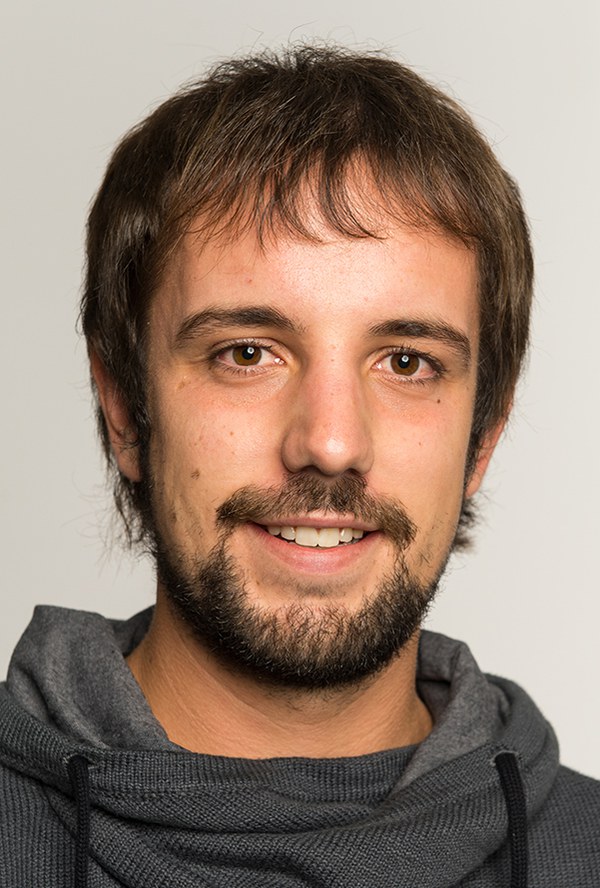
Thorben Schoepe is a Postdoctoral Researcher at the Peter Grünberg Institut (PGI) , specifically within the Neuromorphic Software Ecosystems (PGI-15) department at Forschungszentrum Jülich GmbH. His research focuses on developing robust, low-power, and low-latency event-driven robotic systems for applications in SLAM (Simultaneous Localization and Mapping), object detection, and navigation. Education: B.Sc. in Biomimetics, Westphalian University M.Sc. in Biomechatronics, Bielefeld University PhD in Neuromorphic Sensorimotor Systems, University of Groningen Research Interests: AI-driven robotics Sensing technologies Event-based cameras Hardware-software co-design Neuromorphic computing Low-latency systems
Mürvet Kırcı is an Associate Professor at the Department of Electronics and Communication Engineering, Istanbul Technical University. Her academic journey includes a PhD (1997), MSc (1987), and BSc (1983) in Electronics and Communication Engineering from ITU. She specializes in signal processing, biometrics, embedded systems, and acoustic wave propagation. Her research focuses on biometric authentication, fractional calculus applications, and agricultural monitoring systems. She has contributed to projects involving Petri nets modeling, ear recognition algorithms, and energy-efficient wireless protocols. Education: PhD in Electronics and Communication Engineering, Istanbul Technical University (1997) MSc in Electronics and Communication Engineering, Istanbul Technical University (1987) BSc in Electronics and Communication Engineering, Istanbul Technical University (1983) Research Interests: Dr. Kırcı’s work spans multiple domains including signal processing , embedded systems design , and biometric authentication . She has pioneered methods in fractional-order calculus for data augmentation and developed novel approaches for ear recognition and twin identification in unconstrained environments. Her embedded systems research includes hardware/software co-design for agricultural monitoring systems and energy-efficient sensor networks. Grants & Projects: Led projects on microwave imaging and portable hyperthermia devices for breast cancer treatment. Contributed to TÜBİTAK-funded research on compressed sensing for energy-efficient communication systems. Developed biometric authentication protocols for client-server and IoT networks. Labs & Teams: Active in the Electronics and Communication Engineering Department’s labs, focusing on embedded systems, signal processing, and agricultural robotics. Collaborates with industry partners like Procenne Company on integrated circuit design projects.
Jean-Baptiste Jeannin is an Assistant Professor in the Department of Aerospace Engineering at the University of Michigan — Ann Arbor, leading the MARVL group. He is also affiliated with the departments of Computer Science and Engineering and Robotics. His research focuses on formal verification of cyber-physical systems, logics and semantics of programming languages, and coinductive programming types. He holds a Ph.D. in Computer Science from Cornell University (2013) and a Diplôme d'Ingénieur from École polytechnique (2007), with prior roles at Samsung Research America and Carnegie Mellon University. His research interests include verification of aerospace applications, program logics, and formal methods applied to robotics and distributed systems. Notable work includes formally verified algorithms for collision avoidance, network consensus protocols, and numerical methods. He teaches courses such as AERO 552 (Aerospace Information Systems) and EECS 590 (Advanced Programming Languages). Jeannin's recent publications emphasize formal verification in hybrid systems, rounding error analysis, and hardware-software co-design. His work bridges theoretical foundations with practical applications in autonomous systems, cybersecurity, and computational physics. Collaborations include projects on certified approximations of mathematical functions and verified distributed system protocols.
Tony Geng is an Assistant Professor at the University of Rochester, jointly appointed in the Departments of Electrical and Computer Engineering and Computer Science. He directs the IntelliArch Lab and holds secondary affiliations with the Goergen Institute for Data Science. His research spans computer architecture, generative AI, graph intelligence, and high-performance computing, focusing on sustainable and efficient artificial general intelligence. His work integrates hardware-software co-design for accelerating machine learning workloads, with applications in scientific discovery, fintech, and social media. Recent projects explore dynamical systems for graph learning and diffusion models for scientific simulations. Notable recognitions include multiple DOE and NSF research awards, the Excellence in Graduate Teaching Award, and substantial GPU allocations from NERSC for generative AI research. He actively mentors PhD students and postdocs in sustainable AI development.
Dr. Noor E Karishma Shaik is a Postdoctoral Research Fellow in the Department of Electrical and Electronic Engineering at an institution with the Faculty of Engineering and Information Technology . She leads an AEA-funded project translating her PhD research into a commercial product for non-invasive skin cancer diagnosis using thermal imaging. She holds an honorary appointment at the Peter MacCallum Cancer Centre . Education: PhD in AI-enhanced infrared imaging (University of Melbourne) Masters in Computer Vision (Indian Institute of Technology Kharagpur, funded by ISRO) Research Focus: Developing computer vision solutions for medical imaging, remote sensing, and AI applications. Her work integrates machine learning, nanofabrication, and hardware-software codesign. Notable projects include thermal imaging spectroscopy for cancer diagnosis and remote sensing systems. Awards: CSIRO Scholarship (enabling industrial collaboration as a visiting scientist) Grants & Projects: AEA-funded project (2024–2025) Research grant on thermal imaging spectroscopy for skin cancer Community Engagement: IEEE volunteer, STEM ambassador promoting inclusivity through education. Enjoys AI automation projects using RaspberryPi.
François-Raymond Boyer is an Associate Professor in the Department of Computer Engineering and Software Engineering at Polytechnique Montréal. He holds a B.Sc. and Ph.D. from Université de Montréal and teaches courses in programming and digital audio. His research spans: Computer architecture and VLSI systems Network processing and traffic management Digital audio signal processing Hardware acceleration and optimization He is affiliated with ReSMiQ (Strategic Cluster for Microsystems) and OICRM (Music Research Observatory). Recent publications focus on 5G network processing, modular programming frameworks, and high-speed traffic management architectures, primarily in IEEE Access and IEEE Transactions on VLSI Systems. Professor Boyer has supervised 3 PhD and 6 Master's students, with research topics including network architecture, audio processing, and hardware design. No scientific awards are mentioned in the available records.