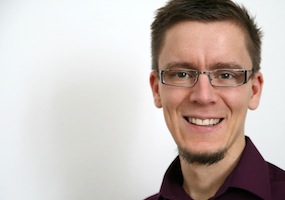
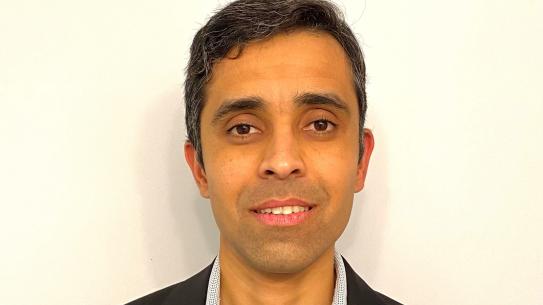
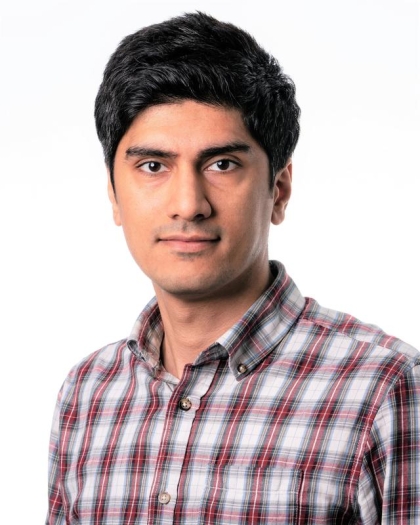
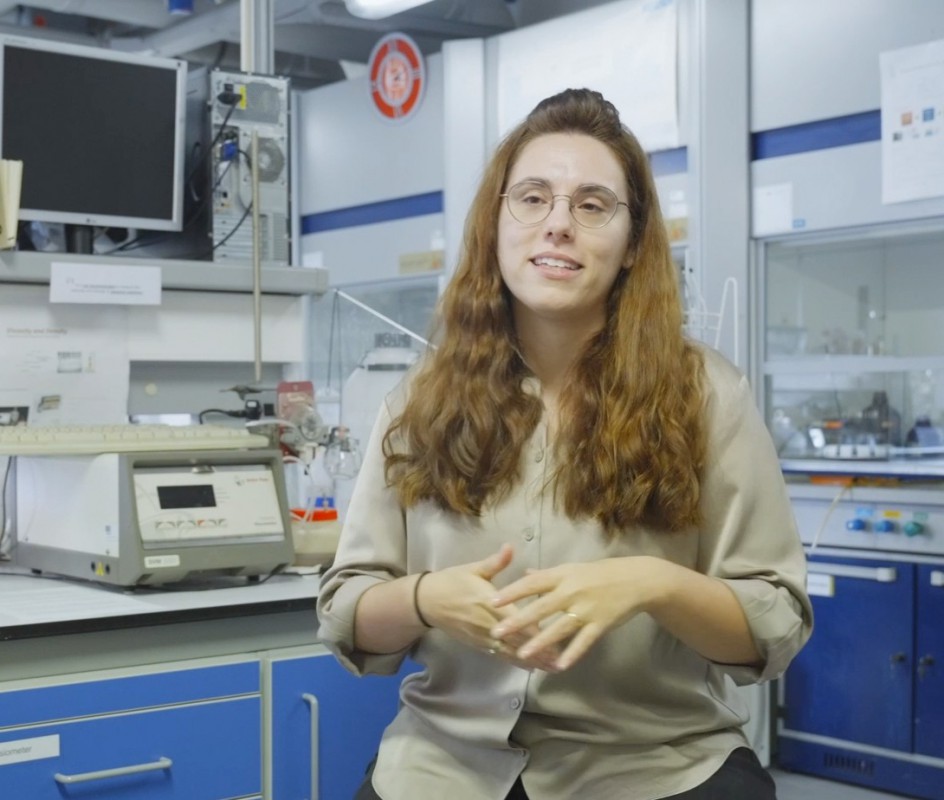
Nirwan Ansari is a Distinguished Professor in the Department of Electrical and Computer Engineering at New Jersey Institute of Technology (NJIT). His research focuses on cutting-edge advancements in 6G networks , wireless charging , machine learning , and Internet of Things (IoT) . He has contributed extensively to AI-driven network optimization and sustainable energy solutions for next-generation communication systems. Ph.D., Electrical Engineering, Purdue University (1988) M.S., Electrical Engineering, University of Michigan-Ann Arbor (1983) B.S., Electrical Engineering, NJIT (1982) His recent work explores AI-native network slicing , UAV-assisted edge computing , and holographic communication . Publications highlight synergies between terrestrial and non-terrestrial networks , digital twin integration, and energy-efficient IoT systems . He serves as an Honorary Chair and contributes to major conferences like IEEE INFOCOM and IWCMC.
Umberto Desideri is a Full Professor of Thermal Machines at the University of Pisa since November 2014, following his tenure as Full Professor at the University of Perugia from 2004 to 2014. He has held leadership roles, including Head of the Department of Engineering at the University of Perugia (2014) and Head of the Department of Energy, Systems, Territory and Construction Engineering at the University of Pisa (2016–2020). He is actively involved in editorial boards, such as the ASME Journal of Fuel Cell Science and Technology (2005–2017), Journal Applied Energy (since 2007, Associate Editor from 2011, Senior Editor since 2022), and Journal Applied Thermal Engineering (since 2013). Additionally, he co-founded two spin-off companies in 2005: Tecnologie per la riduzione delle emissioni engineering srl and Biomasse e nuove tecnologie srl . Desideri obtained his MSc in Mechanical Engineering from the University of Florence in 1988 and his PhD in Energy Engineering from the same university in 1993. His academic career includes roles as Assistant and Associate Professor at the University of Perugia (1992–2004) before becoming a Full Professor there in 2004. His research focuses on renewable energy systems (geothermal, solar, biomass), hydrogen and fuel cell technologies, carbon capture and storage, and energy-efficient buildings. He explores polygeneration systems, sustainable energy storage, and decarbonization strategies for industries like tissue paper production. Recent work emphasizes the integration of renewables with thermal storage and CO2 utilization in circular energy systems. Awards: Fellow of the American Society of Mechanical Engineers (since 1994) Listed in the Top Italian Scientists in Engineering Recognized as a World Top 2% Cited Scientist In advising and grants, he has supervised over 200 Master’s theses and led EU-funded projects such as: H2020 COMPBAT (2020–2024): Computer-aided design for next-gen flow batteries H2020 Regen-by-2 (2020–2027): Multi-energy systems using two-phase fluids LIFE Augia (2020–2023): Sewage oxy-gasification for chemicals production He directed the Fuel Cell Laboratory (2007–2014) and Wind Tunnel (2010–2014) at the University of Perugia. His current work at the University of Pisa’s DESTEC department addresses hydrogen technologies, energy transition, and sustainable systems.
Farid Farrokhi serves as an Associate Professor of Economics at Boston College, maintaining an office in Maloney Hall, room 341. His professional correspondence is facilitated through farid.farrokhi@bc.edu . His academic foundation includes: B.Sc. from Sharif University M.Sc. from Sharif University Ph.D. from Penn State Professor Farrokhi's research bridges International Trade , Spatial Economics , and Environmental Economics , with particular emphasis on trade-induced agricultural transformation, spatial migration patterns, and climate-trade policy interactions. His methodological approach integrates theoretical modeling with empirical analysis of global economic systems. Analysis of his 2019-2025 publications reveals a consistent focus on trade-environment synergies, notably examining deforestation dynamics and climate mitigation through trade policy. Concurrently, his spatial economics work investigates urban wage structures and refugee resettlement networks, while agricultural trade studies explore productivity shifts and food consumption patterns. No scientific awards were documented in the provided materials. The available information does not specify current advisees, grant funding, or research supervision activities. His professional resources include a curriculum vitae and research statement accessible through institutional channels. There is no indication of laboratory affiliations or dedicated research teams within the source documentation.
Dan S. Jurafsky is the Jackson Eli Reynolds Professor in Humanities and Professor of Computer Science at Stanford University. He holds joint appointments in the Department of Linguistics and Department of Computer Science. His academic journey includes a B.A. in Linguistics (UC Berkeley, 1983), Ph.D. in Computer Science (UC Berkeley, 1992), and postdoctoral work at the International Computer Science Institute (Berkeley, 1995-1998). Prior to Stanford, he was on the faculty at the University of Colorado, Boulder (1996-2003). Jurafsky's research bridges computational linguistics, natural language processing, and sociocultural studies. Notable works include The Language of Food (2014) and co-authorship of the seminal textbook Speech and Language Processing (2009, 2022). His work applies NLP to domains like policing interactions, healthcare communication, and historical discourse analysis. His awards include the MacArthur "Genius" Fellowship (2003), American Academy of Arts and Sciences membership (2020), and multiple ACL/IJCAI best paper recognitions. He co-created one of the first MOOCs on NLP with Chris Manning and has advised over 50 students, many of whom won top awards like the Arthur Samuel Thesis Prize. Current projects include studying dialect bias in AI systems, linguistic analysis of police interactions, and ethical foundations of large language models. He leads interdisciplinary teams at Stanford's Center for East Asian Studies and collaborates with researchers in sociology, psychology, and computer science.
Rustam Z. Khaliullin is an Associate Professor in the Department of Chemistry at McGill University. He holds a B.S. from Higher Chemical College RAS (2002), a Ph.D. from the University of California Berkeley (2007), and completed postdoctoral research at ETH Zurich (2008-2011), the University of Zurich (2011-2012), and the Swiss National Science Foundation Fellowship (2012-2015). His research focuses on theoretical and computational chemistry, including quantum chemistry method development, scientific software implementation (Q-Chem and CP2K), and applications in materials, chemical physics, and green organic reactions. He teaches CHEM 505: Computer Modeling of Molecules and Materials. Research interests span: 1) novel quantum chemistry methods exploiting electron locality principles, 2) advancing computational tools for molecular and materials modeling, and 3) interdisciplinary studies of chemical processes in solids, solutions, and surfaces. Collaborations emphasize green chemistry and microscopic mechanism discovery. He has received prestigious funding including the Swiss National Science Foundation Fellowship. His contributions to open-source software (Q-Chem/CP2K) enable global scientific innovation. Current teaching emphasizes computational methods for graduate/advanced undergraduate students, covering electronic structure and statistical mechanics simulations.
Dr. Leonie Baumann is an Assistant Professor in the Department of Economics at McGill University, specializing in Economic Theory, Networks, Mechanism Design, and Game Theory. She holds a Ph.D. (summa cum laude) and M.Sc. in Economics from the University of Hamburg, and dual B.A. degrees from the University of Siegen. Currently on maternity leave, Dr. Baumann previously served as a Postdoctoral Research Associate at the University of Cambridge. Her research explores social interactions in microeconomic theory, with a focus on network formation dynamics, strategic evidence disclosure, and robust implementation mechanisms. Recent work examines how network structures influence economic decision-making and resource allocation. Dr. Baumann's publications demonstrate consistent focus on network economics and game-theoretic modeling, with emerging applications in discrimination mechanisms and evidence disclosure. Her methodological approaches combine theoretical rigor with computational innovations. Awards & Recognition: Vice-Chancellor's Innovation Award (2020) Econometric Society Travel Grant (2015) Multiple research grants including SSHRC and FQRSC funding Supervision & Service: Currently advising 4 doctoral students on topics ranging from biosolvent characterization to indoor air quality Active editorial board member for Journal of Mathematical Economics Organizes international conferences on economic theory
Barry C. Thompson is a Professor of Chemistry and Chair of the Department of Chemistry at the University of Southern California (USC), affiliated with the Loker Hydrocarbon Research Institute. He holds a Ph.D. from the University of Florida (2005) and a B.S. from the University of Rio Grande (2000). His research focuses on designing electroactive organic polymers, particularly for polymer-based solar cells and sustainable materials. Key projects include advancing Direct Arylation Polymerization (DArP) for conjugated polymers and exploring ternary blend photovoltaics. Thompson leads a research group with active grants from NSF, DOE, and industry. His lab includes advanced facilities like a nitrogen glove box, solar simulators, and analytical instruments. He has mentored numerous Ph.D. students and researchers, contributing over 120 peer-reviewed publications. Notable contributions include innovations in polymer synthesis, battery binders, and device engineering for renewable energy applications.
Sukhpal Singh Gill is an Assistant Professor (Lecturer) in Cloud Computing at the School of Electronic Engineering and Computer Science, Queen Mary University of London (UK). He holds a PhD, ME, and BE in Computer Science and is a Fellow of the Higher Education Academy (FHEA). His roles include Programme Director for MSc Advanced Computer Science and MSc Business Analytics, as well as Deputy Chair of the Main Misconduct Panel. He leads the GillNet Research Lab and is the Editor-in-Chief of the International Journal of Applied Evolutionary Computation (IJAEC) , with editorial roles in IEEE IoT, Nature Scientific Reports, and other journals. Education: PhD in Computer Science ME in Computer Science BE in Engineering Research Interests: Focus on Cloud Computing, Edge AI, IoT, Energy Efficiency, and Quantum Computing. His work bridges theoretical advancements with practical applications in healthcare, smart cities, and sustainable computing. Notable projects include AI-driven frameworks for carbon-neutral cloud resource management, blockchain-empowered healthcare systems, and quantum cloud computing models. Teaching: Teaches modules such as Cloud Computing (Postgraduate), Fundamentals of Web Technology (Undergraduate), and Semi-structured Data and Advanced Data Modelling (Postgraduate/Undergraduate). He emphasizes inclusive curriculum design and innovative teaching tools like the Q-Module-Bot for AI-supported learning. Awards & Grants: Recipient of 12,500+ citations and an H-index of 54 (Google Scholar). Secured grants for projects on edge AI, federated learning, and sustainable cloud computing. Winner of awards including the IEEE IT Professional Magazine Outstanding Reviewer Award (2024) and Elsevier's Best Paper Award (2023). Labs & Teams: Leads the GillNet Research Lab , focusing on cutting-edge research in cloud-edge computing, AI, and quantum systems. Collaborates with industry partners on projects like HealthEdgeAI and AIoT-driven smart healthcare systems .
Dr. Sourav Sengupta is an Assistant Professor (Lecturer) in Operations Management at Queen Mary University of London's Department of Business Analytics and Applied Economics, part of the School of Business and Management. He is a member of the Centre for Globalisation Research (CGR). Prior to this role, he was a postdoctoral fellow at the Norwegian University of Science and Technology. His academic credentials include a dual Ph.D. in Operations Management from the Indian Institute of Technology Bombay and Monash University, an M.Tech. in Industrial Engineering & Management, and a B.Tech. in Information Technology. His research focuses on the intersection of supply chain planning, Industry 4.0 technologies, and lean principles, with special attention to digital supply chain twins and sustainability. He teaches courses such as BUS366 (Business Simulations) and BUS367 (Global Supply Chain Analytics). His work has been published in journals like the International Journal of Operations & Production Management, Computers in Industry, and International Journal of Production Research. Dr. Sengupta seeks doctoral candidates interested in adaptable/sustainable supply chain planning, service triads, lean-digital paradoxes, healthcare operations, and digital supply chain twins. He actively contributes to academic discourse through empirical and qualitative research methodologies.
Dr. Wanja Hofer is a former research staff member at the Department of Computer Science 4 (Distributed Systems and Operating Systems) at Friedrich-Alexander-Universität Erlangen-Nürnberg (FAU). She specialized in embedded systems, real-time operating systems, and aspect-oriented programming. Her research focused on optimizing hardware-centric systems like Sloth and CiAO, addressing challenges in interrupt handling, scheduling, and software product line variability. Her academic journey includes a PhD in 2014 titled Sloth: The Virtue and Vice of Latency Hiding in Hardware-Centric Operating Systems . She contributed to key projects such as Sloth (time-triggered RTOS) and CiAO (aspect-oriented OS family), emphasizing scalability and configurability for automotive and embedded domains. Hofer also held roles like Web chair for EuroSys 2009 and co-maintained the EuroSys Research Directory. Her teaching involved Basics of Systems Programming in C and OS-related seminars. She advised over 15 graduate students on topics ranging from MPU-based task isolation to filesystem-level variability management. Notable contributions include hardware-accelerated interrupt handling, aspect-oriented OS design, and embedded system energy optimization. Hofer currently works at Brose Fahrzeugteile, applying her expertise in embedded systems and real-time computing to automotive technologies. Her work bridges academic innovation with industrial applications, particularly in safety-critical and resource-constrained environments.
Dr. Dharik Mallapragada is an Assistant Professor in the Department of Chemical and Biomolecular Engineering at NYU Tandon School of Engineering, affiliated with the Center for Advanced Technology in Telecommunications (CATT). His research focuses on mathematical modeling to analyze low-carbon technologies and their integration into energy systems, emphasizing decarbonization pathways for developed and developing economies. He holds a B.Tech from IIT Madras and a Ph.D. in Chemical Engineering from Purdue University. Key research areas include optimizing energy infrastructure planning, electricity market designs for decarbonization, and techno-economic assessments of hydrogen production and storage. Recent work explores repurposing coal plants into thermal storage, evaluating rate structures for renewables-dominant grids, and analyzing India’s energy transition challenges. Mallapragada’s work bridges computational techniques like optimization modeling and data analytics with real-world policy and geographical contexts. Publications highlight infrastructure synergies between power and gas systems, hydrogen production pathways, and electrification barriers in heavy industries. His research underscores the importance of flexible energy systems and equitable policy frameworks, particularly for emerging economies. The Sustainable Energy Transitions (SET) group he leads collaborates globally to address climate mitigation challenges through analytical tools and cross-sectoral solutions.
Dr. Ahmad Hemmati is an Associate Professor at the Department of Informatics, University of Bergen. His research focuses on optimization models and algorithms for logistics, transportation, and maritime systems. He holds a PhD from the Norwegian University of Science and Technology (NTNU) in 2015. His work addresses challenges in inventory routing, drone delivery systems, and combinatorial optimization using methods like reinforcement learning and metaheuristics. Key contributions include models for maritime cargo optimization, synchronized truck-drone delivery, and feeder network design. He has collaborated internationally with institutions like MIT and the University of Antwerp. His findings are published in journals such as European Journal of Operational Research and Computers & Operations Research , with a focus on practical solutions for industrial logistics problems. Education: PhD in Operations Research (NTNU, 2015). Research Interests: Maritime Logistics, Inventory Routing Problems, Combinatorial Optimization, Drone Delivery Systems, and Algorithm Design. His work bridges theoretical models with real-world applications in transportation networks and sustainability. Publications Trends: Recent articles emphasize deep reinforcement learning applications and maritime environmental monitoring. Earlier work includes foundational contributions to tramp shipping and VMI service routing. His methodologies often blend heuristic algorithms with mathematical programming. Grants/Awards: No specific awards mentioned, but his work has been funded by the Research Council of Norway and industry collaborations.
Dr. John J. Fitzpatrick is a Senior Lecturer in Process & Chemical Engineering at University College Cork (UCC) since 2008. He holds a PhD in Agricultural Engineering (Bioprocess Engineering) from Texas A&M University and has extensive industry experience, including roles at the National Dairy Products Research Centre and University College Dublin. His research focuses on Particle and Powder Technology, Sustainability, and Bioprocess Engineering, with notable contributions to dairy powder breakage mechanisms, sustainable process design, and engineering education reform. Education: PhD, Agricultural Engineering (Texas A&M, 1992) MSc, Food Engineering (University of Massachusetts, 1988) MSc, Teaching & Learning in Higher Education (UCC, 2008) Additional qualifications in Environmental Management and Sustainability. Research Interests: His work spans particle technology (food/dairy powders), sustainable energy systems, bioreactor optimization, and integrating ecological economics into engineering curricula. Recent projects include modeling oxygen transfer in bioreactors and analyzing carbon footprints of energy systems. Dr. Fitzpatrick has secured over €300k in research grants, including EU-funded projects on powder technology and Teagasc-supported studies on infant milk formula. He received the President’s Award for Excellence in Teaching (2006/7) and pioneered sustainability-focused educational initiatives at UCC. His 150+ peer-reviewed publications highlight interdisciplinary approaches to engineering challenges, emphasizing real-world applications and environmental stewardship. Grants & Awards: Walsh Fellowship (2018–2022) EU Research Training Network BIOPOWDERS (2004–2008) Teagasc-funded project on dairy powder breakage (2018–2022) Labs/Teams: Leads the Particle and Powder Science group at UCC, collaborating with industry partners like Teagasc and international universities. Active in curriculum development for sustainable engineering education programs.
Ana Maria da Conceição Ferreira Takahashi is a Junior Researcher at the Aveiro Institute of Materials (CICECO), University of Aveiro, Portugal. She holds a PhD in Chemical Engineering (2018) and has conducted international research at institutions in Brazil, Japan, Germany, and Portugal. Her work focuses on sustainable processes using eco-friendly solvents for biomass valorization and plastic waste recycling, integrating green chemistry and biotechnology within circular economy frameworks. She leads the FCT-funded project GreenPATH, developing enzymatic depolymerization strategies for polymer recycling. With 43 peer-reviewed publications (h-index 20), she collaborates with industries like LEGO and Volvo in EU initiatives. She has supervised over 25 students and received the CICECO Young Researcher Award (2024). Education: BSc (2011), MSc (2013), and PhD (2018) in Chemical Engineering from University of Aveiro. Postdoctoral work included TUM University Foundation Fellowship (Germany) and JSPS Fellowship (Japan). Research interests emphasize bio-based solvents (ionic liquids, DESs), enzyme-assisted depolymerization, and computational tools like COSMO-RS for solvent selection. Projects include plastic additive removal, biomass extraction, and industrial collaboration for sustainable technologies.
Bojan Popov is a Professor in the Department of Mathematics at Texas A&M University, part of the College of Arts & Sciences. His research focuses on numerical analysis, nonlinear partial differential equations, and approximation theory, with a particular emphasis on invariant domain preserving schemes and hyperbolic conservation laws. He holds a Ph.D. from the University of South Carolina (1999) and an M.S. from the University of Sofia (1992). Popov has led or co-led numerous grants from agencies like NSF, DOD, and DOE, totaling over $30 million. He has advised four Ph.D. students and organized major conferences, including the 2007 'Approximation and Learning in High Dimensions' and the 2008 'Nonlinear Approximation Techniques Using L1'. His work bridges numerical methods with applications in fluid dynamics, materials science, and high-performance computing. Recent research includes invariant domain preserving techniques for hyperbolic systems, entropy viscosity methods, and robust finite element approximations. He teaches advanced courses such as Hyperbolic Conservation Laws (Math 638) and Linear Algebra (Math 304).