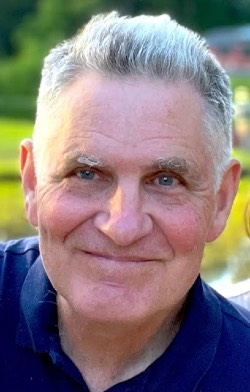
Robert Laubacher is a Research Fellow at the MIT Center for Collective Intelligence within the Sloan School of Management , focusing on how technological innovations like generative AI and large language models are reshaping organizational practices, work structures, and social patterns. Education: B.A. in American Studies, Northwestern University M.A., Doctoral Coursework in Modern History, Harvard University His research explores: Developing ontologies for work activities inspired by biological taxonomy Enhancing human creativity through AI collaboration frameworks Building collective intelligence systems for global challenges like climate change and sustainable development Identifying foundational elements of collective intelligence Historical analysis of IT's impact on employment relationships Recent publications focus on human-AI co-creation , crowdsourced problem-solving , and organizational adaptation to digital transformation. His work has been featured in Harvard Business Review , Sloan Management Review , and ACM conference proceedings.
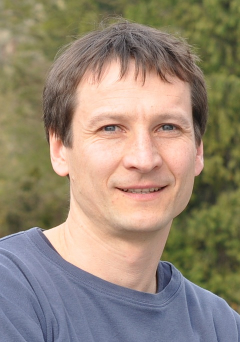
Dr. Sarah Wolf serves as Head of the Junior Research Group 'Mathematics for Sustainability Transitions' at Free University of Berlin's Department of Mathematics and Computer Science and as a Senior Researcher and Board Member at the Global Climate Forum (GCF). Her dual affiliation bridges rigorous mathematical modeling with real-world sustainability policy, focusing on complex socio-ecological systems through an interdisciplinary lens since joining GCF's Green Growth initiative in 2012. Wolf earned her PhD in Mathematics from Freie Universität Berlin in 2010 with the thesis 'From Vulnerability Formalization to Finitely Additive Probability Monads,' developed during interdisciplinary work at the Potsdam Institute for Climate Impact Research. Her academic foundation combines pure mathematics with applied climate impact research, establishing her unique approach to formalizing sustainability concepts. Her research centers on agent-based modeling of socio-technical systems, with core expertise in sustainability transitions , green growth mechanics , and sustainable mobility . She develops mathematical frameworks to clarify vulnerability concepts while embedding simulations in stakeholder dialogues through innovations like the 'Decision Theatre Triangle.' This work uniquely positions mathematics as both analytical tool and communication medium for climate policy. Analysis of her 15 most recent publications reveals an evolutionary trajectory from foundational vulnerability formalization (2009-2012) toward applied stakeholder-integrated modeling (2021-2023). Her work consistently bridges mathematical rigor with policy relevance, showing increasing emphasis on participatory approaches while maintaining computational sophistication in agent-based systems. No scientific awards are documented in the source material, though her leadership in the MATH+ junior research group indicates competitive funding attainment. As group head, she directs research strategy and likely mentors junior researchers, though no formal student advisees are listed. Wolf leads the 'Mathematics for Sustainability Transitions' junior research group within FU Berlin's Biocomputing Group, collaborating with institutions like the Potsdam Institute. Her team develops computational frameworks for green growth transitions, emphasizing stakeholder co-creation through platforms like the Decision Theatre while maintaining strong ties to GCF's global policy networks.
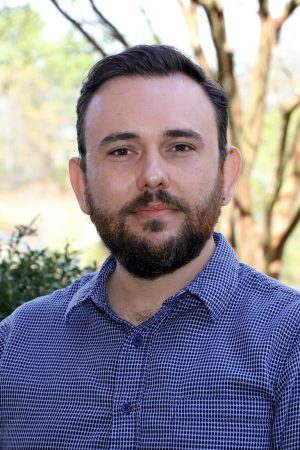
Daniel Baum is a Research Professor and Head of the Visual Data Analysis research group at the Zuse Institute Berlin (ZIB), which is affiliated with Freie Universität Berlin. His work spans across scientific visualization, computational biology, and image analysis, with a particular focus on developing methods for analyzing complex biological structures and neural circuits. He is actively involved in multiple interdisciplinary research projects including HFSP Chitons, Geometric Learning for Single-Cell RNA Velocity Modeling, and RobustCircuit. Dr. Baum's research interests center on visual and data-centric computing approaches to solve complex problems in biology and medicine. His work bridges the gap between computational methods and biological applications, with significant contributions to cryo-electron tomography analysis, neural circuit mapping, and geometric morphometrics. He develops innovative algorithms for 3D reconstruction, image segmentation, and visualization of biological structures, from molecular to organismal scales. His publication record demonstrates consistent contributions to visualization techniques applied to biological problems, with recent work focusing on neural circuit analysis in zebrafish and Drosophila, biomechanical studies of animal structures, and advanced methods for analyzing ancient artifacts. The research shows a clear trajectory toward increasingly sophisticated multimodal data integration and machine learning approaches. Dr. Baum leads a productive research group with several key collaborators who frequently appear as co-authors on his publications, indicating a strong mentoring relationship. His projects involve substantial funding from various sources supporting interdisciplinary collaborations across biology, computer science, and engineering. His laboratory at ZIB focuses on visual data analysis for complex biological systems, with particular strength in developing computational methods for neuroscience applications and biomaterial analysis. The group maintains strong collaborations with multiple institutions working on cutting-edge imaging technologies and biological model systems.
Dr. Denis Jacob Machado is an Assistant Professor in the Department of Bioinformatics and Genomics at UNC Charlotte and a key member of the CIPHER Center. Starting in August 2022, he established the Phyloinformatics Lab, focusing on computational intelligence and phylogenetics to address challenges in One Health through multi-omics integration. Research areas: Pathogen evolution, zoonotic disease risks, and biorepository data solutions Labs: Phyloinformatics Lab (CIPHER Center) His work intersects computational biology, evolutionary frameworks, and public health, with additional service roles in campus safety (Green Dot strategy) and diversity advocacy as part of UNC Charlotte’s Latinx/Hispanic Faculty and Staff Caucus. Awards: Willi Hennig Society Fellow (2024)
Paul Johnson, Ph.D. is a Professor in the Biology Department at the University of North Georgia, specifically within the College of Health and Natural Sciences. He maintains an office in the Health and Natural Sciences building, room 435, in Dahlonega. Dr. Johnson teaches several courses including Microbiology for Allied Health Professions, Genetics, Food Microbiology (Study Abroad), Environmental Microbiology, and General Microbiology. Dr. Johnson earned his Ph.D. in Microbiology and Molecular Genetics from Emory University in 2010 and his B.S. in Biology from North Georgia College & State University in 2002. Following his doctoral studies, he completed a Postdoctoral Fellowship at Emory University from 2010-2012. Dr. Johnson's research focuses on understanding bacterial mechanisms for evading antimicrobial agents, specifically differentiating between antibiotic resistance (heritable genetic mechanisms) and antibiotic tolerance/persistence (survival of genetically identical subpopulations). His work primarily utilizes two model organisms: N. gonorrhoeae and S. aureus . This research has important implications for developing more effective antimicrobial therapies and understanding treatment failures. Dr. Johnson has made significant contributions to understanding efflux pumps, gene regulation in pathogenic bacteria, and the molecular mechanisms underlying antibiotic resistance. Analysis of Dr. Johnson's publication record reveals a consistent focus on antimicrobial resistance mechanisms, particularly in Neisseria gonorrhoeae and Staphylococcus aureus . His work spans molecular genetics, bacterial physiology, and the clinical implications of resistance mechanisms. Over time, his research has expanded from basic mechanisms of efflux pumps to broader questions about bacterial persistence and the evolutionary dynamics of resistance development. The interdisciplinary nature of his work connects microbiology, molecular genetics, and clinical medicine. Dr. Johnson serves as an advisor for Biology and Pre-Medicine students at UNG. His expertise in microbiology and antimicrobial resistance informs both his research and teaching, creating a strong connection between his scholarly work and classroom instruction. While specific grant information isn't provided in the available materials, his productive publication record suggests successful research funding. Based on his research focus on N. gonorrhoeae and S. aureus , Dr. Johnson likely maintains laboratory facilities for bacterial culture, genetic manipulation, and antimicrobial susceptibility testing. His work on microbial population dynamics suggests sophisticated experimental approaches to studying bacterial communities and their responses to antimicrobial challenges.
Maryam Imani is an Associate Professor of Water Systems Engineering at Anglia Ruskin University's School of Engineering and the Built Environment. As a Chartered Civil Engineer (CEng) and Fellow of the Higher Education Academy (FHEA), she specializes in water infrastructure resilience, sustainable drainage systems (SuDS), and computational modeling techniques. BEng (Hons) Civil Engineering, 2001 MEng Water Systems Engineering, 2006 PhD Water Systems Engineering, University of Exeter, 2012 PG Cert in Learning and Teaching in Higher Education, Anglia Ruskin University, 2016 Her research focuses on resilience modeling for water infrastructure, machine learning applications in water systems, and climate adaptation strategies . She leads projects addressing urban wastewater resilience, SuDS implementation in developing countries, and interdependent infrastructure systems. Maryam's work demonstrates a strong emphasis on multi-objective optimization and decision support systems for sustainable water management. Her recent publications explore challenges in Brazil, India, and the UK, integrating climate projections with urban planning. Exeter Research Scholarship (ERS) Fellow of the Higher Education Academy (FHEA) She contributes to major projects like Safe&SuRe water management and RESoURce@Brandia , securing grants from UKRI-GCRF, NERC, and EPSRC. Maryam collaborates with institutions across the UK, Brazil, and the US, including the University of Utah.
Raul Giraldez Rojo is a Professor at the University of Pablo de Olavide in Seville, Spain, working in the Department of Sports and Information Technology within the area of Computer Languages and Systems. He is affiliated with the DASE (Data Analytics Science & Engineering) research group and contributes to PhD programs in Engineering, Data Science, and Bioinformatics. His research interests focus on computer science with specialization in machine learning, evolutionary algorithms, and data analytics. Dr. Giraldez Rojo has made significant contributions to supervised learning techniques, clustering algorithms, and genetic programming applications. His work bridges theoretical computer science with practical applications in bioinformatics and data mining. His publication record demonstrates expertise in developing algorithms for data analysis, particularly in biclustering methods for expression data and supervised clustering techniques. His research shows a consistent focus on improving efficiency and effectiveness of computational methods for handling complex datasets. Dr. Giraldez Rojo collaborates extensively with researchers including Jesús Salvador Aguilar-Ruiz and José Cristobal Riquelme Santos, indicating strong research partnerships within the Spanish academic community specializing in computational intelligence.
Domingo Savio Rodríguez Baena is a Professor at Pablo de Olavide University, affiliated with the Department of Computer Languages and Systems. His research focuses on data mining, bioinformatics, and computational biology, with a particular emphasis on biclustering algorithms, gene co-expression networks, and high-performance computing applications. PhD in Engineering, Data Science, and Bioinformatics (2012) from Pablo de Olavide University His work spans interdisciplinary domains, including recommender systems , livestock behavior analysis , and biological data interpretation . Recent articles highlight his contributions to multi-GPU optimization , ensemble learning , and historical database construction . Key collaborations include the DATAi Intelligent Data Analysis and DASE Data Analytics Science & Engineering research groups. He has developed tools like the CyEnGNet–App for gene network visualization and BIGO for gene enrichment analysis. Contact: dsrodbae@upo.es
Prof. Dr. Joel Zindel is a faculty member at ETH Zurich's Institute of Molecular Health Sciences, leading a translational research group focused on tissue repair and scarring. He previously established his lab at the University of Bern (2023) before migrating to ETH Zürich in August 2025. His work bridges clinical surgery and immunology, targeting post-surgical complications like adhesions and fibrosis. Education: Medical Degree & MD, University of Bern PhD in Immunology, University of Bern SNSF-sponsored Research Fellowship, Canada Research Focus: The Zindel Lab investigates three key areas: (i) peritoneal macrophage biology in injury detection, (ii) mesothelial-to-mesenchymal transition in scarring, and (iii) foreign body responses in body cavities. Using intravital microscopy and clinical cohort studies, the lab explores immune-mesothelial interactions and druggable pathways. Publication Trends: Recent work emphasizes macrophage roles in regeneration, EGFR signaling in fibrosis, and technological innovations in surgical skill assessment. Key methodologies include spatial transcriptomics and multiphoton imaging. Scientific Awards: Max Cloëtta Research Fellowship SNSF Starting Grant Advising & Collaborations: Leads a team including PhD students (John Li Flores Alvarez, Agnes Huber, Brooke Slade) and postdoc Tea Kocijan. Collaborates with (bio)material engineers like Prof. Inge Herrmann and Prof. Mark Tibbitt.
Irene A. Chen is a Professor in the Department of Biochemistry at the University of California, Los Angeles (UCLA) , within the Henry Samueli School of Engineering and Applied Science (SEAS) . She leads the Chen Laboratory , which focuses on biomolecular design and evolution in nanoscale systems , including protocells and bacteriophages . Her research spans synthetic biology , origin of life , RNA evolution , phage engineering , and antimicrobial applications . Her lab uses in vitro evolution , high-throughput sequencing , and nanomaterial-bioconjugation to explore how life-like systems can be constructed and controlled. Research Interests: Biomolecular design and evolution in nanoscale systems Protocell formation and RNA encapsulation Bacteriophage engineering for antimicrobial therapy Fitness landscapes in RNA evolution Phage-nanoparticle conjugates for imaging and therapy Recent Work Trends: Her recent publications (2024–2025) reflect a strong focus on phage-based therapeutics , protocell systems , and RNA evolution . Many papers explore antimicrobial applications using engineered phages, nanoparticle conjugates , and RNA catalysis in prebiotic contexts. Scientific Awards: No specific awards are listed in the provided text. Grants & Funding: While no specific grant details are provided, her extensive publication record and lab operations suggest active funding from NIH, NSF, or other biomedical engineering and synthetic biology programs. Laboratory & Team: The Chen Laboratory is located at UCLA SEAS and focuses on interdisciplinary research combining chemistry , biology , and engineering to address fundamental questions in origin of life and antimicrobial innovation .
Luiza Aparecido is an Assistant Professor at the University of Utah within the School of Biological Sciences . Her research focuses on plant physiological responses to climate change, particularly water use strategies and carbon assimilation across tropical, temperate, and arid ecosystems. She leads the Aparecido Lab (https://www.aparecidolab.com/), emphasizing climate change awareness through outreach initiatives. Research Interests : Plant ecophysiology, ecohydrology, climate change impacts, transpiration dynamics, leaf thermoregulation, and water-carbon cycle modeling. Recent Publication Trends : Her work spans leaf venation evolution (2025), heatwave survival mechanisms (2024), and hydraulic constraints in desert trees (2023). Key subfields include thermal adaptation, hydraulic efficiency, and integrating plant physiology into land-surface models. Outreach & Education : She develops climate change education materials and investigates plant-water interactions in urban heat-stressed environments.
Dr. P.M. Mohite is a Professor at the Department of Aerospace Engineering , Indian Institute of Technology Kanpur , with a career spanning over two decades in composite materials research. He holds a PhD in Aerospace Engineering from IIT Kanpur (2007) and has been a Visiting Assistant Professor (2008-2009) and later Assistant , Associate , and Professor (2019-present) at IIT Kanpur. Research Interests include: Advanced composite structures analysis Micromechanics and damage modeling Finite element adaptive methods Metal plasticity and polymer composites Aerostructural optimization Key Publications focus on damage mechanics, structural optimization, and micromechanical characterization, with recent works on evolutionary algorithm-based composite design and boundary layer effects in laminates. Scientific Awards received: Best Student Award (B.E. Mechanical, 1998) AIAA Students Paper Contest Finalist (2006) Teaching Contributions include core courses like Composite Materials and Finite Element Methods , alongside advanced postgraduate topics in aerospace structural analysis. Advising has impacted 30+ M.Tech/Ph.D. students, including international collaborations with Université de Biskra (Algeria) and Ecole Centrale de Nantes (France).
Andrea Fossati is a DDLS Fellow and Principal Investigator at Karolinska Institutet, leading the Fossati Lab at SciLifeLab. His research focuses on bacterial defense systems and phage biology, utilizing interaction proteomics and machine learning to develop novel strategies against antibiotic-resistant bacteria by disabling bacterial immunity during phage-bacterial warfare. Dr. Fossati's work centers on discovering bacterial defense mechanisms and phage counter-defense systems through advanced proteomic techniques like DIP-MS and quantitative interaction mapping. His lab integrates systems biology and machine learning to analyze host-pathogen interactions, with emphasis on jumbo phage infection mechanisms and lipid compartment formation. This research directly targets the enhancement of phage therapy efficacy by tilting the evolutionary balance toward phages. His publication trends reveal deep specialization in virology and microbiology, with dominant themes in bacterial immunity, phage-bacteria interactions, and proteomic methodology development. Over 80% of recent work involves jumbo phages and defense system characterization, while computational frameworks like PCprophet demonstrate cross-disciplinary integration of machine learning. Scientific awards: DDLS Fellow Dr. Fossati actively mentors the next generation of scientists, currently supervising two PhD students and collaborating with three postdoctoral researchers. His DDLS fellowship provides substantial research funding enabling cutting-edge instrumentation for proteomic analysis and high-throughput screening of phage-bacterial interactions, with recent grants focusing on quantitative interaction mapping and defense system discovery. The Fossati Lab operates within SciLifeLab's national infrastructure, maintaining close collaborations with leading proteomics and virology groups across Europe. The team specializes in next-generation interaction proteomics, developing novel methodologies for complex deconvolution while maintaining strong computational biology capabilities for data analysis and machine learning applications in host-pathogen systems.
Anastasiia Enne is a researcher at the Faculty of Biology , Department of Theoretical Biology , at the University of Bielefeld . She is affiliated with the Collaborative Research Centre (SFB)/Transregio 212 project NC³, specifically subproject D03. Her research intersects Theoretical Biology with Behavioral Ecology , Evolutionary Biology , and Niche Construction , focusing on individualization across ecological and evolutionary processes. Anastasiia Enne can be contacted via email at anastasiia.enne@uni-bielefeld.de or by phone at +49 521 106-4832. Her office is located in room UHG W4-110 .
Prof. Verena Hafner is a Professor at the Institute of Computer Science within the Faculty of Mathematics and Natural Sciences at Humboldt University of Berlin. She leads the Adaptive Systems group, focusing on interdisciplinary research at the intersection of robotics, AI, and cognitive science. Her work emphasizes human-robot interaction, adaptive learning mechanisms, and embodied cognition. Her research explores: Design and impact of socially interactive robots in educational and cognitive contexts Trust dynamics and transparency in human-robot relationships Development of bio-inspired AI models and sensorimotor learning systems Philosophical and ethical dimensions of artificial consciousness and agency Analysis of her recent publications (2023-2025) reveals strong emphasis on educational robotics, cognitive modeling, and humanoid robot design. Key trends include multimodal learning architectures, trust calibration in HRI, and biologically-inspired AI frameworks. Her work consistently bridges theoretical AI with applied human-centered experimentation. She supervises graduate students including Michael Piechotta (doctoral candidate) and leads the Adaptive Systems laboratory investigating lifelong learning in artificial agents.