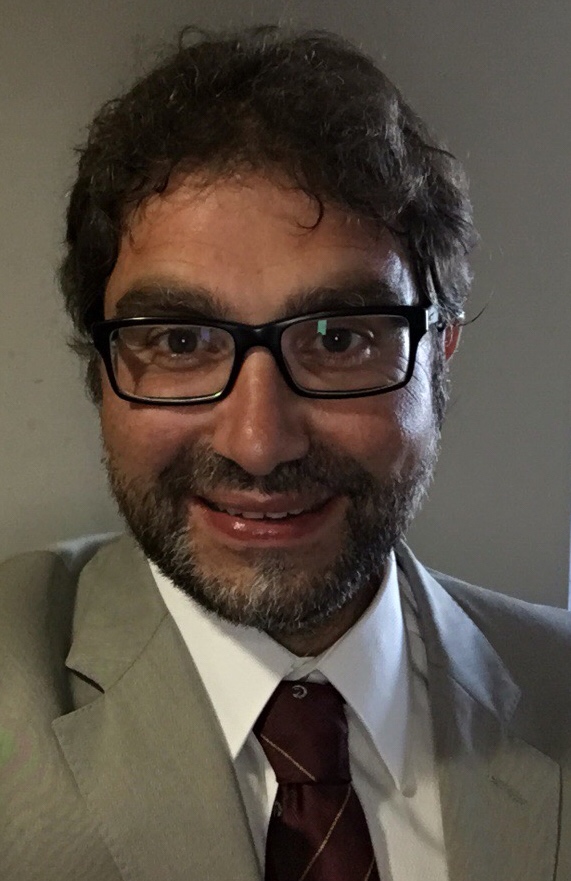
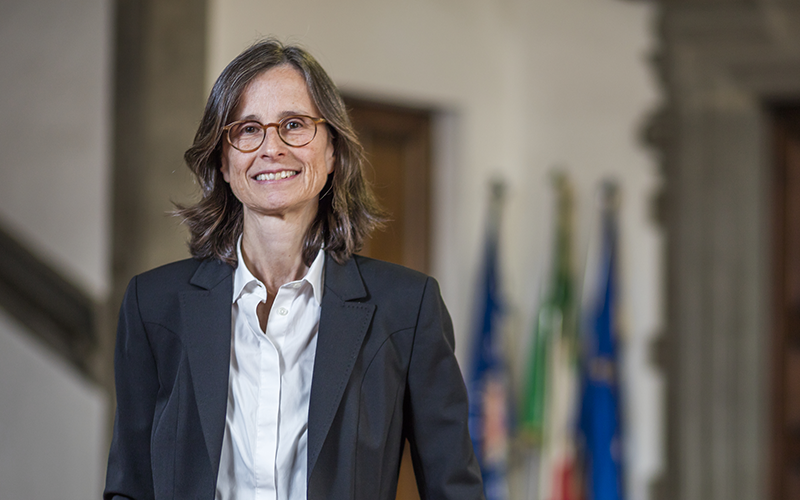
Maurizio Rebaudengo is a Full Professor at the Department of Control and Computer Science (DAUIN) of the Polytechnic University of Turin. He is a member of the PIC4SeR Interdepartmental Center for Service Robotics and holds expertise in embedded systems, fault tolerance, and sensor network applications. Research Interests: Embedded systems, fault tolerance, precision agriculture, RFID technology, wireless sensor networks, and system dependability Scientific Awards: Ramamoorthy Best Paper Award (1997) Leadership Roles: Program Chair for the 4th International EURASIP Workshop on RFID, Committee Member for Public Administration Agreements (2020-2024) Projects: Scientific Director for HONEY (Hybrid ONline tEchnologY for particle therapy), FDM (Food Digital Monitoring), IDEM (Internet of Data for Environmental Monitoring), and OPLON (Healthy Longevity Opportunities). Teaching: Course lecturer for Electronic Calculators, Computer Science, Systems Programming, and Cybersecurity at both undergraduate and postgraduate levels. His work spans IoT applications in agriculture and healthcare, focusing on low-cost sensor networks , RFID-based traceability , and cyber-physical system resilience . Recent publications emphasize particulate matter monitoring and secure communication protocols in wireless environments.
Giordano Da Lozzo is an Associate Professor at Roma Tre University in Rome, Italy, where he is part of the Graph Algorithms and Network Visualization research group. His academic career spans theoretical computer science with a focus on practical applications in graph theory and network analysis. His educational background includes: Associate Professor Habilitation (09/H1 - Information Processing Systems), from 2022 to 2031, awarded by the Italian Ministry of Education, Universities and Research (MIUR) PhD in Computer Science and Automation Engineering, 2015, from Roma Tre University MEng in Computer Science (110/110 cum laude), 2010, from Roma Tre University Da Lozzo's research lies at the intersection of algorithm engineering and computational complexity, with particular focus on graph and network analysis and visualization. His work spans several interconnected fields including graph drawing, computational geometry, topology, combinatorics, parameterized complexity, and more recently quantum computing applications to graph problems. His research combines theoretical rigor with practical implementation considerations, aiming to develop efficient algorithms for real-world network analysis challenges. His publication record shows a consistent focus on graph drawing problems, with recent work expanding into quantum approaches to graph visualization. His research demonstrates progression from foundational graph theory problems toward more complex constrained visualization scenarios, often addressing NP-hard problems with novel algorithmic approaches. His scientific achievements have been recognized with several prestigious awards: Best Student Paper Award at the 18th International Conference and Workshops on Algorithms and Computation (WALCOM 2024) Best Paper Award at the 14th International Symposium on Parameterized and Exact Computation (IPEC 2019) Best Paper Award at the 42nd International Conference on Current Trends in Theory and Practice of Computer (SOFSEM 2016) Best Poster Award at the 23rd International Symposium on Graph Drawing & Network Visualization (GD 2015) Best MCS Thesis Award by Confindustria Servizi Innovativi e Tecnologici–AICA (CSIT 2011) Da Lozzo actively mentors PhD students including Giordano Andreola (working on constrained graph embeddings, expected 2025) and Susanna Caroppo (working on quantum graph drawing, 2023). His research is supported by multiple grants including AHeAD (funded by the Italian Ministry of University and Scientific Research), CONNECT (funded by EU Horizon 2020 Programme), MODE, STACS (funded by the U.S. Defense Advanced Research Projects Agency), AMANDA, NextGRAAL, GraDR, and AlgoDEEP. He is a key member of the Graph Algorithms and Network Visualization research group at Roma Tre University, which focuses on developing efficient algorithms for networked data analysis and visualization. The group collaborates internationally on projects addressing both theoretical and practical challenges in graph representation.
Santa Di Cataldo is an Associate Professor at the Department of Control and Computer Engineering (DAUIN) of Politecnico di Torino. His research focuses on computer vision, pattern recognition, digital image processing, and medical image processing, with applications in industrial systems and AI for manufacturing. Scientific Branch: IINF-05/A - Information Processing Systems ERC Sectors: PE6_8 - Computer graphics, computer vision, multi media, computer games ERC Sectors: PE6_11 - Machine learning, statistical data processing His work includes developing AI-driven anomaly detection frameworks, physics-informed neural networks for additive manufacturing optimization, and neuro-symbolic approaches for Industry 4.0 applications. He supervises PhD students in Artificial Intelligence and Computer Engineering programs, collaborating on projects like BIG (Blue Is Green) and PNRR-Complementary Plan. Premio Donna Innovazione (2010) He leads courses such as Machine Learning in Applications and Applied AI and Machine Learning , while contributing to bioinformatics and robotics-related teaching. His research is supported by IAM@PoliTo and EDA groups, utilizing LADISPE laboratory facilities.
Claudio Passerone is a Tenured Associate Professor at the Department of Electronics and Telecommunications (DET) of Politecnico di Torino. He is affiliated with the College of Electronic, Telecommunications and Physics Engineering and serves as an Invited Member in the College of Computer, Film, and Mechatronics Engineering. His teaching focuses on electronics for embedded systems across multiple academic cycles. Research interests: Embedded Systems, Hardware-Software Co-design, Machine Learning, Cubesat, and Low-Cost Space Technologies Skills: Computer Architecture, Distributed Systems, Signal Processing, and Machine Learning Applications He supervises Pierpaolo Mori', whose PhD research explores DNN optimization techniques. Passerone contributes to the Nanosatellites research group and leads initiatives in the Zero Robotics competition.
Alessandro Savino is an Associate Professor at the Department of Control and Computer Engineering (DAUIN) of Politecnico di TORINO. He serves as an academic advisor for Bachelor’s and Master’s degree programs in Computer Engineering (Ingegneria Informatica) and contributes to PhD programs in Artificial Intelligence and Computer Engineering. Research Interests: Approximate computing, Cybersecurity (including automotive systems), Dependability, Parallel computing, Reliability analysis, and Neuromorphic architectures. Key Projects: Leads RESCHIP4EU (2024-2028), NEUROPULS (2023-2027), and commercial contracts focused on real-time OS validation and avionics design. Publications: Recent work spans hardware security (e.g., VeriSide for leakage assessment), spiking neural networks (SpikeExplorer, SpikingJET), and automotive cybersecurity (CARACAS, CAN-MM). Teaching: Instructs courses on Parallel and Distributed Computing, Hardware & Wireless Security, and System Programming across Politecnico di TORINO and Scuola IMT Alti Studi - LUCCA. Research Group: Leads the SMILIES group, focusing on resilient computer architectures and life sciences.
Renato Ferrero is an Associate Professor at the Department of Control and Computer Science (DAUIN), Politecnico di Torino (Polito) , with key roles as contact person for training activities and member of the PIC4SeR Interdepartmental Center for Service Robotics . His research spans Wireless Sensor Networks (WSN) , Internet of Things (IoT) , and Environmental Monitoring , supported by competitive grants like AGRITech Spoke 6 (2022-2025) and MIUR funding (2017). He has published extensively on topics including air pollution monitoring , quantum-inspired security , and agricultural technology , with recent work focusing on deep learning for mask/respirator detection and biofertilizer analysis . As an IEEE Access Associate Editor and program committee member for conferences like COMPSAC and RFID-TA, he contributes to academic governance. His teaching includes Computer Architecture (2019-2025) and Ubiquitous Computing (2019-2021) at Polito. He advises PhD students Chiara Panico and Nicola Dilillo , with projects in Data Science , Computer Vision , and AI Life Sciences .
Paul Major is a Full Professor in the Department of Mechanical and Aerospace Engineering at the Polytechnic University of Turin, where he has established himself as a leading researcher in aerospace systems. He serves as a member of the PhotoNext Interdepartmental Center for Applied Photonics and the University Internship Commission, demonstrating his commitment to interdisciplinary research and student development across multiple domains of engineering. Professor Major's research focuses on digital twin technology, prognostics and diagnostics of aerospace systems, and embedded sensor systems. His work bridges theoretical modeling with practical applications, particularly in the areas of augmented reality for aircraft monitoring, optical fiber sensors for structural health monitoring, and machine learning applications for predictive maintenance of electromechanical systems. His research has significant implications for improving aircraft safety, efficiency, and sustainability, with applications extending to lunar exploration technologies and space habitat design. His recent publications reveal a strong trend toward integrating advanced computational methods with physical systems, particularly in the domains of lunar exploration technology, additive manufacturing for aerospace applications, and sustainable aviation solutions. The interdisciplinary nature of his work spans aerospace engineering, computer science, materials science, and control systems, reflecting the increasingly interconnected nature of modern engineering research. His team has made significant contributions to optical sensor integration, AR visualization for maintenance, and prognostic frameworks for electromechanical systems. Professor Major actively mentors doctoral students, with current advisees including Matteo Bertone, Pierluigi Vergari, Armando Vittorio Atzori, and several others working on cutting-edge aerospace projects including lunar drones, aircraft anti-icing systems, and electromechanical actuator diagnostics. He has secured numerous research grants from both competitive funding bodies and commercial contracts, including projects like ASTRA (Advanced Space Tethers for Remote-sensing Applications), SmartCore, and FreME (Freno Multidisco Ad Attuazione Elettromeccanica Smart). He leads the ASTRA research group focused on Additive manufacturing for Systems and sTRuctures in Aerospace and is actively involved with the student team ICARUS. His work has practical applications in both terrestrial and space environments, with recent projects addressing lunar exploration technologies, sustainable aviation solutions, and advanced monitoring systems for aerospace applications.
Fulvio Valenza is an Assistant Professor (Fixed-Term Tenure-Track, RTD-B) at the Department of Control and Computer Engineering (DAUIN) , Polytechnic University of Turin . He is a member of the NETGROUP - Computer Networks Group and teaches courses such as Security of next-generation networks and Data Protection, Privacy, and Anonymity across multiple degree programs including Cybersecurity Engineering and Computer and Systems Engineering. Research Interests: Cybersecurity, Network Security, Security Automation, Distributed Systems, Quantum Cryptography Projects: MIRANDA (EU-funded cybersecurity research), Commercial contracts for "ESCAPE" seminar organization Research Trends in his publications focus on security automation in virtualized/cloud environments, formal verification of network policies, and optimization of security configurations for industrial and automotive systems. His work bridges theoretical methods (e.g., formal verification) with practical deployments (e.g., Kubernetes security, VNF placement). Teaching spans both the Polytechnic University of Turin and the University of Eastern Piedmont (2020-2022), covering topics in network security, cloud technologies, and cybersecurity.
Luca Barbierato is a Fixed-term Assistant Professor at the Department of Control and Computer Engineering (DAUIN), Politecnico di Torino, specializing in applied artificial intelligence, cybersecurity, and co-simulation infrastructures for integrated energy systems. He actively contributes to research in edge computing, IoT, and sustainable energy technologies. Research Focus: AI applications in energy systems, secure IoT infrastructures, and co-simulation frameworks Teaching Roles: Invited PhD teaching component (2025/26), teaching assistant across multiple programs His recent publications address critical areas including OpenTitan-based security controllers, urban building energy modeling, and distributed power system co-simulation. Barbierato's work aligns with SDG Goals 7 (Affordable Energy), 9 (Innovation Infrastructure), and 11 (Sustainable Cities). Notable scientific recognition includes the Learning to Teach (L2T) badge from Politecnico di Torino.
Alessandro Checco is an Assistant Professor in the Computer Science Department at University of Rome La Sapienza. His research focuses on crowdsourcing, distributed systems, and privacy-preserving technologies, bridging theoretical computer science with practical applications that consider human factors in technological systems. He has established himself as a significant contributor to the field of human computation and privacy-aware systems. His educational background includes: 2020: Fellowship of Higher Education from The University of Sheffield, Higher Education Academy 2015: Ph.D. in Mathematics from Hamilton Institute (Design of decentralised algorithms applied to channel/code selection and convex optimisation for throughput fairness of 802.11 networks) 2010: M.Sc. in Mathematical Engineering from University of Roma "Tor Vergata" (110/110 with great distinction) 2009: Erasmus Scholarship at Universiteit Gent, Department of Telecommunications 2007: B.Sc. in Mathematical Engineering from University of Roma "Tor Vergata" (110/110 with great distinction) Checco's research spans multiple areas at the intersection of computer science and social implications of technology. He is particularly interested in Crowdsourcing for Human Computation, Distributed Private Recommender Systems, Information Retrieval, Data Privacy, Distributed Systems, User Data Obfuscation in Web Systems, Societal and Economic Analysis of Online Work, Crowd Workers Unionisation, and Algorithmic Bias. His work often examines how technological systems can be designed to respect user privacy while maintaining functionality, and how crowd work can be structured to be more equitable for workers. His recent publications demonstrate a clear evolution in research focus, beginning with foundational work in wireless networks and distributed algorithms, then shifting toward human computation and privacy-preserving systems. His most recent work increasingly addresses the societal implications of crowd work, including investigations into crowd worker unionization and cooperative models. Several publications examine gender bias in algorithmic systems, reflecting growing attention to fairness and ethical considerations in his field. Among his notable achievements: All That Glitters is Gold-An Attack Scheme on Gold Questions in Crowdsourcing (Best Paper Award) Checco has secured significant research funding and led important projects including the H2020-funded FashionBrain project as Research Director and the EPSRC-funded BetterCrowd project as Research Associate. His work on the FashionBrain project demonstrates his ability to lead large-scale, interdisciplinary research initiatives. He has also received the Technology Innovation Development Award (TIDA) from Science Foundation Ireland. His research has practical applications across multiple domains including recommendation systems (BLC: Private Matrix Factorization Recommenders), peer review assistance using AI, smart farming technologies, and cooperative models for crowd workers (CrowdCO-OP). He has developed frameworks for understanding worker behavior in crowdsourcing platforms and created methods for improving quality control in human computation systems.
Gabriele Tolomei is an Associate Professor of Computer Science at Sapienza University of Rome. He leads the HERCOLE Lab (Human-Explainable, Robust, and Collaborative Learning) and focuses on advancing AI systems that are interpretable, robust, and decentralized. His research spans machine learning, computer security, and adversarial learning. PhD in Computer Science, Ca' Foscari University of Venice (2011) MSc in Computer Science, University of Pisa (2005) BSc in Computer Science, University of Pisa (2002) His research interests are centered on Explainable AI , Robust Machine Learning , and Collaborative Learning . He has contributed to areas such as counterfactual explanations for graph neural networks, community membership privacy, and fairness in graph algorithms. His work intersects Web Search and Mining with Computational Advertising , emphasizing user engagement and post-click satisfaction. He teaches courses like Operating Systems for BSc Computer Science and Big Data Computing for MSc Computer Science. Current PhD students under his supervision include Edoardo Gabrielli, Fabiano Veglianti, Flavio Giorgi, Matteo Silvestri, and Vittoria Vineis. The HERCOLE Lab, established in 2021, promotes interdisciplinary research on human-centered AI, adversarial resilience, and edge computing. Collaborators include Fabrizio Silvestri (Full Professor), Federico Siciliano (Postdoctoral Researcher), and Ziheng Chen (Research Scientist at Walmart Labs).
Prof. Fabio Gasparetti is a tenured Full Professor at the Department of Civil, Computer and Aeronautical Engineering of the University of Rome 3 , Italy. His academic profile spans Machine Learning , Recommender Systems , and Educational Technology , with a strong focus on Cultural Heritage digitization and Social Media analytics. He is affiliated with the university's AI Lab (a website currently under construction). Email: fabio.gasparetti@uniroma3.it Phone: 0657333212 Location: Via Vito Volterra 62, Rome Research Interests revolve around: Contextual Recommender Systems for cultural and educational domains Social Network Mining for community detection and user modeling Machine Learning Applications in aerospace engineering and e-learning Temporal Analysis of MOOC dynamics and behavioral patterns Prerequisite Modeling for educational content sequencing Cultural Ecosystems in digital pandemic contexts Recent Publications (2021-2025) demonstrate interdisciplinary synergy between Computer Science and Humanities domains, particularly in: Machine Learning for aerospace physics Multimodal LLMs in art interpretation Social data-driven cultural personalization Graph-based educational community monitoring Cross-platform museum positioning Migration discourse analysis
Stefano Guizzardi is an Associate Professor at the University of Parma , affiliated with the Department of Medicine and Surgery . His career spans decades of teaching and research in histology, embryology, and biomedical technologies. Education: University of Bologna (MD, 1983) PhD in Biomedical Technologies (1989) Research Interests: Guziardi's work focuses on connective tissues and biocompatible materials , particularly their osteoinductive and osteostimulatory properties. He explores endosseous implant surfaces , synthetic apatites , and platelet gel for bone repair, alongside nucleotides/nucleosides in cellular biology. His recent publications highlight advancements in histology education using AI and digital tools. Notable Trends in Publications: His 2025 articles emphasize natural language processing , large language models , and technology-driven pedagogy in biomedical education. Topics include literature screening efficiency , prompt engineering , and automated journal recommendation systems . Scientific Awards: Venosmine Award (1984) for innovative phlebology research Teaching Roles: Guizzardi has taught Histology and Embryology at multiple levels since 1990, including for Dentistry , Physiotherapy , and Neuropsychomotor Therapy programs. He collaborates with the Institute of Science and Technology for Ceramics (ISTEC-CNR) and institutions in Bologna and Varese. Contact: Office at the Integrated Biotechnology Complex, University of Parma .
Filippo Bracci is a Full Professor at the Department of Mathematics , University of Rome Tor Vergata . His work focuses on geometric function theory, holomorphic dynamics, and complex analysis in higher dimensions, with applications to semigroups of holomorphic maps and Loewner equations. Research Interests include geometric function theory, iteration theory, holomorphic foliations, complex Monge-Ampère equations, and visibility properties in convex domains. He has contributed to understanding holomorphic evolution equations and their connections to dynamical systems. Grants : Principal Investigator for ERC Starting Grant 277691 (HEVO) and multiple PRIN projects (2007–2022) on complex manifolds and dynamics. Editorial Roles : Member of editorial boards for journals such as Computational Methods and Function Theory , Bulletin des Sciences Mathématiques , and Complex Analysis and Operator Theory . Leadership : Vice-President of INdAM (Istituto Nazionale di Alta Matematica) and involved in organizing seminars and academic programs.
Professor Benedetta Mennucci is a Full Professor of Physical Chemistry at the Department of Chemistry and Industrial Chemistry, University of Pisa, where she has built her entire academic career. She currently serves as the Vice-Rector for Research Promotion at the University of Pisa, having previously held significant institutional roles including Coordinator of the Doctoral School in Chemical and Materials Sciences (2012-2015) and President of the Graduate Program in Chemistry (2016-2019). Her educational background includes: Chemistry degree from University of Pisa (1994) Research experience at University of Colorado and University of Pittsburgh Doctorate in Chemistry from University of Pisa (1999) Professor Mennucci's research focuses on the development of multiscale computational approaches that combine quantum chemical descriptions with classical models to study molecular processes in complex systems. Her work has significantly advanced our understanding of light harvesting processes in photosynthetic organisms and the activation mechanisms of photoreceptor proteins. She employs sophisticated quantum mechanical/molecular mechanical (QM/MM) methods to investigate photoinduced phenomena at the molecular level, with particular emphasis on energy transfer, electron transfer, and protein-chromophore interactions. Analysis of her recent publications reveals a consistent focus on light-driven biological processes, particularly in photosynthetic systems and photoreceptor proteins. Her work integrates advanced computational methodologies with experimental insights to unravel complex photochemical mechanisms. Key themes include quantum effects in biological energy transfer, protein-environment interactions in photofunctional systems, and the development of novel computational approaches for modeling excited states in complex environments. Her scientific achievements have been recognized with prestigious awards: ERC Starting Grant (2011) for project "EnLight" ERC Advanced Grant (2018) for project "LLIFETimeS" Membership in the International Academy of Quantum Molecular Science (IAQMS) since 2014 Membership on the Board of the World Association of Theoretical and Computational Chemists (WATOC) since 2015 Professor Mennucci has coordinated numerous national and international research projects and serves as Senior Editor of "The Journal of Physical Chemistry Letters." Her extensive publication record of over 350 peer-reviewed articles, with more than 44,000 citations and an H-index of 71 (as of 2022), demonstrates her significant impact in the field. She has mentored numerous students and researchers through her involvement in doctoral programs and research projects. She leads a research group focused on computational photochemistry and photobiology, developing and applying advanced multiscale modeling approaches to understand light-driven processes in biological systems. Her team collaborates extensively with experimental groups worldwide, creating a synergistic approach to studying complex photobiological phenomena.