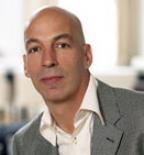
Michael WarnerView profile
Professor
Michael Warner is the Seymour H. Knox Professor in the Department of English at Yale University, where he holds a prominent position in literary and cultural studies. His work bridges scholarship, theory, and public intellectual engagement across disciplines such as early American literature, queer theory, and the sociology of secularism. His research focuses on the interplay between media, reading practices, and the formation of social worlds. Warner explores how publics and counterpublics emerge through print culture and communication, with significant contributions to understanding the evangelical public sphere and the cultural roots of secularism in America. His interdisciplinary interests extend to new media, intellectual property, and political discourse. The recent articles reflect a strong trend in cultural and literary theory, with deep attention to public discourse, identity formation, and interpretive practices. Warner's work consistently engages with philosophical and historical dimensions of literature, often challenging normative frameworks in reading and social belonging. Co-editor, Varieties of Secularism in a Secular Age (Harvard University Press, 2010) Author, The Evangelical Public Sphere in Eighteenth-Century America (forthcoming, University of Pennsylvania Press) Author, Publics and Counterpublics (Zone Books, 2002) Author, The Trouble with Normal (Harvard University Press, 2000) Editor, The Portable Walt Whitman (Penguin, 2003) Warner has advised numerous graduate students and has been involved in major scholarly collaborations, though specific names are not listed. He has received support for his research through academic lectureships, including the Rosenbach Lectures (2009), and editorial projects with leading university presses. His work continues to influence both literary studies and social theory. He is associated with advanced research in secular culture and public discourse, particularly through his current book projects and lecture series. His intellectual leadership positions him at the center of debates on religion, modernity, and democratic public life.