Amine Mhedhbi is an Assistant Professor at Polytechnique Montréal in the Department of Computer Engineering and Software Engineering. He is affiliated with the Institute for Data Valorization (IVADO) and the Software Engineering for Machine Learning Applications (SEMLA) group. His research focuses on data management systems, particularly graph-structured databases, multimodal data engineering, and AI-driven query optimization. Ph.D. in Computer Science from University of Waterloo Former technical advisor to enterprise companies Prior applied research leadership at Distyl AI and internships at Microsoft Research His recent work explores integrating large language models (LLMs) into database systems, optimizing SQL generation, and advancing graph database architectures. Key projects include GraphflowDB and FlockMTL , addressing scalability and declarative semantic applications. Scientific awards include: NSERC Discovery Grant with Discovery Launch Supplement (2025) Cheriton School Distinguished Dissertation Award (2024) Microsoft Research Ph.D. Fellowship (2020) VLDB Best Paper Award (2018) He supervises graduate students in database systems and machine learning applications and serves on program committees for top-tier conferences like VLDB and SIGMOD.
Gotthard Meinel is a Senior Fellow at the Leibniz Institute of Ecological Urban and Regional Development (IOER) since 2023, with a distinguished career spanning over three decades in geoinformatics and spatial analysis. Previously, he served as Head of the Research Department for Spatial Information and Modeling (2009-2022) and held various leadership positions within the institute since joining in 1992. Meinel received his education at the Technical University of Dresden, graduating in Information Technology in 1981. He pursued postgraduate studies in biomathematics and earned a specialist mathematician degree between 1981-1992, culminating in his promotion (PhD equivalent) in 1987. His research focuses on geoinformatics, particularly remote sensing image processing and the automated analysis of large geospatial datasets. Meinel specializes in monitoring land-use developments and building stock through advanced spatial analysis methods. His work encompasses the development of indicators and visualization technologies for understanding settlement patterns and open space dynamics. With expertise spanning computer science, mathematics, and spatial analysis, Meinel has made significant contributions to the field of land use monitoring in Germany. Analysis of Meinel's recent publications reveals a strong focus on land use monitoring systems, spatial data infrastructure, and the integration of survey and geospatial data. His research increasingly emphasizes interdisciplinary approaches, combining urban planning, environmental science, and data science to address complex spatial challenges. Key trends include the development of comprehensive monitoring frameworks, analysis of building stock characteristics, and exploration of sustainable land use practices across Germany. Meinel has led or participated in numerous significant research projects including the Social-Spatial Research Data Infrastructure (SORA), the Research Database for Non-Residential Buildings (ENOB:DataNWG), OpenGeoEdu, and the Competence Center for Scalable Data Services and Solutions (ScaDS). These projects demonstrate his leadership in developing innovative spatial data infrastructures and analytical approaches. As project leader and principal investigator, Meinel has supervised numerous research initiatives and likely mentored students and junior researchers, though specific advisees are not documented in the provided materials. His work has significantly influenced spatial planning practices and land use monitoring methodologies in Germany. Meinel's research is closely associated with the IOER Monitor, a comprehensive spatio-temporal research data infrastructure for settlement and open space development in Germany. His team has developed sophisticated methodologies for analyzing land use change, building stock dynamics, and urban structure through the integration of topographic data, remote sensing, and statistical approaches.
Wei Huo is a researcher at the Institute of Information Engineering, Chinese Academy of Sciences, specializing in software security and engineering. His work focuses on vulnerability detection, program analysis, and cybersecurity across diverse systems including cloud infrastructure, firmware, and web applications. His research interests encompass Software Security , Program Analysis , Binary Analysis , and AI-driven security techniques . He develops practical tools for identifying vulnerabilities in Kubernetes ecosystems, baseband firmware, and binary code, with emphasis on real-world applicability in industrial contexts. Analysis of his publications (2019-2025) reveals a consistent focus on empirical security studies and tool development. Key trends include cloud-native security (Kubernetes), firmware analysis (printers/baseband), and AI-enhanced binary similarity detection, demonstrating progression from component-level to system-level security challenges. While no specific awards are documented in the source material, his contributions to top venues like ASE, ICSE, and ISSTA reflect significant impact in software engineering research. His work bridges academic rigor with practitioner-oriented solutions, particularly in vulnerability management and automated testing. Wei Huo actively contributes to the security research community through publications addressing critical infrastructure vulnerabilities, though details about student supervision or grant funding are not available in the provided text.
Mark Danson is a Professor at the University of Salford's School of Science, Engineering & Environment, specializing in remote sensing and forest ecology. His research focuses on developing terrestrial laser scanning technologies for vegetation analysis and ecological monitoring. He leads work on the Salford Advanced Laser Canopy Analyser (SALCA) system and contributes to global environmental databases like Globe-LFMC. His research explores vegetation structure measurement, lidar technology development, and ecological applications of remote sensing. Key interests include forest canopy analysis, plant moisture estimation, wildfire risk assessment, and climate change impacts on ecosystems. Recent work advances 3D forest modeling and validation of satellite-derived ecological parameters. The publication record demonstrates consistent focus on terrestrial laser scanning methodologies and forest applications. Research trends show progression from instrument development (dual-wavelength lidar systems) toward large-scale ecological validation studies and global dataset creation for climate monitoring. Danson leads technology development initiatives including the SALCA instrument design and calibration. Collaborative work appears through international projects like the Global Ecosystem Dynamics Investigation validation studies.
Seif Haridi is a Professor at KTH Royal Institute of Technology in Stockholm, Sweden, specializing in parallel and distributed computing systems. He holds dual roles as Chair-Professor of Computer Systems and Chief Scientific Advisor at RISE SICS. His research integrates systems engineering with theoretical foundations, focusing on programming systems, distributed computing, and big data technologies. Key contributions include co-designing SICStus Prolog, the Mozart Programming System, and Apache Flink, as well as leading the development of HOPS, a European big data platform awarded the IEEE Scale Prize 2017. He has led major EU projects like EIT-Digital’s cloud computing initiative and co-founded startups such as LogicalClocks and HiveStreaming. His teaching includes courses on distributed algorithms and peer-to-peer computing at KTH. Notable awards include the European Data Science Technology Innovation 2019. His work spans systems like HOPS, Flink, and Kompics, emphasizing scalability and robustness in distributed environments. Current projects include CDA (Continuous Deep Analytics) and ExtremeEarth for geospatial data analysis. Research interests include distributed algorithms, consensus protocols, and cloud-native systems. His lab’s contributions to scalable storage (e.g., HopsFS) and stream processing (Apache Flink) highlight his impact on both academia and industry.
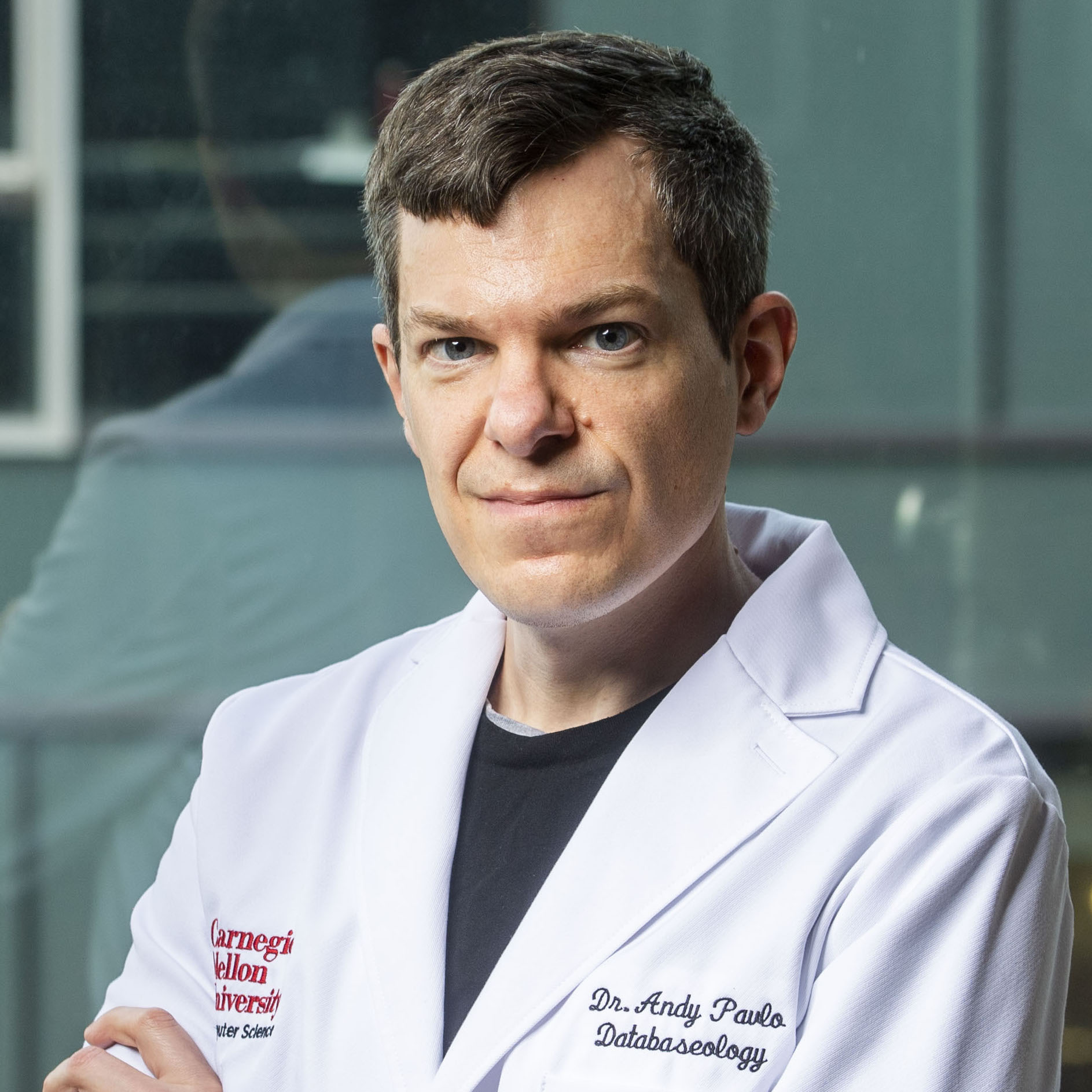
Andrew Pavlo is an Associate Professor of Databaseology in the Computer Science Department at Carnegie Mellon University , part of the School of Computer Science . His research focuses on database systems, particularly self-driving architectures, transaction processing, and large-scale analytics. He is a member of the CMU Database Group and Parallel Data Laboratory. His awards include the NSF CAREER (2019), Sloan Fellowship (2018), and ACM SIGMOD Jim Gray Dissertation Award (2014). He co-founded OtterTune, a database tuning startup, though it later ceased operations. Current research interests emphasize autonomous database systems, query optimization, and distributed computing. Recent publications (2024) highlight work on self-driving DBMS, null representation in columnar formats, and UDF optimization techniques. Awards: NSF CAREER Award (2019) Sloan Fellowship (2018) ACM SIGMOD Jim Gray Dissertation Award (2014) Advising: Mentors students in database systems, including Sam Arch, Wan Shen Lim, and William Zhang. Labs/Teams: Leads the Database Group and collaborates with the Parallel Data Laboratory.
Hannah Haynie is an Assistant Professor in the Department of Linguistics at the University of Colorado. Her research focuses on linguistic diversity, language prehistory, and language change with a specialization in North American languages, particularly those of the California region. She holds a PhD from the University of California, Berkeley, and completed postdoctoral fellowships at Yale University and Colorado State University. Dr. Haynie employs interdisciplinary methods combining linguistic analysis with approaches from geography, ecology, and evolutionary biology to investigate how linguistic diversity emerges from spatiotemporal language change processes. Her work addresses competing pressures shaping language dynamics and integrates computational tools to analyze cross-linguistic data. Her recent articles explore topics such as language complexity in societies of strangers, genealogical constraints on linguistic diversity, and the origins of Uto-Aztecan languages. She has also examined drivers of global land ownership patterns and cultural pathways to social inequality. Her research contributes to understanding the interplay between cultural evolution and environmental adaptation.
Hugo Ledoux is an academic affiliated with the Faculty of Architecture and the Built Environment at Delft University of Technology, specializing in Urban Data Science. His research focuses on 3D geospatial modeling, including CityGML standards, terrain analysis, and automated reconstruction of urban structures. He has contributed to projects like the DeltaDTM coastal terrain model and the cjdb database solution for CityGML. Education: Not explicitly detailed in text, but inferred through academic roles and publications. Research interests emphasize 3D geoinformation systems, remote sensing applications, and urban data science. His work addresses challenges in 3D city models, building reconstruction, and geospatial validation tools like Val3dity. Recent efforts include improving global terrain models using ICESat-2 and GEDI lidar data. Publications span automated building reconstruction workflows, terrain accuracy assessments, and semantic-guided facade modeling. Awards include the Best Presentation at 3DGeoInfo 2020 and the U.V. Helava Award for Best Paper in 2011. Ledoux has supervised 4 academic works and actively participates in conferences, editorial activities, and open-source software development for geospatial applications. Labs/Teams: Involved in TU Delft’s 3D geoinformation research, contributing to tools like 3dfier and CityJSON for 3D data interoperability.
Associate Professor Fatemeh Vafaee is a leading researcher at the University of New South Wales (UNSW) , holding appointments as Associate Professor in the School of Biotechnology and Biomolecular Sciences (BABS) and Deputy Director (Science) of the UNSW AI Institute . She previously served as Deputy Director of the UNSW Data Science Hub (uDASH) and has held academic positions at the University of Toronto and the University of Sydney. PhD in Artificial Intelligence from University of Illinois at Chicago Postdoctoral Fellowships at University of Toronto and University of Sydney Founded the AI-Enhanced Biomedicine Laboratory in 2017 Her research focuses on deploying advanced AI techniques to address biomedical challenges through: Biomarker Discovery for cancer and neurodegenerative diseases Single-Cell Multi-Omics data integration and analysis Computational Drug Repositioning and network pharmacology Multi-Omics Data Fusion and temporal network modeling Recent publications demonstrate expertise in liquid biopsy development , single-cell imaging , and AI-driven cancer diagnostics . Her methodological contributions include novel deep learning architectures for omics data analysis and graph neural networks for drug synergy prediction. Scientific accolades include: Winner, Women in AI Asia-Pacific Health Award (2023) Runner-Up, WAI-APAC Innovator of the Year (2023) Top 10 Women in AI in Asia-Pacific (2023) Australian Bioinformatics and Computational Biology Society Research Excellence Award (2023) She supervises PhD candidates across computational biomedicine and AI in healthcare , with significant grant achievements exceeding $17M in competitive funding, including schemes from ARC Discovery , NHMRC , and Medical Research Future Fund .
Bin Guo is an Assistant Professor at the Computer Science Department of Trent University (since Jan. 2024) and an Adjunct Assistant Professor at the Computing & Software Department of McMaster University. He holds a PhD in Computer Science from McMaster University (2023) and an MSc in Applied Computer Science from Winnipeg University (2018). His research focuses on parallel/distributed computing, graph algorithms, and computer security for data analytics, with notable contributions to federated k-core decomposition and secure distributed algorithms. He teaches courses in database systems, operating systems, and computer security at Trent University and has taught at McMaster University. Education: PhD in Computer Science, McMaster University (2023) MSc in Applied Computer Science, Winnipeg University (2018) Research Interests: Parallel and Distributed Computing Graph Algorithms and Mining Computer Security & Privacy Federated Learning Concurrent Data Structures Advising & Grants: Current advisees: Gregory Prouty, Michael Abiona, Syed Zarif Past advisees: Igor Jardim-Martins, Issec Lee Funding sources: Graduate Teaching Assistantships, Research Fellowships, Trent University Research Development Grants Labs & Teams: Leading research projects in parallel graph algorithms and federated security algorithms Collaborating with McMaster University on PhD/Master's co-supervision
Mathias Lecuyer is an Assistant Professor at the University of British Columbia (UBC), Department of Computer Science, where he leads the Systopia research group. His research focuses on trustworthy AI systems, including differential privacy, adversarial robustness, and causal machine learning. He holds a PhD from Columbia University and was a postdoctoral researcher at Microsoft Research. Education: PhD in Computer Science, Columbia University Postdoctoral Researcher, Microsoft Research (New York) Research Interests: Privacy-preserving machine learning (Differential Privacy) Certified adversarial robustness via randomized smoothing Causal inference for model generalization Systems for privacy and security in AI Awards: SOSP Distinguished Artifact Honourable Mention (2024) Google Research Award Supervised Students: PhD: Qiaoyue Tang, Saiyue Lyu, Frederick Shpilevskiy MSc: Mishaal Kazmi, Shadab Shaikh, Shiqi He Undergrad: Alain Zhiyanov, Jessica Bator, Ryan Shar, Eric Xiong, Joel Hempel Labs/Teams: Member of UBC S&P, TrustML, and CAIDA research groups.
Pieter Bonte is a FWO Senior postdoctoral fellow and IMEC Postdoctoral researcher at Ghent University's Faculty of Engineering and Architecture, Department of Information Technology. His research focuses on Semantic Web technologies, stream reasoning, and Internet of Things applications. His research interests span Semantic Web, Internet of Things, Stream Reasoning, Knowledge Graphs, Context-aware Systems, RDF Processing, Linked Data, and Healthcare Informatics. His work bridges theoretical semantic technologies with practical applications, particularly in healthcare and IoT domains. Bonte's publication record shows a strong focus on streaming data processing, with numerous papers on Streaming Linked Data, context-aware query derivation, and semantic reasoning frameworks. His research demonstrates a progression from foundational semantic web technologies toward practical implementations in healthcare and IoT applications, with an increasing emphasis on privacy considerations and efficient processing techniques. His work frequently involves collaborations with Femke Ongenae, Filip De Turck, and other researchers at Ghent University and IMEC, indicating strong institutional research networks. His publications appear in respected venues including the Journal of Web Semantics, Semantic Web Journal, and various conference proceedings in the semantic technologies field.
Axel Polleres is a full professor in the area of 'Data and Knowledge Engineering' at the Vienna University of Economics and Business (WU Wien) and a faculty member at the Complexity Science Hub (CSH) in Vienna, a position he has held since January 2017. His work bridges academic research and real-world applications in semantic technologies, knowledge graphs, and data governance. His research interests lie at the intersection of semantic web technologies, knowledge engineering, and data management. Focused on querying and reasoning over ontologies, logic programming, and rule-based systems, he explores how structured data can be effectively managed, validated, and integrated—especially through standards like SPARQL and SHACL. His work extends to applications in open data, legal data, biomedical informatics, and socio-environmental challenges such as climate and public health. The most recent publications highlight a growing trend toward practical and societal applications of knowledge graphs, including climate risk assessment, crisis response, healthcare accessibility, and open data governance. These works combine technical rigor in semantic modeling with impactful real-world use cases, particularly in European and Austrian contexts. Axel Polleres has been actively involved in international standardization, notably as co-chair of the W3C SPARQL Working Group, and serves on the editorial boards of the Semantic Web Journal and Journal of Web Semantics . He has contributed to numerous European and national research projects and has published over 100 articles in top-tier journals and conferences. He advises and collaborates with researchers across disciplines and institutions, contributing to interdisciplinary teams working on complex societal challenges. His work is supported by significant research grants, though specific funding sources are not detailed in the provided text. He leads and participates in research groups focused on semantic technologies, knowledge graphs, and data-driven policy.
Christoph Rosinger is a researcher at the Institute of Agronomy (iPBAU) within the University of Natural Resources and Life Sciences, Vienna (BOKU). His work focuses on soil microbiology, conservation farming, and carbon-nutrient dynamics in agricultural and forest soils. Research Themes: Soil organic carbon stabilization, microbial community responses to amendments, and agricultural pollution mitigation using struvite/zeolites Methodologies: On-farm studies, multi-model simulations, and biogeochemical stoichiometry analysis Publication Trends emphasize microbial pathways in carbon sequestration, amendment effects on nutrient cycling, and seasonal soil processes. Recent work explores AI vs. process-based modeling for SOC prediction and volcanic ash pedogenesis. Earlier studies address subtropical soil nutrient limitations and post-disturbance fungal dynamics.
Professor Jon Kerridge is a distinguished academic at the School of Computing, Edinburgh Napier University, where he has made significant contributions to parallel programming, software systems, and database applications. With a career spanning several decades, he has published extensively in the field of computer science and has supervised numerous PhD students. BSc, MSc, PhD Fellow of the British Computer Society (FBCS) Chartered IT Professional (CITP) Fellow of the Higher Education Academy (FHEA) Chartered Engineer (CEng) Professor Kerridge's research primarily focuses on parallel programming models, particularly through his work on the Groovy Parallel Patterns Library and Communicating Sequential Processes (CSP). His research spans multiple domains including software engineering, database systems, and interdisciplinary work in neuroscience related to dyslexia. He has also made significant contributions to pedestrian movement modeling and evolutionary algorithms. His publications demonstrate a consistent focus on practical software engineering solutions for parallel and distributed systems. The research trajectory shows progression from foundational work in computer architecture education in the 1980s through database systems in the 1990s-2000s to modern parallel programming frameworks. His interdisciplinary work connecting computer science with visual processing in dyslexia represents an innovative application of computational approaches to neuroscience problems. Fellow of the British Computer Society (FBCS) Chartered IT Professional (CITP) Fellow of the Higher Education Academy (FHEA) Chartered Engineer (CEng) Professor Kerridge has supervised several PhD students to completion, including Kevin Chalmers (Investigating communicating sequential processes for Java to support ubiquitous computing) and Robert Kukla (A software framework for the microscopic modelling of pedestrian movement). His research has been supported by Edinburgh Napier University funding, with applications ranging from healthcare systems to pedestrian flow optimization. He is a key member of the Centre for Algorithms, Visualisation and Evolving Systems at Edinburgh Napier University, where his work continues to influence both theoretical and applied aspects of computing.