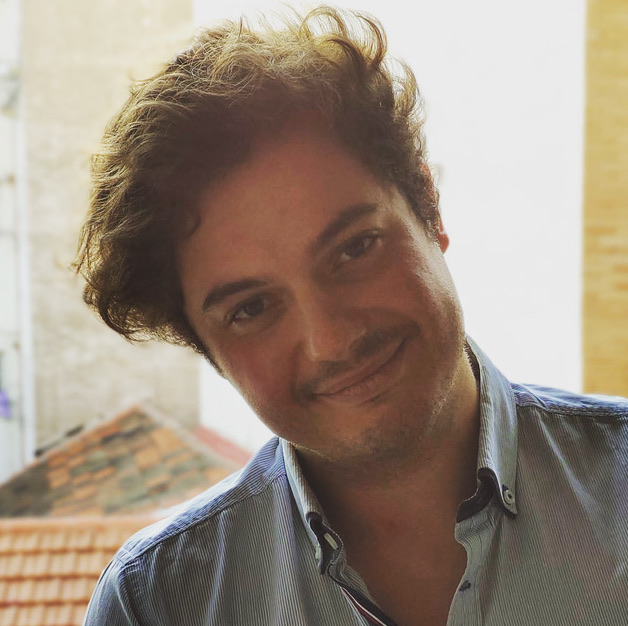
Elyar Pourrahimian is a Postdoctoral Fellow at the University of Alberta's Faculty of Engineering, specifically within the Civil and Environmental Engineering Department. He teaches courses such as CIV E 303 - Project Management (Winter Term 2026) and CIV E 601 - Analytical Methods for Project Management (Fall Term 2025), focusing on project planning, scheduling, and control methodologies. His research interests span Construction Management Project Management Artificial Intelligence Applications in Engineering Chaos Theory in Project Planning Fuzzy Systems in Labour Productivity Bayesian Inference in Construction Simulation . Recent publications highlight trends in construction workspace optimization (2025), chaos and fuzzy systems for productivity analysis (2025-2022), and machine learning frameworks (2024) for construction monitoring. He also explores multidimensional project control (2024) and socio-technical lean management frameworks (2024).
Erin Baker is an Associate Professor at the University of North Carolina at Chapel Hill's School of Medicine and Department of Chemistry. Her research focuses on environmental health, molecular biomarkers, and advanced analytical techniques including Ion Mobility Spectrometry (IMS) and Mass Spectrometry (MS). Education: B.S. in Chemistry (Montana State University), Ph.D. in Chemistry (University of California – Santa Barbara) Postdoctoral: Pacific Northwest National Laboratory Research Interests : Erin's group develops multidimensional separation methods (solid-phase extraction, liquid chromatography, IMS-MS) for high-throughput analysis of chemical exposures and their biological impacts. They integrate genomic, proteomic, and metabolomic data to study environmental perturbations in human health. Scientific Awards : 2024 Emerging Investigator 2023 Emerging Investigator Publications & Outreach : Erin's recent work includes PFAS environmental monitoring, lipidomics scoring systems, and IMS-MS method development. Her lab emphasizes community engagement, presenting internationally and collaborating on K-12 STEM initiatives.
Hassan Shirvani is a Professor of Engineering Design and Simulation at the School of Engineering and the Built Environment, Anglia Ruskin University. He serves as Director of the Engineering Analysis Simulation and Tribology (EAST) Research Group, focusing on industry collaborations to solve engineering challenges. PhD in Mechanical Engineering, University of Bath MSc in Mechanical Engineering, University of Birmingham Member, Institute of Mechanical Engineers (IMechE) His research spans mechanical engineering, artificial intelligence, and biomedical applications, including: Thermal system optimization Machine learning in clinical decision-making Composite metal foil manufacturing Virtual reality medical training systems Flow dynamics in heat exchangers and nozzles AI-assisted diagnostics Hybrid manufacturing processes Hassan's publications reflect expertise in computational modeling, multi-physics simulations, and industrial applications. Notable areas include deep learning for suicide prediction, thermodynamic analysis of sustainable energy systems, and tribology in mechanical components.
Amine Mhedhbi is an Assistant Professor at Polytechnique Montréal in the Department of Computer Engineering and Software Engineering. He is affiliated with the Institute for Data Valorization (IVADO) and the Software Engineering for Machine Learning Applications (SEMLA) group. His research focuses on data management systems, particularly graph-structured databases, multimodal data engineering, and AI-driven query optimization. Ph.D. in Computer Science from University of Waterloo Former technical advisor to enterprise companies Prior applied research leadership at Distyl AI and internships at Microsoft Research His recent work explores integrating large language models (LLMs) into database systems, optimizing SQL generation, and advancing graph database architectures. Key projects include GraphflowDB and FlockMTL , addressing scalability and declarative semantic applications. Scientific awards include: NSERC Discovery Grant with Discovery Launch Supplement (2025) Cheriton School Distinguished Dissertation Award (2024) Microsoft Research Ph.D. Fellowship (2020) VLDB Best Paper Award (2018) He supervises graduate students in database systems and machine learning applications and serves on program committees for top-tier conferences like VLDB and SIGMOD.
Karen Eilbeck is Professor of Biomedical Informatics and Adjunct Associate Professor of Human Genetics at the University of Utah , where she directs a bioinformatics research lab focused on precision medicine and genomic data management. Education B.S., University of Salford, United Kingdom Ph.D., University of Manchester, United Kingdom Research Interests The Eilbeck lab leverages computer science and ontology engineering to address contemporary questions in genomics and molecular biology. Central themes include: Development of ontologies such as the Sequence Ontology (SO) and Non-Coding RNA Ontology (NCRO) to standardize and structure biological data. Design of ontology-enabled software tools that enhance data sharing, variant interpretation, and precision medicine workflows. Metagenomic pathogen detection, clinical genome interpretation, and integration of multi-omics datasets to advance personalized healthcare. Publication Trends Recent publications (2023-2025) emphasize AI-driven clinical decision support, standardized genomic terminology, and large-scale infectious-disease risk modeling. Earlier works (2005-2018) established foundational ontologies and data formats (GVF, VCF) now widely adopted by the genomics community. Contact & Resources Email: keilbeck@genetics.utah.edu Lab website: available via University of Utah Department of Biomedical Informatics Full publication list: PubMed search | Google Scholar
Ramin Karim is a Professor and Head of Subject in the Department of Civil, Environmental and Natural Resources Engineering at Luleå University of Technology. His research focuses on operation and maintenance technology, with expertise in railway systems, industrial cybersecurity, structural health monitoring, and the application of advanced analytics in asset management. He leads the Operation, Maintenance and Acoustics division, emphasizing interdisciplinary approaches to solving complex engineering challenges. Key research areas include predictive maintenance strategies for railway infrastructure, cybersecurity frameworks for Industry 5.0, and the integration of metaverse technologies in industrial contexts. His work often involves data-driven methodologies such as point-cloud processing, game theory for cyber threat modeling, and digital twin concepts. Recent publications highlight his contributions to railway maintenance policy optimization, health monitoring of ground support systems in mining, and cybersecurity challenges in industrial systems. He has co-authored over 50 peer-reviewed articles, many appearing in high-impact journals like International Journal of Systems Assurance Engineering and Management and Frontiers in Virtual Reality . Ramin Karim’s research also explores emerging technologies like federated learning for digital twins, blockchain applications in railways, and human-centric predictive health management systems. His work aligns with initiatives such as the Reality Lab Digital Railway, aimed at advancing sustainable and digitally enabled transportation solutions.
Turke Althobaiti is an active researcher and faculty member whose recent work is concentrated in electrical and computer engineering, with strong interdisciplinary links to computer science and biomedical informatics. Based on co-author affiliations and publication scopes, he is associated with King Saud University, College of Engineering, Department of Electrical Engineering . Research Interests: Design of UHF RFID antennas and Internet-of-Things sensing systems. Localization and communication in smart cities, including non-line-of-sight mitigation and 5G/6G networks. Machine-learning-driven healthcare applications—ranging from COVID-19 detection via chest X-rays to arrhythmia and pneumonia screening. Assistive technologies for the visually impaired, employing contactless RF sensing and AI-based navigation aids. Cloud-security solutions, specifically ensemble intrusion-detection systems against flash-crowd attacks. Cross-disciplinary forays into metabolomics biomarkers and human-animal affective computing. Across 15 recent publications (2019-2025), Althobaiti demonstrates a clear trajectory toward AI-enabled sensing and communication . Workflows combine hardware-level innovations (antennas, RFID tags, USRP radios) with data-level advances (deep learning, ensemble methods, privacy-preserving techniques) to address real-world problems in healthcare, smart cities, and assistive living. Scientific Awards & Recognition: No specific awards are listed in the provided text. Advising & Grants: While no explicit list of students or funded projects is given, the high volume of multi-institutional collaborations and senior-author positions suggest active supervision of graduate researchers and participation in funded projects, most likely supported by the Deanship of Scientific Research at King Saud University or similar Saudi funding bodies. Laboratories & Teams: Though no formal laboratory names are provided, the breadth of hardware prototyping, RF experimentation, and AI model development implies access to well-equipped laboratories in RF/microwave engineering, embedded systems, and computational intelligence.
Assoc Prof Yang Zhang is an Associate Professor in the School of Economics at the National University of Singapore , Department of Economics. He has been affiliated with the university since 2012, progressing from Lecturer (2012-2015) to Senior Lecturer (2016-2021) and currently Associate Professor since 2022. Education: PhD in Managerial Economics and Strategy (Northwestern University, 2011) BA in Economics (Peking University, 2005) Research Interests: Health Economics Applied Microeconomics Industrial Organization Recent Research Trends focus on leveraging deep learning and structural biology tools for protein structure prediction, RNA modeling, and computational drug design. His work integrates advanced algorithms with large-scale metagenomic data to improve accuracy in complex biological system modeling.
Rong Liu is an Associate Professor at the School of Business, Stevens Institute of Technology, specializing in Information Systems and FinTech. His research focuses on Blockchain, Deep Learning, Text Mining, and Business Process Management. Prior to Stevens, he was a Research Staff Member at IBM T.J. Watson Research Center (2006–2017). Liu holds a PhD in Information Systems from Penn State University (2006). Research Interests Liu’s work integrates AI and business analytics to address challenges in finance, healthcare, and operations. Key areas include blockchain applications in supply chains, ethical AI in hiring, misinformation detection, and predictive modeling for fraud and litigation. His methodologies combine deep learning with theory-driven approaches, emphasizing interpretability and real-world impact. Recent Trends in Publications His recent work explores large language model (LLM) applications in healthcare (e.g., drug shortage prediction), financial decision-making systems, and ethical compliance in job advertisements. He also investigates blockchain’s role in supply chain transparency and open-source development’s impact on ICOs. Awards & Recognition Liu has received awards including the Bright Idea Award (New Jersey Business Faculty, 2020) and multiple best paper awards at ICIS, WITS, and INFOCOM conferences. His work on supply chain event management (2007) was recognized with a Best Paper Award at the Business Process Management Conference. Service & Teaching He serves on academic committees at Stevens and reviews for top journals like MIS Quarterly and Production and Operations Management. Courses taught include Web Mining, Deep Learning for Business Analytics, and Large Language Models in Finance.
Associate Professor Fatemeh Vafaee is a leading researcher at the University of New South Wales (UNSW) , holding appointments as Associate Professor in the School of Biotechnology and Biomolecular Sciences (BABS) and Deputy Director (Science) of the UNSW AI Institute . She previously served as Deputy Director of the UNSW Data Science Hub (uDASH) and has held academic positions at the University of Toronto and the University of Sydney. PhD in Artificial Intelligence from University of Illinois at Chicago Postdoctoral Fellowships at University of Toronto and University of Sydney Founded the AI-Enhanced Biomedicine Laboratory in 2017 Her research focuses on deploying advanced AI techniques to address biomedical challenges through: Biomarker Discovery for cancer and neurodegenerative diseases Single-Cell Multi-Omics data integration and analysis Computational Drug Repositioning and network pharmacology Multi-Omics Data Fusion and temporal network modeling Recent publications demonstrate expertise in liquid biopsy development , single-cell imaging , and AI-driven cancer diagnostics . Her methodological contributions include novel deep learning architectures for omics data analysis and graph neural networks for drug synergy prediction. Scientific accolades include: Winner, Women in AI Asia-Pacific Health Award (2023) Runner-Up, WAI-APAC Innovator of the Year (2023) Top 10 Women in AI in Asia-Pacific (2023) Australian Bioinformatics and Computational Biology Society Research Excellence Award (2023) She supervises PhD candidates across computational biomedicine and AI in healthcare , with significant grant achievements exceeding $17M in competitive funding, including schemes from ARC Discovery , NHMRC , and Medical Research Future Fund .
Dominique Ritze is a Research Fellow at the Data and Web Science Group of the University of Mannheim. Her research focuses on ontology alignment, semantic web technologies, linked open data integration, and knowledge organization systems. She collaborates with Prof. Dr. Christian Bizer and Prof. Dr. Kai Eckert on projects like InFoLiS II, aiming to advance data integration and semantic web applications. Education: MSc Computer Science (Diplom-Informatikerin) Research Interests: Dominique’s work bridges theoretical and applied aspects of semantic web technologies. Key areas include ontology evaluation frameworks, cross-domain data integration, and the development of tools for provenance tracking and data reuse. She has contributed to methodologies for aligning knowledge organization systems (KOS) and enhancing discovery systems with linked data. Publications Trends: Her articles from 2010-2015 emphasize ontology alignment (e.g., OAEI evaluations), semantic web applications, and data integration techniques. Notable contributions include the ICE-Map visualization for KOS evaluation and the Mannheim Search Join Engine for cross-website table integration. Awards: No scientific awards explicitly listed in the provided texts. Projects & Teams: Active in the Data and Web Science Group, leading projects on web table matching and semantic data integration. Collaborates with global research networks through initiatives like the Ontology Alignment Evaluation Initiative.
Prof. Dr. Ingmar Ickerott is a faculty member at Osnabrück University of Applied Sciences, affiliated with the School of Management, Kultur und Technik (MKT, Campus Lingen) under the University management department. His academic career spans over two decades, focusing on logistics management, digitalization in supply chains, and smart technology applications like Smart Glasses and Augmented Reality . Academic Background : Diplom-Kaufmann in Business Administration (2001), Ph.D. in Economics (2006). Professional Roles : Senior Project Manager at arvato (2008–2010), Professor since 2010, Dean of MKT since 2019, Vice President for Digitalization since 2019. His research emphasizes logistics innovation , Lean Management , and digital solutions in rural healthcare . Key projects include Land.Digital (2019–2022) and LEAN 4.0 (Erasmus+, 2019–2021). Publications since 2004 cover agent-based simulation , Smart Device economics , and AR in logistics . He actively lectures on topics like Logistics 4.0 and Digital Onboarding . Projects & Grants : Land.Digital : €165,000+ (Erasmus+), 2019–2021. Dorfgemeinschaft 2.0 : €1.46M (BMBF), 2015–2021. Glasshouse : €208,557 (BMBF), 2015–2019.
Dr. Enayat Rajabi is an Associate Professor of Business Analytics at the Shannon School of Business, Cape Breton University. Holding a PhD in Information and Knowledge Engineering from the University of Alcala (Spain) and a postdoctoral fellowship from Dalhousie University, his research focuses on the intersection of Machine Learning, Knowledge Graphs, and Data Analytics. He actively applies these technologies in healthcare, smart cities, and social media crisis response contexts. Education PhD in Information and Knowledge Engineering, University of Alcala (Spain) Postdoctoral Fellowship, Dalhousie University Research Interests His work bridges Knowledge Graphs with Machine Learning, emphasizing explainability and practical applications. Key areas include: Explainable AI for clinical decision-making Knowledge Graph applications in healthcare systems Social media analytics for emergency response Smart city data integration Generative modeling for tabular data Recent Publications Trends Recent articles highlight: Explainable AI in healthcare settings Industrial breakdown prediction systems Social media influencer detection Smart city infrastructure modeling Advanced data synthesis techniques Continued focus on Knowledge Graph applications
David Chaves-Fraga is an Assistant Professor at Universidade de Santiago de Compostela (Spain), affiliated with CiTIUS (Center for Intelligent Technologies) and a research collaborator at KU Leuven's DTAI group. His expertise lies in Knowledge Graph Construction (KGC), focusing on declarative mapping rules, data integration, and semantic web technologies. He completed his PhD at Universidad Politécnica de Madrid in 2021, researching Knowledge Graph Construction from heterogeneous data sources. Education PhD in Artificial Intelligence, Universidad Politécnica de Madrid (2016–2021) Master in Artificial Intelligence, Universidad Politécnica de Madrid (2015–2016) Bachelor in Computer Science, Universidade de Santiago de Compostela (2011–2015) Research Interests Dr. Chaves-Fraga specializes in optimizing data integration systems using declarative rules (e.g., RML), scalable KG materialization, and benchmarking tools like KROWN. He emphasizes reproducibility and sustainability in KG creation, advocating for community-driven standards. His work bridges theory and practice, addressing challenges in real-world KG adoption. Contributions He co-chairs the W3C Knowledge Graph Construction Community Group, organizes workshops like KGC and Sem4Tra, and coordinates initiatives like Open Summer of Code. His tools (e.g., SDM-RDFizer, RMLdoc) are widely used in the semantic web community. Key themes include RDF-star generation, SHACL constraint extraction, and ontology-mapping interoperability.
Pieter Bonte is a FWO Senior postdoctoral fellow and IMEC Postdoctoral researcher at Ghent University's Faculty of Engineering and Architecture, Department of Information Technology. His research focuses on Semantic Web technologies, stream reasoning, and Internet of Things applications. His research interests span Semantic Web, Internet of Things, Stream Reasoning, Knowledge Graphs, Context-aware Systems, RDF Processing, Linked Data, and Healthcare Informatics. His work bridges theoretical semantic technologies with practical applications, particularly in healthcare and IoT domains. Bonte's publication record shows a strong focus on streaming data processing, with numerous papers on Streaming Linked Data, context-aware query derivation, and semantic reasoning frameworks. His research demonstrates a progression from foundational semantic web technologies toward practical implementations in healthcare and IoT applications, with an increasing emphasis on privacy considerations and efficient processing techniques. His work frequently involves collaborations with Femke Ongenae, Filip De Turck, and other researchers at Ghent University and IMEC, indicating strong institutional research networks. His publications appear in respected venues including the Journal of Web Semantics, Semantic Web Journal, and various conference proceedings in the semantic technologies field.