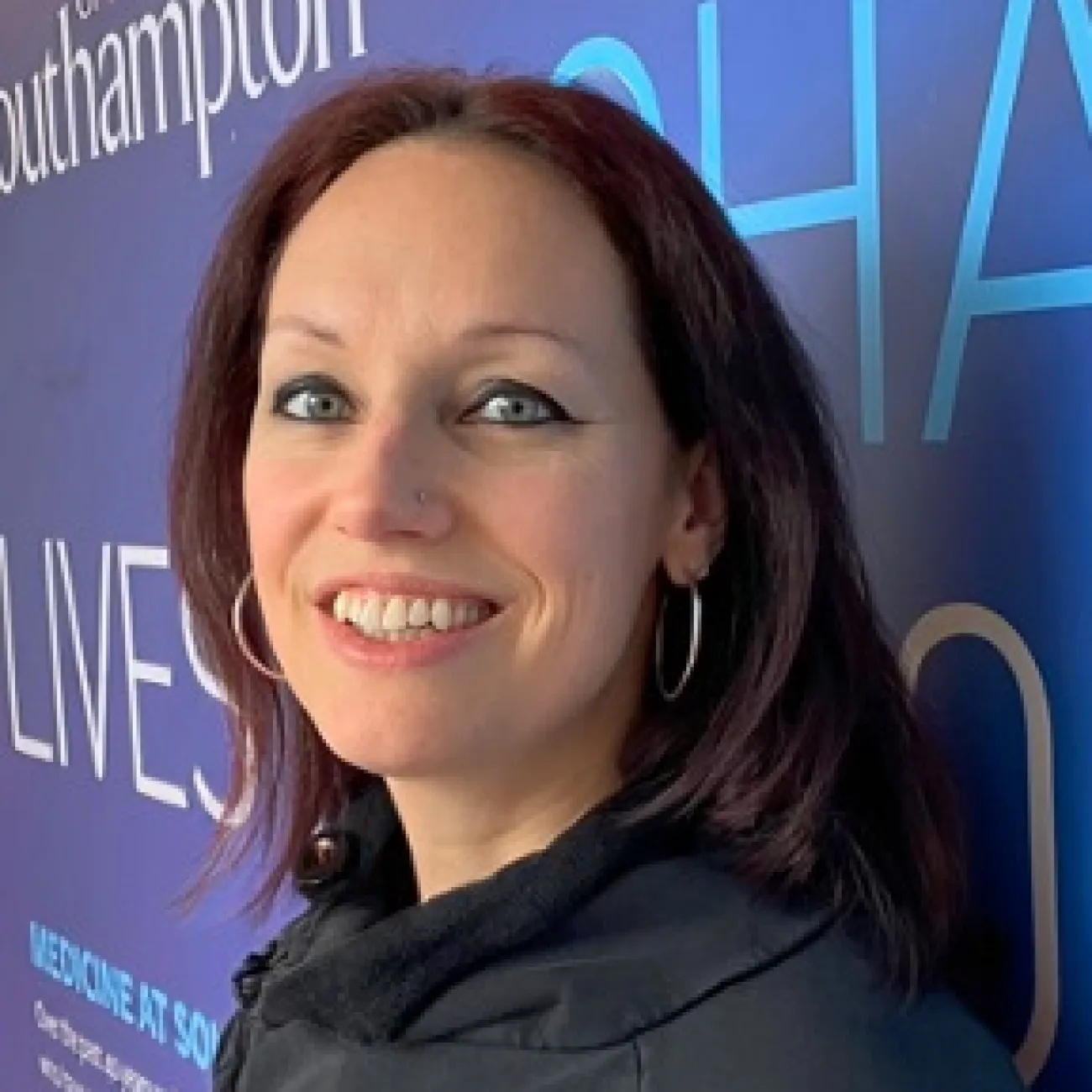
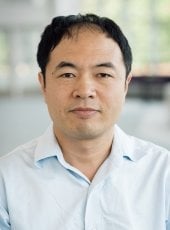
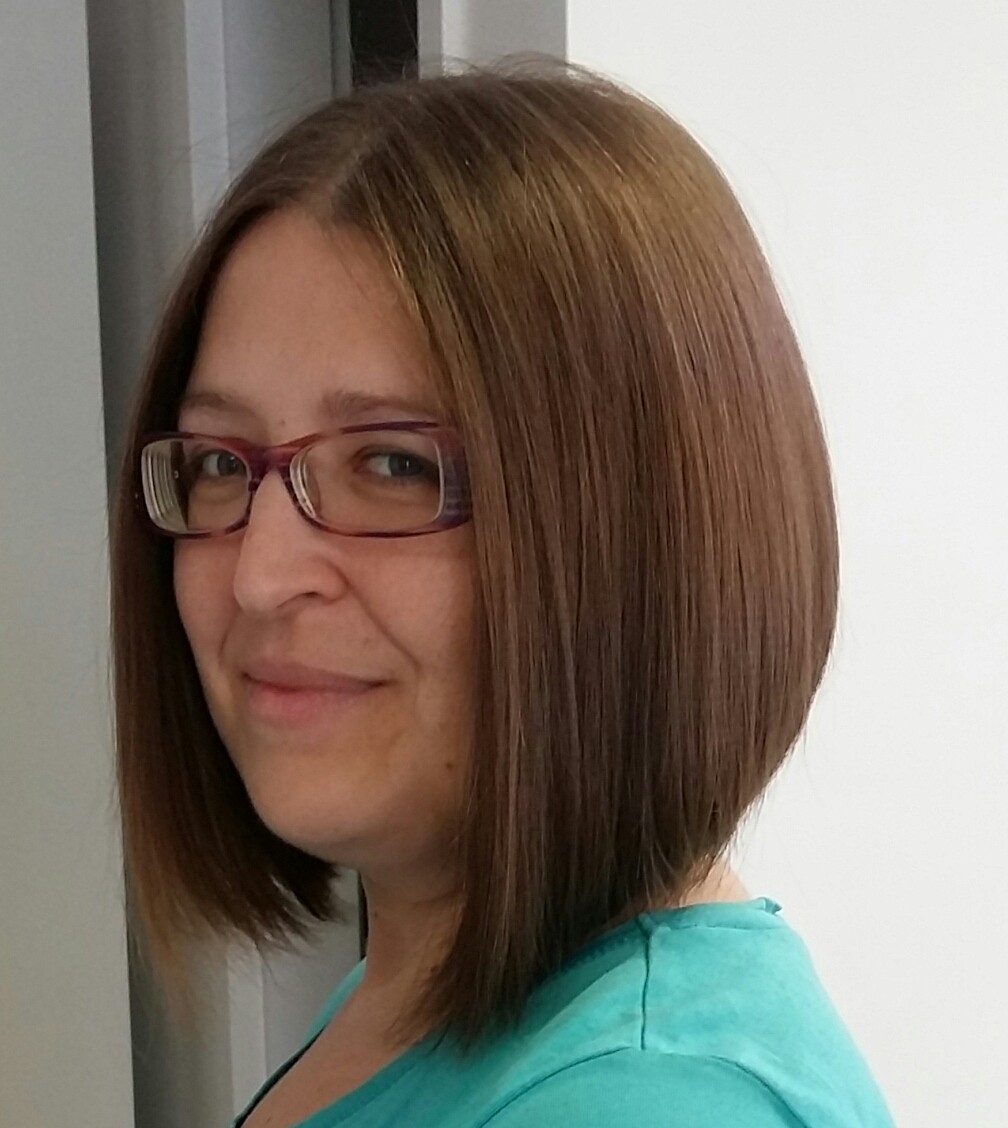
Dr. Zoë Walters is an Associate Professor in Translational Epigenomics at the University of Southampton, affiliated with the Faculty of Medicine and Cancer Sciences department. She leads the MSc Genomics program's Genomics Guided Treatment and Dissertation modules and contributes to BMedSci teaching. Her research focuses on epigenetic mechanisms in cancer and developmental disorders, particularly targeting therapies for pediatric cancers like neuroblastoma and rhabdomyosarcoma. She collaborates on projects addressing therapy resistance, tumor microenvironment dynamics, and precision medicine approaches. Current research includes investigating EZH2 inhibitors in combination therapies, leveraging omic data for sarcoma treatment, and understanding mechanisms of therapeutic resistance. She has received awards such as the Norman Williams Prize (2024) and Young Investigator Award (2023). Her lab also explores AI applications in clinical decision-making for oesophageal cancer. Zoë has supervised numerous PhD students and contributed to over 10 peer-reviewed publications. She serves on editorial boards (e.g., Frontiers in Cell and Developmental Biology) and reviews for journals like Nature Communications and Clinical Epigenetics. Her work spans interdisciplinary collaborations, including with engineering and computer science teams for AI-driven oncology solutions.
Professor Sebastian Sardina is a Professor in Artificial Intelligence at RMIT University's School of Computing Technologies. He holds a Bachelor's from South National University (Argentina) and a PhD from the University of Toronto (Canada). His research focuses on AI for dynamic systems, including automated planning, knowledge representation, and agent-oriented programming. He has contributed to enhancing agent programming languages with learning capabilities and advanced AI planning techniques. His work frequently appears in top AI venues like IJCAI and AAAI, with notable best paper nominations. Teaching interests include foundational CS courses such as Theory of Computation and Intro to AI. He actively promotes computational thinking through workshops for youth and educators, including roles in Victorian curriculum development (VCE Algorithmics). Supervision projects span hand gesture recognition, autonomous vehicle safety, and goal recognition in path-planning. His research has been presented globally and applied across domains like aviation safety, manufacturing systems, and healthcare. Recent trends in his publications emphasize goal recognition techniques (e.g., process mining applications), agent behavior modeling, and interdisciplinary AI applications in healthcare and automotive engineering. He has collaborated with industry and academic partners internationally, contributing to both theoretical advancements and practical AI solutions. Scientific Recognition: Multiple best paper nominations in AI conferences. Community Engagement: MAV conference presenter, VCAA Algorithmics curriculum panel member (2023). Supervision: Active mentor for 4+ research projects in AI planning and recognition.
Dahlia Kairy is an Associate Professor at the School of Rehabilitation, University of Montreal, with a focus on telerehabilitation , virtual reality , and innovative rehabilitation technologies . She leads interdisciplinary research through affiliations with the CRIR (Interdisciplinary Research in Rehabilitation), INTER (Interactive Technologies in Rehabilitation), and REPAR networks. Education: Physiotherapy graduate from McGill University (1997) Clinical experience: Specialized in vestibular and balance disorders since 2005 Her research explores implementation strategies for technology-driven rehabilitation, emphasizing health equity and knowledge translation . Recent work investigates AI integration , smart mobility devices , and virtual care policy development . Academic contributions include 15+ peer-reviewed publications and numerous funded projects from organizations like CIHR, FRQS, and AGE-WELL NCE. Key awards include: Royal Society of Canada College membership (2021) Fortissimo Jeune Chercheur Award (2018) She has supervised 7+ graduate students and co-led multidisciplinary grants totaling millions in funding. Current projects focus on metaverse-era rehabilitation , precision rehabilitation , and AI ethics in healthcare delivery.
Martin Uecker is a Professor at the Institute of Biomedical Imaging at TU Graz. His research focuses on advanced MRI reconstruction techniques, real-time imaging, and open-source software tools like the Berkeley Advanced Reconstruction Toolbox (BART). He specializes in developing methods for fast and accurate medical imaging, including applications in cardiac MRI, fetal brain imaging, and disease monitoring. His work emphasizes reproducibility, quantitative imaging, and clinical translation. Key research areas include generative models for MRI reconstruction, model-based inversion of the Bloch equations, and interactive real-time MRI systems. His team collaborates on projects involving hardware-software integration, such as portable MRI scanners and MRI-guided interventions. Notable contributions include advancements in multi-echo radial FLASH techniques, motion-resolved T1 mapping, and Bayesian uncertainty estimation in imaging. Uecker’s publications highlight innovations in accelerating MRI acquisition and reconstruction, with applications in pulmonary function assessment, neonatal imaging, and cardiovascular diagnostics. His work bridges theoretical physics, computational methods, and clinical practice, fostering open-source frameworks to democratize access to cutting-edge imaging tools.
Bingxu Fang is a Full-time Assistant Professor of Accounting at the School of Accountancy, Singapore Management University (SMU). He joined SMU in 2021 after earning a PhD in Accounting from the University of Toronto, an MSc in Finance from the University of British Columbia, and a BSc in Applied Physics from the University of Science and Technology of China. PhD in Accounting, University of Toronto (2021) MSc in Finance, University of British Columbia (2016) BSc in Applied Physics, University of Science and Technology of China (2014) His research focuses on financial reporting, information intermediaries, credit market dynamics, and valuation. He has published in Review of Accounting Studies and explored topics like regulatory impacts (MiFID II), digital transformation (mobile technology and machine translation), and behavioral aspects of analyst teams. Recent trends in his work emphasize the intersection of technology (machine learning, mobile internet) and financial analysis (earnings forecasting, cost of capital). His studies address challenges in international finance, including language barriers and information asymmetry. FARS Excellence in Reviewing Award (2021) Best Paper Award, FARS Midyear Meeting (2020) SSHRC Doctoral Award (2018-2021) SGS Conference Grant (2018) Michael Goldberg Award (2015) He serves as an ad-hoc reviewer for major accounting conferences and contributes to academic discourse through peer reviews. His teaching interests include financial accounting, management accounting, and data analytics.
Full Professor at Erasmus University Medical Center (Erasmus MC) in the Department of Radiology & Nuclear Medicine. Specializes in advanced imaging techniques for neurological disorders, particularly brain tumors. Her research focuses on magnetic resonance imaging (MRI), functional ultrasound, and AI-driven diagnostic methods in neuro-oncology. Dr. Smits has supervised 13 academic works and contributed over 255 publications, including high-impact studies on tumor progression differentiation and brain metastasis analysis. Her work bridges clinical practice and cutting-edge imaging technologies. Research interests include: Magnetic Resonance Imaging, Neuro-Oncology, Brain Tumor Imaging, and Development of Innovative Diagnostic Tools. Key contributions involve improving diagnostic accuracy through perfusion MRI and functional ultrasound, as well as integrating deep learning into medical imaging workflows. Major contributions: Mobile functional ultrasound brain imaging, data-centric AI for brain metastasis analysis Publications focus on MRI techniques for glioblastoma, dynamic susceptibility contrast imaging, and clinical applications Active in multidisciplinary collaborations, contributing to both academic and clinical advancements in neurological imaging.
Dr. Dimitrios Diochnos is an Assistant Professor in the School of Computer Science at the University of Oklahoma (OU) . His research focuses on theoretical and practical aspects of machine learning, including adversarial learning, semi-supervised learning, and imbalanced data classification. Prior to OU, he was a Hobby Postdoctoral Research Fellow at the University of Virginia and a Research Associate at the University of Edinburgh. He holds a PhD in Mathematics from the University of Illinois at Chicago, an MS in Mathematics from the University of Athens, and a BS in Informatics and Telecommunications from the University of Athens. Research Interests: Dr. Diochnos works on foundational aspects of machine learning, particularly under adversarial conditions. His current projects include developing semi-supervised learning techniques, analyzing online/streaming learning algorithms, and exploring theoretical guarantees for imbalanced classification. He is also involved in the NSF AI Institute for Research on Trustworthy AI in Weather, Climate, and Coastal Oceanography (AI2ES), focusing on trustworthy AI applications in environmental science. Awards and Recognition: He has received NeurIPS Top Reviewer awards (2023, 2019), NSF reviewer status, and the Teaching Award (2009). His postdoctoral fellowship at UVA was supported by the Hobby Endowment. He has held fellowships from the Zossima Brothers Foundation and the University of Illinois at Chicago. Service and Editorial Work: Dr. Diochnos serves as Managing Associate Editor of the Annals of Mathematics and Artificial Intelligence and has been a program committee member for major conferences like NeurIPS, AAAI, and IJCAI. He has organized events such as the Symposium on AI & ML at OU and served on the Scientific Committee for the International Olympiad in Informatics. Grants and Collaborations: His work is supported by NSF grants, including leadership in AI2ES. He collaborates with researchers in meteorology, oceanography, and climate science to address challenges in trustworthy AI for environmental systems. Labs and Affiliations: Dr. Diochnos is affiliated with the OU School of Computer Science and contributes to interdisciplinary initiatives like AI2ES. His research lab focuses on advancing machine learning theory with practical applications in adversarial robustness and environmental forecasting.
Prof. Lena Maier-Hein is a full professor at Heidelberg University and managing director of the National Center for Tumor Diseases (NCT) Heidelberg. She leads the division of Intelligent Medical Systems (IMSY) at the German Cancer Research Center (DKFZ) and oversees the cross-topic program 'Data Science and Digital Oncology'. Her research focuses on machine learning in biomedical imaging, particularly surgical data science and computational biophotonics. She chairs the Surgical Data Science initiative and serves on editorial boards for journals like Nature Scientific Data and IEEE TPAMI. Her awards include the 2024 German Cancer Award, 2013 Heinz Maier-Leibnitz Prize, and European Research Council grants. She advocates for trustworthy AI in healthcare, co-developing frameworks like Metrics Reloaded and TRIPOD+ AI. Her work bridges academic, clinical, and industrial sectors through initiatives like the FeTS challenge. Key contributions include advancing photoacoustic imaging, surgical AI systems, and validation methodologies. She emphasizes ethical AI deployment and interdisciplinary collaboration to address clinical challenges.
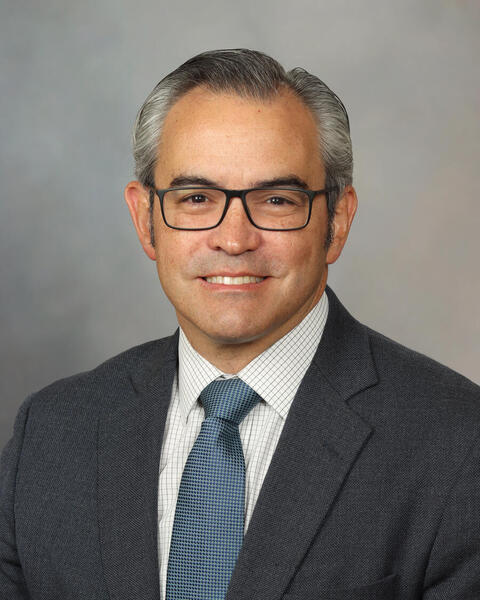
Victor M. Montori is a Professor of Medicine at Mayo Clinic, Rochester, MN, with primary appointments in the Division of Endocrinology, Diabetes, Metabolism, and Nutrition, and a joint appointment in the Division of Health Care Policy & Research, Department of Quantitative Health Sciences. He conducts research in the Knowledge and Evaluation Research (KER) Unit, focusing on evidence-based medicine, shared decision-making, and minimally disruptive medicine. MD: Universidad Peruana Cayetano Heredia MS in Biomedical Research: Mayo Clinic Graduate School of Biomedical Sciences Fellowship in Clinical Epidemiology: McMaster University Fellowship in Human Rights and Technology: Harvard Kennedy School Dr. Montori's research centers on improving healthcare delivery for patients with chronic conditions by aligning treatment with patient values and reducing treatment burden. His work emphasizes knowledge synthesis through systematic reviews and meta-analyses, and the development of patient-centered care models. He advocates for shared decision-making as a method to enhance patient autonomy and care quality. The recent articles highlight a strong trend in patient-centered methodologies, including shared decision-making tools, treatment burden measurement, and the Core GRADE approach for evidence evaluation. His research spans diabetes, heart failure, and broader chronic disease management, with increasing focus on mental health integration and healthcare worker burnout. Member, Editorial Advisory Board, The BMJ (2012–present) Member, National Advisory Council, AHRQ (2012–2015) Chair, International Shared Decision Making Conference (2013) Robert H. and Susan M. Rewoldt Professor of Endocrinology, Mayo Clinic (2023) Most Cited Researcher in Clinical Medicine, Thomson Reuters (2014) Outstanding Mentor Award, Mayo Clinic (2013) Dr. Montori has served as Co-PI on NIH-funded projects such as QBSafe, which aimed to improve care for older adults with type 2 diabetes. He has advised numerous trainees and led initiatives in medical education, including clinical teaching and mentorship. His leadership extends to national and international advisory boards, including the Patient-Centered Outcomes Research Institute (PCORI) and the International Society for Evidence-based Health Care. He is actively involved in the Minnesota Shared Decision Making Collaborative and has contributed to guideline development through The Endocrine Society. His research is conducted within the Knowledge and Evaluation Research Unit, a multidisciplinary team focused on generating and implementing evidence in clinical practice. The unit collaborates across Mayo Clinic’s Centers for Clinical and Translational Science (CCaTS), Biomedical Ethics Research Program, and the Kogod Center on Aging. Dr. Montori also contributes to global efforts in evidence-based medicine through advisory roles with institutions like McMaster University and the Polish Evidence-based Medicine Center.
Prof. Dr. Martin Erdmann is a University Professor of Experimental Physics (High Energy Physics) at RWTH Aachen University, affiliated with the Department of Physics within the Faculty of Mathematics, Computer Science and Natural Sciences. He leads research in high-energy particle physics through the CMS experiment at CERN and the Pierre Auger Observatory in Argentina. His work integrates cutting-edge digital methods, including deep learning and cloud-based data analysis via the VISPA platform. PhD, University of Freiburg (1990) Habilitation, University of Heidelberg (1996) Heisenberg Fellow at DESY and University of Karlsruhe (1997–2002) Professor at RWTH Aachen since 2004 His research interests span Higgs and top-quark physics, cosmic ray detection, radio-based shower measurement, and AI-driven data analysis. He actively contributes to physics education through textbooks and open-access video lectures. His recent publications reflect strong trends in applying deep learning to particle and astroparticle physics, particularly in event reconstruction and simulation. He leads major initiatives like the ErUM-Data-Hub and DIG-UM, advancing digital transformation in fundamental research. Heisenberg Fellowship (DESY and Karlsruhe) Chair, DPG Working Group on Physics, Modern IT, and AI (2019–2021) Project Leader, ErUM-Data-Hub (since 2021) Chair, DIG-UM Community Organization (2021–2024) Prof. Erdmann advises students at all levels and fosters innovation in data science for physics. He has secured leadership roles in international collaborations and promotes sustainable, resource-aware computing in research. His lab develops advanced detector technologies and simulation tools like CRPropa for cosmic ray propagation. Future work includes probing Higgs self-coupling, identifying cosmic ray sources, and refining AI models for physics discovery.
Harald Köstler is an Associate Professor and Head of Research at the Erlangen National High Performance Computing Center (NHR@FAU) within the Department of Computer Science at Friedrich-Alexander-Universität Erlangen-Nürnberg (FAU). He leads the research group on HPC Software Design at the Chair of Computer Science 10 (System Simulation), focusing on software engineering for high-performance computing and data analytics. His research interests include: Software Engineering for HPC Code Generation for Numerical Solvers Performance Engineering on Hybrid Architectures Discontinuous Galerkin and Lattice Boltzmann Methods Multigrid Solvers and Parallel Algorithms Performance Portability across CPUs, GPUs, and FPGAs The recent publications highlight a strong trend in developing efficient, scalable, and portable simulation frameworks for complex physical systems. His work emphasizes code generation, performance optimization, and the integration of classical model-driven and data-driven approaches. Key application areas include computational fluid dynamics, geotechnical engineering, and climate modeling, often leveraging the waLBerla and ExaStencils frameworks. Harald Köstler has no listed scientific awards in the provided text. He advises students in the areas of high-performance computing, numerical methods, and software engineering for scientific applications. His research is supported by collaborations within the FAU HPC ecosystem and likely involves grants related to national high-performance computing initiatives. He is a key contributor to the waLBerla framework, a block-structured, high-performance software for multiphysics simulations, and is involved with the ExaStencils project, which focuses on advanced multigrid solver generation. These frameworks form the core of his research team's efforts in scalable scientific computing.
Jatinder Singh is a Professor at the RC Trust and Principal Research Associate (equivalent to Research Professor) at the Department of Computer Science & Technology, University of Cambridge. He is primarily affiliated with the University of Duisburg-Essen, Germany, where he leads the Compliant and Accountable Systems research group within the Law department. His work operates at the critical intersection of computer science, legal frameworks, and societal impact, focusing on practical implementations that align technology with regulatory requirements while addressing user and community concerns. Research interests center on accountability mechanisms for AI systems, responsible development practices, data governance, and privacy/security in emerging technologies. He examines governance, agency, trustworthiness, and transparency gaps in algorithmic systems through interdisciplinary socio-technical lenses. Current work addresses bias in LLMs, stakeholder participation frameworks, and human rights implications in domains like healthcare, maritime enforcement, and consumer IoT, emphasizing contextual awareness and real-world applicability. His 15 most recent publications (2025-2024) reveal dominant trends in AI transparency, fairness proxy development, and legal-compliance engineering. Key focus areas include stakeholder involvement in AI governance, bias mitigation in language models, data justice applications for vulnerable populations, and operationalizing human-centered AI in clinical settings. The work consistently bridges technical implementation with regulatory frameworks like the EU Cyber Resilience Act and GDPR. Scientific Awards: No awards or fellowships were mentioned in the provided text. Advising and Grants: The text does not specify PhD/Master's students or grant details. As leader of an active research group publishing high-impact work on EU regulations and human rights, he likely directs funded projects and mentors early-career researchers, though concrete evidence is absent in the source material. His position suggests involvement in interdisciplinary grant consortia addressing socio-technical challenges. Labs and Teams: Singh leads the Compliant and Accountable Systems research group at University of Duisburg-Essen, which collaborates across university-wide clusters including Artificial Intelligence and Society, Human-AI Interaction, Trustworthy Human Language Technologies, and Verification of Machine Learning. The group develops frameworks for legal compliance in AI, focusing on demonstrable accountability through tools for transparency, bias auditing, and stakeholder engagement in real-world deployments.
Weihua Zhou is a Tenured Associate Professor at Michigan Technological University in the College of Computing, with affiliations in Applied Computing, Biomedical Engineering, Computer Science, Electrical and Computer Engineering, and Mathematical Sciences. He holds a PhD from Southern Illinois University Carbondale, an MS and B.Eng. from Wuhan University, and completed postdoctoral research at Emory University. Academic Positions : Tenured Associate Professor (2025–present), Tenure-Track Assistant Professor (2019–2025) at Michigan Tech; Nina Bell Suggs Endowed Professorship (2015–2019) at the University of Southern Mississippi. Research Interests : Focuses on medical imaging and health informatics , particularly machine learning applications in cardiovascular diagnosis , osteoporosis risk stratification , and senile dementia early detection . Additional work includes radiomics for COVID-19 severity assessment , federated learning in medical segmentation , and deep learning for proximal femur strength prediction . Scientific Awards : USM Nina Bell Suggs Endowed Professorship, USM College of Arts and Sciences Scholarly Research Award, American Heart Association Research Leaders Academy (2017, 2018), USM Butch Oustalet Distinguished Professorship Research Award. Lab & Tools : Leads the Medical Imaging & Informatics Lab (MIILab-MTU) and contributes to the NSF/MRI GPU Cluster. Open-sourced tools include KD4COVID19 for radiomics analysis and ECGTools for ECG classification.
Assoc. Prof. Drahomira Cupar is an Associate Professor at the Department of Information Sciences and Technologies, University of Zadar. She specializes in information organization, digital humanities, and reading habits research. Her work focuses on classification systems, open access publishing, and cultural heritage preservation. She actively participates in projects like TRIPLE, OPERAS-PLUS, and CRAFT-OA. Consultation hours are Wednesdays 10:00–12:00 via email. Her research spans over 60 publications covering digital transformation of historical texts, metadata strategies, and literacy promotion. Key projects include digitization of Glagolitic texts and development of multilingual taxonomies. She teaches courses on information organization, research methodology, and library science. Awards section is currently unspecified. Grants involve EU-funded initiatives focusing on open science infrastructure and digital preservation. She leads the Thesaurus.hr initiative and contributes to the OPERAS network.
Theresia Gschwandtner is a Researcher at TU Wien's Research Division of Visual Analytics (E193-07). Her work focuses on advancing visual analytics methodologies for temporal data, fraud detection, and uncertainty visualization. She leads the Network Lab and contributes to tools like TimeCleanser for data cleansing and NEVA for fraudulent network identification. Her research emphasizes interactive systems for guidance in data analysis, provenance tracking, and enhancing user-centric visualization frameworks. Key research interests include temporal data preprocessing, multivariate time series analysis, and the integration of automated guidance systems into visual analytics platforms. She has collaborated on projects such as Hermes (economic network exploration) and TBSSvis (temporal blind source separation), which combine algorithmic innovation with intuitive user interfaces. Guidance frameworks and user studies are central to her work, exploring how automated support impacts performance and mental state during complex data analysis tasks. She has advised students on theses addressing data quality, cyclical pattern detection, and lighting design visualization. Notable contributions include the Quantifying Uncertainty in Time Series Processing framework and the LightGuider system for interactive lighting design guidance. Her work bridges theoretical advancements with practical applications in healthcare, finance, and engineering domains.