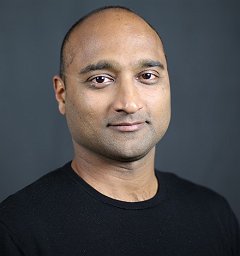
Efstathios StiliarisView profile
Adjunct Associate Professor
Efstathios Stiliaris is an Experimental Nuclear Physicist at the Department of Physics of the National & Kapodistrian University of Athens since 2016, where he also served as Acting Head of the Nuclear and Particle Physics Laboratory until 2022. He concurrently holds the position of Adjunct Associate Professor at The Cyprus Institute in Nicosia, Cyprus since 2013, leading the research group at the SPECT Laboratory (SPECT-Lab). His primary research focuses on experimental nuclear physics, medical imaging technologies, and hadronic physics, with a strong emphasis on developing advanced imaging modalities such as SPECT, Compton cameras, and AI-driven solutions for radiological diagnostics. His expertise spans radiation detection technologies, including gamma-camera systems, thermal tomography, and the development of dual-modality contrast agents for SPECT/MRI and PET/MRI applications. He has pioneered novel reconstruction algorithms like RISE and ComptonRec, addressing challenges in image quality enhancement and inverse problem solutions. His work bridges nuclear physics fundamentals with clinical applications, leveraging machine learning for therapeutic and diagnostic advancements. Key contributions include optimizing semi-pixelated scintillation crystals for planar imaging, exploring proton structure through pion photoproduction analyses, and advancing thermal tomography through physics-informed neural networks. His multidisciplinary approach integrates computational physics, material science, and biomedical engineering to address unresolved challenges in medical imaging instrumentation and radiation detection systems. Stiliaris has collaborated on projects involving the CMS Collaboration at CERN and contributed to experimental methodologies for thermal loss estimation in molten salt energy systems. His research group maintains active involvement in both fundamental physics and translational medical imaging technologies, emphasizing lab-to-clinic transitions through rigorous validation protocols and novel experimental setups.