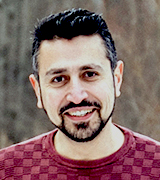
Dr. Moritz Ziegler is a geomechanics researcher affiliated with the Technical University of Munich (TUM) and the Assistant Professorship of Geothermal Technologies . He previously worked at GFZ Potsdam (2017–2023) and earned his PhD in Geophysics from the University of Potsdam (2014–2017). His research focuses on geomechanical numerical modeling , uncertainty quantification , and 3D stress field analysis , with applications to geothermal energy, seismic hazard, and rock mechanics. Education: Bachelor of Science in Geosciences (2008–2011), Freie Universität Berlin Master of Science in Geophysics (2011–2014), University of Potsdam PhD in Geophysics (2014–2017), University of Potsdam & GFZ Potsdam His work integrates advanced computational methods ( Altair Hypermesh , Dassault Systèmes Abaqus , Python , Matlab ) to address complex geomechanical problems. Recent publications analyze stress gradients in the North Alpine Foreland Basin, fault-stress interactions, and physics-based machine learning in geomechanics. He has contributed to software development (DOuGLAS v1.0) and calibration tools (FAST Calibration v2.4). Scientific awards or honors are not explicitly mentioned in the provided text. However, his research has been published in leading journals such as Geophysical Journal International , Solid Earth , and Pure and Applied Geophysics .
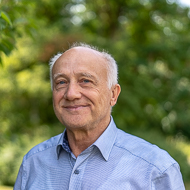
Mohammad Hamdaqa is an Associate Professor in the Department of Computer Engineering and Software Engineering at Polytechnique Montréal, where he leads the Laboratory of Software and Emerging Technologies. His academic journey includes a Ph.D. in Electrical and Computer Engineering from the University of Waterloo (2016), a Master's in Electrical and Computer Engineering from Concordia University, an MBA from the New York Institute of Technology, and a Bachelor's in Computer Engineering from Jordan University of Science and Technology. His research focuses on the intersection of software engineering and emerging technologies, particularly examining how software engineering approaches can be adapted for complex new platforms like cloud computing and blockchain. His work spans model-driven software engineering, cloud application architecture, smart contract development, and infrastructure as code. He investigates both how traditional software engineering practices can evolve to address the challenges of modern distributed systems and how emerging technologies can transform software development processes themselves. Analysis of his recent publications reveals a strong emphasis on blockchain technologies (particularly smart contracts), cloud-native applications, and the application of AI to software engineering tasks. His work shows a consistent thread of empirical research combined with practical tool development, with increasing focus on sustainability aspects of software systems in recent years. Much of his research bridges theoretical foundations with practical implementation concerns. Professor Hamdaqa serves as a thesis supervisor for multiple graduate students, with recent completed Master's theses focusing on smart contract auditing, prompt engineering for OCL generation, model-driven epidemiology, and security practices in infrastructure as code. He actively recruits students for research projects in his laboratory. He is a member of both the IEEE Computer Society and the Association for Computing Machinery (ACM), has served on program committees for major software engineering conferences, and is on the editorial board of Service Transaction on Internet of Thing. His laboratory, the Laboratory of Software and Emerging Technologies, serves as the hub for his research activities in blockchain, cloud computing, and model-driven engineering.
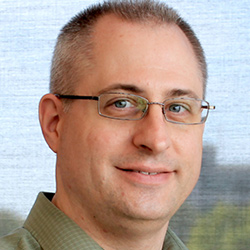
Dr. Yanqing Hu is an Associate Professor at the Department of Statistics and Data Science, School of Science, Southern University of Science and Technology (SUSTech). With a Ph.D. in Systems Theory from Beijing Normal University (2011) and postdoctoral experience at the Levich Institute, City University of New York (2011-2013), his work focuses on big data analysis of complex systems, particularly in social media dynamics, network resilience, and graph neural network applications. Ph.D.: Beijing Normal University (Systems Theory, 2011) Postdoctoral: Levich Institute, CUNY (2011-2013) Research spans complex network analysis, information spreading mechanisms, and predictability of network structures. His work combines theoretical frameworks with real-world applications in social networks, infrastructure systems, and brain connectivity. Recent publications explore information percolation in social media, resilience quantification in interdependent networks, and intrinsic structure predictability. These studies appear in high-impact journals like Nature Human Behaviour (IF: 24.3), Nature Communications (IF: 17.7), and PNAS (IF: 10). World AI Conference Youth Outstanding Paper Nomination Beijing Outstanding Doctoral Dissertation Award Guangdong Special Support for Young Talents Guangdong Outstanding Youth Fund Collaborations include leading researchers from Boston University, King's College London, and Shenzhen-Hong Kong Institute of Microelectronics. His work informs network defense strategies and efficient navigation mechanisms in complex systems.
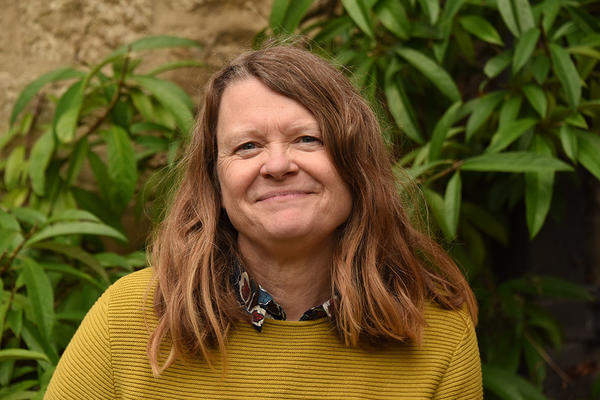
Thomas Rüde is Universitätsprofessor for Hydrogeology at RWTH Aachen University , Germany, where he leads the Hydrogeology group within the Faculty of Georesources and Materials Engineering. Holding the chair since 2005, he also serves as Managing Director of the Vereinigung Aachener Geowissenschaftler e.V. and has previously been Vice-President (2008-2014) and Executive Council member (2000-2008) of the International Mine Water Association (IMWA). Education 2004 – Privatdozent (Dr. rer. nat. habil.), University of Munich 1995 – Dr. rer. nat., University of Karlsruhe 1991 – Diplom-Geologe, University of Karlsruhe Research focus Professor Rüde’s work centres on understanding and modelling flow and reactive transport in complex aquifer systems . Key themes include: Contaminant hydrogeology – behaviour of geogenic arsenic and uranium in groundwater Groundwater protection and remediation – risk assessment and mitigation strategies Mine-water management – acid mine drainage, dewatering-well clogging, post-mining landscapes Tracer and hydraulic testing – field experiments to quantify subsurface heterogeneity Numerical modelling – high-performance simulation of multi-aquifer systems and karst His research spans Europe (Germany, Austria, Netherlands), Latin America (Mexico, Indonesia) and South-East Asia, frequently in close collaboration with local universities and industry partners. Publication trends Since 2010, Rüde has published extensively on geogenic contamination (As, U, F) in sedimentary and volcanic aquifers, mine-water impacts , and karst hydraulics . Recent work (2022-24) highlights advanced environmental tracers (gadolinium), transboundary groundwater issues, and the sustainable management of post-mining landscapes under climate change. Numerical models range from site-scale dewatering optimisation to catchment-scale coupled flow-transport simulations. Scientific awards & recognition Best Teaching Award 2010 – RWTH Aachen University Best Teaching Award 2012 – RWTH Aachen University Best Teaching Award 2014 – RWTH Aachen University Supervision & academic service Since 1998 he has taught hydrogeology through lectures, seminars, laboratory and field courses, and computer-based modelling labs. To date he has supervised: 13 PhD candidates 34 Diploma students 57 MSc students 63 BSc students He is Chairman of the Study Commission for the BSc programme in Georesources Management at RWTH Aachen, ensuring curriculum development and quality assurance. Laboratory & field infrastructure His group operates modern hydrochemical laboratories for trace-element analyses and maintains field stations for tracer experiments in Germany, Mexico and Indonesia. High-performance computing resources (in collaboration with the Jülich Supercomputing Centre) enable large-scale groundwater modelling and Monte-Carlo uncertainty assessments.
Prof. Dr. Harald Wehnes serves as a Professor at the University of Würzburg within the Faculty of Mathematics and Computer Science, specifically affiliated with the Institute of Computer Science's Chair of Computer Science III (Communication Networks). His office is located in room A206 at the Hubland campus, with contact email wehnes@informatik.uni-wuerzburg.de. His research centers on project management methodologies, with particular emphasis on the Project Excellence Model and its practical applications. Prof. Wehnes has developed significant expertise in applying project management frameworks to complex IT infrastructure initiatives and healthcare systems. His work demonstrates how theoretical project management concepts translate into real-world implementation, especially in cross-organizational contexts. Analysis of his publication history reveals a consistent focus on practical project management applications, particularly the NIMBUS project case study which documented the consolidation of 12 data centers into a single state data center. His publications demonstrate evolving expertise from foundational programming work (evidenced by his 1981 book "Strukturierte Programmierung mit FORTRAN 77" which went through seven editions) to sophisticated project management frameworks. Prof. Wehnes has maintained active engagement with the German Project Management Association (GPM), presenting at numerous forums and events. His international reach is evident through presentations at institutions including the University of the United Arab Emirates and the University of Canterbury in New Zealand. From 2013-2020, he taught specialized courses on professional project management (Spezialvorlesung aus der Praxis: Professionelles Projektmanagement) at the University of Würzburg, sharing his extensive practical experience with students. His work environment within the Chair of Computer Science III connects his project management expertise with research areas including 5G & 6G network technologies, network and service management, and green communication networks.
Randy Freeman is a Professor of Electrical and Computer Engineering at Northwestern University's McCormick School of Engineering. He joined the university in 1996 after earning his Ph.D. from the University of California, Santa Barbara. His research focuses on nonlinear control theory, robust control, multi-agent systems, and distributed control systems. Freeman has been recognized with the NSF CAREER Award (1997) and has held editorial roles in prominent journals like the IEEE Transactions on Automatic Control. Education: Ph.D., Electrical Engineering, University of California, Santa Barbara (1996) M.S., Electrical Engineering, University of Illinois at Urbana-Champaign B.S., Electrical Engineering, Cornell University His research explores advanced control strategies for complex systems, including nonlinear feedback systems, distributed averaging, and multi-agent coordination. Key contributions include work on self-healing swarm control, distributed environmental monitoring, and privacy-preserving consensus algorithms. His publications span journals like IEEE Transactions on Robotics and IEEE Control Systems Letters . Scientific Awards: NSF CAREER Award (1997) Advising and Grants: Freeman has contributed to collaborative robotics projects and sensor network research, supported by grants from NSF and other agencies. His work bridges theoretical control systems with practical applications like robotics and environmental monitoring. Labs and Teams: Affiliated with the Master of Science in Robotics Program and collaborates on multi-agent systems and distributed control initiatives.
Professor Lindsay Turnbull is a Professor of Plant Ecology at the University of Oxford's Department of Biology. Her research focuses on understanding the evolutionary and ecological basis of plant trait diversity and its consequences for ecosystems. Key interests include seed size variation, plant-soil interactions, and the impact of organic farming on biodiversity. She leads a research group exploring topics such as mutualism stability, species coexistence, and island conservation genetics. Turnbull's work integrates experimental, observational, and computational approaches to address fundamental questions in ecology. Her lab, based at the Department of Biology (Mansfield Road and South Parks Road campuses), has contributed to global understanding of biodiversity-ecosystem functioning relationships and plant-microbe symbioses. Notable projects include studies on Aldabra giant tortoises and coral reef connectivity in the Seychelles, highlighting her commitment to applied conservation science. Her research spans multiple scales—from molecular interactions in legume-rhizobia systems to large-scale biodiversity patterns in grasslands and tropical ecosystems. Recent work emphasizes the role of trait-based approaches in predicting ecological responses to environmental changes such as eutrophication and climate variability. Her publications frequently bridge theoretical and applied ecology, offering insights into both natural and human-managed ecosystems.
Shili Lin is a Professor of Statistics at The Ohio State University's Department of Statistics, within the College of Arts and Sciences. She joined the faculty in 1995 after serving as the Neyman Visiting Assistant Professor at the University of California, Berkeley. Her expertise spans statistical genomics, bioinformatics, high-dimensional data analysis, Bayesian statistics, and Monte Carlo methods. Lin collaborates extensively with medical researchers to address challenges in genomic data such as ultra-high dimensionality, complex dependencies, and sparsity, focusing on diseases like cancer, multiple sclerosis, tuberculosis, and diabetes. She has contributed to developing computational tools for analyzing chromatin interactions, methylation patterns, and metagenomic samples. Lin holds a PhD from the University of Washington (1993). Her professional roles include serving as an Associate Editor for Biometrics , Statistical Applications in Genetics and Molecular Biology , and Statistics in Biosciences , as well as an Editorial Board member for Genetic Epidemiology . She is a standing member of NIH's Biostatistical Methods and Research Design Study Section and has served on multiple NSF and NIH grant review panels. Additionally, she is President Elect of the Caucus for Women in Statistics and has been a member of the ASA Committee on AAAS representation for six years. Her research interests emphasize statistical methodologies tailored to genomic data, including model selection, epigenetic analysis, and integrative approaches for multi-omics data. Lin's work often combines theoretical advancements with practical applications, such as predicting relapse in immune-mediated disorders and improving imputation techniques for single-cell Hi-C analysis. She has pioneered software tools like TopKLists and GrammR to facilitate ranked list aggregation and metagenomic data analysis. Lin's scientific accolades include ASA Fellowship (2004), AAAS Fellowship (2009), and membership in the International Statistical Institute (2014). Her contributions to statistical genetics and epigenomics have been recognized through grants and editorial leadership roles. While her research group focuses on cutting-edge methods, no formal advisees or students are explicitly listed in the provided materials.
Malay Ghosh is a Distinguished Professor in the Department of Statistics at the University of Florida. He holds a B.A. (1962) and M.A. (1964) in Statistics from Calcutta University, and a Ph.D. (1969) in Statistics from the University of North Carolina at Chapel Hill. His research focuses on Bayesian statistics, small area estimation, and survey sampling methodologies. Ghosh has contributed extensively to statistical theory and applications, including foundational work in probability matching priors and generalized linear models for small area estimation. Research Interests : His key areas include advanced statistical modeling, methodological developments in survey sampling, and Bayesian approaches to complex data analysis. His work bridges theoretical rigor with practical applications in diverse fields requiring precise estimation techniques. Awards: Fellow, American Statistical Association Fellow, Institute of Mathematical Statistics Elected Member, International Statistical Institute Recipient of TIP (1994) and PEP (1996) Awards Editorial Roles: Editor of Sequential Analysis (since 1996), Co-Editor of Sankhya (since 2000), and Associate Editor of the American Statistician (since 2000). His editorial contributions reflect his leadership in advancing statistical discourse.
Robert E. (Rob) Kass is the Maurice Falk University Professor of Statistics and Computational Neuroscience at Carnegie Mellon University, holding joint appointments in the Department of Statistics & Data Science, Machine Learning Department, and Neuroscience Institute. His research spans Bayesian statistics, neural data analysis, and computational neuroscience. Kass earned a B.A. in Mathematics from Antioch College, a Ph.D. in Statistics from the University of Chicago, and has been at CMU since 1981. He has served as Department Head of Statistics (1995–2004) and Interim Co-Director of the CNBC (2015–2018). His work focuses on statistical methods for neuroscience, particularly analyzing spike train data and identifying cross-brain interactions. Notable contributions include co-authoring Analysis of Neural Data and foundational articles on Bayesian inference. Kass has received prestigious awards such as the National Academy of Sciences membership and COPSS Distinguished Achievement Award. Research interests include computational neuroscience, statistical modeling of neural systems, and interdisciplinary education. He has advised numerous students and co-organized major workshops like the Statistical Analysis of Neuronal Data series. Kass’s work emphasizes the interplay between statistical rigor and scientific insight, bridging theoretical and applied domains. Education: B.A. in Mathematics, Antioch College Ph.D. in Statistics, University of Chicago Postdoctoral Fellow, Princeton University Scientific contributions include advancements in spike train analysis, Bayesian model assessment, and statistical methods for brain connectivity. His work on neural synchrony and population coding has influenced both theoretical and applied neuroscience.
Santosh Basapur is an Assistant Professor in the Department of Family and Preventive Medicine at Rush Medical Center and Director of Design at Rush University. He also serves as an Adjunct Faculty Lecturer and planning coordinator for human factors and systems design at the Institute of Design (ID) at Illinois Institute of Technology. His expertise bridges human-centered design, healthcare systems, and user experience research, with a focus on applying methods from HCI, social sciences, and anthropology to complex healthcare challenges. Education: PhD in Design from the Institute of Design (ID), MS in Industrial and Systems Engineering (Human Factors) from SUNY Buffalo, and BS in Mechanical Engineering from Karnatak University. Research Interests: Santosh focuses on innovative systems design in healthcare, including UX research methodologies, smart technologies integration, and cross-disciplinary healthcare innovation. His work emphasizes human factors engineering and culturally sensitive design approaches to improve healthcare delivery and patient outcomes. Industry Roles: Director of Project Management at Rush University Medical Center, Founder/Principal of UX Yantra Inc., and former Chief Experience Architect at Vizlore. He has over 19 years of industry experience in UX design, including roles at Motorola Research Labs and Mobility (Google), where he led projects in Smart Media, Connected Home, and Wellness Experiences. Award Recognition: Notable contributions include patents in media-related systems (2016, 2017) and invited speaking engagements at global conferences like Human-Centered Design (Leuven, 2016) and Service Design Week (Chicago, 2019). His work has been published in venues such as the International Conference on Intelligent Human Systems Integration and BCS Human Computer Interaction Conference. Grants & Collaborations: Collaborated on an NIH-funded project to improve sickle cell care via design interventions. His cross-disciplinary approach integrates clinical, technical, and design expertise to address systemic healthcare challenges. Labs/Teams: Associated with the Center for Collaborative Healthcare Design at ID, focused on equitable healthcare solutions through design innovation.
Michael C. Frank is the Benjamin Scott Crocker Professor of Human Biology at Stanford University and Director of the Symbolic Systems Program. He leads the Stanford Language and Cognition Lab and has pioneered large-scale collaborative projects including Wordbank (open vocabulary data), MetaLab (developmental meta-analyses), ManyBabies (replication network), childes-db (language transcripts), and Peekbank (eye-tracking repository). His research examines children's language learning and its interaction with social cognition, utilizing computational modeling, large datasets, and open science frameworks. Key interests include: Mechanisms of early language acquisition Pragmatic inference in social contexts Cross-cultural variability in cognitive development Data-driven approaches to developmental science Reproducibility and meta-scientific innovation Recent publications (2022-2025) demonstrate strong emphases on: 1) Novel methods for measuring language environments and cognitive abilities, 2) Computational models of learning and perception, 3) Cross-cultural investigations of social cognition, and 4) Infrastructure for open developmental science. The majority employ multimodal data, meta-analytic techniques, and large-scale collaborations. He teaches courses including Experimental Methods, Developmental Psychology, and interdisciplinary seminars on language, cognition, and computation. His lab maintains active research teams across multiple continents through initiatives like ManyBabies and LEVANTE.
Henry Corrigan-Gibbs is an Assistant Professor in MIT's Department of Electrical Engineering and Computer Science (EECS) and a member of the Computer Science and Artificial Intelligence Laboratory (CSAIL). He leads research in computer security, cryptography, and privacy-preserving systems. His work focuses on practical cryptographic systems that empower users while maintaining strong security guarantees. Notable contributions include the Tiptoe private search engine, Prio for privacy-preserving data aggregation, and Larch for secure authentication. His research has influenced industry standards at Apple, Google, and Mozilla, and has been recognized with awards such as the Best Young Researcher Paper at Eurocrypt and the Caspar Bowden Award. Education: PhD in Computer Science (Stanford University, advised by Dan Boneh), Postdoc at EPFL (hosted by Bryan Ford). B.S. in Computer Science from Yale University. Research Interests: Private Information Retrieval, Secure Authentication, Cryptographic Systems, Privacy-Preserving Analytics, and Hardware Security. His lab collaborates with PDOS and CSS research groups at MIT and co-hosts the MIT Security Seminar series. Grants and Funding: Supported by industry and government agencies (details in paper acknowledgments). Teaching roles include co-instructor for Applied Cryptography (6.5610) and Foundations of Computer Security (6.1600). Key Projects: Prio (used in iOS/Android), Tiptoe (private web search), Larch (backdoor-resistant authentication), and Whisper/Poplar systems for private data aggregation. His team includes postdocs, PhD students, and undergrad researchers working on cutting-edge cryptographic protocols.
Dr. Yang Zhang is a Professor at the National University of Singapore (NUS), holding appointments in the Department of Computer Science (School of Computing) and the Department of Biochemistry (Yong Loo Lin School of Medicine). He also leads the Zhang Lab, which focuses on AI-driven computational methods for protein structure prediction and design. Previously, he was a Professor at the University of Michigan. His research integrates artificial intelligence, deep learning, and physics-based models to address challenges in computational biology. Affiliations: School of Computing; Yong Loo Lin School of Medicine; Cancer Science Institute of Singapore Key Roles: Principal Investigator of Zhang Lab; Developer of I-TASSER algorithm Research interests span AI-driven protein design, deep learning for RNA structure prediction, and drug discovery. Projects include the EvoDesign server for protein interaction design and TripletRes for coevolution-based contact prediction. Major contributions include the I-TASSER algorithm, ranked top in CASP experiments for protein structure prediction. Awards: Alfred P. Sloan Award, NSF CAREER Award, and seven-time Highly Cited Researcher (2015–2021).
El Mahdi Chayti is a doctoral researcher at the École Polytechnique Fédérale de Lausanne (EPFL), affiliated with the School of Computer and Communication Sciences and the Department of Computer Science. He works under the Machine Learning and Optimization (MLO) lab, focusing on advanced optimization techniques and machine learning theory. Contact: el-mahdi.chayti@epfl.ch . Current Roles: Doctoral Assistant and PhD Student in Computer and Communication Sciences Research Interests: Machine Learning, Optimization Algorithms, Meta-learning, Second-order Optimization, Energy Forecasting His publications highlight expertise in stochastic and cubic Newton methods, hybrid deep learning models, and personalized collaborative learning. Recent works include Improving Stochastic Cubic Newton with Momentum (2025) and Hybridization of Deep Learning with Physical Knowledge for Energy Forecasting (2019) . Key trends in his research span optimization efficiency , meta-learning frameworks , and integration of domain knowledge into AI models. He emphasizes theoretical guarantees and practical scalability in algorithm design.