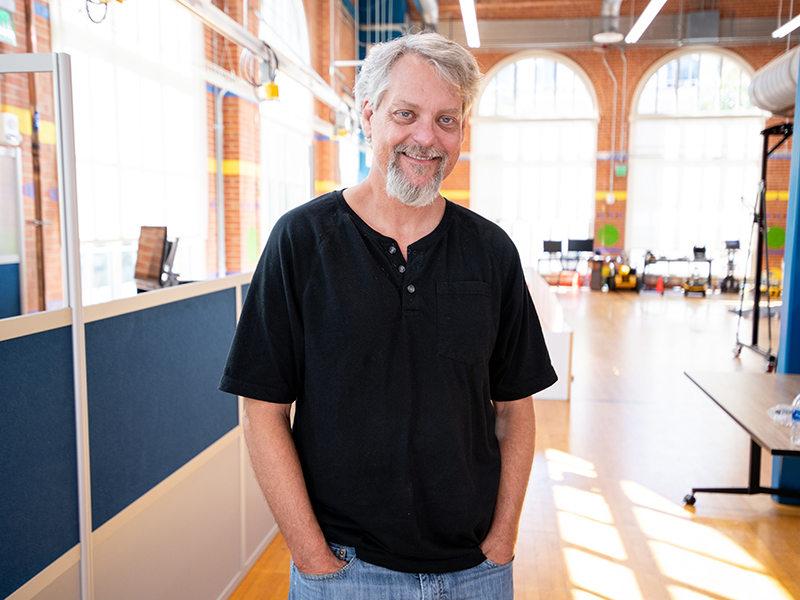
Frank G. Klotz is an Adjunct Senior Fellow and Professor of Policy Analysis at the RAND School of Public Policy. A retired U.S. Air Force Lieutenant General, he previously served as Under Secretary of Energy for Nuclear Security and Administrator of the National Nuclear Security Administration (2014–2018). His military career included roles such as Commander of Air Force Global Strike Command and Defense Attaché in Moscow. Education: U.S. Air Force Academy graduate Rhodes Scholar at the University of Oxford (M.Phil. and D.Phil. in international relations/politics) National War College graduate Research Focus : Nuclear deterrence, military strategy, U.S.-Russia relations, and arms control. His work emphasizes reducing nuclear proliferation, maintaining a modernized nuclear triad, and improving defense budgeting processes through comparative organizational studies. Key Contributions: Authored analyses on extending the New START treaty, modernizing nuclear systems, and avoiding space weaponization. His expertise bridges military operations, policy analysis, and international diplomacy.
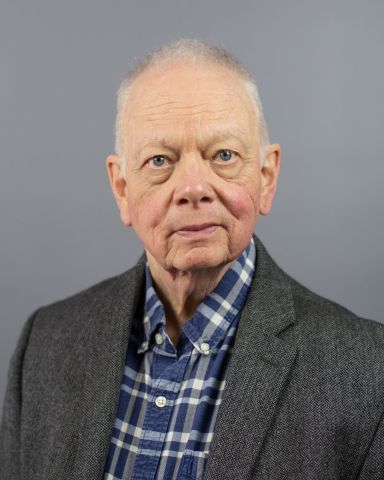
Russell King is the Henry Armfield Foscue Distinguished Professor of Industrial and Systems Engineering (ISE) at North Carolina State University's College of Engineering. He serves as the Director of Graduate Programs for the ISE department, responsible for administering degree programs serving approximately 190 graduate students. King is also a Fellow of the Institute of Industrial and Systems Engineers and has received numerous teaching and research awards throughout his 37-year career at NC State. Dr. King earned his Ph.D. in Industrial Engineering from the University of Florida (1986), following a Master of Industrial Engineering (1982) and Bachelor of Science in Systems Engineering (1980). His undergraduate journey was unconventional, having considered seven different majors including pre-med, biology, microbiology, biochemistry, math, and ornamental horticulture before selecting engineering. His doctoral work was completed under advisor Thom Hodgson, who moved from Florida to become NC State's ISE department head during King's studies. King's research focuses on solving practical problems across diverse areas including logistics, scheduling, and inventory control for additive manufacturing, remanufacturing, and military systems under risk. His work spans pricing strategies, stress control of 3D-printed parts, supply chain design, and military logistics optimization. His research approach bridges theoretical rigor with real-world applications, resulting in consulting engagements with Ford Motors, The Gap, Dillards Department Stores, and the Institute for Defense and Business. Analysis of his recent publications shows a consistent focus on military logistics applications (5 of 10 recent papers), additive manufacturing integration (3 papers), and supply chain risk management (4 papers), demonstrating how his research has evolved to address emerging challenges in manufacturing and defense logistics while maintaining practical relevance. C. A. Anderson Outstanding Faculty Award, ISE Department at NC State University (2020, 2014, 2008, 2002, 1996, 1986) Albert G. Holzman Distinguished Educator Award, Institute of Industrial Engineers (2010) Henry Armfield Foscue Distinguished Professor (2017) Edward P. Fitts Distinguished Professor (2012) NCSU George H. Blessis Outstanding Undergraduate Advisor Award (2010) Teaching Excellence Award in the OR Division, Institute of Industrial and Systems Engineers (2019) Technical Innovation in Industrial Engineering, Institute of Industrial Engineers (2003) Fellow, Institute of Industrial Engineers (2006) As an academic leader, King has developed innovative programs including a dual Master of Industrial Engineering/Master of Business Administration program and a distance education Master of Engineering degree. His mentorship has produced three students who placed in the top 3 of IIE's dissertation award competition, with two taking first place. He has served as associate editor for the Journal of Manufacturing Systems and IIE Transactions, contributing to the scholarly community beyond his own research. Outside academia, King and his daughter are Masters of Taekwondo under Grand Master K.S. Lee of Morrisville, NC.
Afsah Anwar is a tenure-track Assistant Professor in the Department of Computer Science at the University of New Mexico (UNM), Albuquerque, leading the Beyond Defense Lab focused on Internet security, malicious activity analysis, and incident response frameworks. Her work bridges technical cybersecurity research with societal impact assessment. Her research spans Malware Analysis, Threat Intelligence, and Vulnerability Management, with specialized expertise in Machine Learning-based defenses for IoT/mobile platforms, Internet censorship measurement, space security, and web fraud detection. The lab emphasizes real-world applicability through tools that address concept drift in malware detection and robustness against adversarial attacks. Analysis of her 2020-2025 publications reveals dominant themes: IoT malware robustness under adversarial conditions (40% of output), Internet measurement studies including censorship and routing security (30%), and vulnerability database refinement (15%). Key methodologies integrate graph-based analysis, time-series measurement, and multimodal LLMs for interpretable security reasoning. Scientific Awards: Best Paper Award at WISE 2024 Research Grants: NSF SaTC Medium grant (August 2025) on VPN security with Roya Ensafi (UMich) and Jed Crandall (ASU) Advising: PhD Students: Enrique Sobrados (Mobile Security), Ramsha Anwar (Mobile Security/Privacy), Dheeman Saha (Censorship/Internet Measurement; co-advised) Master's: Jack Vanlyssel (NSF SFS Scholar, Space Security), Muhammad Danish (Web Security; CRA Outstanding Undergraduate) Undergraduate: Muneeb Ahmad (AI/Cybersecurity) Mentorship: Weekly CTF events, Sandia National Labs collaborations (Ross, Doakes, Hassan), and dedicated support for students from Bihar, India The Beyond Defense Lab operates from Farris Engineering Center #2150, hosting industry experts (e.g., Meta's Dr. Abusnaina, X's Dr. Saad) and developing healthcare security frameworks with Dr. Sazzadur Rahman. Current projects include Russian censorship analysis using time-series methods and multimodal LLMs for vulnerability reasoning (LLaVul).
Lina Gyllencreutz is an Associate Professor at Umeå University's Department of Nursing in Örnsköldsvik. Her research focuses on emergency medicine, disaster preparedness, and prehospital care, with particular emphasis on mass casualty incidents, chemical incidents, and tunnel safety protocols. She actively contributes to interdisciplinary emergency training programs and has published extensively on simulation-based learning and first responder decision-making. Research Interests: Dr. Gyllencreutz specializes in Emergency medical response Disaster preparedness Mass casualty incident management Chemical incident protocols Tunnel safety training Simulation-based education Publications Trends (2023-2025): Recent work demonstrates a strong focus on improving first responder capabilities through technology-enhanced training, developing assessment tools for disaster preparedness, and analyzing multi-agency collaboration in complex emergency scenarios. Key themes include tunnel incident decision-making, chemical incident response, and mixed reality training applications. Collaborative Networks: Dr. Gyllencreutz regularly collaborates with Umeå University's Department of Diagnostics and Intervention, Center of Disaster Medicine, and international researchers from institutions like Oslo University and Australian safety organizations.
Rachel Whitlark is an Associate Professor in the Sam Nunn School of International Affairs at Georgia Institute of Technology. Her research focuses on international security, nuclear proliferation, and executive decision-making in foreign policy. She holds a Ph.D. in Political Science from George Washington University, a master’s from Stanford University, and a B.A. from George Washington University. Affiliations: Nonresident Senior Fellow at Atlantic Council’s Scowcroft Center, Fellow of Bridging the Gap Project, and former fellowships at Harvard’s Belfer Center and MIT’s Security Studies Program. Her work examines leaders’ roles in nuclear policy, including preventive war strategies, targeting of nuclear scientists, and arms control negotiations. Key geographic focuses include the Middle East and East Asia. Her 2021 book All Options on the Table analyzes preventive military force against adversarial nuclear programs using archival research. Recent Research Trends: Emphasis on nuclear latency, presidential beliefs about coercion, and the interplay between technology and proliferation. Awards and Grants: Recipient of Defense Threat Reduction Agency grants, Stanton Foundation funding, and multiple fellowships at leading institutions. Her work bridges academia and policy, influencing national security discourse. Grants & Labs: Research supported by DTRA and Stanton Foundation grants. Collaborations include the Sam Nunn School’s Global Nuclear Security initiatives and Atlantic Council’s Forward Defense practice. Teaching & Engagement: Teaches courses on international security, nuclear proliferation, and U.S. foreign policy. Publications appear in Security Studies , Journal of Conflict Resolution , and Bulletin of the Atomic Scientists .
Shaul Druckmann is an Associate Professor at Stanford University in the departments of Neurobiology, Psychiatry and Behavioral Sciences, and by courtesy in Electrical Engineering. He is affiliated with Stanford Bio-X and the Wu Tsai Neurosciences Institute. Key Research Areas: Neural circuit dynamics, computational neuroscience, sensory-motor integration, and brain-wide information representation. Academic Roles: Advisor, mentor, and instructor for graduate and doctoral programs at Stanford. His work combines theoretical modeling, in vivo imaging , and genetic dissection to uncover how neural circuits process information and generate behavior. Recent trends in his research emphasize cross-species comparative analysis (Drosophila, rodents, C. elegans) and interdisciplinary applications in neuroprosthetics. 2023-2024 Awards: Award for Excellence in Graduate Teaching, Stanford University McKnight Scholar, McKnight Foundation Sloan Research Fellow, Sloan Foundation Advising & Teaching: Dr. Druckmann mentors doctoral students across Neurobiology, Psychiatry, and Applied Physics. He teaches foundational courses like Introduction to Mathematical Tools in Neuroscience and Neuroscience Computational Core , while supervising independent studies in bioengineering and physics. Laboratory: The Druckmann Lab at Stanford employs advanced imaging , computational modeling , and connectome analysis to bridge theoretical neuroscience with applications in medical devices and cognitive frameworks.
Dr. Narges Arastouei serves as a postdoctoral researcher at the Chair of Mobile Business & Multilateral Security, Goethe University Frankfurt since 2019. With over 12 years of industry experience including leadership of security operations at Iran's largest mobile provider (MCI), she specializes in cybersecurity for next-generation mobile networks and critical infrastructure protection. Her educational background includes: Ph.D. in Computer System Networking and Telecommunications from Amirkabir University of Technology (AUT), Tehran Research focuses on network security, 5G/6G communications, IoT security, and Security Operations Center (SOC) frameworks. Current work bridges theoretical networking with practical incident handling, emphasizing human factors in cybersecurity and privacy-preserving healthcare applications. Her projects address evolving threats in mobile ecosystems through both technical solutions and policy frameworks. Publication trends reveal progression from foundational work in opportunistic network routing (2013-2019) to cutting-edge 6G security research (2022-2025), with consistent emphasis on real-world implementation challenges. Key themes include risk-aware protocols, botnet detection, and secure healthcare systems. Scientific recognition includes: First-place doctoral student award She leads coordination of EU-funded CyberSec4Europe and CyberSecPro projects while spearheading human factor components in the ECCO initiative. Secured Goethe-Corona-Fonds grant funding for longitudinal study on Germany's Corona Warning App adoption. Hosts the SECMGT workshop on information security management since 2023. Active within Goethe University's security research ecosystem, she contributes to multilateral security frameworks and mentors junior researchers through student assistant programs.
Professor Hongmian Gong is a faculty member in the Department of Geography and Environmental Science at Hunter College (CUNY). He holds a Ph.D. in Geography from the University of Georgia (1997) and has extensive academic credentials from institutions in China and the U.S. His research focuses on urban geography, GIS applications, and transportation systems. He has led numerous grants from the U.S. Department of Transportation and other agencies, including projects on GPS integration in urban studies and transportation data collection. Notably, his work has been cited in The Wall Street Journal and media outlets like Sinovision. His teaching spans courses such as Urban Geographic Theory, GIS Applications, and World Regional Geography. He has authored/co-authored over 30 peer-reviewed publications, including a 2016 Routledge book on urban hierarchy and corporate control. Recent research explores shrinking cities, post-9/11 urban restructuring, and geospatial methodologies for transportation surveys. He has organized events like the 2013 GPS for Transportation Symposium at Roosevelt House. His work emphasizes practical GIS tools and urban policy implications. Education: Ph.D., 1997 – University of Georgia, Geography M.A., 1993 – University of Akron, Urban Studies M.S., 1987 – Sun Yat-sen University, China, Geography B.S., 1984 – Sun Yat-sen University, China, Geography Key Research Themes: Urban GIS applications Transportation data analytics Urban resilience and post-disaster recovery Socio-spatial inequalities His grants include over $2M in funding from federal transportation agencies, focusing on GPS/GIS integration and sustainable urban mobility. He advises students on spatial analysis and has collaborated with institutions across the U.S. and Hong Kong. Media engagements include commentary on NYC's geographic advantages and GPS-based urban research innovations.
Allan English, a Professor at Queen's University, is a leading scholar in Canadian military history and culture. With a PhD from Queen's (1994) and an MA in War Studies from the Royal Military College of Canada (RMC) (1987), he brings 25 years of Royal Canadian Air Force and CAF service as an air navigator and educator to his academic work. Military history, culture, and leadership Veteran and family health Human behavior in war Air warfare analysis His research critically examines CAF transformation initiatives, leadership paradigms, and cultural competency in military contexts. A 2015 Queen’s University Award recognized his graduate supervision excellence. Recent publications analyze sexual misconduct crises, doctrinal evolution, and ethical dissonance, reflecting his commitment to improving CAF institutional integrity. Teaching courses like The Human Dimension of War and Canada at War , English bridges historical analysis with contemporary military challenges. His work emphasizes the need for nuanced understanding of military culture and its impact on operational effectiveness and personnel well-being.
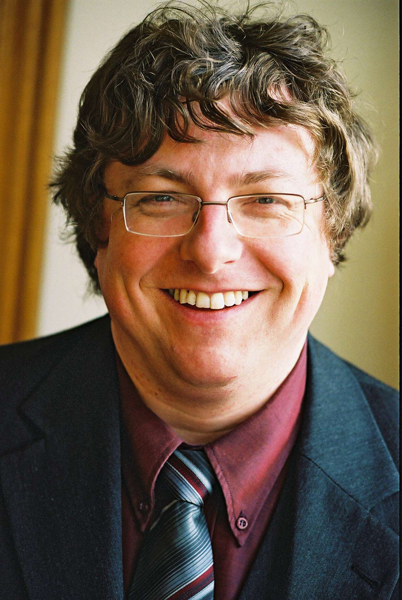
Bart De Moor is a Full Professor at the Department of Electrical Engineering, KU Leuven, Belgium, and a guest professor at the University of Siena. He leads the STADIUS research group and has supervised 85 PhD students. His roles include chairman of Health House (2016–present), member of the Board of VIB (Biotech Institute), and former Vice-Rector for International Policy (2009–2013). Education: Master Degree in Electrical Engineering (1983), KU Leuven PhD in Engineering (1988), KU Leuven Research Interests: His work spans numerical linear algebra, optimization, algebraic geometry, systems and control theory, data-driven AI, machine learning, and applications in process industry and biomedical big data. He has contributed to subspace identification, tensor decomposition, bioinformatics, and quantum computing. Publications Trends: His publications highlight subspace identification methods, tensor decomposition, bioinformatics, and biomedical data analysis. These reflect interdisciplinary advancements in control theory, quantum physics, and mathematical engineering, with applications in industrial and healthcare domains. Scientific Awards and Honors: Leslie Fox Prize (1989) Laureate of the Belgian Royal Academy of Sciences (1992) Bi-annual Siemens Award (1994) Fellow of IEEE (since 2004) Member of the Royal Academy of Belgium for Science and Arts (since 2000) Fellow of IFAC (since 2022) Commander in the Order of King Leopold I (2020) Fellow of SIAM (since 2017) FWO Excellence Award (2010) Advising and Grants: He has led a research group of 20 PhD students and postdocs, co-founded 8 spinoff companies, and secured the ERC Advanced Grant ‘Back to the roots’ (2020–2025). He also co-holds the KU Leuven Chair on healthcare systems (2018–present). Labs and Organizations: Active in the STADIUS research group (KU Leuven), he has served on boards of the Flemish Interuniversity Institute for Biotechnology (VIB), the Alamire Foundation, and the Health Tech Experience Center Health House. His spinoffs include Trendminer, Cartagenia, and Ugentec.
Jo Zucco is a Program Director at the University of South Australia's UniSA STEM faculty, affiliated with the School of Information Technology and Mathematical Sciences and the Australian Research Centre for Interactive and Virtual Environments. Their research focuses on augmented reality (AR), mixed reality (MR), and wearable computing technologies, with applications in medical visualization, educational tools, and haptic interaction. Zucco has contributed to over 15 peer-reviewed publications since 1998, including works on X-ray vision in immersive environments, haptic training devices like the Smart Pipette, and collaborative spatial data analysis. Key research interests include improving user experience in AR/MR systems, developing medical visualization techniques for diagnostic support, and enhancing educational technologies for STEM fields. They have collaborated with defense organizations and health sciences departments, receiving grants from the Australian Government and the Defence Science and Technology Group. Zucco's work emphasizes practical applications of cutting-edge technologies in real-world scenarios, such as command and control decision-making, laboratory simulations, and student orientation programs. As a Research Degree Supervisor, Zucco guides students in interdisciplinary projects combining computer science, engineering, and health informatics. Their contributions to the Wearable Computer Laboratory and the Industrial AI Research Centre highlight a commitment to advancing interactive technologies for societal benefit.
Dr. Kenneth W. Wisian serves as Associate Director of the Environmental Division at the Bureau of Economic Geology (BEG), part of the University of Texas at Austin's Jackson School of Geosciences. A distinguished geophysicist with a unique background combining military leadership and scientific expertise, he previously served as a Major General in the USAF (retired) and held senior state executive positions responsible for disaster recovery, oil spill prevention, and coastal infrastructure protection in Texas. His educational background includes: Ph.D. in Geophysics, Southern Methodist University, 1999 M.S. in Strategic Studies, US Army War College, 2004 M.S. in Geology, Centenary College of Louisiana, 1990 Graduate, US Air Force Test Pilot School, 1990 B.A. in Physics, University of Texas at Austin, 1982 Dr. Wisian's research spans diverse fields including geothermal systems, planetary geology, space exploration, infrastructure resiliency, and international relations. His work bridges traditional geoscience with cutting-edge applications in autonomy, drone technology, and applied gravity. His military career as a navigator/bombardier included flying bombers, transports and fighters, commanding the 147th Reconnaissance Wing flying the MQ-1 Predator, and participating in combat missions in Iraq, Afghanistan and Bosnia. His publication record shows a fascinating evolution from traditional geothermal research in the 1990s toward increasingly interdisciplinary work connecting geoscience with space policy, interstellar flight planning, and extraterrestrial intelligence considerations in the 2010s and 2020s. This trajectory reflects his unique position at the intersection of earth sciences, national security, and space exploration. His notable awards include: Fellow, British Interplanetary Society (2019) Bronze Star Medal for Afghanistan deployments (2005-2008) Air Medal for Iraq deployment (2003) Finalist for NASA biennial astronaut selection (1999) Roy M. Huffington Fellowship (1992-1999) As a military officer, General Wisian led disaster response efforts for the Shuttle Columbia crash and multiple hurricanes. His current work at BEG coordinates environmental-related research, building on his extensive background in both scientific research and operational leadership. His interdisciplinary approach connects traditional geoscience with emerging fields like planetary geology and space policy, making significant contributions across multiple domains.
Lt Col Mark Coleman Duncan is an Instructor of Computer Science at the Air Force Institute of Technology (AFIT), specifically within the Department of Computer Science in the Graduate School of Engineering and Management. He is currently a Ph.D. candidate in Computer Science, advised by Dr. Brett J. Borghetti, and holds advanced degrees in Cyberspace Operations and Aerospace Engineering. Education: Ph.D. Candidate, Computer Science, Air Force Institute of Technology M.S., Cyberspace Operations, Air Force Institute of Technology (2011) B.S., Aerospace Engineering, Embry Riddle Aeronautical University (2005) His research focuses on integrating human cognition with artificial intelligence in defense intelligence environments, particularly in mitigating data overload through ambient awareness systems. He also investigates cybersecurity challenges in satellite telecommanding, emphasizing trust management frameworks. His work bridges aerospace engineering, cybersecurity, and intelligent systems, with applications in military and space operations. His recent publications highlight trends in human-AI teaming for intelligence analysis and secure aerospace communication protocols. These works reflect interdisciplinary efforts combining systems engineering, cybersecurity, and cognitive modeling. Scientific Awards: No awards listed in the provided text. Mark Coleman Duncan advises research through his Ph.D. work and contributes to academic instruction in computer science and cybersecurity. While no formal grants are mentioned, his research areas—such as defense intelligence search and satellite security—suggest involvement in defense-funded projects. He is actively contributing to the development of secure, intelligent systems for military applications. There is no mention of specific labs or research teams in the provided text, though his affiliations suggest participation in AFIT’s research initiatives in cybersecurity and aerospace information systems.
Douglas D. Hodson is a Professor of Computer Engineering at the Air Force Institute of Technology (AFIT), Wright-Patterson AFB, Ohio, affiliated with the Department of Systems and Engineering Management within the Graduate School of Engineering and Management. He holds a PhD in Computer Engineering from AFIT (2009), an MBA and MS in Electro-Optics from the University of Dayton, and a BS in Physics from Wright State University. His research focuses on computer engineering, software engineering, real-time distributed simulation, and quantum communications , with a strong emphasis on Quantum Key Distribution (QKD) systems, modeling and simulation (M&S), and Live-Virtual-Constructive (LVC) environments. His work integrates cybersecurity, network performance, and advanced simulation frameworks such as AFSIM and SwarmSim. His recent publications (2021–2022) reflect a trend toward secure distributed systems, AI-driven classification, fog modeling in military simulations, and opinion dynamics in social systems. These works span disciplines including cybersecurity, artificial intelligence, defense modeling, and environmental effects in multi-domain operations. Scientific Awards and Honors: IEEE Senior Member (2021) Outstanding Achievement Award, World Congress in CSCE (2018) SOCHE Faculty Excellence Award (2017) Harold Brown Award (2015) Multiple AFIT Civilian Category III Awards (2014, 2013) Dayton Area Graduate Studies Institute Scholar (2003–2007) Rev. Raymond A. Roesch, S.M., Award of Excellence, University of Dayton MBA (1998) Advising and Grants: Dr. Hodson has advised numerous graduate students, many of whom are co-authors on his publications. His research has been supported by AFIT, AETC, and collaborative defense-focused grants, particularly in quantum communications and simulation technologies. He has led or contributed to teams receiving Air Force Modeling and Simulation Team Awards and QKD Research Team Awards. Labs and Teams: He is a key contributor to the AFIT Quantum Communications and Modeling & Simulation research teams, working on projects involving AFSIM, QKD system modeling, decoy state protocols, and swarm UAV simulation. His lab environment fosters interdisciplinary collaboration in cybersecurity, physics, and software engineering.
Mitchell Pryor is a Research Professor in the Department of Nuclear and Radiation Engineering at the University of Texas at Austin. He specializes in applied robotics and automation, particularly in hazardous environments such as nuclear facilities, energy sectors, and defense applications. Pryor earned his BSME from Southern Methodist University (1993), followed by an MS (1999) and PhD (2002) in Mechanical Engineering from UT Austin. His research focuses on robotics for hazardous environments, including nuclear waste management, autonomous systems, and human-robot collaboration. He leads the Nuclear & Applied Robotics Group (NRG) and co-founded RAPID, an industry affiliate program supporting automation in energy sectors. His work spans robotics in extreme environments, augmented reality interfaces, and task planning frameworks. Key collaborations include Army Futures Command (AFC), NASA, DARPA, and DOE national labs such as INL, LANL, and ORNL. Pryor’s contributions include developing the TeMoto software framework for robotic autonomy, virtual fixture systems, and radiation surveying methodologies. He chairs the ANS Robotics & Remote Systems Division and actively participates in IEEE, ASME, and other professional societies. His research emphasizes interdisciplinary approaches to deploy robotics in complex, uncertain environments for tasks like material handling, mobile manipulation, and environmental monitoring. Notable projects include AR-STAR for real-time robot data modification, MaRMOT for object tracking, and TeMoto 2.0 for task execution formalisms. His work bridges theoretical robotics with practical applications in nuclear safety, energy infrastructure, and defense systems.