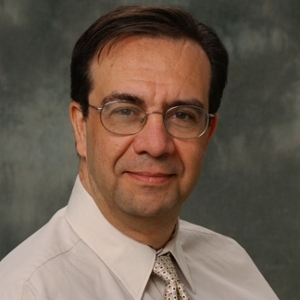
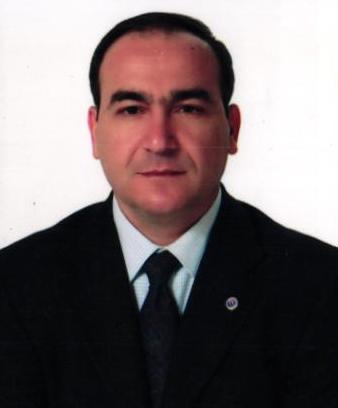
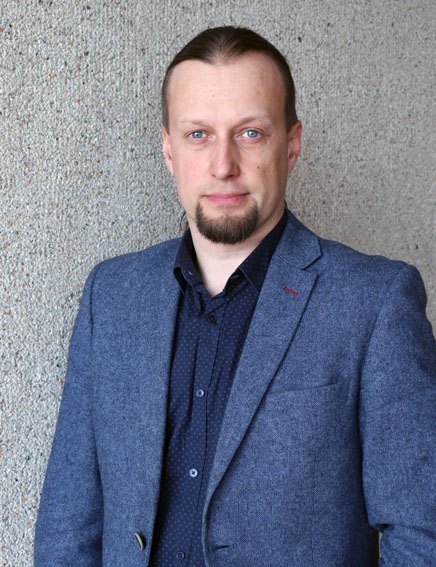
Eugenia Chiappe is a Principal Investigator at the Champalimaud Center for the Unknown , leading the Chiappe Lab . Her research focuses on the neural circuits involved in self-movement estimation and sensorimotor integration in Drosophila melanogaster , combining behavioral paradigms , neural activity recording , and genetic tools to uncover mechanistic explanations for brain function in adaptive behaviors. Research highlights : Investigation of HS and VS cells in flies as self-motion estimators . Development of head-fixed walking paradigms for reversible neural perturbation. Identification of nonvisual signals modulating visual responses during locomotion. Exploration of neural dynamics encoding combined visual and motor inputs. Scientific contributions : Marie Curie Career Integration Grant PCIG13-GA-2013-618854 Bial Foundation grant 191/12 Collaborative projects on state-dependent sensory processing (Journal of Neuroscience, 2017) Advising and Collaborations : Mentored Daniel Tendero (External PhD Student) and Miguel Paço (INDP PhD Student). Collaborations with teams at Yale University , MIT , and University College London .
William M. McEneaney is a Professor in the Department of Mechanical and Aerospace Engineering at the University of California, San Diego, within the Jacobs School of Engineering. He maintains an active research program while teaching advanced courses including MAE289C (Spring 2025), MAE142 (Fall 2024), MAE180 (Fall 2024), and MAE288A (Spring 2024). His office is located in 1809 EBU I, and he has been recognized with prestigious fellowships from both SIAM and IEEE. Professor McEneaney's research spans several interconnected areas at the intersection of control theory, applied mathematics, and physics. His primary interests include nonlinear control theory, numerical methods for Hamilton-Jacobi equations, and Max-Plus/Idempotent Analysis. His work extends to astrodynamics and the n-body problem, where he applies principles of stationary action to solve complex orbital mechanics problems. He has made significant contributions to understanding the relationships between stochastic and deterministic control systems, with applications ranging from risk-sensitive filtering to quantum systems. His recent publications demonstrate a strong focus on staticization techniques, which provide computational reductions for systems with low-dimensional nonlinearities. His work bridges theoretical developments in Hamilton-Jacobi PDEs with practical applications in control systems, wave equations, and quantum mechanics. A notable trend is his exploration of connections between optimal control theory and fundamental physics principles, particularly in developing representations for Schrödinger equations using stationary action principles. Fellow of SIAM (Society for Industrial and Applied Mathematics) Fellow of IEEE (Institute of Electrical and Electronics Engineers) Professor McEneaney has supervised numerous graduate students and collaborated extensively with researchers including P.M. Dower, R. Zhao, and Y. Zheng. His research has been supported by various funding sources that enable his work on computational methods for control problems and fundamental solutions. His book "Max-Plus Methods for Nonlinear Control and Estimation" (Birkhauser, 2006) is a significant contribution to the field. He has also co-edited several influential volumes including "Numerical Methods for Optimal Control Problems" (Springer, 2018) and "Adversarial Reasoning: Computational Approaches to Reading the Opponent's Mind" (CRC Press, 2007). His research group focuses on developing novel computational approaches for solving complex control problems, particularly those involving Hamilton-Jacobi equations. They maintain strong connections with the broader applied mathematics community through participation in workshops like the 2017 Numerical Methods in Optimal Control workshop. The group's work often intersects with physics applications, particularly in quantum systems and orbital mechanics, where they develop efficient numerical methods for solving two-point boundary value problems.
Emilio Jose Armaza Armaza serves as Professor of Criminal Law at the University of Deusto's Law School within the Public Law Department. His academic journey began as a pre-doctoral researcher at the Interuniversity Chair of Law and the Human Genome (2006), culminating in a doctoral thesis under Professor Carlos María Romeo Casabona (2011, Outstanding cum laude). His international research includes stays at Fordham University, Tulane University, University of Coimbra, University of Pau, and Ukraine's National Academy of Legal Sciences. His research focuses on the intersection of criminal law with bioethics, biotechnology, and emerging societal challenges. Key areas include transgender legal protections, cybercrime regulation, public health law during pandemics, and genetic technology governance. His work consistently addresses the tension between individual rights and collective security, particularly regarding dangerous offenders, bioterrorism, and digital society challenges. Analysis of his recent publications reveals an evolving trajectory from traditional criminal law topics toward contemporary challenges: increasing focus on cybercrime (30% of 2022-2023 publications), bioethical dilemmas (25%), and gender/trans rights (20%). His scholarship demonstrates strong international engagement through collaborations with institutions in Peru, Brazil, Philippines, and Spain. Ramón y Cajal Research Grant (2016) Six-year research period recognition by CNEAI Triple accreditation by UNIBASQ (PhD Professor, Associate Professor, Adjunct Professor) Professor Armaza actively supervises doctoral theses and coordinates major research initiatives, including the UNIJES Bioethics Group and International Congress on Law and the Human Genome. His grant portfolio includes Spain's most competitive individual research funding. He leads the University of Deusto's efforts in organizing international academic events on bioethics and criminal law, maintaining strong institutional partnerships across Latin America and Europe. His laboratory work centers on the Interuniversity Chair of Law and the Human Genome, where he investigates biotechnological applications in criminal contexts. Current team projects examine AI's role in criminal risk assessment, legal frameworks for neurotechnology, and pandemic response protocols. Future research directions include transnational regulation of genetic doping and legal responses to emerging bioweapon threats.
Richard Daniel Mooney is the George Barth Geller Distinguished Professor for Research in Neurobiology at Duke University School of Medicine, where he also serves as Professor of Cell Biology and Director of the T32 Neurobiology Training Program. He is a Faculty Network Member of the Duke Institute for Brain Sciences. Dr. Mooney received his B.S. from Yale University in 1981 and his Ph.D. from California Institute of Technology in 1991. Dr. Mooney's research focuses on the neural mechanisms by which experience guides learning, behavior, and perception. His laboratory explores the structure and function of sensorimotor circuits important to learned vocal communication in songbirds and auditory-motor integration in mice. His group has developed extensive technical expertise including in vivo multiphoton neuronal imaging, chronic recording of neural activity in freely behaving animals, intracellular recordings, and manipulation of neuronal activity using electrical, chemical and optogenetic methods. His recent publications reveal a strong focus on vocal learning circuits, auditory-motor integration, and neuromodulatory control of vocal behavior. His work spans from cellular and synaptic mechanisms to systems-level neural dynamics, with particular emphasis on how neural circuits encode, produce, and refine vocal communication. His research bridges basic neuroscience with potential applications for understanding human speech disorders. Major Awards: National Academy of Sciences Member (2024) American Academy of Arts & Sciences Member (2020) Sloan Research Fellowship in Neuroscience (1997) Advanced Mini-Microscope Award (2014) Dr. Mooney has mentored numerous students and postdoctoral fellows who have gone on to successful careers in neuroscience. His laboratory receives substantial funding from multiple NIH grants, including the Neurobiology Training Program which he directs. His team works at the cutting edge of neural circuit analysis, developing innovative approaches to understand how complex behaviors like vocal learning are encoded in brain circuits.
Oliver Niebuhr is an Associate Professor at the Institute of Mechanical and Electrical Engineering , University of Southern Denmark, with a focus on speech prosody, charisma, and human-machine interaction. He leads research at the Centre for Industrial Electronics and has supervised numerous projects bridging linguistics, engineering, and technology. Research Interests: Speech prosody, vocal charisma, phonology, rhetoric, speech perception, and psychoacoustics. Notable Projects: XPEROHS (online hate speech analysis), speech prosody teaching tools for Scandinavian languages, and VR-based public speaking training systems. Scientific Awards: Recipient of the BHJ Innovation Award 2018 . Technological Contributions: Developed MARRYS helmet for jaw movement analysis and VR tools for vocal training. Article Trends reveal a focus on charismatic speech mechanics, cross-modal perception, human-robot interaction, and noise adaptation in industrial environments. His work spans linguistics, engineering, and behavioral science, often integrating VR and biomechanical analysis. Media Engagement: Active in public outreach, including media contributions on speech training, virtual reality, and speech analysis technology.
Joel Brynielsson serves as an Associate Professor at KTH Royal Institute of Technology within the Division of Theoretical Computer Science, School of Electrical Engineering and Computer Science, while simultaneously holding the position of Research Director at the Swedish Defence Research Agency (FOI) since 2008. His academic credentials include a Ph.D. in Computer Science (2006) and M.Sc. in Computer Science and Engineering (2000), both from KTH, followed by achieving Docent (Habilitation) status in Computer Science in 2015. Dr. Brynielsson's research spans uncertainty management, information fusion, probabilistic expert systems, command and control systems, operations research, game theory applications, web mining, privacy-preserving data mining, and cyber security. His work bridges theoretical computer science with practical security applications, particularly in national defense contexts. His recent publication record shows consistent scholarly output through 2024, with research focusing on cybersecurity practices in Swedish administrative authorities, cyber-threat perception in the financial sector, and social media applications for crisis management. The interdisciplinary nature of his work is evident in collaborations across security, defense, and emergency management domains. Associate editor for Springer Security Informatics journal Technical program chair for IEEE EISIC conferences (2013-2019) Regular reviewer for security and informatics journals Research funding from EU, Swedish Armed Forces, and public authorities Through his dual appointments, Dr. Brynielsson maintains a vital connection between academic research and practical defense applications, contributing significantly to both scholarly knowledge and real-world security solutions.
Jacquelyn Schneider is a Hoover Fellow at the Hoover Institution, Stanford University, where her research focuses on the intersection of technology, national security, and political psychology with special interests in cybersecurity, unmanned technologies, and Northeast Asia. Dr. Schneider holds a BA from Columbia University, an MA from Arizona State University, and a PhD from George Washington University. Her military background includes six years as an Air Force officer in South Korea and Japan, and she currently serves as a reservist assigned to US Cyber Command. Her research explores how emerging technologies impact national security decision-making and strategic stability. With expertise in cybersecurity and unmanned systems, she examines the psychological dimensions of technological adoption in military contexts and the implications for international relations, particularly in Northeast Asia. Her work bridges academic scholarship with practical policy applications, addressing critical questions about the future of warfare and security in an increasingly automated world. Dr. Schneider's scholarly contributions appear in leading journals including Security Studies, Journal of Conflict Resolution, Strategic Studies Quarterly, and Journal of Strategic Studies. She is co-author of "Cross Domain Deterrence: Strategy in an Era of Complexity" (Oxford University Press, 2019) and is completing "The Rise of Unmanned Technologies" with Julia Macdonald. Her recent work examines the intersection of artificial intelligence with military decision-making and wargaming. CyberScoop's Leet List of influential cyber experts (2018) Best graduate paper for International Security and Arms Control section of International Studies Association Best graduate paper for Foreign Policy Analysis section of International Studies Association Best graduate paper for Southwest Social Science Association Dr. Schneider has received research funding through a Minerva grant on autonomy (with co-PIs Michael Horowitz, Julia Macdonald, and Allen Dafoe) and a University of Denver grant to study public responses to drone usage. Her policy engagement is extensive, with contributions to Foreign Affairs, CFR, Cipher Brief, Lawfare, War on the Rocks, Washington Post, Bulletin of the Atomic Scientists, National Interest, H-Diplo, and the Center for a New American Security. With prior experience at the Center for a New American Security and the RAND Corporation, Dr. Schneider maintains active connections to both academic and defense policy communities, bridging scholarly research with practical national security applications.
Henry Hexmoor is a Professor in the Department of Computer Science at Southern Illinois University Carbondale within the College of Computing and Technology. He serves as Director of the Control, Command and Communications of Networked Systems Lab located in Engineering A 409C. His educational background includes: Ph.D. in Computer Science from the University at Buffalo Professor Hexmoor's research spans foundational and applied domains in computer science, with emphasis on Artificial Intelligence systems design. His work in multi-agent coordination and cognitive modeling drives innovations in knowledge representation, while cybersecurity and blockchain research addresses critical infrastructure protection challenges. This interdisciplinary focus bridges theoretical computer science with real-world security applications. He leads the Control, Command and Communications of Networked Systems Lab, directing research in networked system architectures and autonomous coordination frameworks.
Sadettin Kapucu is a Professor at the Department of Mechanical Engineering , Faculty of Engineering , Gaziantep University , Turkey. With over 30 years of academic experience, he specializes in robotics, mechatronics, TRIZ-based inventive problem-solving, and vibration control systems. His career spans roles from Research Assistant (1987-1990) to Professor (2006-present) at Gaziantep University, and he has served as Head of the Mechanics and Dynamics Division since 2016. His educational background includes a PhD (1994) and MS (1990) in Mechanical Engineering from Gaziantep University and METU, respectively. PhD: Gaziantep University (1994) MS: Middle East Technical University (1990) BS: Middle East Technical University (1987) Kapucu’s research focuses on robot dynamics , TRIZ methodology , flexible systems control , and mechatronic design . He has pioneered techniques like hybrid input shaping for vibration suppression and variable stiffness actuators for rehabilitation robotics. His work bridges theoretical innovation and practical applications in industrial, medical, and agricultural robotics. Scientific achievements include the 2019 2nd Best Paper Award at ICICT 'xx19 and the 2009 Elginkan Foundation Technology Award . He has supervised over 18 graduate theses and secured 13 research grants, including TÜBİTAK-funded projects on olive oil processing and telehandler design.
Gediminas Navickas is a Lecturer at Vilnius University's Institute of Data Science and Digital Technologies (DMSTI) within the Faculty of Mathematics and Informatics, specializing in the Image and Signal Analysis Group. His work bridges academic research with practical applications in Lithuanian language technologies. His primary research focuses on automatic Lithuanian speech recognition, speech signal processing, speech synthesis methods and algorithms, and speech synthesis quality assessment. Navickas has made significant contributions to developing speech technologies specifically for the Lithuanian language, addressing the challenges of resource scarcity compared to more widely spoken languages. His work demonstrates strong interdisciplinary connections between computer science, linguistics, and cognitive science. Navickas's publication record reveals a consistent trajectory of innovation in speech technology, with recent work emphasizing cognitive approaches to evaluating synthetic speech, particularly examining differences in perception between blind and sighted users. His research has evolved from foundational work on neural network architectures for speech synthesis to comprehensive studies on speech corpus development and accessibility applications. He has been instrumental in major EU-funded projects including the LIEPA series (2013-present), which have developed comprehensive speech recognition and synthesis systems for Lithuanian. These projects have produced practical applications ranging from educational robots to voice-controlled mobile services and assistive technologies for the visually impaired. Member of Lithuanian Computer Society (LIKS) Council Member of IEEE organization Active participant in COST actions including UniDive and Multi3Generation Navickas regularly engages with the public through media appearances on LRT radio and television, where he explains complex speech technology concepts to general audiences. His science communication efforts demonstrate a commitment to making technical research accessible and relevant to Lithuanian society.
Dr. Tazar Hussain is a Lecturer in Computing Science at the School of Computing, Ulster University , where he teaches deep learning and IoT. He completed his PhD at Ulster University on IoT management frameworks for decision-making under unreliability and worked as a part-time Research Associate on the BTIIC 'Data to Action' project. Previously, he served as a Lecturer at King Saud University (9 years) , securing research funding from NPST and DSU. Education: PhD (Ulster University), MSc in Data Telecommunication and Networks (Salford University), Bachelor of Information Technology (Sarhad University) Research Focus: Deep Learning, NLP, IoT Security, Explainable AI, and Human Activity Recognition (HAR) Projects: Active member of the PwC Advanced Engineering and Research Centre (2021-2026), specializing in Few-Shot Learning and Smart Cities His work bridges IoT systems and cybersecurity , with a focus on intrusion response mechanisms. Publications span machine learning applications in security, risk-based decision frameworks , and C4I systems . He is a certified IBM Security Specialist and trained in smart cities and cloud technologies. Key Trends: 1) Application of Explainable AI in pathology LIS systems, 2) Cognitive modeling for IoT cyberattack responses, 3) Risk-based decision-making in IoT environments, 4) Cost-sensitive intrusion response systems, 5) Formal methods (e.g., Situation Calculus) in cybersecurity Collaborations include Invest Northern Ireland and BTIIC , with expertise aligning to UN Sustainable Development Goals in digital security and smart infrastructure.
Adam Gorrell serves as an Assistant Professor of Practice in the Department of Aerospace Engineering at the University of Kansas, leveraging 20 years of distinguished United States Air Force service as a Command Pilot with over 2,000 flight hours on platforms including the supersonic B-1B Lancer and MQ-9 Reaper. His research spans propulsion systems, astronautics, and unmanned aerial systems, with recent publications revealing expertise in nuclear thermal propulsion reactor dynamics and military strategy applications. Key themes include hydrogen behavior in reactor environments and innovative swarming tactics for aerospace operations. His notable recognitions include: Distinguished Graduate, Air Command and Staff College (2015) Engineering Division Award, US Air Force Academy (2014) Flight Commander of the Year, US Air Force Warfare Center (2012) Distinguished Graduate, B-1B Lancer Qualification Course (2006) Dr. Gorrell brings extensive instructional experience from teaching over 330 cadets at the US Air Force Academy in courses like Introduction to Astronautics and Rocket Propulsion, emphasizing clear, compelling presentations that maintain scientific integrity while inspiring next-generation aerospace engineers for air and space systems development.
Melik Dölen is a Professor in the Department of Mechanical Engineering at Middle East Technical University (Ankara Campus). He holds a B.Sc. from Istanbul Technical University (1990), M.Sc. from the University of New Hampshire (1994), and Ph.D. from the University of Wisconsin-Madison (2000). His research spans Precision Engineering , MEMS , Smart Electrical Drives , and Manufacturing Optimization . Specializes in additive manufacturing, CNC machining, and hybrid systems. Utilizes neural networks for predictive modeling in mechanical systems. Develops FPGA-based controllers for industrial automation. His recent work focuses on adaptive toolpath generation for 3D printing, hybrid manufacturing trends, and optimization algorithms. He has not received any publicly listed scientific awards. Email: dolen@metu.edu.tr
Ulaş Yaman is an Associate Professor in the Department of Mechanical Engineering at Middle East Technical University (METU) in Ankara, Turkey. He received his B.Sc. in Mechanical Engineering (2007), M.Sc. in Mechanical Engineering (2010), and Ph.D. in Mechanical Engineering (2014) from METU, with a minor in Mechatronics. His academic career includes roles as a Visiting Assistant Professor at Purdue University (2014-2015) and research positions at METU. His research specializes in additive manufacturing, CAD/CAM systems, computational geometry, and embedded control systems. Key areas include 3D printing optimization, FDM process enhancements, CNC command generation, and hybrid manufacturing technologies. Recent work explores Industry 4.0 integration, structural optimization for 3D-printed artifacts, and novel fabrication pipelines like LIPRO. Yaman's publications demonstrate strong focus on manufacturing innovations, with recurring themes in real-time command generation, material behavior in 3D printing, geometric algorithms for production, and educational tools for control engineering. His work frequently combines hardware implementation with computational efficiency. Scientific Awards: BEST PAPER AWARD - IEEE 8th Workshop on Intelligent Solutions in Embedded Systems (2010) Research Grants: TÜBİTAK 1001: A Smart- and Hybrid Manufacturing System Utilizing Additive Manufacturing Methods and Machining (2017-2020) TÜBİTAK 3001: A Novel Design and Fabrication Pipeline for 3D Printers: LIPRO (2017-2018) ODTÜ-BAP: Improving the Dimensional Accuracy of 3D Printed Artifacts (2016) He leads the Laboratory for Intelligent Production Systems (LIPRO) with six research assistants, focusing on additive manufacturing, computational geometry, and embedded systems. Current projects include developing multi-axis hybrid manufacturing systems and novel CAD/CAM architectures.
Konstantinos Kallas serves as Assistant Professor of Computer Science at the University of California, Los Angeles (UCLA), commencing his appointment in January 2025. Previously affiliated with the University of Pennsylvania as evidenced by his 2020 PLDI contribution, his research bridges theoretical formal methods with practical systems engineering across multiple high-impact conferences including PLDI, POPL, and SPLASH. His research program centers on enhancing computational efficiency and correctness in systems software, with three flagship projects defining his trajectory: PaSh for automatic shell script parallelization, Durable Functions for stateful serverless computing semantics, and DiffStream for differential testing of stream processing. These efforts consistently target the intersection of programming language theory and real-world systems constraints, particularly in parallelism, concurrency, and cloud-native environments where correctness guarantees are challenging to implement. Analysis of his publication history since 2020 reveals a methodological pattern: developing formal semantic models to enable practical optimizations in distributed systems. His work increasingly focuses on serverless architectures and data-intensive pipelines, with recent contributions emphasizing automated verification techniques. The evolution from shell script optimization (2020-2021) to serverless state management (2021-2022) demonstrates strategic expansion into cloud computing's hardest problems. Dr. Kallas actively contributes to the academic community through program committee service for PLDI (2022, 2025), POPL (2021, 2022, 2023), and SPLASH (2020-2023), including leadership roles as Publicity Co-Chair for PLDI 2025 and 2026. His June 2024 announcement confirms recruitment for Fall 2025 students at UCLA, targeting researchers interested in systems, compilers, and programming languages who can advance his work on correctness-preserving parallelization and serverless computing.