Santa Di Cataldo is an Associate Professor at the Department of Control and Computer Engineering (DAUIN) of Politecnico di Torino. His research focuses on computer vision, pattern recognition, digital image processing, and medical image processing, with applications in industrial systems and AI for manufacturing. Scientific Branch: IINF-05/A - Information Processing Systems ERC Sectors: PE6_8 - Computer graphics, computer vision, multi media, computer games ERC Sectors: PE6_11 - Machine learning, statistical data processing His work includes developing AI-driven anomaly detection frameworks, physics-informed neural networks for additive manufacturing optimization, and neuro-symbolic approaches for Industry 4.0 applications. He supervises PhD students in Artificial Intelligence and Computer Engineering programs, collaborating on projects like BIG (Blue Is Green) and PNRR-Complementary Plan. Premio Donna Innovazione (2010) He leads courses such as Machine Learning in Applications and Applied AI and Machine Learning , while contributing to bioinformatics and robotics-related teaching. His research is supported by IAM@PoliTo and EDA groups, utilizing LADISPE laboratory facilities.
Fulvio Valenza is an Assistant Professor (Fixed-Term Tenure-Track, RTD-B) at the Department of Control and Computer Engineering (DAUIN) , Polytechnic University of Turin . He is a member of the NETGROUP - Computer Networks Group and teaches courses such as Security of next-generation networks and Data Protection, Privacy, and Anonymity across multiple degree programs including Cybersecurity Engineering and Computer and Systems Engineering. Research Interests: Cybersecurity, Network Security, Security Automation, Distributed Systems, Quantum Cryptography Projects: MIRANDA (EU-funded cybersecurity research), Commercial contracts for "ESCAPE" seminar organization Research Trends in his publications focus on security automation in virtualized/cloud environments, formal verification of network policies, and optimization of security configurations for industrial and automotive systems. His work bridges theoretical methods (e.g., formal verification) with practical deployments (e.g., Kubernetes security, VNF placement). Teaching spans both the Polytechnic University of Turin and the University of Eastern Piedmont (2020-2022), covering topics in network security, cloud technologies, and cybersecurity.
Luca Barbierato is a Fixed-term Assistant Professor at the Department of Control and Computer Engineering (DAUIN), Politecnico di Torino, specializing in applied artificial intelligence, cybersecurity, and co-simulation infrastructures for integrated energy systems. He actively contributes to research in edge computing, IoT, and sustainable energy technologies. Research Focus: AI applications in energy systems, secure IoT infrastructures, and co-simulation frameworks Teaching Roles: Invited PhD teaching component (2025/26), teaching assistant across multiple programs His recent publications address critical areas including OpenTitan-based security controllers, urban building energy modeling, and distributed power system co-simulation. Barbierato's work aligns with SDG Goals 7 (Affordable Energy), 9 (Innovation Infrastructure), and 11 (Sustainable Cities). Notable scientific recognition includes the Learning to Teach (L2T) badge from Politecnico di Torino.
Marco Console is a tenured Assistant Professor (Ricercatore a Tempo Determinato di cat. B) at the Department of Computer, Control and Management Engineering (DIAG) of Sapienza University of Rome. His research focuses on knowledge representation, ontology-based data management, and the quality of data preparation, with recent emphasis on querying incomplete and heterogeneous data. Education: PhD in Engineering in Computer Science, Sapienza University of Rome, 2017 Research Interests: Console investigates foundational and practical aspects of Knowledge Representation and Reasoning , especially ontology-mediated query answering and data quality . His work spans semantic technologies , incomplete data , and explainable AI , aiming to provide users with meaningful and informative answers over large, heterogeneous knowledge bases. Across his latest publications he explores informativeness measures for query results, disaggregated data architectures for scalable workflows, and semantic explanations of machine-learning classifiers through ontologies, demonstrating a cohesive agenda that bridges symbolic AI and data management. Scientific Awards: Best Paper Award, International Conference on Principles of Knowledge Representation and Reasoning (KR), 2018 Editorial Service: Guest Editor, ACM Journal of Data and Information Quality (JDIQ), Special Issue on Quality Aspects of Data Preparation, 2022.
Enrico Barbera is an academic professional affiliated with the University of Palermo, serving as the Operational Unit Manager for the Cloud Application Design Unit. His work focuses on cloud computing and software engineering, contributing to application development initiatives. Email: enrico.barbera@unipa.it Phone: +3909123897204
Ravi Sandhu is a Professor of Computer Science, Executive Director of the Institute for Cyber Security, and Lead PI of the NSF Center for Security and Privacy Enhanced Cloud Computing at the University of Texas at San Antonio, where he holds the Lutcher Brown Endowed Chair in Cyber Security. He previously served on the faculty at George Mason University (1989-2007) and Ohio State University (1982-1989). His research focuses on cyber security, information privacy, access control, and their applications in cloud computing, internet of things, autonomous vehicles, big data, and blockchain. He is a Fellow of IEEE, ACM, and AAAS, and has received numerous awards for his seminal work on role-based access control (RBAC). Education: BTech and MTech from IIT Bombay/Delhi; MS and PhD from Rutgers University Leadership in founding key security conferences including ACM Conference on Computer and Communications Security and ACM Symposium on Access Control Models and Technologies His work has been funded by NSF, NSA, NIST, DARPA, AFOSR, ONR, AFRL, ARO, and private industry. He has served as Editor-in-Chief of IEEE Transactions on Dependable and Secure Computing and ACM Transactions on Information and System Security. With 31 security technology patents and over 39,000 Google Scholar citations, his team at UTSA pursues world-leading research in cyber security foundations and applications.
Pierangela Samarati is a Professor in the Department of Computer Science at the University of Milan, Italy, actively contributing to academia as Keynote Speaker at ICISSP 2022 and CLOSER 2022, and Conference Chair of SECRYPT 2022. She previously served as Computer Scientist at SRI (CA, USA) and visiting researcher at Stanford University and George Mason University. Her research centers on data and applications security and privacy in emerging technological landscapes, with significant focus on cloud computing environments. She has pioneered methodologies for information protection across diverse application domains, establishing herself as a leading authority in security frameworks for modern digital systems. Prof. Samarati's exceptional contributions have been recognized through: ACM Distinguished Scientist (2009) IEEE Fellow (2012) ESORICS Outstanding Research Award (2018) IEEE Computer Society Technical Achievement Award (2016) IFIP WG 11.3 Outstanding Research Contributions Award (2012) IFIP TC11 Kristian Beckman Award (2008) She maintains influential leadership roles as chair of the IEEE Systems Council Technical Committee on Security and Privacy in Complex Information Systems (TCSPCIS), ERCIM Security and Trust Management Working Group (STM), and ACM Workshop on Privacy in the Electronic Society (WPES), driving international collaboration in security research. Her extensive publication record of over 280 peer-reviewed articles demonstrates sustained impact across security and privacy disciplines.
Giovanni Peres is a Professor at the Department of Physics and Chemistry, University of Palermo (UNIPA). His office is located at the University Observatory (Room No. 15, Piazza Parlamento 1), with office hours on Mondays and Tuesdays from 3:30 PM to 5:30 PM. His research spans astrophysics, focusing on supernova remnants, exoplanetary atmospheres, star formation, and stellar activity. His recent publications highlight trends in supernova remnant dynamics , exoplanet detection , and machine learning applications to astrophysical data. A recurring emphasis is on radiation transport , plasma interactions , and X-ray observations .
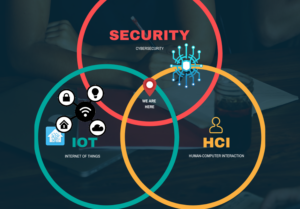
Luca Mannella is a Research Fellow at the Department of Control and Computer Engineering (DAUIN) , Politecnico di Torino. His work spans Cybersecurity , Internet of Things (IoT) , Software Engineering , and Human-Computer Interaction (HCI) . PhD in Computer and Control Engineering from Politecnico di Torino (2024) M.Sc. and B.Sc. in Computer Engineering from Politecnico di Torino (110/110 final score) His research focuses on IoT security , particularly in smart home gateways and automotive systems , with recent work on SOCMATI (Social Media Automotive Threat Intelligence) and COLTRANE-V projects. He has contributed to frameworks for CAN attack simulation , cryptomining detection , and privacy-preserving vulnerability scanning . Publications since 2018 reflect expertise in malware optimization , Cloud-IoT security , and edge computing for constrained devices. His teaching roles since 2020 include Web Applications and Algorithms and Programming courses. He is also a member of the SMILIES research group and co-founded the Mu Nu Chapter of IEEE-HKN .
Stefano Di Carlo is a Full Professor at the Department of Control and Computer Science (DAUIN) at Politecnico di Torino. He is the Coordinator of the Doctoral School in Artificial Intelligence and a member of the PolitoBIOMed Lab and the Doctoral School Council. His research spans Artificial Intelligence , Computer Architecture , Bioinformatics , and Cybersecurity , with a focus on 3D bioprinting , hardware security , and reliability analysis . Research Interests : Approximate computing systems Cybersecurity for connected vehicles Spiking neural networks and neuromorphic hardware Multicellular synthetic biological systems Hardware-based malware detection Biomedical simulation tools Article Trends : His recent publications address approximate computing (7/15), cybersecurity (6/15), and bioinformatics (4/15). Key subtopics include RISC-V security , gradient inversion attacks , photonic computing , and real-time fault injection . Scientific Awards : Best Paper Awards at IEEE AQTR (2010, 2012), IEEE DDECS (2013), and BIOINFORMATICS/BIOSTEC (2014) IEEE Computer Society Golden Core Award (2006), Meritorious Service Award (2010) IEEE Fellow (2011-) and Senior Member Advising & Grants : He supervises 14 PhD students and leads projects like Vitamin-V (RISC-V cloud services), APROPOS (approximate computing), and SERICS (cybersecurity). His lab, SMILIES, focuses on resilient computer architectures and bioinformatics . Labs & Teams : Lab 6 - Research Laboratory (DAUIN) SMILIES - Resilient computer architectures and life sciences PolitoBIOMed Lab - Biomedical engineering
Giuseppe Ruscica is an Associate Professor in the scientific disciplinary sector ICAR/11 (Building Production) at the Department of Engineering and Applied Sciences of the University of Bergamo. He has been with the university since 2012, initially serving as a Researcher until 2023 before being promoted to his current position. Dr. Ruscica earned his PhD in "Architectural, Urban, and Environmental Design and Restoration" from the University of Catania in 2009 and a Degree in Building Engineering with highest honors (110/110 cum laude) from the same institution in 2004. His research focuses on innovative approaches to architectural design and construction, with particular emphasis on responsive and shape-shifting architectures, tensegrity systems, reciprocal structures, and origami-like operations. He also investigates automation for self-supporting masonry shells and develops building components with electromagnetic radiation shielding capabilities using sustainable materials like biochar. His work extends to low-cost IoT sensor systems for environmental monitoring in construction contexts. Dr. Ruscica's publications reveal a strong trend toward integrating sustainable materials with advanced construction technologies, particularly focusing on electromagnetic shielding applications using biochar composites. His research bridges traditional construction methods with cutting-edge digital technologies including Building Information Modeling (BIM), augmented reality, and virtual reality applications for construction sites. He serves as Lecturer for courses including "Technology of Construction Elements and Building Information Modeling" and "Building Ergonomics" for the Building Technologies Engineering program, and co-teaches "Building Information Modeling (BIM)" for the Master's Degree in Construction Engineering.
Giandomenico Nollo is an Associate Professor at the Department of Industrial Engineering of the University of Trento. His teaching and research activities focus on bioengineering, biomedical instrumentation, and healthcare technology. Contact: giandomenico.nollo@unitn.it Location: Via Sommarive, 9 - 38123 Povo He teaches four courses: Complements of Bioengineering : Covers physiological signal transduction, biosensors, and biomedical recording systems. Epidemiologia e Prevenzione (co-taught with Rocco Micciolo and Katya Tentori): Focuses on cognitive processes and decision-making in medicine. Informatics and Electronics for Healthcare 4.0 : Explores big data analytics, cloud computing, and healthcare 4.0 technologies. Medical Devices Quality and Safety : Addresses evidence-based medical practice, value-based healthcare, and medical device regulatory frameworks. His research interests include biomedical instrumentation, healthcare data analysis, and medical device evaluation methodologies.
Andrea Molinari is a Contract Professor at the University of Trento since 1990 and at the Free University of Bozen since 2002. He also serves as a Visiting Professor at Lappeenranta University of Technology (2021-2025) and holds a Docent position in Decision Making at the same institution (2024-2029). Previously, he was an Adjunct Professor at Turku University/Abo Akademi in Finland (2007-2019). Education: 2022: Doctoral Degree - Doctor of Science (Technology), Engineering Science, Software Engineering research field from LUT - Lappeenranta University of Technology. Dissertation: "Integration Between eLearning platforms and Information Systems: a New Generation of Tools for Virtual Communities" 1988: Master Degree in Economics from Università degli Studi di Trento with grade 110/110. Thesis: "P.I.R.S. Personal Information Retrieval Systems" Professor Molinari's research focuses on the intersection of education technology and information systems. His primary areas include e-learning/m-learning systems, virtual communities and social media, semantic technologies and ontologies, data management with AI applications, and Enterprise Project Management. His work bridges theoretical computer science with practical applications in educational and organizational contexts, particularly examining how technology can enhance learning experiences and organizational efficiency. His recent publications reveal a strong emphasis on the evolution of Learning Management Systems in the AI era, integration of semantic technologies with educational platforms, and applications of serious games for professional training. There's a clear trajectory toward more sophisticated, AI-enhanced educational technologies that incorporate data analytics, personalized learning, and advanced user modeling. Scientific Awards: Winner of the "S. Ciancio" scholarship (1980, 1982, 1983) Outstanding Paper Award at the Ed-Media World Conference on Educational Technology (1995) Since 1994, Professor Molinari has supervised approximately 10 thesis projects annually across multiple institutions including the University of Trento (Economics, Engineering), University of Bolzano (Computer Science, Education), and Abo Akademy in Finland. His teaching spans numerous courses related to information systems, project management, and technology applications across various academic disciplines. He has coordinated numerous research projects, particularly in the areas of e-learning platforms, virtual communities, and semantic technologies for educational applications. Professor Molinari is actively involved with several research communities and has served on program committees for numerous international conferences including IEEE-STAR, SMARTGREENS, and the International Conference on Web-based Education. His work often involves interdisciplinary collaboration between computer scientists, educators, and domain specialists to develop innovative technology-enhanced learning solutions.
Daria Arkhipova serves as Associate Professor in the Department of Management at Ca' Foscari University of Venice's Venice School of Management. Specializing in Business Economics (ECON-06/A), she maintains an active research profile centered on sustainability accounting and digital transformation in financial practices. Her academic work bridges theoretical frameworks with practical applications in evolving regulatory environments. Professor Arkhipova's research interests focus on ESG reporting mechanisms , non-financial disclosure practices , and digital technologies' impact on accounting professions . Her recent publications analyze European sustainability frameworks including CSRD implementation challenges, double materiality assessments, and big data applications in financial risk management. Current work examines how stakeholder pressures influence corporate ESG disclosure strategies across diverse industrial sectors. Her five most recent publications (2023-2025) reveal consistent thematic development toward understanding regulatory-compliance dynamics in sustainability reporting. Key trends include the integration of digital tools in ESG data verification, cross-border comparison of disclosure practices, and the evolving role of management accountants in sustainability governance structures. Professor Arkhipova actively contributes to academic knowledge through collaborative research projects. Her current work 'Fostering sustainability mindset' investigates how non-financial disclosure and corporate risk assessment drive ESG value creation, involving a multi-institutional research team examining European corporate practices. Available contact information includes university email (daria.arkhipova@unive.it) and office hours at San Giobbe campus (Fridays 13:45-15:45 by appointment). While specific teaching assignments aren't detailed, her expertise suggests involvement in graduate-level courses on sustainability accounting and digital transformation in financial management.
Barbara Marana is a Researcher in Topography and Cartography at the University of Bergamo, School of Engineering, Department of Engineering and Applied Sciences (DISA). She has maintained an active academic career since 2003, progressing from Research Fellow to Confirmed Researcher in 2008, while also serving as an Adjunct Professor for Information Systems for the Territory and Topography courses from 2015-2023. Her educational background includes a Doctorate in Geodetic and Topographic Sciences from the Polytechnic University of Turin (1993-1997) and a Degree in Electronic Engineering with specialization in Automatic Control from the Polytechnic University of Milan (1991). She possesses strong English language skills and has authored over 60 scientific publications throughout her career. Dr. Marana's research focuses on the application of Geomatics technologies to cultural heritage preservation, environmental monitoring, and urban planning. Her work demonstrates particular expertise in GIS applications, LIDAR technology, 3D scanning, and photogrammetry for documenting and analyzing historical sites, military landscapes, and natural environments. She has developed innovative approaches for integrating these technologies to create detailed spatial analyses that support conservation efforts and sustainable development initiatives. Her recent work shows increasing emphasis on interdisciplinary applications, particularly in environmental monitoring and cultural heritage documentation. Analysis of her publication record reveals consistent thematic development across multiple domains: Early work focused on 3D modeling and documentation of archaeological sites in Central Sicily Mid-career publications expanded into military archaeology and LIDAR visualization techniques Recent research demonstrates sophisticated integration of multiple geospatial technologies for environmental applications, including air pollution analysis and climate change impact assessment Dr. Marana has received recognition for her contributions to geospatial science education through innovative teaching methods including challenge-based learning approaches to digital mapping instruction. Her educational work aligns with Sustainable Development Goals 4 (Quality Education) and 11 (Sustainable Cities and Communities). She leads research projects focused on cultural heritage documentation, particularly using 3D scanning and BIM technologies for historical structures, and maintains active collaborations on projects involving the Grotto of Saints in Enna and the Necropolis of Realmese in Calascibetta. Her methodology consistently combines traditional surveying techniques with advanced technologies including terrestrial laser scanning, UAV systems, and multispectral imagery.