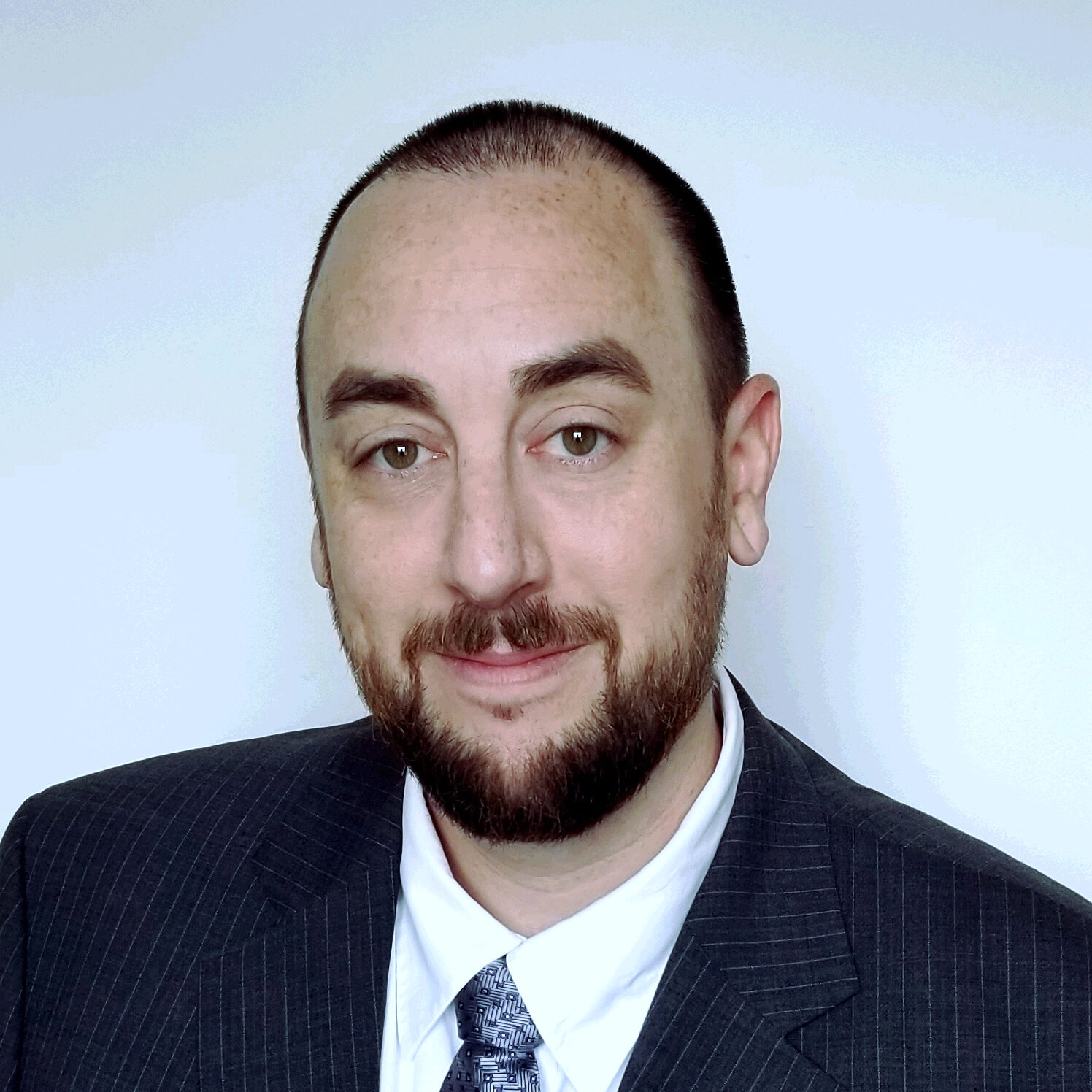
Ryan Boyd is an Assistant Professor in the School of Behavioral and Brain Sciences at the University of Texas at Dallas. As a computational social scientist, he specializes in analyzing everyday language (social media, speeches, writings) to uncover psychological patterns in personality, emotion, and cognition. Affiliation: University of Texas at Dallas Research Focus: Language analysis, mental health detection, AI psychology His work leverages computational linguistics and NLP to study: Personality through text Emotion regulation via social media Mental health indicators in digital language Historical and political discourse analysis Recent publications emphasize AI integration in psychological assessment, radicalization detection, and cultural language frameworks like MR-LIWC2015 for Marathi NLP. He develops accessible tools like LIWC, BUTTER, and WhisperingWizard for non-technical researchers, bridging complex analytics with user-friendly interfaces.
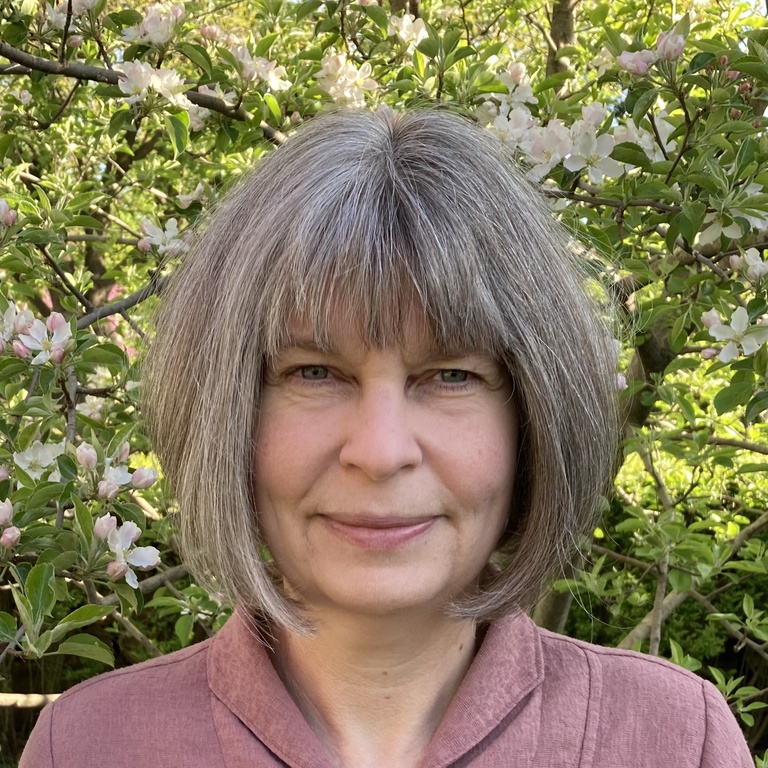
Jodie Plumert is a Professor at the University of Iowa, holding the Russell B. Day and Florence D. Day Chair. She is affiliated with the Department of Psychological and Brain Sciences and leads the Hank Virtual Environments Laboratory (Perceiving, Acting, & Thinking Lab). Her research spans developmental science, cognitive psychology, and clinical science, with a focus on perceptual-motor development, childhood injury prevention, and parent-child communication. Plumert's research explores how children and adults perceive and act in virtual environments, examining risk-taking behaviors, spatial memory, and executive function. She investigates developmental disorders through studies on ADHD symptoms and their impact on movement and decision-making. Her work integrates technology like virtual reality to model human-agent interactions and assess perception-action tuning. Her publications reveal consistent application of VR to study developmental psychopathology and cognitive control. Key themes include road-crossing safety, motor timing, and collaborative behavior in virtual settings. Her laboratory addresses temperament and learning mechanisms in applied contexts. Plumert earned her Ph.D. from the University of Minnesota in 1990. She maintains dual office and lab addresses at the Psychological and Brain Sciences Building (PBSB) in Iowa City, IA, with active phone lines at both locations.
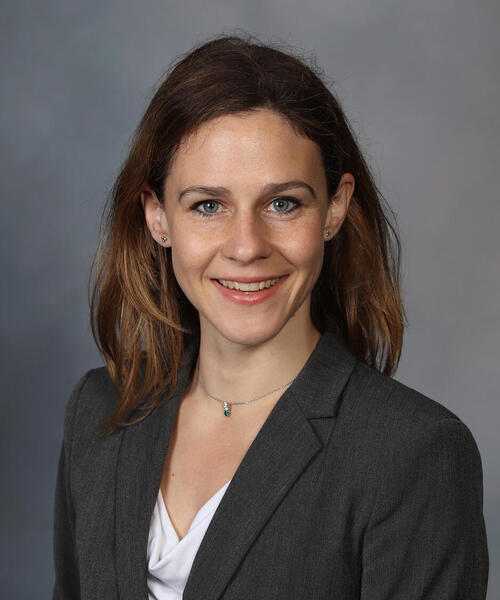
Dora Hermes Miller is an Associate Professor of Biomedical Engineering and holds Senior Associate Consultant II-Research roles in the Departments of Physiology & Biomedical Engineering, Radiology, and Neurology at Mayo Clinic. Her research focuses on human systems neuroscience, integrating multimodal imaging and computational modeling to understand neural signals in neurological and neuropsychiatric diseases. She collaborates with clinicians to develop therapeutic neuromodulation technologies and neuroprosthetics. Education includes a PhD from Utrecht University (Brain Center Rudolf Magnus) and postdoctoral fellowships at Stanford University, New York University, and UMC Utrecht. Her work emphasizes reproducible research practices, with contributions to neuroimaging standards like BIDS-iEEG and open source tools for electrode localization. Research interests span multimodal imaging integration, network dynamics via electrical stimulation, neural oscillations, and translational applications of brain-machine interfaces. Her lab explores how electrical stimulation modulates human connectomes, with implications for epilepsy treatment and psychiatric conditions. Collaborative efforts bridge clinical neurology, neurosurgery, and computational neuroscience. Awards and recognitions are not explicitly listed in the provided text. Her work has advanced understanding of somatotopic motor representations, limbic circuit modulation, and cortical stimulation effects, with over 70 peer-reviewed publications in journals like NeuroImage and Brain. Current projects include developing closed-loop neuromodulation systems, optimizing ECoG/MEG-fMRI integration, and advancing ethical brain-computer interface applications. She leads the Mayo Clinic NeuroEngineering Lab and participates in collaborative initiatives to standardize neuroelectrophysiological data sharing.
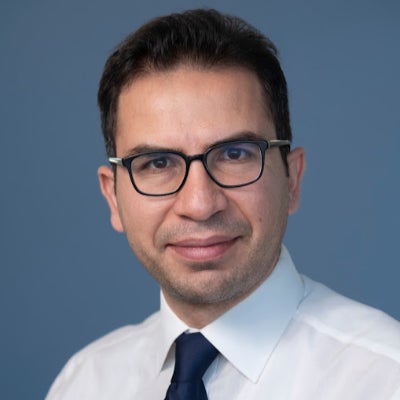
Dr. Reza Abiri is an Assistant Professor in the Department of Electrical, Computer and Biomedical Engineering at the University of Rhode Island's College of Engineering. His research focuses on translational neurorobotics, combining biosignal control systems with AI-enabled medical robotics to address neurorehabilitation challenges. He leads the Translational Neurorobotics Laboratory (TN Lab), established in Fall 2021 with NSF CAREER 2025 funding. Education: Postdoctoral Fellow, University of California, San Francisco and UC Berkeley (2021) Ph.D., Mechanical Engineering, University of Tennessee (2017) M.Sc., Mechanical Engineering, Amirkabir University of Technology, Iran (2011) B.Sc., Mechanical Engineering, K.N. Toosi University of Technology, Iran (2009) Dr. Abiri's research spans multiple disciplines including robotics, artificial intelligence, brain-machine interfaces, and biomedical engineering. His work addresses critical challenges in decoding neural activity for motor control, developing novel actuation mechanisms, and enhancing neurorehabilitation technologies through advanced signal processing and AI integration. Recent publications demonstrate a strong focus on brain-computer interfaces, attention training, and robotic rehabilitation systems. Key topics include EEG signal analysis, shared autonomy algorithms, multimodal AI frameworks, and magnetic actuation technologies. These works reveal a consistent pattern of innovation in connecting neural signals with robotic control systems. Scientific Recognition: NSF CAREER Award (2025) Dr. Abiri's TN Lab develops computational methods to overcome translational barriers in neurorehabilitation and motor control restoration. The lab's work integrates machine learning with biosignal processing to create advanced human-machine interaction systems, particularly focusing on noninvasive neural interfaces and their practical applications in healthcare robotics.
Ali Hassan is a researcher affiliated with the National University of Sciences and Technology (NUST), School of Electrical Engineering and Computer Science, Department of Computer and Software Engineering. His work spans multiple domains in computer science, engineering, and applied mathematics, focusing on areas such as machine learning, IoT, energy systems, and medical informatics. His research explores: Reinforcement learning applications for battlefield information systems IoT antenna design and performance evaluation Optimization of second-life battery systems in electric vehicles Transformers for real-time vehicle collision avoidance Image hashing techniques using visual attention models Neural network-based phasor estimation for power grids Biomedical sensor systems for non-invasive health monitoring Mathematical modeling of viral dynamics Recent publications demonstrate his emphasis on interdisciplinary approaches combining AI, signal processing, and sustainability. He has collaborated with institutions across Pakistan, France, Saudi Arabia, and the USA, with a focus on practical implementations in cybersecurity, energy optimization, and healthcare technology.
Fabio Catania is a Postdoctoral Fellow at the McGovern Institute for Brain Research, Massachusetts Institute of Technology. His work focuses on developing conversational agents and AI systems tailored for neurodevelopmental disorders, emotion recognition in speech, and inclusive technology design. He has pioneered projects such as the Emozionalmente Italian emotional speech corpus and the Emoty conversational agent for individuals with autism spectrum disorder. Research Interests: AI-driven therapeutic interventions for neurodevelopmental disorders Multimodal emotion recognition systems Design of accessible conversational interfaces for marginalized groups Linguistic and acoustic analysis of non-verbal communication cues Key Contributions: Developed AI tools like Smemo (multimodal interface for children's creativity) and OK, DNA! (genomic data explorer) Created voice-controlled music production systems for motor-impaired users Explored irony and sarcasm detection through multimodal analysis His work bridges computational linguistics, human-computer interaction, and clinical applications, with a focus on creating ethical and inclusive AI systems for healthcare and education contexts.
Overview Amr Al Abed is a Senior Lecturer at the Graduate School of Biomedical Engineering, University of New South Wales . He specializes in computational modeling, biomedical instrumentation, and electrophysiology with a focus on cardiac and neural systems. His work bridges biocomputational simulations with experimental validation, emphasizing translational applications like gene therapy delivery, medical devices, and brain-machine interfaces. Education PhD in Biomedical Engineering (UNSW, 2012) Masters in Biomedical Engineering (UNSW, 2006) Bachelor of Medical Sciences (1st Class Honours, UNSW, 2004) Research Interests His research spans: Optrode Technology: Development of liquid crystal-based optrodes for neural and cardiac sensing. Gene Electrotransfer: Novel methods for targeted DNA/RNA delivery using conductivity-clamped electric fields. Computational Cardiology: Multi-physics models of heart mechanics and fluid dynamics for surgical planning and device design. Neural Interfaces: Bidirectional stimulation/detection systems for retinal and neural prosthetics. Publications His 2023-2025 work highlights advancements in flexible electrode arrays , motorless robotic systems , and deep tissue gene delivery . Key themes include biomedical device innovation, computational modeling of cardiovascular systems, and neurotechnology. Grants & Labs Leads projects on liquid crystal optrodes and electrotransfer systems. Collaborates with labs focused on neural interfaces and cardiac electrophysiology. Active in IEEE and SPIE conferences with over 70 peer-reviewed publications.
Kate Arrington is a Professor in the Department of Psychology at Lehigh University, internationally recognized for her research on cognitive control and multitasking. She earned her Ph.D. in Cognitive Psychology from Michigan State University in 2002 and completed an NRSA-funded postdoctoral fellowship at Vanderbilt University before joining Lehigh in 2005. Role: Chair of the Department of Psychology Contact: 610.758.4230 | cma205@lehigh.edu | Chandler-Ullmann room 130 Research Interests: Cognitive psychology, cognitive control mechanisms, human multitasking, and applied cognition. She investigates interactions between stimulus-driven and goal-directed processes in task selection and performance, exploring individual and situational variability in cognitive control. Developed the voluntary task switching paradigm for lab-based studies Applied research in intelligent tutoring systems and multimodal learning interfaces Scientific Awards & Leadership: NIH and NSF grant funding for multitasking and cognitive control research Rotating Program Officer, NSF Perception, Action, and Cognition program (2015-17) Chair, Women in Cognitive Science (from 2021) Director, Lehigh’s Institute for Data, Intelligent Systems, and Computation Teaching: Cognitive Psychology, Cognition in Practice and Policy, Research Methods and Statistics.
Urbano J. Nunes is a Full Professor at Coimbra University and Senior Researcher at the Institute for Systems and Robotics (ISR-UC) , where he coordinates the Human-Centered Mobile Robotics Lab . His career spans national and international funded projects in mobile robotics , intelligent vehicles , and human-machine interfaces , with over 160 publications in journals and conferences. He has supervised 13 completed PhD students and currently guides 4 more. Key Roles : IROS Advisory Committee (2013-), IEEE ITS Society Vice President (2011-2012), IEEE RAS Technical Committee Cochair (2006-2011) Editorial Leadership : Associate Editor for IEEE Transactions on Intelligent Vehicles (2015-), former Associate Editor for IEEE Transactions on Intelligent Transportation Systems (2007-2016) Research Interests focus on human-centered mobile robotics , including mobile service robotics , assistive robotics , autonomous vehicle navigation , pattern recognition , and machine learning . His recent work involves 3D LiDAR processing, multispectral imaging in agriculture, and brain-computer interface (BCI) reliability improvements. Scientific Awards : IEEE ITS Society Outstanding Service Award (2006) IEEE RAS Most Active Technical Committee Award (2006) NiSIS Competition Winner for Automotive Dataset Analysis (2007) Grant Leadership includes 33 funded projects from 2001 to 2025 across domains like digital agriculture (GreenBotics), green automotive innovation (GreenAuto), and telerehabilitation platforms (INPACT), with international collaborations spanning EU programs and Portugal’s FCT grants. Labs & Teams : Coordinates the Human-Centered Mobile Robotics Lab at ISR-UC, integrating cross-disciplinary teams in robotics, AI, and BCI research. His group partners with institutions like CERN and European Commission JRC in cybernetic transportation systems.
Nuno Correia is an Associate Professor in Digital Transformation at Tallinn University , with affiliations including Aalto University (visiting lecturer) and ITI/LARSyS (associated researcher). He holds a PhD in Art and Design in New Media from Aalto University (2013) and has taught at multiple institutions globally since 2000. Research Interests : Human-Computer Interaction (HCI), Sound and Music Computing, Multisensory User Experience, Media Art and Design. His work bridges interactive technology with dance, digital art, and AI applications, focusing on performance ecologies, screen scores, and VR environments. Scientific Awards : Best paper award at ACM DIS 2022 Tallinn University best article in exact sciences 2022 Recent Trends in Articles : 2024 papers on AI-driven dance interaction; 2023 work on multisensory feedback systems; 2022 studies on body mapping and composite animation; 2021 contributions to hackathons, screen scores, and VR design; 2020 projects on live motion capture and glitch workflows. Creative Contributions : Co-founder of SIIDS symposium; organizes art-science residencies (e.g., Bio Elektron, MODINA project); collaborates with Eesti Kontsert on brain-wave visualization performances.
Dr. Oxana Eschenko is a Group Leader at the Max Planck Institute for Biological Cybernetics in Tübingen, Germany, affiliated with the Department of Computational Neuroscience. She was previously associated with the Department of Physiology of Cognitive Processes, indicating a research trajectory focused on brain function and cognitive systems. Her research interests lie primarily in computational neuroscience and the physiology of cognitive processes, with likely emphases on neural mechanisms of learning, memory, and information processing in the brain. These interests are inferred from her departmental affiliations and the scientific focus of the institute. The available data does not include any publications, preventing analysis of research trends or thematic evolution. Similarly, no information on teaching, supervision, or collaborative networks is provided in the current text. No scientific awards or honors are mentioned in the provided content. There is no information available regarding student mentorship, grant funding, or leadership in educational programs. Dr. Eschenko leads an independent research group, suggesting involvement in guiding postdoctoral researchers and doctoral students, though specific names are not listed. She is part of a leading neuroscience research institute with access to advanced imaging, computational, and technical support facilities, suggesting her work benefits from interdisciplinary collaboration and state-of-the-art infrastructure.
Tony Szturm is a Professor and Senior Scholar in the Department of Physical Therapy at the College of Rehabilitation Sciences, University of Manitoba. His work bridges clinical rehabilitation and engineering innovation, focusing on technology-assisted and game-based therapeutic interventions delivered through telerehabilitation platforms. Institution: University of Manitoba School: College of Rehabilitation Sciences Department: Department of Physical Therapy Location: Bannatyne Campus, Winnipeg, MB Dr. Szturm holds a BSc in Biology and a BSc in Physical Therapy from the University of Western Ontario, and a PhD in Neurophysiology from the University of Manitoba. His research is deeply interdisciplinary, integrating wireless sensors, digital media, and interactive systems to support rehabilitation in both clinical and home environments. His primary research interests include technology-assisted rehabilitation , telerehabilitation , game-based motor training , and neurological recovery across diverse populations such as stroke survivors, children with neurodevelopmental disabilities, individuals with traumatic brain injuries, Parkinson’s patients, and aging adults. A key focus is enhancing accessibility, accountability, and engagement in therapy through innovative, low-cost digital tools. The 15 most recent inferred articles reflect a strong trend toward digital health innovation , remote monitoring , and interdisciplinary rehabilitation engineering . These works span areas such as upper limb recovery, balance and gait training, dual-task performance, vestibular rehabilitation, and patient engagement. The integration of wearable sensors, real-time feedback, and gamification principles is a consistent theme, demonstrating his commitment to translating research into practical, scalable solutions. Dr. Szturm is actively involved in mentoring, supervising postdoctoral fellows, PhD, and master's students through the Mentoring of Highly Qualified Personnel (HQP) Program, fostering collaboration between rehabilitation sciences and engineering disciplines. While no formal scientific awards are listed, his leadership in high-impact, publicly featured research projects underscores his contribution to the field. His lab and research group focus on developing and evaluating plug-and-play rehabilitation technologies that can be deployed in resource-limited settings, including international applications such as projects in India. These initiatives emphasize affordability, usability, and clinical effectiveness, aiming to expand access to high-quality rehabilitation globally.
Abdullah A. A. Ahmed is an Associate Professor in the Department of Physics at Thamar University, Yemen. He earned his Ph.D. from Universiti Putra Malaysia (UPM) in 2012 and served as a postdoctoral fellow there before returning to Yemen in 2013. He has been actively contributing to materials science research, particularly in nanomaterials, optoelectronics, energy storage, and hydrogen storage applications. Ph.D.: Universiti Putra Malaysia (UPM), 2012 Postdoctoral Fellowship: Universiti Putra Malaysia Appointment: Assistant Professor, Thamar University (2013) Promotion: Associate Professor (2019–2020) Dr. Ahmed's research spans advanced materials for energy and medical applications. His work includes the development of biopolymer electrolytes for supercapacitors, DFT studies on perovskite materials, photocatalytic nanocomposites, and nanomaterials for anticancer therapy. He frequently employs techniques such as co-precipitation, electrodeposition, and spectroscopic analysis. His recent publications (2021–2025) show a strong trend toward sustainable energy materials, including hydrogen storage in perovskite hydrides, supercapacitors using biopolymers, and photocatalytic nanocomposites for environmental remediation. There is also a growing interest in biomedical applications of nanomaterials and brain interfacing technologies. Dr. Ahmed serves as a Review Editor for Frontiers in Chemistry in the field of Medicinal and Pharmaceutical Chemistry, contributing to peer review and academic discourse. He has advised graduate students such as Annas Al-Sharabi and Ahmed Al-osta, both affiliated with Thamar University. While no specific grants are mentioned, his extensive publication record suggests active research funding and collaboration. His work is conducted within a collaborative network involving researchers from Malaysia, Saudi Arabia, India, and other international institutions, focusing on cutting-edge materials for energy, environment, and health applications.
Dr. Alvitta Ottley is an Assistant Professor in the Department of Computer Science & Engineering at Washington University in St. Louis, with a courtesy appointment in the Department of Psychological & Brain Sciences. Her research focuses on interdisciplinary approaches to visualization systems, machine learning, and cognitive science to enhance decision-making in healthcare, intelligence analysis, and scientific discovery. She leads the AIR-D Summer Science Camp, a program aimed at underrepresented high school students in STEM. Education: PhD and MS in Computer Science from Tufts University (2016, 2013). Research Interests: Developing adaptive visualization systems that account for users' cognitive traits and goals. Her work integrates AI-driven insights with human factors to create context-aware interfaces. Recent studies explore trust dynamics in visualizations, cross-cultural visualization literacy, and the impact of chart types on legal decision-making. Awards: NSF CRII Award (2018), NSF Career Award, EuroVis Early Career Award (2022), and multiple best paper recognitions at top visualization conferences. Grants & Advising: Active in mentoring students and securing grants such as the NSF CAREER Award for context-aware systems. Her work on medical decision-making visualization received NSF support in 2018. Labs & Teams: Affiliated with the Division of Computational & Data Sciences and the Center for Trustworthy AI in CPS, focusing on ethical AI integration in visual analytics.
Giuseppe Schiavone serves as a Researcher holding the Foundation Bertarelli Chair in Neuroprosthetic Technology at the Laboratory for Sensory Processing (LSBI) within the School of Engineering at École Polytechnique Fédérale de Lausanne (EPFL). He concurrently holds Lecturer positions in the School of Life Sciences and the Doctoral Program for Engineering Education, demonstrating cross-disciplinary engagement across EPFL's academic structure. His research centers on neuroprosthetic technology and sensory processing , with emphasis on developing neural interfaces to restore sensory functions. His work bridges engineering and neuroscience through investigations into brain-computer interfaces and neural signal decoding , aiming to create therapeutic devices for sensory restoration. This interdisciplinary approach integrates computational modeling with experimental neuroscience. Dr. Schiavone operates within EPFL's Laboratory for Sensory Processing, a specialized research unit focused on understanding neural mechanisms of sensory perception and translating findings into neuroprosthetic applications. The laboratory collaborates with clinical partners to advance neural engineering solutions for neurological impairments, situated within EPFL's Institute of Neurosciences framework.