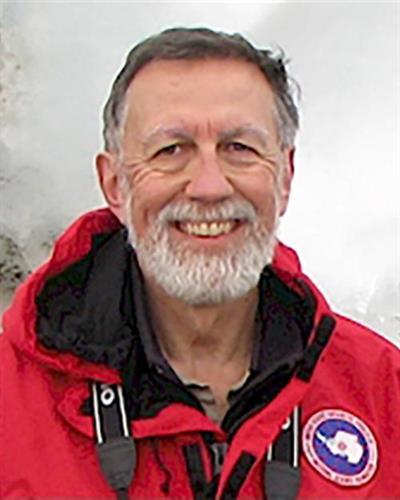
Avi Loeb , the Frank B. Baird Jr. Professor of Science at Harvard University, is a leading astrophysicist and former Chair of Harvard's Department of Astronomy (2011-2020). He directs the Institute for Theory and Computation (ITC) and the Galileo Project (2021-present), while holding the Sackler Senior Professorship at Tel Aviv University. His research spans cosmology, black holes, interstellar objects, and the search for extraterrestrial life. Education: PhD in Physics from Hebrew University of Jerusalem (1986) Former Positions: Member of the Institute for Advanced Study, Princeton (1988-1993) Loeb's research interests include: Gravitational wave detection and interstellar object analysis Simulation hypothesis and cosmic reality Technological signatures beyond the Standard Model His recent publications focus on 3I/ATLAS , gravitational SETI, and AI alignment in space exploration. Awards include being named among TIME's 25 Most Influential People in Space (2012), 14 Most Inspiring Israelis (2020), and ranking #3 in global astronomical impact (2024). He chairs the Breakthrough Starshot Initiative and advises the National Academies' Board on Physics and Astronomy.
Geoff Pleiss is an Assistant Professor in the Department of Statistics at the University of British Columbia (UBC), affiliated with CAIDA's AIM-SI cluster. He is also a Canada CIFAR AI Chair and faculty member at the Vector Institute. His research bridges deep learning and probabilistic modeling, focusing on uncertainty quantification, Bayesian optimization, Gaussian processes, and ensemble methods. Pleiss earned his PhD in Computer Science from Cornell University (2020), followed by a postdoc at Columbia University. He holds multiple awards, including the AISTATS Top Reviewer and NeurIPS recognitions. His work emphasizes scalable algorithms and open-source contributions, such as the GPyTorch library. Pleiss advises students in Computer Science and Statistics, including Donney Fan (PhD), Tim G. Zhou (MSc), and others. He teaches advanced courses like STAT 547U (Deep Learning Theory) and STAT 520P (Bayesian Optimization). Grants include NSERC Discovery and New Frontiers in Research funding. Pleiss collaborates on interdisciplinary projects, such as astrophysical discovery via machine learning, and actively participates in academic service and outreach. Education: PhD in Computer Science, Cornell University (2020) MSc in Computer Science, Cornell University (2018) BSc in Engineering (Computing with Applied Mathematics), Olin College (2013) Key Research Themes: Uncertainty-aware decision-making with neural networks Scalable Gaussian processes and Bayesian optimization Ensemble methods and their theoretical limitations Recent Grants: NSERC Discovery Grant (2024) New Frontiers in Research Fund (2025, co-PI) His publications span foundational theory to applied machine learning, with over 14,500 citations. He actively mentors students through research internships and advises on open-source software development. Pleiss frequently presents at top conferences and collaborates with industry partners like Microsoft and ASAPP.
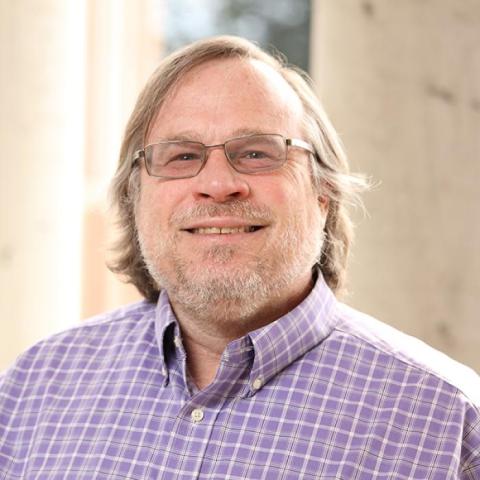
Oliver Shorttle is a Professor of Natural Philosophy at the University of Cambridge, holding a joint position between the Department of Earth Sciences and the Institute of Astronomy. His research focuses on planetary evolution, extrasolar planets, and geochemical cycling, integrating geological and astronomical perspectives. He explores topics such as exoplanet habitability, volcanic processes on distant worlds, and the role of volatiles in planetary systems. Education and Career: Shorttle earned his undergraduate degree in Natural Sciences from Cambridge, followed by a PhD in Earth Sciences. He held postdoctoral positions at Caltech and as a JSPS fellow in Japan before returning to Cambridge as faculty. Research Themes: His work spans planetary chemistry, magma dynamics, and the interplay between planetary interiors and atmospheres. Key projects include analyzing protoplanetary disks, simulating volcanic activity on exoplanets, and investigating phosphorus’s role in prebiotic chemistry. Collaborations: Leads the Planetary Chemistry group, collaborating across disciplines at Cambridge and internationally. Current projects involve modeling exoplanet atmospheres, studying mantle melting processes, and developing geochemical methods to probe planetary formation. Labs/Teams: Directs the Planetary Chemistry research group, fostering interdisciplinary research between geology and astronomy. Active in fieldwork, lab analysis, and computational modeling.
University of California, Los AngelesUnited States
Distinguished Professor David Jewitt is a prominent planetary scientist at UCLA's Department of Earth and Space Sciences within the College of Letters and Science. He has held this position since 2009 and also serves as a Professor in the Department of Physics and Astronomy since 2010, and as Director of the Institute for Planets and Exoplanets since 2011. Dr. Jewitt earned his B.Sc. in Astronomy from the University of London (1979), followed by M.S. (1980) and Ph.D. (1983) in Planetary Science from Caltech. Prior to UCLA, he served on the faculty at MIT (1983-1988) and the University of Hawaii (1988-2009), where he became a full Professor in 1993. His research focuses on primitive bodies of the Solar System, particularly comets which he considers remnants from planetary accretion processes. His work aims to understand solar system formation and evolution through studying these objects. Recent publications explore non-gravitational forces in planetary systems, interstellar interlopers, and the asteroid-comet continuum, reflecting his continued leadership in solar system small body research. Shaw Prize (2012) Kavli Prize (2012) Member of the National Academy of Sciences (2005) Exceptional Scientific Achievement Medal, NASA (1996) Professor Jewitt has mentored numerous students including Jane Luu (co-discoverer of the Kuiper Belt) and Chadwick Trujillo. As Director of the Institute for Planets and Exoplanets, he fosters interdisciplinary research connecting planetary science with exoplanet studies. His work continues to shape our understanding of the solar system's formation through analysis of its smallest constituents.
Max Planck Institute for Multidisciplinary SciencesGermany
Alec M. Wodtke serves as Director at the Max Planck Institute for Biophysical Chemistry and holds a Professorship at the University of Göttingen. He leads the Dynamics at Surfaces research group, which employs cutting-edge laser, molecular beam, and ultrahigh vacuum technologies to study molecular interactions at interfaces. His research focuses on understanding the fundamental rules governing energy conversion at molecular interfaces. Wodtke's work bridges macroscopic energy conversion phenomena with molecular-scale processes, investigating how energy transfers occur one molecule and one collision at a time. His group specializes in designing well-defined experiments that capture molecules in the act of reacting, providing benchmark measurements for theoretical advances in surface chemistry. Recent research trends show a strong focus on ultrafast molecular dynamics, with significant contributions to understanding hydrogen-graphene interactions, energy dissipation mechanisms at surfaces, and atomic-scale reaction kinetics. His work has important implications for developing heterogeneous catalysts, photovoltaics, and fuel cell technologies. Alexander von Humboldt Professorship (2011) ERC Synergy Grant worth 12 million euros (2024) Ertl Lecture Prize (2022) Somorjai Visiting Miller Research Professorship Moore Distinguished Scholar at Caltech Wodtke directs multiple project groups including Atom-surface scattering dynamics, Chemical dynamics using ultra-short atom pulses, First-principles simulations of molecule-surface dynamics, and Time-resolved spectroscopy of surface adsorbates. His research team has secured significant funding including Advanced ERC Grants and operates specialized facilities for surface science research.
Dr Chris Truscott serves as a Bye-Fellow, College Teaching Associate, and Director of Studies for Chemistry (Parts 1B and II) at Sidney Sussex College, University of Cambridge. He oversees the academic progress of chemistry students, arranges college supervision schedules, and acts as their primary academic advisor within the Natural Sciences Tripos framework. His academic background includes: Undergraduate degree in Chemistry PhD in the Department of Chemistry under Prof. Stuart Clarke, focusing on supramolecular chemistry at polymer-oil interfaces for lubrication technologies Post-doctoral research in the same department investigating corrosion prevention at weld-lines Research spans molecular behavior across extreme environments with key emphases: Structure and dynamics of molecules on surfaces Ice formation on interstellar carbonaceous materials Surfactant adsorption on deep-earth minerals Applications in lubrication systems and corrosion control Interfacial phenomena in polymer-oil systems Mineral-surfactant interactions at geological depths No scientific awards are documented in available sources. As Director of Studies, he manages undergraduate academic pathways for Sidney Chemists while delivering college supervisions across year groups. His post-doctoral corrosion research indicates prior grant-funded work, though current funding specifics remain unspecified. Former affiliation with Prof. Stuart Clarke's research group highlights his foundation in experimental surface chemistry, though current laboratory affiliations beyond teaching responsibilities are not detailed.
Dr Charlie Ryan is an Associate Professor in the School of Engineering at the University of Southampton , specializing in low-cost micropropulsion systems for small spacecraft. He leads the Astronautics Group and has a primary research focus on electrospray thrusters , Hall-effect thrusters , and small chemical propulsion systems using hydrogen peroxide. PhD in electrospray voltage effects from Queen Mary University of London (2011) Postdoctoral work on MEMS electrospray thrusters for cubesats (2011-2013, European Commission FP7 'MicroThrust') Post Doctoral Research Fellow at University of Surrey’s Space Centre (2014-2015) developing low-cost Hall-effect thrusters His recent research involves experimental characterization of ionic liquid ion sources , porous electrospray thrusters , and in-situ lunar propellants . Current projects include Protolaunch and SPRINT (Research England), Cryptalabs , and collaborations with SmallSpark. He has supervised 10 PhD students in propulsion technology and related fields. Publications demonstrate expertise in: Electrospray thruster diagnostics Dual-species ion emission mechanisms Flight-ready microthruster development Alternative propellants for Hall thrusters Lunar regolith-derived propulsion Modular thruster design Research funded by EPSRC , Royal Society , and Research England . His hardware has flown on space missions including the International Space Station.
Gábor Magyarfalvi is an Assistant Professor and Lecturer at Eötvös Loránd University, affiliated with both the Institute of Chemistry and the Department of Inorganic Chemistry. His office is located at 1117 Budapest, Pázmány Péter sétány 1/a. (Room 542), and he can be contacted via email at gmagyarf@elte.hu or phone extension 6587. His research focuses on physical and inorganic chemistry, with specialization in spectroscopy, astrochemistry, and computational methods. Key areas include matrix isolation techniques for studying interstellar molecule formation (e.g., H 2 catalysis via polyaromatic hydrocarbons), photochemical generation of reactive intermediates, and conformational dynamics of biomolecules. His work extensively employs low-temperature matrix isolation coupled with laser spectroscopy and quantum chemical calculations. Magyarfalvi's publications demonstrate consistent themes: 60% focus on low-temperature photochemistry and spectroscopy of small molecules (e.g., nitrogen/sulfur compounds, amino acids), 30% on peptide/protein conformational analysis using vibrational circular dichroism (VCD) and NMR, and 10% on methodological developments in computational chemistry. Recent works increasingly explore astrochemistry and quantum tunneling phenomena.
Brooks H. Pate is the William R. Kenan, Jr. Professor of Chemistry at the University of Virginia, Department of Chemistry, within the College of Arts and Sciences. He leads an innovative research laboratory focused on developing and applying broadband rotational spectroscopy for advanced chemical analysis. B.S., University of Virginia, 1987 Ph.D., Princeton University, 1992 NRC Postdoctoral Fellow, National Institute of Standards and Technology (NIST), Gaithersburg, 1992–1993 Dr. Pate’s research centers on molecular rotational spectroscopy , particularly the development of chirped-pulse Fourier transform rotational spectroscopy . His work enables ultra-high-resolution analysis of molecular structure, dynamics, and stereochemistry. Key areas include intramolecular dynamics , molecular clusters (especially water hexamers), and quantitative chiral analysis with applications in pharmaceutical chemistry. His lab’s instruments operate across microwave to mm-wave frequencies, allowing analysis of both small (astrochemical) and large (biomolecular) species. The recent publications demonstrate a strong trend toward real-time, in situ chemical analysis and stereochemical monitoring in synthesis. The research combines experimental spectroscopy with quantum chemical modeling to extract structural and dynamical information. Applications span from fundamental quantum tunneling phenomena in water clusters to industrial process optimization in drug synthesis. Notable scientific awards include: 2016 William F. Meggers Award, The Optical Society UVa Innovator of the Year Multiple publications in Science recognized for groundbreaking impact Dr. Pate actively mentors graduate students and postdoctoral researchers, many of whom are co-authors on high-impact publications. His lab has secured significant research funding, leading to technological innovations that have spun out into a startup company focused on faster molecular analysis. The research is supported by instrumentation development, computational modeling, and strong interdisciplinary collaborations. The Pate Lab is a hub of innovation in physical chemistry, combining cutting-edge spectroscopic techniques with practical applications in pharmaceuticals and astrochemistry. The group operates advanced rotational spectrometers, including cavity-enhanced systems for real-time sampling from reaction flasks, and maintains strong ties with national labs and industry partners.
Samuel Kounaves is a Professor of Chemistry at Tufts University and a Visiting Professor at Imperial College London's Department of Earth Science & Engineering. His research focuses on planetary chemical analysis and astrobiology, particularly the search for life on Mars and icy moons like Enceladus and Europa. He led the Wet Chemistry Lab (WCL) on NASA's Phoenix Mars Lander, discovering perchlorate in Martian soil, a finding revolutionizing understanding of Mars' habitability. His work also includes studying oxychlorine chemistry's effects on biomarkers and developing in-situ analytical instruments for extraterrestrial exploration. Education: DSc (PhD) in Chemistry, Université de Genève (1985) MS and BS in Chemistry, California State University, San Diego (1978, 1975) Research Interests: Planetary geochemistry, astrobiology, Mars habitability, oxychlorine chemistry, and development of analytical instruments for space missions. His team investigates how biomarkers degrade under Martian conditions and designs sensors for detecting life on icy ocean worlds. Recent Contributions: Key publications include studies on perchlorate's role in Mars' chemistry, microbial survival in extreme environments, and mission concepts for Enceladus exploration. He has received awards such as the Kavli Foundation Award and NASA Achievement Awards for his Phoenix mission leadership. Grants & Funding: Major NASA grants for oxychlorine research, sensor development (e.g., MICA), and studies on Mars' organic matter preservation. Awards: Fellowships from the Geological Society, Royal Society of Chemistry, and AAAS, alongside NASA recognitions.
Prof. Philipp Reiss is a Professor of Lunar and Planetary Exploration Technologies at the Technical University of Munich (TUM), part of the TUM School of Engineering and Design. His academic journey includes a doctorate in lunar exploration (2018) and postdoctoral leadership of a research group, followed by ESA work on lunar mission instruments. He was appointed to his current role in 2022. Education: Bachelor's/Master's in Aerospace Engineering from Bremen University of Applied Sciences and TUM Doctorate in Lunar Exploration (TUM, 2018) Research Focus: Development of instruments for in-situ resource characterization (e.g., water detection on the Moon) Simulation of heat/mass transport in extraterrestrial environments Technologies for extreme environment exploration Legal and ethical frameworks for space resource utilization Recent Article Trends: Recent work emphasizes lunar water cycle analysis, space resource extraction technologies, and ESA mission instrument development. Key projects include PROSPECT payload design and thermal extraction of volatiles from regolith. Awards and Roles: ERC Grant Awardee (2024), Honorary Fellow at TUM Institute for Advanced Study Principal Investigator at ORIGINS Excellence Cluster (2022–present) Member of ESA’s PROSPECT science team (2019–present) Contributions to UN space resource legal discussions Advising & Grants: Supervises research projects on lunar rover systems and resource utilization. Secured funding through ERC grants and ESA collaborations. Advises on international space policy initiatives. Labs/Teams: Leads the Lunar and Planetary Exploration Professorship group at TUM, collaborating with ESA, JAXA, and the European Lunar Symposium. Active in developing planetary exploration tools like the PROSPECT permittivity sensor and MULE instrumentation.
Dr. Éric Hébrard is a Senior Lecturer in Astrophysics at the University of Exeter since 2018, with prior academic roles including NASA Goddard Senior Research Fellow and CNRS Research Associate. His work bridges planetary atmospheres, astrochemistry, and combustion modeling with expertise in 3D chemical simulations. PhD in Physics and Chemistry of Planetary Atmospheres, Université Paris 7 (2006) Magna cum laude Magistère Interuniversitaire de Chimie, ENS Paris (2003) Research focuses on: Exoplanetary atmosphere modeling (hot Jupiters, TRAPPIST-1e) Photochemical kinetics and UV absorption Coupling of atmospheric circulation and chemistry Cross-disciplinary combustion-atmosphere analogs Chemical validation strategies for model accuracy Scientific contributions include: NASA-funded research on organic-rich habitable zones Development of KIDA kinetic database for astrochemistry STFC Consolidated Grant for multi-dimensional chemical models Quantum chemistry integration for Titan atmosphere studies Awards: Higher Education Academy Fellowship (ASPIRE program) NASA Postdoctoral Fellowship (2015-2017) CNES Postdoctoral Fellowship (2007-2009)
Dr. Jessica Sunshine is a Professor in the Department of Geology at the University of Maryland. Her research focuses on planetary materials and processes, particularly using spectroscopy and morphological analysis to study comets, asteroids, meteorites, and lunar geology. She is a principal investigator on NASA missions such as the Double Asteroid Redirection Test (DART) and the Lucy Mission, contributing to breakthroughs in planetary defense and asteroid composition analysis. Dr. Sunshine holds a Ph.D. from Brown University (1994). Her work integrates field-based and remote sensing techniques, including thermal infrared spectroscopy, to explore topics like the origins of spinel-rich deposits on the Moon, the composition of Trojan asteroids, and the dynamics of impact ejecta. She leads the Lunar Vulkan Imaging and Spectroscopy Explorer (Lunar-VISE) mission to study non-mare volcanic regions on the Moon. Her recent studies include analyzing the DART mission's impact on Dimorphos, revealing insights into asteroid deflection mechanics and surface material responses. She has also contributed to understanding the geological history of Ceres and the compositional diversity of Jupiter Trojans through the Lucy mission's data.
Kevin K. Lehmann is the William R. Kenan, Jr., Professor of Chemistry at the University of Virginia, within the Department of Chemistry in the College of Arts & Sciences. He is a leading researcher in molecular spectroscopy, with a focus on ultrasensitive detection methods such as cavity ring-down spectroscopy (CRDS) and double-resonance techniques. His educational background includes a B.S. from Cook College, Rutgers University (1977), a Ph.D. from Harvard University (1983), and a Junior Fellowship at the Harvard Society of Fellows. Lehmann's research is centered on advancing trace gas sensing using optical methods, particularly CRDS with high-reflectivity cavities and telecom-grade lasers. His group has pioneered Doppler-free two-photon CRDS and sub-Doppler double-resonance spectroscopy using frequency combs, enabling high-precision measurement of molecular transitions in gases like methane and nitrous oxide. These methods have applications in atmospheric science, planetary exploration (e.g., Mars missions), and combustion diagnostics. He also investigates meta-science questions around the reproducibility of spectroscopic data. The recent publications highlight a strong trend in high-resolution, quantum-limited spectroscopic techniques applied to small polyatomic molecules. There is a clear focus on enhancing selectivity and sensitivity through nonlinear optical effects, cavity enhancement, and advanced detection schemes. Applications span environmental monitoring, astrochemistry, and fundamental molecular physics. Fellow of the Optical Society, 2011 W.R. Kenan Professor of Chemistry, 2009 Earle K. Plyler Award in Molecular Spectroscopy, 2003 Thomas A. Edison Patent Award, 2002 Fellow of the American Physical Society, 1995 Lehmann has advised numerous graduate students and postdoctoral researchers, and his lab has been supported by grants from agencies involved in space exploration, environmental science, and fundamental physics. His work has led to commercial instrumentation through Tiger Optics, Inc. He maintains strong international collaborations, particularly with researchers in Sweden on methane spectroscopy. While specific grant details are not listed, the scope and impact of his research suggest sustained funding from NSF, NASA, and DOE. His laboratory focuses on optical cavity-based sensors and high-resolution spectroscopy setups, integrating frequency combs, narrow-linewidth lasers, and cryogenic pre-concentration systems for trace analysis. The team combines experimental innovation with theoretical modeling to interpret complex spectra and improve measurement fidelity.
Marina Galand is a Professor in Planetary Science at Imperial College London's Department of Physics within the Faculty of Natural Sciences. Her research focuses on energy deposition mechanisms in planetary atmospheres, auroral emissions, and plasma interactions with solar system bodies such as Earth, Jupiter's moon Ganymede, and comet 67P/Churyumov-Gerasimenko. She is deeply involved with international space missions including Cassini, Rosetta, and upcoming missions like JUICE (Jupiter Icy Moons Explorer) and Comet Interceptor. Her work analyzes plasma environments using data from instruments like the Rosetta Plasma Consortium and the upcoming JUICE RPWI. Key research areas include ionospheric modeling, diamagnetic cavity dynamics, and solar wind interactions with cometary atmospheres. She has pioneered studies of far-ultraviolet auroras on comets, demonstrating these phenomena occur beyond planetary bodies. Galand's contributions bridge observational data with theoretical models, advancing understanding of atmospheric evolution and energy transfer processes. She collaborates on mission designs for future exploration of icy moons and pristine comets, emphasizing instrumentation development for plasma and dust diagnostics.