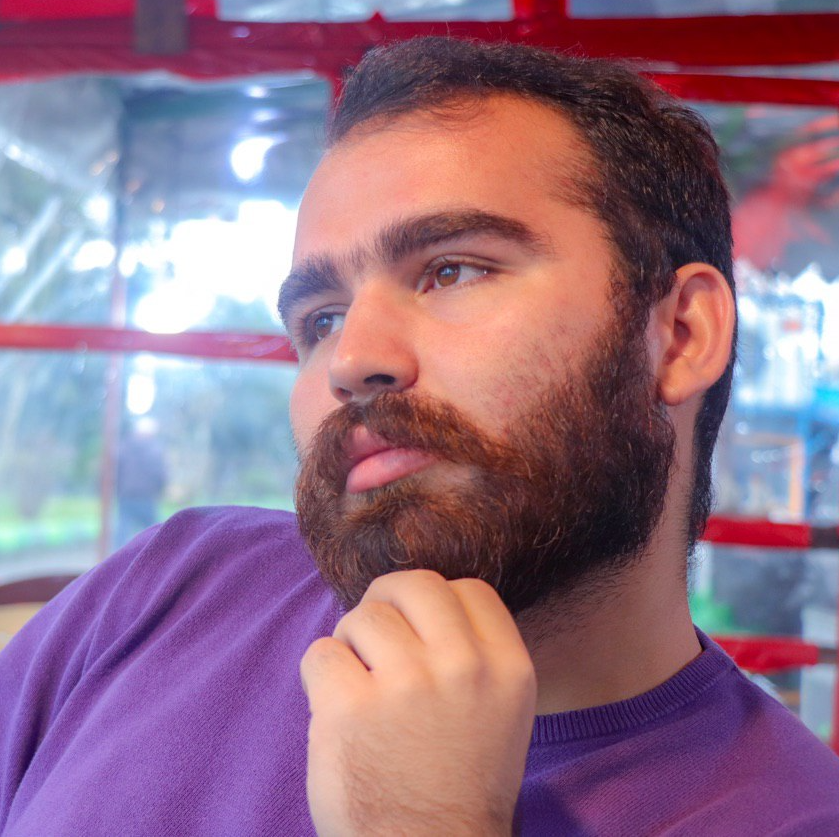
Shayan Aziznejad is a Senior ML Scientist at Distran, working on the intersection of machine learning and acoustic imaging. He was previously an ML researcher at Daedalean AI (October 2022–December 2024) and a Ph.D. candidate at Ecole Polytechnique Fédérale de Lausanne (EPFL) , where he focused on mathematical optimization and signal processing under Prof. Michael Unser. His academic background includes dual B.Sc. degrees in Electrical Engineering and Pure Mathematics from Sharif University of Technology . Research Focus: Machine learning, neural network certification, wavelet analysis, Hessian-Schatten regularization, and sparse modeling. Scientific Recognition: Swiss National Science Foundation Postdoc Fellowship (2021) Best Student Paper Award at ICASSP (2019) Gold Medalist at Iranian National Mathematics Olympiad (2011) Academic Contributions: Authored 15+ publications in top-tier journals (SIAM, IEEE, etc.) and conferences (ICASSP, EUSIPCO), with a focus on Lipschitz-regularized models, spline-based optimization, and inverse problems. Advising Experience: Supervised 11+ students across master's theses, summer internships, and semester projects, including Eliana Renzo, Joaquim Campos, and Haojun Zhu. Email: shayan.aziznejad@gmail.com
Ulisses M. Braga-Neto is a Professor in the Department of Electrical and Computer Engineering at Texas A&M University. His work focuses on statistical signal processing, pattern recognition, and machine learning. Research Interests : Statistical Signal Processing Machine Learning (including physics-informed ML and deep neural networks) Pattern Recognition Nonparametric Classification Regression Analysis Additional Information : Affiliated with the TAMIDS Scientific Machine Learning Lab Author of a widely recognized book on machine learning with Python integration Active in graduate education and curriculum development
Christa Cuchiero is a Professor at the Department of Statistics and Operations Research , University of Vienna , and an elected member of the Austrian Young Academy (Junge Akademie) since 2020. Her research bridges rigorous mathematics and cutting-edge applications in finance, machine learning, and stochastic analysis. Education: Christa earned her M.Sc. in 2006 from TU Wien with a thesis on affine interest-rate models, her Ph.D. in 2011 from ETH Zürich on affine and polynomial processes, and completed her Habilitation at the University of Vienna in 2018 on high-dimensional finance beyond classical paradigms. Research Interests: Her work centers on affine and polynomial processes , stochastic portfolio theory , signature methods , and infinite-dimensional stochastic analysis . Recent projects explore signature-based neural SDEs for option calibration, measure-valued diffusions for energy markets, and universal approximation properties of signature transforms. Awards & Recognition: Among her accolades are the FWF START Award 2019 , the Bruti-Liberati Visiting Fellowship 2018 , the ETH Medal 2012 for an outstanding Ph.D. dissertation, and the Prix de l’Institut Europlace de Finance 2017 for the best paper in finance. Contact: christa.cuchiero@univie.ac.at , Kolingasse 14-16, 05.47, 1090 Wien, Austria.
Prof. Dr. Ferdinand Evers is a Chair of Computational Condensed Matter Theory at the Institute of Theoretical Physics , University of Regensburg. His research spans quantum transport , spintronics , molecular electronics , and many-body localization , with a focus on ab initio and DFT-based modeling of nanostructures and low-dimensional systems . Key Research Areas: Quantum transport in molecular junctions Spin-orbit coupling and chiral effects Multifractality at quantum phase transitions Electronic structure of topological materials Ultrafast laser-driven electron dynamics Anderson localization and disorder Recent Article Trends (2021–2024): High-harmonic generation in topological insulators Spin-selective transport in chiral systems Mechanical torque in molecular rotors Self-consistent GW methods for molecular electronics Quantum interference in graphene nanoribbons Teaching: Lecturer for Theoretical Physics I-IV , Advanced Quantum Mechanics , and Scientific Perspectives courses at the University of Regensburg Focus on statistical mechanics , quantum transport , and computational nanoscience
Fabrizio Falchi is a researcher at the Artificial Intelligence for Media and Humanities (AIMH) Lab of the Institute of Information Science and Technologies (ISTI) within Italy's National Research Council (CNR). He also maintains an associate position at the Biorobotics Institute of Scuola Superiore Sant'Anna. His work focuses on developing advanced multimedia retrieval systems, with the VISIONE platform being his most notable contribution, which has won international competitions including the Video Browser Showdown in 2024 and placed second in 2023. Falchi's educational background includes: Ph.D. in Information Engineering from University of Pisa (Italy) Ph.D. in Informatics from Faculty of Informatics of Masaryk University of Brno (Czech Republic) M.B.A. from Scuola Superiore Sant'Anna in Pisa His research spans deep learning, convolutional neural networks, deep features extraction, similarity search algorithms, distributed indexing systems, multimedia information retrieval, computer vision applications, and peer-to-peer systems. Falchi has made significant contributions to fine-grained visual understanding, cross-modal retrieval (particularly image-text matching), and robustness of deep learning systems against adversarial attacks. His work demonstrates a strong focus on practical applications of these technologies, particularly in video retrieval systems and safety monitoring solutions. Analysis of Falchi's recent publications reveals a strong focus on video and image retrieval systems, with the VISIONE platform being central to his work. His research shows increasing emphasis on fine-grained understanding in computer vision, cross-modal retrieval, and addressing practical challenges like cross-resolution face recognition. Recent work demonstrates innovation in making these systems more efficient through techniques like knowledge distillation (ALADIN) and leveraging virtual worlds for training data. His publications consistently bridge theoretical advances with practical applications in surveillance, safety monitoring, and multimedia search. Falchi's work has received significant recognition: Best paper award at CBMI 2024 for 'Is ClLIP the main roadblock for fine-grained open-world perception?' VISIONE 2024 won the Video Browser Showdown competition in Amsterdam VISIONE obtained second place at Video Browser Showdown 2023 in Bergen Best Paper Award for 'Learning Safety Equipment Detection using Virtual Worlds' at CBMI 2019 Falchi collaborates extensively with researchers at ISTI-CNR, particularly within the AIMH Lab. His work on VISIONE involves collaboration with Giuseppe Amato, Paolo Bolettieri, Fabio Carrara, Claudio Gennaro, Nicola Messina, Lucia Vadicamo, and Claudio Vairo. As co-chair of Ital-IA 2023, the 3rd National Conference on Artificial Intelligence, he plays an active role in the academic community. He is a member of ACM (since 2012), the Computer Vision Foundation, the Italian Association for Computer Vision Pattern Recognition and Machine Learning (CVPL), and the CINI Lab on Artificial Intelligence and Intelligent Systems. Falchi is a key member of the Artificial Intelligence for Media and Humanities (AIMH) Lab at ISTI-CNR, where he leads research on video retrieval systems. The lab has developed the award-winning VISIONE platform, which combines multiple scientific results in content-based video retrieval. His team focuses on developing systems that enable users to search for target videos using textual prompts, drawing objects and colors, or images as query examples. The lab's work demonstrates strong interdisciplinary collaboration, bridging computer science with practical applications in media, safety monitoring, and urban environments.
Chris Monico is an Associate Professor in the Department of Mathematics & Statistics at Texas Tech University . He has been a faculty member there since 2003, following post-doctoral research at the University of Notre Dame. Education B.S. in Mathematics – Monmouth University M.S. in Mathematics – University of Notre Dame Ph.D. in Mathematics – University of Notre Dame Research Focus Monico’s scholarship centers on the intersection of cryptology , computational algebra , and number theory . A significant recent thrust has been the application of machine-learning techniques to mathematical finance , evidenced by work on random-forest models for option pricing and high-frequency trading risk metrics. Parallel lines of inquiry include post-quantum cryptographic schemes built on tropical algebra and semigroup actions, as well as classical problems in Ramsey theory and combinatorial semigroups . Publication Trends Between 2015 and 2025 Monico has published prolifically, with a clear shift around 2020 toward mathematical finance and machine-learning applications , alongside continued output in algebraic cryptanalysis and combinatorics . His 2024–2025 articles emphasize data-driven models in trading, whereas 2020–2021 works concentrate on cryptanalyses of tropical and group-based key-exchange systems. Earlier contributions focus on computational number theory and semigroup-based cryptography. Contact Information Email: c.monico@ttu.edu Phone: 806-834-4144 Office: Department of Mathematics & Statistics, Texas Tech University, 1108 Memorial Circle, Lubbock, TX 79409-1042 Advising & Grants No specific doctoral or master’s students, funded grants, or named awards are detailed in the provided text. Laboratory or Research Group The text does not mention any dedicated laboratory or research group.
Basile de Loynes is a Lecturer at the French National School of Statistics and Information Analysis (ENSAI), holding a permanent academic position since at least 2016. He maintains a dual affiliation as a CREST (Center for Research in Economics and Statistics) Affiliated Member, contributing to interdisciplinary economic-statistical research. His academic trajectory includes a postdoctoral position at the University of Neuchâtel (2012), followed by temporary lecturer roles at the University of Burgundy (2013-2014) and University of Strasbourg (2014-2016). His research centers on advanced probability theory with specific expertise in stochastic processes on non-Euclidean structures. Key areas include: Random walks on algebraic structures (groups, groupoids, tilings, graphs) Poisson-Martin boundary theory and potential analysis Long memory processes and invariance principles Graph signal processing with Fourier/wavelet methods His publication record shows consistent output in top-tier journals since 2012, with recent work (2021-2023) focusing on graph-based signal denoising and differential privacy applications. Analysis of his 10 most recent publications reveals a strong methodological thread connecting classical probability theory with modern graph-based signal processing. Approximately 60% of his work since 2016 involves graph-structured stochastic models, demonstrating an evolving research trajectory from theoretical random walk properties toward applied graph signal analysis. The recurring subfields across publications include Markov additive processes, spectral graph theory, and wavelet transforms on non-Euclidean domains. His academic service includes developing comprehensive teaching materials for core probability and measure theory courses at ENSAI, with publicly available lecture notes and examinations dating back to 2016.
Dr. Duarte Guerreiro Tomé Antunes is an Assistant Professor at the Department of Mechanical Engineering , Eindhoven University of Technology (TU/e), specializing in control theory. He is affiliated with the Control Systems Technology Group and focuses on optimal/stochastic control and networked control systems. Research emphasizes overcoming the curse of dimensionality in large-dimensional systems through approximate control strategies. Explores event-triggered control for networked systems with latency and computational constraints. Teaches Optimal Control and Dynamic Programming , Training Project 4 , and Robotic Seminars . Publications highlight advancements in: Event-triggered methods for linear quadratic control Stability analysis of networked systems with asynchronous links Frequency-domain modeling of control loops with data losses Switched system regulation via informed policies
Edwin Romeijn holds the Jill Stewart Archer Family Chair and Professor position in the H. Milton Stewart School of Industrial and Systems Engineering at Georgia Institute of Technology. He served as School Chair from 2015-2024, overseeing the nation's top-ranked industrial engineering program. Previously, he held faculty positions at the University of Michigan, University of Florida, and Erasmus University Rotterdam, and served as Program Director at the National Science Foundation. Education: Ph.D. in Operations Research (1992), Erasmus University Rotterdam M.S. in Econometrics (1988), Erasmus University Rotterdam Romeijn's research centers on optimization theory and applications , with dual focus areas in radiation therapy treatment planning and supply chain management . His radiation therapy work develops algorithms for cancer treatment planning and clinic scheduling, while his supply chain research addresses integrated optimization of production, inventory, and transportation under demand flexibility, resource constraints, perishability, and uncertainty. His methodologies bridge theoretical operations research with real-world healthcare and logistics systems. His publication portfolio demonstrates consistent contributions to optimization methods across diverse application domains, with recent work spanning healthcare systems, renewable energy, sports analytics, and unconventional logistics. The research exhibits strong methodological continuity in stochastic programming, network optimization, and decision-making under uncertainty. Scientific Awards: Fellow of IISE and INFORMS (2017) Richard C. Wilson Faculty Scholar (2012-2013) Multiple best paper awards in industrial engineering conferences Pierskalla Best Paper Award (2003) Young Investigator’s Award at ICCR (2004) Romeijn has advised numerous graduate students and secured significant research funding through NSF and other agencies. His leadership extends to program direction at NSF and chairing Georgia Tech's Industrial and Systems Engineering school. He maintains active collaborations with healthcare institutions and manufacturing enterprises, translating theoretical advances into practical solutions for radiation oncology and supply chain resilience.
Tobias Neckel is an Associate Professor at the Institute for Informatics at the Technical University of Munich (TUM), where he leads research projects and coordinates academic programs. He has been the project team leader of the IGGSE Project ExaNIML since 2018, main coordinator of the Ferienakademie since 2014, and Program Coordinator of the Bavarian Graduate School of Computational Engineering (BGCE) since 2009. Diploma in Technomathematik from TU München (2005) Dr. rer. nat. in Informatics from TU München (2009) Neckel's research focuses on Uncertainty Quantification, Random Differential Equations, and High Performance Computing. His work develops efficient numerical algorithms using hierarchic and adaptive methods such as octrees/spacetrees and sparse grids, with applications in fluid-structure interactions and incompressible fluid flow simulation. His research bridges theoretical mathematics with practical computational science, emphasizing robust and efficient implementations. His recent publications demonstrate a strong trajectory in multi-fidelity modeling, uncertainty quantification, and high-performance computing. Neckel has made significant contributions to scalable hierarchical approximation methods, dynamic resource management in HPC, and the application of machine learning techniques to computational science problems. His work spans diverse application domains including plasma physics, hydrology, and computational engineering. Lehrfonds prize of the TUM (2014) Ernst Otto Fischer prize of the TUM (2011) Promotionspreis des Bunds der Freunde der TU München (2009) Neckel has supervised numerous graduate students and has been actively involved in curriculum development and teaching innovation. His book "Bits and Bugs: A Scientific and Historical Review of Software Failures in Computational Science" (2019) represents a significant contribution to understanding software reliability in scientific computing. He has organized minisymposia at major conferences including SIAM CSE and SIAM UQ, and serves on program committees for various computational science conferences. As coordinator of the Ferienakademie and the BGCE, Neckel plays a central role in advanced computational engineering education in Bavaria. His research group develops software for exascale computing and contributes to the Transregional Collaborative Research Centre 89 on Invasive Computing. Neckel also maintains international collaborations, with research stays at institutions including the Australian National University and Tokyo Institute of Technology.
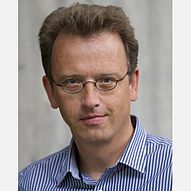
Professor Oliver Johnson is a faculty member at the School of Mathematics, University of Bristol, UK, where he serves as Head of School and holds the Professor of Information Theory position. His research bridges information theory, probability, and statistics, focusing on entropy convergence, group testing, and fundamental limits in data analysis. Current PhD students: Kieran Morris, Conor Crilly Ex-PhD students: Matt Aldridge, Leonardo Baldassini, Dan Cowley, Vaia Kalokidou, Tom Kealy, Jennifer Chakravarty, Zichen Gui, Chrys Paschou Ex-postdoc: Erwan Hillion His work includes ORCiD profile and collaborations across information theory, cybersecurity, and ecological modeling.
Jason Hartline is a Professor of Computer Science at the McCormick School of Engineering, Northwestern University, with a courtesy appointment in Managerial Economics & Decision Sciences. His research bridges computer science and economics, focusing on mechanism design, auction theory, and approximation algorithms. Ph.D. in Computer Science from the University of Washington (2003) Postdoctoral Fellow at Carnegie Mellon University (2003-2004) Researcher at Microsoft Research (2004-2007) His work develops methodologies to analyze and design economic systems using computational theory, particularly in auction mechanisms and non-truthful settings. Key contributions include the textbook Mechanism Design and Approximation and frameworks for Bayesian and prior-independent mechanism design. Recent publications (2018-2023) span topics like non-truthful mechanism learning, multi-dimensional agent modeling, and computational law. Collaborations include researchers from Harvard, Microsoft, and institutions across economics and theoretical computer science. Grants include multiple NSF awards (CCF, ECCS, HDR TRIPODS) for projects in data economics, machine learning integration, and peer grading systems. Former advisees hold academic positions at Stanford, Yale, and Penn State.
Jingbo Liu is an Assistant Professor in the Department of Statistics at the University of Illinois, Urbana-Champaign, with an affiliate appointment in Electrical and Computer Engineering. He received his B.E. (2012) from Tsinghua University, M.A. (2014) and Ph.D. (2018) from Princeton University, all in Electrical Engineering, followed by a postdoc at MIT IDSS. Education Ph.D. in Electrical Engineering, Princeton University (2018) M.A. in Electrical Engineering, Princeton University (2014) B.E. in Electronic Engineering, Tsinghua University (2012) His research focuses on statistical inference under systems constraints, information-theoretic inequalities, graphical models, and applications of high-dimensional probability to information sciences. Key areas include mutual covering bounds, hypercontractivity, Brascamp-Lieb inequalities, and their connections to machine learning and communication systems. Recent work applies information theory to generative AI, analyzing diffusion models' utility, privacy enhancements, and computational efficiency. He also investigates statistical physics techniques for high-dimensional problems like Lasso distributional limits and tensor model free energy, with applications in variable selection and PCA. Scientific awards include the Thomas M. Cover Dissertation Award (2018) and Princeton's Wallace Memorial Fellowship (2016). Courses taught include STAT 578 (High-Dimensional Statistics), STAT 430 (Nonparametric Statistics), and STAT 542 (Statistical Learning).
Professor Cem Evrendilek is a faculty member in the Department of Computer Engineering at Izmir University of Economics, Turkey, holding the rank of Professor with current active status. His institutional email is cem.evrendilek@ieu.edu.tr. His research spans algorithmic complexity and geometric computation, with primary focus areas including: Computational Geometry (specializing in orthogonal polygon covering problems) Wireless Sensor Network Localization (energy-efficient methods and trilateration) NP-hard Problem Analysis (proving complexity for geometric and network problems) Approximation Algorithms for combinatorial optimization Analysis of his 2008-2018 publications reveals consistent work on geometric covering problems and sensor network localization. Key trends include proving NP-completeness for orthogonal polygon covering variants, developing energy-efficient mobile beacon localization techniques, and analyzing trilateration with noisy measurements. His work frequently intersects computational geometry with practical wireless network applications, demonstrating strong theoretical foundations applied to real-world constraints. Collaborative patterns show frequent co-authorship with Hüseyin Akcan (on localization algorithms), Burkay Genç, and Brahim Hnich (on computational geometry problems).
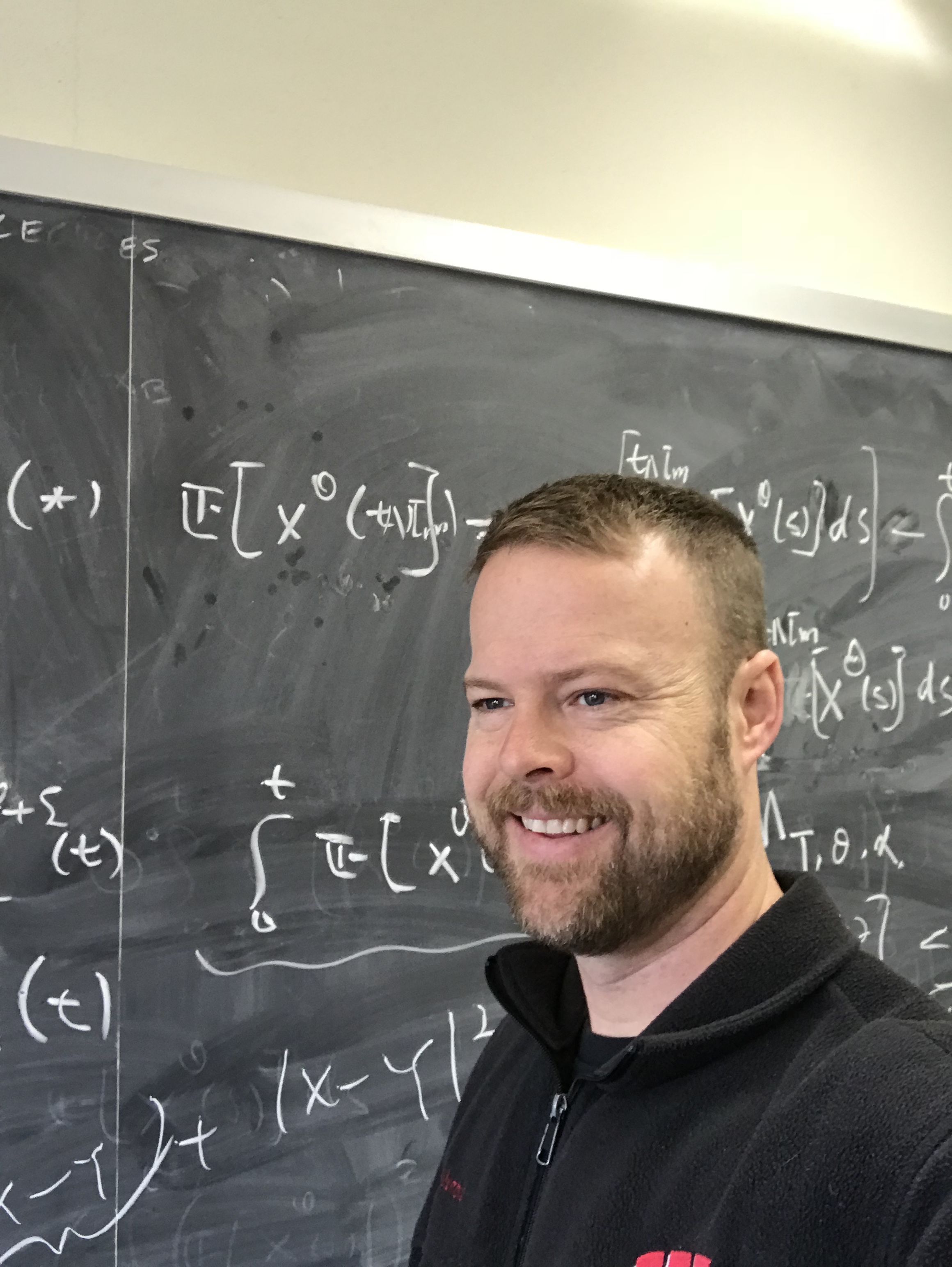
David F. Anderson is the Vilas Distinguished Achievement Professor of Mathematics at the Department of Mathematics, University of Wisconsin-Madison. He has maintained an active research and teaching career spanning over two decades with significant contributions to mathematical biology and stochastic modeling. Dr. Anderson's research focuses on the interface of mathematics and biology, specifically in mathematical systems biology and algorithm design for stochastic models in biological systems. His work has fundamentally advanced chemical reaction network theory, stochastic processes in biochemical systems, and computational methods for analyzing complex biological phenomena. He has developed numerous numerical techniques for simulating and analyzing reaction networks with applications across systems biology. An analysis of his recent publications reveals a sustained focus on mathematical properties of stochastic reaction networks, with increasing emphasis on connections between chemical systems and computational frameworks. His later work explores reaction networks as computing devices, implementing arithmetic operations and neural network functionalities through biochemical processes, while maintaining rigorous mathematical analysis of network properties like ergodicity, mixing times, and solution structures. Simons Fellow (2022) Vilas Associates Award (2016) IMA Prize in Mathematics (2014) Dr. Anderson has successfully guided nine PhD students to completion, with recent graduates including Aidan Howells (2024), Tung Nguyen (2021), Chaojie Yuan (2020), Kurt Ehlert (2019), and Jinsu Kim (2018). His current graduate student is Jingyi Ma. His research has been supported by prestigious fellowships including the Simons Fellowship, indicating substantial research funding, though specific grant details aren't provided in the source material. While specific laboratory facilities aren't described in the text, Dr. Anderson maintains an active research group evidenced by continuous publications, regular PhD student completions, and collaborations with numerous researchers including Daniele Cappelletti, Jinsu Kim, and Tung Nguyen. His research program demonstrates sustained productivity with publications spanning from 2005 to the present.