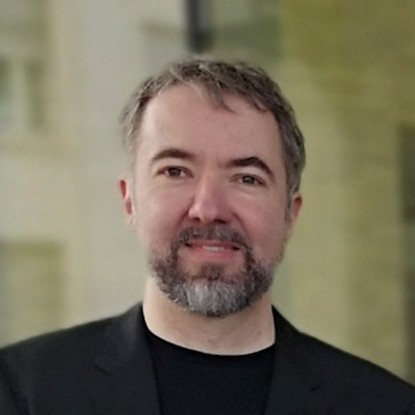
Jürgen Schönwälder is a Professor at Jacobs University Bremen, Germany, with affiliations at the University of Osnabrück and TU Braunschweig's Department of Computer Science. His research focuses on network management, protocol design, and internet infrastructure. Key research areas include network management protocols (NETCONF, RESTCONF, YANG), IPv6 performance analysis, cybersecurity, and network configuration. He has contributed extensively to standardization efforts through RFCs and collaborations with institutions like the IETF and Dagstuhl Seminars. Recent publications highlight trends in RESTCONF implementation for constrained devices, active malware analysis using Bayesian models, and metamorphic testing for cryptographic protocols. His work intersects network management, internet infrastructure, and security evaluation. Co-authors like Vaibhav Bajpai, Anuj Sehgal, and Abhilash Hota appear frequently in his research, indicating long-term collaborations. He has participated in editorial roles for journals like IEEE Communications Magazine.
Jan Peleska is a Professor at the Department of Computer Science, Faculty of Mathematics and Computer Science, University of Bremen. He is a member of the Bremen Institute of Safe Systems (BISS) and co-editor of the BISS Monographs series. His research focuses on the application of formal methods and model-based testing to safety-critical embedded systems in domains such as avionics, railways, and automotive engineering. Affiliation: University of Bremen, TZI (Center for Computing Technology), BISS (Bremen Institute of Safe Systems) Academic Role: Professor of Computer Science Research Interests Peleska’s work emphasizes formal methods for dependable systems, particularly distributed and reactive real-time systems. Key areas include: Formal methods (safety, reliability, availability, security) Development of fault-tolerant systems Test automation for reactive systems Tools development for formal methods Integration with software development standards His research is applied to industrial projects involving safety-critical embedded systems, such as avionic systems and railway control systems. A comprehensive overview is provided in his Habilitation Thesis: Formal Methods and the Development of Dependable Systems . Publication Trends Peleska’s recent publications (2012–2022) focus on model-based testing (e.g., symbolic finite state machines, CSP refinement), standardisation of autonomous train control, and tools for automated testing. His work addresses challenges in railway interlocking systems, avionic software verification, and hybrid system validation, often combining formal methods with practical industrial applications. Scientific Awards Best Paper Award at FORMS/FORMAT 2014 Best Paper Award at QA+Test 2007 Other Responsibilities Peleska co-manages the Post Graduate Programme Embedded Systems GESy and serves as a shareholder/consultant for Verified Systems International GmbH. He has delivered invited lectures on industrial verification, model-based testing, and formal methods at institutions like the University of Tunghai (2016) and workshops including CyPhyAssure Spring School (2019).
Dr. Sven Burger is a leading Researcher at the Zuse Institute Berlin (ZIB) within the Modeling and Simulation of Complex Processes department. His work focuses on Nanophotonics , Quantum Technologies , and Optical Resonance Computation , particularly in photonic crystals, plasmonic systems, and quantum light sources. Key projects: NanoLab GRIPS 2024 , MATH+ TES QT , MATH+ PaA-1 (perovskite solar cells), Colour Impression of Solar Cells Collaborations: MATH+ , BIFOLD , Research Campus MODAL His research spans Bayesian optimization for quantum systems, quasinormal mode expansions , chiral plasmonics , and terawatt-scale photovoltaics . Recent work emphasizes RPExpand software for resonance analysis and AAA algorithm applications in photonic design. He contributes to quantum key distribution via plug&play single-photon sources, hot carrier dynamics in plasmonic nanocrystals, and high-efficiency light extraction for deep-UV LEDs. His computational methods address non-Hermitian systems , exceptional points , and self-interference nanoparticle tracking .
Massimiliano Pontil is a Professor at University College London's Department of Computer Science within the Faculty of Mathematical & Physical Sciences, with additional affiliation at the Italian Institute of Technology in Genoa. He leads cutting-edge research at the intersection of machine learning and dynamical systems theory. His research focuses on developing theoretical frameworks for learning transfer operators of stochastic dynamical systems using kernel methods. Pontil's work provides rigorous spectral learning bounds and addresses representation learning challenges in modeling time-evolving phenomena. His research spans both theoretical foundations and practical applications in data-driven science and engineering. Pontil's recent publications reveal a strong emphasis on Koopman operator theory, with particular attention to spectral analysis, error bounds, and efficient algorithms for large-scale dynamical systems. His work connects kernel methods with dynamical systems theory to create mathematically grounded approaches for forecasting and understanding temporal phenomena. His scientific contributions include multiple publications in top-tier venues including NeurIPS and ICLR, with recent work on invariant representations, long-term forecasting, and randomized algorithms for operator regression. Pontil collaborates extensively with researchers including Vladimir Kostic, Karim Lounici, and Pietro Novelli, leading a productive research group in this specialized area of machine learning theory.
Priscilla A. Furth is a Professor at Georgetown University's Department of Oncology and Medicine, with a distinguished career in disease pathophysiology and cancer research. She serves as an Anna Boyksen Fellow at the Technical University of Munich Institute for Advanced Study (TUM-IAS) since 2023, focusing on experimental bioinformatics and gender diversity in science. M.D. from Yale University (1979) Associate Dean for Faculty Development at Georgetown (2013–2021) Her research integrates bioinformatics and gene-regulatory mechanisms to analyze estrogen signaling pathways in breast cancer risk across diverse gender expressions. She pioneered investigations into circular RNA (circRNA) roles as biomarkers and explores their modification through anti-hormonal therapies. Current article trends show interdisciplinary work bridging quantum computing with network medicine , while maintaining focus on hormonal cancer mechanisms and vaccine immunology . Her 2024 publications emphasize multi-omics data integration and gender-inclusive oncology . Scientific recognition includes: 2023 Anna Boyksen Fellowship 2021 Women in Pathology Spotlight 2020 Excellence in Mentorship Award 2010 Georgetown Women in Medicine Award As Associate Dean, she developed faculty growth programs and continues mentoring through her TUM-IAS fellowship collaborations.
André Siegel is a Lecturer for special tasks at the Electronic Media Technology Group, Department of Electrical Engineering and Information Technology, Technical University of Ilmenau. He is actively involved in research and teaching related to audio engineering and acoustics, with a focus on spatial sound reproduction and simulation. His research interests span Audio Engineering , Room Acoustics , Binaural Sound Reproduction , Spatial Audio , Acoustic Simulation , and Audio Signal Processing . His work emphasizes practical implementations in real environments, including crosstalk cancellation, head-related transfer function measurement, and sound field analysis. The publications reflect a consistent research trajectory from 2005 to 2013, with a concentration on spatial audio technologies, room simulation methods, and perceptual aspects of sound reproduction. Key themes include the optimization of stereo and binaural systems, low-frequency acoustic behavior, and advanced measurement techniques using vector sensors and spherical arrays. André Siegel has not been awarded any scientific prizes or fellowships mentioned in the available data. He collaborates with researchers such as Hans-Peter Schade, Stephan Werner, and Julius T. Fricke. His work contributes to both academic knowledge and practical applications in room acoustical consultancy and immersive audio systems. He is based in Helmholtz Building, Room H 3529, and can be contacted at andre.siegel@tu-ilmenau.de.
Benoît Valiron is a Professor in Computer Science at CentraleSupélec, Université Paris-Saclay. He conducts his research at the Laboratoire Méthodes Formelles (LMF) and is a member of the joint Inria/LMF team QuaCS (Quantum Computing and Systems), focusing on foundational aspects of quantum computation and formal verification. His research interests lie at the intersection of theoretical computer science and quantum computing. He works on programming languages for quantum systems, type theory, semantics of computation, and formal methods applied to quantum algorithms and protocols. His work contributes to the rigorous development and verification of quantum software. Benoît Valiron is actively involved in research through his roles at LMF and Inria. The QuaCS team aims to bridge theoretical advances with practical implementations in quantum computing, emphasizing correctness, expressiveness, and efficiency of quantum programs. He advises students and contributes to academic training in computer science, particularly in quantum computing and programming language theory, though specific advisees are not listed in the available text. There are no mentioned grants or funding sources in the provided information. The research environment includes collaboration within the LMF laboratory and the Inria joint team QuaCS, both located at the Paris-Saclay campus, a leading hub for mathematics, computer science, and engineering in Europe.
Martim Brandão is a Lecturer (Assistant Professor) in Robotics and Autonomous Systems at King’s College London, where he leads the Responsible Robotics and AI (RRAI) Lab and serves as Co-Director of the UKRI Centre for Doctoral Training in Safe and Trusted AI. His research focuses on ethical, explainable, and safe AI and robotics, with applications in human-robot interaction, motion planning, fairness, and societal impact. His research interests include: Explainable AI and Motion Planning Fairness and Bias in AI Systems Human-Robot Interaction and Social Robotics Adversarial Robustness in Robotics Value Alignment and Ethical AI Inclusive and Participatory Robotics Design His recent publications (2023–2025) reflect a strong trend toward socially responsible robotics, focusing on fairness in navigation, explainability of planning failures, worker-centered agricultural robotics, environmental justice in drone delivery, and the dangers of bias in drowsiness detection and LLM-driven robots. His work emphasizes user understanding, societal impact, and ethical safeguards in autonomous systems. He has advised and collaborated with numerous students and researchers across diverse topics in robotics and AI. He is actively involved in shaping responsible robotics through: Leadership in the RRAI Lab Co-directing a national CDT in Safe and Trusted AI Developing fairness-aware algorithms Advocating for inclusive and ethical design practices His lab and research group focus on: Responsible Robotics and AI Explainability in Multi-Agent Planning Fairness in Coverage and Navigation Human-Centered Evaluation of AI Systems
Dieter A. Fensel is a Full Professor at the Institute of Computer Science, Faculty of Computer Science, University of Innsbruck, Austria . He has held academic positions at the University of Karlsruhe, Vrije Universiteit Amsterdam, and the University of Amsterdam. He founded the Digital Enterprise Research Institute (DERI) in Galway and Innsbruck and co-founded the Semantic Technology Institute International (STI2). His work spans semantic technologies, knowledge engineering, and intelligent systems. PhD in Political Science, University of Karlsruhe (1993) Habilitation in Applied Computer Science, University of Karlsruhe (1998) Masters in Computer Science (TU Berlin) and Social Science (FU Berlin) His research interests focus on the Semantic Web, ontologies, knowledge representation, web services, and intelligent systems. He investigates how semantics can enhance data interoperability, service composition, and knowledge sharing in distributed environments. His work bridges formal methods with practical applications in e-commerce, tourism, and digital enterprises. He emphasizes the role of semantics in enabling machine-understandable content and automated reasoning across domains. The research trends in his publications and projects reveal a consistent focus on semantic technologies, from foundational work on knowledge representation (e.g., KARL language) to large-scale EU projects on data ecosystems (PlanetData, BYTE), travel (EuTravel), and energy (ENTROPY). His work evolved from theoretical AI and knowledge engineering to applied semantic web services, linked data, and digital innovation in societal domains. His scientific awards include: Carl-Adam-Petri-Award of the Faculty of Economic Sciences, University of Karlsruhe (2000) As an academic advisor, Dieter Fensel has supervised over 25 PhD students and served on numerous Master’s and PhD committees. He has led more than 100 national and international research projects with total funding in the hundreds of millions of euros, including major grants from the EU’s 7th Framework Program, Horizon 2020, and Science Foundation Ireland. These projects span domains such as big data, ambient assisted living, transportation, and digital services. He co-founded and led several research labs and teams , including: Digital Enterprise Research Institute (DERI), Galway and Innsbruck Semantic Technology Institute (STI) Innsbruck Semantic Technology Institute International (STI2) Co-founder of the European Semantic Web Conference (ESWC) and International Semantic Web Conference (ISWC) These organizations foster global collaboration in semantic technologies and have become central hubs for research, innovation, and community building in the field.
Prof. Mario Kupnik is a Full Professor at the Technische Universität Darmstadt , leading the Measurement and Sensor Technology Group within the Department of Electrical Engineering and Information Technology. His academic career includes roles at Stanford University (2005–2011) and Brandenburgische Technische Universität Cottbus (2011–2014). He holds a doctorate from Montanuniversität Leoben (2000–2004) and a master's in Telematics from Graz University of Technology. His research focuses on micromachined sensors and actuators , ultrasonic and electroacoustic systems , and non-destructive testing . He pioneers innovations in wearable sensors, biomedical applications, and additive manufacturing for sensor integration. Notable contributions include air-coupled ultrasonic transducers, 3D-printed ferroelectret sensors, and robotics for STEM education. Recent work emphasizes biodegradable sensors , acousto-optic modulation , and multi-parameter medical measurement systems . His projects span from fundamental material science to applied engineering solutions, often leveraging open-source hardware. Kupnik’s labs integrate interdisciplinary approaches, combining electrical engineering, materials science, and biomedical engineering.
Bernard Haasdonk is a Professor at the University of Stuttgart, affiliated with the Institute of Applied Analysis and Numerical Simulation (IANS), part of the Faculty of Mathematics and Computer Science. His research focuses on model reduction techniques for parametrized partial differential equations (PDEs), kernel-based methods, numerical analysis, and machine learning applications in scientific computing. He leads a research group in numerical mathematics and has contributed to software tools like RBMatlab and KerMor. Affiliations: Institute of Applied Analysis and Numerical Simulation, University of Stuttgart Roles: Academic Researcher, Software Developer, Grant Principal Investigator His work bridges numerical simulation, machine learning, and reduced basis methods, addressing challenges in optimal control, fluid dynamics, and biomechanics. Haasdonk has held multiple funded projects, including those on kernel methods for model reduction and certified RB-ML-ROM surrogate models. Research Interests: Model reduction for PDEs, kernel methods, greedy algorithms, numerical analysis, optimal control, and applications in fluid dynamics and porous media. He emphasizes structure-preserving methods for Hamiltonian systems and data-driven approaches for surrogate modeling. Publications: Over 200 articles in journals like SIAM, BIT Numerical Mathematics, and Physica D, focusing on convergence analysis, kernel-based approximation, and reduced-order modeling. Recent trends include adaptive greedy algorithms, symplectic model reduction, and energy-conserving surrogates. Awards: IEEE PerCom 2017 Best Paper Award, Teaching Excellence Awards (2012-2017), and early-career research grants. Grants: DFG-funded projects on model reduction, SimTech Cluster contributions, and collaborations on fuel cells and biomechanics. Teams: Leads the Numerical Mathematics Research Group at IANS, collaborating with interdisciplinary teams on projects like MORCOS (Model Order Reduction of Coupled Systems) and KerMor (Kernel Methods for Model Reduction).
Lieven De Marez is a Professor at Ghent University, affiliated with the Faculty of Engineering and Architecture and the Department of Information Technology. His research spans human-computer interaction, quality of experience (QoE), smart homes, digital education, and social media behavior, reflecting a strong interdisciplinary approach combining technical and social sciences. His research focuses on understanding user interactions with emerging technologies, particularly in educational, healthcare, and domestic environments. Key interests include learning analytics, privacy in social media, VR/AR experiences, and the impact of digital technologies on youth and vulnerable populations. He frequently investigates how users perceive and adapt to new systems, emphasizing user-centered design and ethical implications. The most recent publications highlight a trend toward digital well-being, algorithmic transparency in education, and the integration of AI in health and urban contexts. His work often involves mixed-method studies, longitudinal data analysis, and experimental designs to assess user acceptance, behavior, and experience. Recipient of multiple collaborative research grants (inferred from sustained publication output). Active advisor and collaborator with PhD and postdoctoral researchers (inferred from co-authorship patterns). He has contributed to major projects on mobile TV, smart cities, and digital inclusion, often in collaboration with Flemish and European institutions. His work appears in top journals such as Telematics Informatics , New Media & Society , and IEEE Transactions . Lieven De Marez leads or contributes to interdisciplinary research teams focused on interactive technologies, including work on VR prototyping, personal data stores (Solid), and ambient intelligence in public spaces. His recent involvement in projects like ExperienceDNA and Art and Science Interaction Lab underscores his leadership in experimental and user-centric research infrastructures.
Philipp Mayr-Schlegel is a Professor at the University of Göttingen’s Institute of Computer Science, leading the team 'Information & Data Retrieval' at GESIS - Leibniz-Institute for the Social Sciences. His research focuses on interactive information retrieval systems, scholarly recommendation mechanisms, and the integration of bibliometric methods with digital library technologies. University of Göttingen - Institute of Computer Science GESIS - Leibniz-Institute for the Social Sciences His work spans information retrieval , digital libraries , and applied informetrics , with particular emphasis on: Interactive search systems Non-textual ranking algorithms Scholarly document processing Knowledge representation Semantic search technologies User behavior analysis Recent research outputs (2025) include studies on LLMs for scholarly search, bibliometric reproducibility tools, scientific uncertainty annotation, and preprint adoption disparities. He has published extensively in Scientometrics , International Journal on Digital Libraries , and top conference proceedings like ACL and ECIR . As organizer of the International Workshop on Bibliometric-enhanced Information Retrieval (BIR) and Scholarly Document Processing (SDP) series, he has shaped academic discourse through editorial roles at ISSI , JCDL , and SocInfo conferences. His projects have attracted significant national and European funding.
Dr. Yana Boeva is a Junior Research Group Leader at the University of Stuttgart , affiliated with both the Institute for Social Sciences and the Cluster of Excellence IntCDC . Her work bridges Science and Technology Studies (STS) with Computational Design , focusing on critical examinations of digital infrastructure, human-computer interaction, and sustainability in architectural contexts. Research Interests: Algorithmic entanglements in design and construction Participatory technology production Digital fabrication and material practice Epistemic cultures of computational design Socio-political implications of Building Information Modeling (BIM) Her recent publications analyze timber construction innovation trajectories , platformization in urban environments , and ghost labor in automation . She co-edited the volume Algorithmic Regimes (2024), which investigates algorithmic knowledge production across societal domains. Scientific Awards: Recipient of the DigitalFUTURES Young Award for critical computational design research Dr. Boeva teaches courses on Algorithmic Sociology and Digital Sustainability at the MA and BA levels. Her work has been supported by projects under the Excellence Cluster IntCDC and BBSR Innovationsprogramm Zukunft Bau .
Charles L. A. Clarke is a Professor at the University of Waterloo, Canada, with a focus on Information Retrieval and Large Language Model evaluation . He actively contributes to research in search algorithms, human-computer interaction, and computational linguistics. Recent Research Trends : His work examines LLM limitations in relevance assessment, adversarial robustness in legal domains, and hybrid human-AI evaluation frameworks. Workshop Leadership : Co-organizer of the Search Futures Workshop (ECIR 2024/2025) and LLM4Eval@SIGIR. Collaborations : Works with researchers from NII, Microsoft, and ACM SIGIR on testbed development and evaluation methodologies. Key Article Trends : His 2024-2025 publications analyze LLM vulnerabilities, develop evidence retrieval systems, and create metrics for human-AI alignment in generative applications. Subfields include adversarial attacks, prompt sensitivity, and semantic graph frameworks. Scientific Contributions : Focuses on bridging algorithmic performance with human judgment validity, emphasizing ethical AI deployment and robust information access systems.