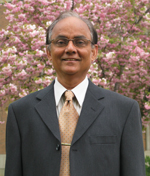
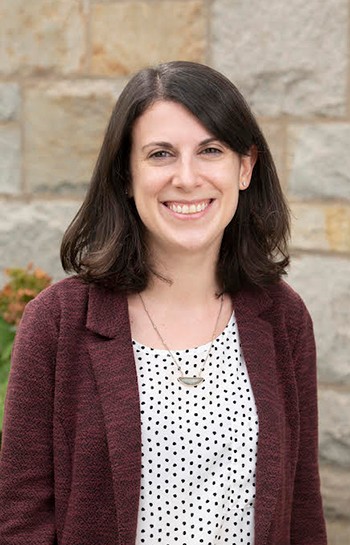
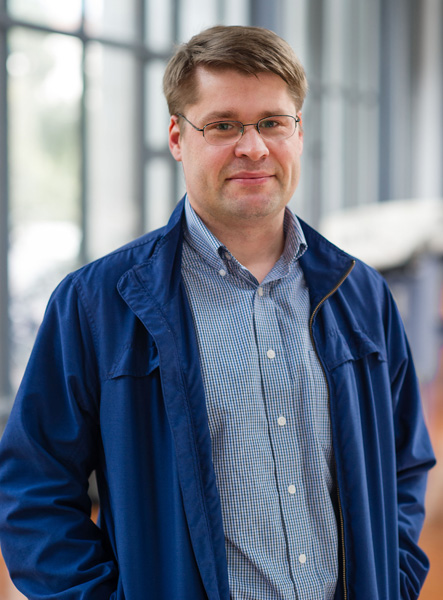
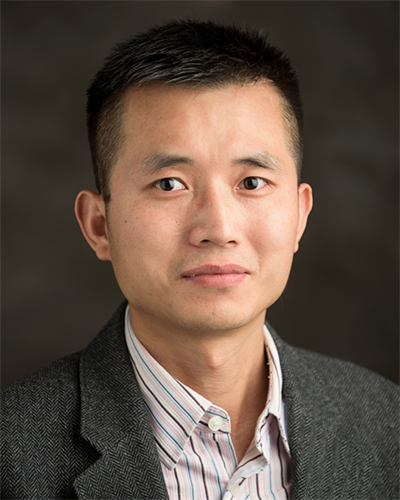
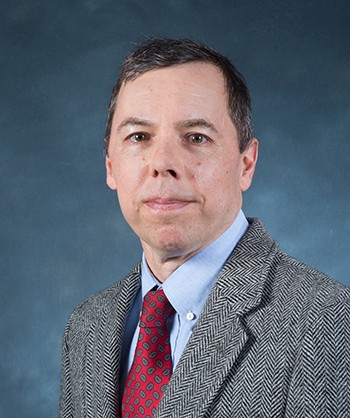
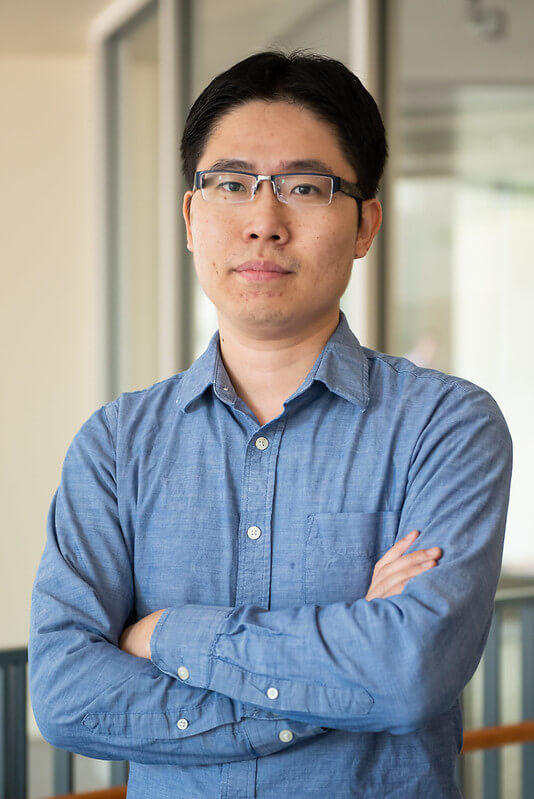
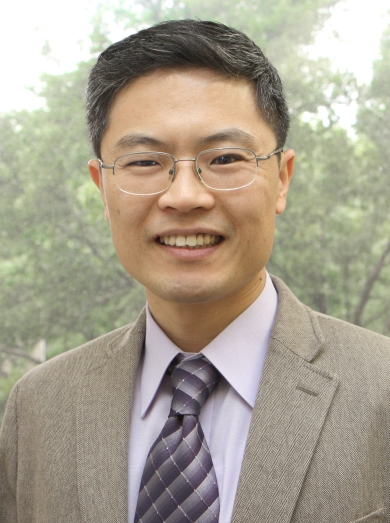
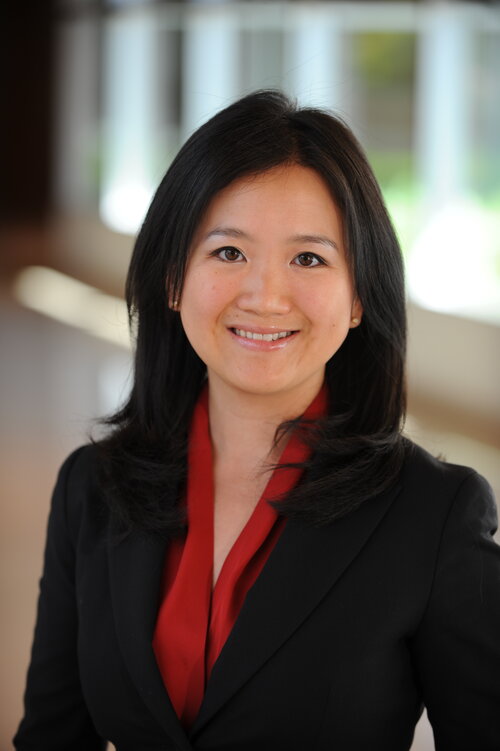
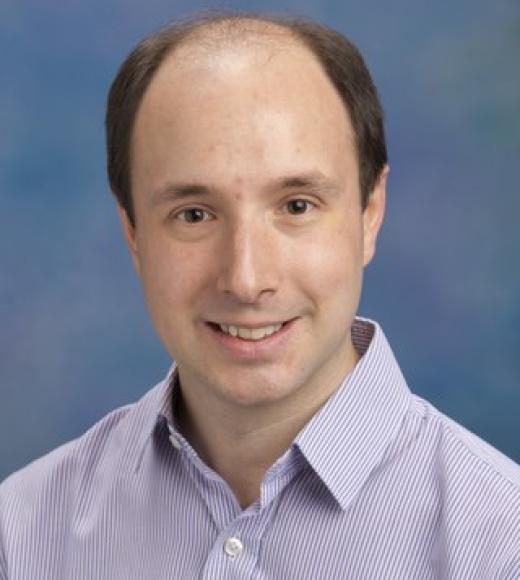
Dr. Sudhir R. Paul is a Professor in the Department of Mathematics and Statistics at the University of Windsor, Faculty of Science. He holds a Ph.D. from Wales and has received prestigious awards including Fellowships from the American Statistical Association (2006) and the Royal Statistical Society (1982). His research focuses on Biostatistics and Statistical Inference, with expertise in areas such as Generalized Linear Models, Clustered/Longitudinal Data Analysis, and Categorical Data Analysis. He has supervised numerous graduate students and maintains an active research program addressing topics like risk difference estimation, bias correction in statistical models, and applications in environmental and medical contexts. Education: Ph.D. (Wales). Research interests span advanced statistical methodologies, including zero-inflated models, measurement error correction, and dose-response modeling. His work bridges theoretical development and practical applications in epidemiology, clinical trials, and environmental studies. His publications reflect contributions to clustered data analysis, interval estimation, and generalized estimating equations. Awards highlight his impact in advancing statistical science through teaching, research, and service. Advising: Over 30 M.Sc. and Ph.D. students have been supervised, with current students engaged in doctoral and master’s research. Postdoctoral fellows include experts in statistical theory and applications.
Brooke Magnus is an Associate Professor in the Department of Psychology and Neuroscience at Boston College. She earned her PhD in Psychology (with a minor in Biostatistics) from the University of North Carolina at Chapel Hill's L.L. Thurstone Psychometric Laboratory. Her research focuses on psychometric model development for clinical and health outcomes, including item response theory (IRT) applications to survey data. She teaches statistics courses and mentors graduate students applying psychometric methods to substantive research areas. Her work emphasizes improving measurement practices in clinical settings, particularly through zero-inflated models for symptom data and IRT-based instrument validation. Key research areas include traumatic brain injury outcomes, neurodivergent youth bullying assessment, and pediatric health measurement. She collaborates across psychology, medicine, and public health disciplines. Recent work highlights advancements in TBI severity characterization, concussion assessment tool comparisons, and autism spectrum disorder psychometric analyses. Her methods bridge quantitative psychology and biostatistics to address gaps in clinical measurement precision.
Elisa Perrone is an Assistant Professor in the Department of Mathematics and Computer Science at Eindhoven University of Technology. Her research focuses on dependence modeling, copula theory, and their applications in fields such as public transport analysis, environmental risk assessment, and renewable energy forecasting. Academic Rank: Assistant Professor University: Eindhoven University of Technology (TU/e) Department: Mathematics and Computer Science Elisa’s work explores discrete copulas, zero-inflated data, optimal experimental design, and uncertainty quantification. She has contributed to modeling dependence structures in complex datasets, particularly in transportation systems and climate science. Recent research outputs highlight copula-based statistical post-processing for weather forecasts, analysis of multi-way contingency tables, and uncertainty reduction in LED health management. Her publications span top-tier journals and conferences in statistics and applied mathematics. Scientific Award : Second Best Poster Presentation Award (2015) Elisa actively organizes workshops like the Eurandom Workshop on Dependence Modeling and contributes to editorial activities. She teaches courses on linear statistical models, regression models, and dependence modeling.
Yuriy Gorodnichenko serves as the Quantedge Presidential Professor in the Department of Economics at the University of California, Berkeley since 2018. His extensive academic affiliations include being a Faculty Research Associate at the National Bureau of Economic Research (2014-present), Research Fellow at the Institute for the Study of Labor (2007-present), International Fellow at the Kiel Institute for the World Economy (2011-present), and Research Consultant for both the European Central Bank (2018-present) and European Investment Bank (2017-present). He also serves as Editor of the Journal of Monetary Economics (2018-present) and Member of the Executive Committee of the Association for Comparative Economic Studies (2019-present). Education: Ph.D., Economics, University of Michigan, 2007 M.A., Statistics, University of Michigan, 2004 M.A., Economics (high honors; valedictorian), Economics Education and Research Consortium at National University of Kyiv-Mohyla Academy, Kiev, Ukraine, 2001 B.A., Economics (honors; valedictorian), National University of Kyiv-Mohyla Academy, Kiev, Ukraine, 1999 Gorodnichenko's research spans multiple subfields of economics with particular emphasis on monetary economics, public finance, international economics, and macroeconomics . His scholarly approach typically combines both macroeconomic and microeconomic data with rigorous theoretical and statistical analyses. His work is organized into five major categories: monetary economics, aggregate implications of informational frictions, business cycles, development/productivity/income differences, and inequality. As an applied macroeconomist, he frequently bridges methodological approaches across different economic subdisciplines. His publication record demonstrates consistent high-impact research across top economics journals including American Economic Review, Journal of Political Economy, and Review of Economic Studies. The trajectory of his work shows increasing focus on the microfoundations of macroeconomic phenomena, particularly how information frictions affect economic behavior and policy transmission mechanisms. His recent publications have increasingly addressed the distributional consequences of monetary policy and the role of cultural factors in economic development. Scientific Awards and Honors: Fellow, Econometric Society (2021) Highly Cited Researcher, Clarivate (2021) Distinguished Teaching Award, Social Science Division, UC Berkeley (2020) World Junior Prize in Monetary Economics and Finance (2018) NSF CAREER award (2012) Sloan Research Fellowship (2013) Multiple #1 rankings among young economists by RePEc (2014-2021) Best paper award, American Economic Journal: Economic Policy (2015) Gorodnichenko has received consistent recognition for his teaching and advising from UC Berkeley's Economics Department, including multiple runner-up positions and a win for the Best Advisor Award (2014). His research has been supported by prestigious grants including the NSF CAREER award and Sloan Research Fellowship. His impact metrics are substantial with over 19,000 citations and an h-index of 54, reflecting significant influence in the economics profession. While the scraped text doesn't specify dedicated research laboratories, Gorodnichenko maintains active research collaborations through his affiliations with major economic research institutions including NBER, IZA, and Kiel Institute. His editorial roles at leading journals position him at the center of contemporary macroeconomic research discourse.
Stephen G. Cecchetti is the Rosen Family Chair in International Finance at the Brandeis International Business School (Brandeis University). He also serves as Vice Chair of the European Systemic Risk Board's Advisory Scientific Committee, a Research Associate at the National Bureau of Economic Research (NBER), and a Research Fellow at the Centre for Economic Policy Research (CEPR). Previously, he was Economic Adviser and Head of the Monetary and Economic Department at the Bank for International Settlements (2008–2013), Executive Vice President and Director of Research at the Federal Reserve Bank of New York (1997–1999), and editor of the Journal of Money, Credit, and Banking (1992–2001). His research focuses on monetary policy, financial regulation, macroeconomics, and central banking. Education: B.S. in Economics from MIT, Ph.D. in Economics from the University of California, Berkeley, and an honorary doctorate from the University of Basel (2016). His honors include the Distinguished Lecturer title from Ohio State University (2002) and the O. John Olcay Lecture at the Peterson Institute for International Economics (2019). His work emphasizes global financial stability, banking reform, and the intersection of monetary and fiscal policy. Recent publications highlight central bank interventions during financial crises, the fiscal consequences of central bank losses, and the future of banking in a digital era. He advocates for stricter regulatory frameworks post-2008 crisis and emphasizes the evolving role of central banks in addressing systemic risks. Cecchetti’s blog Money and Banking provides insights on current economic and financial issues.
Amrita Basak serves as an Associate Professor in the Department of Mechanical Engineering within the College of Engineering at Pennsylvania State University. Her research focuses on advancing metal additive manufacturing technologies, particularly for gas turbine applications. She maintains her laboratory in 233 Reber Building at University Park, PA. Her primary research interests center on laser-based additive manufacturing processes including Laser Powder Bed Fusion (L-PBF) and Laser Directed Energy Deposition (LDED). Specific expertise spans nickel-based superalloys, melt pool dynamics, microstructure-property relationships, fatigue behavior of additively manufactured components, and AI-driven process optimization. Her work addresses critical challenges in thermal distortion control, surface roughness effects, and high-temperature performance of turbine components. Analysis of her recent publications reveals strong emphasis on integrating machine learning with experimental methods to optimize additive manufacturing processes. Key trends include Gaussian process regression for melt pool modeling, Bayesian optimization for thermal management, reinforcement learning for parameter control, and multi-fidelity modeling approaches. Her research bridges fundamental materials science with practical engineering applications in aerospace and energy sectors. Scientific Awards: NSF CAREER Award (2024) for gas turbine research DARPA Young Faculty Award (2022) for multi-laser additive manufacturing Materials Research Institute Roy Award (2023) Professor Basak actively mentors graduate students including R. Pal, N. Menon, and A. Kushwaha who appear as first authors on multiple publications. Her research is supported by significant grants including NSF CAREER funding, Office of Naval Research grants (2024), and DARPA funding. Current projects include 'On-Demand 3D Printing of Food-Grade Biopolymer-Encapsulated Ferrate(VI) for Individualized and Equitable Access to Drinking Water' and metal additive manufacturing research for gas turbine hot section components.
Liping Liu is an Associate Professor in the Department of Computer Science at Tufts University's School of Engineering. He holds a Ph.D. from Oregon State University and has held postdoctoral positions at Columbia University and Tufts. His research focuses on machine learning, generative models, graph learning, and their applications in biochemical data analysis and fluid dynamics simulation. His work on graph generative methods earned the NSF CAREER Award. Education: Ph.D. (Oregon State University, 2016), M.Sc. (Nanjing University, 2009), B.S. (Hebei University of Technology, 2006). Research Interests: Machine Learning, Deep Learning, Generative Models, Time Series, Graph Learning. Dr. Liu's research emphasizes probabilistic modeling and neural networks, addressing challenges in graph generation, data-driven physics simulation, and biochemical analysis. His recent work includes advancements in graph-based recommendation systems, turbulence modeling, and enzymatic reaction prediction. His publications span top AI conferences like NeurIPS, ICML, and ICLR. He has secured grants totaling over $9 million, including the NSF CAREER Award and NIH funding for metabolomics and enzymatic promiscuity studies. His teaching includes courses on generative models, deep learning, and machine learning for graph analytics. Awards: NSF CAREER Award (2023), NIH grants, DARPA ACT-NOW project (2019). Service: NSF panelist, program committee member for AAAI, NeurIPS, and IJCAI.
Peter Ireland is the Murray and Monti Professor of Economics at Boston College, specializing in Macroeconomics and Monetary Economics. He holds a B.A., M.A., and Ph.D. from the University of Chicago. His work focuses on monetary policy transmission mechanisms, inflation dynamics, and the historical evolution of central bank strategies. Ireland has contributed extensively to understanding the effects of interest on reserves, the Barnett critique, and the implications of New Keynesian models for policy analysis. His research spans topics such as money growth rules, nominal GDP targeting, and the role of monetary aggregates in policy frameworks. Ireland has published in leading journals like the Journal of Econometrics and Journal of Money, Credit, and Banking , and his recent work addresses modern challenges such as the zero lower bound and post-crisis monetary policy strategies. His teaching includes courses on Financial Economics and Mathematics for Economists. Notably, Ireland’s work often critiques traditional policy approaches, advocating for clearer nominal anchors and rule-based frameworks. He collaborates frequently with Michael T. Belongia and others on projects analyzing the Federal Reserve’s strategy, Greenbook forecasts, and historical policy decisions. His contributions highlight the importance of monetarist principles in contemporary economic debates.
Xianyang Zhang is a Professor in the Department of Statistics at Texas A&M University, affiliated with the College of Arts & Sciences. He holds a Ph.D. from the University of Illinois at Urbana-Champaign (2013) and a B.S. from the University of Science & Technology of China (2008). His research focuses on high-dimensional statistics, functional data analysis, kernel methods, and genomics, supported by grants from NIH, NSF, and Texas A&M. Education: Ph.D., Statistics, University of Illinois at Urbana-Champaign, 2013 B.S., Statistics, University of Science & Technology of China, 2008 Research Interests: Xianyang Zhang develops statistical theories and methodologies for complex data structures, including high-dimensional inference, kernel-based testing, change-point detection, and microbiome analysis. His work bridges computational and theoretical statistics, addressing challenges in genomics, omics-wide studies, and spatial statistics. Key Contributions: Developed KDist , a package for kernel and distance-based statistical inference Authored fastcpd for efficient change-point detection Advanced covariate-adaptive FDR control methods for omics studies Contributed to microbiome analysis tools like MicrobiomeStat and LinDA Advising & Grants: Advises multiple Ph.D. students in statistics and interdisciplinary projects Recipient of NIH and NSF grants for high-dimensional statistical research Collaborates with institutions like Mayo Clinic and Chinese University of Hong Kong Labs/Teams: Leads research groups focused on statistical methodology development, software implementation, and applications in computational biology and genomics.
Professor Yongwan Chun is a faculty member in the Geospatial Information Sciences program at the University of Texas at Dallas , affiliated with the School of Economic, Political and Policy Sciences. His academic journey includes a PhD in Geography (2007) and MS in Applied Statistics (2006) from the Ohio State University. Research Interests: Methodological advancements in GIScience, spatial statistics, environmental justice, urban crime analysis, population migration, and commodity flow modeling. Awards: Emerging Scholar Award (2017) from the Spatial Analysis and Modeling Specialty Group of the Association of American Geographers. Grants: Multiple awards from National Science Foundation and National Institute of Health totaling $1.4 million. Article Trends reflect expertise in spatial autocorrelation (Moran's I, Geary's C), location-allocation modeling (p-median, p-dispersion), and applications to healthcare accessibility, urban crime patterns, housing market segmentation, and climate impacts. His work integrates GIScience with Bayesian methods, eigenvector filtering, and big data uncertainty. Collaborators: Daniel A. Griffith, Hyun Kim, and students like Dongeun Kim and Changho Lee. Recent Topics: Trauma center accessibility, snowpack variation modeling, and spatiotemporal crime analysis. Contact: ywchun@utdallas.edu | Office: GR 3.208, UT Dallas
Nathan Judd is a Research Fellow in Statistics at the School of Mathematics, University of Birmingham. His research focuses on Bayesian non-parametric methods applied to modern slavery data and stochastic process modeling. He earned his PhD in Statistics from the University of Warwick (2024), MSc in Statistics from Lancaster University (2019), and BSc in Mathematics from the University of Kent (2018). Education: PhD in Statistics, University of Warwick (2024) MSc in Statistics, Lancaster University (2019) BSc in Mathematics, University of Kent (2018) Research themes include: Construction of non-diffusive Wright-Fisher processes Bayesian non-parametric models for crime-linkage analysis Testing methodologies for jumps in discretely observed stochastic processes Application of statistical models to socio-political challenges Recent publications demonstrate expertise in predictive modeling during disruptions, including the 2025 paper on zero-inflated mixed effects models for foodservice sales forecasting. Contact: n.a.judd@bham.ac.uk
Matt Koslovsky is an Assistant Professor of Statistics at Colorado State University. He completed his PhD in Biostatistics at The University of Texas Health Science Center School of Public Health (UTHealth) in 2016 and served as a Post-Doctoral Research Associate at Rice University's Marina Vannucci lab from 2018-2020. Prior to joining CSU in 2020, he worked as a statistical consultant at Johnson Space Center's Biostatistics Lab. PhD, Biostatistics (2016), UTHealth School of Public Health Post-Doctoral Research Associate (2018-2020), Rice University Assistant Professor (2020-Present), Colorado State University His research spans Bayesian methodology and its applications across diverse domains: Theory: Bayesian modeling, variable selection, graphical models, nonparametric Bayes Applications: Cancer prevention, mental health, microbiome analysis, space health, ecological momentary assessment Recent publications demonstrate methodological advancements in: Bayesian variable selection for rare variants Integrated population modeling Compositional data analysis Continuous-time hidden Markov models mHealth data processing Microbiome mediation effects Current advisees include: Hyungjoon Kim (PhD candidate) Brody Erlandson (PhD candidate) Suppapat Korsurat (PhD candidate)
Jing Cynthia Wu is a Professor and Paul W. and Catherine A. Boltz Chair in the Department of Economics at the University of Illinois at Urbana-Champaign, part of the College of Liberal Arts & Sciences. Her research focuses on macroeconomics and finance, with an emphasis on monetary policy, fiscal policy, and financial market dynamics. She holds editorial roles at the Journal of Money, Credit and Banking and the American Economic Journal: Macroeconomics , and is a Research Associate at the National Bureau of Economic Research (NBER). Her work examines unconventional monetary policies such as quantitative easing (QE), central bank digital currencies (CBDC), and the implications of zero lower bound constraints. Key themes include fiscal-monetary policy interactions, inflation targeting strategies, and the transmission mechanisms of global financial integration. Recent studies address post-pandemic inflation dynamics, policy normalization, and the distributional effects of monetary interventions. Dr. Wu’s contributions span both theoretical modeling (e.g., New Keynesian frameworks, heterogeneous agent models) and empirical analysis of financial markets. She has published extensively on yield curve dynamics, bond risk premia, and the macroeconomic impacts of unconventional policies. Her research bridges academic theory with policy relevance, informing central bank decision-making on tools like QT (quantitative tightening) and forward guidance. Awards/Honors: Paul W. and Catherine A. Boltz Chair, NBER Research Associate, Journal Editorial Roles Grants/Advising: Active in funding and mentorship through UIUC and NBER collaborations, though specific grants/students are not listed in available data. Her work often addresses pressing policy questions such as optimal QE design, CBDC frameworks, and the role of international financial linkages in policy transmission. Current projects likely explore evolving central bank toolkit strategies and inflation dynamics in a post-pandemic world.
James Cloyne is Professor of Economics at the University of California, Davis, and a Research Associate of the NBER, Research Fellow at CEPR, IFS and CESifo. He joined UC Davis in 2016 after five years as Senior Research Economist at the Bank of England and earlier roles as economic policy adviser at the UK Cabinet Office. Education: Ph.D. in Economics, University College London, 2011 MSc (Distinction) in Economics, University College London, 2005 B.A. (Honours) in Philosophy, Politics & Economics, Keble College, University of Oxford, 2004 Research focus: Empirical macroeconomics, monetary and fiscal policy transmission, household and corporate finance, and economic history. His work combines narrative identification, micro-level administrative data and modern macro-econometric techniques to quantify how taxes, interest rates and house prices affect households, firms and aggregate activity. Recent publications analyse the efficacy of tax changes at the zero lower bound, the distributional consequences of corporate tax reforms, and the role of mortgage market notches in identifying intertemporal substitution elasticities. A recurrent theme is the interaction between household debt and macroeconomic stabilization policies. Awards & recognition: Economic Journal Referee Prize, Royal Economic Society, 2013 Distinguished Young Affiliate Prize, CESifo Institute, 2011 Outstanding Teaching Award, UCL (2007-2011, multiple years) W.M. Gorman Scholarship, UCL, 2005 At UC Davis he teaches undergraduate and graduate courses in macroeconomics, monetary and fiscal policy, and quantitative macro analysis. He maintains active research grants and collaborative projects with the NBER, CEPR, IFS and CESifo networks, but no doctoral advisees are listed in the supplied material.
Dr. Saumen Mandal is a Professor in the Department of Statistics at the University of Manitoba, Faculty of Science. He holds a PhD from the University of Glasgow, UK, and MSc/BSc (Gold Medal) from the University of Calcutta, India. His research focuses on optimal experimental design, biostatistics, data science, shrinkage estimation, and constrained optimization. He has received numerous teaching awards including the Dr. and Mrs. H.H. Saunderson Award for Excellence in Teaching, Students Choice Best Professor Award, and multiple Merit Awards. He is also a P.Stat. designee from the Statistical Society of Canada. Education: PhD (Statistics), University of Glasgow, UK MSc (Statistics), University of Calcutta, India (First Class First, Gold Medal) BSc Honours (Statistics), University of Calcutta, India Research Interests: Optimal design theory and applications Biostatistical methods for clinical trials and healthcare data Data science and machine learning techniques Shrinkage estimation and model selection Linear models and goodness-of-fit testing Publications span topics like optimal regression designs, response-adaptive clinical trial methods, and statistical models for healthcare data. His work emphasizes practical applications in medicine and data-driven decision making. Awards include: Teaching Excellence Awards (2005-2007) Merit Awards for Teaching and Research (2010-2019) Faculty of Science Innovation in Teaching Award (2020) He advises graduate students in statistics and contributes to research teams in biostatistics and data science. His office is temporarily located at 256 Parker Building during construction.