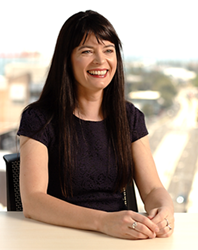
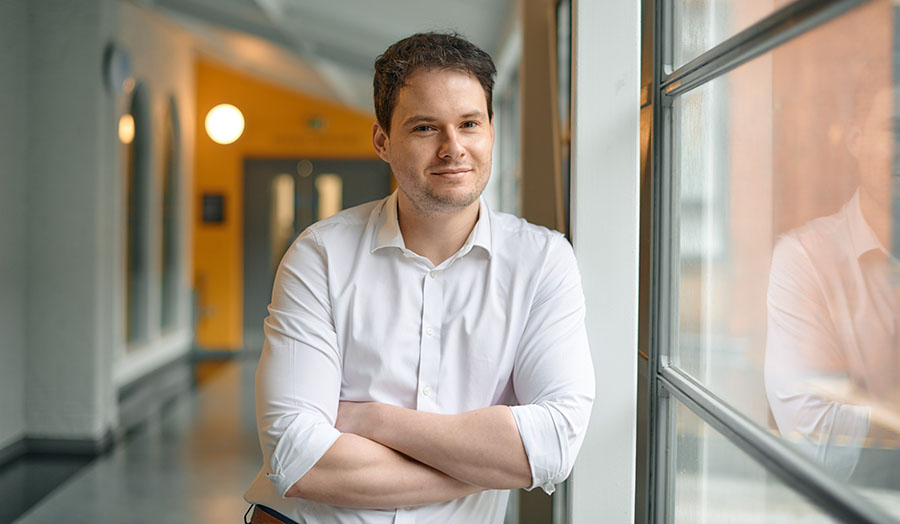
Alexandra Kennedy-Hanson is a Lecturer in Social Work at the School of Society and Community , University of Wolverhampton. She brings extensive professional experience in youth and community work, family support, and children’s safeguarding to her academic role. BA Hons Youth & Community Studies (2:1), University of Worcester MA Social Work (Merit), University of Wolverhampton Her research focuses on safeguarding children and young people, domestic violence, and its impact on families. She also explores social work practice in multicultural communities and issues affecting youth. Alexandra is a qualified social worker with 5 years of post-qualifying experience in child protection and a JNC-qualified youth worker. She transitioned to academia after a decade in statutory and community-based youth work, including projects on multiculturalism, anti-racism, and young women’s self-esteem. She currently teaches on the BA Social Work Programme and coordinates admissions for both BA and MA Social Work Programmes. Her professional memberships include: British Association of Social Workers (BASW) Social Work England
Professor Amy Maguire is a leading academic in human rights and public international law at the University of Newcastle, Australia. She holds roles as Deputy Head of the School of Law and Justice (2021-2024) and co-founder Director of the Centre for Law and Social Justice. Her research focuses on human rights accountability, Indigenous rights, climate change displacement, and refugee rights. She has secured over $2.7 million in grants, including an ARC Mid-Career Industry Fellowship (2024-2028) for national human rights reform initiatives. Maguire advises the Queensland Parliament on human rights compliance and collaborates with global institutions like the Australian Human Rights Commission. Her work has influenced policy, including Australia’s death penalty abolition strategy and Indigenous rights frameworks. She has been awarded multiple accolades for research and teaching excellence, including the 2020 Leadership Excellence Award and 2016 Early Career Researcher of the Year. Maguire’s education includes a BA, LLB (Hons), and PhD from the University of Newcastle. Her interdisciplinary approach bridges law and social justice, addressing issues like climate migration and legal responses to global crises. She leads projects such as the Hunter Region climate displacement study and the Human Rights Measurement System. Maguire’s public engagement includes over 70 articles for The Conversation, reaching 920,000+ readers, and expert media commentary globally. She advocates for inclusive education through initiatives like early entry programs for Indigenous and refugee students, earning a 2021 Senior Fellowship from Advance HE. Her research outputs span 60+ publications, with key works on MH17 litigation, climate justice, and Indigenous legal frameworks. Grants include a 2021 stimulus grant to establish the Centre for Law and Social Justice, supporting postdoctoral research and international collaborations. Maguire’s leadership extends to global networks, including the UN Human Rights Council evaluation project and the Human Rights for NSW Alliance. She remains committed to translating research into policy, education, and community impact through clinics, youth forums, and law reform advocacy.
Dr Martin Elliott is a Senior Research Fellow at the Children's Social Care Research and Development Centre (CASCADE), Cardiff University, and holds roles as Research Development Adviser for Health and Care Research Wales and academic lead for the all-Wales ExChange programme. His work focuses on child welfare inequalities, poverty, secure accommodation, and services for disabled children. With 17 years in statutory children’s services, he transitioned to academia via a PhD analyzing looked-after children in Wales. He has secured £3.4M+ in research funding, including a major CASCADE partnership grant. Educated with a DipSW (1997), BA(Hons) Community Studies (1998), MSc Social Science Research Methods (2013), and PhD (2018), his expertise spans mixed-methods research. Awards include the ESWRA doctoral thesis award (2020) and BASW’s British Journal of Social Work prize (2021). His research explores socio-economic dimensions in social work practice, policy impacts, and system equity. Key grants include studies on child welfare interventions, kinship care, and secure accommodation outcomes. He leads projects analyzing Wales’ Flying Start program, workforce regulation impacts, and crisis mental health services. CASCADE collaborates internationally on child welfare systems, reflecting his strategic focus on translating research into policy. His work bridges academic inquiry with frontline practice, addressing systemic challenges in child protection and welfare delivery.
Catherine Butler is a Senior Fellow of the Higher Education Academy and Programme Director of the DClinPsy Programme at the University of Bath's Department of Psychology. She holds external examiner roles at Cardiff University, University College London, and others. Her academic journey includes a Doctor of Clinical Psychology from the University of East London, an MBA from the Open University, and advanced training in Systemic Supervision at the University of Exeter. Her research focuses on Inclusion, Whiteness, Gender and Sexual Minorities, Intersectionality, and Systemic Therapy, with contributions to anti-racism and climate crisis studies. Key projects include exploring systemic therapy supervision, validation of therapeutic scales, and shared learning courses with clinical psychology trainees. Dr. Butler’s scholarly work addresses topics such as gender dysphoria in neurodivergent populations, relapse experiences in addiction therapy, and systemic training in clinical psychology programs. She has been recognized for her contributions through awards like the Senior Fellow of the Higher Education Academy. Her professional activities include roles on the British Psychological Society committee, conference presentations, and advisory roles in academic and clinical settings. She has supervised 18 doctoral students and led projects funded by UK charities such as the Association for Family Therapy.
Professor Cristina Iannelli holds the Personal Chair of Education and Social Stratification at the University of Edinburgh’s Moray House School of Education and Sport, affiliated with the Institute for Education, Community & Society (IECS). She is a Fellow of the British Academy and the Academy of Social Sciences. Her research focuses on social stratification in education and labor markets, social mobility, youth transitions, and quantitative data analysis. She has led major international projects like the ESRC-funded ‘Understanding Inequalities’ (2017-2021) and previously co-directed the ESRC Applied Quantitative Methods Network (AQMeN). Key contributions include analyzing educational policies, intergenerational mobility, and curriculum impacts on inequality. Her educational background includes a PhD from the European University Institute (Florence) and prior roles as a Research Fellow at the University of Edinburgh. She has supervised 14 PhD students across topics like educational inequality, policy analysis, and labor market transitions. Awards include ESRC research fellowships for projects on educational structure and social mobility. Recent work highlights include analyzing sibling data to study intergenerational transmission of advantage, cross-country comparisons of STEM enrollment disparities, and the role of spatial job opportunities in labor market outcomes. She chairs the European Research Network on Transitions in Youth (TIY) and advises ESRC’s Data and Infrastructure Expert Group.
Alexandra Walsham is Professor of Modern History at the University of Cambridge and a Fellow of Emmanuel College. She previously held roles as Chair of the Faculty of History (2019-2022) and currently serves as President of the Historical Association. Her academic roots include a PhD from Trinity College, Cambridge, following studies at the University of Melbourne and Exeter University. Her research focuses on religious and cultural history of early modern Britain, particularly the Protestant and Catholic Reformations. Key themes include post-Reformation Catholicism, religious tolerance, providence, miracles, the history of the book, and the relationship between religion and landscape. Her work has been supported by grants from the British Academy, AHRC, and the Leverhulme Trust. Walsham has authored award-winning books like Providence in Early Modern England and The Reformation of the Landscape , and edited volumes on topics such as archives, memory, and confessional history. She has delivered prestigious lectures including the Ford Lectures at Oxford (2018) and the Wiles Lectures at Queen’s University Belfast (2024). Her professional service includes editorial roles for Past and Present and the Cambridge Studies in Early Modern British History series. She led the AHRC-funded 'Remembering the Reformation' project (2016-2019) and chairs the Early Modern Section of the British Academy. Awarded a CBE in 2017 and an honorary doctorate from Melbourne in 2023, Walsham’s work bridges academic rigor and public engagement, influencing both scholarly discourse and historical education.
Dr. Heidi Ashton is an Associate Professor in Cultural and Creative Ecologies at the University of Warwick's Centre for Cultural and Media Policy Studies (CCMPS). She holds a concurrent role as a global research fellow at the Creative Industries Policy and Evidence Centre (PEC). Her work bridges academic research with practical insights from over 25 years of experience as a freelance dancer, choreographer, and producer across global creative sectors. Key affiliations include Director of Education for SCAPVC and external PhD evaluator at Bahria University, Pakistan. Research interests focus on freelance workers' rights within creative industries, social security access, and policy impacts on arts education and cultural participation. Notable projects include collaborations with Equity Union on social security challenges and with Prof. Prue Huddleston on arts education policy. Her work has influenced UK policy debates, including House of Lords citations and Guardian features. Teaching responsibilities span undergraduate and postgraduate levels, including modules on creative industry workplaces and policy analysis. Current PhD supervision explores cultural policy-labour dynamics and digital platforms' role in creative work. Recent projects include the 'Urban Village' community arts initiative in Coventry and pandemic impact studies on cultural sectors. Publications address freelance worker vulnerabilities, comparative cultural policies (e.g., UK vs USA), and educational apartheid critiques. Her 2024 co-authored 'State of the Arts' report provides a UK-wide cultural sector health check, presented to DCMS officials and arts leaders.
Tarik Abou-Chadi is a Professor in European Union and Comparative European Politics at the University of Oxford's Department of Politics and International Relations, and a Professorial Fellow at Nuffield College. He holds a PhD from Humboldt University Berlin (2015). His research focuses on elections, political parties, and the transformation of democratic representation in post-industrial societies. Key affiliations include the Government and Politics Network, Comparative Politics and Government, and leadership of the Swiss National Science Foundation-funded project on 'Social Status and the Transformation of Electoral Behavior in Western Europe'. He previously served as Assistant Professor at the University of Zurich before joining Oxford. His work appears in top journals like the American Political Science Review and World Politics. Awards include the Henrik Enderlein Prize (2022) and inclusion in Capital magazine's 'Top 40 under 40' (2022). He advises four doctoral students and actively contributes to media commentary on European political trends through outlets like The Economist. Research interests emphasize far-right dynamics, voter behavior, and party strategy in Western Europe. His recent analyses address gendered political preferences among youth, climate policy acceptance, and the electoral consequences of mainstream parties adopting radical-right policies.
Mel Ainscow is a Professor in Education at the University of Glasgow and holds adjunct and emeritus roles at Queensland University of Technology and the University of Manchester. He is recognized globally for his work on inclusion and equity in education, particularly through systemic reforms and collaborative research with schools. His career includes roles as a head teacher, adviser, and researcher, emphasizing strategies to make schools effective for all students. Key projects include leading the Greater Manchester Challenge (a £50M initiative for school improvement) and Schools Challenge Cymru (a Welsh Government program focusing on disadvantaged students). He advises UNESCO and the Organization of American States on equity in education. His research focuses on systemic change, policy analysis, and inclusive practices, with over 90 publications including books like Struggles for Equity in Education and articles in journals like Journal of Educational Change and Prospects . Dr. Ainscow's awards include a CBE for services to education (2012). His work bridges theory and practice, advocating for equity through collaboration, ethical leadership, and evidence-based strategies. He has collaborated with international networks in Australia, Portugal, Spain, and Latin America, emphasizing global approaches to educational challenges.
London School of Economics and Political Science (LSE)United Kingdom
Dr. Roham Alvandi is Associate Professor of International History at the London School of Economics and Political Science (LSE), where he also serves as Director of the Iranian History Initiative and Master's Programme Director. He is affiliated with the Phelan United States Centre and the Middle East Centre at LSE, and is a Fellow of the British Institute of Persian Studies, the Royal Historical Society, and the Royal Asiatic Society. Dr. Alvandi earned his DPhil and MPhil from the University of Oxford, where his doctoral thesis won the Foundation for Iranian Studies’ Dissertation Prize and the Pavry Memorial Prize. He also holds degrees from the University of Sydney, where he received the University Medal, and the Fletcher School of Law and Diplomacy at Tufts University. His research focuses on modern Iranian history, U.S. foreign relations, and the Global Cold War, with current work exploring human rights activism and the origins of the 1979 Iranian Revolution. His scholarship has been published in leading journals such as Diplomatic History , Cold War History , and Iranian Studies . He is the author of Nixon, Kissinger, and the Shah: The United States and Iran in the Cold War (Oxford University Press, 2014), selected by the Financial Times as one of the best history books of the year, and editor of The Age of Aryamehr: Late Pahlavi Iran and its Global Entanglements (2018). His recent media commentaries and articles—appearing in The New York Times , The Guardian , The Wall Street Journal , and The Washington Post —reflect a consistent focus on Iran’s political trajectory, nuclear ambitions, and societal resistance. The articles highlight themes such as the fragility of the Islamic Republic, the role of historical memory, and the persistent desire for secular democracy among Iranians. Financial Times Best History Book of 2014 Foundation for Iranian Studies’ Dissertation Prize University of Oxford’s Pavry Memorial Prize University Medal, University of Sydney LSE Excellence in Education Promotion Prize (2015) LSE Excellence in Education Award (2018) Dr. Alvandi has supervised PhD students including Jack Roush and Jean-Baptiste Ollieric, and has received LSE teaching awards in recognition of his excellence in education. He has held visiting appointments at the University of Tehran and Columbia University, and previously worked on the strategic planning staff for UN Secretary-General Kofi Annan. He is also a frequent contributor to documentaries by HBO, BBC, and Manoto, serving as a historical consultant on projects such as Hostages and Hoveyda .
Dr. Bahar Baser is a Professor in Politics and International Relations at Durham University's School of Government and International Affairs, where she joined in 2021. She is also a member of the Institute for Middle Eastern and Islamic Studies. Previously, she served as Associate Professor at Coventry University's Centre for Trust, Peace and Social Relations, leading the "Peacebuilding and Conflict Transformation Research Group," and was a postdoctoral research fellow at the University of Warwick. Dr. Baser completed her PhD in Social and Political Sciences at the European University Institute in Florence, Italy. During her doctoral studies, she was a Visiting Research Fellow at multiple institutions including Humboldt University in Berlin, REMESO in Sweden, and the Instituto de Ciencias Sociais in Lisbon. Dr. Baser is an expert in diaspora studies, peacebuilding, and conflict transformation with a regional focus on the Middle East. Her research examines diaspora engagement in peace processes, post-conflict reconstruction, and state-building in the Global South. She has extensively studied stateless diaspora activism in Europe, particularly regarding host states' counterterrorism policies, radicalization of diaspora members, and transnationalization of homeland conflicts. Her recent publications demonstrate a strong focus on Kurdish diaspora studies, diaspora governance by authoritarian states, intergenerational trauma in diaspora communities, and peacebuilding processes. Her work spans multiple disciplines including political science, international relations, migration studies, and Middle Eastern studies, with particular attention to how diasporas interact with homeland conflicts and host state policies. Dr. Baser serves as editor of the Kurdish Studies Series published by Lexington Books and co-editor of the Diasporas and Transnationalism Series published by Edinburgh University Press. She is also a senior associate research fellow at the Security Institute for Governance and Leadership in Africa (SIGLA), Stellenbosch University, South Africa, and a visiting professor at Tampere Peace Research Institute, Tampere University, Finland. Dr. Baser has supervised multiple doctoral students including Abdullah Al-Khonaini, Mengqi Sun, Nannan Li, and Shorooq Al Zaabi. She has secured numerous research grants including projects funded by the British Academy, Academy of Finland, Allan and Nesta Ferguson Trust, and Horizon 2020 Marie Curie Fellowship. Her research projects span topics such as diaspora engagement in peace processes, youth violence and conflict transformation, and diasporic identity formation. Dr. Baser is actively involved with the Institute for Middle Eastern and Islamic Studies at Durham University, contributing to research initiatives focused on the Middle East and Islamic studies. Her multilingual capabilities (Turkish, English, Italian, Spanish, French, Portuguese, Azerbaijani) support her extensive fieldwork and collaborative research across multiple countries.
Helen Quirk is a Research Fellow at the University of Sheffield's School of Health and Related Research (ScHARR), funded by the NIHR School for Public Health Research (SPHR) as a Post-Doctoral Launching Fellow from April 2020 to August 2023. Her work focuses on understanding and promoting physical activity while addressing health inequalities, particularly among vulnerable populations. Her research interests center on physical activity promotion, health inequalities, community-based physical activity initiatives, mental health and physical activity connections, and qualitative research methods. She has developed expertise in understanding the barriers and benefits of physical activity, especially for populations facing significant challenges to maintaining active lifestyles. Analysis of her recent publications reveals a strong focus on community-based physical activity initiatives, particularly parkrun, as a vehicle for addressing health inequalities. Her work examines how these initiatives impact mental wellbeing, social inclusion, and physical health outcomes, with special attention to underrepresented groups including people with mental health conditions and those living in socioeconomically deprived areas. Scientific Awards: NIHR School for Public Health Research (SPHR) Post Doctoral Launching Fellowship (2020-2023) Helen's research is characterized by strong partnerships with community organizations like parkrun, allowing for real-world application of findings. She has been involved in numerous large-scale surveys and qualitative studies that have informed both academic understanding and practical implementation of physical activity initiatives. Her approach emphasizes understanding people's lived experiences through qualitative methods while also engaging with quantitative data to capture broader trends. Her work extends beyond traditional academic outputs, with active engagement in knowledge mobilization through blogs, webinars, and community presentations. She serves as Vice Chair of the parkrun Research Board, demonstrating her commitment to bridging research and practice in community physical activity initiatives.
Professor Louis Appleby is a distinguished Professor of Psychiatry at the University of Manchester, where he serves in the Division of Psychology & Mental Health. He holds the prestigious position of Director of the National Confidential Inquiry into Suicide and Safety in Mental Health and leads England's National Suicide Prevention Strategy. His work has positioned him as one of the UK's foremost experts in suicide prevention and mental health safety. Professor Appleby's research focuses on suicide prevention across diverse populations including mental health patients, children and young people, individuals with prior self-harm, and offenders. He leads the Centre for Mental Health and Safety, recognized as the largest research unit in suicide prevention globally. The Centre has developed a UK-wide database of over 100,000 suicides that informs evidence-based policy and practice. His research examines risk factors that increase suicide vulnerability and identifies protective factors and effective intervention points across different populations. Recent publications demonstrate his continued leadership in the field, with studies examining suicide in veterans, self-harm patterns in children and women, and suicide risk among patients with psychosis. These works reflect his commitment to translating research into practical interventions that save lives across multiple demographic groups. CBE (2006) RCPsych Lifetime Achievement Award (2021) Knighted in the 2023 New Year Honours Making a Difference Award, University of Manchester (May 2019) Outstanding Benefit to Society Through Research (2015) Professor Appleby has secured substantial research funding totaling £25 million from organizations including the Wellcome Trust, Medical Research Council, and Department of Health. His leadership extends to numerous doctoral students and early-career researchers in suicide prevention. He has held significant government roles including National Director for Mental Health (2000-2010) and National Clinical Director for Health and Criminal Justice (2010-2014), demonstrating his impact on national mental health policy. As Director of the Centre for Mental Health and Safety, Professor Appleby oversees multiple research programs including the National Confidential Inquiry, the Manchester Self-Harm Project (MASH), bereavement support research, offender health initiatives, and international epidemiological collaborations with Danish colleagues. His work continues to shape suicide prevention strategies at local, national, and international levels.
Dr. Ivan Grigoriev is a Lecturer in Russian Politics at King’s Russia Institute, part of the School of Politics & Economics within the Faculty of Social Science & Public Policy at King’s College London. His research focuses on judicial politics, business-state relations in Russia, post-Soviet reforms, and constitutional dynamics. He teaches courses such as 7YYR0002, 6YYR0002, and 4YYR0001, and supervises PhD studies on Russian political topics like federalism, elections, and business-state interactions. Grigoriev’s research interests span constitutional courts under authoritarianism, the structure of Russian society, and international organizations’ roles in post-Soviet governance. His work appears in journals like Post-Soviet Affairs , Russian Politics , and Democratization . His recent publications analyze topics such as elite dynamics in color revolutions, EU leadership programs in Eurasia, and the role of law clerks in Russia’s Constitutional Court. While no specific awards are mentioned, his contributions were noted at King’s annual awards events in 2024. Grigoriev’s advising focuses on Russian political phenomena, including authoritarian modernization and labor reforms. His research often bridges theoretical frameworks with empirical analysis of institutional adaptations under autocracy.
Dr. Mark Thompson is a Senior Lecturer in Psychology and Researcher of Sport Psychology at London Metropolitan University's School of Social Sciences and Professions. He holds a PhD from the University of Hull and is a Fellow of the Higher Education Academy (FHEA). His academic work bridges sport psychology, healthcare rehabilitation, and youth athlete development. Dr. Thompson's education includes a PhD in Psychology from the University of Hull. His research focuses on emotional processes in elite athletes, doping propensity in youth sports, and post-COVID-19 patient rehabilitation. Notable projects include NHS-funded studies on telerehabilitation and collaborations with the International Olympic Committee and World Anti-Doping Agency. Research Interests: Psychophysiological responses to stress in sports Emotional regulation strategies among athletes Anti-doping education and youth athlete behavior Telehealth applications in post-hospitalization recovery His publications emphasize qualitative methodologies, exploring topics like athlete performance under stress, doping prevention programs, and healthcare professional perspectives on self-management approaches. Awards: Fellow of the Higher Education Academy (FHEA). Dr. Thompson has delivered presentations at major conferences such as the American College of Sports Medicine and contributed to media discussions on doping in elite sport via LoveSport Radio. His teaching spans foundational psychology to advanced modules like cognition and behavior, often serving as module leader.