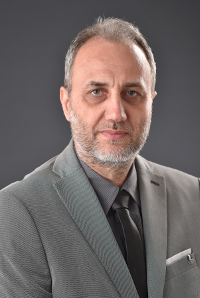
Torsten Grust is a Professor of Computer Science at the University of Tübingen, leading the Database Systems research group since 2008. Previously, he held professorships at TU München and TU Clausthal. He earned his M.Sc. (Diploma) and Ph.D. in Computer Science from Universität Konstanz in 1994 and 1999, respectively. His research focuses on database languages, query and programming language technology, and scalable processing of non-relational queries. He bridges database and programming language research, emphasizing mutual benefits between the fields. **Education:** Ph.D. in Computer Science, University of Konstanz (1999) M.Sc. (Diploma), Computer Science, University of Konstanz (1994) Visiting Scientist, IBM Silicon Valley Laboratories (2000) **Research Interests:** Design and optimization of database languages Query compilation and execution engines Integration of functional programming with SQL Query provenance and debugging **Awards and Honors:** ACM SIGMOD Reproducibility Award (2021) University of Tübingen Teaching Award (2021/22) Winner of Dyalog 2019 APL Program Solving Competition Member of the VLDB Endowment Board of Trustees (2022–2027) **Advising & Grants:** Guided numerous students, including alumni such as Alexander Ulrich, Benjamin Dietrich, and Christian Duta Recipient of grants supporting research in query compilation, provenance analysis, and database language design **Labs & Teams:** Leads the Database Systems research group at University of Tübingen Collaborates with the National Institute of Informatics (Tokyo) on query and programming languages
Miloš Racković serves as a full Professor in the Department of Mathematics and Informatics at the University of Novi Sad, Serbia. He maintains active academic engagement through the Laboratory for the development of information systems, with his office located in the Information technologies and systems office (DMI&DF) on the second floor, room 49. Contact is available via telephone (485)-2868 or email rackovic@dmi.uns.ac.rs, and his personal website (http://www.is.pmf.uns.ac.rs/rackovicm/) provides additional resources. His research spans foundational and applied computer science, with seminal contributions in fuzzy database systems including PFSQL query language development and prioritized fuzzy logic for relational databases and XML. He has pioneered deep learning methodologies through innovative classification techniques using negative and missing features in convolutional neural networks. Additional expertise includes high-performance computing implementations of Lattice Boltzmann methods using OpenCL, robotics (symbolic modeling and trajectory planning), and blockchain applications for Industry 4.0 production processes. His sports analytics work applies neural networks to basketball player and referee movement analysis. Analysis of his 2012-2025 publications reveals a strategic evolution toward interdisciplinary applications, particularly in industrial transformation (blockchain-enabled traceability) and sports analytics. His work consistently bridges theoretical computer science with practical implementations, demonstrating increasing focus on real-world problem solving while maintaining strong foundations in database theory and computational methods. Professor Racković leads the Laboratory for the development of information systems, which focuses on advancing information system methodologies through formal modeling extensions (including Petri net innovations) and practical implementations for uncertainty management. The laboratory's work spans from foundational research in fuzzy logic systems to applied projects in high-performance computing and blockchain integration, fostering innovation in information technology development.
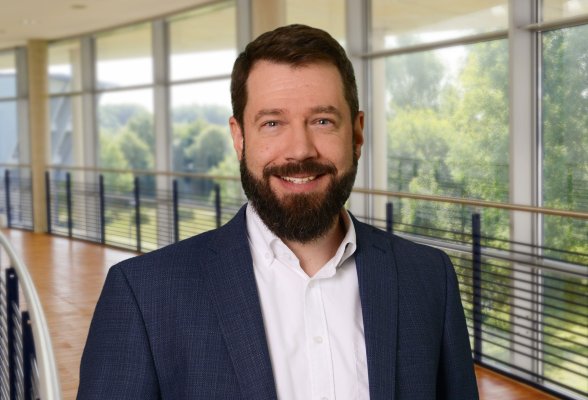
Ghislain Fourny is a Lecturer and senior scientist in the Department of Computer Science at ETH Zurich. His research spans quantum foundations, game theory, and database systems. He develops deterministic models merging game theory into quantum physics, proposing non-Nashian solution concepts to address quantum paradoxes. He co-designed the JSONiq query language and leads the RumbleDB project for large-scale data querying. A recipient of multiple teaching awards including the Golden Owl and ETH Medal, he advises numerous students on topics ranging from quantum theory to database systems. His work bridges theoretical physics, computer science, and mathematics, aiming to reconcile determinism with quantum mechanics through game-theoretic models. Education : Holds a Master's in Quantum Information (2007) and a PhD in Computer Science (2011). His early career included pioneering work on XBRL standards and XQuery implementations. Research Themes : Non-Nashian game theory: Fixpoint equilibria avoiding Grandfather paradoxes, Pareto optimality. Quantum foundations: Deterministic models challenging free-choice assumption, spacetime games integrating special relativity. Database systems: JSONiq language design, RumbleDB for scalable querying of heterogeneous data. Teaching Contributions : Courses include Big Data for Engineers, Information Retrieval, and Information Systems for Engineers. His open-access Big Data textbook is widely used in universities. Recognition : Over 20 awards including the 2023 VIS Teaching Award, ETH Medal (2000), and multiple top ranks in international mathematics competitions since 1993.
Dario Colazzo is a Professor at Université Paris-Dauphine, affiliated with the LAMSADE laboratory. His research focuses on database systems and programming languages, particularly in cloud databases, type systems for semi-structured data, and query processing optimizations. He has contributed extensively to XML and XQuery research, including parallel query execution and static analysis techniques. His teaching includes courses on programming (Java), UML, database systems, and semantic web technologies at both undergraduate and graduate levels (in French). Key research interests span XML/XQuery optimization, JSON processing, distributed systems, and type systems for safe and efficient data handling. His work emphasizes scalable cloud-based solutions and efficient query execution models. Publications highlight advancements in parallel query processing (e.g., PAXQuery), type-based optimizations for XML updates, and semantic graph analytics. He has collaborated with institutions like EDBT, WWW, and VLDB conferences.
Jan Hidders is a Lecturer in the School of Computing and Mathematical Sciences at Birkbeck, University of London. He joined Birkbeck in 2020 after holding academic positions at Vrije Universiteit Brussel (Associate Professor, 2016–2020), Delft University of Technology (Assistant Professor, 2008–2016), and the University of Antwerp (Postdoctoral Researcher, 2001–2008). He holds a PhD from Eindhoven University of Technology (2001) and has industry teaching experience at Avans Hogeschool (1996–2001). Research Focus Hidders' research centers on three interconnected domains: Graph Data Management : Design of graph query languages, schema definition systems (PG-Schema), and theoretical properties like expressive power and optimization. He contributes to ISO standardization for SQL/GQL graph extensions. Workflow Modelling : Hierarchical decomposition of Petri nets for workflow correctness verification and orchestration of multi-actor systems. Conceptual Data Models : Formal semantics of ORM2 and its relationship to graph data models, including ORM-native DBMS design. His recent publications emphasize graph database schemas , threshold query optimization , and scalable data processing , reflecting his involvement in LDBC benchmarks and ISO standards. No awards are documented. Academic Roles Programme Director for MSc Computer Science at Birkbeck. Researcher at Birkbeck Knowledge Lab and Birkbeck Institute for Data Analytics. ACM and IEEE member since 2003 and 2006, respectively. He teaches Software Engineering II and Computer Systems , with 1 recorded PhD supervision.
Niklas Klein is a Professor at the Department of Information and Communication at Flensburg University of Applied Sciences. He also serves as Vice President for Studies and Teaching on the Executive Board. His academic background includes a PhD from the University of Kassel (2011) and earlier degrees from the University of Paderborn. His research focuses on context-aware systems, ubiquitous computing, and smart grid technologies. He has contributed to projects like the Future Internet Smart Grid Application (2013), activity recognition using inertial sensors (2011), and XML/XQuery transformation frameworks (2005–2011). His work emphasizes time synchronization in sensor networks and user-centric service creation. Notable publications include studies on context prediction stability, energy management in smart grids, and DAG-based context reasoning architectures. He has advised over 20 Master's and Bachelor's students in areas like distributed systems and communication technologies. Klein has secured funding for projects such as the KLIMASCHUTZ-PLANER (2013–2014) and IT2Green Pinta (2012–2014). He organizes workshops like AwareCast and serves on technical program committees for CAPS 2012 and Context 2011. Additional service includes managing the alumni network for Kassel University's Communication Technologies chair and supporting international student recruitment.
Véronique Benzaken is a Full Professor at the University of Paris-Saclay , affiliated with the Computer Science Department and member of the VALS (Verification of Algorithms, Languages, and Systems) research group at LRI (CNRS) and the Toccata group at INRIA-Saclay. Her research focuses on Data-Centric Programming Languages and Deep Specification with Proof Assistants , particularly SQL/XML formalization and Coq-based verification systems. Her work includes the development of the ℂDuce XML-centric functional programming language and the Datacert project (2016-2021) for certifying data-intensive systems using Coq and Why(3). She collaborates with Oracle Labs on multi-lingual query interfaces (QIR) and formalizes languages like XQuery, Datalog, and SQL execution plans. She has received significant funding through the ANR grants for the Typex (2016) and Datacert (2016-2021) projects. Her publications in venues like CPP, ESOP, ITP, and SPLASH reflect her leadership in formal methods for data systems. Education : Habilitation (1996), PhD (1990), DEA in Theoretical Computer Science (1986), and degree in Singing/Opera (1983). Employment : Full Professor at Paris-Sud 11 since 1998; Assistant Professor at Paris 1 Panthéon-Sorbonne (1990-1998); INRIA researcher (1986-1990).
Vinayak R. Borkar is a researcher and software engineer affiliated with the University of California, Irvine, where he completed his PhD in 2016. His work focuses on big data platforms, database systems, and scalable query processing frameworks. PhD in Big Data Processing (UC Irvine, 2016) Contributions to Apache AsterixDB, Hyracks, and Pregelix Industry experience at BEA Systems (2000s) Research interests include database systems , big data management , XQuery optimization , and dataflow engines . His publications analyze scalable similarity queries, memory management, and declarative approaches to machine learning. Recent articles explore Apache AsterixDB , dataflow compilation , and graph analytics . Collaborators include Michael J. Carey and Alexander Behm.
Univ.-Prof. Dr. Günther Specht is a faculty member in the Department of Computer Science at Universität Innsbruck. His research focuses on machine learning, data mining, and their applications in recommendation systems, music information retrieval, and authorship attribution. He has contributed to projects such as HPT4Rec (a hyperparameter optimization framework for recommenders) and Cloudgene (a cloud computing tool for biomedical pipelines). His work spans database systems, text analysis, and social media analytics. Notable tools include HaploGrep 2 (for mitochondrial DNA analysis) and StyleExplorer (for textual style visualization). Key research areas include: (1) Developing algorithms for music popularity prediction and playlist analysis; (2) Enhancing authorship attribution techniques using grammar profiling and syntax tree analysis; (3) Designing efficient database index structures like Height Optimized Tries; and (4) Investigating ethical aspects of recommendation systems and plagiarism detection. Publications from 2020-2024 highlight advancements in cross-domain text classification, social media behavior analysis, and automated music genre recognition. His work bridges traditional statistical methods with modern machine learning, emphasizing practical applications in both academic and industry contexts.
Dr. Christian Urban is a Lecturer in Computer Science at King's College London's Department of Informatics, part of the Faculty of Natural, Mathematical & Engineering Sciences. He is actively involved in the Security Hub and King's Cybersecurity Centre, an EPSRC-NCSC Academic Centre of Excellence in Cyber Security Research. His research focuses on theorem provers, programming languages, compilers, type systems, and functional programming. He has led and contributed to multiple research projects, including Formal Verification of Practical Nominal Unification Algorithms (Royal Society-funded) and Nominal Techniques for Verification Environments . Research Interests: Formal methods for program correctness Automated reasoning and theorem proving Programming language semantics and compilation Nominal logic and its applications His work bridges theoretical foundations with practical tools, emphasizing verified software systems and formal verification techniques. Recent Projects: Formal Verification of Practical Nominal Unification Algorithms (2025-2027) Nominal Techniques for Verification Environments (2021-2024) Efficient and provably correct schedulers for many-core CPUs (2013-2015) Awards: Skolem Award from CADE (2015) Grants & Collaborations: Dr. Urban has secured funding from the Royal Society, DFG, and other bodies. His collaborations include projects on XML query optimization, schedulers for parallel architectures, and verified parser implementations. Labs/Teams: As part of the Informatics Department and Security Hub, he contributes to interdisciplinary research on software systems security, formal methods, and verified programming tools.
Veronique Benzaken is a Full Professor (Professeur de classe exceptionnelle) at University of Paris Sud 11, where she is a member of the LRI (Laboratoire de Recherche en Informatique), UMR 8623 - CNRS. She is currently a member of the VALS (Verification of Algorithms Languages and Systems) research group, a joint team between LRI and the Toccata group at INRIA - Saclay. Her research focuses on data-centric programming languages and systems, with particular expertise in XML processing, type systems, and formal verification of database systems. Her academic background includes: Dec 1996: Habilitation à diriger des recherches, University Paris Sud 11 (UFR des Sciences - Orsay) Jan 1990: PhD in Computer Science, University Paris Sud 11 (UFR des Sciences - Orsay) Sep 1986: DEA d'Informatique fondamentale, University Denis Diderot Paris 7 (Master in Theoretical Computer Science) June 1983: Diplomée de Chant et d'Art-Lyrique, Conservatoire National de Région de Grenoble Professor Benzaken's primary research interests lie at the intersection of database systems, programming languages, and formal methods. She has made significant contributions to XML-centric programming through the design and development of ℂDuce, an XML-centric general purpose functional programming language developed under an MIT license. Her work emphasizes type-safe and fast query and transformation of XML documents. More recently, she has focused on the formalization of data intensive management systems using the Coq proof assistant, particularly in the context of the Datacert project (2016-2021) which aims to certify and verify data intensive systems such as RDBMS's and XML processing engines. Her research spans several interconnected areas including type systems for data languages, formal semantics of query languages, verification of database systems, and language-integrated query processing. She has led significant research projects such as the ANR project Blanc SIMI2 Typex (Typeful certified XML) and has collaborated with Oracle Labs on developing intermediate representations for multi-lingual querying interfaces. Her publication record shows a clear trajectory from XML processing and type systems toward increasingly rigorous formal verification of database technologies. Professor Benzaken has been actively involved in the academic community through service on program committees for major conferences including ESOP, ICDE, VLDB, and others. She has also been an invited speaker at workshops such as the Coq workshop (CoqWS@FLOC) in 2018. Her research is supported by significant grants including the ANR project Datacert (2016-2021) and the ANR project Blanc SIMI2 Typex. She has collaborated extensively with researchers such as Évelyne Contejean, Chantal Keller, and Stefania Dumbrava on formal verification projects, producing notable publications at ITP 2017 and ITP 2018 on Datalog and SQL formalization. Professor Benzaken is a member of the PCRI research group within LRI, focusing on programming, systems, and their applications. Her work bridges theoretical computer science with practical database system implementation, contributing to both the academic understanding and industrial application of data management technologies, particularly in the areas of XML processing, query languages, and formal verification of database systems.
Leonard Wörteler is a Researcher at the University of Konstanz's Department of Computer and Information Science, affiliated with the Database and Information Systems group. He joined as a PhD student in 2015 after completing his Bachelor's (2012) and Master's (2015) in Computer and Information Science at the same institution. His research focuses on query optimization, including architectures, parallel heuristic algorithms, and non-relational databases. He has contributed to teaching, including courses on database systems and computer science fundamentals. His research explores advanced optimization techniques, such as neural language models for cardinality estimation and landmark-based algorithms for graph databases. He has published in venues like IDA, DBPL, and SIGRAD, addressing topics ranging from XQuery optimization to real-time transportation visualization. Wörteler's work emphasizes practical implementations, such as optimizing Neo4j's performance through landmark embedding. His contributions bridge theoretical optimization frameworks with real-world applications in databases and data mining.
Chrisa Tsinaraki is a Lecturer at the School of Electrical and Computer Engineering (ECE) of the Technical University of Crete. She specializes in interdisciplinary research areas including Citizen Science, Artificial Intelligence, Semantic Web technologies, and Data Management. Her work bridges technical innovation with societal applications, particularly in environmental policy, public health, and smart spaces. Her research portfolio includes contributions to the Web of Things (WoT), analyzing mobile apps during health crises, and leveraging citizen science for biodiversity conservation. She has collaborated with institutions like the European Commission’s Joint Research Centre (JRC) on projects involving spatial data analysis, semantic interoperability, and multimedia content management. Key Projects: CoCoMA (Content & Context-Aware Multimedia Systems), MoM-NOCS (Mobile Multimedia Nature Observation Management) Technical Expertise: SPARQL/XQuery integration frameworks, OpenAPI semantics, and ontology-driven data systems Her publications emphasize practical applications of emerging technologies in public sectors, policy-making, and crisis management. She has authored over 50 peer-reviewed articles, contributing to both technical advancements and policy-oriented analyses.