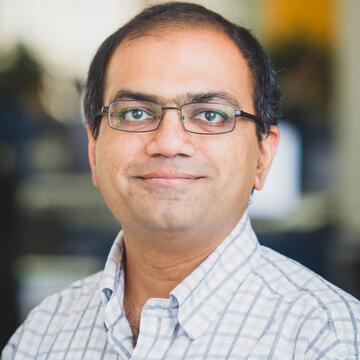
Maher Ahmed is an Associate Professor at the Faculty of Science, Wilfrid Laurier University. His research focuses on pattern recognition, artificial neural networks, and expert systems. He has contributed to diverse fields including robotics, medical informatics, network security, and computer vision. Key research interests include developing algorithms for shape representation, improving network anomaly detection, and applying machine learning to financial fraud prevention. His work bridges theoretical computer science with practical applications in healthcare and autonomous systems. Publications span robotics localization, medical literature reviews, encryption techniques, and sign language recognition, reflecting a cross-disciplinary approach. He currently holds no listed awards but maintains an active research agenda with a focus on applied artificial intelligence.
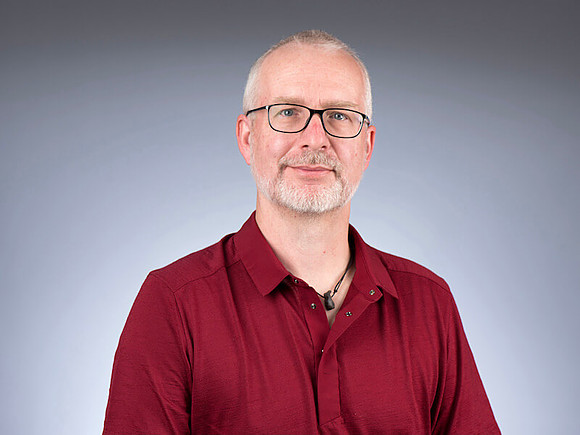
Prof. Oliver Ehmer is a Full Professor of Romance Linguistics at the University of Osnabrück (since April 2022), supported by the DFG Heisenberg Professorship. He previously held interim professorships at the Universities of Regensburg (Winter 2021/22) and Freiburg (multiple terms since 2018). His academic journey includes a Ph.D. (2010, 'summa cum laude') and Habilitation (2018) from the University of Freiburg, focusing on interactional linguistics and spoken language structures. Ehmer's research interests span linguistic structure, social interaction, and cognition; language variation and change; digital humanities; corpus technology; and pragmatic particles. He has coordinated major DFG initiatives, such as the Research Training Group 'Frequency Effects in Language' (2009–2012) and the 'Hermann Paul School of Linguistics' (2008–2009). His work emphasizes multimodal analysis of spoken corpora and the development of corpus tools like the act package for R and the Transformer software. Key Awards: Irmgard Ulderup Prize 2018 (Best Habilitation Thesis) FRIAS Research Prize (2010) Hans and Susanne Schneider Prize (2009) Ehmer leads projects such as 'Requests for action in interaction and language change' (DFG Heisenberg) and collaborates on 'Body knowledge' (Baden-Württemberg grant) and 'Emergent Memory' (DFG/SNF). He has developed corpora like ICAS (instructional corporeal skills), cespla (River Plate Spanish), and tools for transcription and analysis.
Robert Sutor is an Adjunct Associate Professor in the Department of Computer Science and Engineering at the University at Buffalo, within the School of Engineering and Applied Sciences. He holds a PhD in Mathematics from Princeton University (1992), an MA from Princeton (1983), and an AB from Harvard University (1980). PhD: Mathematics, Princeton University, 1992 MA: Mathematics, Princeton University, 1983 AB: Mathematics, Harvard University, 1980 His research focuses on quantum computing, mathematical markup languages (e.g., MathML), web standards (e.g., DOM), and computer algebra systems like AXIOM. Notable contributions include foundational work on MathML, the Document Object Model (DOM), and AXIOM compiler design. He has also explored privacy in big data and the intersection of quantum computing with societal impact. His publications span over three decades, with key works on: Quantum computing theory and applications Mathematical content representation standards (MathML) Web infrastructure standards (DOM) Compiler design for algebraic systems Dr. Sutor has been deeply involved in standards development through initiatives like the World Wide Web Consortium (W3C) and WS-I. His work bridges theoretical mathematics and practical software engineering, emphasizing interoperability and accessibility.
Aleksandar M. Dimitrijevic is an Associate Professor at the Faculty of Electronic Engineering, University of Niš, Department of Electrical Engineering and Computer Science. He holds a Doctorate from the same institution (2024), a Master's degree (2003), and a Bachelor's degree (1997). His academic career includes roles as Assistant Professor (2004) and Associate Professor (2024). Education: PhD in Computing and Informatics, Faculty of Electronic Engineering, University of Niš (2024) Master's degree in Electrical Engineering and Computer Science, Faculty of Electronic Engineering, University of Niš (2003) Bachelor's degree in Electrical Engineering and Computer Science, Faculty of Electronic Engineering, University of Niš (1997) Research Interests: Aleksandar focuses on Geographic Information Systems (GIS) , Computer Graphics , and Algorithm Optimization . His work emphasizes terrain rendering algorithms, mobile GIS applications, and integration of GIS with virtual reality systems. Recent projects include optimizing spatial coherence in terrain visualization and developing block-based rendering techniques for large datasets. Publications Trends: His articles span terrain rendering (RINGO algorithm variants), mobile GIS implementation, and XML web services management. Notable contributions include enhancing parallel processing for spatial data and improving visualization efficiency in mobile environments. Advising & Grants: While specific student names/grant details are not listed, he participates in 3 national projects and has contributed to international conferences (WSEAS, TELSIKS). His research collaborations include institutions like Benalmadena (Spain) and Elounda (Greece). Labs/Teams: Affiliated with the Faculty's computing and telecommunications departments, though specific lab names are not specified in the text.
Philip Bernhard is a Professor in the Department of Electrical Engineering and Computer Science at Florida Institute of Technology (FIT), holding concurrent roles as Associate/Assistant Dean and Program Chair for Cybersecurity. He specializes in Database Systems, Spatial Databases, and Computational Complexity. His research focuses on database performance tuning, NoSQL systems, big data, and theoretical aspects like computational complexity. Education: B.A. in Computer Science, SUNY Oswego M.S. and Ph.D. in Computer Science, SUNY Albany Research Interests: Spatial databases, database benchmarking, performance optimization, NoSQL technologies, and theoretical computer science topics such as computation theory. His work emphasizes practical applications in education and industry, including classroom database benchmarks and collaboration with organizations like Harris Corporation and the U.S. military. Grants & Projects: Recent projects include NoSQL database research ($114k from Harris Corp, 2012) and cloud-based database evaluations ($80k, 2011). He has led initiatives in coral database systems (USGS, 2004) and Air Force-funded database optimization tools (2006). Labs/Teams: Works on spatial database systems, performance analysis, and collaborative projects with industry partners. Teaches advanced courses like Spatial Databases (CSE 5800) and Computational Complexity (CSE 5610).
Hieu Nguyen is a Professor of Mathematics at Rowan University, affiliated with the College of Science & Mathematics. He holds a Ph.D. from the University of California, Berkeley, and a B.S. in Mathematics and Electrical Engineering from the University of Minnesota-Minneapolis. His research focuses on Experimental Mathematics, Coding Theory, and Frames, with applications in AI-driven Precision Agriculture and autonomous drone systems. Notable projects include mitigating Blueberry Scorch Virus using AI drones and developing error-correcting codes for communication systems. Education: Ph.D., Mathematics, UC Berkeley (1996); B.S., Mathematics & Electrical Engineering, University of Minnesota (1990) Research Interests: Smart Drones, Deep Learning, Precision Agriculture, Coding Theory, Frames, and Experimental Mathematics Grants/Projects: NJ Department of Agriculture-funded Blueberry Scorch Virus project (2022–2025), Precision Agriculture Using AI Drones (2023–2024) His work includes over 20 publications, emphasizing ensemble learning, error-correcting codes, and mathematical modeling. He leads the eXperimental Mathematics Laboratory (XML) and has advised numerous students in interdisciplinary research. Professional memberships include the Mathematical Association of America and New Jersey Big Data Alliance.
Guy De Tré is an Associate Professor at the Department of Telecommunications and Information Processing within Ghent University's Faculty of Engineering and Architecture. He leads the Database, Document and Content Management (DDCM) research group and focuses on computational intelligence in information systems, with expertise in bi-polarity handling, uncertainty modeling, and multi-valued logic systems. Primary Affiliation: Ghent University Research Focus: Data quality, fuzzy querying, spatio-temporal modeling Key Contributions: Foundational work in possibilistic databases and explainable AI His research combines theoretical and applied approaches to information management systems. Theoretical work includes: Bipolarity and uncertainty handling in databases Multi-valued logic frameworks Interval B-tree indexing for possibilistic data Applied research spans: NoSQL database optimization Decision support systems Contextualized machine learning 3D/4D modeling for geological resources Recent publications show increasing focus on explainable AI, with multiple works on contextualized support vector machine classification and orthographic similarity measures for graph-based data representations. His work bridges database theory with practical applications in data quality assessment, medical informatics, and cultural heritage projects like the Byzantine Book Epigrams database. Research Group: Leads the DDCM group at Ghent University, specializing in: Database management innovation Content modeling techniques Fuzzy logic implementations Temporal data indexing Intelligent information systems
Emanuela Mitreva is an Adjunct Professor at the Department of Computer Science, Sofia University St. Kliment Ohridski. She holds an M.Sc. in IT Services (2011) and a B.Sc. in Informatics (2009) from the same institution. Her research focuses on database systems, including NoSQL and relational databases, with applications in healthcare informatics, big data, and 3D visualization for education. She also explores digital storytelling for children's development and cultural heritage preservation through virtual collections. Her teaching interests include programming in Python and relational databases. Notable research contributions address XML data extraction in healthcare compliance, performance analysis of SQL/NoSQL systems, and leveraging Unity for 3D medical education tools. Her work bridges theoretical database research with practical implementations in medical and cultural domains. Mitreva has collaborated extensively on projects involving 3D visualization technologies and NoSQL solutions for analytical loads. Though no formal awards are listed, her publications reflect sustained engagement with interdisciplinary challenges in computer science applications.
Christoph Koch is an Associate Professor at Technische Universität Wien specializing in databases and artificial intelligence. His research spans database theory, complexity theory, and logic in computer science, with a focus on XML processing, query optimization, and parallel data science techniques. Lead projects: KnowledgeGraph (2020–2028), HINT (2012–2017), Weblearn (2005–2008) Developed the Lixto visual extraction system and contributed to DLV knowledge representation framework Supervised T. Lukasser's diploma thesis on XPath query processing
Vashti Galpin is a Lecturer in the School of Informatics at the University of Edinburgh, affiliated with the Laboratory for Foundations of Computer Science (LFCS). She holds a BSc(Hons) and MSc from the University of the Witwatersrand (Wits) and a PhD from the University of Edinburgh. Her research focuses on formal methods for modeling complex systems, including provenance and data quality, programming languages, quantitative performance evaluation, and concurrency theory. She has also been recognized as a Cape Wine Master. Education: BSc(Hons) in Computer Science (Wits) MSc in Computer Science (Wits) PhD in Computer Science (University of Edinburgh) Research Interests: Galpin's work emphasizes hybrid systems modeling using process algebras like HYPE and Bio-PEPA. Her research spans collective adaptive systems, stochastic and deterministic modeling, and applications in energy systems, biological processes, and network performance. She has developed tools like the Scottish COVID-19 Data Curation Interface and contributed to frameworks for temporal data management in scientific curation. Publications: Her recent work includes advancements in CARMA (Collective Adaptive Resource-Sharing Markovian Agents), spatial modeling techniques, and hybrid systems analysis. These studies highlight methodologies for analyzing systems with both continuous and discrete behaviors, with applications in smart grids, protein trafficking, and opportunistic networks. Software & Tools: Galpin's contributions include prototypes for data curation (Scottish COVID-19 Interface) and provenance tracking in XML documents. She actively participates in conferences and workshops on formal methods and systems biology. Labs/Teams: Her primary affiliation is with LFCS, where she collaborates on foundational research in theoretical computer science and applied systems modeling.
Mahesh Chaudhari is Assistant Professor in the Data Science program at the University of San Francisco, specializing in databases, data engineering, and cloud computing. His research builds autonomous data infrastructure for hybrid cloud environments and optimizes distributed data processing. Chaudhari holds a PhD in Computer Science from Arizona State University. Research focuses on query optimization techniques for heterogeneous data sources, distributed stream processing, and scalable data architectures. His work addresses performance challenges in large-scale data systems through metadata management and hybrid database designs. Prior to academia, Chaudhari accumulated 11 years of industry experience, serving as Principal Software Engineer at TransUnion and Chief Architect at Zephyr Health Inc. He received the Graphies Award in 2013 for innovative healthcare applications.
Elena Ivanova Zaharieva-Stoyanova is an Associate Professor at the Technical University of Gabrovo, Bulgaria, specializing in Computer Systems and Technologies. She holds a Doctorate in Automated Design Systems in Knitwear Production (1999) and was appointed Associate Professor in 2005. Her academic career spans over 25 years at the Technical University of Gabrovo, progressing from Assistant to her current position. Dr. Zaharieva-Stoyanova's research focuses on the intersection of computer science and traditional textile arts, particularly developing CAD/CAM systems for knitting and crochet industries. Her work bridges software engineering with cultural heritage preservation, creating digital representations of traditional costumes and developing specialized XML-based languages for craft pattern description. She teaches Object-Oriented Programming and Introduction to Programming at the bachelor's level, and Platform-Independent Programming at the master's level. Her publication record shows a clear progression from foundational CAD system development to sophisticated digital representation of traditional crafts. The most recent articles demonstrate her specialization in XML-based languages for knitting and crochet symbols, color stitch representation, and validation modules for traditional costume digitization. This research trajectory reflects a deep commitment to preserving cultural heritage through technological innovation. Dr. Zaharieva-Stoyanova has participated in numerous scientific projects funded by the Scientific Research Fund from 2001-2017, covering image processing in CAD systems, digital data transmission, and most recently, cloud-based medication monitoring systems. She is a member of both the Union of Scientists in Bulgaria and the Union of Automation and Informatics. Fluent in English and Russian with excellent reading and very good writing and speaking skills in both languages, she has conducted specializations in the Czech Republic and Croatia under the CEEPUS project. Her international collaborations are evident in her publications presented at conferences across Europe including Bulgaria, Serbia, Macedonia, Greece, Spain, Austria, Romania, and Ireland.
Michael Piotrowski is an Associate Professor in the Section of Language and Information Sciences at the University of Lausanne (UNIL), appointed since August 2021. He holds expertise in computational linguistics, digital humanities, and historical text processing. His career includes roles as a software developer, researcher, and academic, with notable contributions to the Leibniz Institute for European History (Mainz) and the DARIAH European infrastructure project. He earned his doctorate in computer science from Otto von Guericke University Magdeburg with a thesis on document-oriented e-learning components. Research interests focus on knowledge representation, formal modeling in humanities, and computational approaches to historical texts. His work bridges computer science and the humanities, emphasizing interdisciplinary innovation. Notable publications include foundational texts like Natural Language Processing for Historical Texts (2012) and contributions to computational historiography, digital humanities institutional frameworks, and uncertainty modeling in historical analysis. Piotrowski has led projects such as managing digitization of Swiss legal sources and developing tools for historical text processing. His academic contributions span e-learning technologies, NLP applications, and computational methods for cultural heritage. He actively participates in international DH initiatives and publishes on methodological challenges in digital humanities.
Dr. Felix Burkhardt is a Lecturer at the Chair of Speech Communication, Technische Universität Berlin. He has held roles including temporary professor (2020-2022) and acting head of the Chair. His research focuses on emotion-oriented computing, speech synthesis/analysis, and machine learning applications in audio processing. He leads R&D at audEERING GmbH since 2018, developing emotion AI technologies. Education: PhD in Speech Communication from TU Berlin. Key projects include the EmoDB emotional speech database, open-source tools like Speechalyzer and Nkululeko, and contributions to W3C's EmotionML standard. He serves on program committees for top conferences (ACII, ICASSP, Interspeech) and journals. Research interests span emotional speech modeling, speaker classification, voice search systems, and ethical implications of paralinguistic technologies. Over 150+ publications in top venues (IEEE, Springer, ACM) showcase his work on emotion recognition, speech synthesis, and machine learning frameworks.
Dr. María de los Ángeles Saavedra is a researcher at the University of A Coruña (UDC) , affiliated with the Faculty of Computer Science in the Department of Computer Science and Information Technology . She has completed 4 five-year teaching merit evaluations and 4 six-year research merit evaluations. Her research focuses on information systems , text indexing algorithms , and digital content management . Key trends in her recent work include housing market analysis databases , cultural heritage GIS applications , and business intelligence systems . She has participated in software patent projects and developed systems for digital libraries, perfumery inventory management, and multi-device educational platforms. Her research has been funded by entities including the European Union , Ministry of Science and Innovation , and Galician Innovation Agency .