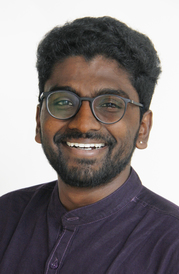
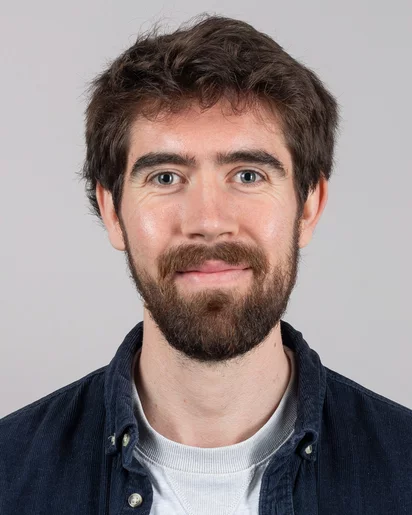
Anjany Sekuboyina is a Postdoctoral Researcher at ETH Zurich's Department of Quantitative Biomedicine, focusing on medical image analysis using machine learning. Her work emphasizes deployable solutions for hospitals, including probabilistic ML, generative models, and relational ML/graph-based approaches. She co-developed the VerSe dataset, a large-scale CT spine segmentation benchmark, and contributed to projects like MedShapeNet and GenerateCT. Research Interests: Medical Image Segmentation (e.g., vertebrae, spine, and vascular structures) Generative Models for Medical Imaging Synthesis Relational Machine Learning and Graph Neural Networks Automated Clinical Workflow Integration Labs/Teams: Bjoern Menze Team at ETH Zurich. Active contributor to open-source repositories like VerSe (234 stars) , focusing on medical imaging challenges and datasets.
Prof. Andries Meijerink is a Professor of Condensed Matter and Interfaces at Utrecht University's Faculty of Science, affiliated with the Debye Institute for Nanomaterials Science. His research focuses on luminescence spectroscopy of lanthanide ions, quantum dots, and nanocrystals, with applications in LEDs, solar cells, scintillators, and thermometry. His work spans energy transfer mechanisms, quantum confinement effects, and luminescent materials synthesis. Key achievements include advancing downconversion processes for solar cells, understanding exciton dynamics in quantum dots, and developing luminescence-based temperature sensors. He leads an active research group and collaborates with industry partners like Signify and Nichia. Education: Not explicitly stated in texts (inferred doctoral training from academic rank). Research Focus: Rare earth ions in solids, quantum dot bio-imaging, and nanocrystal doping. His awards include membership in the Royal Netherlands Academy of Arts and Sciences (2009) and the 2004 Electrochemical Society Centennial Award. He has delivered invited lectures on topics like upconversion solar cells and photonics. Current projects include luminescence thermometry for catalytic environments, optimizing LED phosphors, and exploring photonic effects in nanocrystals. His lab develops materials for high-temperature sensing and bio-imaging applications.
Matteo Aldo Luigi PORRO is an Associate Professor in the Department of Molecular Sciences and Nanosystems at Ca' Foscari University of Venice. He is actively engaged in teaching and research, with a focus on electronics and semiconductor-based radiation detection systems. His office is located in room 612 of the ALFA building on the scientific campus via Torino. Research Interests: PORRO specializes in the design and testing of microelectronic circuits for radiation detectors, particularly in mixed-signal CMOS design and semiconductor sensor modeling. His work supports advanced instrumentation for synchrotron and X-ray free-electron laser (XFEL) applications, including DEPFET sensors and high-speed data acquisition systems. The recent publications highlight a strong trend in developing cutting-edge detector technologies for high-energy physics and photon science, particularly in the context of the DSSC camera and European XFEL. These works span electronics, detector physics, and real-time data processing, reflecting a multidisciplinary approach to advanced instrumentation. Scientific Service and Recognition: Chair, Linac Coherent Light Source (LCLS) Detector Advisory Committee, Stanford, USA Topic Convener, IEEE NSS MIC Conference 2022 (Milan) and 2021 (Yokohama) – Session: Synchrotron Radiation, Accelerator, FEL and Beamline Instrumentation Reviewer for U.S. Department of Energy (DOE) BES Accelerator and Detector Research Program (2022) Reviewer for NSERC Discovery Grants, Canada (2014) Advising and Grants: While no formal students are listed, PORRO leads significant research initiatives, including the development of multi-channel CMOS ASICs for semiconductor detectors and ultra-fast, low-noise X-ray cameras for XFELs. He participates in international collaborations and has contributed to major instrumentation efforts at facilities like the European XFEL and SLAC. Labs and Teams: He is involved in the research lines of 'Physics of Materials' and 'Informatics' within his department and contributes to detector development teams for large-scale photon science facilities. His role as Laboratory Safety Officer (Preposto di Laboratorio) indicates active management of laboratory operations.
Dariusz Osypiuk is an Assistant Professor at the Department of General, Coordination and Crystallography Chemistry within the Faculty of Chemistry at Maria Curie-Skłodowska University (UMCS) in Lublin, Poland. His research focuses on coordination chemistry of transition metals and lanthanides, with particular expertise in synthesizing and characterizing novel metal complexes. Research Interests: Design and synthesis of mono- and heteronuclear complexes with d- and f-electron metals Structural characterization using X-ray crystallography and spectroscopic methods Investigation of magnetic, thermal and spectroscopic properties Development of Schiff base ligands and carboxylate coordination compounds Exploration of structure-property relationships in coordination polymers His 44 publications demonstrate consistent focus on: Copper(II), cobalt(II) and nickel(II) coordination chemistry (35% of recent publications) Structural analysis via crystallography and spectroscopy (100% of works) Investigation of thermal decomposition pathways (75% of works) Magnetic property characterization (60% of works) No awards, research grants, or supervised students are mentioned in available sources. His work involves collaboration with researchers across crystallography, theoretical chemistry, and bioinorganic chemistry disciplines.
Martin Diehl is a lecturer at the Faculty of Engineering Sciences of KU Leuven , Belgium. He is affiliated with the Department of Materials Engineering and the Department of Computer Science . His research focuses on computational materials science, particularly crystal plasticity simulations and multiscale modeling of metallic microstructures.
Tomonao Hosokai is a Professor at the Department of Quantum Beam Physics within the Institute of Scientific and Industrial Research (SANKEN) at Osaka University. He also serves as Team Leader at RIKEN Spring-8 Center Laser Acceleration Development Team. His research focuses on developing compact particle acceleration technologies using high-intensity lasers, with applications spanning from fundamental plasma physics to medical and industrial applications. Professor Hosokai's research interests center around laser-plasma acceleration, where his team develops table-top GeV-class laser accelerators using plasma waves excited by intense laser pulses. His work extends to quantum beam applications including beam-driven drug discovery, electron linear accelerator applications, and high-power laser processing for material modification and strengthening. His laboratory employs advanced numerical simulations to understand relativistic plasma behavior and develops plasma control techniques for stable electron acceleration. His recent publications reveal a strong focus on multi-stage laser wakefield acceleration, electron injection control, and practical applications of quantum beams. Key trends include developing modular supersonic nozzles for stable acceleration, controlling electron self-injection with asymmetric gas-jet nozzles, and exploring applications in drug discovery and material science. Hosokai leads the Hosokai Laboratory which operates several major research facilities including the LAPLACIAN laser acceleration platform, L-band electron accelerator/THz FEL system, laser peening test equipment, gas jet laboratory, and a high-performance PC cluster with 1024 CPU cores. His team actively participates in international collaborations including the EuPRAXIA project, which aims to develop compact, cost-efficient particle and radiation sources.
Michael Tómas Grimes is a Postdoctoral Researcher at the Paul Scherrer Institute (PSI) in Switzerland, working within the Magnetism and Microscopy Group at the Swiss Light Source. His research employs advanced x-ray synchrotron and free-electron laser techniques to investigate dynamic processes in quantum materials. His academic credentials include: Bachelor of Arts (Mod.) in Nanoscience, Physics and Chemistry of Advanced Materials, Trinity College Dublin (2018) PhD in Computer Science, University of Manchester (2022) Grimes specializes in multiferroic materials exhibiting coupled magnetic and ferroelectric properties. His work probes non-equilibrium states using ultrafast x-ray diffraction and resonant inelastic scattering to unravel interactions between spin, orbital, and charge systems. This research targets fundamental mechanisms for next-generation spintronic and electronic devices through femtosecond-scale manipulation of material properties. Recent publications demonstrate expertise in coherent diffraction imaging applied to operando catalysis and magnetic phase transitions, with emphasis on nanoscale strain dynamics and time-resolved structural analysis. Key contributions appear in ACS Nano and Journal of Applied Crystallography, highlighting innovations in x-ray nanoscopy for nanoparticle systems. He participated in the ERC CARINE project at CEA-IRIG, developing time-resolved imaging techniques through collaborations at ESRF's ID01 beamline. His career includes research appointments at ETH Zürich/PSI and Grenoble-based facilities, reflecting deep integration with European large-scale research infrastructures. At PSI, Grimes operates within the Laboratory for Condensed Matter, utilizing the Swiss Light Source to advance methodologies for studying ultrafast magnetic phenomena and catalytic processes under realistic operating conditions.
Philip Chater serves as the Crystallography Science Group Leader at Diamond Light Source, the UK's national synchrotron facility located at the Harwell Science and Innovation Campus in Oxfordshire. Previously the Principal Beamline Scientist for I15-1 (XPDF), he joined Diamond in August 2013 after appointments at the University of Birmingham and University of Liverpool. His leadership encompasses guiding the crystallography team to optimize beamline operations for user experiments while advancing his own research in local structure analysis. Dr. Chater's research centers on powder diffraction techniques, particularly Pair Distribution Function (PDF) analysis, to resolve local atomic structures in energy-critical materials including hydrogen storage systems, lithium-ion conductors, and fuel cell components. His work investigates short-range ion ordering mechanisms to elucidate structure-property relationships in ion transport phenomena. Methodological innovations include developing fundamental parameter models for 2-D area detectors in Rietveld refinement, creating high-throughput tools for large diffraction datasets, and pioneering advanced PDF analysis frameworks applicable across battery materials, pharmaceuticals, and earth sciences. The XPDF beamline under his direction recently implemented a robotic sample changer and next-generation detector system to dramatically enhance data acquisition speed and resolution. His group provides specialized support for researchers utilizing PDF techniques to study disordered solids, amorphous materials, and liquids across physics, chemistry, and materials science disciplines. Scientific awards are not documented in the available information. Regarding research guidance, Dr. Chater leads a multidisciplinary team supporting synchrotron users but no formal student supervision or specific grant awards are referenced. His collaborative framework facilitates industry and academic partnerships through Diamond's user program, with recent beamline upgrades enabling breakthroughs in energy materials characterization.
Franz X. Kärtner is Professor of Physics at Universität Hamburg and leads the Ultrafast Optics and X-rays (UFOX) Group at the Center for Free-Electron Laser Science (CFEL), DESY, Hamburg. His work bridges fundamental research in ultrafast photonics and practical applications in large-scale scientific infrastructures. His research focuses on ultrafast laser science , including few-cycle and ultralow jitter femtosecond lasers, sub-cycle optical waveform synthesizers, precision timing distribution, integrated photonics, compact electron and X-ray sources, terahertz generation and acceleration, and attosecond science. These areas are central to advancing next-generation light sources and precision measurement systems. The publication trends—though not listed—would reflect deep engagement in photonics, quantum optics, and applied physics , with emphasis on instrumentation for extreme temporal and spatial resolution. His work often intersects engineering and physics, targeting real-world deployment in scientific and industrial settings. Scientific Honors: Fellow of Optica Fellow of IEEE IEEE Laser Instrumentation Award (2022) UNIPRENEURS Award (2023) Kärtner has advised numerous students and researchers in ultrafast optics and photonics, though specific names are not listed. His group has been supported by competitive grants from German and international funding agencies, and he actively collaborates with major research facilities. He co-founded Cycle GmbH , a Hamburg-based company commercializing precision timing and frequency distribution systems, linking academic innovation to industrial applications. His lab, the Ultrafast Optics and X-rays (UFOX) Group at CFEL, develops cutting-edge laser systems for synchronization and control in free-electron lasers and other large-scale facilities, positioning it at the forefront of advanced photonics research.
Dr. Joan Vila Comamala is a Scientist at the Paul Scherrer Institute (PSI) in Switzerland, affiliated with the X-ray Optics and Applications group at the Laboratory for X-ray Nanoscience and Technologies. Previously, he worked at the TOMCAT group (PSI and ETH Zürich) and the Diamond Light Source (UK). His research bridges Nanotechnology and X-ray Imaging, focusing on nanofabrication of diffractive X-ray optics and developing laboratory-based phase contrast imaging for medical applications. Education: PhD in Physics at ALBA Light Source (2004–2008). Postdoctoral Work: Paul Scherrer Institute (2008–2012) and Argonne National Laboratory (Advanced Photon Source) (2008–2012). His work includes the development of Fresnel Zone Plates for Transmission X-ray Microscopy, zone-doubling techniques for high-resolution optics, and grating-based interferometry for medical imaging. He has collaborated with institutions in Switzerland, the UK, and the USA, contributing to advancements in synchrotron and laboratory X-ray technologies. His publications highlight expertise in X-ray Optics, Nanofabrication, and Imaging. Key topics include achromatic lenses, coherent pulse generation, and Talbot-order interferometry for soft-tissue visualization. He specializes in electron beam lithography and atomic layer deposition for nanoscale structures. At PSI, he works on next-generation X-ray optics for synchrotrons and Free Electron Lasers, aiming to expand phase contrast imaging into routine medical diagnostics. His career spans roles at major facilities like ALBA, Diamond Light Source, and Argonne National Laboratory.
Anna Bergamaschi is a Group Leader at the Paul Scherrer Institute (PSI) in Switzerland, specifically within the Center for Photon Science's Laboratory for X-ray Nanoscience and Technologies. She holds a PhD in physics from the University of Trieste (Italy) and has dedicated her career to advancing hybrid detector technology for synchrotrons and XFELs since joining PSI in 2008. Education PhD in Physics, University of Trieste (Italy), 2005 Her research focuses on detector modeling, characterization of single photon counting and analog detectors, and sensor optimization for soft X-ray applications. Notable projects include the MYTHEN3 and MÖNCH detectors, with innovations in spatial resolution, count rate capability, and energy-resolved imaging. Anna coordinates international collaborations (e.g., with FBK) and serves as co-editor of the Journal of Synchrotron Radiation since 2019. Her work bridges technical development with experimental applications, particularly in high-resolution X-ray imaging and powder diffraction at the Swiss Light Source. Responsibilities Group Leader, PSD Detector Science and Characterization (since 2021) MYTHEN3 detector development FBK collaboration on sensor amplification Her publications highlight advancements in detector design, sensor materials, and imaging methodologies, with applications in materials science and synchrotron techniques.
Maria del Mar Carulla Areste serves as a Research Fellow at the Paul Scherrer Institute (PSI) in Villigen, Switzerland, affiliated with the Center for Photon Science and the Laboratory for X-ray Nanoscience and Technologies. Her research concentrates on advanced X-ray methodologies for nanoscale investigations, with core expertise in: X-ray Nanoscience Nanotechnology Photon Science Synchrotron Radiation Applications X-ray Instrumentation Development Dr. Carulla Areste's work focuses on pushing the boundaries of nanoscale imaging and analysis through cutting-edge X-ray technologies, contributing to PSI's mission in photon science innovation. She operates within Switzerland's premier research infrastructure for materials and life sciences. No scientific awards or student advisement roles were documented in the source material. Her laboratory activities center on developing novel X-ray techniques for nanomaterial characterization within PSI's interdisciplinary research ecosystem.
Professor Cezary Czaplewski of the University of Gdańsk is a leading researcher in computational chemistry and coarse-grained molecular modeling. Affiliated with the Faculty of Chemistry and the Department of Theoretical Chemistry , he heads the UNRES server for protein simulations and contributes to projects like Multi-GPU UNRES and MAGENTA . His work bridges physics-based simulations with experimental data integration. Key roles : Professor, Computational Biophysics, University of Gdańsk Projects : EuroHPC PL, Harmonia9, Enerliq, Parylens Research Focus : His research spans coarse-grained modeling , protein structure prediction , and hydrophobic interaction studies , with applications in virology (SARS-CoV-2), antimicrobial peptide design, and large-scale biomolecular simulations. He specializes in GPU-accelerated algorithms and multi-GPU implementations for scalable systems. Teaching : Currently teaches Molecular mechanics & dynamics , Introduction to Python programming , and Parallel programming (Bioinformatics III) . Past courses include Electronic chemical diagnostics and Software in biomacromolecular calculations for PhD students. Scientific Contributions : Developed the UNRES server for polypeptide simulations, extended the UNRES force field to nucleic acids and membrane proteins, and participated in multiple CASP/CAPRI experiments for protein structure prediction. His 2025 publications focus on time-averaged restraints and multi-GPU scalability. Contact : cezary.czaplewski@ug.edu.pl Location : Room B328, Faculty of Chemistry, University of Gdańsk
Prof. Satish Vitta is a faculty member in the Department of Metallurgical Engineering and Materials Science at the Indian Institute of Technology Bombay (IIT Bombay). He holds the academic rank of Professor and is actively engaged in research and teaching in advanced materials science. Education: B.Tech. in Metallurgical Engineering, Mysore University (1980) M.Tech. in Metallurgical Engineering, IIT Kanpur (1982) Ph.D. in Metallurgical Engineering, University of Cambridge His research focuses on nanomaterials , particularly the magnetic, electrical, and optical properties of metals, alloys, oxides, and ultra-thin layered structures. He investigates phenomena such as spin wave magnetization in nanoparticles and electrical transport in nanocrystalline manganites. His work has significant implications for energy, sensing, and advanced optical devices, especially in the development of soft x-ray and water window multilayer mirrors . His recent publications highlight consistent work in nanoscale materials synthesis , magnetic behavior , and thin film optics , with a strong emphasis on experimental characterization and material design for functional applications. Scientific Awards: No awards mentioned in the provided text. He advises students in the Ph.D. and M.Tech. programs at IIT Bombay, although specific names are not listed. There is no mention of external grants or funding sources in the text. He is associated with research facilities within the MEMS department at IIT Bombay, particularly those related to materials synthesis and characterization.
John D. Joannopoulos is the Francis Wright Davis Professor of Physics at the Massachusetts Institute of Technology (MIT), where he has served since 1974. He holds positions in the Department of Physics and is a Principal Investigator at the Research Laboratory of Electronics (RLE). His academic journey includes roles as Assistant Professor (1974), Associate Professor (1978), and full Professor (1983), culminating in his named chair in 1996. He directed the Institute for Soldier Nanotechnologies from 2006. Joannopoulos’ research focuses on theoretical condensed matter physics and photonic crystals, pioneering work in ab initio computational methods and light-manipulating materials. His contributions have led to 560+ publications, 70+ patents, and co-founding four tech companies. Education: B.A. and Ph.D. in Physics from UC Berkeley (1968, 1974). Research Interests: His dual focus includes Microscopic theoretical descriptions of material properties using ab initio methods Development of photonic crystals for light control, revolutionizing photonics and optics His work bridges computational physics with practical applications, influencing semiconductor studies, plasmonics, and nanophotonics. Awards & Recognition: Fellow of the American Physical Society (1983) Fellow of AAAS (2002) 2015 Aneesur Rahman Prize Thompson ISI Highly Cited Researcher (2003–) Multiple teaching awards including the Buechner Prize (1996) Labs & Teams: Leads the ab initio Physics Group at MIT, focusing on computational modeling and photonic crystal applications. His work is highlighted through collaborations with the MITite Group and RLE research initiatives.