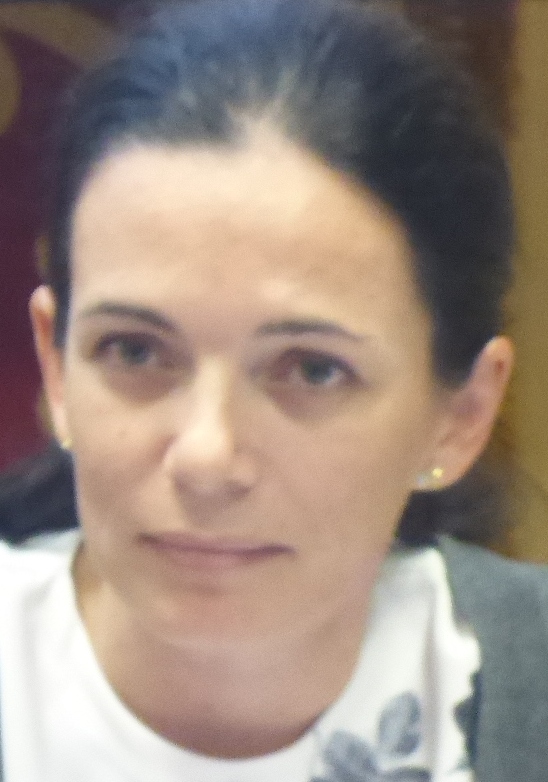
Teresa Mateo-Girona is a full-time Assistant Professor at the Faculty of Education , Department of Language Didactics, Arts, and Physical Education , Complutense University of Madrid. She holds a PhD in Education and degrees in Hispanic and English Philology. PhD in Education (Complutense University of Madrid) Degree in Hispanic Philology (University of Murcia) Degree in English Philology (Complutense University of Madrid) Master's in Educational Innovation (Carlos III University of Madrid) Master's in Teacher Training for Spanish as a Foreign Language (University of Barcelona) Her research focuses on academic writing instruction , language teaching in primary/secondary education, digital tools for writing , and teacher training . Her recent work explores AI applications in reading strategies, multimodal argumentation, and labor-based grading models. She leads the Didactext research group and participates in international networks like RIEA-EA and ALES.
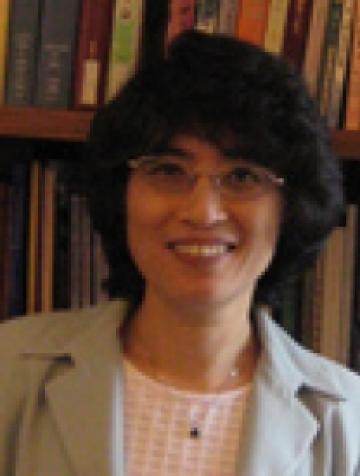
Binyomin Abrams is a Research Professor and Director of General Chemistry at Boston University's Department of Chemistry within the College of Arts & Sciences. He holds a Ph.D. in Theoretical Physical Chemistry from New York University (2008), an M.S. in Organic Chemistry (2003), and a B.S. in Chemistry (2001), both from Rensselaer Polytechnic Institute. His research focuses on chemical education, emphasizing innovative teaching methods, skill transitions between chemistry courses, and integrating educational technology. Key projects include question-embedded videos, hybrid flipped-classroom models, and the BU Chemical Writing Program. He also collaborates with K-12 educators to improve atomic theory instruction. Notable awards include the 2021 Gitner Family Award for Teaching with Technology, 2015 Metcalf Award (BU's highest teaching honor), and 2010 Templeton Prize for Advising. His work emphasizes active learning, writing in STEM, and equity initiatives like summer preparatory programs for marginalized students. Advising highlights include mentoring Anna Booras (ACS Undergraduate Award winner) and Morris Cohen (NESACS Fellowship recipient). His teaching innovations include Excel tutorials, flipped classroom resources, and lab manual development. He directs the Abrams Group, hosting workshops on dimensional analysis, quantum concepts, and scientific writing. Labs/Teams: Leads the BU General Chemistry Program and collaborates with the BU Writing Program on research-based writing initiatives. Maintains an active group website with educational videos, lab manuals, and teaching resources.
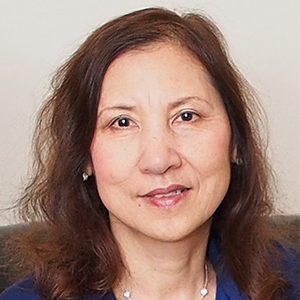
Maiheng Dietrich is a Senior Lecturer in East Asian Languages and Civilizations at the University of Pennsylvania, within the School of Arts & Sciences. She specializes in teaching Chinese language and culture, focusing on foundational skills in listening, speaking, reading, and writing. Her courses, such as CHIN 011 (Beginning Chinese I), emphasize communicative competence and grammatical accuracy through structured lesson plans and interactive activities. She holds office hours at Williams Hall 701 and can be reached via email at maiheng@sas.upenn.edu. Her teaching materials include the Integrated Chinese textbook series, complemented by audio resources and online practice tools. She collaborates with teaching assistants for tutorial support, and her course requirements involve regular homework, quizzes, and oral presentations. Dr. Dietrich’s instruction integrates cultural contexts, such as traditional Chinese poetry, and emphasizes practical communication skills for real-world applications. Her syllabi detail weekly lesson plans covering topics like tone practice, character writing, and grammatical structures.
Suman Chhabra is an Associate Professor at the School of the Art Institute of Chicago (SAIC), specializing in Liberal Arts. They teach courses focusing on contemporary poetry, Asian American literature, diaspora studies, and writing processes. Their academic role includes adjunct responsibilities, emphasizing creative writing pedagogy and critical analysis of cultural narratives. Chhabra's research interests center on the intersection of identity, colonization, and cultural expression through literature. Courses such as FYS I: Rebel Verse and Contemporary Narrative: Asian American Lit highlight their focus on underrepresented voices and literary canons. They also lead English for International Students tutorials, supporting non-native speakers in academic writing and communication. Teaching methodologies emphasize writing as a process, with a focus on multidraft essays, freewriting, and individual inquiry. Courses often incorporate multimedia materials like films and graphic novels alongside traditional texts. Chhabra's curriculum integrates themes of diaspora, memory, and political impact, using works by authors such as Ocean Vuong, Rajiv Mohabir, and Cathy Park Hong.
April Yi Wang is a tenure-track Assistant Professor at the Department of Computer Science, ETH Zürich, leading the PEACH Lab. She holds core faculty roles at the Institute for Intelligent Interactive Systems and the ETH AI Center. Her research focuses on human-centered approaches in programming, education technology, and data science collaboration. She earned her PhD from the University of Michigan (2023) and MSc from Simon Fraser University (2018), advised by Steve Oney and Christopher Brooks. Education: PhD in Information Science, University of Michigan (2018–2023) MSc in Computer Science, Simon Fraser University (2016–2018) B.Eng in Computer Science, Zhejiang University (2013–2016) Research Interests: Human-Computer Interaction (HCI) Programming Support Systems Collaborative Data Science AI-Enhanced Education Literate Programming Accessibility in Technology Recent Work Trends: Her 2025 publications emphasize AI-driven educational tools (e.g., Math2Visual for math pedagogy, datAR for data literacy), emotion-aware moderation systems, and studies on workplace multitasking. Her work bridges HCI with computational education, focusing on intuitive programming interfaces and inclusive design. Awards: Gary M. Olson Award (2023), ACM CHI Honorable Mentions (2023/2020/2018), Rising Stars in EECS (2022). Grants: Innovedum funding for Coducate project (2025). Lab Focus: Designing expressive systems for programming and data literacy through visual/tangible interfaces, AI co-decomposition tools, and interdisciplinary metaphors. Teaching: Courses on Human-Computer Interaction, Educational Technology, and Mixed Reality at ETH Zürich.
Eiko Ichinose is a Lecturer in Japanese at Lake Forest College, part of the Modern Languages and Literatures department. She teaches a range of Japanese language courses from beginner to advanced levels, including specialized tutorials on pedagogy and creative writing. Her educational background includes a BA in English and American Literature from Ritsumeikan University (Kyoto, Japan) and certification in Teaching Japanese as a Foreign Language from Pana Lingua Institute (Tokyo, Japan). Her courses emphasize language proficiency, cultural immersion, and practical teaching methodologies. While no specific research publications or awards are listed, her academic focus aligns with applied linguistics and language education innovation. She advises students on language acquisition techniques and maintains a curriculum covering oral proficiency, reading comprehension, and creative expression in Japanese.
Harry Freemantle serves as a Multi-Discipline Adjunct Lecturer in the School of Humanities at The University of Western Australia's Albany Campus, teaching undergraduate History, Indigenous Studies, Anthropology, Sociology, and Medieval & Early Modern units while providing tutorial support for the School of Indigenous Studies and mentoring postgraduates. His academic foundation includes a PhD in Sociology from Murdoch University (1997), focusing on the conditions for sociology's emergence. Key research areas span History, Visual Culture, Indigenous Studies, and Truth-Telling, exemplified by his book Seeing the Social which analyzes historical visibility technologies and their metaphorical frameworks. Recent publications reveal interdisciplinary convergence between historical scholarship and creative practice, with recurring themes of regional identity, sense of place in Albany, and Indigenous perspectives. His work bridges academic analysis with poetic forms like prose poetry, emphasizing community engagement through Truth-Telling initiatives. Notable recognitions include: UWA Albany Directors Prize (2024) Albany Centre Excellence in Teaching Award (2015) Freemantle actively shapes regional scholarship through editorial leadership for Studies in Western Australian History and co-convening the 'Great Southern Great History' conference. His mentorship extends to Albany postgraduates, while editorial projects like Albany: An Antipodean Arcadia demonstrate commitment to documenting local narratives through collaborative academic-creative frameworks. Personal pursuits include exhibiting visual art, running, snorkelling, and creative writing, reflecting his holistic integration of academic and artistic practices within Albany's cultural landscape.
Sherran Clarence is Senior Lecturer in the Doctoral School at Nottingham Trent University , leading university-wide workshops and courses for doctoral researchers and supervisors. She also holds honorary affiliations as a Senior Research Associate at Rhodes University’s CHERTL and as an Associate Member of the LCT Centre at the University of Sydney. After earning degrees in Political Science and Women’s & Gender Studies, she completed her PhD at Rhodes University in 2014. Earlier roles included coordinating the UWC Writing Centre at the University of the Western Cape, focusing on undergraduate writing development and lecturer support. Research interests Doctoral education and researcher development Social justice and equity in higher education Academic literacies and writing-centre theory Legitimation Code Theory applications Emotional and affective labour in early-career academia Disciplinary knowledge construction and pedagogy Her work interrogates how universities can create inclusive cultures that enable diverse students and staff to become knowledge-makers without conforming to dominant norms, emphasising explicit pedagogy, affective support, and epistemic justice. Publication trends span critical higher-education studies, Legitimation Code Theory, writing-centre innovation, and affective aspects of postgraduate development, with recent pieces on precarity, doctoral identity, and inclusive writing pedagogy. Editorial & service roles Managing Editor, Theoria: A Journal of Social and Political Theory Editorial Board member, Teaching in Higher Education Editorial Board member, Higher Education, Research and Development Assessor, Strengthening Postgraduate Supervision short course, Rhodes University Doctoral & Masters supervision covers Legitimation Code Theory, academic literacies, higher-education curriculum and pedagogy, accounting education, doctoral attrition, online learning barriers, and feedback practices. She currently leads a new research project exploring representation, belonging, equity, and inclusion in the university through feminist sociologies of emotion.
Juan Eugenio Jiménez González is a Full Professor at the University of La Laguna, affiliated with the Faculty of Education and the Department of Educational Psychology. His academic work centers on educational psychology, with a strong focus on learning disabilities, early literacy, and mathematics education. University: University of La Laguna School: Faculty of Education Department: Department of Educational Psychology Academic Rank: Professor His research interests include early literacy development, cognitive and linguistic predictors of reading and writing, assessment of learning difficulties, and educational interventions. He has extensively studied phonological awareness, syntactic awareness, oral language, and transcription skills in Spanish-speaking children, particularly in kindergarten and early primary education. The recent articles (2014–2025) reflect a consistent focus on decoding strategies, writing productivity and quality, curriculum-based measurement, and cognitive assessment tools like BM-PROMA and EGRA. These works span developmental psychology, educational assessment, and cognitive science, emphasizing early identification and intervention for at-risk learners. No scientific awards were mentioned in the provided text. Juan Eugenio Jiménez González has collaborated extensively with María Cristina Rodríguez Rodríguez on 65 publications. His work has led to the development of assessment instruments and instructional programs, such as the multimedia BM-PROMA battery and the Letra tutorial system for teacher training. There is no mention of grants or student advising in the provided data. He has contributed to the development of standardized tools like the Spanish EGRA and has explored heterogeneity in mathematical learning disabilities using the triple code model. His research informs both theory and practice in educational psychology across Ibero-American contexts.
Dr. Harold Fisher is an Affiliate Faculty member in the School of Education Professions at the College of Adult and Graduate Studies, College of Biblical Studies, Houston, Texas. He has been teaching at the institution since 2009 and has been involved in online education since 2007 across multiple universities. His background combines formal academic training with extensive experience in secondary and virtual education. Educational Background: Ed.D., Teacher Leadership – Walden University M.A., Organizational Leadership – Summit University M.Ed., Curriculum and Instruction – Our Lady of the Lake University M.Ed., Instructional Technology – American Intercontinental University B.S., Biblical Studies – College of Biblical Studies Dr. Fisher's research and professional interests focus on educational technology , virtual schooling , and online teaching methodologies . His work explores teacher perspectives, real-world strategy integration in digital environments, and curriculum design for Christian and general learners. He emphasizes leadership in teaching and the transformational impact of technology in education. His recent publications and submissions from 2012 to 2015 reflect a strong trend in online secondary education , teacher attitudes , and virtual learning environments , indicating sustained engagement with digital pedagogy and its challenges. Scientific and Professional Awards: 2009 Teacher of the Year – Spring I.S.D. 2009 Teacher of the Year – Spring I.S.D. Virtual High School Teacher of the Month (June 2009) – KPRC Channel 2 Houston Harris County Region 4 Teacher of the Year – 2009 Inductee, Delta Epsilon Chi Honor Society for Biblical Higher Education Dr. Fisher has contributed significantly to curriculum development and teacher training through his publications and academic work. While no formal grants are mentioned, his dissertation and peer-reviewed submissions suggest research activity supported by academic institutions. He has advised and influenced educators through his writings and teaching, particularly in the realm of virtual instruction. There is no mention of specific labs or research teams, but his work appears to be individually driven with a focus on practical and faith-integrated educational solutions.
Dr. Rocío Delgado serves as tutorial faculty and research mentor at Trinity University, San Antonio, with key roles in the McNair Scholars program , the Mexico, the Americas, and Spain (MAS) program , and the Linguistics minor advisory committee . She directs the Empatico program while supporting student interns in the Master of Arts in Teaching (MAT) pursuing elementary certification. Ph.D., The University of Texas at Austin M.A., New Mexico State University B.I.S., University of Texas at El Paso Dr. Delgado’s research focuses on multicultural special education and bilingual education , emphasizing family-school relationships , Latinx education , and English language learners (ELLs) . She explores intersectional challenges in urban education and culturally responsive teaching. Her scholarly work examines clinical teacher preparation, ELL family engagement, and Latinx community empowerment. Key themes include educational equity, cross-cultural mentorship, and inclusive pedagogy for linguistically diverse students with/without disabilities. Scientific Awards University Award for Distinguished Advising (2019) Association of Educational Publishers’ Award (co-authored book 'Reaching Out to Latino Families of ELLs') Dr. Delgado supervises interns and McNair Scholars while collaborating with San Antonio school districts (Northside, Judson, Harlandale, Edgewood). She contributes to the Council on Teacher Education and interdisciplinary initiatives like Cultures and Languages across the Curriculum (CLAC) .
Menna van Praag serves as a Royal Literary Fund Fellow at Anglia Ruskin University (ARU), affiliated with the Cambridge School of Creative Industries within the Faculty of Arts, Humanities, Education and Social Sciences. She additionally teaches at the University of Cambridge's Institute of Continuing Education and supervises Master's students in Cambridge University's MSt in Creative Writing program. Her academic work focuses on creative writing pedagogy, with particular expertise in the 'History of the Novel' module for ARU's MA Creative Writing program. Her scholarly interests encompass a rich tapestry of literary fields: Nineteenth-century marriage and feminism The Pre-Raphaelites movement Psychological fiction techniques Speculative fiction frameworks Short fiction and flash fiction composition Magical realism traditions The historical evolution of the novel Van Praag's publications reveal a consistent thematic focus on magical realism and speculative fiction, frequently exploring female empowerment, sisterhood dynamics, and the intersection of reality with magical elements. Her work often incorporates historical figures and Cambridge settings, creating a distinctive literary voice that bridges academic knowledge with imaginative storytelling. Many of her novels examine women's experiences through both contemporary and historical lenses, with recurring themes of healing, loss, and self-discovery. As an educator, van Praag maintains a robust supervisory role for Master's students in Creative Writing at Cambridge University while teaching on ARU's MA program. She has also co-founded the Cambridge Creative Writing Company, which provides year-round in-person tutorials, demonstrating her commitment to writing education beyond traditional academic settings. Her current writing projects include a self-publishing venture featuring a cozy crime series titled 'The Biscuit Tin Murders,' representing her exploration of new literary genres.