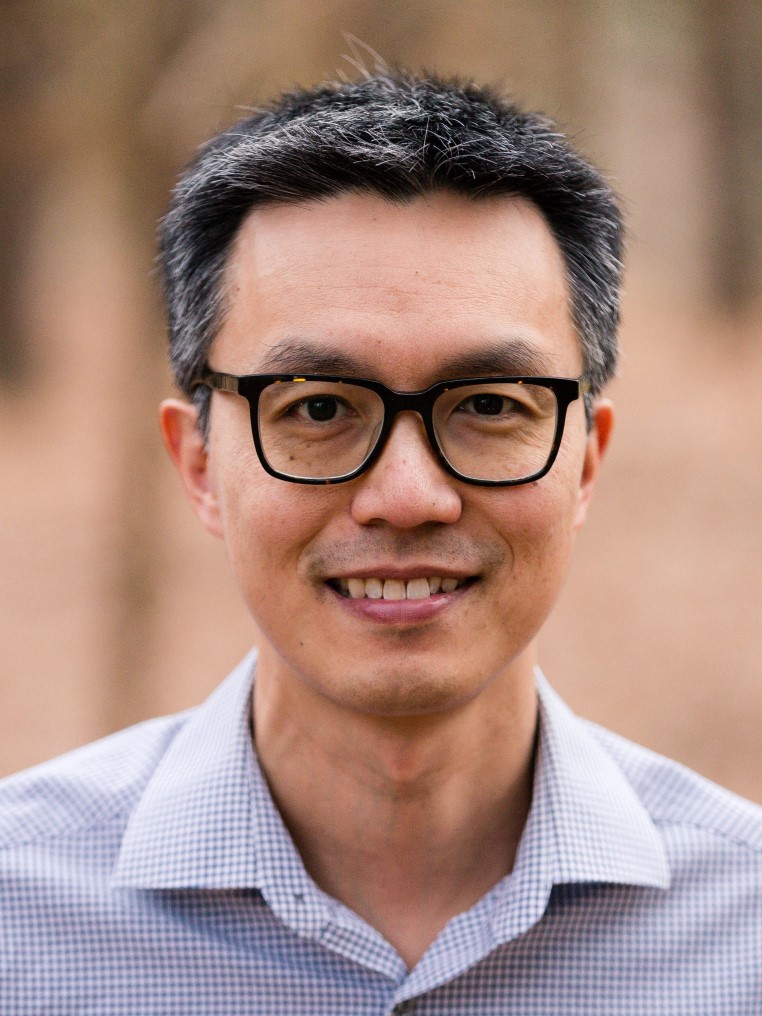
Joseph Lam is an Associate Professor in the Department of Religious Studies at the University of North Carolina at Chapel Hill. He holds a Ph.D. from the University of Chicago (2012) and specializes in ancient Near Eastern languages and literatures, particularly Hebrew Bible studies, Ugaritic texts, and Semitic linguistics. His research focuses on religious thought, metaphor theory, and ritual practices in ancient Syria-Palestine and Anatolia. Lam teaches courses on Classical Hebrew, ancient Near Eastern history, and religious metaphors, and has authored influential works like Patterns of Sin in the Hebrew Bible (2016). He has received awards including the Schwab Academic Excellence Award (2017) and Lydie T. Shufro Research Fellowship (2017). His current projects explore sacrificial traditions and their connections to sin concepts in ancient Israel. Lam also contributes to public scholarship through courses on Wondrium and academic council roles. Education: Ph.D., University of Chicago (2012); M.A. (2005), M.Div. (2003), and B.A.Sc. (1999) from other institutions. Research interests include Hebrew Bible context, ritual analysis, Semitic languages, and metaphor in religious discourse. Key publications address sin metaphors, Ugaritic literature, and linguistic studies of ancient texts. He maintains affiliations with the Society of Biblical Literature Council and has developed innovative courses on ancient Near Eastern mythologies and religious practices.
Daniel T. Potts is a Professor of Ancient Near Eastern Archaeology and History at New York University's Institute for the Study of the Ancient World (ISAW). He holds a PhD from Harvard University (1980) in Anthropology, specializing in Near Eastern archaeology, and previously held academic roles at institutions including the Freie Universität Berlin, University of Copenhagen, and the University of Sydney, where he served as the Edwin Cuthbert Hall Chair of Middle Eastern Archaeology until 2012. His research focuses on the archaeology and history of Iran, Mesopotamia, and the Persian Gulf. He has conducted fieldwork in Iran, Saudi Arabia, Turkey, and the United Arab Emirates, emphasizing excavations at sites like Tepe Yahya and Tell Abraq. His work explores nomadic societies, ancient trade networks, and material culture's role in understanding historical dynamics. Potts is the founding editor-in-chief of *Arabian Archaeology & Epigraphy* and serves as a Corresponding Member of the German Archaeological Institute and ISMEO. His publications include seminal works on Elamite archaeology, UAE prehistory, and the broader Ancient Near East, reflecting his expertise in integrating archaeological evidence with historical records. His advising and grants narrative highlights decades of academic mentorship and leadership in archaeological projects. While specific grant details are not provided, his extensive fieldwork and editorial roles suggest sustained institutional and international support. He has been involved in prominent field teams, including those at Tell Abraq and Tepe Yahya, contributing to the understanding of ancient regional interactions and cultural evolution.
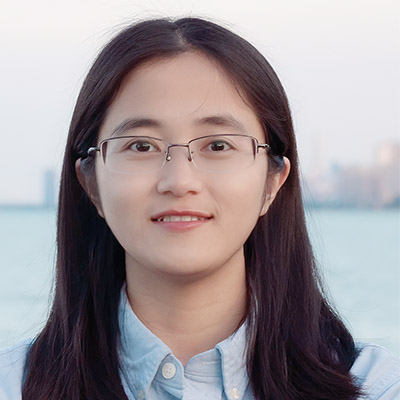
Dr. Shiyan Jiang is an Assistant Professor in the Learning Design and Technology Program at North Carolina State University’s College of Education . She joined NC State in 2019 and specializes in integrating digital literacy into STEM education, particularly through AI-driven curriculum design and technology-enhanced interdisciplinary learning. Her work emphasizes empowering K-12 students with tools like narrative modeling, data visualization, and machine learning to explore STEM identities and career pathways. Education : Dr. Jiang holds a Ph.D. in Teaching and Learning (Specialization: Technology-Enhanced STEM Education) from the University of Miami (2018). Research Focus : Her research centers on: AI and data science education in K-12 classrooms Multimodal composing environments for STEM identity development Technology-mediated interdisciplinary learning Epistemic agency and data literacy Key Achievements : Recipient of NSF Awards #1949110 (2019) and #2241671 (2022) for AI-in-education projects Co-chair of the Technology Committee at the International Society of the Learning Sciences (ISLS) Editorial board member of Journal of Educational Technology Research and Development and Journal of Science Education and Technology Teaching : Courses include Data Visualization, Machine Learning, and Text Mining in Education, alongside doctoral seminars in Learning Sciences. Grants & Outreach : Collaborates with educators and institutions to design AI-infused curricula, such as the i-SAIL (integrated Science and AI Learning) program. She also develops tools like StoryQ for K-12 machine learning education. Labs & Teams : Active in the Friday Institute for Educational Innovation and the Belk Center, focusing on scalable educational technologies.
Alissa Ruth is an educational anthropologist and faculty member at Arizona State University's School of Human Evolution and Social Change, serving as Director of Strategic Initiatives. She focuses on improving educational access, student success, and innovative pedagogies. Her work includes research on undocumented immigrant youth, undergraduate research experiences (UREs), and critical pedagogy. She leads the Innovations in Social Science Instruction and Training Lab and directs education for the NSF Cultural Anthropology Methods Program (CAMP). Ruth has over 22 years of experience in higher education, including teaching, curriculum design, and mentoring students and community members. She co-edited The Handbook of Teaching Qualitative and Mixed Methods (2023) and contributes to journals like Social Science & Medicine . Her research projects address higher education equity, methods training, and social entrepreneurship pathways for underserved students. Affiliations: Director of Strategic Initiatives, ASU; Institute for Social Science Research; NSF CAMP. Education: Ph.D. Anthropology (ASU), M.S. Justice Studies (ASU), B.A. Anthropology (University of Florida). Research Interests: Critical Issues in Higher Education, First-Generation Students, Ethnographic Methods, College Student Wellbeing, Immigration Policy, and Pedagogical Innovation. Publications: Over 20 peer-reviewed articles and edited volumes, emphasizing methods training, UREs, and marginalized student success. Awards: None explicitly listed, but recognized through editorial roles and program leadership. Teaching & Advising: Teaches courses on cultural anthropology, ethics, and global health. Advises students through honors programs and internships. Leads initiatives like the Global Ethnohydrology Study and Methods4all.
Professor Charles Stafford is a leading anthropologist specializing in China, Taiwan, and the United States. He holds a professorship at the Department of Anthropology, London School of Economics (LSE), and is a Fellow of the British Academy (FBA). His research focuses on learning, child development, morality, and the intersection of economic life with cultural and psychological processes. His seminal works include The Roads of Chinese Childhood (1995) and Economic Life in the Real World (2020), which explore how cultural contexts shape human behavior and ethical frameworks. Professor Stafford's fieldwork spans decades, from Taiwanese fishing communities in the 1980s to recent studies of kinship and cooperation in rural China and Oklahoma. He has authored influential books such as Separation and Reunion in Modern China (2000) and edited volumes on ordinary ethics and cooperative dynamics in Chinese communities. His work bridges anthropology, psychology, and economics, emphasizing interdisciplinary dialogue. His research interests include cognitive anthropology, the psychology of economic life, and the role of ritual in structuring social relations. Recent studies investigate moral judgment and cooperative behavior in diverse cultural settings. His contributions have shaped debates on how cultural norms influence decision-making and ethical practices in both traditional and modern contexts.
Aaron Gerow is the A. Whitney Griswold Professor of Film and Media Studies and East Asian Languages and Literatures at Yale University. He specializes in East Asian film and media, with a focus on Japanese cinema’s historical, theoretical, and cultural dimensions. Gerow holds a PhD from the University of Iowa and has taught at Yokohama National University and Meiji Gakuin University in Japan, where he also contributed to the Yamagata International Documentary Film Festival. Education: Columbia University: A.D. (1985), M.F.A. (1987) University of Iowa: M.A. (1992), Ph.D. (1996) His research explores early Japanese cinema, film theory, animation, and censorship. Key works include Visions of Japanese Modernity (2010) and Kitano Takeshi (2007). Gerow is currently writing on the history of Japanese film theory and has supervised reprints of prewar film journals. His interdisciplinary approach bridges film studies, literary analysis, and cultural history. Publications span monographs, edited volumes, and peer-reviewed articles, reflecting his engagement with both Japanese and global cinematic traditions. Gerow’s work often critiques national narratives and explores transnational influences in media. His advising and grants include contributions to Yale’s doctoral program in East Asian cinema and collaborations on film preservation projects. Gerow’s online presence includes a curated website with resources on Japanese film studies and links to his publications.
Noomi Christine Linde Matthiesen is an Associate Professor at the Department of Communication and Psychology, Faculty of Humanities and Social Sciences, Aalborg University. Her research focuses on family life, cultural care practices, and families' interactions with welfare state institutions like daycare and school. She co-leads the Psychology of Culture, Humanity and Education and SSH Children and Youth Research Network groups. Academic Background: M.A. in Psychology, Ph.D. Key Projects: BEST: Best Interests of the Child , TROLD: Wellbeing and Play Participation , and Præstationsfrigørende Rum (Performance-Free Spaces). Her work examines how adults foster children's development, emphasizing trust, emotional labor, and subjectivity. Publications often intersect psychology, education, and cultural studies, addressing parental coaching, leisure time pedagogy, and normative ideals in child protection. Media contributions highlight critiques of performance-driven parenting and solutions for wellbeing. Recent articles (2024–2025) explore situated psychology, trust theory, and leisure pedagogy, with subfields spanning emotional labor, child protection, and cultural adaptation. Collaborations with scholars like S. Brinkmann and T. Szulevicz reflect interdisciplinary engagement.
Dr Kirstin Mills is Senior Lecturer and Director of the Master of Research and Graduate Diploma of Research in the Faculty of Arts at Macquarie University. She holds a PhD and a BA (Hons, First Class) in Literature from Macquarie University, with her doctoral thesis entitled "Imagined Worlds: the Role of Dreams, Space, and the Supernatural in the Evolution of Victorian Fantasy" (2014). She has led the design and implementation of innovative graduate research programs including the Graduate Diploma of Research which launched in 2025. Dr Mills earned her PhD in English Literature from Macquarie University with a thesis examining dreams, space, and the supernatural in Victorian fantasy literature. Her undergraduate honors work focused on psychology and epic fantasy in Beowulf and Tolkien. She maintains active involvement in academic leadership through positions on the University's Graduate Research Management Committee and as Deputy Chair of the Faculty of Arts Research Training Committee. Dr Mills' research specializes in Gothic and fantastic literature with particular focus on the long nineteenth century and its twenty-first century adaptations. Her work explores intersections between Gothic literature and historical, cultural, and technological contexts, examining representations of space, the supernatural, and the sciences of the mind. This includes studies of nineteenth-century theories of dreams and consciousness, Victorian mathematical concepts of the fourth dimension, digital adaptations of Gothic literature, Gothic animal studies, and gender in Gothic narratives. She has published on authors ranging from Samuel Taylor Coleridge and Mary Shelley to contemporary digital vampire texts. Analysis of Dr Mills' recent publications reveals a strong interdisciplinary approach connecting Gothic studies with science, psychology, and digital media. Her work spans Victorian Gothic and the occult, Frankenstein and undead sciences, and theories of dreaming in Romantic literature. She consistently examines how literature engages with scientific concepts of life, death, and consciousness, demonstrating expertise in both historical context and contemporary adaptations. Editor of "Advances in Nineteenth-Century Research" (Routledge/Taylor and Francis) Series Editor for the "International Nineteenth-Century Studies Association Book Series" with Clemson University Press Board Member of the Australasian Horror Studies Network Board Member of the International Nineteenth-Century Studies Association Dr Mills supervises PhD and Master of Research students in Gothic and fantastic literature and their adaptations. She has developed curriculum for advanced research training units including FOAR8010 Research Writing, FOAR8020 Research Theory, and FOAR8030 Research Methods. Her teaching philosophy emphasizes interdisciplinary connection, creative thinking, and building supportive academic communities. She has presented on research supervision at conferences and contributes to professional development for researchers. Dr Mills maintains active engagement with both academic and public communities. She contributes regularly to Macquarie's "The Lighthouse" magazine with articles on Dracula, Wednesday, Beetlejuice, Jane Eyre, Frankenstein, and Victorian-era TV shows. She provides commentary for newspapers, has been interviewed on ABC and 2SER Radio about ghost stories and adaptations, and speaks at public events including at the State Library of New South Wales. She appears regularly on the "From the Lighthouse" podcast and serves as an accredited Mental Health First Aider and member of Macquarie's Ally Network.
Alexis Housen is a Professor of Linguistics & Applied Linguistics at the LW Academic Unit Linguistics and Literary Studies within Vrije Universiteit Brussel . Their research focuses on second language acquisition, multilingualism, and psycholinguistics. Currently active in over 30 projects, including leadership roles in initiatives like the Eye-Catching project (2021-2024) and the International Francqui Professor program (2023-2025). Research Interests : Housen's work examines language acquisition processes, particularly in second language learning contexts. Key themes include lexis-grammar interfaces, salience effects in SLA, and the role of instruction in phonological acquisition. Their empirical studies integrate psycholinguistic methodologies with corpus-based analyses. Recent Contributions : Recent publications address salience's role in morphology acquisition, complexity metrics in L2 writing, and comparative proficiency analysis across oral/written modalities. Their work demonstrates interdisciplinary influence across linguistics, education, and cognitive science. Recognition : Awarded the European Second Language Association Fellowship (2000). Active in international collaborations, presenting at conferences like the European Second Language Association and Birkbeck College symposia. Grants & Leadership : Oversees €1.2M+ in active funding through projects like SRP-Groeifinanciering: Multilingual language control (2022-2027). Serves in leadership roles including Dean and Head of Research Groups.
Ying Wang is an Associate Professor in English linguistics at Karlstad University since 2020, specializing in English for academic purposes, applied corpus linguistics, and second language writing. She holds a PhD from Uppsala University (2013) and has taught courses at both undergraduate and graduate levels focusing on academic writing, second language pedagogy, and corpus methodology. Her research explores rhetorical structures in disciplinary genres, evaluative language resources, and the impact of extramural English activities on L2 writing development. Notable projects include the Swedish Learner English Corpus (SLEC) initiative and analyses of predatory publishing practices in political science. She has also examined government communication strategies during the UK's COVID-19 pandemic response through corpus-assisted discourse studies. Key research contributions span formulaic language use in ELF contexts, methodological innovations in corpus linguistics, and linguistic comparisons between well-established and predatory journals. Her work bridges theoretical linguistics with practical applications in education and scholarly publishing ethics. Publications span prestigious journals like English for Specific Purposes , Text & Talk , and Journal of Second Language Writing , reflecting her interdisciplinary approach to language studies. Current projects emphasize corpus-driven research on academic communication practices and their pedagogical implications.
Dr. phil. habil. Frank Förster is a researcher and curator at the Institute of Archaeology and Cultural Anthropology at the University of Bonn, specializing in Egyptology. He serves as Curator of the Egyptian Museum of the University of Bonn and holds the title of Temporary Academic Councillor. His academic journey includes a PhD and habilitation from the University of Cologne, with a focus on early Egyptian history, desert archaeology, and iconography. His research interests include Desert Road Archaeology , Predynastic and Early Dynastic Egypt , Rock Art , Sports in Ancient Egypt , and Pharaonic trade routes . He has led and contributed to major interdisciplinary projects, particularly under the DFG and the Collaborative Research Center 389 ACACIA. His scholarly work emphasizes the intersection of movement, landscape, and cultural expression in ancient Egypt. Frank Förster's recent publications reveal a strong focus on museum curation, artifact analysis, and the symbolic representation of violence and power in early Egyptian iconography. His work spans academic monographs, exhibition catalogs, and interdisciplinary studies. He has co-edited volumes on rock art and desert archaeology, and his articles frequently appear in leading Egyptological journals. He is actively involved in digital education, public outreach, and exhibition development. Notably, he contributed to the relocation and reopening of the Egyptian Museum at the University of Bonn in 2024. His academic service includes obituaries, editorial work, and collaborative research with international institutions. Member, Heinrich-Barth-Institut für Archäologie und Umweltgeschichte Afrikas e.V. Member, Uschebti e.V. – Verein der Freunde und Förderer des Seminars für Ägyptologie der Universität zu Köln He has advised on numerous exhibition projects and virtual reality tours, integrating academic research with public engagement. His work exemplifies a commitment to both scholarly rigor and accessibility in Egyptology.
Diana Strazdes is an Associate Professor in the Program in Art History at the University of California, Davis, where she has been a faculty member since 1997. Her academic work focuses on American art and material culture of the long 19th century, with additional expertise in museum studies and transatlantic artistic developments. She is based in Room 162, Everson Hall, and can be reached at dstrazdes@ucdavis.edu. Education: Ph.D., Yale University M.Phil., Yale University M.A., Yale University B.A., Vassar College Her research interests span American painting, sculpture, architecture, and domestic life, with a particular focus on professional identity, public art reception, and the cultural meanings of space. She has published widely on topics ranging from the Hudson River School to the domestic ideology of Catharine Beecher, from museum evolution to the display of ruins. Her work often bridges art history, cultural studies, and material culture analysis. The recent publications in her list reflect a sustained engagement with 19th-century American art, evolving into broader themes of cultural memory, museum display, and transatlantic influences. Her articles frequently appear in leading journals such as Winterthur Portfolio , Master Drawings , and Change over Time , demonstrating her interdisciplinary reach across art history, conservation, and museum theory. She has no listed scientific awards in the provided text. Diana Strazdes teaches a wide range of courses, from introductory surveys like Baroque to Modern Art to advanced seminars on realism, professional identity, and landscape painting. She also leads a seminar on research and writing methods, indicating her commitment to mentoring emerging scholars. While no specific grants or advisees are listed, her extensive publication record and long tenure suggest a robust research program and likely advising activity. She is actively involved in the academic life of the Art History program, contributing to the intellectual development of students through both teaching and research. Her work with museum collections and public art suggests engagement with curatorial teams and cultural institutions, though no formal lab or research team is specified.
Heghnar Zeitlian Watenpaugh is Professor of Art History at the University of California, Davis, where she has been a faculty member since 2005. She is also a Faculty Associate in the Graduate Programs in Cultural Studies, Women and Gender Studies, Performance Studies, Jewish Studies, and Medieval and Early Modern Studies. Her research focuses on the visual cultures of the Middle East, particularly architectural preservation, museums, and cultural heritage. She earned her Ph.D., M.A., and B.A. (summa cum laude) from the University of California, Los Angeles, and an A.A. from Beirut University College. Her research has been supported by prestigious fellowships from the Guggenheim Foundation, the National Endowment for the Humanities, the J. Paul Getty Trust, Fulbright-Hays, and the Social Science Research Council. Watenpaugh’s research spans art and architectural history, cultural heritage, Islamic art, Ottoman urbanism, provenance and restitution, and the intersections of art, conflict, and human rights. Her work often centers on survivor objects—artifacts that endure genocide and displacement—and their role in justice and memory. She has published extensively in journals such as International Journal of Middle East Studies , Journal of the Society of Architectural Historians , and Muqarnas . Her recent publications, including The Missing Pages (2019) and several 2023 articles, reflect a strong trend toward the study of cultural survival, restitution, and the ethical dimensions of museum collections. Her scholarship bridges academic rigor with public engagement, appearing in The New York Times , Newsweek , and The Los Angeles Times , and featured in BBC podcasts. Spiro Kostof Book Award, Society of Architectural Historians (2006) Ömer Lütfi Barkan Article Prize, Ottoman and Turkish Studies Association (2015) Best Article Prize, Syrian Studies Association (2007) Gold Medal in World History, Independent Publisher Book Awards (2020) Book Award, Society for Armenian Studies (2020) Book Award, Ottoman and Turkish Studies Association (2020) Shortlisted, William Saroyan International Prize for Writing (Non-Fiction, 2020) Guggenheim Fellowship NEH Public Scholar Aga Khan Career Development Professor, MIT Watenpaugh has advised numerous scholarly initiatives and served on the boards of the Society of Architectural Historians, Historians of Islamic Art Association, and Syrian Studies Association. She is currently President of the American Research Institute of the South Caucasus. Her teaching includes courses on Islamic art, the Islamic city, arts of the Islamic book, and art, architecture, and human rights. She also leads seminars on visual theory, cultural conflict, and the exhibition of Islamic art. She is affiliated with multiple research centers and collaborates internationally on heritage preservation, particularly in post-conflict zones. Her public scholarship program at UC Davis reflects her commitment to bridging academic and public discourse on cultural heritage.
Dr. Olive Nabukeera is a Lecturer in English for Academic Purposes (EAP) at the Language Centre, Faculty of Arts, Humanities and Cultures, University of Leeds, where she has been teaching since September 2023. Her teaching supports foundation year, pre-sessional, and in-sessional students, particularly in the School of Sociology and Social Policy, focusing on academic literacies and writing development. Her research lies at the intersection of race, language, and identity in English language teaching, with a focus on Blackness, critical literacies, and decolonial pedagogies. She critically examines the representation and positioning of Black educators in TESOL and ELT contexts, challenging systemic inequities and native speakerism. Her recent and forthcoming publications (2022–2025) explore themes such as the invisibility of Black educators, teaching while Black, and racial performativity. These works appear in respected outlets including the CATESOL Journal, Patterns of Practice, and a Bloomsbury-published volume on Language Teacher Agency. She is currently writing her first monograph, Race, English and Blackness , to be published by Palgrave Macmillan. Dr. Nabukeera holds a Doctorate in TESOL from Alliant International University (USA), a Master's in TESOL from the University of Bath, a Master's in International Educational Management from the University of Leeds, and a Bachelor's in Education, English & Literature from Makerere University, Uganda. She is an active member of key professional associations: TESOL International Association British Association of Lecturers in English for Academic Purposes (BALEAP) American Association of Applied Linguistics (AAAL) British Association of Applied Linguistics (BAAL) While no formal advisees or grant projects are mentioned, her scholarship demonstrates a strong commitment to equity, inclusion, and transformative pedagogy in language education.
Kristi Murray Costello is an Associate Professor in the Department of English at Old Dominion University (College of Arts & Letters). She serves as the Associate Chair of Writing Studies and English General Education, and as the Four-Year College Chair of Writing Across Virginia. Her academic leadership and research focus on emotional labor, writing program administration, and interdisciplinary writing pedagogy.