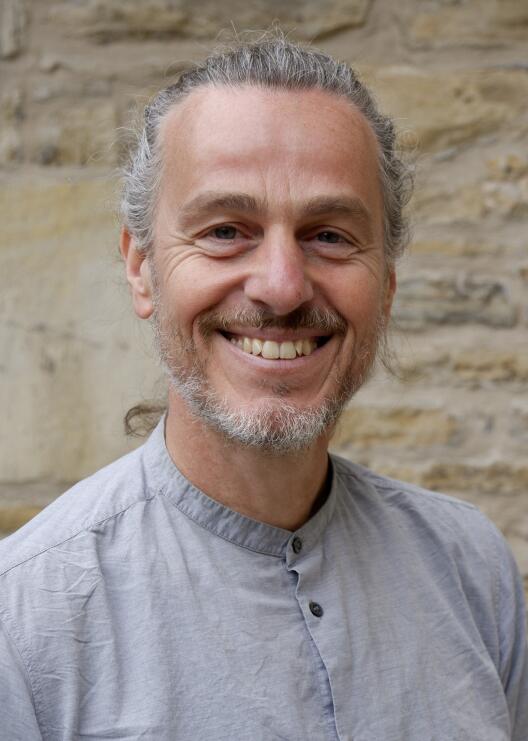
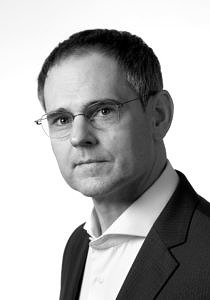
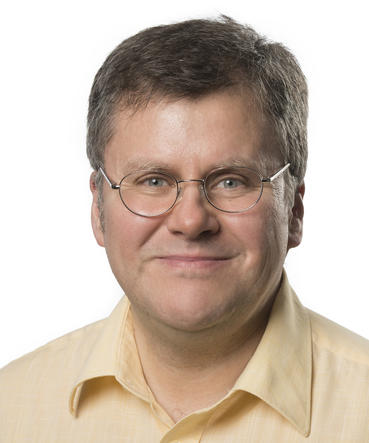
Jan Alber is a Professor of Modern English and American Literature at the Department of English and American Literature and Culture, Justus Liebig University Giessen . He previously held positions at RWTH Aachen, Aarhus University, TU Darmstadt, and the University of Freiburg. His work bridges narrative theory, cognitive studies, and postcolonial literature, with a focus on unnatural narratives and empirical approaches to literary analysis. Fields of Interest: Unnatural Narratology, Cognitive Literary Studies, Climate Fiction, Postcolonial Literature Key Themes: Storyworlds, Ideology, Empirical Methods, Narrative Beginnings Alber's recent publications explore narrative theory's intersections with cognition and ideology, including analyses of digital post-postmodernist novels and climate change narratives. His empirical studies examine how readers process experimental narratives, particularly unnatural narrators and metaleptic structures. He has received prestigious awards such as the Habilitation Prize from the German Association of Anglists (2013) and the FRIAS junior group competition (2008). His research is funded by the AHRC, DFG, and Alexander von Humboldt Foundation, notably supporting interdisciplinary work on post-truth political narratives and Ukrainian scholars. Alber co-founded the Aachen Center for Cognitive and Empirical Literary Studies and serves as President of the International Society for the Study of Narrative. He organizes international workshops on cognitive narratology and teaches courses spanning literary history, theory, and postmodern fiction.
Hakan Özkan is a Privatdozent and Research Associate at the Institute of Arabic and Islamic Studies, Department of Middle Eastern Studies, University of Münster, where he has been working since 2007 in various capacities. He was awarded his Venia Legendi (Habilitation) in November 2019 for Arabic and Islamic Studies with his thesis 'History of Eastern Zajal – Dialectal Arabic Verse Poetry from the East of the Arab World.' His academic background includes a Franco-German doctorate completed in 2006 from Université de Provence and University of Cologne, supervised by Claude Audebert and Monika Gronke, with external reviewers including Wolfhart P. Heinrichs from Harvard University. His educational background includes: 2019: Venia Legendi for Arabic and Islamic Studies, University of Münster 2002-2006: Franco-German Doctorate in Arabic Studies and Narratology (Université de Provence and University of Cologne) 1995-2000: Master of Arts in Islamic Studies, Oriental Languages and Literatures (University of Cologne) 2000-2001: Course program in Modern Standard Arabic and Syrian-Lebanese dialect at Institut Français d'Etudes Arabes de Damas Özkan's research focuses on premodern Arabic dialect poetry, particularly zajal and muwashshaḥ forms, narratology, prosimeter literature, socio-literary history, and diachronic dialectology. His interdisciplinary approach bridges linguistic analysis with literary criticism, examining how dialectal forms evolved within Arabic literary traditions across different historical periods and geographical regions. He has conducted extensive field research in Arab countries including Syria, Egypt, Lebanon, Tunisia, and Morocco, with particular emphasis on the historical development of poetic forms from the Mamluk through Ottoman periods. His publication history demonstrates consistent scholarly contributions to Arabic literary studies, with his 2020 monograph 'History of Eastern Zajal' representing a landmark study in the field. His recent work has expanded to include analyses of religious poetry praising the Prophet Muhammad in zajal form, wine poetry in Arabic literary traditions, and the integration of dialects into Arabic language teaching methodologies. His scholarly output spans monographs, critical editions, encyclopedia entries, journal articles, and book chapters across multiple languages including German, English, French, and Turkish. Among his academic recognitions: 2018: Second place on shortlist for W2 Professorship for Arabic Language and Translation Science, University of Leipzig 2008: Offered Junior Professorship at American University in Cairo (declined) 2007: Second place on shortlist for maître de conférence position at University of Nancy 2007: Official Qualification from National University Council (CNU) for positions as maître de conférence at French universities Özkan has served on numerous academic committees, including appointment committees for professorships in Sinology and Arabic and Islamic Studies at the University of Münster. He has been a juror for the Sheikh Hamad Award for Translation and International Understanding in Doha and has served on the steering committee for the 'Translation for Dialogue' program of the Anna Lindh Foundation. His editorial work includes reviewing for Mamluk Studies Review, Die Welt des Islams, and Middle Eastern Literatures since 2012. His scholarly activities extend to linguistic fieldwork on Pontic Greek dialects in Turkey and organizing significant academic conferences including 'The Race Course of Literature – An-Nawāǧī and His Contemporaries' in 2018 at the University of Münster. His multilingual capabilities (Arabic, Turkish, German, French, English, Persian, Ottoman Turkish, and knowledge of Modern Greek) enable his comparative work across multiple linguistic and cultural traditions in the Mediterranean region.
Harald Zapf is a Senior Lecturer in the Department of English and American Studies at Friedrich-Alexander University Erlangen-Nürnberg (FAU), specializing in American literature and cultural studies. Affiliated with the Faculty of Philosophy and Theology, he focuses on postcolonial theory, hybridity, and multiculturalism in the Americas. 2002 Lilli Bechmann Rahn Doctoral Prize 2001 Bavarian American Academy Dissertation Prize His research explores intersections of ethnicity, language, and performance in contemporary American poetry, particularly in multilingual and transnational contexts. He has collaborated extensively with Wolfgang Binder and Klaus Lösch on publications examining cultural encounters and hybrid identities. Zapf’s publications span monographs, edited volumes, and critical articles, with a strong emphasis on authors like Ishmael Reed and theoretical frameworks such as rooted cosmopolitanism and deconstruction. His work bridges literary analysis with sociocultural and philosophical discourses.
Joachim Weickert is a Professor of Mathematics and Computer Science at Saarland University where he heads the Mathematical Image Analysis Group since 2001. He received his diploma and Ph.D. in mathematics from the University of Kaiserslautern (1991, 1996), and a habilitation degree in computer science from the University of Mannheim (2001). Prior to his current position, he worked as a research assistant at the University of Kaiserslautern, as a post-doctoral researcher at the universities of Utrecht and Copenhagen, and as an assistant professor at the University of Mannheim. His research focuses on image processing, computer vision, and scientific computing, with special emphasis on techniques based on partial differential equations, variational principles, wavelets, morphological and nonlocal methods, as well as neuroexplicit approaches. He has developed mathematical models and efficient numerical algorithms for image restoration, enhancement, segmentation, compression, optic flow computation, stereo reconstruction, shape from shading, and signal processing methods for tensor fields. These ideas have been successfully applied in industry, biomedical image analysis, and other fields. Analysis of his recent publications reveals a strong trend toward combining traditional PDE-based methods with modern deep learning approaches, particularly in the areas of image inpainting and compression. His work increasingly explores the connections between numerical algorithms for partial differential equations and neural network architectures, demonstrating how mathematical foundations can inform cutting-edge AI techniques while maintaining strong theoretical guarantees. Gottfried Wilhelm Leibniz Prize (2010), considered the most important research award in Germany ERC Advanced Grant (2017) for "Inpainting-based Compression of Visual Data" Elected member of Academia Europaea - The Academy of Europe Jan Koenderink Prize for Fundamental Contributions in Computer Vision (2014) Multiple DAGM Prizes and Best Paper Awards throughout his career AAIA Fellow (2021) and Highly Ranked Scholar (2024) distinctions Professor Weickert has supervised over 250 bachelor's and master's theses and initiated the Master Programme in Visual Computing at Saarland University, the first of its kind in Germany taught in English. He has established numerous interdisciplinary collaborations with colleagues from medicine, bioinformatics, pharmacy, physics, mechatronics, and mechanical engineering. As Principal Investigator for Visual Computing within the Multimodal Computing and Interaction Cluster of Excellence, and former dean of the Faculty of Mathematics and Computer Science (2008-2010), he has played a significant leadership role in advancing visual computing research and education. He heads the Mathematical Image Analysis Group, which has been at the forefront of developing mathematical methods for image analysis. The group maintains strong connections with both theoretical mathematics and practical applications, bridging the gap between fundamental research and real-world implementation across various domains including medical imaging, industrial inspection, and multimedia processing.
Zhao Baisheng is a Professor and Chair of the Institute of World Literature at Peking University, where he also serves as Secretary General for Cross-Cultural Studies. During Summer Semester 2005, he was a Guest Professor at Johannes Gutenberg University Mainz, affiliated with the Department of English and Linguistics. His research focuses on cross-cultural dynamics, East-West interactions, and global literary frameworks. He led a seminar titled "Cross-culturalism – Toward a World Literature and Culture" , examining themes like immigration, colonization, and globalization through works by Defoe, Eliot, Hu Shi, and others. His lecture series explored topics such as Westernization in 20th-century China, the role of Marxism in Chinese contexts, and representations of China in media. Zhao’s academic contributions include Theory of Auto/Biography (2003), analyzing auto/biographical forms in cultural contexts. His work bridges literary theory with interdisciplinary cross-cultural studies.
Katrin Bromber is a German Researcher at the Centre for Modern Oriental Studies in Berlin, where she has led the research group "Progress and its Discontents: Ideas, Practices, Materiality" since 2014. Her career spans senior research roles at ZMO and academic teaching positions at the University of Vienna. Nationality: German. Language skills: Native German, fluent English/Swahili, moderate Amharic, good reading knowledge in French/Russian, basic Tigrinya. Habilitation (2009–): African Studies, University of Vienna PhD (1993): African Linguistics, University of Leipzig MA (1988): Swahili Studies, University of Leipzig Katrin Bromber's research interrogates intersections of body politics , sports history , Swahili linguistics , and Ethiopian modernity . Her work traces how physical culture, media representation, and colonial/imperial narratives shape national identities across Africa and Asia. Current focus: "Progress" as contested concept in Ethiopian and Gulf urbanism. Key article trends reflect her translocal methodology: 2017 studies on Ethiopian stadiums and fitness culture ; 2014-2013 publications analyzing East African military press , sports branding in the Gulf , and Swahili poetry ; 2007-2000 works on colonial linguistic politics , Indian Ocean slavery , and German colonial Swahili promotion . Recurring sub-fields: body as political text, translocal modernity, media historiography. Scientific Awards: Research Grant of the Berlin City Council (1999-2000): Gendered Slavery study Service to the Scientific Community: Chairwoman, Academic Association for Horn of Africa Studies (2012–) Editorial Advisory Board - Stichproben. Vienna Journal of African Studies (2015–) Editorial Advisory Board - Studies of Department of African Languages and Cultures (2015–) Teaching Experience: Textlinguistics, Mediacommunication, African Linguistics, Swahili (elementary/advanced), Swahili Literature, Swahili in Arabic Script at Leipzig, Humboldt-Berlin, Free Berlin, and Vienna universities Anthropology of the Body at Mekelle University Summer School Field Research: Tanzania (1993-2003): Swahili Poetry, Intellectual History Kenya (2005): Indian Ocean WW2 UAE/Bahrain (2009): Sports and Body Cultures Ethiopia (2009-2015): Sports, Body Politics
Rhenish Friedrich Wilhelm University of BonnGermany
Prof. Robert Fuchs holds the Frommann Professorship of Applied English Linguistics at the University of Bonn, leading the Chair of Bonn Applied English Linguistics (BAEL) within the Department of English, American and Celtic Studies. His research focuses on World Englishes, corpus linguistics, sociolinguistics, and the impact of artificial intelligence on linguistic analysis. He actively supervises PhD students in topics aligned with his research group's interests, emphasizing empirical work and data science. Recent research explores language change in varieties like Hong Kong English, Trinidadian prosody, and intensifier usage across cultures. Fuchs frequently presents at international conferences, including ISLE, ICAME, and Sociolinguistics Symposium, and publishes extensively in journals like World Englishes and Language and Speech . His teaching includes advanced courses on corpus linguistics and language in culture, with a focus on climate change discourse analysis. He maintains an active academic presence through ResearchGate, Academia.edu, and LinkedIn. Research Interests: Fuchs investigates sociolinguistic variation, AI applications in linguistics, and the structural features of postcolonial Englishes. His work addresses topics such as vowel mergers in Hong Kong English, lexical stress perception in Indian English, and the role of gender in language use. He also explores diachronic changes in aspects like stative progressives and the perfect-past alternation across Asian Englishes. Advising & Grants: Fuchs oversees PhD student recruitment through research associate positions and self-funded scholarships, prioritizing applicants with strong empirical and analytical skills. His funded projects include studies on pandemic discourse (DisCOVIndUK) and linguistic trends in Caribbean English. His lab, BAEL, collaborates internationally, with ongoing work on Trinidadian prosody and Northeast Indian linguistic ecology. Labs/Teams: The Bonn Applied English Linguistics (BAEL) group, part of the University of Bonn's IAAK institute, focuses on cutting-edge research in global Englishes and computational linguistics, hosting international workshops and fostering interdisciplinary collaboration.
Prof. Dr. Jakob Leimgruber is Professor of English Linguistics at the University of Regensburg since 2022, where he is affiliated with the Department of English and American Studies within the Faculty of Languages, Literature, and Cultures. Previously, he served as Substitute Professor at the University of Freiburg (2020-2022) and Lecturer at the University of Basel (2018-2022). His academic journey includes a Habilitation in English Philology from the University of Freiburg (2018), a DPhil in English Language from the University of Oxford (2009), and a Licence ès lettres in English Linguistics from the University of Fribourg (2005). Leimgruber's research centers on World Englishes with particular focus on East and Southeast Asia, sociolinguistics, language planning and policy, linguistic landscapes, language contact phenomena, language variation and change, indexicality, and authenticity. His work employs empirical approaches including corpus linguistics, fieldwork, and eye-tracking methodologies to investigate multilingual contexts across Singapore, Montreal, Taiwan, and the UAE. He has made significant contributions to understanding Singapore English, linguistic landscapes in multilingual cities, and language variation in postcolonial contexts. His publication record demonstrates consistent research output across multiple high-impact journals in linguistics, with a strong focus on empirical studies of language variation in specific contexts. Recent work shows increased attention to East Asian Englishes beyond Singapore, including Taiwan, and expanding investigations into the linguistic landscapes of global cities like Dubai. His research often employs collaborative approaches with international scholars across multiple institutions. Leimgruber has been active in academic service through numerous conference presentations including invited talks at institutions worldwide, participation in research workshops, and contributions to edited volumes on World Englishes and multilingual cities. His work bridges theoretical linguistics with practical applications in language policy and education. As an academic leader, Leimgruber has directed research projects examining multilingualism in global contexts, with particular attention to the role of English in shaping linguistic landscapes and identity construction. His recent work has increasingly focused on comparative approaches across different multilingual settings, examining common patterns and context-specific variations in how English functions in diverse sociolinguistic environments.
Christine Gerhardt is a Full Professor of American Literature and Culture at the University of Bamberg, Faculty of Humanities and Cultural Studies, Department of English and American Studies. She has held this position since October 2010 after serving as Director of the German-American Institute / Carl Schurz House in Freiburg (2008-2010) and as Acting Professor for North American Literature at the University of Freiburg (2008). She declined a W3 professorship at the University of Augsburg in 2017. Her research focuses on 19th and 20th/21st-Century American Literature with specializations in Ecocriticism, Literature of Migration and Mobility, Walt Whitman and Emily Dickinson studies, African American Literature, and Literature of the American South. Her recent publications demonstrate a strong engagement with environmental imagination, mobility studies, and the intersection of nature writing with cultural history. She has edited significant works including The American Novel of the Nineteenth Century (2017) and co-edited the special issue Environmental Imagination on the Move (2017). Professor Gerhardt has received numerous honors including the 2015 CHOICE Award for A Place for Humility: Whitman, Dickinson, and the Natural World and the Harris Distinguished Professorship at Dartmouth College (2015). She holds memberships in several professional associations including the Emily Dickinson International Society, Transnational Walt Whitman Association, and American Studies Association. Her teaching portfolio includes courses on American Literature I & II, Baldwin, The American Civil War, Presidential Elections, Walt Whitman, Toni Morrison, Herman Melville's Moby-Dick , Emily Dickinson, and various seminars on nature, environment, and contemporary American literature. She has organized numerous conferences including the International Conference on 'The Environment and Human Migration' (2016) and the Symposium on 'Nature – Mobility – Literature' (2014).
Dr. Silvana Deilen is a Researcher at the Institute for Translation Studies & Technical Communication within the Faculty of Language and Information Sciences at the University of Hildesheim. She joined the university in 2023 after working as a Research Associate at Johannes Gutenberg University Mainz from 2018-2024. Her primary research focus centers on accessible communication, particularly in the areas of Easy Language and Plain Language translation, with special emphasis on cognitive aspects of translation processes and AI-assisted translation technologies. Dr. Deilen earned her B.A. in Multilingual Communication from Cologne University of Applied Sciences (2012-2015), followed by an M.A. in Specialized Translation from the same institution (2015-2018). She completed her doctoral studies (Dr. phil.) in Translation Studies at Johannes Gutenberg University Mainz (2018-2021) with summa cum laude distinction, supervised by Prof. Dr. Silvia Hansen-Schirra and Prof. Dr. Arne Nagels. Her research interests span multiple interconnected domains within translation and communication accessibility. A significant portion of her work examines the cognitive processing of compound words in Easy Language, utilizing eye-tracking methodologies to investigate how visual segmentation affects reading behavior and cognitive load. She has pioneered research on AI-assisted translation for health communication, particularly focusing on how large language models can support the creation of accessible health information. Her work bridges theoretical translation studies with practical applications in healthcare, government communication, and digital accessibility. Dr. Deilen's publication record reveals a clear trajectory toward increasingly sophisticated integration of technology and accessibility. Her recent work shows strong emphasis on evaluating AI systems like ChatGPT for translation tasks, developing editorial workflows for AI-assisted translation of health information, and investigating cognitive aspects of compound translation. The interdisciplinary nature of her research connects linguistics, cognitive science, health communication, and artificial intelligence, demonstrating how translation studies can address real-world accessibility challenges. 2014 & 2016: PROMOS Scholarships 2018-2021: Doctoral Scholarship from Gutenberg Young Researchers College 2020: Best Student Paper Award at Swiss Conference on Barrier-free Communication 2023: Award for Outstanding Dissertation from Johannes Gutenberg University Mainz 2023: Multiple research grants from University of Hildesheim, Wort & Bild Verlag, and Niedersachsen Zukunftsdiskurse 2025: DAAD Postdoctoral Research Grant Dr. Deilen actively collaborates on significant research projects including the KI-GesKom project (AI-Supported Health Communication in Plain Language), which receives funding from the state of Niedersachsen. She works closely with Prof. Dr. Ekaterina Lapshinova-Koltunski, Prof. Dr. Christiane Maaß, and Sergio Hernández Garrido as part of the Research Center for Easy Language. Her work with the Apotheken Umschau demonstrates practical application of research, translating health information into accessible formats for people with communication limitations. Dr. Deilen also contributes to the academic community as a program chair and scientific committee member for international conferences including UCCTS 2025 and Translation in Transition 2024.
Dr. Fabian Baumann is a historian specializing in Eastern European history, particularly nationalism and empire in Russia, Ukraine, and East Central Europe. He holds a position as Postdoctoral Research Fellow at Heidelberg University's Karl Jaspers Centre and previously held fellowships at institutions including the University of Chicago and the University of Vienna. His research emphasizes the agency of individuals in shaping national identities, as seen in his award-winning monograph Dynasty Divided , which examines the Shul’gin family’s divergent national allegiances. Education: PhD in East European History (University of Basel, 2020) M.Phil in Slavonic Studies (University of Oxford, 2016) BA in Russian and English Language (University of Geneva, 2012) Research Interests: His work explores the construction of national identities beyond ethnic determinism, focusing on the interplay of state-building, loyalty, and dissent. Current projects include the prosecution of state enemies in interwar Czechoslovakia and co-editing the Handbook of Ukrainian History (Oxford UP, 2028). Awards: 2024 W. Bruce Lincoln Book Prize 2025 Alexander Nove Prize Grants and Fellowships: Recipient of Swiss National Science Foundation (SNSF) grants, including Postdoc.Mobility fellowships at the University of Chicago and RECET Vienna. Labs/Teams: Active in the Karl Jaspers Centre and collaborative projects with the RECET research group.
Benjamin Kohlmann serves as Professor of English Literature and Culture at the University of Regensburg, where he has held a full professorship since November 2020. Previously, he was Assistant/Associate Professor at the University of Freiburg (2011-2019) and held visiting positions at Columbia University, Cambridge University, UC Davis, and Queen Mary University of London. An elected member of Academia Europaea and the International Association of University Professors of English, Kohlmann maintains an active international research profile with current visiting fellowships at Clare Hall, Cambridge (2024-25). Education Habilitation in English Literature, University of Freiburg (2011-2017) PhD in English Literature, Lincoln College, University of Oxford (2007-2010) MA in Philosophy/English Literature, University of Freiburg and Yale University (2004-2007) Undergraduate Studies in Philosophy/English Literature, University of Freiburg (2001-2004) Research Focus Professor Kohlmann specializes in British literature and culture from 1860 to the present, with particular expertise in the relationship between literature and politics. His scholarship explores the literary and cultural histories of socialism and communism, politicized modernism of the interwar years, the prehistory of the welfare state (c.1860-1940), literary histories of populism, and global approaches to literature. His theoretical work examines how literature conceptualizes political structures and revolutionary events, bridging historical analysis with contemporary theoretical concerns. Publication Trends Kohlmann's research trajectory reveals a consistent engagement with literature's political dimensions across historical periods. Early work focused on modernist political aesthetics, particularly in the 1930s, as seen in his monograph Committed Styles (2014). Recent scholarship demonstrates increasing attention to global revolutionary narratives and the bildungsroman as political form, culminating in his British Literature and the Life of Institutions (2021) and the forthcoming Revolutionary Subjects . His most recent publications show sophisticated integration of theoretical frameworks with historical analysis, particularly in examining how literature processes revolutionary events and conceptualizes institutional frameworks. The 2023-2025 publications reveal heightened focus on contemporary political formations while maintaining historical depth. Scientific Recognition Heisenberg Programme grant from German Research Foundation (2020-2025) Heinz Maier-Leibnitz Prize (2018) Feodor Lynen Fellowship from Alexander von Humboldt Foundation Elected Life Member of Clare Hall, University of Cambridge Member of Academia Europaea Academic Leadership Professor Kohlmann has supervised numerous PhD theses including Nikolina Hatton's award-winning work on decommodified things in 18th-19th century novels and current projects examining democratic essay forms and literary histories of collective resistance. He serves on editorial boards for Critical Quarterly and CUSP , co-edits the Oxford UP book series "Literature and Politics," and has organized multiple international conferences on literature and political thought. His research leadership includes directing the "Writing Collectivity" research group at Regensburg and coordinating international collaborations through the Heisenberg grant. Research Environment At Regensburg, Kohlmann contributes to a vibrant research environment within the Department of English and American Studies, collaborating on interdisciplinary projects examining literature's relationship to political economy and social structures. His "Thinking Revolution" project connects with global scholarly networks through visiting fellowships at Cambridge and other institutions. The department's research focus on British literary history benefits from Kohlmann's leadership in organizing international conferences and securing substantial research funding, creating a dynamic environment for graduate students and junior researchers working at the intersection of literature and political thought.
Dr. Jenny Benham is a Reader in Medieval History and Co-director of the Centre for Medieval Studies at Cardiff University. Her research focuses on medieval diplomacy, international law, and espionage, with a particular emphasis on treaty negotiations and legal practices. She holds fellowships from the Royal Historical Society and the Higher Education Academy. Education: BA, MA, and PhD in Medieval History from the University of East Anglia. Professional roles include project officer for the AHRC-funded 'Early English Laws' and Research Associate at the University of Copenhagen's Centre for Studies of Legal Culture. Research interests span medieval international law, espionage networks, and the role of treaties in conflict resolution. Notable works include International Law in Europe, 700-1200 (2022) and Peacemaking in the Middle Ages (2011). Awards include a Leverhulme Trust Research Fellowship (2023-24) and a Senior Fellowship at the Freiburg Institute for Advanced Studies (2024-25). She leads collaborative projects like 'Little Birds: Spies and Espionage in the Medieval World' and the international 'Voices of Law' network. Grants and collaborations include funding from the Leverhulme Trust and partnerships with institutions in Scandinavia and the Netherlands. Her current projects explore medieval espionage and the legal frameworks of early medieval diplomacy.
Wolfram Drews is a Professor of Medieval History specializing in early and high middle ages, with a focus on transcultural history at Westfälische Wilhelms-Universität Münster since March 2011. He is actively involved in the Cluster of Excellence as both a Principal Investigator and member of the Board of Directors. His research spans multiple fields including cultural history of politics, world and global history, and strategies of integration between Christian and Islamic societies in the medieval period. His academic background includes: Habilitation at the University of Cologne (2007) PhD from Freie Universität Berlin (2000) MA in History, Jewish Studies and Theology from Freie Universität Berlin (1998) MA (Diploma) in English and Spanish from Humboldt-Universität Berlin (1991) Drews' research primarily explores the complex interrelationships between Christian, Jewish, and Islamic societies during the medieval period, with particular emphasis on Spain. His work examines how political power was constructed and maintained across cultural boundaries, how religious identities were negotiated, and how knowledge systems interacted across the Mediterranean world. He has developed innovative approaches to transcultural history that move beyond traditional national and religious frameworks to examine the fluid interactions between different medieval societies. His scholarship reveals how medieval societies constantly redefined their boundaries through processes of entanglement, conflict, and coexistence. His recent publications demonstrate a consistent focus on religious interactions, political legitimacy, and cultural entanglements in medieval Spain and the broader Mediterranean world. Drews frequently examines how religious communities negotiated their identities and political positions within pluralistic societies, with particular attention to Jewish communities in Christian and Islamic contexts. His work shows increasing engagement with global and comparative frameworks for understanding medieval political and religious dynamics. Drews has received significant recognition for his scholarly contributions: Member of Academia Europaea (2018) Dumbarton Oaks Fellowship (2012) Friedrich-Meinecke-Preis (2001) DAAD Scholarship (1994) TEMPUS Scholarship (1991) As an academic leader, Drews serves as executive director of the Institute of Early Medieval Studies and editor of the journal "Frühmittelalterliche Studien." He has supervised doctoral students including Franziska Kleybolte (2022) and Nadeem Khan (2017), focusing on topics related to religious minorities and political structures in medieval Spain. His leadership extends to various research initiatives including the Excellence Cluster "Religion und Politik" and the research group "Xenokratie vor Ort." Drews leads significant research projects including "Discourses of Purity and Purification in Medieval Spain" and previously directed "Monarchical Rule and Religious Community-Building" until 2018. His work is situated within several theoretical frameworks examining differentiation, conflict, ambiguity, decision-making, and migration within medieval transcultural contexts.
Prof. Dr. Susanne Gruß is Chair of English Literature at the Department of English and American Studies, Otto-Friedrich-University Bamberg since April 2024. Previously, she was Professor of English Literature and Culture with a focus on Gender and Queer Studies at the University of Cologne (2022-2024) and held visiting professorships at the universities of Bonn, Passau, and Frankfurt/Main. She serves as Head of Examination Board for MA English and American Studies and as representative of internationalisation at Bamberg University. Her academic background includes: M.A. in English literature, German literature, and Contemporary History from FAU Erlangen-Nürnberg (2001) Ph.D. in English literature with summa cum laude (2007), published as "The Pleasure of the Feminist Text: Reading Michèle Roberts and Angela Carter" (Rodopi/Brill 2009) Habilitation (2020) on "The Laws of Excess: Law, Literature, and the Laws of Genre in Early Modern Drama" Prof. Gruß's research spans two primary temporal domains: contemporary British literature and early modern English literature. Her specializations include gender studies and feminist theory, neo-Victorianism, Black British writing, film adaptation, and the cultural implications of the fungal world. In early modern studies, she focuses on revenge tragedy, tragicomedy, collaboration in theatre, early modern piracy, and law and literature. Across both fields, she examines popular culture, canonization, and genre formation with an interdisciplinary approach that often bridges legal studies and literary analysis. Her recent publications reveal a growing interest in fungal studies and posthumanism within literary contexts, alongside continued engagement with neo-Victorianism and early modern drama. There's a clear interdisciplinary trajectory connecting her work on law and literature with explorations of collaborative authorship across historical periods. Her scholarship demonstrates consistent attention to questions of gender, queerness, and marginalized perspectives within both contemporary and historical frameworks. Her scientific awards include: FAU-Lehrpreis für Nachwuchswissenschaftlerinnen und Nachwuchswissenschaftler (2020) Travel grant from FAU Erlangen-Nürnberg (2019) DAAD travel grant (2017) DAAD scholarship for academic year at Trinity College Dublin (1997-98) Stipendium nach dem Bayerischen Begabtenförderungsgesetz (1995-2001) Prof. Gruß actively mentors students and supervises final theses, with specific guidelines available on her Padlet page. She has served on numerous editorial boards including Zeitschrift für Anglistik und Amerikanistik and Journal for the Study of British Cultures. Her academic service extends to peer reviewing for multiple journals and participation in professional organizations such as the German Association for the Study of English and the European Society for the Study of English. At Bamberg University, she leads the Chair of English Literature, which participates in various extracurricular activities including the Book Club and the University English Drama Group. The department hosts events such as the Winter Workshop and Shakespeare productions, fostering a vibrant literary community beyond the classroom.