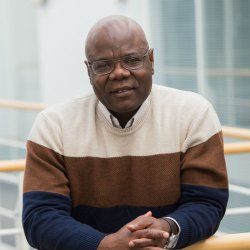
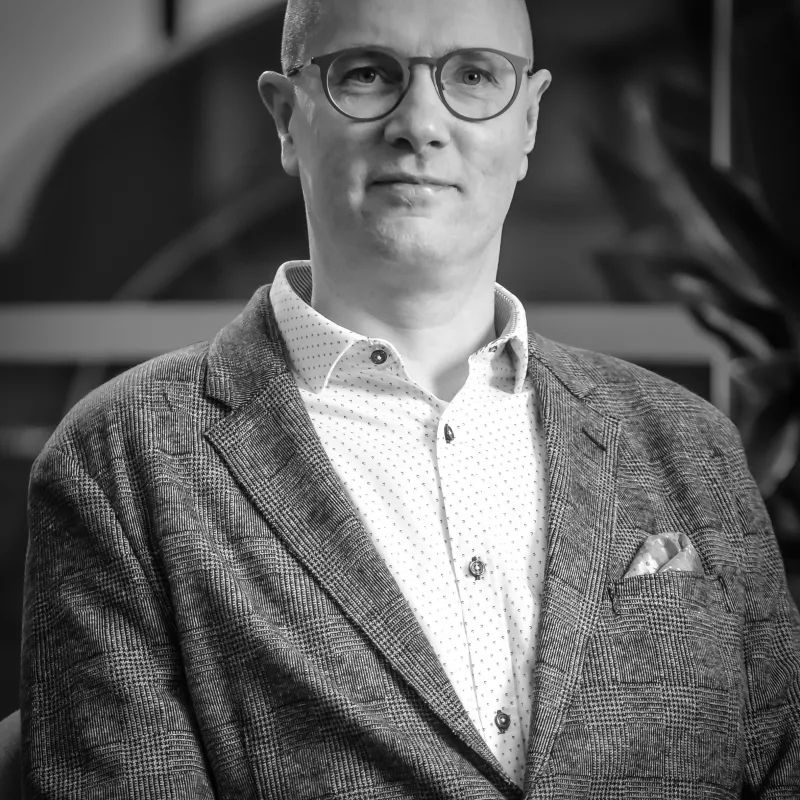
Marlon Twyman II is an Assistant Professor of Communication at the University of Southern California (USC) Annenberg School for Communication and Journalism. His expertise lies in computational social science, social networks, and digital collaboration. He merges perspectives from social sciences and STEM to study team formation, online communities, and organizational behavior in the digital age. Education: PhD in Technology and Social Behavior (dual degree in Communication Studies and Computer Science), Northwestern University MS and BS in Biomedical Engineering, Wright State University His research focuses on how teams and organizations form in collaborative platforms, with applications to healthcare quality, IT implementation, and policy. Supported by grants from NSF, NASA, and the Air Force Research Lab, his work has been published in journals like New Media & Society , Journal of Computer-Mediated Communication , and Social Networks . Awards: NSF CISE Research Initiation Initiative Grant (2021) USC Provost Assistant Professor Fellowship (2019) He teaches courses such as Understanding Social Science Research and Organizational Communication and has contributed to media discussions on topics like workplace dynamics and digital equity. His research lab focuses on advancing computational methods for studying networked collaboration.
Professor Samuel Aryee is a Professor of Organisational Behaviour and Human Resource Management at Surrey Business School, University of Surrey. He joined the institution in November 2016 and currently serves as Director of the Doctoral Programme. Prior to joining Surrey, Professor Aryee held faculty positions at the National University of Singapore, Hong Kong Baptist University, Aston University, and King's College London, where he also served as Director of the Doctoral Programme at both Aston Business School and KCL's School of Management and Business. Professor Aryee earned his PhD and MA from McMaster University and BA (Hons) from University of Ghana, Legon. His extensive academic career spans multiple continents, reflecting his expertise in cross-cultural organizational behavior. Professor Aryee's research focuses on several key areas in organizational behavior and human resource management. His primary interests include: Strategic Human Resource Management and High-Performance Work Systems Services Management and Customer Service Performance Organizational Justice, Workplace Trust, and Employee Voice Work-Family Interface and Family Supportive Work Environments Workplace Safety and Employee Well-being Cross-cultural organizational behavior and leadership His research examines these topics through various theoretical lenses including self-determination theory, social exchange theory, conservation of resources theory, and psychological ownership frameworks. Professor Aryee's work often investigates the mediating and moderating mechanisms that explain how organizational practices and leadership behaviors influence employee attitudes, behaviors, and performance outcomes. Professor Aryee's extensive publication record demonstrates a consistent focus on understanding the links between human resource practices, leadership, and performance outcomes at multiple levels of analysis. His research frequently examines how psychological mechanisms such as need satisfaction, psychological empowerment, and psychological ownership mediate the relationships between organizational practices and outcomes. His work spans various industries including banking, hospitality, and public service sectors across multiple countries. Professor Aryee has served as Associate Editor for the Journal of Occupational and Organizational Psychology and Human Relations, and on the editorial boards of prestigious journals including Academy of Management Journal, Journal of Applied Psychology, Human Relations, Journal of Management Studies, and Management and Organization Review. As Director of the Doctoral Programme at Surrey Business School, Professor Aryee plays a significant role in mentoring and guiding PhD students through their research journey, contributing to the next generation of organizational scholars.
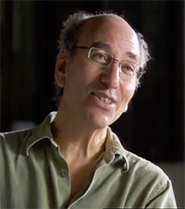
David Kirsh is a Professor in the Department of Cognitive Science at the University of California, San Diego. He holds a D.Phil from Oxford University and completed post-doctoral work at MIT's AI Lab. His research focuses on distributed cognition, embodied cognition, and human-computer interaction, with specific interests in how environments shape cognitive processes and how physical objects become tools for thought. Key research areas include: Theory of Interaction: Examines how people adapt environments to simplify cognitive tasks Environment Design: Develops principles for designing collaborative spaces and smart rooms Information Architecture: Designs large-scale web systems and information spaces Dr. Kirsh directs the Interactive Cognition Lab and co-directs the Arthur C. Clarke Center for Human Imagination. His work bridges cognitive science with practical applications in workplace design, e-learning, and human-computer interaction.
Adam Alter is a Professor of Marketing at New York University’s Leonard N. Stern School of Business, with an affiliated appointment in the Psychology Department. He joined Stern in 2009 and is known for research on judgment, decision-making, and social psychology, particularly focusing on how environmental cues influence behavior. His work bridges marketing and psychology, addressing topics like behavioral addictions and cognitive biases. Alter is the author of best-selling books including Irresistible (2017) and Drunk Tank Pink (2013), which explore hidden forces shaping human behavior and the rise of addictive technologies. Education : Ph.D. in Psychology, Princeton University (2009) M.A. in Psychology, Princeton University (2006) B.S. (Honors Class 1, University Medal) in Psychology, University of New South Wales (2004) Awards : Society of Judgment and Decision Making Runner Up, Hillel Einhorn Young Investigator Award (2010) Charlotte Elizabeth Procter Honorific Dissertation Fellowship Woodrow Wilson Society of Scholars Fellowship His research interests include consumer behavior, cultural psychology, and fluency/metacognition. Alter’s work has been featured in major media outlets like New York Times , Atlantic , and NPR, and he has advised companies such as Google and Microsoft. He teaches courses like Behavioral Applications in Marketing (Ph.D. seminar) and focuses on translating academic insights into practical business strategies. Alter’s publications span over 20 years, addressing topics like cognitive disfluency, exceptional expenses, and moral decision-making under financial strain. His interdisciplinary approach highlights the interplay between individual psychology and societal trends, with a focus on modern challenges like tech addiction and consumer behavior.
Prof. Dr. Anja Schulze is an Associate Professor for Mobility and Digital Innovation Management at the University of Zurich's Department of Business Administration, within the Faculty of Business, Economics and Informatics. She holds a DIZH Bridge Professorship, strengthening ties between UZH and ZHAW in research collaboration. Her research focuses on digital technologies' impact on organizational learning and innovation within the automotive and mobility sectors, employing both qualitative and quantitative methods. She leads the swiss Center for Automotive Research (swiss CAR) and chairs the DSI Community Mobility. Education includes a PhD from the University of St. Gallen, a habilitation at ETH Zurich, and an SNSF Professorship. Her work appears in top journals like the Strategic Management Journal and has been featured in media such as SRF Tagesschau. Key projects include the Automobil Industrie Studie and initiatives promoting sustainable mobility ecosystems. Research trends emphasize innovation dynamics in evolving industries, strategic capabilities, and cross-country analyses. Awards include the prestigious Swiss National Science Foundation Professorship. She advises on innovation strategies and collaborates widely to address challenges in technology-based industries.
Dr. Linda Buchan is an Associate Professor of Organisational Behaviour and Associate Executive Dean (Accreditation) at Edinburgh Business School, Heriot Watt University. She holds a PhD in Work, Employment and Organisation from the University of Strathclyde (2015-2019) and has over 25 years of HR experience in private sector roles at companies like Standard Life and Boots the Chemist before transitioning to academia in 2014. Her research challenges traditional leadership concepts, redefining leadership as a communicative process between individuals. She focuses on topics such as collaborative leadership, organizational change, and leadership development beyond individual-centric models. Key professional roles include overseeing AACSB and EFMD accreditations, leading MBA and MSc HRM programmes, and serving as external examiner for academic institutions. Teaching specializations include post-experience education (MBA/MSc), with courses centered on linking theoretical concepts to workplace realities. External activities include consultancy roles in change management and leadership development, alongside editorial work for journals like Project Management Journal .
Thecla Schiphorst is Professor and Director of the School of Interactive Arts and Technology at Simon Fraser University. Her research bridges dance, computing, and embodied interaction, focusing on movement knowledge representation, wearable technologies, and aesthetics of interaction. With interdisciplinary MA (Dance and Computing Science) from SFU and PhD from University of Plymouth, she applies somatic models like Laban Movement Analysis to technology design. Schiphorst co-developed Life Forms, the choreographic composition tool used by Merce Cunningham for his creations (1990-2005). Her work expands embodied theory applications in HCI through research in tangible interfaces, natural interaction, and experience design. She teaches courses exploring artificial intelligence applications and ethical challenges.
Dr. Haiying Kang is a Senior Lecturer in Human Resources Management (HRM) at RMIT University's School of Management, located at the City Campus in Melbourne, Australia. She serves as the HDR Coordinator for the School and Co-Theme Leader (Multicultural Inclusion) at the Centre for Organisations and Social Change (COSC). Her research focuses on HRM and International HRM, emphasizing workgroup interactions, mentoring, career management, employee health/wellbeing, global work design, cross-cultural dynamics, and expatriate management. She has authored a book on South Korean multinational enterprises' IHRM practices and contributed to top-tier journals such as Human Resource Management and International Business Review . Dr. Kang holds a PhD in HRM from the University of South Australia, alongside degrees from the University of Adelaide. She has secured external funding from Australian government and charitable sources, and her awards include RMIT's Dean’s Research Excellence Award and Best Book Award. She teaches International HRM and oversees HDR supervision, currently open to mentoring Master’s/PhD students and collaborating on industry projects. She also chairs academic committees and serves as an Associate Editor for Journal of Management and Organization . Educations: PhD in Human Resource Management (University of South Australia) Master of Performance Management (University of Adelaide) Bachelor of Accounting (University of Adelaide) Her research aligns with UN SDGs 3 (Good Health), 8 (Decent Work), 9 (Innovation), and 10 (Reduced Inequalities), addressing topics like workplace wellbeing, global talent management, and multicultural inclusion. Recent studies explore expatriate-local interactions, mentoring effects, and the impact of organizational policies on employee outcomes. Grants & Funding: Multiple Australian government and charitable trust grants for research projects on IHRM and expatriate management. Dr. Kang leads the COSC's Multicultural Inclusion theme, advancing inclusive organizational practices. Her lab focuses on global HR strategies and their societal impacts, with ongoing work on gamification in training and work-family enrichment through HR practices.
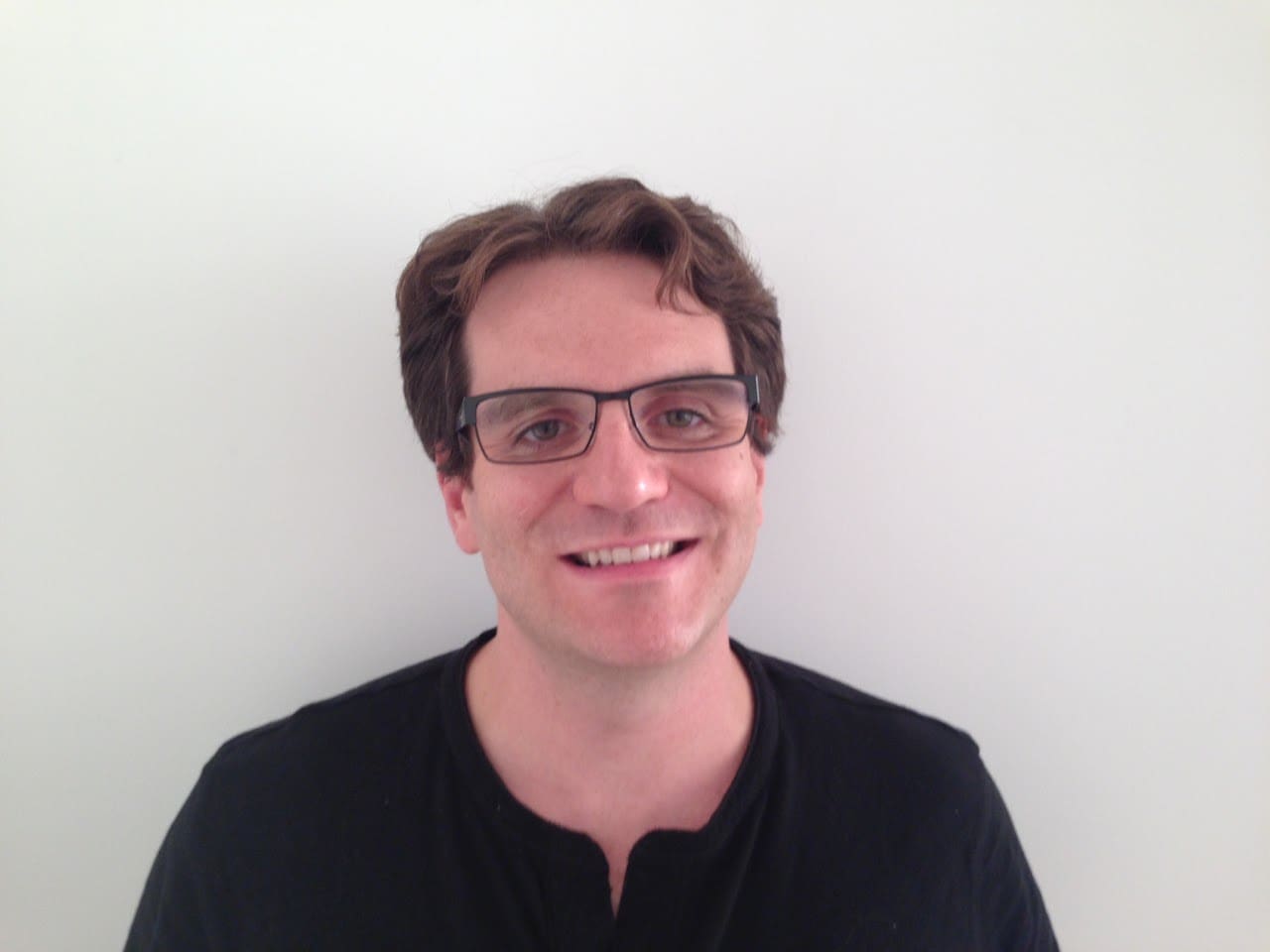
Matthew J. Wiswall is the Steven M. Kaye Professor of Economics at Johns Hopkins University and holds the David Edwin and Lucille Hartmann Davies Chair at the University of Wisconsin-Madison. He is a Visiting Research Professor at Johns Hopkins (2023-24). His research focuses on child development, education policy, labor economics, and applied econometrics. He has been funded by NSF, William T. Grant, and others, with publications in top journals like the Journal of Political Economy and Quarterly Journal of Economics. Education: PhD in Economics from UCLA (2005). Previous positions include NYU and Arizona State University. Awards include the H. I. Romnes Faculty Fellowship (2023-28) and Spencer Foundation Fellowship (2004-05). He serves as an Associate Editor for Econometrica and affiliated with NBER, Institute for Research on Poverty, and other institutes. His research explores topics such as childcare inequality, gender differences in labor preferences, and the impact of summer employment on youth. He has advised numerous PhD students and led grants totaling over $2M. Key contributions include analyzing household decisions on child development and evaluating school reforms in NYC and Madison.
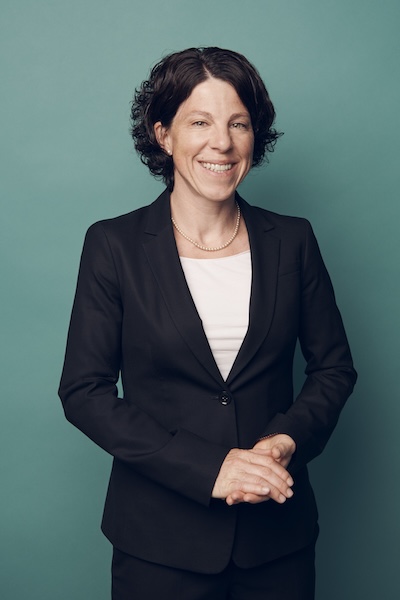
Dr. Katherine Julian is Professor of Medicine in the Division of General Internal Medicine at the University of California, San Francisco (UCSF) School of Medicine. She serves as Associate Dean for Graduate Medical Education and Designated Institutional Official, with prior leadership as Program Director for the UCSF Primary Care General Internal Medicine Residency Program. A member of the Haile T. Debas Academy of Medical Educators, her work is central to advancing medical education, equity, and residency training. Education: M.D., School of Medicine, University of California, San Francisco, 1996 Residency, Internal Medicine, University of California, San Francisco, 1999 Chief Residency, Internal Medicine, University of California, San Francisco, 2000 Diversity, Equity, and Inclusion Champion Training, University of California, 2017 Dr. Julian’s research focuses on graduate medical education, resident assessment, diversity, equity, and inclusion, and primary care training. Her work investigates systemic biases in clinical evaluations based on race, ethnicity, and gender, and explores innovative models for continuity clinics, team-based care, and faculty development. She has led and contributed to numerous studies on educational reform, interprofessional collaboration, and resident well-being. Her scholarship emphasizes health equity and the improvement of training environments through evidence-based educational practices. The 15 most recent publications reveal a strong trend in medical education research, particularly in the areas of gender and racial equity in resident assessment, clinical evaluation methodologies, and innovations in graduate medical education. Her work frequently employs qualitative and mixed-methods approaches, often in collaboration with the Gender Equity in Medicine (GEM) workgroup. There is also a consistent focus on curriculum development, faculty teaching skills, and systemic reform in internal medicine training. Scientific Awards: Faculty Excellence and Innovation Award in Graduate Medical Education, UCSF, 2019 Academic Senate Distinction in Teaching Award, UCSF, 2015 Robert H. Crede Award Excellence in Teaching, UCSF Division of General Internal Medicine, 2007 Haile T. Debas Academy of Medical Educators, UCSF School of Medicine, 2006 Dr. Julian has played a significant role in mentoring and advising through her leadership in residency programs and educational initiatives. She has been involved in numerous grants and institutional projects related to educational innovation, including the Educational Innovations Project Ambulatory Collaborative, which examined clinic design, resident satisfaction, and patient outcomes. Her work has influenced policy and practice in graduate medical education, particularly in promoting equity and inclusion. She is affiliated with the Division of General Internal Medicine and has collaborated extensively with colleagues on curriculum development, faculty development programs (e.g., SBIRT training), and longitudinal educational pathways. Her leadership as Designated Institutional Official and Associate Dean underscores her role in overseeing and shaping the broader GME enterprise at UCSF.
Lene Tanggaard Pedersen is a Professor at the Department of Communication and Psychology, Aalborg University, and former Rector of Design School Kolding (2019-2025). Her research focuses on balancing learning and performance cultures in organizations, creativity, innovation, and educational psychology. Current role: Professor in Psychology of Culture, Humanity, and Education Former Rector at Design School Kolding Visiting Scholar at UC Berkeley Member of OECD PISA Expert Group (2017-2022) Her research combines qualitative studies of organizational learning, vocational education, and creative processes, with over 545 publications and 44 projects globally. She has supervised 19 PhD students and contributed to 170+ conference presentations. Recent scientific awards include: Ridder af Dannebrog (2023) Året sveske (2020) First Folkeprofessor at Idrætshøjskolen Aarhus (2018) Gyldendal Communication Prize (2015) She actively advises public and private organizations through board positions at SMK, Nordjyske Medier, and Jysk Børneforsorg (vice-chair).
Frode Moen is an Associate Professor at the Department of Education and Lifelong Learning at the Norwegian University of Science and Technology (NTNU). His research focuses on sports psychology, athlete development, and the interplay between sleep, stress, and performance in elite athletes. He has authored influential books such as Coaching Elite Junior Athletes and Hjernekraft: Mentale prosesser og mental trening , which explore mental training and coaching methodologies. His work examines burnout prevention among coaches, the role of the coach-athlete relationship, and the effects of sleep interventions on athletic performance. Key research areas include sleep patterns in endurance athletes, the impact of stress and coping strategies during crises like the pandemic, and the efficacy of coaching education programs. Moen collaborates extensively with colleagues like Jan Arvid Haugan and Maria Hrozanova, producing studies published in journals like Frontiers in Psychology and Sports . Publications highlight his interdisciplinary approach, bridging sports science, psychology, and education. His findings contribute to optimizing athlete well-being, enhancing coaching practices, and understanding performance-related variables in competitive sports.
Mika Vanhala is an Associate Professor in the Department of Business Studies at LUT Business School, Lappeenranta University of Technology (LUT University), Finland. His academic work is centered on knowledge management, intellectual capital, human resource management, and organizational trust. Position: Associate Professor Institution: Lappeenranta University of Technology School: LUT Business School Department: Business Studies Email: Mika.Vanhala@lut.fi Dr. Vanhala's research interests lie at the intersection of organizational behavior and strategic management. He investigates how knowledge management practices, HRM strategies, and intellectual capital influence organizational performance, innovation, and employee engagement. His work often explores the role of trust—particularly impersonal trust—as a mechanism for knowledge sharing and organizational effectiveness. His recent publications reveal a strong focus on knowledge protection, innovation in SMEs, and the impact of HRM on trust and performance. He frequently collaborates with leading scholars in the field, contributing to high-impact journals across business and management disciplines. The research spans both theoretical development and empirical validation, with applications in logistics, innovation management, and digital consumer behavior. Dr. Vanhala has published extensively in top-tier journals such as Journal of Business Research , Human Resource Management Journal , and Journal of Knowledge Management . His work demonstrates a consistent trajectory in advancing the understanding of knowledge-intensive organizational processes. While no specific awards or grants are listed in the provided information, his publication record and institutional affiliation reflect a strong scholarly presence. He has contributed to both journal articles and book chapters, indicating broad academic engagement. Dr. Vanhala advises or collaborates with researchers and practitioners in the fields of innovation, HRM, and knowledge management. Although no formal students are listed, his collaborative publications suggest mentorship and research leadership roles. He is actively involved in research teams focusing on intellectual capital, organizational trust, and innovation. His work on the impersonal trust scale has contributed to measurement development in organizational studies.
Dr. Jamie Gruman is a Professor of Organizational Behavior, Senior Research Fellow, and Graduate Coordinator in the Organizational Leadership stream of the PhD in Management at the University of Guelph's Gordon S. Lang School of Business and Economics. He holds leadership roles in the Canadian Positive Psychology Association and has taught at multiple institutions, including the University of Windsor and the University of Toronto. Education: PhD (2002) from the University of Windsor, MA (1996) from Lakehead University, and BA (1994) from Concordia University. Research focuses on workplace well-being, employee engagement, and positive organizational behavior. Key interests include hope, resilience, onboarding processes, and psychological capital. He has pioneered frameworks like Socialization Resources Theory, E-socialization, and the ReNU model of recovery. His work has been featured in outlets like Time , Fast Company , and Forbes . Awards include the CBE Senior Research Fellowship (2018) and the Distinguished Professor Award (2009). His books, such as Boost: The Science of Recharging Yourself and Advanced Introduction to Employee Engagement , emphasize practical strategies for well-being. He consults Fortune 500 companies and public agencies, advocating for human-centered organizational practices. Teaches courses on leadership, organizational change, and assessment. Active in academic outreach via blogs for Psychology Today and the Huffington Post. Engages in interdisciplinary collaborations, including a leadership course in the Department of Geography, Environment, and Geomatics.
Silvia Cinque is a Lecturer in Organisation and Management at the University of Liverpool Management School , appointed in August 2024 within the Work, Organisation and Management Group. She previously held roles at SDA Bocconi School of Management as DBA Program Coordinator and Fellow of Bocconi University’s Department of Management and Technology. She currently serves as Fellow in the Leadership, Organization and Digital Technologies Area at SDA Bocconi. Educational Background: Bachelor of Arts in Political Sciences (University of Bologna) Master of Arts in Human Resources and Knowledge Management (Lancaster University) Ph.D. in Management (Nottingham University Business School) Research Interests : Silvia’s work focuses on identity dynamics, power structures, and gender inequalities within organizations. Her studies explore how individuals navigate meaning through work, particularly in creative industries like theater and comedy. She employs critical theoretical frameworks to analyze organizational practices and societal impacts. Teaching : In 2024-25, she teaches Workforce Planning, Resourcing, and Talent Management (Module Code: ULMS895). Research Output : Her work appears in top journals like Human Relations and Culture and Organization , addressing themes like embodied identity work, academic self-reflexivity, and organizational performativity. Recent studies investigate gendered power dynamics in stand-up comedy and economic precarity in theater professions. Prior Experience : Before academia, she worked as a communication manager in architecture/design and as an actress, experiences that inform her research on creative labor and organizational narratives.