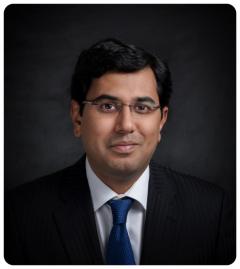
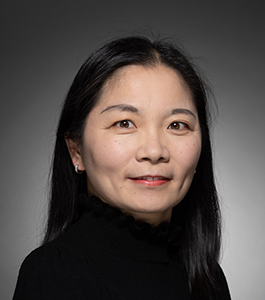
Alessandro Tundo is a Researcher in Computational Sustainability at TU Wien. His work focuses on quantum compilation, edge computing optimization, and energy-aware AI systems. Research Focus: Develops frameworks for efficient quantum compilation and energy optimization in edge computing environments. Recent projects include DynaSplit for hardware-software co-design and decentralized edge workload forecasting. Teaching: Courses on AI/ML in Climate Change and Data-intensive Computing. Supervision: Advised student research on anomaly detection in sensor systems.
Kenneth Getz is a Research Professor in the Department of Public Health and Community Medicine at Tufts University School of Medicine, based at 75 Kneeland Street in Boston, MA. He holds an MBA from Northwestern University (1991) and a BA from Brandeis University (1984). With over two decades of pioneering research, he is internationally recognized for quantifying trends in drug development efficiency, clinical trial performance, and global investigative site operations. His research examines: Phase I-IV protocol design strategies impacting development economics Clinical research operations including patient recruitment, data management, and outsourcing models Global contract research organization markets and site management practices Regulatory reforms and multi-stakeholder collaboration frameworks His 193+ publications predominantly focus on clinical trial optimization, with recent trends showing concentrated work in risk-based quality management, protocol amendment impact assessments, decentralized trial methodologies, and diversity/inclusion strategies. Analysis reveals recurring themes of operational efficiency metrics, regulatory compliance frameworks, and economic value quantification across therapeutic areas. He has secured 63 research grants from organizations including the National Institutes of Health, Drug Information Association, and various pharmaceutical sponsors. Funded projects address clinical trial efficiency, protocol data relevance, patient engagement capabilities, and decentralized trial valuation. No information about research labs, student advising, or scientific awards was found in the provided materials.
Peyman Kabiri is a Senior Lecturer in Cyber Security at the De Montfort University School of Computer Science and Informatics , Faculty of Computing, Engineering and Media. His research spans interdisciplinary domains including Network and Cybersecurity (Intrusion Detection/Response) Remote Sensing and Acoustic Emission Analysis Many-Valued Logic and Robotics Sound Analysis and Music Information Retrieval Peyman's academic contributions focus on adaptive error compensation in mechanical systems and security frameworks for cyber-physical environments. His recent publications highlight innovations in Monocular SLAM algorithms for indoor navigation Wavelet packet transform for image processing Signal strength-based wireless intrusion detection Trust modeling in virtualized systems As an educator, he teaches Practical Host & Network Security (PG) Secure Coding (UG) Endpoint Security (UG) with extensive experience in microprocessor design, robotics, and network security modules. Professional memberships include BCS (2024) IEEE (1997-2002, 2012) ACM (2010-2013) SPIE (2005) ISMVIP (2010-2019) ISAV (2017)
Professor Flora Salim is a leading academic at the University of New South Wales (UNSW) Sydney, holding a full Professorship in the School of Computer Science and Engineering. She serves as Deputy Director (Engagement) of the UNSW AI Institute and contributes to multidisciplinary research at the intersection of ubiquitous computing, machine learning, and data science. Human-centred AI and ethical systems Spatio-temporal data modeling Applications for climate resilience and urban mobility Her research focuses on multimodal foundation models, continual learning, and responsible AI deployment in real-world environments. She explores: Time-series and sensor data analysis Wearable and environmental sensing AI for sustainable infrastructure Robustness and trustworthiness in models Recent publications highlight her work on: Transformer-based climate downscaling Cross-modal fairness in mobility Privacy-preserving spatio-temporal generation Patient similarity networks in healthcare She has received multiple competitive fellowships including: Humboldt Fellowship Bayer Fellowship Victoria Fellowship ARC Australian Postdoctoral Industry (APDI) Fellowship Additional accolades include: Women in AI Award Australia and New Zealand (2022) IBM Smarter Planet Industry Innovation Award As Chief Investigator in: ARC Centre of Excellence for Automated Decision Making and Society (ADM+S) ARC Training Centre for Whole Life Design for Carbon Neutral Infrastructure She maintains active collaborations through: Associate position at ELLIS Alicante Visiting Professor roles at University of Kassel (2019-2020) and University of Cambridge (2019) Editorial board memberships in ACM TIST, IEEE Pervasive Computing, and Nature Scientific Data
Amer Qouneh serves as an Associate Professor in the Department of Electrical and Computer Engineering at Western New England University, where his research centers on computer architecture, high-performance computing, data centers, Internet of Things (IoT), and embedded systems with emphasis on energy efficiency and practical implementations. Education: Ph.D. in Computer Engineering, University of Florida, 2014 M.S. in Computer Engineering, University of Florida, 2010 M.S. in Computer Science, University of Wisconsin-Milwaukee, 2007 M.S. in Electrical Engineering, Fairleigh Dickinson University, 1988 B.S. in Electrical Engineering, Fairleigh Dickinson University, 1985 Dr. Qouneh's research integrates theoretical innovation with real-world applications across multiple domains. His computer architecture work addresses thermal resilience in photonic networks and processing-in-memory systems, while his data center research focuses on renewable energy integration, resource allocation, and containerization. In IoT and embedded systems, he develops practical solutions like solar array trackers and edge-based machine learning deployments, demonstrating a commitment to sustainable and accessible technology education. Publication analysis from 2009-2022 reveals a strategic evolution from foundational work in transactional memory and containerization toward advanced energy-efficient architectures. His recent output emphasizes IoT educational integration and embedded AI applications, maintaining consistent contributions to top venues like IEEE Transactions on Parallel and Distributed Systems while adapting to emerging computational challenges in green computing and edge intelligence. Dr. Qouneh actively mentors undergraduate researchers, evidenced by multiple co-authored conference papers on IoT implementations and curriculum development. His scholarly impact spans both technical innovation in data center optimization and educational leadership in modernizing engineering curricula for emerging technologies.
Marino Widmer is a Full Professor and Head of the Department of Computer Science at the University of Fribourg, within the Faculty of Mathematics, Natural Sciences and Medicine. He is actively engaged in research and academic leadership, with a strong publication record in operations research, scheduling, optimization, and intelligent systems. His research interests span Operations Research, Scheduling Optimization, Metaheuristics, Artificial Intelligence, Machine Learning, Decision Support Systems, Supply Chain Management, Automated Driving, Human-Computer Interaction, Workforce Planning, and Industrial Engineering . His recent work focuses on human factors in automated driving, including physiological monitoring, takeover quality prediction, and multimodal interfaces for driver support. The analysis of his recent publications reveals a strong trend toward interdisciplinary research combining AI, human factors, and industrial applications, particularly in transportation and public sector management. His work integrates machine learning with physiological data to improve safety in automated vehicles and applies decision analysis to real-world organizational challenges. Awarded no explicitly mentioned scientific awards. He has advised researchers such as Agneta Ramosaj and Francesca Venteicher and has been involved in projects related to fire department mergers, sales forecasting, and AI companions for drivers. While no specific grants are mentioned, his extensive publication output suggests sustained research funding. He leads the Department of Computer Science and is involved in interdisciplinary collaborations across engineering, psychology, and public administration. Marino Widmer is affiliated with the Institute for Automation and Operations Research at the University of Fribourg and has collaborated with institutions in Canada, France, and across Europe. His research has practical applications in manufacturing, transportation, and public service optimization.
Albert Lunde is an Adjunct Associate Professor at the University of Stavanger, affiliated with the Faculty of Science and Technology and the Department of Safety, Economics and Planning. His work bridges academic research and practical emergency response, focusing on safety in high-risk environments such as avalanche zones and helicopter emergency medical services. Institution: University of Stavangar School: Faculty of Science and Technology Department: Department of Safety, Economics and Planning Rank: Adjunct Associate Professor His research interests center on systems thinking in safety , risk management , and emergency response optimization . He investigates organizational overcommitment, uncertainty in rescue operations, and the impact of climate change on mountain safety and infrastructure. His interdisciplinary approach integrates engineering, public policy, and behavioral science. The trends in his recent publications highlight a consistent focus on Norwegian avalanche rescue systems , rescuer and patient safety , and technological and procedural improvements in emergency services. His work frequently employs systems theory, Bayesian modeling, and empirical analysis of real-world incidents to inform policy and practice. Scientific Contributions: Developed frameworks for systems thinking in avalanche safety Studied overcommitment in HEMS operations Evaluated rescue performance in road-related avalanche incidents Assessed climate change impacts on mountain tourism and rescue services Tested direction-finding equipment for avalanche search Lunde actively collaborates with national safety organizations, including the Norwegian Mountain Center (Norsk fjellsenter), and contributes to technical reports and policy recommendations. While no formal advising or grant information is listed, his extensive co-authored publications suggest a collaborative research network in safety science and emergency management. His work supports the development of resilient, adaptive, and human-centered emergency response systems in challenging environments.
Paul Speaker is a Professor in the Finance Department at West Virginia University , holding the Fred T. Tattersall Distinguished Teaching Chair. He also serves as an Adjunct Professor in Economics and is President of Forensic Science Management Consultants, LLC. Education: Ph.D. in Economics (Purdue University), M.S. in Economics (Purdue University), B.A. in Economics (LaSalle College) Dr. Speaker's research focuses on economic modeling in regulated industries, business valuation, process engineering, financial institutions, not-for-profit organizations, and technology impacts on forensic science. His work bridges finance, economics, and forensic management through initiatives like Project FORESIGHT. His recent publications analyze return on investment , performance metrics , and strategic budgeting for forensic laboratories. He has developed frameworks for financial sustainability, benchmarking tools, and resource optimization in forensic science. Teaching Excellence: Recipient of 24 Outstanding Teacher Awards, Golden Apple, Beta Gamma Sigma Professor of the Year, and WVU Foundation Award for Outstanding Teaching Service Recognition: 4 Outstanding Service Awards from the John Chambers College of Business and Economics Dr. Speaker consults for government agencies (U.S. Department of Justice, State Department, GAO, DOE) and private sector clients (ASCLD, Citigroup, ATK Tactical Systems). He has led forensic management workshops globally and contributed to curriculum design and distance learning technology.
Irina Abankina is a Tenured Professor (2011) and Distinguished Professor (2019) at the National Research University Higher School of Economics (HSE University), where she has been employed since 2001. She holds dual appointments as Professor at the Institute of Education's Department of Educational Programmes and as Senior Research Fellow at the Institute of Education's Centre for Financial and Economic Decisions in Education. Her extensive career spans over two decades at HSE, where she has made significant contributions to educational economics and policy. Abankina earned her Candidate of Sciences (PhD equivalent) in Mathematical and Instrumental Methods in Economics in 1985 and holds a degree in Economic Cybernetics from Lomonosov Moscow State University (1979). Her educational background in mathematical economics forms the foundation of her analytical approach to educational policy and finance. Professor Abankina's research focuses on critical issues in educational economics and policy, including human capital development, educational standards implementation, financing mechanisms for various education levels, and systemic reforms in education. Her work particularly emphasizes preschool and higher education financing, with numerous publications examining international comparisons, budget allocation strategies, and policy effectiveness. She has pioneered research on personalized funding models, teacher compensation structures, and the economic aspects of educational quality assurance. Her scholarly output demonstrates consistent focus on the economic dimensions of educational policy, with particular attention to how financial mechanisms impact educational accessibility, quality, and equity. Analysis of her recent publications reveals growing interest in regional educational disparities, university-city relationships, and innovative funding approaches that respond to changing demographic and economic conditions. Best Teacher Award (2023) Best Teacher Award (2021) Best Teacher Award (2015) Professor Abankina actively supervises doctoral candidates, having guided O. Leshukov's 2020 dissertation on regional higher education networks and A. Melikyan's 2019 research on university export activities. Her mentorship extends to numerous master's students through courses in Economics, Public Economics, and Foundations of Higher Education. She serves on multiple editorial boards including Экономика образования (2011), Справочник руководителя дошкольного учреждения (2005), and Вопросы образования (2003), demonstrating her commitment to advancing educational scholarship. As a leading researcher at HSE's Institute of Education, Abankina contributes to several major research initiatives examining educational finance, policy implementation, and institutional development. Her work with the Centre for Financial and Economic Decisions in Education focuses on practical applications of economic theory to educational management challenges, particularly in resource allocation and budget optimization across different educational sectors.
Professor Theodoridis Ioannis is a distinguished faculty member in the Department of Informatics at the University of Piraeus, where he serves as Director of the Data Science Laboratory within the School of Information and Communication Technologies. With a career spanning over two decades, he has established himself as a leading expert in data management and analysis. His research interests focus on Data Science, particularly in databases, big data management, data mining, and geoinformatics. Professor Theodoridis has made significant contributions to spatial database systems, time series analysis, and distributed data processing. His work bridges theoretical foundations with practical applications in areas such as smart cities, mobility analytics, and scientific data management. His publication record demonstrates consistent research productivity with over 100 peer-reviewed articles in top-tier venues, accumulating more than 10,000 citations. His research output shows a clear evolution from foundational database techniques toward contemporary challenges in big data analytics, machine learning integration, and privacy-preserving methods. Member of editorial board of ACM Computing Surveys (since 2016) Reviewer for numerous international journals and conferences Active participant in data management conference committees Professor Theodoridis has secured significant research funding through Horizon 2020 projects, serving as project coordinator and research team leader since 2001. His work demonstrates strong industry and academic collaboration, with applications spanning multiple domains. He has also co-authored three influential monographs in his field. He leads the Data Science Laboratory, which serves as a hub for interdisciplinary research at the intersection of database systems, machine learning, and domain-specific applications. The laboratory fosters collaboration between computer scientists, domain experts, and industry partners to address real-world data challenges.
Deepak Nadig is an Assistant Professor in the Department of Computer and Information Technology (CIT) at Purdue University and Director of the Cloud-native, Cyberinfrastructure and Networks (CYAN) Lab. He holds a Ph.D. in Computer Engineering from the University of Nebraska-Lincoln (2021). Prior to academia, he served as Director of Technology and Research at SOLUTT Corporation (India, 2009–2015), leading networking and wireless operations in 4G/LTE and multi-gigabit technologies. He is an IEEE-certified Wireless Communications Professional (2014–2019) and has received awards including the 2017 IEEE ANTS Best Paper Award and 2019 Milton E. Mohr Fellowship. Education: Ph.D. in Computer Science & Engineering, University of Nebraska-Lincoln, 2021. Master’s Thesis: Design and Deployment of DTN Architectures for Interplanetary Communication Systems, RV College of Engineering, India, 2007. Research Interests: His work focuses on computer networks, cloud-native infrastructure, software-defined networks (SDN), network virtualization, AI/ML-driven networking solutions, and cybersecurity. He leads the CYAN Lab, advancing cloud-native and edge computing architectures for data-intensive applications. Grants & Awards: NSF-funded research, Purdue Bravo Award (2021), and multiple dissertation awards. His contributions include optimizing network architectures for GridFTP transfers (SNAG framework) and scalable edge computing for agriculture (ERGO). Labs & Leadership: Director of the CYAN Lab, managing projects on network observability, SDN security, and cloud-native systems. Active in program committees for IEEE conferences and journals like IEEE/ACM Transactions on Networking and IEEE INFOCOM.
Pascal Felber is a Full Professor at the Institute of Computer Science within the Faculty of Science at the University of Neuchâtel. His career spans significant industry experience at Oracle Corporation and Bell Labs before transitioning to academia, where he has established himself as a leading researcher in complex computing systems. His research interests focus on the theoretical foundations and practical applications of complex computing systems, particularly reliable, distributed, concurrent, and secure systems. Felber's work addresses critical challenges in large-scale systems including cloud computing, Internet of Things, and big data technologies. His research bridges theoretical computer science with practical system implementations. Analysis of his recent publications reveals a strong emphasis on Trusted Execution Environments (TEEs), secure computing, blockchain security, and privacy-preserving technologies. His work spans multiple domains from secure DNA alignment to phishing detection in smart contracts, demonstrating both theoretical depth and practical impact in addressing security challenges in modern distributed systems. Professor Felber has participated as a (co-)applicant in approximately twenty research projects funded by the EU (including VELOX, SRT-15, LEADS, ParaDIME, SafeCloud, SecureCloud, EBSIS, LEGaTO, VEDLIoT) and the Swiss National Science Foundation (SNSF). His teaching portfolio includes Bachelor's degree courses in French (Programming I & II, Languages and compilation, Web and network technologies, Concurrent and distributed systems) and Master's courses in English (Concurrency: Multi-core programming and data processing, Hot topics in operating systems seminar).
Mehdi Cherti is a researcher at the Jülich Supercomputing Centre (JSC), part of Forschungszentrum Jülich in Germany. He is based in Building 16.3v, Room 3001, and can be reached at +49 2461/61-96550. His work focuses on the intersection of high-performance computing, artificial intelligence, and renewable energy applications. Dr. Cherti's research spans multiple domains with a strong emphasis on deep learning applications. His primary research interests include: Computer vision for solar energy systems, particularly heliostat surface prediction and flux density forecasting Multimodal learning, with focus on language-vision models and their evaluation Scaling laws and robustness evaluation of foundation models Continual learning approaches for real-world applications High-performance computing benchmarks for AI workloads Analysis of Dr. Cherti's recent publications reveals a clear research trajectory connecting artificial intelligence with renewable energy applications. His work on heliostat surface prediction using inverse deep learning raytracing demonstrates innovative applications of computer vision in concentrated solar power plants. Simultaneously, he has made significant contributions to the evaluation frameworks for multimodal models, investigating biases in compositional vision-language benchmarks and developing scaling laws for robust model comparison. His involvement with the JUPITER benchmark suite indicates strong expertise in high-performance computing applications for AI research. While specific awards are not detailed in the available information, Dr. Cherti's research has been recognized through publications in significant venues related to AI, computer vision, and renewable energy applications. Dr. Cherti appears to be actively involved in large-scale research initiatives at Forschungszentrum Jülich, particularly those connecting supercomputing capabilities with AI research. His work on the JUPITER benchmark suite suggests involvement with one of Europe's most advanced supercomputing projects. While specific advising roles are not mentioned, his publication record indicates collaboration with multiple research teams across different domains.
Prof. Knut Haase holds the position of Professor at the University of Hamburg Business School's Institute of Logistics, Transport and Production. He is affiliated with the University of Hamburg in Hamburg, Germany, and his office is located in Room 2033. His contact information includes the email knut.haase@uni-hamburg.de and telephone number +49 40 42838 9026. Office hours require prior arrangement via email with his team assistant. His research focuses on transportation systems optimization, production planning in manufacturing industries, and facility location strategies in public services. Specific areas of interest include: Logistics and supply chain management Transport economics and urban mobility solutions Healthcare facility location modeling Operations research applications in public safety Mathematical programming for production scheduling Event management and crowd safety optimization His recent work exhibits strong trends in applying optimization algorithms to: Public transportation networks Large-scale event logistics (e.g., FIFA World Cup, Hajj pilgrimage) Healthcare and police service district planning Brewery production systems Academic program evaluation in business schools Analyses often combine simulation methods with spatial and stochastic modeling techniques. Prof. Haase has advised multiple institutions including DB Schenker, Lufthansa Technical Training, and Bosch GmbH. His research collaborations involve: Development of decision support systems for production planning Optimization of crew scheduling in transportation sectors Revenue-maximizing tariff zone designs He leads research teams focusing on: Transport economics within the Institute of Logistics Mathematical modeling for public sector challenges Logistics optimization in manufacturing and service industries
Yun Cheng, PhD, is an Associate Professor of Accounting at the University of West Georgia, affiliated with the Department of Accounting and Finance within the Richards College of Business. He holds a PhD in Accounting from Florida Atlantic University (2014). His teaching responsibilities include core courses such as Principles of Accounting (I and II), Auditing, and advanced seminars in Cost Accounting and Auditing. He has consistently taught multiple sections of these courses across semesters since at least 2020. Dr. Cheng’s research focuses on auditing practices, regulatory compliance (e.g., SOX 404b), managerial decision-making in financial reporting, and the impact of managerial reputation on disclosure quality. His work examines topics like audit partner workload effects, earnings restatement impacts, and comparative analyses of stock exchanges. He has no listed scientific awards but maintains an active teaching schedule, including internship coordination (ACCT-6286) and graduate seminars. No specific grants or lab affiliations are mentioned in the provided text.