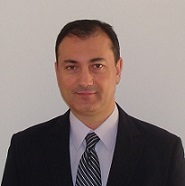
Balwin Bokor is a Researcher at Steyr University of Applied Sciences, affiliated with the Department of Production and Operations Management. His work focuses on industrial systems, simulation modeling, and sustainable manufacturing practices. Bachelor of Arts (BA), Master of Science (MSc) Research Interests: Bokor's research spans production engineering and operations management, emphasizing energy efficiency, logistics optimization, and simulation-based analysis. His studies address material requirements planning (MRP), constant work-in-process (CONWIP) systems, and flexible capacity adjustments in multi-stage production environments. Article Trends: Recent publications highlight simulation-driven approaches to production planning, energy cost balancing, and control system optimizations. These works align with Industry 4.0 trends in smart production and sustainable logistics. Scientific Awards: Recipient of the Würdigungspreis (2022), an Austrian award recognizing academic merit. Collaborations: Active in cross-institutional research networks, with collaborations in production system engineering, battery manufacturing, and energy reduction strategies. His work contributes to the 'fingerprint' research areas identified by Steyr University of Applied Sciences.
Dr. Marc Hesse serves as Team Leader of the Cognitronics & Sensor Technology Group at Bielefeld University's Faculty of Engineering and is also a Board member of the Center for Cognitive Interaction Technology (CITEC). His work bridges engineering, robotics, and sensor technology with practical applications across multiple domains. Dr. Hesse's research spans wireless sensor networks, robotics, machine learning applications, and Industry 4.0 technologies. His work focuses on developing practical solutions for real-world problems, including physiological monitoring systems, UWB localization in challenging environments, and edge computing applications for smart grids and manufacturing. He has made significant contributions to educational robotics through the AMiRo platform, which integrates research and teaching in robotics education. His publication record shows consistent output across multiple domains, with recent work emphasizing machine learning applications in sensor networks, edge computing implementations, and digital twin technologies. The research demonstrates a trajectory from fundamental sensor and system design to applied implementations in agriculture, healthcare, and industrial settings. Dr. Hesse collaborates extensively across disciplines and institutions, with publications spanning biomedical engineering, robotics, electrical engineering, and sports science. His work often addresses the practical challenges of implementing theoretical concepts in real-world environments with resource constraints.
Cecilia Berlin is an Associate Professor at Chalmers University of Technology's Department of Design & Human Factors, specializing in ergonomics and human factors engineering. Her research focuses on optimizing work environments to enhance both human well-being and system performance, particularly in manufacturing and production settings. Key areas include cognitive workload analysis, workplace design, and social sustainability in industrial contexts. University: Chalmers University of Technology School: School of Industrial and Materials Science Department: Design & Human Factors Her work emphasizes preventive occupational health strategies and the integration of ergonomics into Industry 4.0/5.0 transitions. Notable contributions include frameworks like ACD³ for ergonomic workplace design and Change Agent Infrastructure for stakeholder analysis in work system interventions. Cecilia has collaborated on projects such as the VirKA study on VR office environments and the PreKo model for cognitive workload assessment in manual assembly. Her research bridges human abilities, technology, and organizational practices to create sustainable and productive work systems.
Reha Uzsoy is the Clifton A. Anderson Distinguished Professor in the Edward P. Fitts Department of Industrial & Systems Engineering at North Carolina State University. He holds a PhD from the University of Florida (1990) and dual BS/MSc degrees from Bogazici University (Turkey). His research focuses on production planning, scheduling, and supply chain management, with significant contributions to semiconductor manufacturing optimization. He has held visiting roles at Intel, IC Delco, and Hong Kong University of Science and Technology. Awards include Fellow of the Institute of Industrial Engineers (2005), C.A. Anderson Outstanding Faculty Award (2011), and Purdue University's University Faculty Fellow (2001). He transitioned to NC State in 2007 from Purdue, where he directed the Laboratory for Extended Enterprises, an interdisciplinary supply chain research center. Education: PhD in Industrial Engineering, University of Florida, 1990 BS and MS in Industrial Engineering, Bogazici University, 1984-1986 Additional BS in Mathematics, Bogazici University, 1985 Research interests emphasize production systems' dynamic behavior, including new product introductions, congestion effects, and transition management. His work bridges theoretical models (e.g., clearing functions) with industrial applications in semiconductor fabrication and supply chain coordination. Recent projects include optimizing order acceptance/scheduling in additive manufacturing and developing equity-focused food distribution models. Awards: Fellow of the Institute of Industrial Engineers (2005) Outstanding Young Industrial Engineer in Education (1997) C.A. Anderson Outstanding Faculty Award (2011) Purdue University Faculty Fellow (2001) Contributions extend beyond academia: he co-developed NC State's Master of Supply Chain Engineering and Management (MSCEM) program and pioneered methodologies for production planning under stochastic demand. His research has been funded by NSF, Intel, Hitachi, and others. Labs/Teams: Former director of Purdue's Laboratory for Extended Enterprises; collaborates with NC State's industrial partners on semiconductor and healthcare supply chain initiatives.
Katarina Planer is a Professor for Nursing/Nursing Management at Esslingen University of Applied Sciences since 2017, following prior roles at the Bern University of Applied Sciences (2015–2017) and a return to HS-Esslingen (2014–2015). Her expertise spans care quality management , systemic nursing , and staff deployment planning . Education : Diploma in Nursing Management (Catholic University of Applied Sciences, Osnabrück, 1999–2003) Master's in Nursing Science (PTHV, 2006–2008) Doctorate (PTHV, 2008–2014) Systemic Therapist Training (2003–2007) Research Focus : Her work bridges standardized nursing research methods with ethically grounded practice , emphasizing staffing ratios , quality indicators , and digital transformation in care systems. Key themes include workforce shortages , policy reform , and patient autonomy . Publications highlight trends in care process planning , fee structures , and regional demand analysis across Germany and Luxembourg. She advocates for systemic approaches to address care crises and workload challenges .
Alex F. Mills is Professor of Operations Management in the Narendra Paul Loomba Department of Management and Academic Director of the Executive MBA in Healthcare Administration in the Zicklin School of Business at Baruch College, part of the City University of New York (CUNY). He is also a member of the doctoral faculty in Business at the Graduate Center of CUNY. In Academic Year 2025-26, he is on sabbatical leave from CUNY and will be Visiting Professor at Columbia Business School. Professor Mills earned his Ph.D. in Statistics and Operations Research from the University of North Carolina at Chapel Hill and his undergraduate degree in Mathematics from the College of William and Mary. Prior to joining CUNY, he was Associate Professor of Operations and Decision Technologies at the Kelley School of Business, Indiana University. Professor Mills specializes in operations management with a focus on healthcare services. His research centers on economic incentives in healthcare, demand management, allocation of healthcare provider resources, and healthcare system response to disruptions. He employs a diverse methodological toolkit including stochastic modeling, optimization, and data analysis. His work has significantly contributed to understanding healthcare operations, particularly in emergency response, telehealth, and resource allocation during crises. Professor Mills serves as an Associate Editor at Manufacturing & Service Operations Management and as a Senior Editor at Production and Operations Management. His publications demonstrate consistent excellence in applying operations research methodologies to complex healthcare challenges, with particular emphasis on telehealth systems, emergency response operations, hospital resource allocation, and healthcare policy analysis. Scientific Awards and Honors College of Healthcare Operations Management Best Paper (Production and Operations Management Society, 2018) Operations and Decision Technologies Faculty Scholar (Indiana University Kelley School of Business, 2018) Trustee Teaching Award (Indiana University, 2015) Second Prize, Public Sector Operations Research Best Paper (INFORMS, 2014) Professor Mills has successfully mentored numerous PhD students who have secured academic positions at institutions including University of Miami, University of North Carolina Wilmington, and University of Cincinnati. He has received research funding from PSC-CUNY for projects including "Operational impact of hospitalist localization," "Pooling resources in virtual and physical services with application to telehealth," and "Operational impact of telehealth pay parity policies." At Baruch College, he serves as Area Coordinator for Operations Management in the Department of Management and is a member of the Business School Alliance for Healthcare Management (BAHM).
Timothy S. Vaughan, Ph.D., is a Professor in the Marketing and Supply Chain Management Department at the University of Wisconsin-Eau Claire's College of Business. His academic career spans decades, focusing on operations management, inventory systems, and statistical pedagogy. He holds a Ph.D. from the University of Iowa and a B.A. from the University of Northern Iowa. Ph.D., University of Iowa B.A., University of Northern Iowa Research interests include operations management, analytics, simulation, and statistical quality control. Recent work explores quality control applications in daily habits, workload variability in capacity planning, and dynamic inventory policies for spare parts. His publications span journals like Decision Sciences Journal of Innovative Education and International Journal of Production Research . Scientific awards include the 2021 College of Business Creativity and Innovation Award. He has presented extensively at conferences such as the Winter Simulation Conference and Decision Sciences Institute National Meetings, covering topics from beer game implementations to cyclical scheduling systems.
Bruno Abrahao is an Assistant Professor of Information Systems and Business Analytics at NYU Shanghai and a Global Network Assistant Professor at the Leonard N. Stern School of Business, New York University. He is also a faculty member in the Center for Artificial Intelligence and Deep Learning. His educational background includes: PhD in Computer Science from Cornell University (under Bobby Kleinberg) MSc in Computer Science from Cornell University Professor Abrahao's research centers on the applications of Artificial Intelligence in business, alongside foundational methods in deep learning and large language models. He also focuses on data science to analyze interactions within digital platforms and marketplaces, uncovering insights into their structure and evolution to improve decision-making and operational efficiency. His work bridges the gap between theoretical AI advancements and practical business applications, with a particular emphasis on how AI can transform traditional business processes and create new opportunities in the digital economy. His recent publications demonstrate a strong focus on applying cutting-edge AI techniques to solve complex business problems across multiple sectors including finance, marketing, operations, and digital platforms. The research shows a clear trajectory toward more sophisticated AI applications with increasing emphasis on ethical considerations, explainability, and practical implementation challenges. His notable awards include: Outstanding Study Design Paper Award 2019 by the Thirteen International Association for the Advancement of Artificial Intelligence Conference on Web and social media Best Extended Abstract Award for 'From Power to Status in Online Exchange', Association for Computing Machinery Web Science 2012 Best Paper Award Finalist for 'Fractal Characterization of Web Workloads', Eleventh International World Wide Web Conference Teaching Award from Cornell University (2009) Professor Abrahao has taught various courses including 'AI for Business – Reinforcement Learning', 'AI for Business – Machine Learning', 'Network Analytics (graduate level)', and 'Computer Science Independent Study'. His teaching focuses on equipping students with practical AI skills that can be directly applied to business challenges, emphasizing hands-on learning and real-world application of AI techniques.
Professor Karina Bakkeløkken Hjelmervik is a Professor in the Department of Maritime Operations , Faculty of Technology, Natural Sciences and Maritime Studies at the University of South-Eastern Norway , Campus Vestfold. Since 2009 she has combined mathematics and oceanography to advance numerical modelling of coastal waters, in particular the Oslofjord system. Education: PhD in Fluid Mechanics, University of Oslo, 2009 – thesis on wave–current interactions in coastal tidal currents. Cand. Scient. in Oceanography, University of Bergen – thesis on cold CO₂ droplets in seawater. Cand. Mag. in Science, University of Bergen. Research interests revolve around fluid mechanics and physical oceanography . She develops and validates high-resolution numerical models that simulate water currents, tides, waves, and dispersion processes. Her work supports operational ocean forecasting, tidal-energy assessment, oil-spill contingency planning, and maritime training simulators. Project leadership spans more than 15 funded initiatives totalling over 30 MNOK. Flagship projects include the FjordOs series (2013–2021) that produced an operational forecast model for the Oslofjord, and collaborative grants on tidal power, clean propulsion, and micro-technology for pathogen detection. Publications and dissemination include 20+ peer-reviewed journal articles since 2012, keynote talks at IEEE OCEANS and JONSMOD, and popular lectures such as Mathematics in the Oslofjord . Student supervision is extensive: she mentors master’s and PhD candidates across mathematics, physics, and maritime programmes, though specific student names are not listed. Contact: karina.hjelmervik@usn.no | +47 31 00 93 25
Andrea Vinci is a Researcher at the Italian National Research Council (CNR) under the Institute for High-Performance Computing and Networking (ICAR-CNR) . His work bridges Machine Learning , Internet of Things (IoT) , and Smart City technologies, focusing on scalable solutions for urban data analysis, energy optimization, and cognitive building systems. Research Interests include: Developing multi-density clustering algorithms for urban hotspot detection Designing platform-agnostic IoT applications across edge-cloud architectures Applying quantum computing to energy management and cloud resource allocation Creating deep reinforcement learning models for human-driven smart environments Leveraging LSTM networks and federated learning for occupancy prediction Exploring blockchain-empowered swarm robotics for distributed control Key Scientific Contributions : Best Paper Award at ACM Computing Frontiers 2023 for spatio-temporal crime prediction Pioneering the COGITO platform for cognitive building automation Advancing 32 Gb/s passive optical networks for high-loss environments
Wolfgang Seiringer is a researcher at the Research Center Steyr, Center of Excellence for Smart Production within the HEAL Production and Operations Management department at the University of Applied Sciences Upper Austria (FH Steyr). Holding academic degrees of Magister (MMag.) and Bachelor of Technology (Bakk. techn.), he maintains an active research profile with an h-index of 21 and 12 research outputs spanning 2017-2025. His educational background includes a Magister degree in Social and Economic Sciences and a Bachelor of Technology, though specific institutions are not documented in available sources. These qualifications underpin his technical expertise in production systems engineering and quantitative analysis. Seiringer's research centers on production planning and control systems, with specialized focus on Material Requirements Planning (MRP), simulation-based optimization, and energy-aware production logistics. His work employs simheuristics and discrete event simulation to address challenges in volatile production environments, including variant diversity reduction, safety stock optimization, and rolling horizon planning. Recent investigations examine the interplay between energy pricing dynamics and production scheduling efficiency. Analysis of his 2024-2025 publications reveals a cohesive research trajectory emphasizing simulation-driven evaluation of production systems. Key thematic clusters include algorithmic approaches to production variant management, energy-cost tradeoff modeling in dispatching rules, and computational efficiency improvements in constraint-based production control frameworks. His methodology consistently integrates real-world production constraints with advanced simulation techniques. While no specific scientific awards are documented, Seiringer's research impact is evidenced by his Scopus-indexed publications and active conference participation. His work contributes to the evolving field of smart production systems through practical simulation frameworks and parametric optimization studies. He served as Co-Investigator in the SimGenOpt2 project (2017-2021), which developed robust production planning methodologies under the 'Production of the Future' initiative. Though details of individual grants are limited, his collaborative projects demonstrate sustained research funding. Seiringer has supervised at least one research work and maintains active engagement through conference presentations at the Winter Simulation Conference series (2021-2023). As a core member of the Center of Excellence for Smart Production at Research Center Steyr, he contributes to advancing production system engineering through simulation-based research. His collaborative network spans institutions including Johannes Kepler University Linz and industrial partners in the production technology sector, focusing on practical implementation of smart manufacturing solutions.
Berit Irene Helgheim is an Associate Professor in Logistics at Molde University College's Faculty of Logistics, where she holds multiple director positions including Director of the Master of Science in Logistics, Master of Science in Sustainable Energy Logistics, Experienced-based Master in Logistics, Experienced Master in Health Care Operations Management and Digital Systems, Bachelor in Supply Chain Management and Logistics, and Director of the Center for Health Care Operations Management. Her research focuses on Supply Chain Management and Operations Management in Health Care, with particular expertise in applying logistics principles to healthcare systems. Her work explores the intersection of digital transformation, AI applications, and operational efficiency in healthcare delivery, home care services, and sustainable logistics systems. She has made significant contributions to understanding how technology can improve patient flow, reduce healthcare workloads, and enhance documentation systems in both hospital and home care settings. Analysis of her recent publications reveals a strong trend toward applying advanced analytics and AI to healthcare operations, with increasing focus on sustainability and digital transformation across multiple sectors. Her work spans from theoretical frameworks like principal-agent theory in port digitalization to practical applications in emergency departments and home healthcare. The research demonstrates a consistent pattern of interdisciplinary collaboration, often involving computer science experts for AI implementations and healthcare professionals for domain expertise. Professor Helgheim leads the Center for Healthcare Operations Management research group and contributes to Digitalization for Sustainability and Supply Chain Management research groups at Molde University College. Her work demonstrates strong connections between academic research and practical applications in healthcare systems, with numerous case studies conducted in Norwegian municipalities and healthcare institutions. As director of multiple academic programs, she oversees curriculum development and student supervision across bachelor's, master's, and experienced-based master's programs in logistics and healthcare operations. Her leadership extends to major research projects including e-Hospital4Future, which focuses on digital transformation in healthcare settings.
Prof. Steffen Eickemeyer is an Adjunct Professor of Lean Management at the School of Business, Social & Decision Sciences at Constructor University Bremen gGmbH. His research focuses on capacity planning, regeneration of complex capital goods, supply chain optimization, and blockchain applications in logistics. He has contributed to the Belt and Road Initiative through studies on material flow security and has validated mathematical models for demand-driven capacity planning using case studies in global MRO companies. His academic work integrates data mining, statistical analysis, and mathematical modeling to address challenges in industrial asset management, maintenance strategies, and sustainable manufacturing processes. Notable contributions include optimizing regeneration workflows, reducing uncertainty in disassembly processes, and designing decision models for dynamic demand environments. Publications highlight his expertise in blockchain technologies for logistics security, fuzzy data management in maintenance systems, and availability optimization in capacity planning. His research bridges theoretical frameworks with practical applications in global industries, emphasizing cross-regional validation and real-world implementation. Prof. Eickemeyer collaborates with global enterprises to apply lean principles in complex industrial settings, focusing on lifecycle assessment, resource recovery, and cross-functional data integration. His work aligns with industry needs for reliable capacity solutions in fluctuating demand scenarios.
Mihaela Vela is a Senior Lecturer at the Department of Language Science and Technology at Saarland University. Her research focuses on machine translation evaluation, post-editing strategies, and translation technologies. Prior to her academic role, she worked as a researcher at the Language Technology Lab of DFKI (2007–2011), contributing to projects like ontology schema extraction from financial news. She holds a PhD in Computational Linguistics (2011) from Saarland University, supervised by Hans Uszkoreit and Thierry Declerck, and a Licentiate degree in Linguistics from West University of Timisoara. Her teaching portfolio includes courses such as Translation and Content Management , Applied Language Technologies , and Machine Translation , reflecting her expertise in integrating computational methods with translation practice. She has developed tools like TeLeMaCo (a collaborative teaching repository) and Catalog (a post-editing interface). Her work emphasizes improving translation workflows through better CAT tool design, metadata preservation, and cognitive load analysis in post-editing tasks. Key contributions include the SubCo corpus of learner translations and studies on post-editing effort in low-resource languages. Her research bridges theoretical linguistics with practical applications, addressing challenges in legal text classification, parliamentary discourse analysis, and neural post-editing systems.
Rouskas Angelos is a Professor at the Department of Digital Systems, University of Piraeus. He holds a Diploma in Electrical Engineering from the National Technical University of Athens (NTUA), a Master's in Communications and Signal Processing from Imperial College London, and a PhD in Electrical and Computer Engineering from NTUA. Previously, he served as Lecturer, Associate Professor, and Head of the Computer Systems and Communications Laboratory at the University of the Aegean (2000–2009). His research focuses on next-generation wireless networks, edge computing, and energy-efficient network design. He has led multiple national and EU-funded projects and worked as a network designer at CosmOTE (1999–2000). He chaired the Technical Committee for European Wireless 2006 and served on numerous international conference committees. Education: BEng: Electrical Engineering, NTUA MSc: Communications & Signal Processing, Imperial College London PhD: Electrical & Computer Engineering, NTUA Research Interests: His work centers on optimizing wireless networks, particularly in edge computing environments and 6G/IoT connectivity. Key areas include energy efficiency, heterogeneous network architectures, and latency reduction through adaptive resource allocation. Recent trends in his publications emphasize non-terrestrial networks and federated edge-cloud IoT systems. Grants & Leadership: He has coordinated国家级 and European projects focusing on green networks and edge computing. His technical leadership extended to roles in industry partnerships and academic administration. Labs & Collaboration: Past leadership at the Computer Systems & Communications Lab (University of the Aegean) and current involvement in edge-cloud research initiatives.