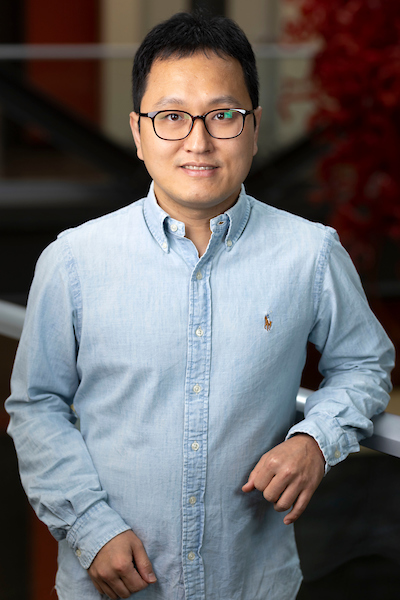
Kwangsung Oh is an Assistant Professor in the Department of Computer Science at the University of Nebraska at Omaha's College of Information Science & Technology. His research focuses on GPU-based image reconstruction, cloud computing optimization, and deep learning for software evolution. Contact: kwangsungoh@unomaha.edu . Research Areas GPU Acceleration for Biomedical Imaging Geo-distributed Data Analytics Serverless Computing Optimization Machine Learning in Software Engineering Recent publications demonstrate expertise in structured illumination microscopy algorithms, cloud storage policy frameworks, and deep learning-driven code inspection tools. His work bridges computational biology applications with distributed systems infrastructure.
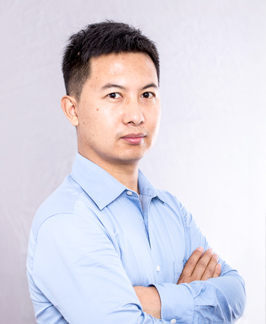
Professor Shenghua Gao is an Associate Professor at the School of Computing and Data Science of the University of Hong Kong (HKU), concurrently serving as Assistant Director for Shanghai Initiatives. He holds a PhD from Nanyang Technological University. His research focuses on integrating machine learning, spatio-temporal data analysis, and database systems to address challenges in mobility prediction, traffic management, and geospatial representation learning. He has contributed significantly to trajectory modeling, indexing frameworks for multi-dimensional data, and the application of large language models (LLMs) in spatio-temporal contexts. Key research interests include: Spatio-Temporal Data Science: Developing frameworks for efficient processing and analysis of point cloud, trajectory, and traffic data. Machine Learning for Databases: Innovating indexing algorithms (e.g., BMTree, MAST) and query optimization techniques leveraging ML. Trajectory and Mobility Prediction: Creating personalized models for next-location prediction and transfer learning across regions. Geographic AI (GeoAI): Enhancing road network representation and urban function inference using physics-guided and foundation models. Recent work highlights include the ST-LLM+ framework for traffic prediction, the MAST system for point cloud analytics, and the exploration of City Foundation Models for urban challenges. His publications span top venues in databases (SIGMOD, VLDB) and AI/data science (ICML, NeurIPS). While no awards are explicitly mentioned, his prolific output and leadership roles indicate significant academic contributions. He is actively involved in teaching and supervising research in the School’s undergraduate and postgraduate programs, including MSc(AI) and MPhil/PhD tracks.
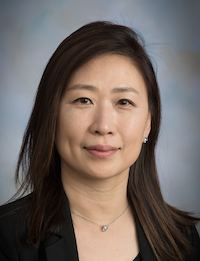
Sangmi Lee Pallickara is a Professor of Computer Science and the Clare Booth Luce Professor at Colorado State University. She is affiliated with the Department of Computer Science in the College of Natural Sciences. Her research is supported by major agencies including the National Science Foundation, Department of Homeland Security, ARPA-E, and NIFA, with ongoing projects in AI Institutes, Cyberinfrastructure, and CyberPhysical Systems. Research Interests: Her work focuses on Big Data systems for scientific applications, including scalable storage, retrieval, metadata management, predictive analytics, and interactive visualization. She applies these to domains such as agriculture, atmospheric science, environmental monitoring, and epidemiology. Her research integrates data science, distributed systems, and deep learning to enable scalable knowledge extraction from high-velocity, voluminous datasets. Publication Trends: Her recent publications emphasize scalable solutions for geospatial and spatiotemporal data, including efficient storage (e.g., ATLAS), visualization (e.g., Glance, Iris), and deep learning (e.g., Argus, CloudNet). There is a strong focus on real-world applications such as wildfire prediction, satellite data imputation, and precision agriculture, leveraging generative models, embeddings, and ensemble methods. Scientific Awards: NSF CAREER Award IEEE TCSC Award for Excellence in Scalable Computing Best Paper Award at IEEE/ACM UCC 2019 Best Paper Award at IEEE CLUSTER 2019 Best Paper Award at IEEE/ACM UCC 2014 Finalist for Best Paper Award at IEEE BDCloud 2018 Advising and Grants: She advises numerous Ph.D. and Master’s students, many of whom have gone on to careers in industry and academia. Her research is funded by the NSF (AI Institutes, CPS), DHS, ARPA-E, NIFA, and the Environmental Defense Fund. She also leads the SWiFT outreach program for K–12 STEM education. Labs and Teams: She leads a vibrant research group focused on Big Data systems, with students working on distributed storage, deep learning for satellite imagery, spatiotemporal analytics, and interactive visualization. The team collaborates with domain scientists in agriculture, climate, and public health.
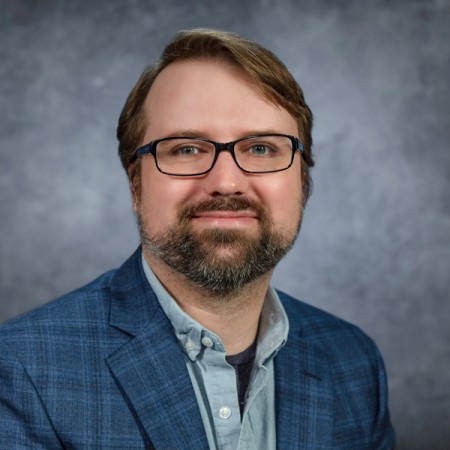
Leonardo Banh is a Researcher at the University of Duisburg-Essen within the Faculty of Computer Science and its Chair of Business Information Systems and Software Engineering . M.Sc. in Business Information Systems (University of Duisburg-Essen, 2022) B.Sc. in Business Information Systems (University of Duisburg-Essen, 2020) Semester abroad at Instituto Superior Técnico, Lisbon (2021) His research focuses on Generative AI and its socio-technical implications, particularly in Machine Learning and Deep Learning applications. He explores intersections with NeuroIS , Smart Tourism , and E-commerce Ecosystems , emphasizing sustainability and digital transformation. Recent publications analyze Generative AI in Software Engineering , AI in Music Sentiment Analysis , and AI-Based Sign Language Translation . His work often involves design science research and grounded theory frameworks. Best Paper in Track Award (ICIS 2024) Nominated for Best Paper Award (ICIS 2024) Outstanding Reviewer (ICIS 2024) As advisor, he supervises theses on topics including AI-Based Mental Health Chatbots , Generative AI in HR , and Smart Tourism Applications . He also contributes to the Institute of Computer Science and Information Systems and serves on appointment/habilitation committees.
Tomasz Wiktorski is a Professor at the Faculty of Science and Technology , University of Stavanger , where he serves as Study Program Manager for MSc and PhD programs in Computer Science and Data Science. His research integrates conventional time series analysis with deep learning for applications in biomedical data (e.g., wearable devices), oil and gas drilling automation, energy systems prediction, and cloud infrastructure optimization. Education : Not explicitly detailed in the text. Research interests span data-intensive system modeling, focusing on: Biomedical time series analysis (wearables, ECG signal correction) Drilling process optimization via transfer learning and temporal models Energy systems prediction using machine learning Cloud infrastructure monitoring Curriculum development in data science education Scientific trends reveal expertise in recurrent neural networks, support vector machines, and hybrid data modeling for sensor networks across domains like health, petroleum, and cloud computing. Leadership includes designing data science programs and contributing to the EDISON Data Science Framework for global standards.
Dr. Martin J. Land is an Associate Professor at the Faculty of Economics and Business , University of Groningen , specializing in Operations Management . He has held academic roles since 1992, including Programme Director for multiple Master’s programs and leadership in large-scale research projects like the €500k European-funded initiative. Doctoraal (MSc) in Econometrics and Operations Research (1992) PhD in Management Sciences (2004) His research spans Production Management , Workload Control , Smart Manufacturing , and Sustainable Energy Supply . Recent work includes optimizing hydrogen storage for offshore wind parks and developing control frameworks for high-variety manufacturing. Publications focus on improving throughput times, dispatching rules, and lean methodologies in production environments. He teaches key courses like Logistics & Supply Chain Operations and Sustainable Energy Supply , engaging over 600 students annually. Current projects involve the Prestatieverbetering Noordelijke Maakindustrie initiative, providing practical tools to small manufacturers in Northern Netherlands. Collaborations include Newcastle University Business School and Dutch consultancies like Langhout & Cazemier.
Dr. André Bauer is an Assistant Professor of Computer Science at Illinois Institute of Technology. He holds a Dr. rer. nat., M.S., and B.S. in Computer Science from the University of Würzburg. His research focuses on performance engineering and systems optimization for data science applications, addressing challenges in resource management, adaptive systems, and sustainable computing. Bauer leads the SPEC RG Predictive Data Analytics Working Group and has contributed to benchmarks like Libra for time series forecasting. His work spans cloud computing, container orchestration, and security protocols such as homomorphic encryption. Education: Dr. rer. nat., Computer Science, University of Würzburg M.S., Computer Science, University of Würzburg B.S., Computer Science, University of Würzburg Research Interests: Bauer’s research integrates interdisciplinary expertise to optimize scientific computing infrastructures. Key areas include resource allocation in heterogeneous environments, adaptive distributed systems, and privacy-preserving technologies. Recent contributions include studies on serverless cold starts, microservice benchmarking, and federated learning frameworks. Articles Trends: Bauer’s publications emphasize performance analysis in cloud-native systems, security for IoT/CPS, and machine learning interpretability. Recent work explores hybrid compression methods for time series and the environmental impact of HPC workloads. Awards: 2023 SPECtacular Award (SPEC) 2023 Leadership Academy Fellowship (German Scholars Organization) 2023 SPEC Kaivalya Dixit Distinguished Dissertation Award Advising & Leadership: Bauer chairs the SPEC RG Predictive Data Analytics group and co-authored influential tools like Libra. His research is supported by grants in cloud benchmarking and secure group communication. Labs/Teams: Active in Illinois Tech’s Computer Science department and collaborates with institutions like Argonne National Laboratory on distributed computing initiatives.
Professor Margaret Lech holds a position as Discipline Leader in the Department of Electrical & Electronic Engineering at RMIT University's School of Engineering. She has been at RMIT since 1998, progressing from a Research Fellow to her current role as Professor. Her expertise spans machine learning, signal processing, speech and image processing, and biomedical applications. Education: MSc in Physics from the University of Maria Curie-Sklodowska (Poland), PhD in Electrical Engineering from the University of Melbourne. Research highlights include groundbreaking emotion detection from speech signals, clinical depression analysis, and conversational trust modeling. She has co-authored over 160 papers and holds an international patent for her work on emotion detection. Awards: Telstra Innovation Challenge 2010, Vice-Chancellor's Research Supervision Excellence Award (2013), RMIT Award for Excellence in Graduate Research (2019). Grants: VPAC, ARC Linkage, DSI, AOARD, DSTG, and current co-investigator on Office of National Intelligence and ARC Discovery grants. Her research focuses on applications of AI and machine learning in healthcare, cybersecurity (e.g., Smart Grids), robotics (multi-agent systems), and fine art analysis. She has supervised over 30 PhD students and pioneered techniques in real-time speech emotion recognition and sleep stage classification. Labs/Teams: Leads interdisciplinary teams working on neuromorphic sensing, neural network systems, and computational inference of social signals. Active in collaborative projects involving industry and international partners.
Banks Miller is a Professor of Political Science, Public Policy, and Political Economy at the University of Texas at Dallas (UTD), serving as Associate Dean of Outreach & Recruitment within the School of Economic, Political and Policy Sciences (EPPS). He holds a J.D. from The University of Texas School of Law (2004), a Ph.D. in Political Science from Ohio State University (2009), and a B.A. from Hendrix College (2001). Miller’s research focuses on judicial behavior, immigration policy, intellectual property law, and American politics. His work examines factors influencing asylum grant rates, the role of attorney capability in legal outcomes, and dynamics within specialized courts. Notable contributions include analyses of U.S. attorney firings, state solicitors general, and patent litigation strategies. His scholarly awards include the Regents Outstanding Teaching Award (2012) and multiple travel grants. Miller has led projects on judicial expertise, state litigation success, and bureaucratic oversight mechanisms. His research frequently intersects law, policy, and political institutions, with findings published in journals like Law and Society Review and Political Research Quarterly . Miller advises on EPPS’ academic programs and collaborates with institutions like the Ohio State University’s Center for Interdisciplinary Law and Policy Studies. His recent work highlights systemic challenges in immigration adjudication and the strategic dimensions of legal representation quality.
Carlo Gaetan is a Full Professor at the Department of Environmental Sciences, Informatics and Statistics at Ca' Foscari University of Venice. His research focuses on statistical modeling for environmental applications, including extremes in climate data, spatial-temporal analysis, and environmental risk assessment. He contributes to editorial roles, such as Associate Editor of the Journal of the Royal Statistical Society, Series C. His work spans environmental statistics, spatial modeling, and applications in climate change and health. Gaetan is actively involved in projects like the Venice 2021 climate scenario initiative and collaborates on studies assessing air pollution impacts and disease modeling. His teaching includes office hours for students, emphasizing accessibility and academic guidance.
Junpei Komiyama is an Assistant Professor in the Department of Technology, Operations, and Statistics at the Leonard N. Stern School of Business, New York University, where he has been a faculty member since September 2019. His research bridges machine learning methodology and business applications, focusing on decision-making, fairness, and reproducibility in data-driven systems. His educational background includes a PhD in Information Science, an MS in Applied Physics, and a BTech, all from the University of Tokyo. Professor Komiyama's research interests center on machine learning with a strong emphasis on ethical and robust methodologies. He investigates decision-making models such as multi-armed bandits, algorithmic fairness , experimental design , and the reproducibility of data science findings. His work aims to redefine how we validate and trust results generated by machine learning systems. The recent articles reflect a strong trend in fairness-aware machine learning , online decision-making , and reproducible research practices . They span applications in business analytics, recommender systems, pricing, and cloud computing, demonstrating both theoretical depth and practical relevance. Presented work at top venues including NeurIPS and KDD Focus on ethical AI and robust scientific methodology He has advised students in machine learning and data science, though specific names are not listed. His research has been supported through academic grants related to AI ethics and data science innovation, though specific grant details are not provided. Professor Komiyama teaches courses in programming and machine learning, contributing to the technological education of business students at Stern. He is actively involved in advancing the integration of rigorous machine learning methods into business decision-making frameworks.
Rita Shane is an Associate Dean at Cedars-Sinai Medical Center in Los Angeles and Professor in the Department of Clinical Pharmacy at the University of California San Francisco (UCSF). She serves as Vice President and Chief Pharmacy Officer at Cedars-Sinai Medical Center, where she provides leadership in pharmacy practice, education, and research. Her work bridges academic pharmacy with clinical practice in a major medical center setting, focusing on improving medication systems and patient outcomes. Dr. Shane's research centers on clinical pharmacy, medication therapy management, and hospital medication systems. Her work addresses critical issues in medication safety, including medication reconciliation, medication errors, and professional roles in pharmacy practice. She has made significant contributions to understanding pharmacy operations, pharmacist-led interventions, and the impact of pharmacy services on patient outcomes in hospital settings. Her research often involves collaborative studies examining how pharmacy services can improve medication safety and reduce healthcare utilization for high-risk patient populations. Analysis of Dr. Shane's recent publications reveals a strong focus on medication safety systems, transitions of care, and optimizing pharmacy practice models in health systems. Her work spans clinical pharmacy, health services research, and medication management, with particular attention to high-risk patient populations and complex therapeutic regimens. She frequently collaborates with interdisciplinary teams to evaluate pharmacist interventions and their impact on healthcare quality and efficiency. Her research demonstrates how strategic pharmacy practice models can enhance patient safety while managing healthcare costs. As Associate Dean, Dr. Shane works with area directors of advanced pharmacy practice programs in providing administrative support, mentoring, and instruction to students and faculty members. She has been instrumental in developing pharmacy technician residency programs and advancing the role of pharmacists in healthcare systems. Her leadership extends to strategic planning for pharmacy departments in hospitals and health systems, as evidenced by her significant contributions to the ASHP Foundation Pharmacy Forecast publications that guide pharmacy practice nationwide.
Stefan Haeussler is an Associate Professor at the Department of Information Systems, Production and Logistics Management within the University of Innsbruck , Austria. His academic career spans since 2009, starting as a University assistant while completing his PhD in Management. He holds dual diplomas in Business Administration (2009) and Political Science (2010) from the same university. Specializing in production and logistics management, Häussler combines optimization techniques with machine learning approaches to address complex manufacturing challenges. His research focuses on Workload control systems Order release mechanisms Lead time management Reinforcement learning applications Semiconductor manufacturing optimization Behavioral operations in supply chains Recent publications highlight his work on integrated production planning , explainable AI for powertrain control , and dynamic workload allocation . He actively presents at major conferences like Winter Simulation Conference, EURO, and International Working Seminar on Production Economics. Häussler also teaches master's level courses and supervises thesis work in production economics, while serving as a guest lecturer on topics at the intersection of AI and manufacturing.
Anna Lackinger is a PreDoc Researcher and PhD student in the Distributed Systems Group at TU Wien's Faculty of Informatics. Holding a Diplom-Ingenieur (Master's) and BSc from TU Wien, she specializes in edge intelligence and distributed machine learning systems with applications in cloud infrastructure optimization. Education: Diplom-Ingenieur (Master of Science in Engineering), TU Wien, 2023 Bachelor of Science, TU Wien Her research centers on Edge Intelligence and Federated Learning architectures, developing communication-efficient orchestration frameworks for hierarchical learning systems. She pioneers time series prediction techniques for cloud workload forecasting, enabling proactive resource scaling while addressing challenges in heterogeneous IoT environments and communication-constrained distributed systems. Analysis of her publication record reveals consistent focus on adaptive federated learning systems that optimize communication costs while maintaining model accuracy. Her work bridges theoretical AI advancements with practical distributed systems implementations, particularly in edge-cloud continuum scenarios where resource constraints demand innovative orchestration solutions. Professional Service: Reviewer for IEEE International Conference on Autonomic Computing and Self-Organizing Systems (ACSOS) Reviewer for International Web Information Systems Engineering Conference (WISE) Reviewer for ACM Transactions on Internet Technology (TOIT) Reviewer for IEEE Transactions on Services Computing (TSC) Reviewer for IEEE Internet Computing (IC) Reviewer for IEEE Open Journal of the Computer Society (OJCS) Anna co-advises bachelor's and master's theses in distributed systems and machine learning. She actively contributes to major research initiatives including AloTwin (2023–2025) on reactive federated learning orchestration, INTEND (2024–2026) developing adaptive inference agents, and TEADAL (2022–2025) focused on load-aware federated learning systems. As a core member of TU Wien's Distributed Systems Group, she collaborates on cutting-edge research in edge intelligence and IoT swarm coordination, advancing the RainCloud framework for decentralized heterogeneous IoT systems while contributing to the group's leadership in distributed AI infrastructure.
George Amvrosiadis is a Research Professor in the Department of Electrical and Computer Engineering at Carnegie Mellon University, with a courtesy appointment in Computer Science. He is a core member of the Parallel Data Lab and spends part of his time at Amazon S3 as an Amazon Scholar. Education: 2016 - Ph.D., Computer Science, University of Toronto 2009 - BA, Computer Science, University of Ioannina Research Interests: His work focuses on distributed systems , operating systems , data analysis , cloud computing , and storage technologies . He explores high performance computing (HPC), zoned storage , systems security , and storage solutions for machine learning . Scientific Trends: Articles highlight innovations in storage systems, including zoned storage , HPC data services , and machine learning infrastructure . Research spans distributed systems , I/O optimization , and data integrity in large-scale environments. Scientific Awards: DeltaFS project received the R&D 100 Award from R&D World Magazine Teaching & Service: He co-teaches graduate courses on storage and cloud systems, serves on program committees for top conferences (SOSP, OSDI, FAST), and mentors students in systems research and infrastructure projects.