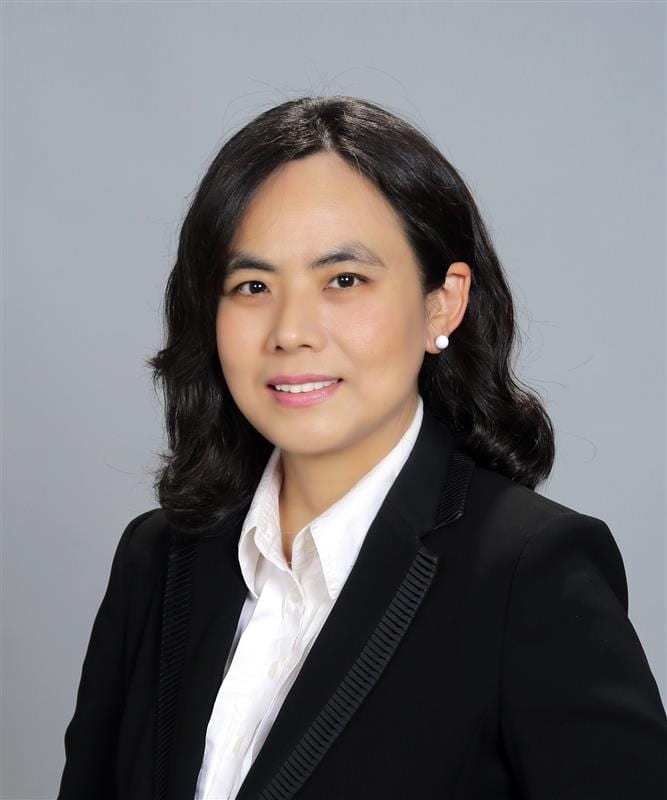
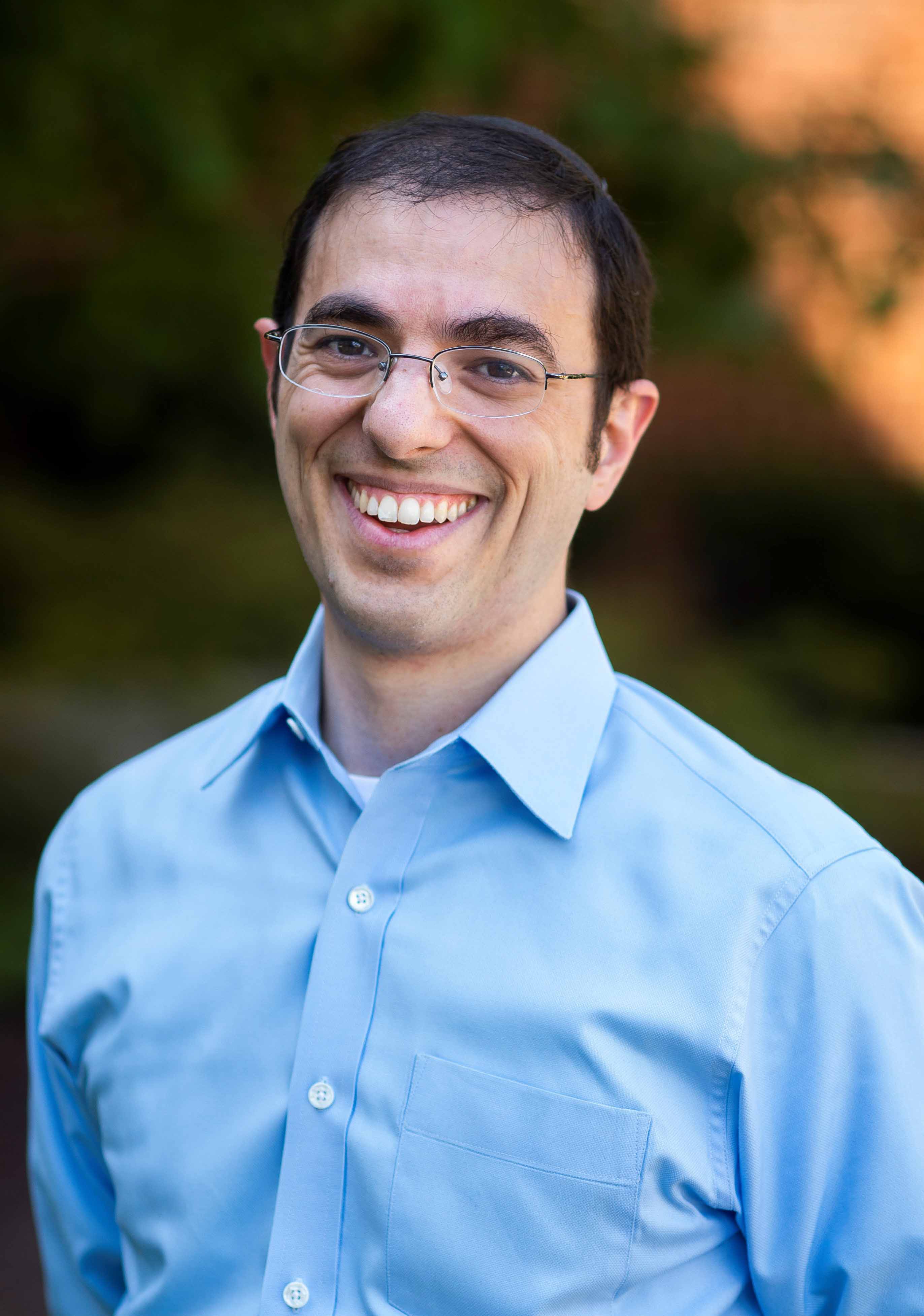
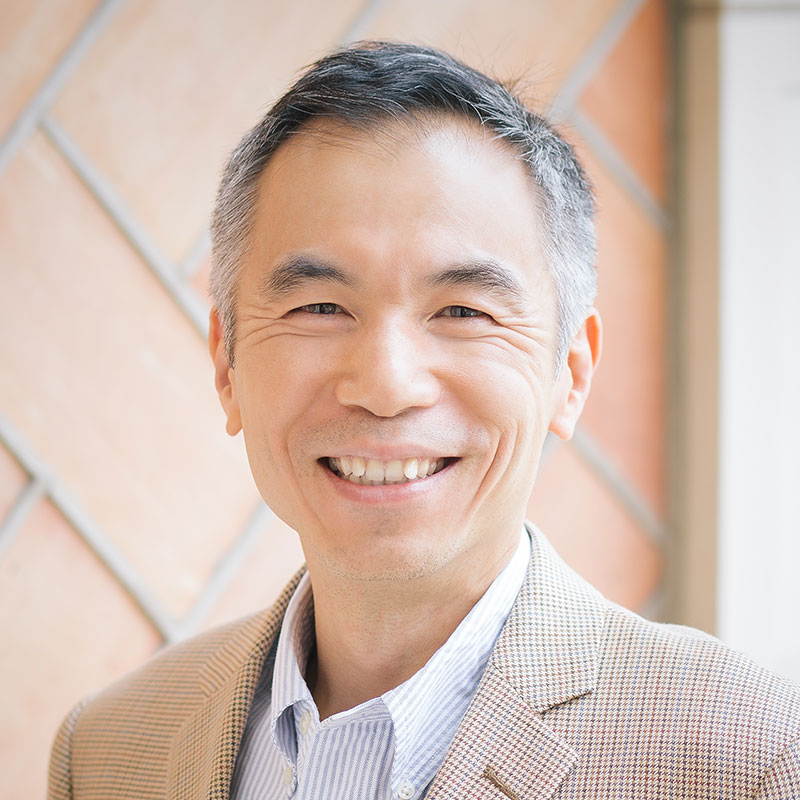
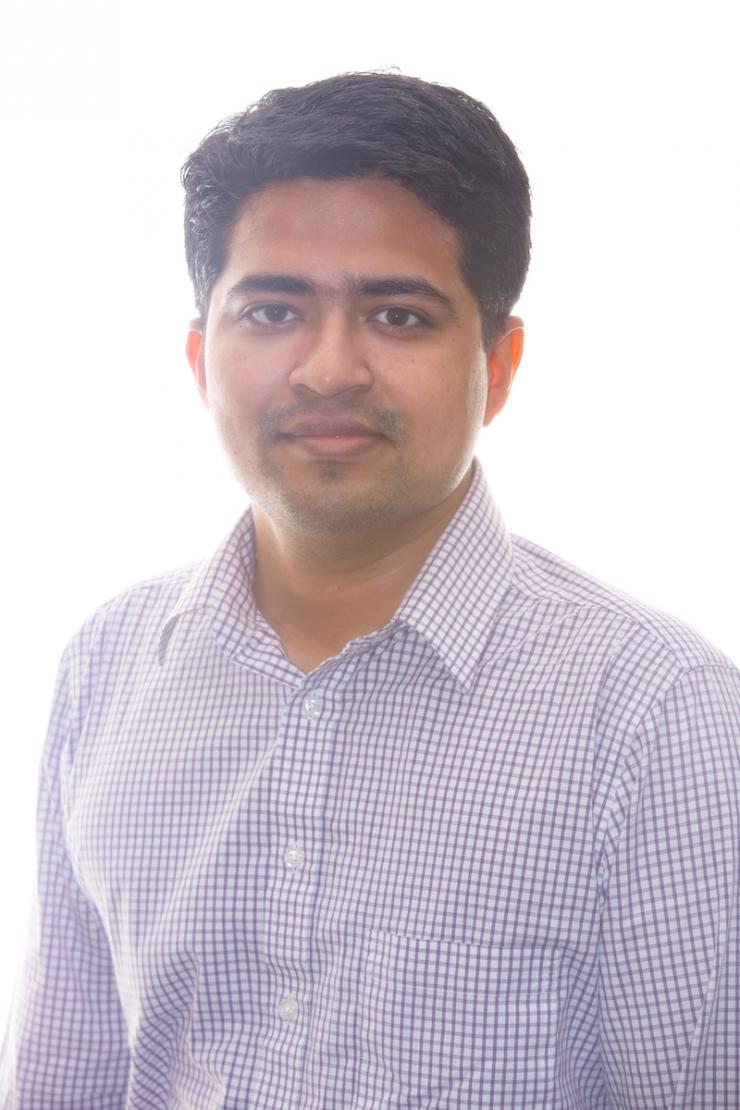
Hyesoon Kim is a Professor at the Georgia Institute of Technology , affiliated with the College of Computing and leading the HPArch research group . She co-directs the Center for Research into Novel Computing Hierarchies (CRNCH) . Her research focuses on Computer Architecture , GPU , Compilers and Runtime Systems , and Hardware Security , particularly for heterogeneous systems. Contact : hyesoon@cc.gatech.edu Location : 266 Ferst Drive, KACB 2344, Atlanta, GA Research Trends Her recent work spans RISC-V extensions for security, CUDA optimization on softcore GPUs, memory safety techniques, and energy-efficient deep learning architectures. Articles emphasize heterogeneous computing , GPU performance scaling, and IoT -oriented neural network methods. Open Source Projects She leads development of Macsim (heterogeneous architecture simulator) and Vortex (open-source GPU platform).
Professor Mohammad FARD is a faculty member at RMIT University's School of Engineering, specializing in Mechanical Engineering and Intelligent Systems. He leads research in autonomous vehicles, crash safety, and driver monitoring using AI. His industry experience includes six years at Nissan Technical Centre, focusing on vehicle body design. He holds a PhD from Tohoku University and has collaborated across Engineering, Health, and Science disciplines, achieving international media coverage for work on driver drowsiness and road safety. Research Interests: Autonomous Vehicles Advanced Crash Safety Driver State Monitoring AI in Noise/Vibration Human Factors/Ergonomics Teaching & Projects: Teaches Advanced CAE, Vehicle NVH, and research supervision in areas like crash simulation and vibration control. Current projects include Formula One safety barriers and driver education for autonomous vehicles. Awards & Labs: No awards listed. Active in cross-disciplinary teams and labs addressing automotive innovation and safety.
Daniel Abadi is the Darnell-Kanal Professor of Computer Science at the University of Maryland, College Park. He leads the Data Systems Lab at Maryland (DSLAM) and is widely recognized for his groundbreaking contributions to database system architecture and implementation. Previously, he was a faculty member at Yale University where he received the Provost's Teaching Prize. Abadi's research primarily focuses on database system architecture, particularly at the intersection with scalable and distributed systems. He is best known for developing the storage and query execution engines of the C-Store prototype (a column-oriented database system commercialized by Vertica and later acquired by Hewlett-Packard), HadoopDB research (commercialized by Hadapt and acquired by Teradata), and deterministic distributed transactional systems like Calvin (currently being commercialized by Fauna). His work bridges theoretical innovation with practical industrial impact. Analysis of his recent publications reveals a consistent trajectory toward solving fundamental challenges in distributed database systems. His research has evolved from foundational work on column-stores and hybrid database architectures to cutting-edge innovations in geo-replicated transactions, concurrency control mechanisms, and the integration of machine learning with database systems. The trend shows increasing focus on practical implementations that address real-world scalability and performance challenges in large-scale data processing environments. ACM Fellow Churchill Scholarship recipient NSF CAREER Award winner Sloan Research Fellowship recipient VLDB Best Paper Award winner Two VLDB Test of Time Awards (for C-Store and HadoopDB) 2008 SIGMOD Jim Gray Doctoral Dissertation Award 2013-2014 Yale Provost's Teaching Prize 2013 VLDB Early Career Researcher Award Professor Abadi has successfully mentored several PhD students, most notably Alexander Thomson and Jose Falerio, both of whom won the prestigious SIGMOD Jim Gray Doctoral Dissertation Award for their work under his supervision. His research has been generously supported by multiple NSF grants including BIGDATA awards and other funding mechanisms that have enabled significant advances in database technology. He actively collaborates with industry partners, with several of his research projects leading directly to commercial products. At the University of Maryland, Abadi directs the Data Systems Lab at Maryland (DSLAM), which focuses on developing innovative database technologies that address contemporary challenges in data management. The lab's research spans distributed transaction processing, database architecture, and the integration of database systems with emerging computing paradigms. Notable projects include SLOG (Serializable, Low-latency, Geo-replicated Transactions), which eliminates traditional tradeoffs in distributed database design, and ongoing work in deterministic database systems that provide strong consistency guarantees without sacrificing performance.
James C. Hoe is Professor of Electrical and Computer Engineering at Carnegie Mellon University (College of Engineering). He is on sabbatical at MangoBoost and directs research in computer architecture, reconfigurable computing, and high-level hardware design. Education Ph.D., Electrical Engineering and Computer Science, MIT (2000) M.S., Electrical Engineering and Computer Science, MIT (1994) B.S., Electrical Engineering and Computer Science, UC Berkeley (1992) Research Interests Professor Hoe’s work spans computer architecture , reconfigurable computing , FPGA architectures , and high-level hardware synthesis . His group created the CoRAM abstraction for virtualized FPGA computing and leads efforts in power-efficient accelerators, in-network computing, and security-oriented FPGA systems. Scientific Awards IEEE Fellow (2013) Intel Outstanding Researcher Award (2021) Research Funding & Projects Intel / VMware Crossroads 3D-FPGA Academic Research Center – co-leading exploration of FPGA roles in future datacenters. DARPA BRASS program ($2.7 M, 4 years) – ensuring long-lived software systems remain robust to resource changes. Pigasus open-source IDS – world’s fastest FPGA-accelerated intrusion-detection system (100 Gb/s on one server). Labs & Teams He heads activities within the Computer Architecture Lab at Carnegie Mellon (CALCM) , supervising graduate researchers on CoRAM++, SPIRAL autotuning, and FPGA overlays for stream processing.
Joy Arulraj is an Associate Professor in the School of Computer Science within the College of Computing at Georgia Institute of Technology. His research focuses on data systems, machine learning, and database systems, with a particular emphasis on video analytics and adaptive query processing. He leads the Data Systems and Analytics Group and is developing the EVA AI-Relational Data System. Dr. Arulraj's research interests span data systems, machine learning, database systems, video analytics, and adaptive query processing. His work centers on developing systems that efficiently process complex queries, particularly for video analytics and machine learning workloads. He has made significant contributions to GPU database systems, non-volatile memory database management, and adaptive query processing techniques. His research often bridges the gap between theoretical database principles and practical implementations for modern hardware architectures. His recent publications show a strong trend toward video analytics systems, adaptive query processing for machine learning workloads, and GPU-accelerated database systems. The EVA system represents a major focus of his recent work, providing end-to-end exploratory video analytics capabilities. His research also addresses fundamental database concepts like buffer management, query optimization, and storage management, adapting these principles for modern hardware and application requirements. Dr. Arulraj has advised numerous graduate students including Pramod Chunduri, Gaurav Tarkok Kakkar, Jiashen Cao, and Sayan Sinha. His graduated students have gone on to work at companies like ServiceNow, Meta Research, and the Korean Army. He actively teaches database system courses at Georgia Tech, including Database System Implementation (CS 4420/6422) and Advanced Database System Implementation (CS 4423/6423), where students build database systems from scratch using C++ and the BuzzDB framework. He maintains an active research program with consistent publication output across top database and systems conferences. His work spans from theoretical database principles to practical system implementations, with a recent emphasis on video analytics, machine learning integration with database systems, and leveraging modern hardware like GPUs and non-volatile memory for database applications.
Oana Balmau is an Assistant Professor in the School of Computer Science at McGill University, where she leads the Data-Intensive Storage and Computer Systems Laboratory (DISCS Lab). She also holds a status-only appointment at the University of Toronto and serves as a working group chair for MLPerf Storage. Her research focuses on creating storage infrastructure that enables fast and energy-conscious insights from data, with particular emphasis on storage and persistent memory technologies for machine learning, data science, and edge computing workloads. Dr. Balmau's research interests span computer systems, with specific focus on: Design and implementation of efficient key-value stores Storage systems for machine learning workloads Edge computing infrastructure Persistent memory technologies Performance optimization of data-intensive systems Her recent work has led to significant contributions in storage benchmarking through the MLPerf Storage benchmark and in edge computing frameworks. The MLPerf Storage benchmark has become an industry standard for evaluating storage performance in machine learning environments, while her work on hierarchical edge computing addresses security and performance challenges in distributed edge environments. Her publications show consistent high-impact contributions to top systems venues, with recent work focusing on processing-in-memory virtualization, stream processing reconfiguration, and efficient data preprocessing pipelines. Dr. Balmau has received numerous awards for her research, including: SEC 2024 Best Paper Award for "Falcon: Live Reconfiguration for Stateful Stream Processing on the Edge" MLCommons Hero Award 2023 for leadership as MLPerf Storage working group chair ACM SIGOPS Dennis M. Ritchie Doctoral Dissertation Award 2021 Honorable Mention CORE John Makepeace Bennett Award 2021 for the best Computer Science doctoral dissertation in Australia and New Zealand USENIX ATC 2019 Best Paper Award for "SILK: Preventing Latency Spikes in Log-Structured Merge Key-Value Stores" As an educator, Dr. Balmau teaches courses on advanced computer systems, operating systems, and principles of computer systems design at McGill University. She has served on program committees for top systems conferences including SOSP, SIGMOD, FAST, and EuroSys, and has co-organized workshops on resource-efficient machine learning and edge computing. She leads the DISCS Lab, which focuses on two main research directions: Systems for ML (including the MLPerf Storage benchmark) and Edge computing (including frameworks for fast and secure edge computing in hierarchical edge environments).
Professor Tulika Mitra is the Dean of the School of Computing and Vice Provost (Special Projects) at the National University of Singapore (NUS). She holds the Provost’s Chair Professor in the Department of Computer Science and has been instrumental in shaping academic policies and strategic initiatives at NUS since joining in 2001. PhD in Computer Science, Stony Brook University (2000) M.E. in Computer Science, Indian Institute of Science (1997) B.E. in Computer Science, Jadavpur University (1995) Her research focuses on hardware-software co-design for energy-efficient computing systems, particularly in real-time embedded systems, heterogeneous architectures, and AI accelerators. She leads major research programs such as the NRF Competitive Research Programme on Low-Power Edge Accelerators and the MOE Tier-3 Programme on Green AI , collaborating with industry leaders like ARM, AMD, and Meta. Her recent publications highlight innovations in CGRA optimization , sparse attention mechanisms , photonic-digital hybrid architectures , and low-power ML inference . These works often integrate compiler techniques, architectural design, and real-time constraints for edge computing applications. Scientific Awards : ESWEEK Test-of-Time Award (2022), ACM SIGDA Distinguished Service Award, IEEE CEDA Outstanding Service Recognition Award, Teaching Excellence Award (2006), and multiple best paper recognitions. Education Leadership : Spearheaded the Computer Engineering (CEG) Programme at NUS, a joint initiative between Engineering and Computing. As a mentor , she has supervised over 25 PhD students , many now in prominent academic or industrial roles. Her research group eCO Lab focuses on embedded computing challenges, while her grant collaborations include projects on 5G base stations, reconfigurable architectures, and IoT-optimized SoCs.
Tosiron Adegbija is an Associate Professor in the Department of Electrical and Computer Engineering at the University of Arizona, where he serves as Director of Graduate Studies and Thomas R. Brown Endowed Fellow. He is a member of the Graduate Faculty and actively contributes to research and teaching in computer architecture and embedded systems. Education: PhD in Electrical and Computer Engineering, University of Florida, 2015 MS in Electrical and Computer Engineering, University of Florida, 2011 BS in Electrical Engineering, University of Ilorin, Nigeria, 2005 His research centers on energy-efficient computing with a focus on bio-inspired computer architecture , including spiking neural network (SNN) accelerators and in-memory computing. He also explores domain-specific architectures , adaptable memory systems , and microprocessor optimizations for IoT . His work leverages novel memory technologies like STT-RAM to enhance performance and reduce energy consumption in embedded and resource-constrained systems. Recent publications highlight trends in hybrid SNN acceleration, domain-specific accelerator generation, and system-level design space exploration. His research is increasingly focused on neuromorphic computing, automated hardware design, and ultra-efficient architectures using emerging materials like antiferromagnetic tunnel junctions. Scientific Awards: National Science Foundation (NSF) CAREER Award (2019) Elected IEEE Senior Member (2020) Best Paper Award at IEEE ISVLSI (2014) Teaching Award, University of Arizona (2018) ACM GLSVLSI Travel Award (2015) He advises numerous graduate and undergraduate students, many of whom have pursued careers at institutions like Pacific Northwest National Labs, Micron Technology, and Amazon. He has secured significant funding, including a $1.9M NSF FuSE2 grant for energy-efficient computing. His lab collaborates with UA Physics, CMU, and UNL. He has also developed educational tools for Chipyard and RISC-V, supporting hands-on learning in computer architecture. Labs and Research Teams: Leads a research group focused on bio-inspired and domain-specific computing, fostering innovation in energy-efficient hardware. The lab emphasizes hardware/software co-design, neuromorphic engineering, and real-world deployment in IoT and biomedical applications.
Jignesh M. Patel is a Professor in the Computer Science Department at Carnegie Mellon University , focusing on Data Management , System Efficiency (e.g., Scalable Data Platforms), and Human Efficiency (e.g., LLM-Based Query Interfaces). His work bridges Database Systems , Machine Learning , and Human-Computer Interaction . Co-founder of four startups: Paradise (1997), Locomatix (2007), Quickstep (2015), and DataChat (2017). Member of SIGMOD 2025 (AE) , CIDR 2024 (Co-Chair) , and other program committees. Research Interests include efficient data analysis algorithms , LLM-based data interaction , and systems security . His group develops platforms combining scalability and user productivity . Scientific Awards include Best Paper Awards at SIGMOD and VLDB, and Fellowships from AAAS, ACM, and IEEE. He also received Teaching Awards at CMU. Professional Activities feature co-founding startups , serving on program committees , and teaching courses like Database Systems and Advanced Database Systems at CMU.
Mehmet Esat Belviranli is an Assistant Professor in the Computer Science Department at the Colorado School of Mines, where he directs the High Performance Systems and Software Lab (HyperSys). His research focuses on increasing resource utilization in heterogeneous architectures through runtime systems, scheduling algorithms, and performance modeling, with publications in top venues including MICRO, PPoPP, and SC. Education: Ph.D. in Computer Science, University of California, Riverside (2016) M.S. in Computer Science, Bilkent University (2009) B.S. in Computer Science, Bilkent University (2006) Belviranli's research spans heterogeneous architectures, runtime systems, performance modeling, parallel programming, autonomous computing, deep learning acceleration, cyber-physical systems, and edge-cloud platforms. His work develops analytical models and programming abstractions to address resource management, scheduling, and security challenges in diversely heterogeneous systems, with applications in edge computing, autonomous systems, and machine learning acceleration. Recent projects emphasize real-world constraints and security implications. His publication trends reveal increasing focus on edge-cloud resource management (e.g., HARNESS), security vulnerabilities in heterogeneous systems (e.g., MC3), and deep learning acceleration under resource constraints. Key themes include memory contention modeling, scheduling for cyber-physical systems, and concurrent DNN execution, reflecting a shift toward practical deployment in security-sensitive edge environments. Scientific Awards: U.S. Air Force Research Lab Summer Faculty Fellowship Award (2022) U.S. Air Force Research Lab Summer Faculty Fellowship Award (2021) Oak Ridge National Laboratory Significant Event Award (2019) Best Paper Finalist, IEEE HPEC 2018 Outstanding Paper Award, DATE 2024 Belviranli mentors Ph.D. students Ismet Dagli (MLCommons Rising Star 2024, CGO'24 SRC finalist) and Justin Davis (DATE'24 Outstanding Paper Award winner). He has secured $2M+ in funding from NSF, DoE, and SRC, including an NSF-SaTC grant on mobile security (2024), a DoE grant on superconductive systems (2023), and an NSF FuSe grant on graphene nanoribbons (2023), often leading multi-institutional teams from Rochester, Virginia, Arizona, and Minnesota. The HyperSys Lab develops ecosystems for high-performance heterogeneous systems, with recent projects including HARNESS for edge-cloud resource management and MC3 for mobile SoC security. The lab has received equipment donations from Google Coral.ai and Xilinx, and collaborates with national labs on security challenges and next-generation semiconductor technologies.
Kenneth Ross is a Professor in the Computer Science Department at Columbia University in New York City. His primary appointment is within the Department of Computer Science, with affiliations including the Foundations of Data Science Committee. His work bridges theoretical database research and practical system implementation. His research focuses on database systems with particular expertise in query processing, query language design, data warehousing, and architecture-sensitive database system design. Additional research spans computational biology, especially analysis of large genomic data sets. Current projects include Linear Algebra Operators in Databases for machine learning workloads and Repeats and Somatic Mutation analysis in genomics. His work consistently addresses the intersection of hardware capabilities and database system design. Ross leads the Database Research Lab at Columbia, which has produced significant work on query optimization, GPU database processing, and hardware-conscious database systems. His recent publications demonstrate strong focus on adapting database systems to modern hardware including GPUs, SIMD processors, and persistent memory. His scientific recognition includes: Packard Foundation Fellowship Sloan Foundation Fellowship NSF Young Investigator Award Distinguished Faculty Teaching Award (2008) Ross actively advises undergraduate engineering students (juniors with last names P-Z) and has taught foundational courses including Introduction to Databases and Programming and Problem Solving for over two decades. His teaching portfolio shows consistent engagement with both theoretical concepts and practical implementation challenges in computer science education.
Heiner Litz is an Associate Professor in the Computer Science & Engineering Department at UC Santa Cruz's Baskin School of Engineering. He holds the Kumar Malavalli Endowed Chair of Storage Systems Research and serves as Director of the Center for Research in Storage Systems (CRSS). He is also a member of UCSC's Hardware Systems Collective (HSC). Litz earned his PhD from Mannheim University and previously held positions at MIT, Google, and Stanford University. His research focuses on computer architecture and systems optimization , specifically improving hardware-software interfaces for data center workloads. Key areas include microarchitectural mechanisms (branch prediction, prefetching, cache design), profile-guided optimizations, and storage/disaggregated memory systems. His work bridges compiler techniques and hardware efficiency for emerging cloud applications. Recent publications emphasize profile-guided optimization across microarchitecture layers, storage scalability, and resource allocation in distributed systems. Trends include hardware-software co-design for data centers, RDMA-based protocols, and real-time control systems. Awards & Honors: Kumar Malavalli Endowed Chair of Storage Systems Research Best Paper Award at MICRO (2022) IEEE Micro Top Picks (2019, 2023) Best Paper Awards at ICPP (2008) and ARC (2009) Advising & Grants: He currently advises 11 PhD students and has graduated 8 MS/PhD students. Research is supported by NSF, Intel, Samsung, Google, Meta, Nutanix, HPE, ARM, Marvell, Cerabyte, Western Digital, and Broadcom. Labs & Teams: Directs CRSS, focusing on storage systems innovation, and collaborates with HSC on hardware-software integration projects.
Natalie Enright Jerger is a Professor in the Department of Electrical and Computer Engineering at the University of Toronto's Faculty of Applied Science and Engineering. She holds the Canada Research Chair in Computer Architecture and serves as Director of the Division of Engineering Science (2023-2028). Previously, she was the Percy Edward Hart Professor (2016-2019). She received her B.S. in Computer Engineering from Purdue University (2002), and M.S./Ph.D. in Electrical Engineering from University of Wisconsin-Madison (2004/2008). Her research focuses on: Multi/many-core architectures and on-chip networks Cache coherence protocols and memory hierarchy optimization Approximate computing and sustainable systems Intermittent computing for energy-harvesting devices Hardware acceleration for machine learning Her publications demonstrate strong emphasis on networks-on-chip (NoC) innovations, including routing algorithms, deadlock handling, power-efficient designs, and topology optimizations. Recent work expands into approximate computing, mobile architectures, and ML-driven hardware design. Major Awards: Fellow of Engineering Institute of Canada (2023) McLean Senior Fellow (2019) IEEE Micro Top Picks (2016) ACM/IEEE Microarchitecture Hall of Fame (2015) Sloan Research Fellowship (2015) Canada Research Chair (current) Distinguished Scientist, ACM Fellow, IEEE She leads the NEJ research group and collaborates with industry partners including Intel, AMD, Qualcomm, and IBM. Her work is funded by NSERC, CFI, and industrial grants. She co-chaired ASPLOS 2023 and HPCA 2014, and actively promotes diversity through WICARCH and ACM initiatives.
Peter Dinda is a Professor in the Department of Computer Science at Northwestern University , with a secondary appointment in the Department of Electrical and Computer Engineering . He has authored over 130 scientific papers, holds five patents, and is a Fellow of the IEEE . As the former head of the Computer Engineering and Systems division, he has contributed extensively to experimental computer systems. Education: B.S. in Electrical and Computer Engineering from the University of Wisconsin Ph.D. in Computer Science from Carnegie Mellon University Research Focus: Experimental computer systems, particularly parallel and distributed systems , virtualization , operating systems , and empathic systems that integrate user satisfaction with systems-level decision-making. His work also spans compiler design, memory management, and hardware-software co-design for performance optimization. Recent Trends: His publications emphasize virtualization efficiency, memory protection frameworks, parallel programming language design, and power management in heterogeneous computing environments. Key areas include exascale systems, IoT privacy, and physiological sensor-based user modeling. Scientific Awards: Fellow, IEEE Leadership: Served as Director of Graduate Studies and previously led the Computer Engineering and Systems division.
Daniele Ielmini is a Professor at the Department of Electronics, Information and Bioengineering at Politecnico di Milano, Italy, where he leads research in non-volatile memory technologies and neuromorphic computing. He received his Laurea (with merit) and Ph.D. in Nuclear Engineering from Politecnico di Milano in 1995 and 2000, respectively, and has held visiting positions at Intel Corporation (2006), Stanford University (2006), and the University of Illinois at Urbana-Champaign (2010). His research focuses on the modeling and characterization of non-volatile memories, including nanocrystal memory, charge trap memory, phase change memory (PCM), resistive switching memory (RRAM), and spin-transfer torque magnetic memory (STT-MRAM). He has co-edited the book 'Resistive switching – from fundamental redox-processes to device applications' and published over 300 papers with more than 10,000 citations and an H-index of 69 (Scopus, September 2023). Prof. Ielmini's recent publications demonstrate a strong trend toward in-memory computing and neuromorphic applications, with particular emphasis on closed-loop analog computing architectures, reservoir computing with 2D materials, and hardware security implementations using emerging memory technologies. His work bridges fundamental device physics with practical computing applications, especially for energy-efficient AI acceleration. Intel Outstanding Researcher Award (2013) ERC Consolidator Grant (2014) IEEE-EDS Paul Rappaport Award (2015) Fellow of the IEEE Prof. Ielmini leads multiple ERC-funded projects including SHANNON (Secure Hardware with Advanced Nonvolatile memories), NEURO2D (neuromorphic systems based on reservoir computing in MoS2), and ANIMATE (closed-loop in-memory computing). His research group includes post-doctoral researchers, PhD students, and M.Sc. students working on various aspects of emerging memory technologies and their applications. He serves as Associate Editor for IEEE Trans. Nanotechnology and Semiconductor Science and Technology (IOP), and has served in several Technical Subcommittees of international conferences including IEEE-IEDM, IEEE-IRPS, and IEEE-ISCAS. His laboratory at Politecnico di Milano is equipped with advanced semiconductor device testing equipment including probe-stations, semiconductor parameter analyzers, high-speed waveform generators, and other specialized instruments for nano-electronic research. The lab collaborates with major semiconductor companies including Micron Technology Inc. and STMicroelectronics, as well as participating in national and international research projects.