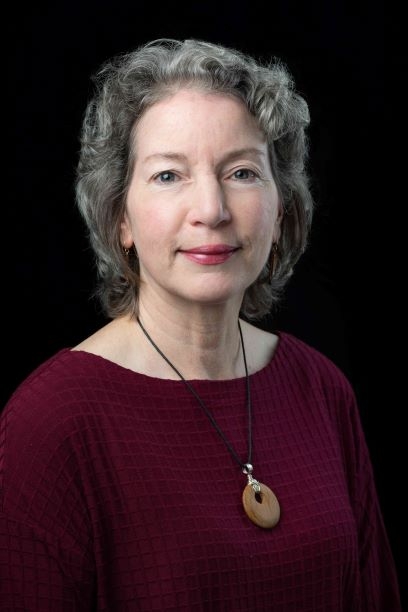
Professor Laura Hill serves as Chair and Professor in the Department of Human Development at Washington State University's College of Agricultural, Human, and Natural Resource Sciences (CAHNRS). Her academic career spans over 20 years, including roles as Associate Director for Health Promotion (2011-2014) and Associate/Assistant Professorships. She holds a Ph.D. in Psychology from Vanderbilt University (1998), an M.S. from Vanderbilt (1994), and a B.A. in Greek Studies from Smith College (1979). Dr. Hill's research focuses on prevention science, particularly translating evidence-based interventions into real-world settings. Key areas include brief interventions for college student retention (especially in STEM), parent-child dynamics in emerging adulthood, and workforce development. She leads major grants totaling millions, including a NIH-funded study on parenting interventions for college students and a WSU Strategic Reallocation grant addressing student success through values-based programming. Her funded projects emphasize scalable solutions, such as adapting parenting programs for Spanish-speaking families and evaluating community wellness initiatives. She teaches graduate courses like HD540 (Effective Intervention Programs) and HD513 (Research Methods). Her scholarly work bridges developmental psychology with practical applications, frequently involving students in co-authorship.
Professor Julia Race is a leading academic in the Department of Naval Architecture, Ocean and Marine Engineering at the University of Strathclyde’s Faculty of Engineering, where she also serves as Vice Dean (Academic). Her research focuses on the role of pipeline infrastructure in achieving net-zero emissions, particularly through carbon dioxide transport for Carbon Capture and Storage (CCS) and hydrogen energy systems. PhD, University of Cambridge – Carbon diffusion across dissimilar steel welds (1992) BEng, University of Sheffield (1989) Her research interests center on the adaptation of energy infrastructure for decarbonization, combining engineering, risk assessment, and socio-economic analysis. She investigates material specifications for CO₂ and H₂ pipelines, quantitative risk assessments, hydraulic design, and the wider economic impacts of energy transitions. Her work is closely tied to UN Sustainable Development Goals, particularly those related to climate action and sustainable industry. The recent publications reflect a strong trend toward interdisciplinary research at the intersection of engineering, economics, and policy. Her work increasingly emphasizes the socio-economic dimensions of decarbonization, including employment impacts, labour supply constraints, and regional economic benefits of CCS and hydrogen infrastructure. There is a clear focus on UK industrial clusters and the role of Scottish CO₂ transport systems in national and international markets. Julia Race has contributed to several policy briefings and collaborative reports with key stakeholders including the Scottish Government, OEUK, and Storegga. She is actively engaged in research projects funded by EPSRC, NERC, and the British Council, focusing on early-career development, maritime decarbonisation, and engineering education equity. Co-investigator, Strathclyde Engineering Scholars – Equal Outcomes for the Most Disadvantaged (2025) Principal Investigator, EPSRC/NERC CDT in Offshore Renewable Energy (IDCORE 2) (2019–2028) Co-investigator, Empowering Early Career Researchers to Advance Maritime Decarbonisation in Indonesia (2024–2026) Co-investigator, Green Hydrogen Integration at Sullom Voe (2023–2024) She plays a key role in policy outreach and professional engagement, regularly participating in workshops and meetings with government and industry stakeholders. Her leadership extends to diversity and inclusion in engineering education, where she contributes to initiatives aimed at supporting disadvantaged students.
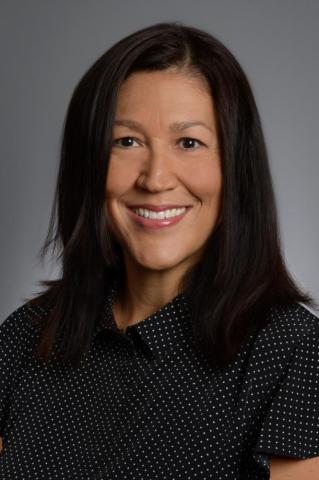
Angela Boatman is an Associate Professor in the Department of Educational Leadership & Higher Education at Boston College specializing in higher education policy evaluation, with emphasis on improving access and success for underrepresented student populations through evidence-based interventions. Her educational credentials include: Ed.D. in Higher Education from Harvard University M.P.P. and M.A. in Higher Education from the University of Michigan B.A. from the University of Minnesota Dr. Boatman's research program systematically examines college access barriers and success pathways, focusing on remedial education reform (particularly mathematics), financial aid design, community college transfer policies, and behavioral interventions to reduce loan aversion. She employs rigorous quasi-experimental and experimental methodologies to evaluate policy impacts on student outcomes, with particular attention to equity implications for traditionally marginalized groups. Her work bridges academic research and practical policy implementation through sustained engagement with federal and state education agencies. Analysis of her recent publications (2019-2025) reveals consistent thematic focus on remediation models (corequisite vs. traditional, high school vs. college timing), behavioral economics applications in financial aid, and cross-institutional transfer policies. Her research spans diverse contexts including U.S. community colleges, technical institutions in Chile, and rural-serving universities, demonstrating methodological versatility through large-scale administrative data analysis, randomized trials, and comparative international studies. Dr. Boatman has secured substantial external research funding from the Institute for Education Sciences, Bill & Melinda Gates Foundation, Lumina Foundation, and Peabody College. She actively contributes to national discourse as a faculty affiliate of the Center for the Analysis of Postsecondary Readiness (CAPR) and the Center for Education Policy Research (CEPR) at Harvard University, frequently presenting findings to policymakers and practitioners through congressional briefings, Federal Reserve conferences, and national education forums.
Julia Cramer is an Assistant Professor in the Department of Science Communication and Society at the Institute of Biology Leiden (IBL), Leiden University, with a joint affiliation at the Leiden Institute of Physics (LION). Her research focuses on the intersection of quantum science and technology with society, particularly through the lens of science communication, public engagement, and societal readiness. She leads the Quantum and Society research group and is actively involved in national and European initiatives on the Ethical, Legal, and Societal Aspects (ELSA) of quantum technology. PhD in Applied Physics, Delft University of Technology Member of the Dutch Physics Association (NNV) Co-founder of Women in Quantum Development (WIQD) Chair of the Young Academy Leiden (from 2023) Former member of the CBS communicatie-adviesraad Member of the Physics Scientific Advisory Board of the Lorentz Center Julia Cramer's research interests lie at the intersection of quantum technology and society. She investigates how quantum science is communicated to the public, how societal groups perceive quantum technologies, and how to foster inclusive and responsible innovation. Her work emphasizes broadening youth participation in STEM and enhancing diversity in quantum fields. She is passionate about making quantum accessible to non-expert audiences and ensuring that technological development aligns with societal values. Her recent publications reflect a strong trend in science communication, public perception, and societal integration of quantum technologies. Themes include measuring public attitudes, designing effective outreach interventions, promoting diversity, and addressing ethical implications. The research combines qualitative and quantitative methods to assess communication strategies and societal impacts. Casimir Prize (during PhD) Recognized as one of the Faces of Science by KNAW Julia Cramer supervises several PhD candidates and is involved in mentoring early-career researchers. She has led initiatives such as the Women in Quantum Development (WIQD) and contributes to national science policy through advisory roles. Her research is supported by collaborations with Quantum Delta NL and other European networks focused on responsible quantum innovation. She leads the Quantum and Society research group, which focuses on content analysis of quantum communication, developing attitude measurement tools, and evaluating the impact of public engagement interventions. The group collaborates with physicists, social scientists, educators, and policymakers to ensure a multidisciplinary approach to quantum-society integration.
Elisa Riedo is a tenured Professor of Chemical and Biomolecular Engineering at New York University (NYU) Tandon School of Engineering, with joint appointments as Professor of Physics in NYU’s College of Arts and Science and as affiliated Professor of Mechanical Engineering at Tandon. She serves as Director of Faculty Development at NYU Tandon and has held prior tenured positions at Georgia Tech (2003–2015) and CUNY ASRC (2015–2018). Her academic career spans over two decades, with a Ph.D. in Physics from the University of Milano (2000) and postdoctoral work at EPFL. Her research focuses on nanotechnology , graphene and 2D materials , and thermal scanning probe lithography (tSPL) , with applications in biomedical diagnostics quantum electronics electromagnetic interference shielding mechanical reinforcement of materials She pioneered tSPL for sustainable nanofabrication and discovered diamene—a single-layer diamond structure from graphene under pressure. Her recent work involves transparent infrared electrodes using silver nanowires (2025) and self-organized graphene stacking domains for quantum technologies (2024). She has secured major grants from National Science Foundation , Department of Defense , and Army Research Office . Scientific honors include: 2023 NYU Tandon Excellence in Research Award 2013 American Physical Society Fellow 2005 CREA Innovation Award Membership in the Academy of Europe (2023) She contributes to editorial boards for journals like 2D Materials and Applications and advises companies such as Mirimus Inc. and SwissLitho AG .
Dr. Andrea K. Rorrer is a full-time Professor at the University of Utah's College of Education, Department of Educational Leadership and Policy, and serves as Director of the Utah Education Policy Center (UEPC). With 35 years of education experience, she has held roles as a teacher, principal, policy analyst, and researcher. Her academic career at the University of Utah includes promotions from Assistant Professor (2002-2009) to Associate Professor (2009-2014) and Professor since 2014, alongside serving as Associate Dean for Research from 2014-2023. PhD in Educational Leadership & Policy, University of Texas at Austin (2001) MS in Educational Leadership & Policy, University of Virginia (1995) Dr. Rorrer's research focuses on the intersection of educational leadership, policy implementation, and systemic change with equity as a central theme across early childhood, K-12, and higher education. Her work examines leadership preparation programs, charter school effectiveness, policy mediation, and institutional factors affecting educational outcomes. Recent publications highlight: Leadership preparation program features influencing career intentions (2025) Personalized learning software's impact on teacher-student dynamics (2024) Turnaround reform frameworks (2018) Charter school mobility patterns (2019) Homeschool policy analysis (2012) Scientific recognition includes: UCEA Master Professor Award (2020) College of Education Research Award AERA Dissertation Award (2001) Culbertson Award for early-career contributions Mentorship has been central to her career, with 35 doctoral chairs and 44 committee memberships since 2002. Current teaching activities include Thesis Research and Ed.D. Capstone Project courses.
Pradeep Lall is the MacFarlane Endowed Distinguished Professor and Alumni Professor in the Department of Mechanical Engineering at Auburn University’s Samuel Ginn College of Engineering. He serves as Director of the Auburn University Electronics Packaging Research Institute (EPRI) and holds a joint courtesy appointment in the Department of Electrical and Computer Engineering. A leader in flexible hybrid electronics and harsh environment systems, Dr. Lall has built a world-renowned research program focused on additive manufacturing, electronics reliability, and sustainable materials. Ph.D. in Mechanical Engineering, University of Maryland M.B.A. in Finance and Strategy, Northwestern University M.S. in Mechanical Engineering, University of Maryland B.E. in Mechanical Engineering, Delhi College of Engineering Dr. Lall’s research centers on Flexible Hybrid Electronics (FHE) , Harsh Environment Electronics , Semiconductor Packaging , and Prognostics Health Management . His work leverages additive manufacturing techniques such as Aerosol-Jet, InkJet, and screen printing to develop conformal, robust, and sustainable electronic systems. His innovations include the Flexible Biometric Band for monitoring workers in hazardous environments and additively printed antennas for aerospace applications. His recent focus includes eliminating PFAS from electronics and developing water-based inks for eco-friendly manufacturing. The 15 most recent publications reflect a strong trend toward sustainability , additive manufacturing , and real-world applications in defense, aerospace, automotive, and healthcare. His work bridges fundamental research with industrial realization, particularly through partnerships with NextFlex and federal agencies. Themes include reliability under shock and vibration, sensor development for extreme environments, and workforce training in advanced manufacturing. Dr. Lall has received numerous scientific honors, including: SMTA Founder’s Award (2024) SEMI FlexTech R&D Achievements Award (2023) ASME Avram Bar-Cohen Memorial Medal (2022) IEEE Biedenbach Outstanding Engineering Educator Award (2020) IEEE Sustained Technical Contributions Award (2018) NSF Alex Schwarzkopf Prize (2016) Fellow of ASME, IEEE, NextFlex, and Alabama Academy of Science Dr. Lall has secured over $2 million in annual research funding from SRC, NSF, and NextFlex, leading large-scale projects on sustainable electronics and workforce development. He mentors numerous graduate and undergraduate students and leads the NSF-CAVE3 Center. As founding faculty advisor of the SMTA student chapter, he promotes student engagement in electronics manufacturing. His lab, EPRI, features a full prototyping line for additive electronics and collaborates with industry and government to advance domestic manufacturing capabilities. EPRI, under Dr. Lall’s leadership, partners with the Auburn University Research and Technology Park, the Office of Economic Development, and multiple colleges to drive technology commercialization and workforce education in electronic packaging. The institute is at the forefront of the national effort to reestablish U.S. leadership in semiconductor packaging and advanced electronics manufacturing.
Benjamin C. Flores is a Professor of Electrical and Computer Engineering at the University of Texas at El Paso (UTEP) , where he has built an internationally recognized career spanning advanced radar signal processing and large-scale STEM education initiatives. He directs the UT System Louis Stokes Alliance for Minority Participation (LSAMP) and the Bridge to the Doctorate Program , managing more than $40 million in funded projects aimed at increasing access and success for Hispanic and other under-represented students in STEM disciplines. Education: While specific degrees are not listed in the provided text, Dr. Flores’s faculty appointment and extensive technical expertise in radar and chaotic systems imply advanced training in electrical engineering. Research Interests: Radar & Signal Processing: high-resolution radar, inverse synthetic aperture radar (ISAR), range-Doppler processing, micro-Doppler analysis, bistatic radar, chaotic wideband signal design, neural-network-based classification of radar jamming signals. Antenna Engineering: fractal antennas, 3-D printed antenna prototyping, anechoic chamber measurements. STEM Education & Diversity: evidence-based retention strategies for non-traditional and Hispanic students, peer-led team learning, graduate mentoring, systemic change models for faculty diversity. Publication Trends: Dr. Flores’s recent articles (2021-2025) reveal two dominant thrusts—(1) cutting-edge radar/chaotic signal processing and joint radar-communication systems, and (2) rigorous, data-driven studies on broadening participation in STEM, with emphasis on mentoring, social networks, and program evaluation at Hispanic-Serving Institutions. Scientific Awards & Honors: Texas STAR Award – Texas Higher Education Coordinating Board (2005) ABET President’s Diversity Award (2006) Presidential Award for Excellence in Science, Mathematics, and Engineering Mentorship (2010) Grants & Leadership Roles: Principal Investigator & Project Director, Model Institutions for Excellence Initiative (1999-2007) Principal Investigator, UTEP PUENTES Program (US Dept. of Education, 2010-2015) Principal Investigator & Director, UT System LSAMP & Bridge to the Doctorate Program (since 2005) Laboratory & Facilities: Dr. Flores’s research group utilizes UTEP’s anechoic chamber and rapid-prototyping laboratories for antenna design and characterization, while also housing real-time radar test-beds and analog-computer platforms for chaotic oscillator experiments.
Erin Barnes is a Clinical Associate Professor in the Department of Counselor Education at the University of Iowa’s College of Education. She holds a PhD from the University of Iowa and is credentialed as both a Certified Rehabilitation Counselor (CRC) and National Certified Counselor (NCC). Her career spans over 10 years in higher education teaching and clinical practice, with expertise in rehabilitation counseling, mental health advocacy, and homeless individuals’ well-being. Barnes focuses on experiential learning methods to enhance student skills in clinical mental health and rehabilitation contexts. Education: Barnes earned her undergraduate and graduate degrees from the University of Iowa, with specializations in counselor education and rehabilitation. Research Interests: Her work addresses diversity in counseling professions, psychopathology assessment, educational equity for marginalized groups, and culturally sensitive rehabilitation practices. She emphasizes the intersection of mental health, disability, and socioeconomic factors in her scholarship. Awards: Barnes has received notable recognition, including the 2023 Collegiate Teaching Award and the Rehabilitation Counseling Alumnus of the Year Award (2017). Her leadership development includes participation in the HERS Leadership Institute and the National Research Mentor Network (NRMN). Grants & Advising: Barnes directs grants focused on telemental health, community-engaged practice, and opioid epidemic response. She collaborates on projects like the Center for Community-Engaged Practice and Research for Counselor Educators and the Opioid Workforce Expansion Program. Her mentorship emphasizes inclusive pedagogy and supporting high-achieving, low-income students. Labs/Teams: She leads initiatives through the University of Iowa’s Center for Community-Engaged Practice and Research, fostering partnerships between academic programs and community agencies to address mental health and disability challenges.
Dr. Marie Hoepfl is a Professor in the Department of Sustainable Technology and the Built Environment at Appalachian State University. She is a prominent figure in technology and engineering education, with extensive experience in curriculum development, research methods, and educational leadership. University: Appalachian State University School: College of Fine and Applied Arts Department: Department of Sustainable Technology and the Built Environment Academic Rank: Professor Her research focuses on technology education, technological literacy, evaluation and assessment, and the societal implications of technology. She has contributed significantly to the advancement of standards-based education and teacher development in STEM fields. The analysis of her recent publications reveals a consistent focus on educational reform, curriculum design, and the integration of sustainability and ethics into technology education. Her work bridges theory and practice, emphasizing teacher preparation, student assessment, and the societal dimensions of technological advancement. Dr. Hoepfl has held leadership roles in key professional organizations: Past President, Council of Technology and Engineering Teacher Education (CTETE), 2016–2019 Member, International Technology and Engineering Educators Association (ITEEA) Member, Epsilon Pi Tau (Honor Society) She has mentored graduate students through courses such as TEC 5000 (Research in Technology) and TEC 5670 (Graduate Seminar), and has been involved in multiple research and development projects. Her work includes developing e-portfolios for general education assessment, promoting appropriate technology, and advancing renewable energy education. Dr. Hoepfl's contributions span over two decades, with publications ranging from journal articles to edited yearbooks and textbooks, reflecting her deep commitment to educational excellence and innovation in technology and engineering education.
Sarah Hernandez is an Associate Professor in the Civil Engineering Department at the University of Arkansas , specializing in transportation systems engineering. Her research focuses on advanced data collection and analysis for freight planning, and she teaches graduate courses in transportation planning and data analysis. Ph.D. in Civil and Environmental Engineering, University of California, Irvine M.S. in Civil Engineering, University of California, Irvine B.S. in Civil Engineering, University of Florida Her research integrates Intelligent Transportation Systems (ITS) technologies to address freight data gaps, including: Development of tools for freight performance measures Fusion of GPS, WIM, and lock performance data Weather impact on freight traffic Lidar-based truck classification Key trends in her publications include: Advancing sensor technologies for freight analytics Improving long-range infrastructure planning Addressing data gaps in commercial vehicle operations Enhancing freight network efficiency through modeling Scientific awards: Private Sector Applicability Award, TRB Intermodal Freight Committee (2018) As founder of the Freight Transportation Data Research Lab , she leads initiatives on unbiased freight planning and workforce diversity. Her outreach includes mentoring middle and elementary school STEM programs.
Sheri Klug Boonstra is an Associate Research Professional at Arizona State University (ASU), affiliated with the School of Earth and Space Exploration. She leads the NASA-funded Lucy Student Pipeline and Competency Enabler (L’SPACE) Program and co-founded the ASU Space Works Program, both of which focus on STEM workforce development. Her work emphasizes creating equitable, authentic research experiences for students at scale, bridging educational institutions with NASA missions like the Lucy Asteroid Mission and Mars Sample Return. Education: M.S. in Earth Science Education (Boise State University, 1998); B.S. in Earth Science Education (Boise State University, 1994, Cum Laude and Distinguished Honors). She has held NASA fellowships and awards, including the NASA Space Grant Fellowship and recognition as Geoscience Student of the Year. Research Interests: Klug Boonstra specializes in STEM education innovation, workforce development, and public engagement in space exploration. Her programs address equity, mentorship, and skill-building for underrepresented students. She has secured over $54 million in grants for STEM initiatives, including NASA-funded projects like the Mars Student Imaging Project and the L’SPACE Program. Awards: Recipient of the AGU’s Excellence in Earth and Space Science Education (2020), the International Astronautical Federation’s Excellence in 3G Diversity Award (2023), and the honor of having Asteroid 8631 named SHERIKBOONSTRA in her honor (2021). Courses Taught: She instructs courses such as SES 307/407 (Space Works I/II) and Special Topics in STEM Education, focusing on design, fabrication, and testing of space-related projects. These courses emphasize hands-on learning and collaboration with industry partners. Grants & Leadership: Klug Boonstra has served on key boards, including the AAAS Science in the Classroom Advisory Council and NASA’s Solar System Exploration Subcommittee. Her work spans K-12 through undergraduate education, prioritizing real-world, mission-driven experiences to prepare students for STEM careers.
Professor Lisa Kervin is a leading academic in early childhood education at the University of Wollongong (UOW), serving as Director of Early Start Research and holding a Professorial appointment in the School of Education. Her research focuses on young children’s literate practices, play-based learning, and digital technology integration in education. She leads the ARC Centre of Excellence for the Digital Child and has secured significant funding, including a 2025 ARC Future Fellowship exploring intergenerational play. Kervin was honored as a Member of the Order of Australia (AM) in 2024 for contributions to early childhood digital literacy research. She has supervised over 35 research students, many now in academic and leadership roles, and currently oversees seven doctoral candidates. Her work bridges theory and practice through collaborations with educators and industry partners, emphasizing interdisciplinary approaches to child development and policy influence globally. Education: PhD in Language and Literacy from UOW (2001–2004). Professional roles include Principal Fellow of the Australian Literacy Educators’ Association and Director qualifications from the Australian Institute of Company Directors. Her research spans digital childhood ethics, play pedagogy, and literacy curriculum design, with outputs impacting government policies and international educational frameworks. Ongoing projects include the ‘DigIQ’ program promoting digital literacy and ‘Playgroups for All Ages’ fostering intergenerational engagement. Grants and collaborations involve partnerships across six universities and 33 global organizations. Her teaching innovations include the Early Childhood Elevate Mentoring Program to support educators’ academic progression. Kervin’s work addresses critical issues like screen time impacts, STEAM education, and culturally responsive pedagogies, positioning her as a key voice in 21st-century early childhood education.
Lisa Flores is a Professor in the Department of Psychological Sciences at the University of Missouri, within the College of Arts and Science. Her research focuses on career development, diversity in STEM fields, and systemic barriers faced by underrepresented groups in higher education and professional settings. Flores leads a clinical psychology lab investigating topics like invisibility in vocational contexts, retention of Latinx engineers, and structural competencies in counseling practice. Her work integrates social cognitive career theory with critical race theory and intersectionality frameworks. Notable contributions include developing assessment tools like the Career Support Scale for Women in Engineering (CSS-WE) and the Negative Outcome Expectations Scale in Engineering (NOES-E). Flores has secured grants for longitudinal studies on engineering student retention and led initiatives to improve academic-climate metrics for underrepresented minorities. Recent research emphasizes workplace diversity challenges, particularly for women and people of color in technical fields. She has published over 50 peer-reviewed articles and serves on editorial boards for journals like Journal of Counseling Psychology and Journal of Latinx Psychology . Flores' teaching focuses on counseling psychology, career development interventions, and culturally responsive pedagogy.
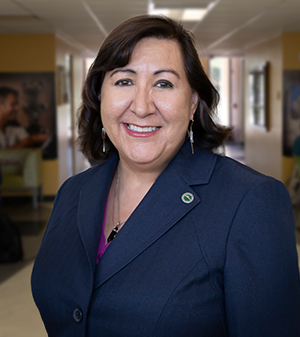
Norma Alcantar is a Professor and Associate Dean for Research at the University of South Florida (USF) College of Engineering , where she leads in the Department of Chemical, Biological and Materials Engineering . Her research focuses on Energy and Sustainability , leveraging natural materials like cactus mucilage for water purification, drug delivery, and sustainable technologies. Her scientific work spans Environmental Engineering , Biomaterials , and Nanotechnology , addressing challenges in water treatment, biomedical applications, and green manufacturing. Her recent publications highlight innovations in ammonia removal , off-flavor degradation , nano-drug delivery , and diversity initiatives in STEM . She has contributed to Sustainable Chemical Engineering Materials (SusChEM) grants and symposiums. Her research trends include bioinspired materials for pollution control, targeted therapeutics for cancer, and interfacial science applications. She utilizes cactus mucilage in water purification , oil spill response , and biomedical systems , emphasizing scalability and environmental compatibility. Her work bridges green chemistry with public health and infrastructure sustainability . Grants and collaborative efforts include NSF SusChEM funding for graded polymer membranes and interdisciplinary programs like CAI-STEM. She has no listed scientific awards in the provided text. Her email contact is norma@usf.edu, and her office is at ENC 3201 , USF.