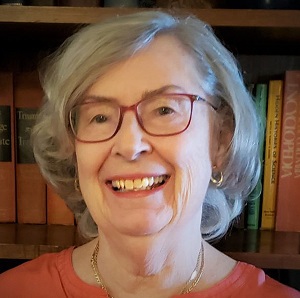
Ruth Tappen, EdD, RN, FAAN, is a Professor and Christine E. Lynn Eminent Scholar at Florida Atlantic University's College of Nursing. With extensive research experience in Alzheimer's disease, dementia care transitions, and hospital readmission reduction, she has led significant projects including the development of a patient decision guide for nursing home care and co-investigated a $2.4 million NSF data science grant. Education: EdD, Columbia University (1980) M.Ed, Columbia University (1974) BSN, Wagner College (1966) Her research focuses on Alzheimer's Care , Care Transitions , Gerontological Nursing , and Data Science Applications . Recent work explores in-vehicle cognitive monitoring systems and decision-making tools for end-of-life care. Scientific Awards: Sigma Global Nursing Excellence (2021) Greater Fort Lauderdale Alliance World Class Faculty Award (2021) Southern Nursing Research Society Distinguished Researcher (2020) AJN Book of the Year (2018) Active grants include: $5M NIA grant for 'In-Vehicle Sensors to Detect Cognitive Change' (2020) $2.4M NSF grant for data science curriculum (2020)
Martin Krauss is a prominent environmental chemist and researcher with extensive contributions to contaminant analysis, pesticide fate, and bioavailability studies. His work spans 2000-2025, focusing on advanced analytical techniques like LC-HRMS, Orbitrap mass spectrometry, and biota-to-soil accumulation factor modeling. Key research areas include: Environmental fate of nitrosamines, PAHs, and PCBs Development of extraction methods for complex matrices Covalent binding mechanisms in soil organic matter Toxic pressure assessment in aquatic ecosystems Integration of omics data into toxicokinetic-toxicodynamic (TKTD) models Non-target screening of emerging contaminants His articles demonstrate methodological innovations in environmental monitoring, combining solid-phase extraction , high-resolution mass spectrometry , and biological assays . Recent work (2025) explores wastewater discharge patterns through temporal clustering , while 2024 studies link gene expression to zebrafish embryo toxicity . Collaborations with Juliane Hollender, Wolfgang Wilcke, and Werner Brack highlight his interdisciplinary approach across environmental science , analytical chemistry , and toxicology . His findings inform chemical risk assessment frameworks and pollution mitigation strategies.
V. N. Venkatakrishnan is a Professor and Associate Dean for Research and Graduate Studies at the College of Engineering, University of Illinois at Chicago. His research focuses on Computer Systems Security with applications in web security, exploit detection, and security automation. Education: Ph.D in Computer Science (2004), Stony Brook University Research Interests: Spanning Computer Systems Security , Venkatakrishnan's work integrates compilers , operating systems , and formal methods to develop defenses against cyber attacks. His recent publications emphasize automated attack detection, exploit generation, and security frameworks for web applications. Scientific Awards: Distinguished Paper Award at USENIX Security 2018 Best Paper Award at IEEE QRS 2016 2009 ATT Award for Best Applied Security Research Best Paper Award at ACSAC 2003 Advising and Collaborations: He has mentored numerous Ph.D. and M.S. students including Sadegh Momemi and Maliheh Monshizadeh. Former advisees include Birhanu Mekuria (now at University of Michigan) and Rigel Gjomemo (now Research Assistant Professor at UIC).
Timo Kretschmer M.A. is a Lecturer at HTWK Leipzig's Faculty of Architecture and Social Sciences, specializing in Building Information Modeling (BIM), computer-aided design, and architectural animation. He has been affiliated with the university since 2004, initially working in the Faculty of Civil Engineering before moving to the Faculty of Architecture and Social Sciences in 2014. As Webmaster of the IT organization and Member of the Faculty Council, he plays a significant role in the university's digital infrastructure. His research focuses on BIM implementation, digital building applications, and virtual construction monitoring. He has been involved in significant projects including the cooperative doctoral procedure with Leipzig University on the reconstruction of Max Klinger's 'Christus im Olymp' and the Saxon Ministry of Justice's model project (2007-2008). His current research (2023-2025) continues to advance digital methods in architectural practice. Kretschmer's publications and presentations demonstrate a clear trajectory from foundational BIM concepts to advanced implementation strategies. His 2024 handbook 'BIMcert Handbuch Grundlagenwissen openBIM' represents the culmination of his expertise, while his earlier works from 2004-2015 established his contributions to architectural history and education. His conference presentations since 2015 show increasing specialization in BIM competence development, data security, and interdisciplinary applications. Chairman of DIN NA 005-13-05 AA 'Professional Competence' Spokesperson for buildingSMART eV Specialist Group 'Certification' Member of buildingSMART International PCert Sub-Committee Member of CEN/TC 442/WG8 'Competence' Founding member of buildingSMART eV Regional Groups in Saxony and Central Germany As an active participant in professional organizations, Kretschmer contributes significantly to standardizing BIM competence frameworks. His work with the Saxony Chamber of Architects on the 'Digital Building Application' working group demonstrates his commitment to bridging academic research and professional practice. His jury work for the BIM Champions awards (2021-2025) further establishes his authority in the field. The IT infrastructure he helps maintain, including the BIMcloud system, supports numerous architectural design projects across the faculty.
Awais Ashfaq is a Postdoctoral Researcher at Halmstad University's School of Information Technology, focusing on healthcare data analytics and AI applications in clinical decision-making. His work bridges the gap between advanced machine learning techniques and practical healthcare solutions, with particular emphasis on emergency department diagnostics and cardiovascular disease analysis. Dr. Ashfaq's research interests center around healthcare data analysis, applying statistics, traditional machine learning, deep learning, and language models to extract insights for informed clinical and management decisions. His work demonstrates strong expertise in interpretable AI models for medical diagnostics, particularly in emergency settings for conditions like dyspnea. He has made significant contributions to the development of evidence-based diagnostic tools that integrate seamlessly with clinical workflows. His publication record shows a consistent focus on leveraging complete healthcare system data to address real clinical challenges. The research trends indicate increasing sophistication in model interpretability while maintaining high diagnostic accuracy. His work spans multiple healthcare domains including emergency medicine, cardiology, and pediatric care, demonstrating the versatility of his methodological approaches. Dr. Ashfaq collaborates extensively with physicians across all care levels to ensure his research translates effectively to clinical practice and improves patient outcomes. His work on regional healthcare information platforms demonstrates commitment to building infrastructure that supports ongoing medical research and quality improvement initiatives.
Dr. Suren Chilingaryan is a Data Processing and Software Performance Expert at the Institute for Process Data Processing and Electronics (IPE) at Karlsruhe Institute of Technology (KIT), where he has been working since 2007. His expertise lies in developing high-performance computing solutions for scientific experiments, with a focus on data acquisition systems, parallel computing architectures, and optimization of image processing software for scientific applications. His educational background includes: PhD in Computer Science (2006) from the Institute for Informatics and Automation Problems of the National Academy of Science of the Republic of Armenia Diploma in Mechanics and Mathematics (2001) from Moscow State University, with thesis on neural networks Dr. Chilingaryan's research spans high-performance computing, parallel hardware architectures, and scientific data management. He specializes in developing efficient algorithms for data acquisition and control systems, particularly for particle physics experiments. His current activities include high-speed data acquisition and control, management of large data, and optimization of image processing software for parallel computing architectures. He has pioneered techniques for GPU-accelerated data processing that enable real-time analysis of massive datasets from experiments like KATRIN (neutrino mass measurement), PANDA, and ASEC (Aragats Space Environmental Center). His recent publications demonstrate a strong focus on neutrino physics, cosmic ray phenomena, and high-speed data acquisition systems. The integration of FPGA and GPU technologies in his research has enabled breakthroughs in real-time data processing for scientific experiments, particularly in synchrotron imaging and particle detection applications. His work bridges computer science and experimental physics, with particular emphasis on developing scalable infrastructure for managing and analyzing large scientific datasets. Dr. Chilingaryan leads development of key software infrastructure including: UFO (Ultra fast X-Ray imaging platform) for smart experiments using GPU computing ADEI (Advanced Data Extraction Infrastructure) for time-series data management High-throughput DAQ Platform for FPGA-based scientific experiments His technical leadership supports major international collaborations including KATRIN, PANDA, and ASEC, providing critical data management solutions that enable new types of scientific investigations across particle physics, astrophysics, and atmospheric science disciplines.
Ciara Hughes is Professor of Health Science Research at Ulster University's Faculty of Life & Health Sciences, where she serves as Research Director for Nursing and Health Sciences at the School of Health Sciences. Based at the Magee Campus in Londonderry, Northern Ireland, she has established herself as a leading researcher in radiography, artificial intelligence applications in healthcare, and maternal health. Her research interests span a diverse range of topics including radiography practices, non-medical prescribing by therapeutic radiographers, artificial intelligence in medical imaging, reflexology and complementary medicine, maternal health issues, and pressure ulcer prevention. Dr. Hughes has particular expertise in systematic reviews and randomized controlled trials as research methodologies. Analysis of her 261 research outputs reveals a strong focus on practical healthcare applications, with significant contributions to understanding how AI can support radiographers, improving pregnancy-related healthcare, and advancing wound care technologies. Her work demonstrates consistent productivity with 22 research outputs in 2024 alone, showing no signs of slowing down. JMIRS Top Paper Awards 2022 for AI-related research Best Conference Poster Award at Allied Health Professions Research Conference (2006) Dr. Hughes actively supervises research and leads multiple projects including CoRIPS (2024-2025) analyzing AI interfaces for clinical decision support, development of the PUPI pressure-relieving boot, and the Intelligent Monitoring of Prosthesis conditions in lower limb amputees project where she serves as Principal Investigator. Her research group maintains strong connections with healthcare providers including the Belfast Health and Social Care Trust.
Dalia Suša Vugec, PhD is an Assistant Professor at the Department of Informatics, Faculty of Economics & Business, University of Zagreb. She is actively involved in teaching and research within the field of business informatics, with a focus on digital transformation and business process management. Her educational background includes a graduation in managerial informatics in 2012 and a PhD earned in 2020, both from the University of Zagreb, Faculty of Economics & Business. She has also pursued additional education at the University of Ljubljana and University of Cambridge. Business Process Management Robotic Process Automation Digital Transformation Knowledge Management Digital and Information Literacy Artificial Intelligence Applications Her research output demonstrates a strong focus on business process management, digital transformation, and the intersection of technology with business processes. Recent publications explore robotic process automation, process mining, AI applications in knowledge management, and the digital literacy of students. Her work often examines practical implementations and case studies across various industries. Dean's Award for Excellence for graduate thesis (2012) Dr. Suša Vugec teaches various courses including Business Process Management Systems, Business Informatics, and Artificial Intelligence Systems in Business. Her teaching materials are delivered through Google Classroom, reflecting her practical approach to integrating digital tools in education. She has actively participated in numerous scientific projects and serves as a reviewer for international scientific journals and conferences.
Jana L. Anderson, M.D. serves as Assistant Professor of Emergency Medicine at Mayo Clinic College of Medicine, holding dual appointments as Consultant in the Division of Emergency Medicine Research and Division of Pediatric Emergency Medicine. Her clinical practice focuses on pediatric emergency care at Mayo Clinic's Rochester, Minnesota campus where she actively participates in the Hospital-Wide Sedation Committee since 2006. Education: Fellow, Pediatric Emergency Medicine (University of Utah) Residency, Pediatrics (University of Utah) M.D., Carver College of Medicine (University of Iowa) B.A., Biology Cum Laude (Luther College) Dr. Anderson's research centers on pediatric pain management and sedation protocols , with landmark findings establishing pediatric pain as responsible for over 19 million annual U.S. medical visits. Her work spans intranasal analgesics (fentanyl vs ketamine), nitrous oxide protocols , and propofol/fentanyl applications for fracture reduction. A significant contribution includes developing an electronic decision aid for acute otitis media that promotes shared decision-making between clinicians and parents, reducing unnecessary antibiotic use. Her fingerprint analysis confirms deep expertise in Emergency Department operations (100%), Pediatrics (54%), and Sedation protocols (29%). Analysis of her publication trends reveals increasing focus on evidence-based clinical decision rules since 2020, with recent book chapters addressing bacterial meningitis, fever evaluation, and serious infections in infants. Her work consistently bridges emergency medicine with primary care applications, particularly in antibiotic stewardship and procedural sedation safety. Scientific Awards: 2024 Minnesota Monthly Top Doctors 2019 & 2018 Favorite Faculty Awards 2015 Best Doctors recognition 2012 Teacher of the Year 2003 NIH Loan Repayment for Pediatric Research As founding charter member of the Society for Pediatric Sedation (since 2007), Dr. Anderson has shaped national sedation standards while maintaining active roles in Mayo Clinic's Quality Committee and Pediatric Residency Clinical Competency Committee. Her research receives continuous institutional support through Mayo Clinic's Emergency Medicine Research infrastructure, with recent work on codeine dispensing patterns funded through retrospective database analysis of national claims data. Current projects focus on optimizing painless emergency department experiences through protocol development and decision support tools. Dr. Anderson leads the Pediatric Nursing Workgroup within Emergency Medicine and contributes to the ED Provider Peer Review Committee, driving quality improvements in pediatric sedation safety and length-of-stay metrics. Her clinical work directly informs research through Mayo Clinic's integrated practice-based research network.
Don Adjeroh is a Professor and Associate Chair in the Lane Department of Computer Science and Electrical Engineering at West Virginia University (WVU). He serves as Graduate Coordinator for CS programs and has led multiple NSF-sponsored projects including Bridges in Digital Health and Multi-Scale Integrative Approach to Digital Health . His research focuses span Machine Learning , Bioinformatics , Computational Biology , and Data Compression . NSF CAREER Award recipient Collaborated with institutions like University of Central Florida and University of Canterbury Led workshops on Plant Image Analysis and Long Non-Coding RNA research His academic contributions include co-authoring the book The Burrows Wheeler Transform: Data Compression, Suffix Arrays, and Pattern Matching (Springer, 2008) and developing software tools like BSMP and PSA for data compression and protein family modeling. He teaches graduate-level courses in String Algorithms and Information Theory , with former projects involving undergraduate and graduate students in DNA microarray image processing and 3D video compression research. Key Scientific Awards : NSF CAREER Award NASA-WV Space Consortium funding WV-EPSCOR grants NSF-CITeR support DOD-ONR/DHS/DOJ/NIJ/NHPRC sponsorships
Rochelle Wigley is a Lecturer and Project Director for Nippon Foundation/GEBCO projects at the University of New Hampshire. With a Ph.D. in sedimentology and geochemistry from the University of Cape Town, she bridges geological research with advanced ocean mapping technologies. Her work focuses on integrating geochemical analysis with bathymetric data to enhance continental shelf evolution understanding, particularly in southern Africa. Education Ph.D., Geology/Earth Science, University of Cape Town M.S., Geochemistry, University of Cape Town B.S., Geology/Earth Science, Rhodes University B.S., Chemistry, Rhodes University Her research spans marine authigenic minerals (phosphorites, glauconite), deep ocean bathymetry, and autonomous mapping systems. She pioneered projects like the Indian Ocean Bathymetric Compilation and contributed to the Shell Ocean Discovery XPRIZE through AUV-USV integration. She teaches courses such as Marine Geosci for Hydrography and Ocean Mapping Internships . Recent publications emphasize global bathymetry challenges, programming education for ocean mappers, and collaborative data processing networks. Although no awards are explicitly listed, her leadership in international mapping programs underscores her influence in marine geoscience and policy. As part of the Center for Coastal & Ocean Mapping, Wigley manages the Chase Ocean Engineering Lab, fostering innovation in unmanned seafloor mapping. She maintains a global alumni network for GEBCO, advancing remote data workflows and training future ocean mappers.
Andrew E. Russell is a Clinical Assistant Professor in the Geriatric and Palliative Medicine department at the University of Michigan Medical School . He completed his MD at Tulane University, MPH at University of Illinois at Chicago, and BA and BS at Washington University in St. Louis. Internal Medicine Residency, Tulane University (2021) MD, Tulane University (2021) MPH, University of Illinois at Chicago (2018) BA, Washington University in St. Louis (2011) Dr. Russell's research focuses on expanding access to outpatient palliative care and addressing health disparities through quality geriatric and palliative medicine for diverse populations. He explores health informatics innovations, frailty management , and pain treatment optimization . Recent publications highlight policy analysis of palliative care systems, EHR adaptation during the pandemic, and symptom management in aging adults. Dr. Russell provides direct patient care in outpatient clinics for Geriatrics and Palliative Care while mentoring at the University of Michigan. His work bridges clinical practice with healthcare delivery research, emphasizing health equity and systemic improvements in elder care.
Dr. Menino Osbert Cotta is an Honorary Research Fellow at the University of Queensland Centre for Clinical Research, specializing in pharmacokinetics/pharmacodynamics (PK/PD) of antimicrobials and therapeutic drug monitoring (TDM) in critically ill patients. His work focuses on optimizing beta-lactam antibiotics and anti-infective agents for sepsis, neurocritical care, and resistant infections. Key Research Areas: Antimicrobial stewardship, precision dosing software, ICU pharmacotherapy, cerebrospinal fluid drug penetration, and machine learning applications in TDM. Collaborations: Works with international teams across Australia, UK, and LMICs, particularly on beta-lactam infusion strategies and hospital antimicrobial programs . Recent Trends: 2024-2025 publications emphasize pediatric ICU antibiotic compatibility cost-effectiveness of outpatient parenteral antimicrobial therapy (OPAT) CSF pharmacokinetics of ceftriaxone Methodology: Utilizes population PK/PD modeling, systematic reviews, and clinical trials like BLING III to evaluate continuous vs. intermittent infusions in sepsis. Contact: Email m.o.cotta@uq.edu.au for collaboration or inquiries.
Prof. Dr. Yaşar Güneri ŞAHİN serves as the Dean of the Faculty of Engineering and Computer Sciences at Izmir University of Economics, where he also holds a professorship in the Department of Software Engineering. With over two decades of experience in both academia and industry, he has established himself as a prominent figure in software engineering, real-time systems, and educational technologies. His academic journey began with a Bachelor's degree in Computer Engineering from Middle East Technical University in 1994, followed by a Master's in Computer Education from Gazi University in 1999, and culminated with a Ph.D. in Industrial Technology from Gazi University in 2005. Prior to joining Izmir University of Economics in 2008, he served as a faculty member at Yaşar University starting in 2005, and before that, he gained nearly a decade of industry experience in high-level management roles overseeing numerous software projects for both public and private sectors. Prof. ŞAHİN's research spans several interconnected domains with a strong emphasis on practical applications. His work in software engineering focuses on project management methodologies, team building models for educational contexts, and database systems. In real-time systems, he has made significant contributions to forest fire detection technologies using innovative approaches like animal-based biological sensors and radio-acoustic sounding systems. His educational technology research addresses challenges in nursing education, special education for individuals with autism, and internet resource utilization by university students. Notably, his interdisciplinary approach bridges computer science with healthcare applications, particularly in medical informatics where he has developed public health information systems and tools for medical data entry. His scholarly output demonstrates a consistent trajectory of innovation across multiple domains, with particular concentration in the period from 2007-2013. While his early work focused on foundational software engineering concepts and database systems, his research evolved to address pressing societal challenges including forest fire detection, healthcare information systems, and educational technologies. This evolution reflects his ability to identify emerging technological needs and apply software engineering principles to diverse real-world problems. His contributions have been recognized through multiple prestigious awards: TÜBİTAK Scientific Publication Awards (2008-2012) İzmir University of Economics Scientific Publication Awards (2008-2011) As an academic advisor, Prof. ŞAHİN has supervised doctoral and master's theses on diverse topics including heart failure management, triage algorithms for multiple injuries, and software project selection metrics for small and medium enterprises. His administrative leadership extends beyond his deanship to include serving on juries for national art, design, and architecture competitions, as well as evaluating research projects for TEYDEB and TÜBİTAK. His grant activities include serving as a project reviewer and monitor for various technology development initiatives including "Bulut," "ARAGES," "SADE," and "SWH-ATLANTIS." Prof. ŞAHİN maintains an active research laboratory environment focused on real-time systems and software engineering applications. His work often involves interdisciplinary collaboration, particularly with medical professionals on health informatics projects and with education specialists on technology-enhanced learning initiatives. Current research directions appear to focus on the intersection of software engineering principles with healthcare applications and environmental monitoring systems.
Dr Isabella Bovolo is an Assistant Professor in the Department of Geography at Durham University, specializing in tropical hydro-climatology and ecosystem services. She leads research on the impacts of climate change and deforestation in the Guiana Shield region, with a focus on coupled human-natural systems and flood risk management in urban/semi-urban environments. 2015-Present: Assistant Professor, Durham University World Bank-affiliated flood risk specialist (2013 onwards) Former Fellow of the Institute of Hazard, Risk & Resilience Her research integrates hydrology, climate modeling, and community engagement, particularly in Guyana and Suriname. Key projects include mangrove rehabilitation and Rupununi Savannah wetlands analysis. Recent publications analyze regional climate patterns, deforestation impacts, and hydrological modeling in tropical and Mediterranean regions. She has served on the Environmental Research Letters review board (2006-2021). Over $3.8M grant from Global Environment Facility (2008-2013) Extensive EU-funded project collaboration