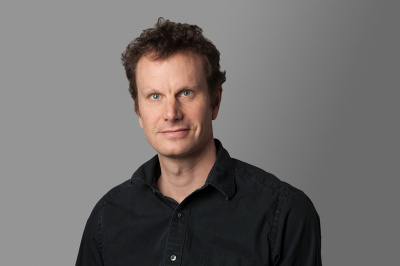
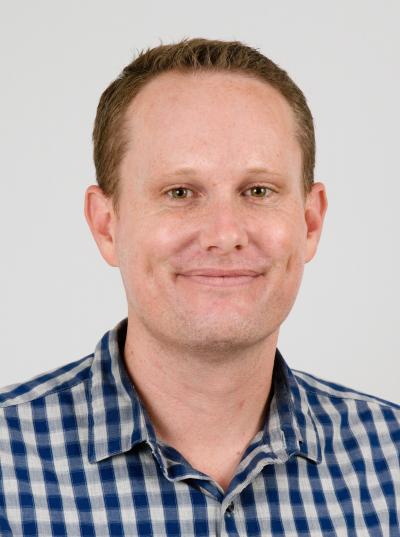
Benjamin J. Keys is a Research Associate at the University of Pennsylvania's Wharton School within the Public Economics program. His work focuses on public economics, environmental economics, and financial risk management with particular emphasis on housing markets and climate change impacts. University of Pennsylvania - The Wharton School Public Economics Department His research explores: Climate risk capitalization in housing markets Mortgage insurance moral hazard Consumer credit card payment behaviors Emergency credit systems Regional economic redistribution through mortgages Email: benkeys@wharton.upenn.edu Scientific awards include: Fellowships on Consumer Financial Management
Swiss Federal Institute of Technology in LausanneSwitzerland
Dominique Foray is a Professor at Ecole Polytechnique Fédérale de Lausanne (EPFL) and holds the Chair of Economics and Management of Innovation (CEMI). He is a member of the Swiss Council for Science, chairman of the KOF Swiss Economic Research Institute's Advisory Board, and a foreign member of Columbia University's Center of Capitalism and Society. His career includes extensive advisory roles, such as with the European Commission's 'Knowledge for Growth' group and Germany's Expert Commission for Research and Innovation. Education: Ph.D. in Economics, University Lumière of Lyon (1984) Habilitation à diriger des recherches, University Lumière of Lyon (1992) Foray's research focuses on the economics of innovation, knowledge-based economy dynamics, technology policy, smart specialization strategies, and institutional frameworks for innovation. He has authored seminal works including The Economics of Knowledge (MIT Press, 2004) and Smart Specialisation (Routledge, 2015). His recent publications explore mission-oriented innovation policies, smart specialization in EU contexts, and knowledge diffusion mechanisms. Foray's work bridges academic theory with practical policy design, influencing regional and national innovation strategies globally. Advising: Past EPFL PhD students: Aouinait Camille Marguerite, Ayoubi Charles Chadi, Baruffaldi Stefano Horst, Bednyagin Denis, Bogers Marcellus, Coffano Monica, Conti Annamaria, Cristelli Gabriele, Gaulé Patrick, Hamdan Livramento Intan Maizurah, Marino Marianna, Muñoz Tellez de Kieffer Viviana Carolina, Pellegrin Claudia, Simeth Markus Foray's institutional roles include leadership in European policy initiatives and contributions to the World Bank's studies on innovation's role in economic growth. His interdisciplinary approach integrates economics, policy analysis, and technology management to address grand societal challenges through innovation.
Swiss Federal Institute of Technology in LausanneSwitzerland
Michaël Aklin is an Associate Professor of Economics and Management of Innovation at the École Polytechnique Fédérale de Lausanne (EPFL), holding the Chair of Public Policy and Sustainability since joining in 2023. He co-directs the Enterprise for Society (E4S), a joint initiative with IMD and the University of Lausanne. Previously, he was an Associate Professor at the University of Pittsburgh, with a PhD from New York University and postdoctoral work at the University of Pennsylvania. Education: PhD in Economics, New York University MA in Politics, University of Essex BSc in International Studies, Graduate Institute of International and Development Studies Research Interests: Focuses on the political and economic dimensions of sustainable development, energy policy, and climate change. His work bridges environmental economics, public policy analysis, and political economy, with emphasis on just transition policies, renewable energy adoption, and equitable energy access. Recent projects include studies on coal-dependent communities, just transition frameworks in national climate plans, and socio-economic impacts of clean energy transitions. Key Roles: Head of Enterprise for Society (E4S) Member of CDM Management and Doctoral Program Committee (EDMT-GE) Teaching responsibilities include courses on sustainability, technology policy, and econometrics Advising & Grants: Supervises four doctoral students (Bataillard, Fernandez, Touré, Zollner). His research has been supported through grants analyzing energy transitions, policy effectiveness, and socio-economic impacts of green initiatives. Labs & Initiatives: Leads E4S, a multidisciplinary center addressing societal challenges through business and technology innovation. Collaborates on global projects assessing climate policies, energy access disparities, and just transition strategies.
Gautam Gowrisankaran is a Professor of Economics at Columbia University , with affiliations as a Research Associate at the National Bureau of Economic Research (NBER), a Research Fellow at the Centre for Economic and Policy Research (CEPR), and a Professeur affilié at HEC Montréal. His research spans Health Economics , Industrial Organization , and Environmental Economics . Primary Affiliation : Columbia University, Department of Economics Secondary Affiliations : NBER, CEPR, HEC Montréal His work investigates dynamic market behaviors , including hospital pricing under Medicare reforms, energy transitions in regulated markets, and the impact of policy uncertainty on technology adoption. Recent publications focus on renewable energy integration , insurance market dynamics , and environmental regulation enforcement . Key trends in his research include applied microeconomic modeling , policy evaluation , and strategic interactions in markets with high stakes such as healthcare and energy. His methodological approach often combines structural estimation with empirical data analysis . Notable Grants : Doctoral Dissertation Research in Economics (Effect of Certified Nurse Midwife Scope-of-Practice Laws) Gautam actively contributes to academic discourse through collaborations with institutions like the University of Arizona and University of Chicago . His work addresses critical societal challenges, including healthcare affordability, energy sustainability, and regulatory efficiency.
Cesla Amarelle serves as Full Professor and Chairholder of Public Law and Migration Law at the University of Neuchâtel's Faculty of Law. Her academic leadership extends to co-directing the Swiss Center for Migration Law (CDM) and contributing to national research initiatives including the National Center of Competence in Research (NCCR) 'On the Move'. She concurrently holds significant public appointments as Chair of the Institute of European Law at the University of Fribourg and Federal Commissioner for Women's Issues, with recent expert designation to the Federal Round Table on signature collection integrity for 2024. Her academic foundation includes a law degree from the University of Lausanne (1996), LL.M. in European and International Economic Law from the University of Fribourg, and doctoral thesis from the University of Lausanne (2004). Her career progression at the University of Neuchâtel spans assistant professor (2009-2014), extraordinary professor (2015-2016), and full professor positions since 2016, complemented by earlier research roles at Swiss National Science Foundation and University of Fribourg. Professor Amarelle's research centers on migration law frameworks, human rights protections in asylum systems, and constitutional dimensions of European integration. Her work critically examines the intersection of migration governance with digital technologies, climate change impacts, and gender equality. Current projects analyze temporary protection regimes, non-refoulement principles in technological contexts, and the evolving relationship between Swiss migration law and European legal frameworks. Her scholarship consistently bridges theoretical legal analysis with practical policy implementation challenges. Her extensive publication record demonstrates evolving focus from foundational migration law codification toward contemporary challenges including digital discrimination, child rights in emergency contexts, and sustainable finance frameworks. Recent scholarship reflects increasing engagement with technological impacts on migration governance and the humanitarian dimensions of temporary protection systems, while maintaining rigorous analysis of constitutional and European law interfaces. Professor Amarelle actively contributes to academic and public discourse through leadership in the Swiss Center for Migration Law and participation in the NCCR 'On the Move' consortium. Her public service includes significant political roles as Vaud State Councilor for Education (2017-2022) and National Councilor (2011-2017), where she chaired key committees on political institutions and finance while representing Swiss higher education interests nationally. She maintains active engagement with professional associations including the Swiss Conference of Higher Education Institutions and Conference of Directors of Public Education.
Danny Yagan is a Researcher at the University of California, Berkeley Department of Economics, with expertise in public economics, taxation, and income inequality. He contributes to the National Bureau of Economic Research (NBER) and the Conference on Research in Income and Wealth. His research focuses on fiscal policy, including deficit sustainability and the "growth dividend" concept. He has extensively studied pass-through business entities' impact on labor income share and inequality, using administrative tax data to analyze wealth distribution and taxation of top earners. Recent work examines spatial inequality trends, place-based redistribution, and the role of colleges in intergenerational mobility. Collaborations with scholars like Raj Chetty, Emmanuel Saez, and Owen Zidar highlight his interdisciplinary approach. Yagan's publications span topics including tax reform, capital taxation, and household investment behavior. He is actively involved in policy analysis and empirical economic research.
Martin Huber is Professor of Applied Econometrics and Policy Evaluation at the University of Fribourg, Switzerland, within the Faculty of Management, Economics and Social Sciences, Department of Economics. He leads the Chair of Applied Econometrics and maintains an active research profile with numerous publications in top economics and statistics journals. His work bridges theoretical econometrics with practical policy applications across multiple domains including labor, health, and education economics. Professor Huber earned his Ph.D. in Economics and Finance in 2010 and served as Assistant Professor at the University of St. Gallen until 2014. He has conducted research stays at Harvard University (2011/2012) and the University of Sydney (2014 and 2019), establishing an international research network. His academic affiliations include the Committee for Econometrics of the Verein für Socialpolitik, Global Labor Organization, Soda Labs (Monash Business School), and Centre for European Economic Research (ZEW) Mannheim. Huber's research focuses on data-based causal analysis , machine learning applications in economics , and policy evaluation methods . He specializes in developing and applying statistical and econometric methods for measuring causal effects, with particular emphasis on semi- and nonparametric microeconometrics. His work spans labor economics (gender occupational segregation, maternal labor supply), health economics, education policy, and competition policy (bid-rigging cartels detection). His recent publications (2023-2025) demonstrate a clear trajectory toward integrating machine learning techniques with traditional econometric methods for causal inference. This includes developing frameworks for causal discovery, improving difference-in-differences methods with machine learning, and creating novel approaches for detecting collusion in markets. His 2023 book "Causal Analysis: Impact Evaluation and Causal Machine Learning with Applications in R" (MIT Press) has become a key reference in the field. As an active researcher, Professor Huber directs several research projects including experimental evaluations of gender occupational segregation in the Swiss apprenticeship market. His work combines theoretical rigor with practical policy relevance, often employing experimental and quasi-experimental methods to address questions of causal mechanisms in social and economic phenomena. Through his Chair of Applied Econometrics, Huber supervises Ph.D. students and maintains an active research group focused on advancing causal inference methodologies. His work has significant implications for evidence-based policymaking across multiple sectors, particularly in evaluating the effectiveness of social programs and economic policies.
Western Switzerland University of Applied SciencesSwitzerland
Dr. Laura Zizka is a Professor at the EHL Hospitality Business School, part of the HES-SO university network. She specializes in higher education strategies, crisis communication, and sustainability in hospitality and STEM sectors. Her research bridges academic theory with industry practice, focusing on organizational resilience during crises, digital education transformation post-pandemic, and embedding sustainability literacy in curricula. Education**: BSc HES-SO in Hospitality and Tourism Management Research Themes**: Crisis communication strategies in tourism and hospitality Digital transformation in higher education Pro-environmental behavior in hospitality operations Sustainability integration in STEM and business programs Her work emphasizes bridging educational practices with real-world challenges, such as pandemic communication, stakeholder engagement in sustainability, and employability skills for STEM graduates. Recent studies include analyzing Swiss hoteliers' pandemic communication evolution and exploring AI's role in academic writing through Microsoft Copilot case studies. Grants & Projects**: HES-SO Rectorate-funded project (2019–2020) on destination image and pictorial content impact (CHF 99,000) Longitudinal studies on student/faculty perceptions of digital education (2020–2023) Dr. Zizka collaborates with industry partners like KITRO (food waste tech) and actively contributes to conferences on topics ranging from trauma-informed pedagogy to blended learning models. She advocates for holistic sustainability education and has advised on CSR communication strategies for airlines and hospitality firms.
Patrick Emmenegger is a Professor of Comparative Political Economy and Public Policy at the University of St. Gallen's School of Economics and Political Science (SEPS-HSG). He chairs the PhD Program in International Affairs and Political Economy and serves on the Executive Committee of the Council for European Studies. His research focuses on direct democracy, electoral systems, vocational education policy, and the political economy of skill formation. He has held roles in federal vocational education commissions and served as editor of the Socio-Economic Review. His academic interests include the interplay between economic policy and political institutions, particularly in Switzerland and Europe. Recent work examines voter behavior in direct democratic contexts, electoral district design, and the adaptation of skill formation systems to the knowledge economy. He co-authored a forthcoming book on electoral system reforms and contributed to policy reports on industrial policy and education reforms. Key research outputs include analyses of higher education as industrial policy, municipality-level voting patterns in Switzerland, and partisan strategies in electoral districting. His work bridges comparative political economy with methodological rigor, addressing topics like taxation politics, labor market governance, and the impact of war on state capacity. Advising and grants include leadership of the PhD program and contributions to federal education policy initiatives. His research team explores themes such as gender segregation in occupations and the role of skill requirements in labor markets. He maintains strong links with European policy networks through his involvement in the Council for European Studies.
Frédéric Robert-Nicoud is Full Professor of Political Economy at the Geneva School of Economics and Management (GSEM) , University of Geneva. He has held academic positions at HEC Lausanne and the London School of Economics (LSE), with visiting roles at CEMFI, CERAS, CORE, Princeton, and other institutions. His research focuses on Economic Geography, Urban Economics, and International Trade , with significant contributions to agglomeration theory, trade liberalization, and spatial sorting. Education: PhD in Economics, London School of Economics (2002) Master's in Econometrics and Mathematical Economics (Summa Cum Laude, 1999) Master's in International Relations (HEID, 1996) Bachelor's in Economics (University of Geneva, 1994) His research interests explore the interplay between trade liberalization, urban inequality, tech clusters, and labor market dynamics. Recent work analyzes climate change's geographic implications and structural transformation in cities. He has developed frameworks for understanding highway impacts on spatial sorting, agglomeration effects, and trade's role in unemployment. Key scientific awards include: CEPR Fellow Affiliated with Spatial Economic Research Centre (SERC) Former Editor of Journal of Economic Geography (6 years) Former Associate Editor of Review of International Economics (4 years) Member of Conseil scientifique des économistes His grants and fellowships span NBER, CEPR, and SERC affiliations. He has presented at major conferences including the Urban Economics Association Annual Meetings, European Economic Association Congress, and World Trade Institute seminars.
Swiss Federal Institute of Technology in LausanneSwitzerland
Yuval Noah Harari is a historian, philosopher, and lecturer at the Department of History at the Hebrew University of Jerusalem. Born in Haifa, Israel in 1976, he received his PhD from the University of Oxford in 2002. He is best known as the author of the internationally acclaimed books Sapiens: A Brief History of Humankind (2014), Homo Deus: A Brief History of Tomorrow (2016), 21 Lessons for the 21st Century (2018), Nexus: A Brief History of Information Networks from the Stone Age to Artificial Intelligence , and the Unstoppable Us children's series. Harari's research focuses on macro-historical questions including the relationship between history and biology, the essential difference between Homo sapiens and other animals, justice in history, historical directionality, human happiness throughout history, and the ethical questions raised by science and technology in the 21st century. His work bridges history, biology, philosophy, and economics, taking both macro and micro perspectives to understand not only what happened and why, but also how it felt for individuals. His books have sold over 45 million copies in 65 languages, with Sapiens alone selling 25 million copies since its publication. He is considered one of the world's most influential public intellectuals today. Harari has given keynote speeches at major international forums including the World Economic Forum in Davos and has presented as a digital avatar in a TED talk. Sapiens spent 96 consecutive weeks in the top 3 of the Sunday Times bestseller list Co-founded Sapienship, an international social impact company focused on education and storytelling, with his husband Itzik Yahav Regularly speaks at major international events on topics of technology, history, and the future of humanity Harari's recent work focuses on the challenges of the information age, particularly the crisis of truth and trust in an era of disinformation and artificial intelligence. He explores how humans can navigate the complex ethical questions raised by emerging technologies while maintaining democratic values and human dignity.
Deborah L. Brake is the John E. Murray Faculty Scholar and Professor of Law at the University of Pittsburgh School of Law. Her scholarship focuses on gender discrimination, Title IX jurisprudence, and equality theory, with particular emphasis on sports equity, employment law, reproductive justice, and constitutional protections against discrimination. She has authored extensive research on the intersection of gender, law, and social inequality. Brake's research explores feminist legal theory, discrimination doctrine, and civil rights enforcement mechanisms. Her work critically examines: Title IX's application in athletics and education Legal frameworks for addressing pregnancy discrimination Systemic barriers in employment retaliation cases Constitutional dimensions of transgender rights Campus sexual assault adjudication systems Her recent publications demonstrate sustained focus on evolving gender equality issues, including constitutional challenges to transgender athlete bans, feminist jurisprudence legacy, #MeToo-era workplace dynamics, and reproductive rights under Title IX. The scholarship reveals consistent engagement with contemporary civil rights debates through intersectional feminist frameworks.
Dr. Marcus Dillender is an Assistant Professor in the Department of Economics at Vanderbilt University, a Faculty Research Fellow at the National Bureau of Economic Research (NBER), and a Research Fellow at the IZA Institute of Labor Economics. His research focuses on the intersection of health, labor, and public economics, with particular attention to occupational health, workers' compensation insurance, and healthcare labor markets. PhD in Economics from the University of Texas at Austin (2013) Prior affiliations: W.E. Upjohn Institute for Employment Research, University of Illinois at Chicago School of Public Health Dr. Dillender's recent work investigates gender disparities in medical evaluations and policy impacts on healthcare markets . He has also studied the effects of air pollution on workplace safety , computerization on employment , and public health funding efficacy . His research appears in journals such as the Journal of Health Economics and Journal of Public Economics. Office hours: Tuesdays, 3-5pm at Vanderbilt University.
Zurich University of Applied Sciences (ZHAW)Switzerland
Thorsten Busch is a Senior Lecturer at the ZHAW School of Management and Law, affiliated with the Zurich Center for Sustainability Leadership. His academic career includes roles as Visiting Assistant Professor at the University of Konstanz (DE), Postdoctoral Fellow at Concordia University (CA), and Senior Research Fellow at the University of St. Gallen (CH). He holds an M.A. in political science, economics, and management from the University of Oldenburg (DE), and a Ph.D. in organizational studies and cultural theory from the University of St. Gallen (CH). His research focuses on digital business ethics, AI ethics, and sustainability in digital industries. Notable projects include leading the ethical business model development for the Play Science citizen science platform. His work has been published in outlets like Journal of Business Ethics and presented at MIT, Oxford, and McGill University. Education: M.A.: University of Oldenburg (Political Science, Economics, Management) Ph.D.: University of St. Gallen (Organizational Studies & Cultural Theory) Advanced training: Oxford Internet Institute, Harvard Berkman Klein Center Research interests bridge digital ethics and sustainability, addressing topics like algorithmic HR challenges, CSR in sports organizations, and environmental impacts of the games industry. He actively engages in global academic discussions through conferences like EGOS and ACM Ethical Games. Current projects emphasize actionable solutions for ethical business models in digital sectors.
University of Applied Sciences and Arts LucerneSwitzerland
Sebastian Huber is a Lecturer and academic leader at the Lucerne School of Business (Lucerne University of Applied Sciences and Arts), holding roles such as Coordinator of Continuing and Executive Education and Head of multiple academic programs including the CAS in International Management and Business Excellence. He holds a DBA in Business Administration from Silpakorn University (Thailand) and has extensive industry experience in luxury goods, marketing, and international business development. His educational background includes a Master/MBA in International Business and Economics (China-focused) from Hamburg University/Fudan University and a Bachelor of Arts in International Business Management. His academic career spans teaching Organisational Behaviour and International Management at Swiss universities since 2004. Research focuses on B2B sharing economy models, SME business transformation, luxury industry innovation, and digitalization in education. Key projects include hyFiT - hybride Führung internationaler Teams and AI Driven Business Model Innovation . He actively publishes in journals like Marketing Review St. Gallen and ABAC Journal , with over 20 peer-reviewed articles since 2021. Awards: Honorary Membership in Luxury Innovation Lab, Reviewer roles for multiple academic platforms Podcasts: Co-hosts Von Pontius bis Pilatus , an executive education podcast Industry Experience: Over 20 years in leadership roles at companies like Montblanc, Wellendorff, and Alibaba His work bridges academic research and practical business challenges, emphasizing interdisciplinary collaboration and innovative educational models.