Jennifer Lavoie is an Associate Professor at Wilfrid Laurier University's Faculty of Human and Social Sciences, affiliated with the Department of Psychology and Criminology. She specializes in mental health crisis response, policing strategies, de-escalation techniques, and scenario-based training. Wilfrid Laurier University: Faculty of Human and Social Sciences, Psychology and Criminology Departments Research Interests : Her work focuses on integrating virtual reality and scenario-based training to improve police de-escalation skills. She examines violence risk assessment , correctional systems , and housing first programs for homeless individuals with mental illness. Recent studies address big data governance , cyberstalking victimization , and community-driven policing approaches . Publication Trends : Her research spans mental health policy , police training efficacy , and technological integration in crisis management . She explores virtual reality applications and community co-designed interventions , alongside longitudinal studies on stress and coping mechanisms in correctional and psychiatric settings. Scientific Awards : No scientific awards listed in available data. Advising : Actively supervises students in psychology and criminology, with unlisted advisees. Her work bridges academic research and practical policing applications .
Don John Omale serves as a Senior Lecturer in Criminology within the College of Business, Law and Social Sciences, focusing on critical issues in Nigerian and African criminal justice systems. His work bridges theoretical frameworks with practical field applications across diverse security and justice contexts. Dr. Omale's research centers on restorative justice mechanisms, police ethics, and conflict resolution in Africa. He extensively examines traditional African dispute resolution models alongside modern criminal justice challenges, with particular emphasis on Nigeria. His studies address farmer-herder conflicts, prison conditions, terrorism countermeasures, and domestic violence in semi-urban settings, consistently advocating for culturally grounded solutions that enhance community trust and institutional accountability. Analysis of his 15 most recent publications (2010-2025) reveals a dominant focus on restorative justice implementation and police accountability in Nigeria. His work demonstrates a methodological shift from theoretical discourse (2005-2011) toward empirical field studies examining practitioner perspectives and community-level impacts, particularly in conflict-affected regions like the Niger Delta and North Central Nigeria. The research consistently connects indigenous African conflict resolution traditions with contemporary security challenges. No scientific awards were documented in available sources Professional activities show no recorded student advising or grant funding in the provided materials, though his extensive publication record suggests active research supervision. His work frequently engages criminal justice professionals and community stakeholders, indicating collaborative field-based approaches to justice reform.
Emily D. Gottfried, PhD, is an Associate Professor at the Medical University of South Carolina (MUSC) in the Department of Psychiatry and Behavioral Sciences, College of Medicine. She serves as Director of the MUSC Sexual Behaviors Clinic and Lab (SBCL) and CPSPD Student Education & Research, conducting forensic evaluations, physiological sexual arousal assessments, and mentoring students. She is licensed in South Carolina and Georgia, and a National Register Health Service Psychologist. Bachelor’s in Psychology, San Diego State University Master’s in Psychology, Teachers College, Columbia University PhD in Clinical Psychology, Florida State University Her research focuses on sex offender risk assessment , malingering detection (PPG/VPP technology), female offender psychology , and forensic evaluation validity . Recent work includes dimensional personality models and QAnon-related threat analysis . She has published extensively on psychopathy , penile/vaginal plethysmography , and mental health court outcomes . Notable publication trends include Forensic validity of symptom detection tools Psychopathy in female offenders Technology's role in sexual behavior assessment Telehealth adaptation during pandemics MMPI-2-RF applications in correctional settings Psychological factors in civil commitment She leads ongoing funded studies on female sexual arousal and police officer behavioral outcomes , operating at the intersection of forensic science and clinical psychology .
Prof. Dr. Mareike Kühne is a full-time Professor of Business Administration at the Department of Business and Management, Brandenburg University of Technology. With a unique interdisciplinary background spanning economics, business administration, philosophy, and neuroscience, she bridges affective dimensions with economic rationality to develop holistic decision-making frameworks. Doctorate in Economics, Otto von Guericke University Magdeburg (1992-1997) Fulbright Scholar, San Diego State University (1997-1998) Studies in Philosophy, Humboldt University (2007-2011) Doctoral and Master’s in Neuroscience, Berlin School of Mind and Brain (2011-2013) Her research integrates insights from psychology and neuroscience into capital market-oriented corporate reporting, corporate governance, and normative rationality frameworks. She critiques current economic models for neglecting the embodied nature of cognition, advocating for a more nuanced understanding of rationality that incorporates lived experience. Her 15 most recent works span sustainability reporting (2025), neuroeconomics (2021), M&A disputes (2017), and IFRS standard evolution (2005-2012). These publications highlight her focus on reconciling traditional accounting principles with interdisciplinary approaches to decision-making. Fulbright Scholar (1997-1998) Prof. Kühne has taught at Humboldt University, HHL Leipzig, and the Berlin School of Mind and Brain. She actively participates in professional organizations including the German Society for Philosophy, European Accounting Association, and European Financial Reporting Advisory Group. Her work emphasizes the practical impact of neuroscientific findings on economic policy and standard-setting.
Stanislaw Jarecki is an Associate Professor of Computer Science at the Donald Bren School of Information and Computer Sciences (ICS) at the University of California, Irvine (UCI). He joined UCI in 2003 after earning his Ph.D. in Computer Science from MIT in 2001 under Prof. Shafi Goldwasser. His research focuses on applied and distributed cryptography, with significant contributions to threshold cryptography, secure computation, and password-authenticated key exchange (PAKE) protocols such as OPAQUE, which secures 2 billion WhatsApp users. He also worked at Intertrust’s StarLab and Stanford’s applied cryptography group under Prof. Dan Boneh. Education: Ph.D., Massachusetts Institute of Technology, 2001. Research Interests: Distributed cryptography, secure multi-party computation, privacy-preserving protocols, threshold security, blockchain applications, and efficient cryptographic primitives. His work emphasizes practical solutions for real-world systems, including protocols resilient to server compromises and scalable encryption methods. Awards: 2023 IACR Fellow for contributions to distributed cryptography and efficient secure computation. Advising and Grants: Jarecki’s research has been supported by grants including NSF SaTC programs. He advises students on cryptographic protocol design and security mechanisms. His work on OPAQUE and CHIC protocols exemplifies his focus on bridging theoretical cryptography with practical implementation. Labs/Teams: Leads a research group focused on applied cryptography and security within ICS at UCI, collaborating on projects like secure computation, privacy-preserving data processing, and cryptographic protocol development.
Colin Peter Green is a Professor of Economics at the Norwegian University of Science and Technology (NTNU) in Trondheim, Norway, where he serves in the Department of Economics within the Faculty of Economics. He also holds a research fellowship at the Institute of Labor Economics (IZA) in Bonn, Germany. Having earned his PhD from the University of Queensland in 2008, Green has established himself as a prominent researcher across multiple economic fields. Green's research spans labor economics, education economics, migration studies, health economics, political economy, and behavioral economics. His work frequently examines the intersection of these fields, with particular focus on how economic policies and structures impact individual behavior, educational outcomes, and well-being. Recent projects have investigated performance pay systems, political connections in business, refugee integration in educational settings, and the relationship between physical attractiveness and adolescent risk behaviors. His methodological approach typically employs rigorous empirical techniques applied to large-scale datasets from multiple countries. Green serves as Editor in Chief of the journal Education Economics and is an Associate Editor for the Journal of Economic Behavior & Organization (JEBO). He is also the organizer of the International Workshop on the Applied Economics of Education (IWAEE), demonstrating significant leadership in his academic community. His editorial roles and conference organization indicate substantial recognition from peers and influence in shaping research directions in education and labor economics. His extensive publication record includes articles in top journals such as Journal of Economic Behavior & Organization, Labour Economics, British Journal of Industrial Relations, and Journal of Population Economics. Green's research demonstrates consistent productivity with publications spanning from 2021 through 2025, covering diverse topics from the impact of bar closing hours on traffic accidents to the effects of political donations on UK democracy. Green maintains an active professional presence through his Bluesky account (@colinpgreen.bsky.social) where he engages with the academic community, shares conference announcements, and discusses research opportunities. His involvement in hiring PhD students and faculty positions at NTNU indicates ongoing commitment to departmental development and academic mentorship.
Dr. Gary Nihan serves as a Visiting Associate Professor in the Department of Sport and Movement Science at Salem State University . With a 36-year career in public education, he previously held leadership roles including K-12 Director of Health and Physical Education in Danvers Public Schools and administrative positions in Reading Public Schools. His expertise spans curriculum design , standards-based assessment , and bullying prevention in athletics . Education: Doctorate in Education (Curriculum Leadership) from Northeastern University Current Responsibilities: Supervising teacher candidates and teaching courses like First Responder and Fundamentals of Fitness Grant Work: Provides technical assistance for Carol M. White Pep Grants in Massachusetts and Maine Dr. Nihan's research focuses on evidence-based approaches to bullying prevention , instructional strategies in physical education, and pre-service teacher training . His publications and presentations emphasize sequential K-12 curriculum development and student growth measurement through NASPE PE Metrics. He also explores the integration of physical activity into community education programs. Recent works highlight interdisciplinary connections between physical education, health promotion, and behavioral science. His editorial contributions address systemic gaps in physical education programming and youth driver education policies. Dr. Nihan collaborates with institutions on grant management and sustainability strategies, while maintaining active teaching roles in both academic and community settings. Personal interests include cycling, skiing, golf, and fiction reading.
Pascal Mettes is a tenured Assistant Professor at the University of Amsterdam within the Informatics Institute, specializing in Artificial Intelligence. He leads groundbreaking research in hyperbolic deep learning, a field he has significantly advanced through theoretical developments and practical applications in computer vision and multimodal learning. His research focuses on three primary domains: hyperbolic vision-language models that address the hierarchical nature of language-vision relationships; hierarchical deep learning using hyperbolic embeddings that naturally accommodate exponential growth patterns; and robust deep learning in hyperbolic space that improves out-of-distribution detection and network resilience. Mettes has established himself as a leading figure in this emerging field through numerous publications at top-tier conferences including CVPR, ICCV, ICML, NeurIPS, and ICLR. His recent work demonstrates how hyperbolic geometry provides natural solutions to fundamental limitations in modern deep learning, particularly regarding hierarchical data structures that cannot be adequately represented in Euclidean space. The publication trends show increasing impact and recognition in the computer vision and machine learning communities, with multiple papers receiving oral presentations and best paper nominations. Best paper nomination ESWC25 for 'Designing Hierarchies for Optimal Hyperbolic Embedding' Finalist MM 2023 Best Open-Source Software Competition (for HypLL) Multiple reviewer awards across major conferences including CVPR, ICLR, ECCV, ICML, and NeurIPS MM 2016 Best Doctoral Student Award TRECVID 2015 Winner Multimedia Event Detection Benchmark Mettes actively mentors eight PhD students working on hyperbolic learning and related topics, while also securing significant research funding including ELLIs PhD Award, NWO ClickNL, Google Perception Academic Funding, and Data Science Centre PhD Grants. He serves in prominent academic roles as Program Chair for International Conference on Multimedia Retrieval 2026 and has organized multiple workshops on hyperbolic learning at major conferences. His leadership in establishing hyperbolic deep learning as a recognized research direction is evident through his survey paper in IJCV 2024 and the development of the HypLL library for hyperbolic learning.
Dr. Pammla Petrucka is a Professor at the University of Saskatchewan's College of Nursing and affiliated with the School of Public Health. A USask graduate with degrees in Nursing (BScN, MN, PhD), she focuses on marginalized populations' health through innovative methodologies like qualitative and mixed methods. Her research emphasizes Women’s Health, Global Health, Menstrual Hygiene Equity, and One Health initiatives. Current projects include improving healthcare accessibility in developing regions and addressing menstrual hygiene disparities. She teaches courses on leadership in nursing, rural nursing practices, and evidence-based health care. Dr. Petrucka’s work has been nationally and internationally funded, supporting collaborative research teams across disciplines. She has authored numerous peer-reviewed publications addressing global health challenges and cultural barriers to healthcare access. Her honors and fellowships reflect recognition for advancing nursing science and public health equity. Grants & Funding: Successfully secured funding at local, provincial, national, and international levels for research projects. Advising: Mentors a large cohort of graduate and undergraduate students in nursing and public health. Labs/Teams: Leads interdisciplinary groups focused on global health equity and maternal-child health interventions. Her sabbatical (July 2024–June 2025) will likely expand her work on One Health innovations and menstrual hygiene advocacy.
Professor Holly Thorpe is a Professor of Sociology in Te Huataki Waiora / School of Health at the University of Waikato, specializing in Sport and Human Movement. She serves as Associate Dean Research in the Division of Health PVC Office and is an internationally recognized sociologist of sport, physical culture and gender whose work has earned prestigious fellowships and awards including Fulbright, Leverhulme, and Royal Society honors. Her educational background includes a PhD from the University of Waikato and Papa Reo Level 1 certification from Te Wananga o Aotearoa, reflecting both academic excellence and cultural engagement with Māori language and knowledge systems. Professor Thorpe's research centers on equity and inclusion in sporting cultures, with particular attention to women's health and wellbeing, sport and gender, and the impact of social media on athletic experiences. She employs critical and feminist theoretical frameworks with expertise in qualitative methods to examine how sport, physical activity, and health intersect in rapidly changing social landscapes. Her work spans gender studies, feminist methodologies, sports science, sociology of health, and digital media studies within sporting contexts, with a strong commitment to community-engaged research. Her extensive publication record reveals consistent thematic focus on contemporary issues including menstruation in sport, digital technologies and athlete experiences, pandemic impacts on wellbeing, and the gendered dimensions of mega-sport events. Her work frequently employs intersectional analysis and collaborates across disciplines to address complex questions about embodiment, identity, and social change in sporting cultures, particularly as they relate to women and marginalized communities. Professor Thorpe's significant scholarly recognition includes: Royal Society Early Career Research Excellence Award for Social Sciences (2018) Fellow of the North American Society for the Sociology of Sport (2018) Royal Society James Cook Fellowship for a two-year project focused on women's wellbeing through and beyond pandemic (2021) She actively supervises students and has secured substantial research funding including the Te Punaha Matatini CORE Research Institute project 'Youth Wellbeing in Uncertain Times: The Voices of Rangatahi from Flood-Effected Tairāwhiti Gisborne' (2023-2025). Professor Thorpe collaborates extensively with international and national sports organizations including the International Olympic Committee, High Performance New Zealand, Sport New Zealand, Skateistan, and Voice in Sport to ensure her research has real-world impact on policy and practice. She serves as Series co-editor for 'New Femininities in Digital, Physical and Sporting Cultures' and maintains active media engagement through The Conversation and other outlets. Professor Thorpe leads several significant research initiatives including 'Reimagining Fields of Play' (2023) and co-organized the 'Gender, Health and Wellbeing Symposium' (2022), demonstrating her commitment to creating spaces for critical dialogue about sport, gender, and health while advancing culturally responsive methodologies that center Indigenous and diverse perspectives.
Dhruv Shah is an Incoming Assistant Professor of Electrical and Computer Engineering at Princeton University starting January 2026 and currently serves as a Senior Research Scientist at Google DeepMind. He is also an Associated Faculty member in Princeton's Center for Statistics and Machine Learning, focusing on the convergence of machine learning and robotics for real-world deployment. His academic credentials include a Ph.D. and M.S. in Electrical Engineering and Computer Sciences from the University of California, Berkeley (2024) and a B.Tech. (Honors) in Computer Science and Engineering from the Indian Institute of Technology, Bombay (2019). Shah's research pioneers foundation models for robotics, emphasizing large-scale robot learning, out-of-distribution generalization, and long-horizon reasoning. His group adopts a full-stack methodology spanning algorithmic innovation to system design, drawing from cognitive science to develop physical AI systems at the perception-learning-control interface. Key focus areas include reinforcement learning, human-robot interaction, and continual learning for challenging environments. Analysis of his 15 most recent publications reveals dominant trends in foundation models for visual navigation, language-conditioned policies, and multi-agent systems. His work increasingly integrates multimodal inputs (vision, language) while addressing generalization gaps in real-world settings, with strong emphasis on efficient data curation and scalable robot learning frameworks. His accolades feature the Microsoft Future Leaders in Robotics & AI Fellowship (2024), two IEEE ICRA Best Conference Paper Awards (2024), multiple ICRA finalist awards across cognitive robotics and manipulation categories, and the Berkeley Fellowship (2019-2024). Shah will recruit PhD students for Princeton's upcoming admissions cycle, establishing a research group dedicated to full-stack robotics development. While specific grant details aren't provided, his trajectory indicates significant funding for AI-robotics convergence projects, particularly in foundation model development and real-world deployment challenges. His laboratory at Princeton will integrate algorithmic innovation with system design, focusing on physical AI systems that bridge perception, learning, and control while maintaining strong ties to cognitive science principles for human-aligned robotic intelligence.
Philip Bell is a Professor in the Learning Sciences & Human Development at the University of Washington College of Education . He holds the Shauna C. Larson Endowed Chair in Learning Sciences and serves as Director of the Institute for Science + Math Education . Additionally, he co-directs the LIFE Science of Learning Center , focusing on equity-driven innovation in STEM education. Education : PhD and MEd in Human Development & Cognition, Science/Math Education from UC Berkeley (1998, 1996); BS in Electrical Engineering & Computer Science from University of Colorado Boulder (1989). Bell’s research emphasizes cognitive and cultural approaches to learning across diverse environments, including everyday science expertise , learning technology design , culturally expansive instruction , and large-scale educational reform . His work bridges formal and informal learning contexts , addressing equity through participatory design research. Recent research trends include culturally sustaining pedagogies , climate justice science education , and systemic equity in STEM . His team develops STEM Teaching Tools and collaborates with national networks to improve science standards and instructional coherence. Scientific Awards : Shauna C. Larson Endowed Chair in Learning Sciences. Bell mentors a diverse group of doctoral students and has advised numerous PhD/MEd graduates now in academic and research roles. His projects span K-12 STEM innovation , science communication , and equity-focused policy , including contributions to the Next Generation Science Standards . He leads the Institute for Science + Math Education and collaborates with the Research+Practice Collaboratory , Seattle/Renton school districts, and national teams to scale equitable science education.
Marguerite M. Pinto, MBBS, serves as a Clinical Assistant Professor in the Department of Pathology at Yale School of Medicine. With decades of experience in cytopathology, Dr. Pinto specializes in diagnosing diseases through cellular examination of tissue samples, with particular expertise in fine needle aspiration techniques and cytologic diagnosis. She has maintained a strong clinical focus throughout her career, emphasizing the importance of accurate diagnosis to avoid unnecessary patient testing and biopsies. Dr. Pinto's educational background includes: MBBS from St. John's Medical College (1969) Residency at Bridgeport Hospital (1975) Fellowship at Children's Hospital of Philadelphia (1976) Fellowship at Milton S. Hershey Medical Center (1977) Her research focuses on improving diagnostic accuracy in cytopathology, particularly through the application of biomarker testing in fine needle aspirates. Dr. Pinto has specialized interest in clinical research involving small case series to develop practical diagnostic methods applicable in any laboratory setting. Her work has contributed significantly to the understanding of tumor markers like carcinoembryonic antigen (CEA) and CA-125 in the diagnosis of various cancers, with particular applications in breast, gynecologic, pancreatic, and pulmonary pathologies. She approaches diagnostic pathology with the philosophy that accuracy directly impacts patient care quality, minimizing unnecessary procedures while ensuring definitive diagnoses. Dr. Pinto's publication record from 1991-1997 demonstrates a focused research trajectory examining how tumor markers can enhance traditional cytologic diagnosis. Her work consistently explored the diagnostic value of CEA and CA-125 across multiple organ systems, establishing evidence for their practical application in fine needle aspiration biopsies. This research has contributed to standardized protocols for using these biomarkers as diagnostic adjuncts in cytopathology. Her professional recognition includes: American Cancer Award (April 14, 2009) Dr. Pinto maintains active clinical practice at Yale Medicine, where she applies her expertise in cytopathology to patient care. Her professional legacy extends beyond her own work, as she comes from a multi-generational medical family - her father was a medical school dean, and her daughter graduated from Yale School of Medicine to become a transplant cardiologist, continuing the family tradition. Dr. Pinto has been affiliated with the Norma Pfriem Cancer Center at Bridgeport Hospital from 1997-2012, contributing her cytopathology expertise to cancer diagnosis and treatment.
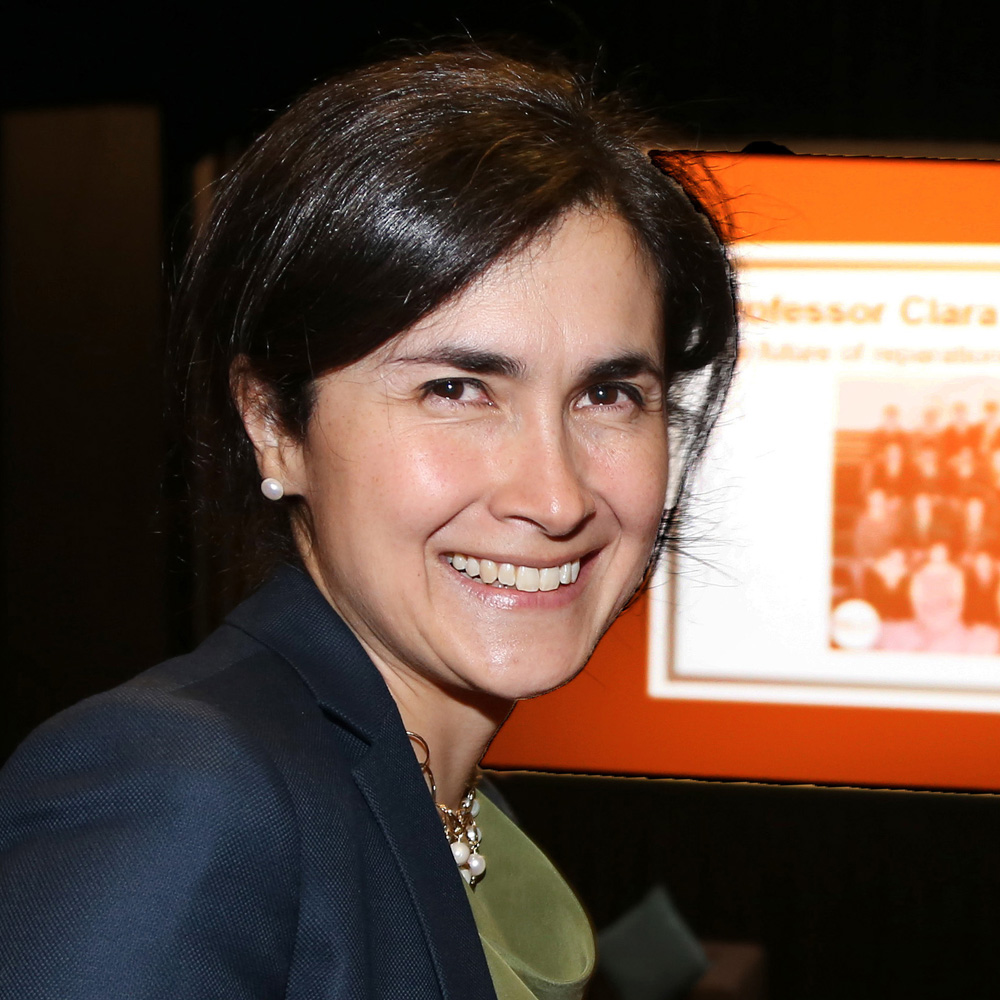
Prof Clara Sandoval Villalba is an Honorary Professor at the Essex Law School, University of Essex. She is a qualified lawyer, a member of the Human Rights Centre, and Co-Director of the Essex Transitional Justice Network. Her work focuses on the Inter-American System of Human Rights, Transitional Justice, and the Right to Reparation. She is actively involved in research, teaching at the Geneva Academy's Master in Transitional Justice, and leading projects on victims' participation and reparation in transitional settings. Clara co-authored notable works such as Reparations for Victims of Armed Conflicts (CUP, 2020) and Doctrine, Practice, and Advocacy in the Inter-American Human Rights System (OUP, 2019). Her research projects include AHRC GCRF and ESRC-funded initiatives in Colombia, Guatemala, and Peru, analyzing reparation programs, victims' participation, and accountability mechanisms. Her recent publications address virtual hearings during the pandemic, gender-sensitive reparations, and the interplay between supranational bodies and state implementation of reparation orders. Clara has advised the ICC on reparation awards and contributed to UN Guidance Notes on Conflict-Related Sexual Violence. She is also engaged in human rights litigation and capacity-building with organizations like REDRESS. Clara supervises PhD students in Human Rights and Law, including Paulina Jimenez Fregoso and Maria Delia Sanchez Del Angel, who explored intersectionality and victims' participation in transitional justice. She has secured grants from AHRC, ESRC, and the British Council for research on land restitution, structural inequalities, and transitional justice mechanisms. For academic inquiries, she can be reached via email at csando@essex.ac.uk by appointment at the Colchester Campus, University of Essex.
Marjorie Corman Aaron serves as Professor of Practice and Director of the Center for Practice at the University of Cincinnati College of Law, where she teaches negotiation, client counseling, trial practice, mediation, and decision analysis. Her leadership oversees the law school's trial practice program and student competition teams in dispute resolution. Her academic foundation includes a BA from Princeton University and JD from Harvard Law School. Professor Aaron's research revolutionizes lawyer-client communication through structured decision-making frameworks. She pioneered methodologies for counseling clients through legal uncertainties, emphasizing decision tree analysis to quantify risks and outcomes. Her seminal works "Client Science" and "Risk and Rigor" bridge psychological insights with practical legal strategy, transforming how attorneys navigate complex negotiations and settlement discussions while maintaining ethical rigor. Her scholarly trajectory reveals consistent innovation in dispute resolution pedagogy, evolving from foundational decision analysis techniques to contemporary explorations of mediator neutrality in politically charged contexts and ethical implications of nondisclosure agreements. Her distinguished recognition includes: Harold C. Schott Scholarship Award (2019) Goldman Prize for Excellence in Teaching (2010) University President’s Excellence Award for Teaching (2006) American College of Civil Trial Mediators Education/Training Achievement Award (1998) CPR Institute for Dispute Resolution Second Prize for Excellence (1995) As an educator, she mentors students through national competition teams while extending her impact via workshops for law firms, corporations, and government entities. Her digital platforms (clientsciencecourse.com and riskandrigor.com) provide global resources for legal educators, complemented by frequent guest lectures at Harvard, Michigan, and international institutions. The Center for Practice functions as an experiential learning hub under her direction, integrating theoretical knowledge with hands-on trial advocacy training and dispute resolution simulations that prepare students for real-world legal practice.