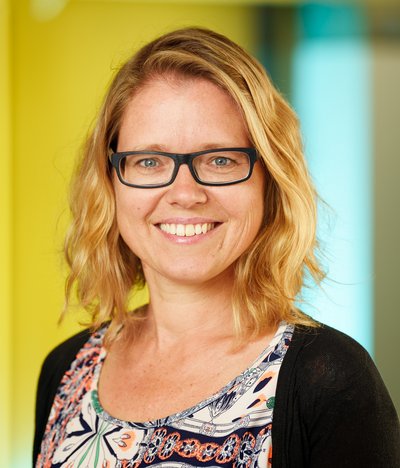
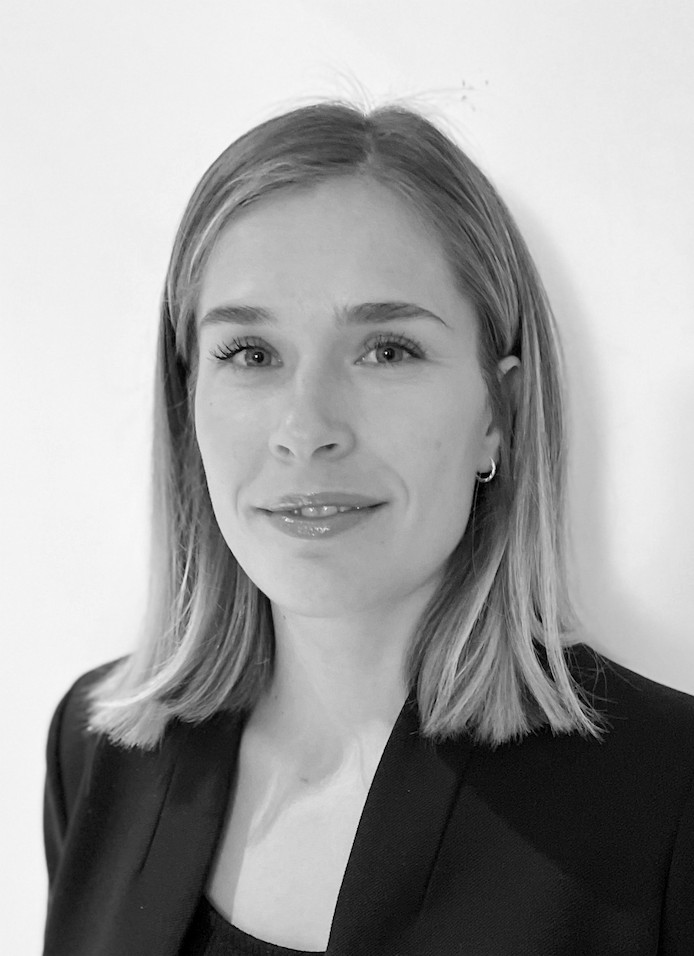
Katrina Campbell is a Professor at the School of Biological Sciences , Queen's University Belfast , where she leads the Biosensors Strand within the Centre for ASsured, SafE and Traceable food (ASSET) . She holds dual Fellowships from the Royal Society of Biology and Royal Society of Chemistry , and is affiliated with the Irish Toxicology Society , SFET , and International Society for the study of harmful algae . Education: BSc (Hons) in Biochemistry (1995), Queen's University Belfast MMedSc in Ultrastructural Anatomy and Pathology (1996), Queen's University Belfast PhD in Pharmacy (transdermal drug delivery), Queen's University Belfast Katrina's research focuses on rapid biosensor-based detection of toxins, chemical contaminants, and pathogens throughout the "environment to farm to fork" food supply chain. She develops antibodies, phage, and aptamers for bioanalytical methods on platforms like Biacore AB, SAW Instruments, and Neogen Lateral Flow , aiming to enhance food safety , sustainability , and traceability . Her work aligns with UN Sustainable Development Goals including Zero Hunger ( SDG 2 ), Climate Action ( SDG 13 ), Life Below Water ( SDG 14 ), and Life on Land ( SDG 15 ). Recent publications address plant-based milk contaminant detection , marine biotoxin monitoring , and PFAS regulation impacts on food sustainability. She leads projects like Seafoodtomorrow , Eurobiotox , and Mychif , collaborating with the Food and Drug Administration (USA) and through Safefood funded initiatives. Scientific Awards: Fellow of the Royal Society of Biology (2023) Fellow of the Royal Society of Chemistry (2023) Katrina supervises PhD students and contributes to technology transfer workshops . She serves as EITFOOD Education Programmes Co-ordinator at Queen's University Belfast. Labs & Collaborations: She leads the Biosensors Strand in ASSET, collaborating with multi-centre EU projects (BioCop, Conffidence, Midtal, Atlantox), industrial partners , and international institutions to create state-of-the-art biosensor tools for food safety.
Thomas Schlag is Professor of Practical Theology at the University of Zurich , with research foci in religious education, church theory, and pastoral theology . He directs the university-wide research focus "Digital Religion(s): Communication, Interaction and Transformation in the Digital Society" , exploring the intersection of theology and digital culture. His career includes roles as Chairman of the Center for Church Development (ZKE) and Dean of the Faculty of Theology (2014–2016). Key Research Areas : Digital religion, public theology, interreligious education, confirmation work, church development, and socio-political theology. Academic Leadership : Directed international studies on confirmation work, co-edited interdisciplinary theological compendiums, and contributed to debates on state religious education and digital ethics. Recent Publications (2024–2025) examine digital media in religious education, Swiss church reform, theological responses to polarization, and interfaith educational models. His "Digital Religion(s)" program analyzes church-state-civil society dynamics in digital societies. He teaches courses on existential religious education , digital transformation , and ecclesiological-practical semesters . Collaborations include the European Network for Confirmation Work , International Academy of Practical Theology , and projects with Swiss and international theological institutions. His work bridges digital innovation , democratic education , and pastoral care in virtual environments .
Elise van den Hoven holds dual academic appointments as Associate Professor in the Future Everyday cluster of the Industrial Design department at Eindhoven University of Technology (TU/e) and Full Professor in the School of Software, Faculty of Engineering and Information Technology at University of Technology Sydney (UTS), Australia. She maintains additional honorary positions as senior research fellow at Duncan of Jordanstone College of Art & Design, University of Dundee and associate investigator with the Australian Research Council's Centre of Excellence in Cognition and its Disorders. Her educational background includes: MSc in Biology (1998) from Utrecht University, specializing in perception research MTD degree (now PDEng) in Human-Computer Interaction from Eindhoven University of Technology PhD in Human-Computer Interaction from Eindhoven University of Technology (2004) Dr. van den Hoven's research program centers on human-computer interaction, tangible interfaces, and memory support systems , with her internationally recognized Materialising Memories (MM) program serving as her flagship research initiative. She approaches Interaction Design as "a wonderful opportunity to first imagine and then create new interactive products, inspired by the needs and desires of people in their everyday lives." Her work uniquely bridges the gap between digital technology and human experience, particularly examining how physical and digital artifacts function as memory cues in everyday contexts. Analysis of her publication record reveals a clear research trajectory from foundational work on gesture interaction with physical artifacts toward increasingly sophisticated systems that support personal memory through hybrid digital-physical interfaces. Her scholarship consistently integrates perspectives from computer science, psychology, and design disciplines, creating a distinctive interdisciplinary approach to memory and interaction. Her notable scientific achievements include: Best long paper award (2016) NWO Vidi Award for "The design of improved recollections of personal memories" (2011-2018) Dr. van den Hoven has secured significant research funding through competitive mechanisms, most notably the VIDI fellowship that enabled the Materialising Memories program. Her research program involves substantial international collaboration between TU/e, UTS, and University of Dundee, reflecting her global research impact and network. She leads the Materialising Memories international research consortium, which brings together multidisciplinary expertise to investigate how design can support human remembering activities through tangible and interactive systems in real-world contexts.
Dr. Sara Kijewski is a Lecturer at ETH Zurich's Department of Humanities, Social and Political Sciences (D-GESS), specializing in the Ethics and Governance of Artificial Intelligence, Digital Health, and Health Policy. She joined ETH in 2022 after earning her PhD in Political Science from the University of Bern, with additional studies at the University of North Carolina, University of Oslo, and University of Zurich. Her research focuses on AI ethics frameworks, digital health governance, and the societal impacts of war through projects like the Health Ethics & Policy Lab's Health Data and AI course coordination and postdoctoral work on NRP 77 (Digital Health Innovation Governance). As Director of Operations for the ETH AI Ethics and Policy Network, she bridges academic and policy dimensions of emerging technologies. Key research interests include global AI governance, healthcare innovation ethics, and the long-term social consequences of conflict, reflected in publications analyzing post-war societies, public opinion on biotechnology, and international health policy challenges. Her academic background includes multilingual proficiency (Norwegian/Finnish native, German/English fluent), supporting cross-cultural research collaboration. Professional activities include undergraduate course coordination, internship supervision, and contributions to interdisciplinary initiatives like Precise4Q: Predictive Modelling in Stroke. Current academic roles combine teaching (e.g., Ethics Workshop: The Impact of Digital Life on Society in Autumn 2025) with research leadership in AI ethics and health policy domains.
Hamed Jalali is a Full Professor in Supply Chain Management at NEOMA Business School since September 2024, having joined the institution in September 2017. He holds a Master's degree in Statistics and a PhD in Business Economics from KU Leuven, Belgium. His research emphasizes simulation-based optimization, particularly Kriging-based algorithms, and explores intersections between marketing and operations management, as well as sustainable supply chain practices using game-theoretic models. His work has been published in journals like IIE Transactions , European Journal of Operational Research , and International Journal of Production Economics . Dr. Jalali has received numerous teaching awards at NEOMA Business School and collaborates with industries such as IMEC and EuroGijbels on projects like inventory management and rationing strategies. His research spans inventory dynamics, product portfolio management, blockchain applications in supply chains, and coopetition models in closed-loop systems. Education: PhD in Business Economics, KU Leuven, Belgium Master's degree in Statistics, KU Leuven, Belgium His recent articles highlight contributions to sustainable supply chain traceability, bullwhip effect mitigation through product portfolio adjustments, and multiobjective optimization algorithms. He actively reviews for top-tier journals and presents at international conferences. Key Awards: Multiple teaching excellence awards at NEOMA Business School. Industrial Projects: Collaboration with IMEC and EuroGijbels on inventory management and supply chain sustainability initiatives. His research integrates technical simulation methods with real-world supply chain challenges, emphasizing both operational efficiency and environmental sustainability.
Yoshiko Matsumoto is the Yamato Ichihashi Professor in Japanese History and Civilization and Professor of East Asian Languages and Cultures at Stanford University, with a courtesy appointment in Linguistics. She has been a faculty member at Stanford since 1992, progressing from Assistant Professor to her current distinguished position. Matsumoto also serves as coordinator of the Japanese Language Program and has held significant administrative roles including Chair of the Department of Asian Languages (2003-2005) and Interim Chair of the Department of East Asian Languages and Cultures (2016). Matsumoto earned her Ph.D. in Linguistics from the University of California, Berkeley (1989), following M.A. degrees in Linguistics from UC Berkeley and General and Applied Linguistics from the University of Tsukuba, an M.I.A. in American Studies from the University of Tsukuba, and a B.A. in English Language & Literature from Japan Women's University. Professor Matsumoto's research focuses on linguistic pragmatics from cross-linguistic perspectives, with particular expertise in Japanese language. Her work spans structural and sociocultural aspects of language in use, including noun-modifying clause constructions, honorifics, discourse markers, and the intersection of language with gender and aging. She has pioneered research on conversational narratives of older adults, examining how ordinary framing strategies help individuals navigate difficult experiences. Her current projects explore intergenerational communication through haiku, communicative abilities of people with dementia, and noun-modifying constructions across Eurasian languages. Matsumoto's scholarship consistently bridges theoretical linguistics with practical applications for understanding human communication in diverse social contexts. Matsumoto's recent publications reveal a growing focus on practical applications of linguistic research for social benefit, particularly in intergenerational communication and dementia care. Her work increasingly integrates arts-based approaches, especially haiku poetry, to bridge generational divides and enhance communication with elderly populations. The research shows a consistent trajectory from theoretical linguistic frameworks toward applied, human-centered language studies that address real-world challenges in aging societies, with particular attention to how ordinary language practices help individuals navigate life transitions and difficult experiences. Dean's Award for Distinguished Teaching, School of Humanities and Sciences, Stanford University (2000) Richard E. Guggenhime Faculty Scholar, Stanford University (2000-2003) Violet Andrews Whittier Fellow, Stanford Humanities Center (2019-2020) Faculty Research Fellow, Michelle R. Clayman Institute for Gender Research (2014-2015) Research Fellow, Japan Foundation (2002) Internal Fellow, Stanford Humanities Center (2005-2006) Presidential Fund for Innovation in the Humanities, Stanford University (2009-2011) Professor Matsumoto has mentored numerous students through her teaching in Japanese language and linguistics courses, including specialized offerings on language and aging, points in Japanese grammar, and haiku-based communication. Her research has been supported by prestigious grants from the National Endowment for the Humanities, the Japan Foundation, and Stanford's Presidential Fund for Innovation in the Humanities. She has served on multiple editorial boards including the Journal of Pragmatics since 1992, demonstrating long-standing leadership in her field. Matsumoto has also advised students through individual studies and thesis projects in East Asian Languages and Cultures. Matsumoto leads several collaborative research initiatives including the 'Sharing Conversations' project which examines intergenerational communication through haiku, and research on communicative abilities of people with dementia. Her work often involves interdisciplinary teams spanning linguistics, gerontology, and creative arts, with fieldwork conducted in both Japan and the United States. The 'Noun-Modifying Constructions in Languages of Eurasia' project represents a major international collaboration examining linguistic structures across cultural boundaries. She also directs the 'Language, Old Age and Gender in Japan' project supported by the Stanford University/Japan Foundation, and the 'Difficult Conversations Continue: Memories of the 3.11 Disaster and Bereavement Narratives' project focused on post-disaster communication.
Sampsa Hautaniemi is a Professor at the Department of Biochemistry and Developmental Biology within the Faculty of Medicine at the University of Helsinki. He serves as Principal Investigator of the Systems Biology of Drug Resistance in Cancer research group and holds docentship in the Faculty of Medicine. Professor Hautaniemi actively supervises doctoral students across multiple programs including the Doctoral Programme in Biomedicine, Doctoral Programme in Clinical Research, and Doctoral Programme in Integrative Life Science. His research focuses on systems biology approaches to understand drug resistance mechanisms in cancer, particularly ovarian cancer. His work integrates computational biology, genomics, epigenetics, and bioinformatics to develop precision medicine approaches for cancer treatment. His laboratory develops innovative computational methods and experimental models including patient-derived organoids to study tumor evolution, identify therapeutic targets, and predict treatment responses. Analysis of his recent publications reveals a strong emphasis on understanding tumor heterogeneity, clonal evolution during therapy, and the development of computational tools for cancer genomics. His work spans multiple disciplines including cancer biology, computational biology, immunology, and precision medicine, with a particular focus on high-grade serous ovarian cancer as a model system. Scientific Awards: The Anders Jahre Medical Prize to young medical scientists (2014) for outstanding research on systems biology and cancer The Finnish Medical Foundation 50-years jubileum award (2010) Professor Hautaniemi has supervised numerous doctoral students and early-career researchers, contributing significantly to cancer research education. His research is supported by multiple active projects including the DECIDER project (Clinical Decision via Integrating Multiple Data Levels to Overcome Chemotherapy Resistance in High-Grade Serous Ovarian Cancer) funded until 2026, as well as projects from the Academy of Finland, Cancer Foundation, and industry partners like Orion Corporation. His laboratory maintains a patient-derived organoid biobank for high-grade serous ovarian cancer and develops computational tools like Jellyfish for visualizing tumor evolution.
Margiolakis Irini is a Professor at the Department of Cell & Developmental Genetics Biology, University of Patras. Her research focuses on structural biology, protein crystallography, and pharmaceutical applications using synchrotron radiation and X-ray diffraction. She actively collaborates with institutions like the European Synchrotron Radiation Facility (ESRF) and contributes to international crystallography networks. University: University of Patras Department: Cell & Developmental Genetics Biology Email: imargiola@upatras.gr | margiolaki@esrf.fr Research Interests: Structural analysis of proteins and peptides, drug design, insulin polymorphism studies, virus-derived macromolecules, and development of advanced diffraction methods. Her work bridges biophysics, pharmaceutical sciences, and materials science, with a focus on vaccine and diabetes drug development. Recent Article Trends: Publications emphasize synergistic NMR-X-ray powder diffraction approaches for polymorph screening, humidity effects on crystal structures, and pharmaceutical peptide design (e.g., Octreotide, insulin variants). Collaborative efforts span virology (Dengue, Arenaviridae) and methodological innovations in macromolecular crystallography. Scientific Awards: Unesco L'Oreal Fellow (2010) for Young Women in Life Sciences Leadership & Networks: Co-organizer of international crystallography workshops, member of European Powder Diffraction Committee, and co-editor of Acta Crystallographica . Leads initiatives for Greece's integration into synchrotron radiation research via the Greek Synchrotron User Network (GrSUN).
Mehdi Kabbage is a Professor and Director of Graduate Studies in the Department of Plant Pathology at the University of Wisconsin-Madison . His research focuses on necrotrophic fungal pathogenesis, particularly the role of oxalic acid and programmed cell death (PCD) in plant-pathogen interactions. He teaches courses in fungal biology and plant-microbe interactions. Education : Ph.D. in Plant Pathology (Kansas State University), M.S. in Plant Pathology (Kansas State University), B.S. in Engineering (Ecole d'Ingénieurs de Purpan, France) Dr. Kabbage investigates how Sclerotinia sclerotiorum manipulates plant PCD through oxalic acid secretion and explores strategies to inhibit this process for crop protection. His work spans molecular mechanisms of fungal virulence, plant stress tolerance, and genetic resistance in soybeans. Recent publications highlight his research on fungal effector proteins, host-induced gene silencing, oxalic acid signaling, and autophagy-based resistance strategies. He collaborates extensively on soybean and dry bean pathosystems, with a focus on integrated disease management and climate resilience. His lab develops transgenic approaches for stress tolerance, studies BAG protein family functions in plant defense, and investigates fungal enzymatic virulence factors like alcohol oxidases and laccases. Current projects include chemical genomics for resistance pathway discovery and novel antifungal agents such as poacic acid.
David R. Liu is the Thomas Dudley Cabot Professor of the Natural Sciences at Harvard University and the Richard Merkin Professor at the Broad Institute. He serves as a principal investigator at the Howard Hughes Medical Institute and director of the Merkin Institute of Transformative Technologies in Healthcare. His laboratory pioneers revolutionary genome editing technologies with profound implications for basic research and therapeutic development. Liu's research spans multiple disciplines at the intersection of chemistry and biology: Organic Chemistry Chemical Biology Biochemistry Genetic Engineering Genome Editing Technologies He pioneered base editing and prime editing techniques that enable precise DNA modifications without creating double-stranded breaks, overcoming key limitations of traditional CRISPR-Cas9 systems. His work on DNA-templated synthesis and phage-assisted continuous evolution (PACE) has transformed protein engineering and drug discovery approaches. Liu's contributions have been recognized with numerous prestigious awards: ACS Award in Pure Chemistry (2006) Election to National Academy of Medicine (2020) Election to National Academy of Sciences (2021) King Faisal Prize (2022) Breakthrough Prize in Life Sciences (2025) As an entrepreneur, Liu has co-founded multiple biotechnology companies including Editas Medicine, Beam Therapeutics, and Prime Medicine to translate his discoveries into therapeutic applications. His laboratory continues to advance genome editing technologies while developing novel approaches to treat genetic diseases through precise DNA modifications.
Dr. Rosana Collepardo is a Winton Advanced Research Fellow at the Cavendish Laboratory, University of Cambridge, where she leads a research group within the Theory of Condensed Matter (TCM) Group and is also affiliated with the Biological and Soft Systems group. Her research focuses on developing multi-scale computational models to investigate chromatin nanostructure, epigenetic regulation, and biomolecular condensates, with applications in understanding genome organization and sustainable data storage. Her primary research interests include: Computational biophysics of chromatin and epigenetics Mechanisms of biomolecular condensates and phase separation Nanoscale structure of the genome and DNA accessibility Multi-scale modeling from atomistic to mesoscale Design principles for chromatin-inspired data storage Analysis of her recent publications (2023-2025) reveals a dominant focus on chromatin organization, epigenetic mechanisms, and biomolecular condensates. Key trends include the role of nucleosome spacing, linker histones, and epigenetic modifications in chromatin phase separation, alongside investigations into condensate aging, material properties, and the physical principles of phase transitions in RNA-protein systems. Her work consistently integrates computational modeling with experimental validation. Notable scientific awards include: Winton Advanced Research Fellowship ERC Starting Grant Dr. Collepardo actively mentors PhD and MPhil students, including Sivapalan Chelvaniththilan (MPhil in Physics, recipient of Gates and Winton Scholarships), Miguel Garcia Ortegon (MPhil in Scientific Computing), Stephen Farr (PhD in Computational Methods for Materials Science), Akshay Sridhar (MPhil in Scientific Computing), and Adiran Garaizar (PhD with EPSRC scholarship). Her group secures competitive funding through ERC grants and student scholarships. The Collepardo group, established in 2016 at the Maxwell Centre, Cavendish Laboratory, comprises postdoctoral researchers, PhD students, and MPhil candidates. They collaborate with experimental groups to study chromatin dynamics and biomolecular condensates using advanced computational techniques, contributing to fundamental biological understanding and potential biotechnological applications.
Navid Bayati is an Associate Professor at the University of Southern Denmark, affiliated with the Institute of Mechanical and Electrical Engineering and the Centre for Industrial Electronics. He leads the Control and Protection of Smart Grids (CAP-SG) group and focuses on renewable/hybrid power systems, microgrid protection, and grid code compliance. Education: Ph.D. in Power Systems & Microgrid Protection (2020, Aalborg University); M.Sc. in Power Systems (2017, Amirkabir University of Technology) His research spans renewable energy integration , transient analysis , grid interconnection , and digital twin applications . Recent work includes machine learning for carbon emission prediction, fault localization in DC microgrids, and supercapacitor resilience in hybrid systems. Collaborations include projects like IEA Wind Task 50 and RePoSys , addressing grid renovation, life cycle assessment, and digital twin resilience. His teaching portfolio covers power electronics , energy management , and microgrid control .
Jennifer Somers is an Assistant Professor in the Department of Psychological Sciences at Auburn University , directing the FLOWER Laboratory (Families: Leveraging Opportunities for Wellbeing and Resilience). Her research examines biobehavioral processes in parent-child interactions that influence depression and anxiety risks. Education: PhD in Clinical Psychology (Arizona State University, 2021) MA in Clinical Psychology (Arizona State University) BA in Psychology & English (Pomona College) Her work focuses on dyadic resilience , emotion regulation , and physiological synchrony in families. She has secured funding from NIMH, NSF, and private foundations. Recent publications analyze parent-child interactions , RSA synchrony , and transdiagnostic biomarkers spanning developmental psychology, clinical research, and behavioral science. Labs & Teams: FLOWER Lab investigates mechanisms to promote family resilience across the lifespan, integrating biological and environmental factors in mental health outcomes.
Chi Jin is a Researcher in Sociology at the John F. Kennedy Institute, Department of Sociology, Freie Universität Berlin since March 2024, supervised by Prof. Sebastian Kohl. Concurrently, Jin is completing a PhD in Housing Systems at Delft University of Technology (expected April 2025) under Prof. Peter Boelhouwer, with prior industry experience at Shimao Real Estate in Shenzhen. Education: PhD in Housing Systems, Delft University of Technology, Netherlands (2020-2025) MS in Architecture and Civil Engineering, Chongqing University, China (2015-2018) BS in Engineering Management, Yangtze University, China (2011-2015) Research spans urban sociology, housing studies, migration, behavioral economics, and sustainable development, with focus on young talents' housing and migration decisions in Chinese metropolises. Jin integrates sociological, geographical, and economic perspectives to analyze residential mobility, satisfaction, and urban policy impacts, particularly in Shenzhen. Publications reveal consistent interdisciplinary focus on Chinese urban dynamics, housing systems, and talent migration. Recent work extends to sustainable small-town development using big data and city attribute effects on student retention, demonstrating methodological evolution from behavioral economics to spatial analytics while maintaining China-specific urbanization themes. Academic service includes coordinating the ENHR Conference 2024 and Sustainable Housing Summer School 2023, plus reviewing for Cities, Journal of Housing and the Built Environment, and International Journal of Housing Policy.
Alton Russell is an Assistant Professor at the Department of Epidemiology, Biostatistics and Occupational Health, Faculty of Medicine and Health Sciences, McGill University. He serves as an Affiliate Investigator at the Research Institute of the McGill University Health Centre (RI-MUHC) and is affiliated with the Quantitative Life Sciences program. His research focuses on data-driven decision modeling to optimize healthcare resource allocation through methods in decision analysis, simulation, health economics, and machine learning. PhD in Management Science and Engineering (2021), Stanford University MSc in Management Science and Engineering (2018), Stanford University BSc in Industrial Engineering (Health Systems concentration) and Interdisciplinary Studies (Global Health and Sustainability concentration) (2014), North Carolina State University Russell's research program develops advanced models for blood safety, pediatric kidney disease management, opioid crisis interventions, and infectious disease surveillance. His lab (D3Mod) integrates individual-level data with machine learning and Bayesian statistics to address heterogeneity in patient populations and policy impacts. His work emphasizes open science practices, with publications and code archived via DOIs. Current research themes include personalized donor risk assessment, emergency service optimization, and harmonization of serosurveillance data. Russell teaches advanced decision modeling (EPIB 676) and economic evaluation of health programs (PPHS 528) at McGill.