Anne G Hoen is an Associate Professor at the Geisel School of Medicine , Dartmouth College, with joint appointments in Epidemiology , Biomedical Data Science , and Microbiology and Immunology . Her research focuses on microbiome development in infants, environmental exposures, and their associations with health outcomes, using interdisciplinary approaches including statistical modeling and bioinformatics. Research Interests: She explores how microbial communities in early life influence disease risk through environmental and dietary factors. Her work integrates microbiome-metabolome interactions, computational methods for microbial network analysis, and epidemiological studies of infectious diseases. Recent Article Trends: 2025-2024 publications highlight maternal diet-microbiome links, microbial interaction networks, ECHO consortium collaborations, and novel computational approaches for microbiome data. Key sub-fields include perinatal exposome, microRNA profiling, and longitudinal metabolomic analysis. Scientific Awards: K01LM011985: Bioinformatics strategies for early life microbiomics R01LM012723: Multi-omic functional integration using networks Advising: Mentors current PhD students in Dartmouth's Quantitative Biomedical Sciences (QBS) program, including Becky Lebeaux and Quang Nguyen, while alumni like Sara Lundgren and Wes Viles hold postdoctoral and academic positions.
Alistair McCulloch is a Professor in the Learning and Teaching Unit at the University of South Australia, with significant expertise in doctoral education and research supervision. Previously, he served as Professor and Dean of Research and Knowledge Transfer at Edge Hill University near Liverpool for over 12 years, where he was responsible for the development and quality of the university's research degree programs. His primary research interests focus on doctoral education, PhD supervision, and graduate education, with particular attention to the experiences of part-time doctoral students, especially working mothers. McCulloch's work explores sociocultural transitions in doctoral education, the role of oral examinations (vivas), and the concept of serendipity in research. His research demonstrates a consistent concern with the wellbeing of doctoral students and the structural factors that affect their success. McCulloch's publication record shows a clear evolution from early work in political history (notably his 1979 thesis on the 1910 UK General Election) toward contemporary issues in higher education. His recent work (2022-2025) focuses on critical issues in doctoral education including student wellbeing, supervisor-student relationships, and assessment practices. He has been particularly active in examining the experiences of marginalized doctoral student populations and has contributed significantly to the literature on part-time doctoral study. As an academic leader, McCulloch has been involved with the Quality in Postgraduate Research (QPR) conference series held in Adelaide, South Australia, which brings together international scholars interested in doctoral education. His work bridges theoretical perspectives (including Marxist theory on work and alienation) with practical concerns in doctoral program design and implementation.
Dr. Nabil Nasr serves as Associate Provost for Academic Affairs and Director of the Golisano Institute for Sustainability (GIS) at Rochester Institute of Technology (RIT). He also holds leadership positions as CEO of the REMADE Institute and Member of the United Nations Environment Programme (UNEP) International Resource Panel (IRP). His academic journey includes a BS from Helwan University (Egypt), M.Eng. from Pennsylvania State University, and MS and PhD from Rutgers University. Dr. Nasr is an internationally-recognized leader in sustainability research with expertise spanning sustainable manufacturing, remanufacturing, circular economy, and sustainable product development. His work emphasizes systems thinking and technological innovation to build regenerative industrial systems. He has pioneered research in value-retention processes, establishing frameworks for remanufacturing, refurbishment, repair, and direct reuse as strategic approaches to resource efficiency. His publication record demonstrates significant contributions to circular economy implementation across multiple sectors. Analysis of his recent work reveals strong focus on practical applications of circular strategies in industrial systems, automotive production, and urban mobility solutions, with emphasis on developing decision support tools and business cases for sustainable practices. Remanufacturing Industries Council 2017 ACE Award Rochester Engineering Society 2017 Engineer of Distinction APRA Asia-Pacific Most Influential Expert on Remanufacturing Award (2016) Institute of Industrial and Systems Engineers (IISE) Fellow Dr. Nasr has established numerous research centers and initiatives including the world's first university-based remanufacturing research hub (1997), the Center for Integrated Manufacturing Studies (2002), and the REMADE Institute - the largest recycling and remanufacturing consortium in the United States. His leadership extends to international forums including the UN Environment Programme, World Trade Organization, and OECD, where he influences global sustainability policy.
Yeonghyeon Gu serves as Assistant Professor in the Department of Artificial Intelligence Data Science at Sejong University, South Korea, a position held since 2022 after progressing from Principal Researcher (2014-2019) to Acting Professor (2019-2022). He maintains active affiliation with the university's AI Convergence Research Center and has produced 84 research outputs with 795 Scopus citations and an h-index of 14. His academic credentials include: B.A. from Sejong University (2004) M.A. from Sejong University (2006) Ph.D. from Sejong University (2014) Dr. Gu's research centers on Artificial Intelligence with specialization in Meta Learning, Transfer Learning, and Deep Learning methodologies. His work demonstrates strong interdisciplinary application across robotics, agricultural technology, energy systems, and meteorology. Key contributions include district heater load forecasting using parallel CNN-LSTM attention, image-based hot pepper disease diagnosis, and potato late blight prediction models. Analysis of his 2024-2025 publications reveals concentrated innovation in hybrid AI architectures, particularly combining graph networks with reinforcement learning for blockchain security and integrating physical models with deep learning for weather prediction. His work consistently addresses real-world engineering challenges through novel neural network applications while maintaining strong theoretical foundations in transfer learning frameworks. No scientific awards were documented in the source materials. While specific student advisees and grant details weren't listed, his extensive publication record (29 outputs in 2025 alone) and international collaborations suggest active mentorship and research funding. His work shows particular strength in cross-institutional projects with researchers from Turkey, Nigeria, Saudi Arabia, and South Korea. As a core member of Sejong University's AI Convergence Research Center, Dr. Gu contributes to institutional initiatives bridging AI theory with practical implementation across multiple sectors. The center's structure facilitates his interdisciplinary approach, connecting computer science with engineering, agriculture, and environmental science domains through shared computational infrastructure and collaborative research frameworks.
Professor Robert D. Pahre is a distinguished faculty member in the Department of Political Science at the University of Illinois, with cross-appointments across multiple academic units including the American Indian Studies Program, Global Studies Programs and Courses, Recreation Sport and Tourism, European Union Center, Russian East European and Eurasian Center, and Center for Global Studies. Dr. Pahre earned his B.A. in International Relations and German Studies from Stanford University in 1984, followed by an M.A. (1988) and Ph.D. (1990) in Political Science from UCLA. His academic journey has positioned him as a leading scholar at the intersection of international relations, political economy, and environmental politics. His research interests span International Political Economy, Foreign Policy, Environmental Politics, and National Parks and Wilderness Areas. Pahre has developed innovative approaches to teaching politics through experiential learning in national parks, creating unique connections between political science theory and practical application in protected areas. His scholarly work demonstrates consistent engagement with how political institutions shape international cooperation and domestic policy-making processes. Professor Pahre's publications from the last three decades reveal an evolving research trajectory that increasingly incorporates environmental concerns and experiential education. His recent work focuses on the relationship between recreation, conservation, and political processes, with particular attention to how national parks serve as living laboratories for political science education. As an educator, Pahre has developed specialized courses that take students into national parks for field-based learning experiences. His commitment to innovative pedagogy is evident in his publications on teaching politics in national park settings, where he explores how wilderness environments can enhance political science education through direct engagement with policy implementation and environmental governance. Professor Pahre maintains active involvement with multiple research centers and regularly contributes to discussions about environmental politics, protected areas management, and the role of federal lands in American political life. His work bridges disciplinary boundaries, connecting traditional political science concerns with emerging issues in environmental governance and sustainability.
Prim. Clin. Assoc. Prof. PD Dr. Dietmar Dammerer, MSc PhD is the head of the Clinical Department of Orthopaedics and Traumatology at Krems University Hospital, affiliated with Karl Landsteiner Private University of Health Sciences. He has been in this role since February 2022, leading the merger of orthopedics and traumatology into a unified clinical department. A dual-trained specialist, he is recognized for his expertise in endoprosthetics and tumor orthopedics, and actively promotes interdisciplinary collaboration and team-based medicine. His educational background includes a PhD in Musculoskeletal Sciences (2015), an MSc in Advanced Orthopaedics and Traumatology (2017), and board certification in both orthopedics and traumatology (2017, 2018), culminating in habilitation in 2019. He has received prestigious Traveling Fellowships from the European Hip Society and European Musculo-Skeletal Oncology Society. Dietmar Dammerer’s research focuses on orthopedic oncology, joint reconstruction, biomechanics, and minimally invasive surgery. His work emphasizes the integration of clinical inquiry with research to improve patient outcomes. Recent publications analyze pelvic sarcoma reconstruction, spinal metastases, cartilage repair techniques, and health disparities in sarcoma care. His 15 most recent articles reflect a strong trend in musculoskeletal oncology, surgical biomechanics, and evidence-based orthopedic practice, with frequent use of systematic reviews, retrospective studies, and multicenter collaborations. Topics include implant performance, surgical safety, and global access to specialized care. Scientific awards include: Traveling Fellow Stipendium from the European Hip Society (2018) Traveling Fellow Stipendium from the European Musculo-Skeletal Oncology Society (2020) He is deeply committed to mentoring and team development, emphasizing that medical success is measured by the success of one’s colleagues. He leads a research-active department that hosts international observers, conducts training courses for physicians across Europe, the Middle East, and Africa, and maintains a high rate of peer-reviewed publication. The department collaborates closely with the Departments of Biomechanics and Anatomy and Developmental Biology, reflecting a multidisciplinary research approach.
Marco Maretto is Associate Professor of Architecture and Urban Design at the Department of Engineering and Architecture, University of Parma, Italy. He has held academic positions at Sapienza University of Rome and the University of Florence, and is a founding member and Vice-President of ISUFItaly, the Italian chapter of the International Seminar on Urban Form. He co-directs the international journal U+D. Urban form and Design and serves on multiple scientific committees and editorial boards. Ph.D. in Architecture, University of Genoa (2002) 5-Year Degree in Architecture, Sapienza University of Rome (1998) His research focuses on Urban Morphology , Sustainable Urban Design , and Environmental Urban Design , emphasizing the integration of urban form, sustainability, and societal well-being. He investigates how urban fabrics influence climate resilience, public space quality, and neighborhood identity, often employing GIS, pedestrian tracking, and 3D urban surveying. His work bridges historical analysis with contemporary design challenges, particularly in medium-sized European cities and historic urban centers like Venice. His most recent publications explore sustainable neighborhoods, thermal resilience of open spaces, and pedagogical approaches to urban morphology. These works reflect a cohesive trajectory toward evidence-based, environmentally responsive urban design. Key themes include smart living integration, urban regeneration, and the redefinition of urban beauty through sustainability. Scientific Referee: Urban Morphology , Urban Design International , Sustainability , Buildings , Urban Science , City, Territory and Architecture Advisory Editor: The Urban Book Series , Springer Founder and Co-Director: U+D. Urban form and Design Council Member: ISUF (2010–2016), CISPUT (2017–present) Maretto has advised over 25 Master’s theses and multiple PhD students, primarily at the University of Parma and Sapienza University of Rome. He leads and contributes to major international research projects, including EU-funded initiatives such as KAEBUP (Erasmus+) and ARCHEA , focusing on evidence-based urban practices and sustainable urban development. He also organizes international design workshops (WAM) and conferences on urban regeneration, involving institutions like ETSAB Barcelona, UPV Valencia, and FEUP Porto. He is a member of the U.A.L. (Urban and Architectural Laboratory) at the University of Parma, where he leads participatory urban regeneration projects in the Emilia-Romagna region, including Casina Collaborator and Collaboratorio Vetto. His work demonstrates a strong commitment to public engagement, interdisciplinary collaboration, and the practical application of urban research.
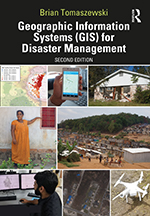
Brian Tomaszewski is a Professor at the Rochester Institute of Technology (RIT) within the School of Interactive Games and Media , Golisano College of Computing and Information Sciences. He also holds an Adjunct Professor position at the Centre for Disaster Management and Mitigation, Vellore Institute of Technology, India. Education : BA (University at Albany), MA (University at Buffalo), PhD (Pennsylvania State University) Research Interests focus on Geographic Information Science applications for Disaster Management , Forced Displacement , and Geovisual Analytics . His work bridges Spatial Thinking with Serious Games for crisis response and mitigation. Recent Publications (2023-2014) emphasize LLM-driven refugee camp analysis , geospatial resilience modeling , and serious games for disaster education , with fieldwork spanning Rwanda, Jordan, and Poland. Scientific Awards : Fulbright Scholar (2018) Grants & Collaborations include US National Science Foundation (NSF) funding for international projects and partnerships with UNHCR and IEEE . He leads the RefuGIS project and the Center for Geographic Information Science and Technology at RIT.
Patrick HEINRICH is a Full Professor in the Department of Asian and North African Studies at Ca' Foscari University of Venice , where he has served since 2014, advancing to Full Professor in 2021. His academic journey includes positions in Germany, Japan, and Italy, with significant contributions to sociolinguistics, endangered languages, and language policy. He holds a Dr. phil in Japanese Studies from Gerhard-Mercator-University Duisburg (2002) and completed his habilitation at Duisburg-Essen University (2005). Research Interests: His work spans sociolinguistics , linguistic ideology , endangered languages (especially Ryukyuan languages), urban communication , and language revitalization . He has pioneered the concept of welfare linguistics , emphasizing language use as a contributor to human well-being. His research integrates historical, political, and ecological perspectives on language. Publication Trends: His recent articles (2023–2025) reflect a strong focus on decolonizing methodologies , language reclamation , and urban linguistic landscapes . He frequently publishes in international handbooks and journals, contributing to debates on identity, ideology, and language policy in Japan and beyond. His editorial leadership in volumes on Arabic sociolinguistics and Japanese communication ideologies underscores his global scholarly impact. Scientific Awards: Honorary President, Ryukyuan Heritage Language Society (2020) Honorary member, Foundation for Endangered Languages (2014) Tokugawa Award, Japanese Association for Sociolinguistic Sciences (2010) Best Dissertation of the Year, Duisburg University Society (2002) Advising, Grants, and Collaboration: While specific students are not listed, he actively mentors research and collaborates globally. He has received fellowships from DAAD, JSPS, and Erasmus, and has been a visiting professor at institutions including Toulouse Jean-Jaurès, Duisburg-Essen, and the University of Lapland. His editorial roles in journals such as East Asian Pragmatics , Contemporary Japan , and Current Issues in Language Planning highlight his leadership in the field. Labs and Teams: Although no formal lab is mentioned, he leads research networks focused on language revitalization, urban sociolinguistics, and welfare linguistics. His projects often involve international collaboration, including co-edited volumes and joint publications with scholars across Europe, Asia, and beyond.
Dr. Huadong Mo is a Senior Lecturer at the School of Systems and Computing, University of New South Wales (UNSW) Canberra, Australia. He holds a B.E. degree in automation from the University of Science and Technology of China (2012) and a Ph.D. in systems engineering and engineering management from the City University of Hong Kong (2016). Prior to his current position, he was a research associate at ETH Zurich's Reliability and Risk Engineering Lab (2016-2019) and a Lecturer at UNSW Canberra (2019-2021). Dr. Mo's educational background includes a strong foundation in systems engineering with international experience across China, Switzerland, and Australia. His career trajectory demonstrates a progression from academic research to faculty positions with increasing responsibilities in teaching and research leadership. His research focuses on enhancing the resilience, performance, and security of complex systems using learning-based algorithms, primarily in power and energy systems, cyber-physical systems, and manufacturing systems. He applies data analytics to understand system evolution under uncertainties, with particular emphasis on prognostics and health management, sustainable transportation, robust operation of power systems under extreme events, and reinforcement learning-based asset management. His work bridges theoretical advances with practical applications in critical infrastructure. Analysis of Dr. Mo's recent publications reveals a strong focus on energy systems, particularly in the integration of machine learning with power grid management, battery storage systems, and resilience against cyber threats. His research shows a clear trajectory toward increasingly complex system integration, with growing emphasis on multi-vector energy communities, cross-domain prediction, and uncertainty-aware energy management. The interdisciplinary nature of his work spans electrical engineering, computer science, and operations research. 2024 IEEE SMC Early Career Award 2023 Visiting Research Fellowship (Jean d'Alembert Pour Fellowship) Gold Medal in 2024 China International College Student Innovation Competition (as supervisor) Arc PGC Supervisor Award (2021) IEEE SMC Outstanding Chapter Award (2021) Alumni Achievement Award from City University of Hong Kong (2019) Dr. Mo actively supervises numerous HDR students working on cutting-edge research topics including battery health monitoring, quantum control, reinforcement learning for power systems, and explainable AI for energy management. He leads multiple significant research grants totaling over 3 million AUD, including projects funded by ARC, Energy Innovation Fund, and international collaborations with institutions like ETH Zurich, Cambridge, and Tsinghua University. His research group maintains strong international connections, facilitating student exchanges and collaborative research. As Postgraduate Course Coordinator of Systems Engineering and Chair of IEEE SMC ACT Chapter, Dr. Mo plays a significant role in academic leadership and professional community building. His research team collaborates with industry partners on practical implementations of their theoretical work, particularly in the energy sector.
Anssi Laurila is a Professor in the Department of Ecology and Genetics, specializing in Animal Ecology at Uppsala University, Sweden. His research integrates evolutionary biology and ecology to explore the mechanisms underlying phenotypic and genetic variation in natural populations, particularly amphibians. His primary research interests include phenotypic plasticity , local adaptation , maternal effects , life-history evolution , and genomic responses to environmental gradients such as latitude, temperature, acidity, and predation. He investigates how populations adapt to heterogeneous environments through both plastic and genetic mechanisms, often using comparative studies across latitudinal clines and contrasting habitats. His work frequently focuses on amphibians like Rana temporaria , Rana arvalis , and Bufo bufo , as well as other ectotherms including freshwater snails and fish. The trends in his recent publications (2020–2025) show a strong emphasis on genomic and transcriptomic analyses of adaptation, host-pathogen interactions (especially with Batrachochytrium dendrobatidis ), immunogenetics (MHC diversity), conservation genetics of edge populations, and acclimation physiology . His studies often combine field observations with controlled experiments and molecular techniques, contributing to understanding evolutionary responses to climate change and anthropogenic stressors. No scientific awards are explicitly mentioned in the provided text. Dr. Laurila actively collaborates with researchers across Europe and supervises or co-supervises numerous studies, as evidenced by his consistent presence as a senior or corresponding author. While specific grant details are not listed, his extensive publication record in high-impact journals suggests sustained funding for research in evolutionary ecology and conservation. His work has implications for biodiversity conservation, particularly in the context of climate change and emerging infectious diseases. He is involved in research on amphibian microbiomes, thermal adaptation in geothermal systems, and the genetic basis of adaptive traits. His team explores how environmental stressors shape phenotypic and genetic variation, with a focus on understanding the limits and costs of plasticity and adaptation.
Wing Chung Ng is Professor and Department Chair in the History Department at the University of Texas at San Antonio (UTSA), within the College of Liberal and Fine Arts. A cultural and social historian specializing in Chinese migration and traditional Chinese opera, he teaches courses on Chinese and Japanese history as well as the Chinese diaspora. Dr. Ng's research focuses on Modern China, East Asia, and Migration History, with particular expertise in Chinese diaspora communities and Cantonese opera preservation. His scholarly work examines how Chinese communities maintain cultural identity while adapting to new environments across the Pacific, analyzing the interplay between traditional cultural practices and modern social transformations. His publication record reveals a consistent scholarly trajectory examining Chinese cultural transmission across borders. Recent works include analyses of Kunqu opera in the 21st century and historical soundscapes of Sino-Western encounters, building on his foundational research on Cantonese opera and Chinese communities in North America. His interdisciplinary approach spans cultural history, migration studies, and Asian American studies. Dr. Ng has received significant scholarly recognition: Fulbright Scholar (2012) from the United States Department of State Faculty Research Award (2004) from the National Endowment for the Humanities National Humanities Center Fellow (1996) His research has been supported by substantial grants including $5,000 for 'Connecting Worlds: Master Wong Toa's Trans-Pacific Life and Career 1914-2015' (2020-2021) and $40,000 for 'Local Theater, Transnational Arena: A New Social History of Cantonese Opera, 1860-1945' (2004-2005). He was previously a Commonwealth Scholar at UBC and has received support from the Chiang Ching-kuo Foundation and NEH. Most recently, he served as a Fulbright Scholar at Hong Kong Baptist University. Currently, Dr. Ng is working on a centennial biography of Master Wong Toa (1914-2015) to study his life and music across early 20th century South China, Cold War Hong Kong, post-exclusion era Chinatown Vancouver, multicultural Canada, and the age of China's rise.
Dr. Patrick S. Market is a Professor of Atmospheric Science and currently serves as the Director of the School of Natural Resources at the University of Missouri. He also acts as Interim Co-Director of the Missouri Water Center. His research focuses on synoptic and mesoscale dynamics, particularly winter weather, heavy rainfall, flash flooding, and severe local storms. He has contributed to advancements in precipitation efficiency studies and operational forecasting techniques. His work explores the role of artificial intelligence in weather prediction and communication, emphasizing the continued importance of human expertise in an automated forecast process. Dr. Market has secured grants for data stream maintenance and digital equity planning, and he has led educational initiatives integrating research into synoptic meteorology classrooms. Notable collaborations include projects with the National Weather Service and studies on the Ozark Plateau's topographical influence on weather systems.
Dr Elisabeth Huynh is a Senior Research Fellow at the Australian National University's Centre of Epidemiology for Policy and Practice. She specializes in health economics, focusing on understanding health-related preferences, choice behavior, and economic evaluations in public policy and medical interventions. Education: PhD in Economics (Econometrics) and B.Com from the University of Sydney. Affiliations: Research Affiliate at the University of Sydney (2021-2026). Research Interests: Her work spans health economics, applied econometrics, and public policy, with specific contributions to discrete choice experiments, best-worst scaling, health workforce dynamics, healthy aging, nutrition interventions, and quality-of-life valuation. She investigates decision-making patterns in health care, including patient preferences, end-of-life care, and health service provider behavior. Publications: Her recent articles focus on pediatric quality-of-life metrics, pandemic preparedness modeling, dietary supplement choices during pregnancy, and workforce dynamics in health care. These studies employ advanced econometric methods and systematic reviews to inform policy decisions. Supervision: Elisabeth supervises PhD candidates exploring topics like child health valuation, chronic disease management, and maternal nutrition programs.
Professor Matthew Simpson is a leading figure in applied mathematics at the School of Mathematical Sciences, Faculty of Science, Queensland University of Technology (QUT). He holds the position of Professor of Applied Mathematics and is an Australian Research Council (ARC) Future Fellow, reflecting his sustained research excellence. His work bridges mathematical theory and biological applications, particularly in cell migration, tissue invasion, and multiscale modeling. BE (Environmental) Honours 1, University of Newcastle (1995–1998) PhD (with Distinction), Environmental Engineering, University of Western Australia (2000–2003) Research Fellow, Department of Mathematics and Statistics, University of Melbourne (2003–2006) ARC Postdoctoral Fellow, University of Melbourne (2006–2009) Lecturer (2010–2011) and Senior Lecturer (2011–2013), QUT Associate Professor (2013–2014), QUT Professor and ARC Future Fellow (2014–present), QUT Matthew Simpson’s research focuses on mathematical and computational modeling of biological systems , particularly collective cell motion, diffusion processes, and reaction-diffusion dynamics. His interests span multiscale modeling , random walk processes , cell biology , and numerical and computational mathematics . He develops and analyzes models to understand phenomena such as wound healing, cancer progression, and tissue engineering. His recent publications (2023–2025) demonstrate a strong trend toward integrating data-driven modeling , likelihood-based inference , and equation learning with traditional mechanistic models. These works emphasize parameter identifiability , uncertainty quantification , and prediction robustness in biological contexts. Themes include sharp-fronted wave propagation, mechanical cell interactions, tumor spheroid formation, and generalized diffusivity in food drying, showcasing the breadth and depth of his modeling expertise. Among his key accolades are: J.H. Michell Medal (2012) – Awarded by ANZIAM for distinguished research by an early-career applied mathematician in Australia and New Zealand. ARC Future Fellowship (2013–2017) – For the project 'New data-driven mathematical models of collective cell motion' (FT130100148). Professor Simpson has also played significant editorial and leadership roles, including: Executive Associate Editor, Journal of Engineering Mathematics Academic Editor, PLoS ONE Editorial Board Member, ANZIAM Journal Co-chair of the 2015 ANZIAM meeting He has supervised PhD students on topics such as moving boundary problems, first-passage times, stochastic simulations, and curvature-dependent growth in biological systems. His research projects have been funded by competitive Australian grants (ARC DP and FT schemes), including studies on 3D cell migration, ghrelin’s role in cell invasion, and epithelial-to-mesenchymal transition in cancer and wound healing. He is actively involved in developing computational tools for biological modeling and promoting best practices in scientific publishing.