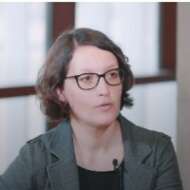
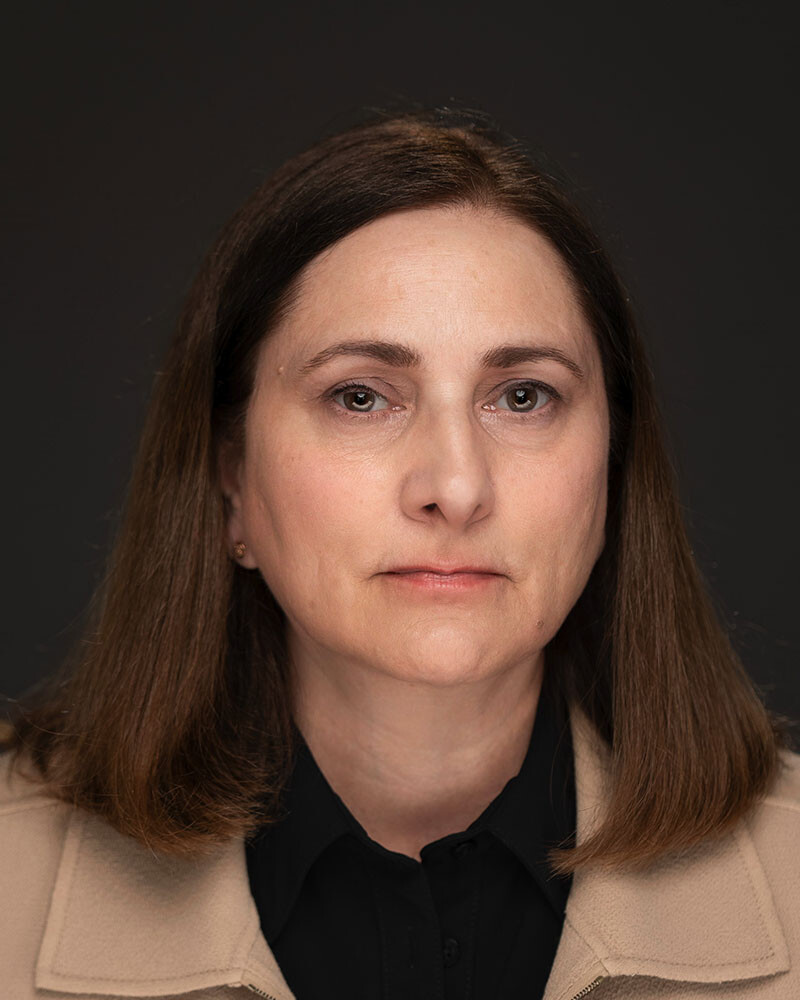
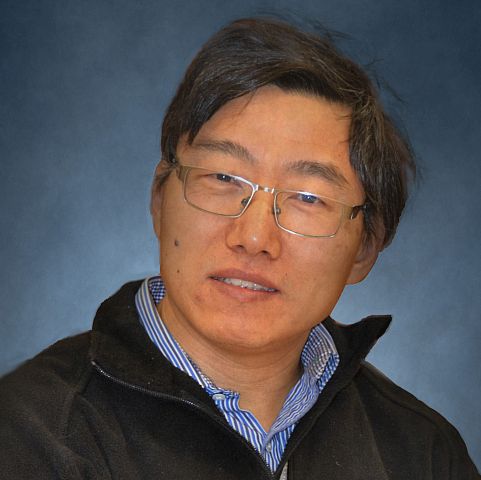
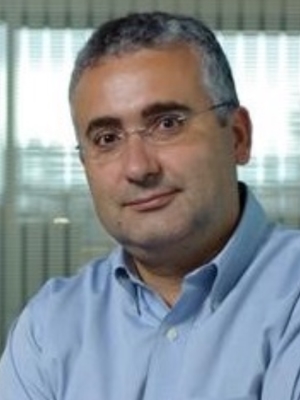
Laura Anderson is an Associate Professor in the Department of Mathematics at Binghamton University. She holds a Ph.D. from MIT (1994) and has been affiliated with Binghamton since 2001. Her research focuses on Combinatorics and Topology, with a specialization in matroid theory, hyperplane transversals, and topological combinatorics. She teaches advanced courses such as Introduction to Combinatorics (Math 511) and Discrete Mathematics (Math 314). Her academic contributions include groundbreaking work on oriented matroids, combinatorial Grassmannians, and hyperfield applications. Anderson has advised multiple Ph.D. students, including Olakunle Abawonse, Ulysses Alvarez, and Leandro Junes, whose theses explore topics like matroid extensions and tropical phased matroids. She actively participates in academic conferences, co-organizing the Binghamton University Graduate Conference in Algebra and Topology (BUGCAT). Anderson’s research integrates algebraic topology with discrete mathematics, addressing geometric realizations, hyperfield structures, and topological invariants. Her pedagogical innovations include experimenting with flipped classroom methods in calculus education. She maintains an active presence in academic service, contributing to journal reviews and editorial work in combinatorial geometry.
John DeNero is the Giancarlo Teaching Fellow and Associate Teaching Professor in UC Berkeley's Electrical Engineering and Computer Sciences (EECS) department. He joined UC Berkeley in 2014 to focus on undergraduate education in computer science and data science. He teaches and co-develops introductory courses like CS 61A (Computer Science) and Data 8 (Data Science), which serve thousands of students annually. His research spans natural language processing and education innovation, with notable contributions to textbooks like Composing Programs and Computational and Inferential Thinking . Education: Ph.D. in Electrical Engineering and Computer Science, UC Berkeley (2010) M.A. in Philosophy, Stanford University (2002) B.S. in Mathematical & Computational Science and Symbolic Systems, Stanford University (2001) Research interests focus on advancing AI education and curriculum design. His work emphasizes scalability, equity, and student success in large courses. Notable contributions include the Pac-Man projects for AI education and the Berkeley Data Science Education Program. Recent trends in publications highlight AI-assisted education tools, machine translation improvements, and large-scale student feedback systems. Awards include the UC Berkeley Distinguished Teaching Award (2018) and multiple accolades for teaching excellence. Advising and grants: While currently not taking new students, his team supports massive course infrastructures. Labs include the Berkeley Artificial Intelligence Research (BAIR) Lab and contributions to Data Science undergraduate studies.
Elodie Loubaresse is an Associate Professor of Management at Paris-Saclay University since 2009. She holds a PhD in Management from Paris 2 University (supervised by Pr. Isabelle Huault) and is a former student of Ecole Normale Supérieure of Cachan. Her research focuses on innovation-organization relationships in clusters, sectors, and educational contexts, with a strong emphasis on pedagogical innovation and distance learning. She currently leads the L3 Management program and the M1 Strategic Management program in distance learning. Her academic work spans organizational dynamics, cluster networks, and spatial mobility strategies. She has organized international conferences (e.g., AIMS 2022) and served as guest co-editor for special issues on coopetition in ecosystems (FCS 2023) and spatial mobilities (RFG 2012). She is a member of the AIMS scientific committee and contributes to journal peer reviews (Management & Avenir, Revue Française de Gestion). Her teaching portfolio includes courses on strategic management, research methodology, and entrepreneurship across undergraduate and graduate levels. She leads pedagogical innovation initiatives through her role in AUNEGe (French university network for distance education) and has developed resources on management fundamentals for digital education platforms.
Marcia Barnes is the Dunn Family Chair in Psychoeducational Assessment and a Professor of Special Education at Vanderbilt University's Peabody College, Department of Special Education. Her research focuses on understanding and addressing learning difficulties in reading comprehension and mathematics among children with neurodevelopmental disorders and those at risk for learning disabilities. Her research interests include: Cognitive and linguistic processes in reading and math disabilities Development of assessment tools for inferential comprehension Design and evaluation of interventions for early mathematics and reading comprehension Co-occurring reading and math disabilities Technology-assisted and combined cognitive-academic interventions Her work employs longitudinal studies, randomized controlled trials, and meta-analyses, and has been supported by federal funding from the Institute of Education Sciences (IES) and the National Institutes of Health (NIH). Her publications appear in top journals such as Scientific Studies of Reading , Journal of Educational Psychology , and Neuropsychology . Marcia Barnes is the author of numerous peer-reviewed papers, book chapters, and a widely used book on learning disability identification and intervention. She leads the Barnes Lab at Vanderbilt, which is dedicated to improving outcomes for children with or at risk for learning disabilities through rigorous research. Ph.D. in Psychology, McMaster University, 1988 Postdoctoral Fellowship, Research Institute, The Toronto Hospital for Sick Children, 1988–1991 She advises students and leads research teams in the Barnes Lab, focusing on innovation in assessment and intervention for learning disabilities. While specific advisees are not listed, her federally funded projects suggest active mentorship and collaboration. Her lab explores future directions in technology-enhanced learning and integrated cognitive-academic supports. The Barnes Lab conducts cutting-edge research on: Risk factors for co-occurring math and reading disabilities Intervention efficacy through randomized trials Development of novel assessment instruments Technology-assisted learning tools Longitudinal trajectories of learning difficulties
Qingguo Li is a Professor and Associate Head at the Department of Mechanical and Materials Engineering , Queen's University , and a member of the Ingenuity Labs Research Institute . He specializes in biomechanical system design, energy harvesting, wearable sensors, gait analysis, and load carriage systems. His research integrates robotics, biomedical engineering, and sensor technology to develop human-centric devices and mobility aids. Current Roles : Professor, Associate Head, Queen's University Research Institute : Ingenuity Labs Research Institute Lab : Bio-Mechatronics and Robotics Laboratory His work focuses on biomechanical energy harvesting , IMU-based motion analysis , and assistive device development . Key applications include stroke rehabilitation, gait monitoring, and wearable power generation systems. Articles span cable-driven robots , smart walkers , and 3D printing mechanisms , emphasizing human-robot interaction and dynamic modeling . The lab explores sensor calibration , adaptive control algorithms , and human movement optimization . Areas of impact include rehabilitation engineering , load carriage stability , wearable sensor accuracy , and assistive robotics . His team develops solutions for gait asymmetry detection , post-stroke mobility , and low-cost energy systems , leveraging machine learning and kinetic modeling .
Peter Benner is a Professor and Director at the Max Planck Institute for Dynamics of Complex Technical Systems in Magdeburg, where he leads the Computational Methods in Systems and Control Theory group. He also holds an Honorarprofessor position for Mathematics at Otto-von-Guericke Universität Magdeburg since 2011. Benner has previously served as Managing Director of the Max Planck Institute during multiple periods (2013-2014, 2021-2022, and 2025-2026), demonstrating his leadership in the field. Benner's research focuses on Scientific Machine Learning, Numerical Linear and Multilinear Algebra, Model Order Reduction and Reduced-order Modeling, Numerical Methods in Systems and Control Theory, PDE Constrained Optimization, High-performance and Power-aware Computing, and Mathematical Software development. His work bridges theoretical mathematics with practical engineering applications, particularly addressing challenges in large-scale dynamical systems. Analysis of his recent publications reveals a strong emphasis on developing efficient computational methods for complex systems. Benner has pioneered approaches combining model order reduction with tensor methods to tackle high-dimensional problems in uncertainty quantification and PDE-constrained optimization. His work shows a consistent trend toward integrating data-driven techniques with traditional model-based approaches, particularly for nonlinear and parametric systems. Throughout his career, Benner has actively mentored students and collaborated with researchers worldwide, delivering numerous invited talks at prestigious institutions and conferences across Europe, North America, and Asia. His research has received significant funding, supporting the development of mathematical software and computational methods for industrial applications. Benner leads the Computational Methods in Systems and Control Theory department at the Max Planck Institute, which focuses on developing and implementing advanced numerical methods for large-scale dynamical systems. The group maintains strong connections with both theoretical mathematics and practical engineering applications, particularly in fluid dynamics, energy systems, and control theory.
Emilio Frazzoli is a Full Professor at ETH Zurich’s Department of Mechanical and Process Engineering. He leads the Institute for Dynamic Systems and Control and the Center for Sustainable Future Mobility, focusing on autonomous systems, robotics, and socio-technical control frameworks. Current affiliations: ETH Zurich (Dynamic Systems and Control, Sustainable Future Mobility) Research: Autonomous mobility-on-demand, game theory for resource allocation, and safety verification in multi-agent systems His work bridges robotics, control theory, and economics, with projects like the open-source AMoDeus simulation framework for autonomous taxis and karma-based resource allocation systems. Recent publications emphasize trustworthy AI, reproducibility in autonomous vehicle control, and human-robot interaction challenges. Notable projects include nuReality (VR-based pedestrian interaction studies) and CARSI II (context-driven vehicle interfaces).
Kin Wai Michael Siu is the Eric C. Yim Professor in Inclusive Design and Chair Professor of Public Design at The Hong Kong Polytechnic University (PolyU) . He founded the Public Design Lab and directs two joint research centers: the PolyU-HIT Inclusive Environment Center and the PolyU-WUT Ship/Marine Aesthetic Design Lab . His roles include PhD/postdoc supervision, coordination of design research methods, and extensive editorial/advisory board memberships. PhD, The Hong Kong Polytechnic University PhD, University of Bath MSc, City University of Hong Kong MA, The Hong Kong Polytechnic University MEd, The University of Hong Kong BA(Hons), Loughborough University of Technology A leading figure in inclusive design, Siu integrates Vygotsky's ZPD and Bruner's scaffolding theory into his 'Scaffolding Innovation' framework. His work balances creative design with technological application, focusing on inclusive public spaces (playgrounds, country parks, recycling facilities) and pandemic prevention strategies (e.g., COVID-19/NID mitigation through design ). Recent projects explore AI-enhanced recycling , bioinspired wearables , and cultural heritage semiotics . His publications span design education , participatory design , and cross-cultural heritage preservation , with a fingerprint highlighting 'Public Design', 'Inclusive Design', 'Visually Impaired', 'Cultural Semantics', and 'Spatial Practice'. Key collaborators include researchers from Hong Kong, China, and international institutions. Scientific Awards : 2024 G Cross Award for Excellent Guidance (Instructor) 2024 Hong Kong Contemporary Design Awards for Exceptional Advisor Multiple international design/invention awards (over 100 total) 2008 Romanian Ministry Invention Awards for Rapid Demountable Platform (RDP) Awarded over 50 patents, Siu has secured numerous external grants for public design innovations. His Public Design Lab collaborates with institutions like Tsinghua University, MIT, and Cambridge, while his editorial roles span design, engineering, and education journals.
Mark de Rond is Professor of Organisational Ethnography at Cambridge Judge Business School and Fellow of Darwin College, University of Cambridge. His work focuses on immersive ethnographic studies of human behavior in extreme contexts including war zones, high-stakes sports, and controversial social movements, revealing how individuals navigate challenging circumstances through compromise and sensemaking. His educational background includes a DPhil from the University of Oxford alongside advanced degrees in management and economics, photojournalism, documentary photography, biography, creative nonfiction, and prose fiction. This multidisciplinary training informs his unconventional methodological approach. De Rond's research centers on extreme context ethnography, examining how pressure-cooker environments expose fundamental organizational dynamics. His work spans military medicine (Camp Bastion fieldwork), elite sports (Cambridge Boat Race), Amazon river expeditions, and controversial practices like paedophile hunting. Key contributions explore negotiation, conflict resolution, serendipity, institutional persistence, and the emotional toll of fieldwork, often employing innovative methods like enactive ethnography and linguistic analysis of digital communities. His recent publications reveal a growing focus on digital vigilantism and the societal implications of extreme practices, with increasing interdisciplinary reach across organizational studies, criminology, medical anthropology, and sociology. The work demonstrates methodological creativity through linguistic analysis of Facebook groups, embodiment studies in extreme environments, and dream-based reflexive techniques. Scientific recognition includes: BEST ARTICLE AWARD FOR 2016 Favorite MBA Professor honors from Poets & Quants (2021, 2022) Guinness World Record for first unsupported Amazon row De Rond advises MBA students and delivers executive education to top law firms (Slaughter and May, Allen & Overy), professional services (McKinsey, KPMG), corporations (Sky, BT, Diageo), and NGOs (UNICEF, NHS). His negotiation training from Harvard Law School informs both academic work and university mediation practice. Current research involves collaborative teams studying paedophile hunting (featured in Sundance-nominated documentary Predators ) and high-performance sports organizations, with fieldwork requiring deep immersion in challenging environments. His research methodology involves embedded collaboration with diverse teams including medical personnel in conflict zones, elite rowers, and controversial activist groups, often pushing methodological boundaries through photojournalism and creative nonfiction approaches.
Associate Professor Wenhua Zhao is a globally recognized expert in offshore hydrodynamics and renewable energy technologies at The University of Queensland , School of Civil Engineering. With over 110 publications and 30 million AUD in secured research funding, his work bridges theoretical and practical advancements in marine engineering. Research focuses on Clean Energy , Artificial Intelligence , and Climate Change , specifically floating wind energy, floating solar, offshore aquaculture, and green hydrogen production. His 15 most recent articles (2024-2025) emphasize wave-structure interactions, gap resonance dynamics, and AI-driven wave prediction, published in top journals like Journal of Fluid Mechanics and Ocean Engineering . Scientific awards include the prestigious ARC Future Fellowship (2024-2028) and DECRA Fellowship (2019-2022) , recognizing his contributions to academia and industry. He teaches the 'Design of Offshore Energy Systems' course , training hundreds of students in coastal and ocean engineering, and serves as Deputy Editor for Ocean Engineering and Associate Editor for ASME's Journal of OMAE . Available for research supervision, Zhao actively collaborates with editorial boards of Applied Ocean Research and other Q1 journals.
Prof. Dr. Sebastian Steinhorst is an Associate Professor (W3-level with tenure) at the Technical University of Munich (TUM) within the Embedded Systems and Internet of Things group at the TUM School of Computation, Information and Technology . His research focuses on advancing the security, predictability, reliability, and interoperability of smart connected and autonomous systems, particularly for applications in Internet of Things (IoT) , Industry 4.0 , and automotive systems . PhD in Computer Science (2011) from Goethe University Frankfurt Postdoctoral roles at TUMCREATE Singapore (2011-2016) and Aarhus University (2016) Joined TUM in 2016 as Rudolf Moessbauer Tenure Track Professor His research areas include decentralized embedded systems, hardware/software co-design, modeling and verification of cyber-physical systems, security protocols for automotive networks, and time-sensitive networking (TSN) for industrial applications. Recent work explores blockchain-based data sovereignty, zero-knowledge proofs for vehicle authentication, and resilient architectures for autonomous systems. Key scientific contributions include the 2019 ACM TODAES Best Paper Award and pioneering work on CyberSecDome , LeapChain , and Simutack frameworks. He serves on editorial boards and conference committees, including co-organizing the Autonomous Systems Design initiative at DATE. His teaching portfolio spans lectures on System Design for IoT , Software Architecture for Distributed Systems , and IoT Security across multiple semesters. He also leads advanced seminars on embedded systems and IoT.
Geert Deconinck is a full professor at KU Leuven , leading the Electrical Energy Systems and Applications (ELECTA) research group within the Department of Electrical Engineering (ESAT). He also serves as scientific leader of the EnergyVille research center's algorithms domain, focusing on smart electrical networks and thermal systems. M.Sc. and Ph.D. from KU Leuven Head of ELECTA since 2012 (10 professors, 8 postdocs, 70+ PhDs) Over 8 million EUR research budget in last 5 years 44 completed PhDs and 10 current advisees IEEE Transactions editorial board member His research spans smart grid architectures , distributed control , and cyber-physical security , with recent focus on EV-grid integration , renewable energy democratization , and multi-carrier energy systems . Current projects include: Smart Charging - E-Mobility meets Renewable Energy Early Detection and Defense Systems for Smart Grids Open-source P2P energy sharing platforms Microgrid control strategies for PV-battery systems Awarded IET Fellow and IEEE Senior Member status, his work combines machine learning with power systems engineering through both theoretical modeling and experimental validation . He has contributed over 575 publications with 9800+ Google Scholar citations.
Yang Weng is an Associate Professor at the School of Electrical, Computer and Energy Engineering, Arizona State University. He leads the U.S.-Israel International Consortium on Energy Cyber Initiative on Cybersecurity R&D and directs a research lab focused on smart grid resilience and machine learning applications. Previously, he was a TomKat Postdoctoral Scholar at Stanford University. Education: Ph.D. in Electrical and Computer Engineering, Carnegie Mellon University M.S. in Machine Learning, Carnegie Mellon University Research: His interdisciplinary work bridges power systems, machine learning, and cybersecurity, emphasizing renewable integration, grid optimization, and cyber-physical resilience. Key themes include physics-informed AI, adversarial robustness in energy infrastructure, and real-time control algorithms for dynamic grids. Publications: Recent articles (2024–2025) demonstrate strong trends in AI-driven grid security, adaptive control under uncertainty, and climate-impact modeling. Dominant domains include neural network applications for stability guarantees, cyber-attack mitigation, and data-efficient renewable integration. Awards: NSF CAREER Award (2021), Amazon Research Award (2023) Best Paper Awards at IEEE SmartGridComm (2012, 2013), PES GM (2014), PMAPS (2016) IEEE Senior Member, Sun Award (ASU), Centennial Award (ASU) Grants & Leadership: Secured DOE, NSF, and AFOSR funding for projects on AI-enhanced grid resilience. Advises PhD/postdoc candidates and chairs the U.S.-Israel Energy Center consortium. Organized international workshops (e.g., ICRDE 2023) and validated research via hardware-in-the-loop experiments. Lab & Team: Directs a research group developing deployable ML solutions for utilities (e.g., OPAL-RT collaborations). Focus areas: cybersecurity toolchains, reinforcement learning for grid control, and anomaly detection architectures.
Jill Newton is a Professor in the Department of Curriculum and Instruction at Purdue University’s College of Education. Her work focuses on mathematics education curriculum development, teacher training, and equity in education, with additional contributions to international and study abroad programs. Ph.D. in Curriculum, Teaching, and Educational Policy (Mathematics Education), Michigan State University (2008) M.A. in International Education, George Washington University (1995) B.S. in Mathematics and Secondary Teaching Certification, Michigan State University (1987) Newton’s research spans algebra teaching, curriculum coherence, and social justice in education. She has led national studies on mathematics teacher preparation and explored how teachers use curricular resources post-COVID. Her work also emphasizes international education, including virtual communities of practice for global social justice. Recent publications highlight her focus on algebraic reasoning, curricular alignment, and equity. She has co-authored studies on elementary teachers’ curriculum use, preservice teacher development, and virtual intercultural collaborations. Terry L. Wood Mathematics Teacher Educator Award (2024-25) Book of Great Teachers Inductee (2023) Outstanding Leadership in Globalization Award (2022-23) Charles B. Murphy Outstanding Undergraduate Teaching Award (2017) Newton has coordinated undergraduate research at Purdue since 2018 and has taught mathematics education courses since 2004. Her teaching experience spans secondary schools in Venezuela, Tanzania, Bulgaria, and Papua New Guinea, enriching her global perspective.
Helmut Leder is a Professor at the University of Vienna, specifically within the Faculty of Psychology's Department of Cognition, Emotion, and Methods in Psychology. He serves as Head of the Vienna Cognitive Science Hub, integrating interdisciplinary approaches to study aesthetic experiences and cognitive processes. His academic profile includes teaching courses in General Psychology, Cognitive Psychology, and Neurosciences, alongside supervising master's and doctoral thesis seminars focused on perception and neuroaesthetics. Key Research Areas : Empirical Aesthetics, Cognitive Psychology, Visual Perception, Cross-Cultural Psychology, Urban Art Impact, Mental Imagery Studies Methodological Focus : Eye-tracking, Machine Learning Analysis, Cross-Cultural Comparisons, Field Experiments, Neuroimaging Recent Contributions : Investigated urban art's role in stress reduction, developed network models of aesthetic experiences, explored non-visual color navigation for the blind, and applied machine learning to art evaluation. His work bridges psychology with cultural studies, examining how aesthetic experiences shape well-being and cognitive processes. Current projects emphasize the neural and behavioral distinctions between real and imagined art encounters, while challenging traditional gender-based perception models.