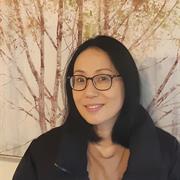
Mr. Wil Dim is an Associate Lecturer in the School of Design at RMIT University, specializing in design education and workplace design innovations. He holds an ORCID identifier (0000-0693-3330) and is based at the City Campus in Australia. His research focuses on pedagogical approaches in industrial design education, aging workforce challenges, and workplace safety frameworks. Wil has collaborated extensively with institutions like WorkSafe Victoria on commissioned reports addressing workplace design for aging workers and safety innovations. His work integrates human-centered design principles with contemporary societal needs. Key research outputs include studies on learner-centered design studios and future-of-work scenarios. Awards: ACUADS National Teaching Excellence Award (2022) RMIT Vice-Chancellor Teaching Award of Excellence (2022) Wil’s teaching and research emphasize interdisciplinary collaboration, evidenced by his co-authored publications with experts like Soumitri Varadarajan and Ian de Vere. His contributions span conference presentations at events such as the International Conference on Higher Education Advances and the Engineering and Product Design Education conference.
Dr. Taylor Brown is a Lecturer at RMIT University's Department of Health and Biomedical Sciences. Her research focuses on the psychological impacts of immersive digital environments, including avatars, games, and screen-based interactions, particularly on wellbeing, identity, and behavioral risks among digital-native populations. She integrates clinical psychology, digital health, and educational innovation in her work. Her research interests include the user-avatar bond, behavioral addictions (e.g., Gaming Disorder, Screen Addiction), and digital phenotyping. She employs psychometric and machine learning approaches to explore how online engagement relates to mental health and developmental outcomes. Dr. Brown teaches Developmental Psychology, Motivation and Organisational Psychology, and Psychology Field Placement at RMIT. She led a CEIQ-funded initiative to redesign placement-based learning through Work Integrated Learning (WIL) and industry collaboration. She actively supervises Honours and PhD students in areas like socio-emotional difficulties linked to internet use and gaming behavior. Her recent articles highlight machine learning applications in gaming disorder, user-avatar bond dynamics, and psychometric validation of addiction scales. She explores translational science for youth prevention and early intervention in digital contexts.
Dr. Geetika Verma is a Lecturer in Mathematics and Cybersecurity at the School of Science, RMIT University STEM College. Her research spans applied and pure mathematics, focusing on numerical techniques, industrial applications of mathematics and statistics, and cybersecurity algorithms such as cryptography. She actively engages in work-integrated learning (WIL) initiatives, coordinating internships and research projects for mathematics, statistics, and cybersecurity courses. Dr. Verma has been recognized with multiple teaching and outreach awards for her industry-linked pedagogical approaches. Her research interests include fractal geometry, functional and harmonic analysis, evolutionary population dynamics, and cybersecurity. She has contributed to over 17 peer-reviewed publications since 2014, addressing topics from fractal convolutions to elliptic curve key generation. Dr. Verma serves on the B H Neumann Prize committee and coordinates the Mathematical Sciences Seminar. She is open to supervising Masters and PhD students in fractal-related research.
Dr. Bin Wu is a Senior Lecturer in Early Childhood Education at RMIT University’s School of Education, with extensive experience in both early childhood settings and tertiary education across New Zealand and Australia. She is based at the Bundoora West Australia campus and is open to supervising Masters Research or PhD students. Her work focuses on creating equitable and inclusive learning environments, particularly through culturally responsive outdoor learning and addressing social justice issues. Teaching interests include Work-Integrated Learning (WIL) courses, where she supports preservice teachers and mentors them during placements. Her research explores educational theories, philosophies, and historical practices in early childhood education, alongside gender, diversity, and curriculum development in higher education contexts. Recent supervision projects include: Entangling Urban-Bush Kinder: Developing Culturally Responsive Outdoor Learning in Victoria, Australia (Jan 2025) An Exploration of Victorian Kindergarten Educators’ Experiences of Remote Teaching During COVID-19 Lockdown: (Aug 2024) No scientific awards are explicitly mentioned in the text. Her research narrative emphasizes bridging theory and practice to foster inclusive education, while her teaching contributions highlight mentorship and practical skill development for future educators. No specific labs, teams, or additional affiliations beyond the School of Education are noted.
Dr. Janine Sheaves is a Lecturer in the College of Science and Engineering at James Cook University. She also serves as the Director of the Work Integrated Learning (WIL) program, which connects undergraduate students with industry and community organizations to enhance their career readiness. Her research focuses on the spatial and temporal dynamics of benthic invertebrates in tropical transitional wetlands, emphasizing how these ecosystems respond to tidal and freshwater flow changes. This work supports restoration strategies for human-impacted coastal wetlands, addressing critical knowledge gaps in their ecological functioning. Her research interests revolve around understanding the structure and dynamics of marine and estuarine ecosystems, particularly in tropical regions. She integrates field observations with technological tools like deep learning to study cryptic species and optimize ecological monitoring. Key themes include wetland restoration, benthic invertebrate ecology, and the application of computer vision in ecological research. Her publications span topics like tidal ecosystem consequences, whale shark nursery roles, marine restoration strategies, and fisheries parameter optimization via technology. Despite her active research output, no scientific awards are listed in the provided texts. The WIL program highlights her commitment to bridging academic training with real-world industry needs, though specific grants or advising records are not detailed. No dedicated lab or team affiliations are explicitly mentioned in the text.
Wil van der Aalst is a prominent Professor in the Department of Computer Science at Eindhoven University of Technology. He is a leading figure in Process Mining, contributing to foundational theories and applications. His work focuses on business process management, workflow systems, and Petri Nets. He has co-authored over 167 publications, including seminal works on Process Mining standards (e.g., IEEE XES) and workflow patterns. His research emphasizes practical applications in healthcare, healthcare process privacy, and blockchain integration. He has collaborated extensively with institutions globally, including SAP and academic partners. Key contributions include methodologies for process conformance checking, stochastic process analysis, and configurable process models. His work bridges theoretical computer science with real-world business process optimization.
Jennifer Clifton is a Lecturer in the School of Education at Queensland University of Technology (QUT). Her research focuses on work-integrated learning (WIL), teacher education, and professional experience models. She has contributed to studies on educational partnerships, curriculum innovation, and the impact of technology on teaching practices. Clifton has authored over 35 publications, including peer-reviewed articles in journals such as Innovations in Education and Teaching International and Australian Journal of Teacher Education . Her work emphasizes the importance of bridging theory and practice in teacher training, with a particular interest in addressing challenges in professional experience programs. Clifton has also explored topics such as gender diversity in WIL contexts and the role of collaborative frameworks like the Distributed Open Collaborative Course (DOCC) in education. She has engaged in policy discussions, including QUT’s response to AI in education, and advocates for equitable and innovative approaches to teacher preparation. Clifton’s research spans over two decades, with contributions to both practical and theoretical aspects of education. Her interdisciplinary approach integrates insights from pedagogy, curriculum design, and educational technology to enhance teaching and learning outcomes.
Alicia Carey is a Lecturer in Nursing and Midwifery at the School of Nursing, Midwifery and Indigenous Health, Charles Sturt University. Her academic work is deeply rooted in improving rural, regional, and remote healthcare through education, workforce development, and innovative health programs. Research Interests: Her research spans work-integrated learning (WIL) , interprofessional education , rural and remote clinical placements , e-health and mHealth interventions , postnatal depression , and translational research in maternal and community health . She focuses on co-designing educational models that support sustainable healthcare delivery in underserved areas. The recent trend in her publications highlights a strong emphasis on collaborative, community-engaged research. Her work investigates how partnerships between academia, health services, and professional bodies can enhance student learning, workforce retention, and mental well-being of healthcare providers—exemplified by her evaluation of the Schwartz Rounds program. She also explores digital health tools to support new mothers and improve access to care in rural settings. Scientific Awards: Ralph W. Tyler Award (2024) WILNZ Research Excellence Award (2024) Advising and Grants: While no individual students are listed, she has contributed significantly to team-based research projects funded through academic and health partnerships. Her work in curriculum development and WIL indicates active engagement in educational grants and policy-informing research. She has collaborated with multidisciplinary teams across Australia, particularly in NSW Health and rural health districts. Labs and Teams: Alicia is part of collaborative research groups focused on rural health workforce sustainability, interprofessional education, and digital health innovation. She contributes to the Australian College of Midwives and engages in national-level curriculum planning, indicating strong integration with professional and academic networks.
Dirk Fahland is an Associate Professor in Process Analytics on Multi-Dimensional Event Data at the Analytics for Information Systems group, Eindhoven University of Technology (TU/e), School of Mathematics and Computer Science. He combines formal methods with data-driven approaches to analyze complex distributed systems through event data. His current research focuses on process mining, data engineering, and multi-dimensional analysis of business processes. Academic Background: PhD from Humboldt-Universität zu Berlin and TU/e under Profs Wolfgang Reisig and Wil van der Aalst Post-Doc at TU/e on EU-funded ACSI project Research stays at Weizmann Institute, HPI Potsdam, and National University of Singapore Appointments: Assistant Professor (2013), Tenure (2016), Associate Professor (2019) Research Interests: Dirk's work centers on analyzing complex systems through event data by developing techniques for large-scale preprocessing, model synthesis, and multi-angle behavioral analysis. He explores object-centric process mining, anomaly detection, and knowledge graph applications for auditing. His research emphasizes balancing model accuracy with simplicity and integrating domain knowledge for explainable process analysis. Scientific Awards: Best Paper Award BIS 2011 Best Paper Award BPM 2011 Best Paper Award ICPM 2020 Best Paper Award ICPM 2021 Best Reviewer Award ICPM 2019 Educational Contributions: He manages the "Data Science in Engineering" Master's program, leads the "Data Challenge" course series at JADS, and teaches advanced process mining courses. He also contributes to BPMN visualization and performance monitoring education.
Dr. Beate Mueller is a Senior Lecturer at the TD School, University of Technology Sydney (UTS). Her expertise spans higher education teaching and learning, with a focus on global work-integrated learning (WIL), career development, intercultural communication, and diversity and inclusion. She holds a PhD from Macquarie University (Sydney) and prior degrees from Friedrich-Schiller University in Germany. Currently, she convenes the Innovation Internship A+B program and teaches subjects including Work-Integrated Learning, Intercultural Communication, and Graduate Capabilities. Dr. Mueller’s service roles include Associate Editor for the Journal of University Teaching and Learning Practice and Board Membership in the Australian Collaborative Education Network (ACEN). Research Interests: Dr. Mueller’s work centers on pedagogical strategies for inclusive education, compassionate teaching practices, online WIL adaptation during the pandemic, and student perceptions of international studies. Her research bridges theory and practice, emphasizing authentic learning experiences and social justice in higher education. Teaching & Supervision: She leads courses in WIL, career development, and intercultural communication. Her supervision focuses on graduate capstone projects and international internship frameworks. Languages: Fluent in German, Spanish, French, and English. Proficient in academic peer review and intercultural business communication.
Rowena Lavery is a Senior Lecturer in Biotechnology at Flinders University, College of Medicine and Public Health. She holds a PhD from the University of Galway and has extensive international research experience in reproductive biology and molecular genetics across institutions in Ireland, Italy, France, and Australia. She transitioned into education in 2016, teaching across higher and vocational education programs at Holmesglen, RMIT, and Flinders University. Doctor of Philosophy (PhD), University of Galway Bachelor of Science (Hons) 1st Class, University of Galway National Diploma in Fine Chemicals and Pharmaceuticals, Galway-Mayo Institute of Technology Certificate IV in Training and Assessment (TAE40110) Her research focuses on reproductive biology , particularly the molecular mechanisms of SOX9 and RSPO1 in sex determination and gonadal development. She pioneered work showing that female sex differentiation is actively induced by RSPO1 , overturning the default pathway dogma. Her later work revealed SOX9 ’s role in RNA splicing, expanding its known functions beyond transcription. She combines this deep scientific background with innovative teaching approaches, emphasizing work-integrated learning (WIL), gamification, and cloud-based platforms like Canvas with H5P tools to create dynamic, student-centered experiences. The analysis of her publications reveals a consistent trajectory in developmental genetics and reproductive biology , with recent contributions shifting toward educational research and pedagogical innovation. Her work spans molecular diagnostics, stem cell research, and clinical applications, with a strong emphasis on both basic science and translational outcomes. Her scientific and teaching excellence has been recognized through numerous awards, including: RMIT SEH Top Course Award (multiple years, across Biochemistry, Histology, and Molecular Biology) Harold–Mitchell Postdoctoral Travel Grant Equity Trustees Equipment Grant Faculty of 1000 Recommendations for high-impact research National University of Ireland PhD Scholarship Rowena Lavery has supervised and mentored numerous students across multiple programs, though specific names are not listed. She has secured competitive grants for laboratory equipment and research, demonstrating strong project leadership. Her professional engagement includes extensive participation in workshops and industry collaborations with Helena Laboratories, Thermo Scientific, Peter MacCallum Cancer Centre, and Monash Medical Centre, ensuring her teaching remains aligned with real-world applications. She is a member of the Australian and American Societies for Biochemistry and Molecular Biology, and her work contributes to UN Sustainable Development Goals in health and education.
Catherine Linnett-Young is a Lecturer and Teaching Specialist (Clinical Practitioner) in Speech Pathology at Flinders University, where she serves as Course Coordinator for the Bachelor of Speech Pathology program. She is based in the Discipline of Speech Pathology within the College of Nursing and Health Sciences, and her work is centered on clinical education, student support, and trauma-informed, family-centered practice. Her research and teaching interests include: Evidence-based practice in pediatric speech pathology Trauma-informed and family-centered approaches Relational focus in therapeutic interactions Interprofessional and transdisciplinary clinical education Psychodrama and experiential learning methods Catherine has played a key role in developing the first national trauma-informed practice guidelines for speech pathologists through her work with Speech Pathology Australia. She is also instrumental in the Interprofessional Student Clinic at Health2Go, where she supports clinical educators and students in early intervention settings. Her scientific recognition includes: Honourable Mention: 2024 Student-led Teaching Award for Outstanding Wellbeing and Student Support Catherine supervises students in Work-Integrated Learning (WIL) placements and has extensive experience as a Clinical Educator. She previously served as the inaugural Student Engagement Coordinator for both Bachelor and Master of Speech Pathology programs, providing pastoral care and academic support. She is also deeply involved in curriculum development and topic coordination for core pediatric speech pathology subjects. She is a trainee psychodramatist with AANZPA and has completed advanced training in Interpersonal Neurobiology through the Mindsight Institute (UCLA), enhancing her integrative, person-centered approach to teaching and therapy.
Dr Ruby Ma is a Lecturer in Work Integrated Learning at Deakin Business School, Deakin University, specializing in education-focused roles. With qualifications including a PhD, MBA, GCHELT, and Bachelor of Applied Science from RMIT University, she is passionate about student engagement, employability, and innovative pedagogy. PhD, Deakin University MBA, Deakin University Graduate Certificate of Higher Education Learning and Teaching, Deakin University Bachelor of Applied Science, RMIT University Ruby's research focuses on cross-cultural business negotiations, international management, and work-integrated learning (WIL). Her work explores emotional dynamics, team resilience, and cultural adaptation in global business contexts, particularly between East and West. Ruby's publications highlight trends in cross-cultural negotiation strategies and diversity management in Sino-Western collaborations. She has contributed to handbooks like Palgrave Handbook of Cross-Cultural Business Negotiation and Managing Cultural Diversity in Asia . Scientific Awards: Deakin University Vice Chancellor's Award for Teaching Excellence (2012) Deakin University Vice-Chancellor's Team Award for Student Growth (2022) Faculty of Business and Law Early Career Teacher Award (2011) Australian Universities Lecturer of the Year (2011) With industry experience spanning health, pharmaceuticals, technology, and hospitality, Ruby also works as a management consultant, advising corporate clients on organizational development and training. She is affiliated with the Academy of International Business (AIB), Academy of Management (AOM), and Australian & New Zealand Academy of Management (ANZAM).
Associate Professor Nicole Herbert serves as Head of the School of Information and Communication Technology at the University of Tasmania, where she has been since 1999. She holds leadership roles including Deputy Associate Dean for Student Success and Academic Quality within the College of Sciences and Engineering (CoSE). Nicole specializes in ICT curriculum design, particularly in enhancing student engagement, retention, and job readiness through innovative pedagogical approaches like Work-Integrated Learning (WIL) and curriculum Indigenisation. Her research focuses on transforming education through culturally inclusive practices, addressing systemic biases in technology, and leveraging learning analytics for STEM retention. Notable contributions include pioneering the ICT capstone project units and KIT105 Professional Practices, which integrate ethical and professional competencies. Nicole's work has been recognized with prestigious awards such as the 2025 CORE Teaching Award and Senior Fellowship from the Higher Education Academy. Nicole has led multiple curriculum reforms including embedding Indigenous perspectives into ICT education and developing industry-aligned programs. She actively contributes to national education initiatives, including the Women in Technology poster series promoting STEM careers for girls. Her scholarly efforts have produced over 50 research outputs, emphasizing practical solutions for educational challenges. Awards & Recognition: 2025 CORE Teaching Award (National) 2024 Vice Chancellor's Medal for Teaching Excellence 2021 Senior Fellow of the Higher Education Academy 2023 Associate Fellow (Indigenous Knowledges) Teaching & Supervision: Nicole has mentored over 200 students through capstone projects and WIL experiences. She currently supervises PhD research in computing education and learning analytics. Her courses KIT512 WIL Experience and KIT105 Professional Practices consistently achieve top student satisfaction scores.
Javier Diaz-Martinez is a Lecturer and Teaching Specialist at Flinders University, affiliated with the Discipline of Languages, Linguistics, TESOL and Communication within the College of Humanities, Arts, and Social Sciences. He holds roles as Discipline Lead for Applied Linguistics and TESOL, Coordinator of the Master of Language Studies, and President of the Spanish Teachers' Association of SA. His work emphasizes language teaching methodologies, digital pedagogy, curriculum design, and integrating wellbeing practices into education. Education: Master in Applied Linguistics, University of Adelaide Master in Film Script Writing, Universidad Autónoma de Madrid Graduate Certificate in ELE (Teaching Spanish as a Foreign Language), International House, Spain Licentiate in Philosophy and Education, Universidad Complutense de Madrid (Honours) Research & Professional Engagement: Javier focuses on language learning assessment, workplace-integrated learning (WIL) for students, and the application of digital tools in education. He collaborates with organizations like the SACE Board of SA and the Spanish Embassy in Australia, and actively contributes to associations such as STASA and MLTASA. His 2016 Flinders Teaching and Learning Innovation Grant supported frameworks for language student placements. Labs/Teams: Leads the Applied Linguistics and TESOL discipline, coordinating interdisciplinary initiatives in language education and community engagement.