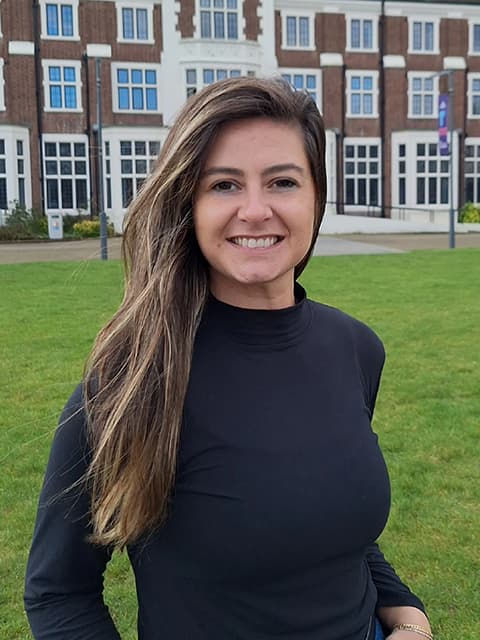
Professor Nancy W. Y. Law is a leading scholar in Learning Sciences and Technology at the University of Hong Kong's Faculty of Education . She has served as Founding Director of the Centre for Information Technology in Education (CITE) (1998-2013) and currently holds the Chair of Learning Sciences and Technology . Her career spans over 25 years of international comparative studies, policy analysis, and large-scale educational innovation. Current roles: Associate Dean (Strategic Development), HKU Key affiliations: Sciences of Learning Strategic Research Theme (co-convener) Research Expertise Her work focuses on technology-enhanced learning , digital literacy , knowledge building communities , and multilevel educational change . She pioneered network models of teacher innovation and socio-technical frameworks for sustainable pedagogical transformation, particularly in STEM education and Cyberbullying prevention . Scientific Leadership With over 25 major research grants (2000-2023) exceeding HK$50 million, she leads projects like: Learning and Assessment for Digital Citizenship Jockey Club Self-directed Learning in STEM Design-Aware Learning Analytics A Fellow of the International Society of Learning Sciences and recipient of the HKSAR Humanities and Social Sciences Prestigious Fellowship , she has supervised numerous international comparative studies including SITES 2006, ICILS 2013, and longitudinal digital citizenship research (2019-2021).
Dr. Victor Kempf is a postdoctoral researcher at the Institut für Philosophie , Humboldt-Universität zu Berlin, since March 2025. He completed his PhD at Goethe-Universität Frankfurt in 2017 and focuses on social and political philosophy from a critical theory perspective.
Kevin Manaugh is an Associate Professor at McGill University, specializing in Urban Planning with a focus on sustainable transportation and spatial justice. His research examines how decision-making processes in urban development balance environmental, economic, and social equity goals, particularly through transport systems. He holds a PhD in Urban Planning from McGill University (2013). His key research interests include integrating social equity into land use policies, analyzing accessibility impacts on socioeconomically diverse populations, and studying behavior change related to sustainable transportation. Current projects explore equitable transit accessibility, responses to local mobility policies, and health/well-being effects of sustainable transport choices. Manaugh has published extensively on transportation equity, urban form analysis, and GIS applications. His work bridges theoretical frameworks with practical policy implementation, emphasizing participatory approaches to urban planning. Notable contributions include studies on pandemic street reallocation equity and cycling infrastructure prioritization strategies. His research has been supported by interdisciplinary collaborations and applied to Canadian urban contexts. Despite prolific output, Manaugh maintains an active engagement with public discourse on urban mobility challenges and equitable urban futures.
Christopher J. Palmer is an Associate Professor of Finance at the MIT Sloan School of Management, specializing in financial decision-making, credit markets, and policy interventions. His research focuses on how individuals and institutions respond to economic upheavals in areas like bankruptcy, retirement savings, and real estate. He holds a PhD in Economics from MIT and a BA in Economics and Mathematics from Brigham Young University. Palmer’s work has been published in top journals such as the American Economic Review , Journal of Finance , and Review of Financial Studies . He explores topics including racial disparities in bankruptcy outcomes, consumer payment behavior, and the effects of quantitative easing. His research is supported by affiliations with the National Bureau of Economic Research (NBER) and the Jameel Poverty Action Lab (J-PAL). Key honors include the 2022 Jamieson Prize and the 2019 Society for Financial Studies Best Paper Award. Palmer has contributed to public debates on policy issues like rent control and retirement savings through media outlets such as The New York Times , Bloomberg , and Vox .
Anders Søgaard is a Professor at the University of Copenhagen , affiliated with both the Department of Computer Science and the Department of Communication. His research bridges Natural Language Processing and Machine Learning with a focus on AI ethics , explainability , and human-AI interaction . Primary Affiliation: Department of Computer Science, University of Copenhagen Secondary Affiliation: Department of Communication, University of Copenhagen Email: soegaard@di.ku.dk, soegaard@hum.ku.dk Research Interests His work spans Natural Language Processing , Machine Learning , and AI ethics , with recent studies addressing: Trustworthiness in AI systems Explainable AI (XAI) frameworks Multilingual model fairness and alignment Human-AI collaboration in reasoning tasks Ethical implications of social robots Mental health analytics using ML Recent Publications His 2025 output highlights trends in: AI ethics (e.g., fairness metrics, trustworthy systems) Multilingual model analysis (knowledge retention, cross-lingual transfer) Human-centric AI (gaze data, cultural considerations) Applications in healthcare and social good
Alison Ledgerwood is a Professor in the Department of Psychology at the University of California, Davis, and Principal Investigator of the Attitudes and Group Identity Lab. Her research examines how social context shapes attitudes and preferences, with a focus on open and inclusive scientific practices. Ph.D., Social Psychology, New York University (2008) M.A., Psychology, New York University (2006) B.A., Psychology, Amherst College (2003) Her research explores psychological distance , framing effects , and system justification theory , while methodologically advancing preregistration , collaborative science , and equity in publishing . She also investigates group identity dynamics and implicit/explicit bias measurement . Recent publications highlight her work on racial bias methodology , open science reform , and contextual framing . Awards include the 2024 Distinguished Service to the Society award, 2021 UC Davis Advising and Mentoring Award, and 2017 SPSP Service to the Field award. 2024 Distinguished Service to the Society, SPSP 2021 UC Davis Graduate Advising and Mentoring Award 2017 Service to the Field, SPSP Hellman Fellowship (2010-2011), UC Davis UC Davis Chancellor's Fellow APS Fellow SESP Fellow Ledgerwood advises on scientific integrity through roles like Chair of the Transparency and Openness Promotion (TOP) II Guidelines Task Force and Anti Colorism and Eurocentrism in Methods and Practices (ACEMAP) Task Force. Her lab fosters contextual evaluation studies and psychological distance frameworks .
Natalie H. Brito is an Associate Professor of Applied Psychology at New York University (NYU), affiliated with the Steinhardt School of Culture, Education, and Human Development. Her research focuses on how early social and cultural contexts shape neurocognitive development in infants and toddlers, particularly in areas of attention, memory, and socio-emotional skills. Prior to NYU, she completed a postdoctoral fellowship at Columbia University Medical Center and was a Robert Wood Johnson Health and Society Scholar. Dr. Brito’s work bridges developmental psychology, neuroscience, and public policy, emphasizing the need for equitable environments that support healthy child development. She has received prestigious awards such as the APS Rising Star Award and NIH grants, reflecting her impactful contributions to understanding developmental trajectories. Her research also extends to policy implications, such as the effects of paid maternal leave on infant brain function and the role of structural inequities in maternal mental health. Key themes include early life stress, gut microbiome influences, and the neurobiological underpinnings of cognitive development. Dr. Brito has published extensively in journals like Child Development , Developmental Cognitive Neuroscience , and JAMA Psychiatry , with a focus on innovative methodologies (e.g., the OWLET gaze-tracking tool). She teaches courses on developmental psychology and the principles of applied psychology, fostering interdisciplinary approaches to human development. Her scientific accolades include recognition from the International Society of Developmental Psychobiology and the American Psychological Association, underscoring her leadership in advancing developmental science and equity-focused research.
Richard E. Mayer is a Distinguished Professor of Psychology at the University of California, Santa Barbara, affiliated with the College of Letters & Science. His work bridges cognition, instruction, and technology to advance understanding of how people learn and how to design effective educational interventions. Research focuses on multimedia learning , computer-supported learning environments , and computer games for learning Current projects examine immersive virtual reality, generative learning strategies, and social cues in online instruction Recipient of top honors: Thorndike Award, Scribner Award, and APA’s Distinguished Contribution Award Principal Investigator on grants from the Office of Naval Research , Institute of Education Sciences , and National Science Foundation He leads the Mayer Lab for Research on Learning and Instruction, which emphasizes learning for transfer —ensuring learners apply knowledge in new contexts. His research has established 12 instructional design principles for online learning environments.
Roswitha Skare is a Professor of Documentation Science at the Department of Language and Culture, UiT The Arctic University of Norway, within the Faculty of Humanities, Social Sciences and Teacher Education. She is actively engaged in research and teaching, focusing on documentation studies, public libraries, archives, museums (LAM sector), digitalization, and film history. Her research interests include: Documentation and document theory Paratext and digital documents Public libraries and their role in society Libraries and social media Migration and refugee services in libraries Film history, especially silent films and early documentaries Cultural memory and Sámi cultural resilience Institutional convergence in cultural policy Her recent publications (2019–2025) reveal a strong focus on public libraries during and after the Covid-19 pandemic, the role of libraries in supporting immigrants and refugees, theoretical developments in document studies, and historical film analysis—particularly Robert Flaherty’s Nanook of the North . She frequently collaborates with scholars such as Andreas Vårheim, Noah Lenstra, and Sigrid Stokstad. Her work appears in journals like Journal of Documentation , Library & Information Science Research , and Proceedings from the Document Academy . Roswitha Skare teaches courses such as: MDV-1001: Multimediale dokumenter: Historie, teori og analyse MDV-1203: Bibliotek og formidling MDV-1207: Dokumentinstitusjoner og digitalisering MDV-1206: Prosjektoppgave i bibliotek- og dokumentasjonsvitenskap She supervises bachelor’s, project, and master’s students in library and documentation science. She is a member of the research group Engaging Conflicts in a Digital Era (ENCODE) and participates in projects such as LAMCOM – Libraries, archives, and museums in the community and SAMCOM - Sámi cultural centers as community and cultural resilience infrastructure , which explore the societal roles of cultural institutions and Indigenous resilience. No scientific awards are listed in the provided text.
Lea Di Salvatore is a Research Fellow at the Law School, University of Eastern Finland , affiliated with the Center for Climate Change, Energy and Environmental Law (CCEEL) since 2013. Her work focuses on energy law, environmental law, and international investment law. Current Project: INTEL (2024-2029): Developing the general doctrine of energy law. Research Interests: Critical examination of procedural inclusivity in multilateral legal frameworks, particularly in investor-State dispute settlement (ISDS) reform, with emphasis on systemic barriers faced by developing countries. Publications: Recent work highlights disparities in ISDS reform participation, analyzing structural disadvantages such as resource inequality, expertise gaps, and delegation instability in UNCITRAL negotiations.
Luca De Benedictis is a Professor of International Economics and Network Analysis at the University of Macerata's Department of Economics and Law. His research focuses on international trade empirics, including trade specialization measurement, network analysis, and causal models. He has authored numerous articles on topics like gravity models, migration impacts, and historical trade networks. His work spans journals such as the Journal of the Royal Statistical Society and Network Science . He teaches courses in International Economics and Network Analysis. His research interests include economic geography, policy evaluation, and applied econometrics. Notable projects include analyzing the Erasmus Program's inclusivity, Roman road networks' legacy, and immigration's effect on trade. De Benedictis has secured funding from EU initiatives like COSTNET and GeComplexity, focusing on network data science and economic systems. He serves on editorial boards of journals like Italian Economic Journal and Journal of Historical Network Research . His work bridges theoretical models with empirical applications in trade, migration, and policy.
Laverne Jacobs, PhD, is a Full Professor at the University of Windsor's Faculty of Law where she holds the Research Chair in Disability Equality & Administrative Justice. She serves as the founder and Director of the Law, Disability & Social Change Project, a research and public policy center dedicated to fostering inclusive communities. Notably, Professor Jacobs was elected to the United Nations Committee on the Rights of Persons with Disabilities in 2022, becoming the first Canadian to serve on this UN Human Rights Treaty Body. She also serves as Co-Director of the Disability Rights Working Group at Berkeley Law's Center for Comparative Equality & Anti-Discrimination Law and previously held the position of Associate Dean (Research & Graduate Studies) for the Faculty of Law from 2018-2021. B.A. (Honours), McGill University, 1994 LL.B., McGill University, 1999 B.C.L., McGill University, 1999 Ph.D., Osgoode Hall Law School, York University, 2009 Professor Jacobs' research sits at the intersection of disability equality law and administrative law and justice, characterized by an interest in the everyday work of the administrative justice system and the lived experiences of people who use it, particularly persons with disabilities. Her work spans disability rights, administrative justice, human rights law, socio-legal theory, and empirical research methodologies. She has made significant contributions to understanding accessibility legislation, transportation inequality, post-secondary education access for students with disabilities, and the implementation of disability equality principles in administrative decision-making. Her scholarship bridges theoretical legal frameworks with practical applications, emphasizing citizen participation in policy development and the importance of inclusive design in legal systems. Analysis of Professor Jacobs' recent publications reveals a consistent focus on how administrative law can better serve persons with disabilities through inclusive design and accessible processes. Her work demonstrates growing attention to intersectional issues, particularly how women with disabilities experience administrative systems, and increasingly examines the implementation challenges of accessibility legislation across Canadian jurisdictions. She frequently employs empirical research methods to ground her legal analysis in real-world experiences of marginalized communities. Scientific Awards and Honors: Canadian Bar Association Touchstone Award (2021) Canadian Association of Law Teachers (CALT) Academic Excellence Award (2022) Hummingbird Award from the Disabled Women's Network of Canada (DaWN), 2022 Election to the United Nations Committee on the Rights of Persons with Disabilities (2022) Professor Jacobs has held significant leadership roles including service on the Board of Directors of the Income Security Advocacy Centre and the Canadian Institute for the Administration of Justice. Through her role as Director of the Law, Disability & Social Change Project, she has secured research funding to support policy-relevant scholarship on disability rights and administrative justice. Her work has influenced accessibility legislation development across Canada, particularly through her annotated version of the Accessible Canada Act. She provides expert consultation to government bodies and international organizations on disability rights implementation. The Law, Disability & Social Change Project serves as Professor Jacobs' primary research hub, bringing together interdisciplinary scholars, disability advocates, and policy makers to develop practical solutions for creating more inclusive legal and administrative systems. The project has produced numerous research reports, policy briefs, and public resources that translate academic research into actionable recommendations for improving accessibility and disability equality in Canadian society.
Elena Maria Baralis is a Full Professor at the Department of Control and Computer Science (DAUIN) at the Polytechnic University of Turin. She serves as Pro-Rector, member of the Board of Directors (without voting rights), member of the Academic Senate (without voting rights), and coordinator of the University's Permanent Observatory for Monitoring the Academic Sector. She chairs the Control and Computer Engineering Department and previously chaired the Computer Engineering School from October 2012 to October 2018. Her research interests focus on database systems and data mining, specifically explainable AI, bias detection in data analytics, and machine learning algorithms for big data. Her work spans various application domains including predictive maintenance, Industry 4.0, and healthcare. Recent publications demonstrate her expertise in speech processing, bias mitigation, and innovative neural network architectures like Kolmogorov-Arnold Networks. Her research output shows a clear trend toward addressing fairness and explainability in AI systems while exploring novel approaches to speech and language understanding. Professor Baralis has received significant recognition including becoming a Fellow of the Academy of Sciences of Turin in 2017. She has served as Editor-in-Chief for IEEE Internet of Things Journal (2016-2019) and Knowledge and Information Systems (2014-present). She actively mentors doctoral students including Claudio Savelli (researching Machine Unlearning), Eleonora Poeta, Giuseppe Gallipoli, Alkis Koudounas, and others. Her research is supported by numerous projects including AI4CTI (Artificial Intelligence for Cyber Threat Intelligence, 2025-2028), Smart manufacturing driven by Machine Learning in Industry 4.0 (2019-2020), and I-REACT (2016-2019).
Dr Alison Powell is an Associate Professor in the Department of Media and Communications at the London School of Economics and Political Science (LSE), serving as Programme Director for the MSc Media and Communications (Data and Society). Her research focuses on technology design, public sector technology, and digital futures. She is known for her book Undoing Optimization: Civic Action in Smart Cities (2021) and her participatory research method, data walking. From 2019–2023, she directed the JUST AI network, supported by the Ada Lovelace Institute and UKRI, advancing AI ethics research. Her work integrates critical theory, participatory methods, and interdisciplinary collaboration. Education: PhD in Communication from Concordia University (Canada), MA in Media Studies from Toronto Metropolitan University, and postdoctoral research at the Oxford Internet Institute. Prior to academia, she worked in the film and TV industry. Research interests include civic engagement in data-driven governance, ethical AI, and participatory urbanism. She has advised projects like Africa Just AI and Operationalising Ethics for AI, funded by Horizon Europe, AHRC, and the Open Society Foundations. Her articles address topics such as AI governance, urban light ecology, feminist research praxis, and the ethical implications of technology for marginalized communities. She contributes to blogs like Media@LSE and leads initiatives at Polis and the LSE’s Digital Futures for Children project. Grants and collaborations include work with Projects by IF, Open Rights Group, and the Human Data Interactions Network (EPSRC). She explores intersections of technology, justice, and sustainability, emphasizing equitable and inclusive innovation.
Sabrina Furtado is a Lecturer in Sport Management and Dean’s Associate Fellow at Loughborough University’s School of Sport, Exercise and Health Sciences. She holds a BSc, MSc, and PhD. Previously, she taught at the Federal University of Paraná and State University of Santa Catarina in Brazil, focusing on sport management, sports law, and entrepreneurship in the sports sector. Her research focuses on sports governance, strategic planning, and policy development in public and private sports entities. Key areas include Olympic and Paralympic federations, sports financing, and the impact of media representation on disability inclusion. She contributes to the Sport, Business and Society and Lifestyle for Health and Wellbeing research groups, as well as the Inteligência Esportiva Research Institute . Recent work analyzes governance structures in Santa Catarina municipalities, business intelligence applications in sports management, and modernization processes in Brazilian Olympic federations. Her publications span topics like Paralympic organizational roles, media stigma in disability sports reporting, and funding mechanisms for sports initiatives. No scientific awards are mentioned. Sabrina advises master’s students on sport management and policy but no grant details are provided. Her current projects aim to strengthen sports policies and enhance stakeholders’ engagement in the sport system.