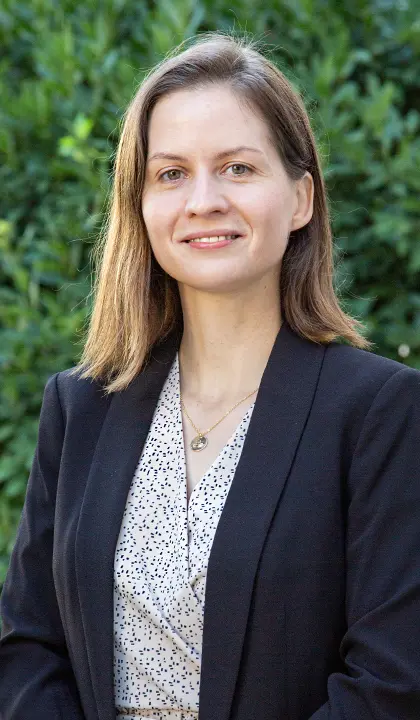
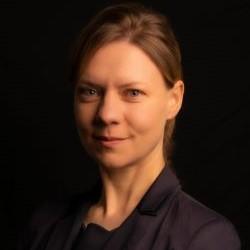
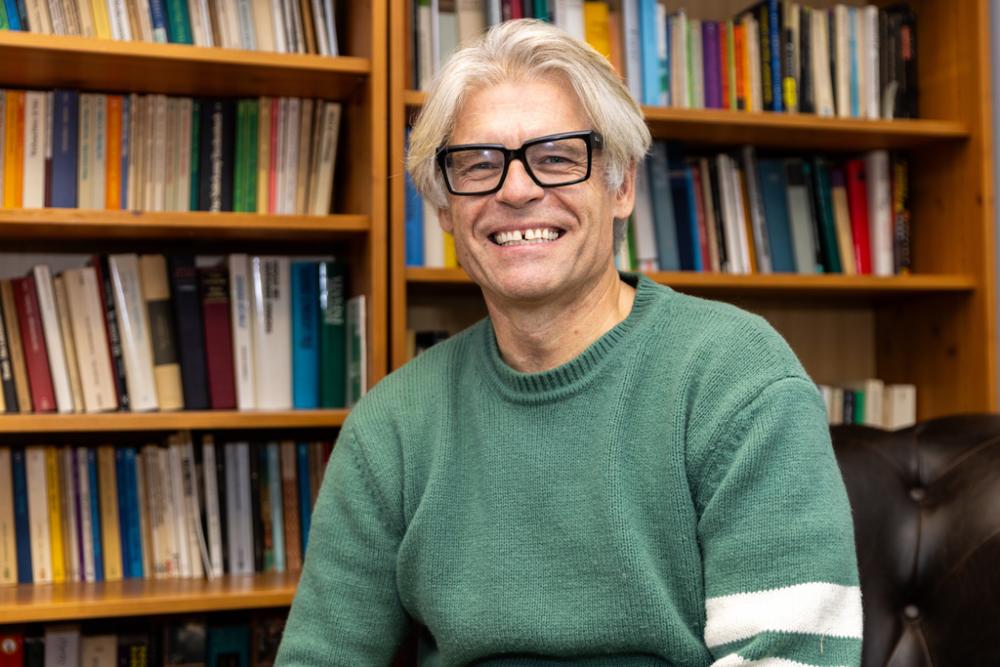
Joanna Pawlik is an Associate Professor and Head of the Department of Art History at the University of Sussex, within the School of Media, Arts and Humanities. Her research focuses on modern art and literature, emphasizing transnationalism, avant-gardism, and protest movements. She has been funded by prestigious grants like the Leverhulme Trust and the AHRC. Her 2021 monograph Remade in America , awarded the MSA First Book Prize, examines Surrealism's role in American activism post-1940. Current research explores fascist iconography in American art (1945–1980), funded by a Leverhulme Fellowship. Education: PhD in Art History, University of Sussex (2003–2008) MA in Art History, York University, Canada (2021–2022) BA Hons in Art History, University of East Anglia (2018–2021) Research Interests: Her work investigates surrealism's transnational legacies, anti-fascist art, feminist/queer methodologies, and postwar American visual culture. She examines how surrealist principles intersect with race, gender, class, and activism in movements like the Beat Generation and Black Arts Movement. Grants & Awards: Leverhulme Research Fellowship (2020–2022) Leverhulme Trust Grant 'Radical America: Afterlives' (2016) MSA First Book Prize (2021) Professional Activities: Co-director of the SAVAnT Doctoral School promoting interdisciplinary American visual studies. Supervises PhD projects on postwar American art, anti-fascism, and feminist/queer art history. Engages in public scholarship through interviews and exhibitions.
Olivia Badoi is a faculty member in the Department of English at Saint Louis University-Madrid. She holds a Ph.D. in English from Fordham University and contributes to the academic mission through teaching and research in modernist studies, graphic narratives, and ecocriticism. Education: Ph.D. in English, Fordham University M.A. in English, Wroclaw University B.A. in American Studies, University of Bucharest Dr. Badoi's research lies at the intersection of modernist literature, visual culture, and environmental thought. Her work explores how wordless narratives, particularly woodcut novels, engage with ecological themes and nonhuman agency. She introduces the concept of arboreal modernism to describe how trees and forests serve as structural and symbolic models in modernist art. Her scholarship spans ecocriticism, feminist modernism, adaptation studies, and the representation of animals and nature in media. She is currently completing her first book, Arboreal Modernism and the Woodcut Book , under contract. Her recent publications and conference presentations reveal a strong interdisciplinary trajectory, combining literary analysis with visual culture, environmental philosophy, and translation studies. Themes such as deep time, materiality, liminality, and nonverbal communication recur across her work, reflecting a sustained engagement with the boundaries between human and nonhuman, word and image, nature and culture. Scientific Awards: No scientific awards listed in the provided text. Dr. Badoi actively contributes to academic discourse through peer-reviewed publications and international conference presentations. While specific grant funding is not mentioned, her book contract and scholarly output indicate a robust research profile. She mentors students through her academic role, though no named advisees are listed. Her work is supported by her affiliation with Saint Louis University-Madrid, where she participates in scholarly events such as the Landscape, Narrative, and Deep Time conference. She is associated with academic teams and initiatives focused on modernism, adaptation, and environmental humanities, as evidenced by her conference organization and participation.
Dr Andrea Greve is a Lecturer in the Department of Psychology at the University of Cambridge . Her research focuses on cognitive processes related to memory, prediction error, and learning mechanisms. Key areas of interest include declarative memory formation, semantic predictions, and the influence of novelty on memory retention. She has explored topics such as word learning in variable-choice paradigms, the role of hippocampal lesions in memory binding, and predictive coding in neuroimaging contexts. Her work integrates experimental psychology with neuroscience methodologies, particularly leveraging neuroimaging techniques to investigate memory systems. Notable contributions include studies on false memory effects, the nonmonotonic relationship between object-location memory and expectedness, and the impact of prior knowledge on memory encoding. Dr. Greve has also contributed to methodological advancements, such as improved MRI anonymization for MEG coregistration. While her research spans multiple decades, recent efforts (2023–2025) emphasize predictive frameworks and their applications in understanding cognitive phenomena like semantic surprise and episodic memory formation. Her findings challenge traditional assumptions about fast mapping in adults and highlight the importance of integrating computational models with empirical data. Dr. Greve collaborates extensively with neuroimaging and cognitive science teams, contributing to interdisciplinary projects that bridge theoretical and applied research in memory systems. Her work maintains a strong focus on methodological rigor, particularly in experimental design and data interpretation.
Tuğba Dalyan is an Associate Professor in the Department of Computer Engineering at Istanbul Bilgi University, Faculty of Engineering and Natural Sciences. She holds a Ph.D. in Computer Engineering from Yıldız Technical University (2014), an MSc from Kocaeli University (2007), and dual BSc degrees in Mathematics and Computer Science and Business Administration (Minor) from Istanbul Bilgi University (2003). She has been a faculty member since 2016 and previously served as a Teaching Staff member and Research Assistant at the same institution. Her research focuses on Natural Language Processing , Machine Learning , Deep Learning , Text Mining , Data Science , and Big Data Analytics . Her work spans computational linguistics, sentiment analysis, author profiling, machine translation, and smart systems. She has led and contributed to numerous research projects, particularly in AI-driven urban solutions and health technologies. The most recent publications show a strong trend in Turkish NLP, zero-shot classification, multimodal AI (image captioning), emotional robotics, and decision support systems using fuzzy logic. Her work combines theoretical rigor with practical applications in smart cities, education, and healthcare. Best Paper Award , CICLing 2012 TÜBİTAK 2209-A student project awards (2022–2024) Horizon2020 Eşik Üstü Ödülü , MIMOSCSA 2024 TÜBİTAK 2242 competition: 2nd and 3rd place (2016, 2018) She has advised numerous student research projects, many of which have received national recognition. She has directed multiple TÜBİTAK and institutional research grants, including projects on smart homes, blockchain crowdfunding, mental health, and AI for social polarization. Her leadership roles include Head of Department, Vice Dean, and Director of Graduate Programs. Tuğba Dalyan leads research in AI and NLP with a strong emphasis on Turkish language technologies. She is involved in interdisciplinary teams working on emotional robots, smart city platforms, and citizen science ecosystems. Her lab activities focus on neural networks, text analysis, and intelligent systems development.
PD Dr. Jens Wolff is a German theologian and researcher at the Faculty of Theology, University of Rostock . His work bridges image theory , cultural hermeneutics , and negative theology , with a focus on Lutheran theology and its intersections with literature and art . Education : Studied at Eberhard-Karls-Universität Tübingen, Martin-Luther-Universität Halle/Wittenberg, Ludwig-Maximilians-Universität München. Academic Timeline : 1995–1998 Heidelberg Academy researcher, 1998–2002 assistant at Münster's Faculty, 2003 PhD, 2005 ordained pastor, 2009–2012 DFG project on Sigmund von Birken, 2012–2015 DFG project on Image Theory, 2015 habilitation. Wolff's research explores image and media theory through theological lenses, interrogating figurative knowledge , religious rhetoric , and intercultural hermeneutics . His work connects Baroque literature (e.g., Klopstock, Hamann) with contemporary philological and deconstructive methods , examining tensions between sacralization and secularization . His recent publications analyze the word of God as performative polysemy in Lutheran thought, death and utopia in Stefan Andres' work, and iconic anthropology in Reformation contexts. He co-edited the two-volume Bild und Tod (2016), a foundational text on image-death relations. Awards: Martin-Luther-Preis für den akademischen Nachwuchs (2005) for his dissertation on Metapher und Kreuz . Wolff's advising and collaborative work focus on interdisciplinary image studies , including DFG-funded projects and symposia like the Image and Sound conference (2014). He maintains links to institutions in Bratislava , Frankfurt , and Brazil .
Carsten Strathausen is a Professor of German and English at the University of Missouri's College of Arts and Science. He holds appointments in both the Departments of German and English, bridging interdisciplinary research and teaching. His work spans literary theory, visual culture, digital humanities, and bioaesthetics, with a focus on Kafka adaptations and evolutionary theory's influence on aesthetics. Research Interests: Dr. Strathausen’s interdisciplinary research explores the interplay of science, art, and media. Central themes include the word-image relationship in literature, posthumanism, and the digital humanities. His current projects include a global database analyzing Kafka adaptations (Adapting Kafka) and a monograph on Kafka’s adaptations through evolutionary and media frameworks. Earlier works like Bioaesthetics and The Look of Things established his reputation in interdisciplinary cultural studies. Teaching: In German studies, he teaches graduate seminars on 20th-century literature and Kafka. In English, he offers courses on contemporary literary theory, posthumanism, and digital humanities. He also mentors undergraduate and graduate students in digital humanities research. Collaborations: Collaborations include work with Dr. Verena Kick on the Adapting Kafka project. His research often intersects with film, visual arts, and science studies, reflecting his commitment to cross-disciplinary inquiry.
Prof. Dr. Axel Mecklinger is a leading cognitive neuroscientist at Saarland University , specializing in the neurocognition of memory and language through spatiotemporal brain imaging (EEG/MEG/fMRI). His career spans over three decades, with significant contributions to understanding visual working memory , associative recognition , and memory development . Key research areas: Memory binding, ERP subsequent memory effects, novelty detection, and cognitive aging Major grants: DFG Research Groups, Collaborative Research Centers, and international collaborations with the Chinese Academy of Sciences Scientific leadership: Organized conferences, edited journals, and served as speaker for research training groups His recent work explores unitization in memory formation , cross-cultural differences in memory processing , and theta neurofeedback interventions . Awards include the Early Career Award of the German Psychophysiology Society (1992) and the European Federation of Psychophysiology Societies' Federation Prize (1994). Current projects investigate the neural mechanisms of semantic surprisal and memory plasticity in aging populations.
Bryce Westlake is an Associate Professor in the Department of Justice Studies within the College of Social Sciences at San Jose State University. He is a leading researcher in digital forensics and child sexual abuse material detection, with significant contributions to both forensic science education and alternative sexuality studies. Education: Ph.D. in Criminology from Simon Fraser University (2015) Master's degree in Criminology from Simon Fraser University Bachelor of Arts degree in Psychology and Sociology (double major) from University of British Columbia Dr. Westlake's research spans two primary areas with significant societal impact. In digital forensics, he focuses on developing automated tools to detect, collect, analyze, and match child sexual abuse material disseminated online. His work involves international collaboration with researchers, law enforcement agencies, and government partnerships to create more effective detection systems. In his secondary research area, he explores alternative sexuality, particularly BDSM communities, conducting multi-phasic, kink-positive studies examining health and safety within these communities. His research aims to destigmatize participation through a deeper understanding of the social and emotional enrichment practitioners receive from activities. His recent publications demonstrate a clear trend toward increasingly sophisticated technical approaches to combating child sexual exploitation while simultaneously advancing understanding of alternative sexual practices. The technical publications focus on biometric identification, file structure analysis, and ethical web scraping methods, while his BDSM-related work emphasizes community safety, education pathways, and mental health benefits. This dual focus positions him uniquely at the intersection of technology, law enforcement, and human sexuality research. Scientific Awards: The Storytellers Award (Social Sciences and Humanities Research Council) - April 2014 Canadian Graduate Scholarship (Social Science and Humanities Research Council) - May 2012 Dr. Westlake has been heavily involved in developing the forensic science program at SJSU, creating six undergraduate courses, revising two graduate courses, and introducing one graduate course. In Fall 2020, he created and implemented a new concentration in digital evidence (computer forensics) for forensic science majors - one of the first in-person digital forensic bachelor of science degrees in the United States meeting FEPAC standards. He has developed and directs the Silicon Valley Digital Forensics Laboratory, which began accepting students for internships in Fall 2024. He was awarded a three-year $497,948 grant from the National Science Foundation in 2023 to study 'Training digital forensics examiners through hands-on education investigating live criminal investigations.' Through the Silicon Valley Digital Forensics Laboratory and partnerships with criminal justice agencies (district attorneys offices, law enforcement agencies, etc.), Dr. Westlake provides students with training and practical experience conducting digital forensic investigations from start (evidence collection) to finish (report writing and testimony). He also co-hosted the first annual Child Sexual Abuse Reduction Research Network workshop in Adelaide Australia in December 2023.
Fabrizio Falchi is a researcher at the Artificial Intelligence for Media and Humanities (AIMH) Lab of the Institute of Information Science and Technologies (ISTI) within Italy's National Research Council (CNR). He also maintains an associate position at the Biorobotics Institute of Scuola Superiore Sant'Anna. His work focuses on developing advanced multimedia retrieval systems, with the VISIONE platform being his most notable contribution, which has won international competitions including the Video Browser Showdown in 2024 and placed second in 2023. Falchi's educational background includes: Ph.D. in Information Engineering from University of Pisa (Italy) Ph.D. in Informatics from Faculty of Informatics of Masaryk University of Brno (Czech Republic) M.B.A. from Scuola Superiore Sant'Anna in Pisa His research spans deep learning, convolutional neural networks, deep features extraction, similarity search algorithms, distributed indexing systems, multimedia information retrieval, computer vision applications, and peer-to-peer systems. Falchi has made significant contributions to fine-grained visual understanding, cross-modal retrieval (particularly image-text matching), and robustness of deep learning systems against adversarial attacks. His work demonstrates a strong focus on practical applications of these technologies, particularly in video retrieval systems and safety monitoring solutions. Analysis of Falchi's recent publications reveals a strong focus on video and image retrieval systems, with the VISIONE platform being central to his work. His research shows increasing emphasis on fine-grained understanding in computer vision, cross-modal retrieval, and addressing practical challenges like cross-resolution face recognition. Recent work demonstrates innovation in making these systems more efficient through techniques like knowledge distillation (ALADIN) and leveraging virtual worlds for training data. His publications consistently bridge theoretical advances with practical applications in surveillance, safety monitoring, and multimedia search. Falchi's work has received significant recognition: Best paper award at CBMI 2024 for 'Is ClLIP the main roadblock for fine-grained open-world perception?' VISIONE 2024 won the Video Browser Showdown competition in Amsterdam VISIONE obtained second place at Video Browser Showdown 2023 in Bergen Best Paper Award for 'Learning Safety Equipment Detection using Virtual Worlds' at CBMI 2019 Falchi collaborates extensively with researchers at ISTI-CNR, particularly within the AIMH Lab. His work on VISIONE involves collaboration with Giuseppe Amato, Paolo Bolettieri, Fabio Carrara, Claudio Gennaro, Nicola Messina, Lucia Vadicamo, and Claudio Vairo. As co-chair of Ital-IA 2023, the 3rd National Conference on Artificial Intelligence, he plays an active role in the academic community. He is a member of ACM (since 2012), the Computer Vision Foundation, the Italian Association for Computer Vision Pattern Recognition and Machine Learning (CVPL), and the CINI Lab on Artificial Intelligence and Intelligent Systems. Falchi is a key member of the Artificial Intelligence for Media and Humanities (AIMH) Lab at ISTI-CNR, where he leads research on video retrieval systems. The lab has developed the award-winning VISIONE platform, which combines multiple scientific results in content-based video retrieval. His team focuses on developing systems that enable users to search for target videos using textual prompts, drawing objects and colors, or images as query examples. The lab's work demonstrates strong interdisciplinary collaboration, bridging computer science with practical applications in media, safety monitoring, and urban environments.
Yeonsoo Kim is an Associate Professor at the Stan Richards School of Advertising & Public Relations, The University of Texas at Austin. Previously serving as public relations concentration coordinator at James Madison University and faculty associate at the Center for Faculty Innovation, she directs the Strategic Social Responsibility and Communication Lab and currently presides over the Korean-American Communication Association (KACA) for 2023-2025. Dr. Kim's research centers on strategic communication with emphasis on corporate social responsibility (CSR), diversity and inclusion in public relations, corporate social advocacy, reputation management, and crisis/issue management. Her work investigates organizational communication of social initiatives, stakeholder perception management, and leadership communication's role in fostering inclusive workplace climates through motivating language and dialogic practices. Analysis of her 15 most recent publications (2023-2025) reveals dominant trends in corporate social advocacy and CSR, particularly examining consumer/employee responses to diversity initiatives (LGBTQ+ and ethnic minorities) and environmental programs. Her work extensively explores digital-age crisis communication including social media complaint management, negative word-of-mouth strategies, and emerging applications of AI in healthcare marketing, consistently emphasizing strategic issue selection and authenticity-building communication approaches. Dr. Kim has received professional recognition including: Accredited Public Relations (APR) professional designation Statewide Public Relations Awards in Virginia With extensive experiential learning experience founding student-run public relations agencies at prior institutions, she actively enhances diversity, equity, and inclusion in PR education as evidenced by her 2022 research on teaching practices. Her prolific publication record indicates substantial research funding despite no explicit grant details provided. As director of the Strategic Social Responsibility and Communication Lab, Dr. Kim leads research on CSR, diversity communication, and advocacy. Her professional leadership extends to the Korean-American Communication Association where she serves as President (2023-2025) after previously holding Vice President position (2021-2023), demonstrating sustained commitment to advancing communication scholarship.
Jeff Barda serves as Senior Lecturer in French Cultural Studies at the University of Manchester, joining in 2020 after a Junior Research Fellowship at Cambridge's Murray Edwards College. Awarded the Manchester Humanities Outstanding Teaching Award in 2020 and promoted to Senior Lecturer in 2023, he maintains active international affiliations including visiting positions at Bordeaux-Montaigne University and London's Institute of Languages, Cultures & Societies in 2024. His research centers on contemporary French poetic practice with emphasis on digital poetics, sound arts, and avant-garde traditions. Key interests include the intersection of media and literature, lettrism, and data-driven creative processes, reflected in his extensive publications on figures like Pierre Alferi and Christophe Tarkos. His second monograph Data Poetics: Contemporary French Poetic Practice in the Age of Digital Overload is under contract with Liverpool University Press. Dr Barda's scholarly impact is evidenced by the 2021 Literary Encyclopedia Book Prize for his first monograph Experimentation and the Lyric in Contemporary French Poetry . His recent publications demonstrate evolving focus from historical avant-gardes to contemporary digital poetics, with increasing attention to OSINT methodologies and cross-disciplinary practices like sports-literature intersections. Manchester Humanities Outstanding Teaching Award (2020) Literary Encyclopedia Book Prize (2021) As an active supervisor welcoming PhD inquiries, Dr Barda contributes to multiple research networks including Marge (Lyon), the European Neo-Avant-Garde Network (Ghent), and 'After Social Networks' (Paris). His teaching excellence complements substantial grant activity supporting international collaborations, particularly in digital humanities initiatives exploring poetic practice in public spheres. His research infrastructure includes affiliations with three major transnational networks examining contemporary creation, with recent projects focusing on image manipulation in poetry and OSINT applications in literary analysis.
Dr. Behrooz Mahmoodi-Bakhtiari is an Associate Professor and Head of the Department of Performing Arts at the University of Tehran, Iran. Born in 1974 in Tehran, he earned his PhD in Linguistics from Allameh Tabatabaee University in 2003. His work bridges linguistics and performing arts, with a focus on Persian language pedagogy and cultural studies. His research encompasses Iranian linguistics, dialectology, teaching Persian as a foreign language, Iranian dramatic literature, and discourse analysis of drama. He employs linguistic and semiotic approaches to analyze drama and film, contributing to interdisciplinary academic dialogues. Mahmoodi-Bakhtiari has published extensively in these areas and contributed to major reference works, including the Encyclopedia Iranica , Encyclopedia of Language and Linguistics , Encyclopedia of Islam (Third Edition) , and The Great Islamic Encyclopedia . His publications span linguistics, medical education, neuroscience, and literature, reflecting a broad interdisciplinary scope. He welcomes international academic collaborations and can be contacted via email for scholarly exchanges.
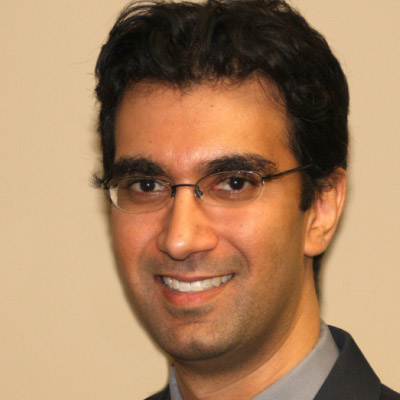
Dr. Avniel Singh Ghuman is an Associate Professor in the Department of Neurological Surgery at the University of Pittsburgh School of Medicine. He serves as Director of the Cognitive Neurodynamics Lab and plays a key role in advancing MEG (Magnetoencephalography) Research at the university. His work bridges clinical neurosurgery with fundamental neuroscience research to understand visual perception mechanisms. Dr. Ghuman's educational background includes: BA in Math and Physics from The Johns Hopkins University (1998) PhD in Biophysics from Harvard University (2007) Postdoctoral training at the National Institute of Mental Health Dr. Ghuman's research focuses on how the brain transforms visual input into meaningful perception of objects, faces, words, and social images in real-world contexts. His laboratory employs both invasive (intracranial EEG) and non-invasive (MEG) techniques to examine the spatiotemporal dynamics of neural activity during visual processing. The lab integrates multivariate machine learning methods, network analysis, and direct neural stimulation to investigate information processing at both local brain regions and distributed network levels. Recent work has pioneered methods for studying brain activity during authentic social interactions and natural behavior. His publication record demonstrates significant contributions to understanding real-world face perception, neural dynamics during natural behavior, and the application of advanced analytical techniques to brain imaging data. His research has revealed how brain network dynamics form a 'punctuated equilibrium' of stable states with transitory bursts between them, coinciding with behavioral shifts in everyday activities. Dr. Ghuman has received notable recognition for his work: Young Investigator Award from NARSAD (2012) Award for Innovative New Scientists from the National Institute of Mental Health (2015) His research has been featured in prominent media outlets including MIT Technology Review, The Wall Street Journal, and Carnegie Mellon University publications. As Director of the Cognitive Neurodynamics Lab, Dr. Ghuman leads a research program that has advanced our understanding of how the brain processes visual information in real-world environments, with implications for both fundamental neuroscience and clinical applications.
Dirk Geeraerts is a full Professor of Linguistics at the University of Leuven (KU Leuven), where he has held a faculty position since 1993. He studied Germanic languages (Dutch and English) and holds a bachelor's degree in Philosophy, earning his PhD in 1981. His academic career includes professorships at the Kortrijk campus of the University of Leuven (1986–1993) and the University of Leiden (1985–1986), as well as foundational research at the Instituut voor Nederlandse Lexicologie (1977–1985). Research Focus : Geeraerts specializes in lexical semantics , lexicology , and cognitive linguistics , particularly examining social variation , diachronic change , and empirical semantic methods . His work bridges theoretical and applied lexicography, notably through his editorial role in the Van Dale Groot woordenboek van de Nederlandse taal (1995–2005). Scientific Contributions : Founded the international journal Cognitive Linguistics Co-editor of The Oxford Handbook of Cognitive Linguistics Managing editor of the Cognitive Linguistics Research monograph series Honors and Awards : 1978: L.K. Engels Award 1992: Flemish Government Award for Wat er in een woord zit 2003: Member of the Royal Academy for Dutch Language and Literature (KANTL) 2020: Matthias de Vries Medal for Dutch lexicology contributions Labs and Teams : Established the Quantitative Lexicology and Variational Linguistics (QLVL) research group at the University of Leuven, advancing empirical approaches to lexical and semantic studies.
Mark Sabbagh is a Professor in the Department of Psychology at Queen's University , Canada. His research focuses on theory of mind , social learning , executive functioning , and conceptual change in preschoolers, as well as theory of mind and social functioning in adults. Education : Ph.D. (1998), M.Sc. (1996) in Psychology from the University of Oregon; B.A. (1993) in Psychology from the University of California, Santa Cruz. Cross-Appointments : Centre for Neuroscience Studies, Queen's University. His work integrates developmental psychology with cognitive neuroscience , examining neural correlates (EEG, fMRI) of social cognition and mental state reasoning. Additionally, he investigates clinical implications of theory of mind, including links to depression and autism spectrum disorders. Recent publications highlight his expertise in ERP studies , word learning , executive function , and neurogenetic influences on social cognition. His lab explores how probabilistic reasoning and environmental factors shape cognitive development. Current roles : Editor-In-Chief of Cognitive Development Journal (since 2014); Board Member, Cognitive Development Society (since 2013). Contact : sabbagh@queensu.ca | Office: 348 Humphrey Hall, Queen's University.