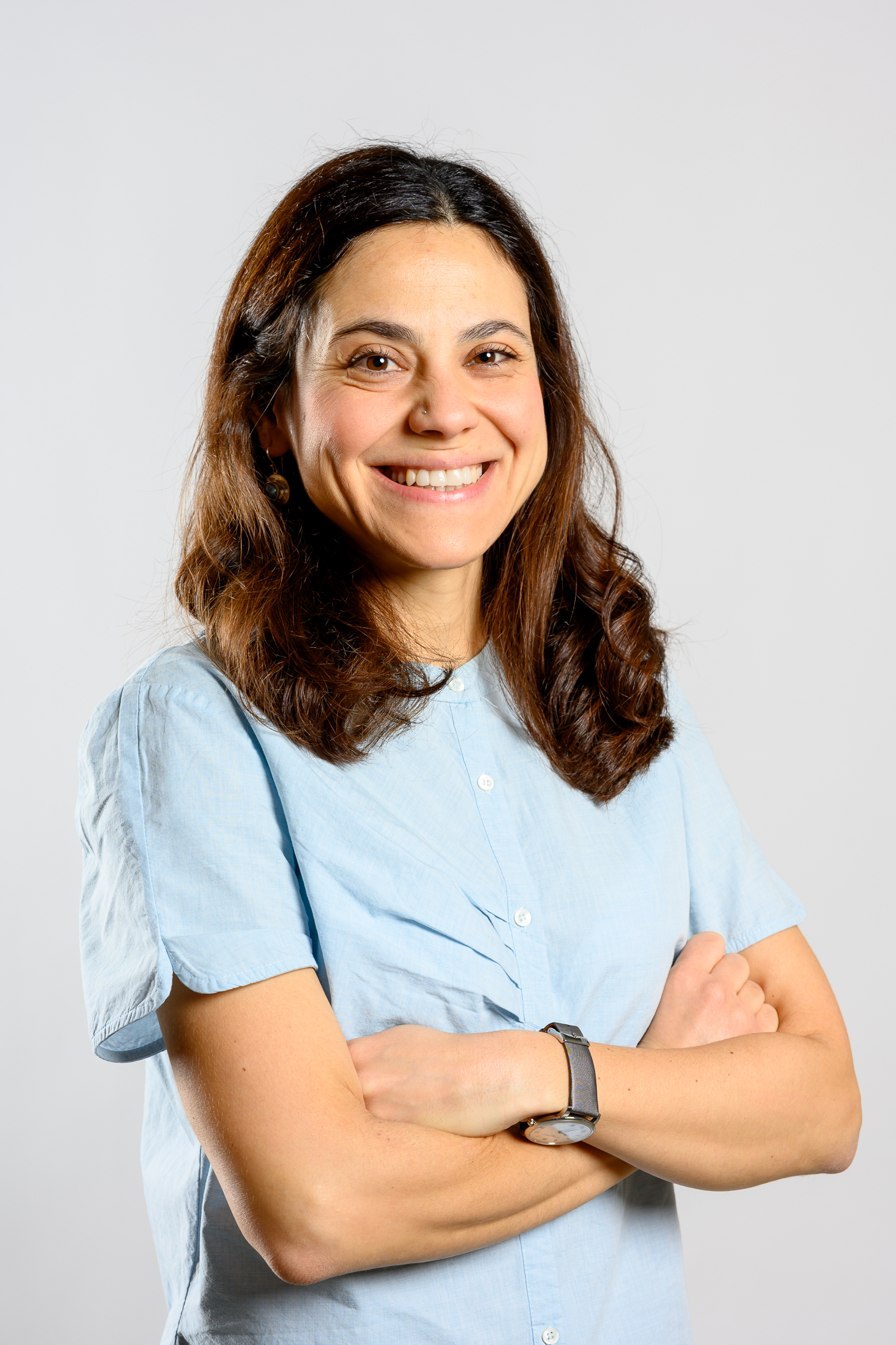
Kaius Sinnemäki is a Professor of Quantitative and Comparative Linguistics at the University of Helsinki, affiliated with the Department of Languages under the Faculty of Arts. Since 2025, he has directed the strategic profiling action Diversity in Society and Life (DIVSOL) , funded by the Research Council of Finland, and previously led the ERC Starting Grant project Linguistic Adaptation (2019-2024). His research focuses on large-scale comparative linguistics, integrating language typology with sociolinguistics. Key areas include core argument marking, statistical methods in typology, linguistic complexity, language contact, and the interplay between language and religion. He teaches courses spanning language typology, evolution, sociolinguistics, and quantitative methods. Recent publications address replication in linguistic research, adaptation in contact ecologies, and complexity measures across phonological, morphosyntactic, and syntactic domains. His work often bridges theoretical linguistics with empirical data analysis, utilizing open datasets and computational tools. Scientific Awards: Prize for the Humanities (2021) He actively supervises academic theses, serves on editorial boards (e.g., Linguistic Typology ), and participates in international collaborations, peer reviews, and media engagements on linguistic diversity and secularism.
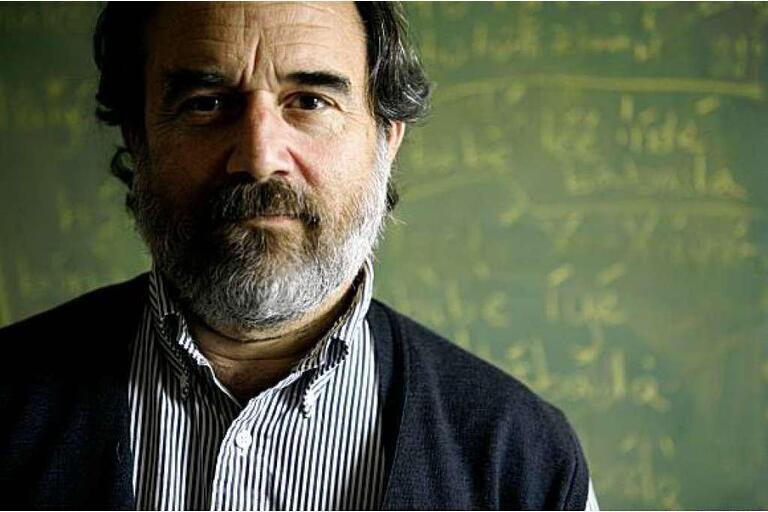
Pedro Ferreira is a Professor at Iscte Business School, ISCTE - IUL, Lisbon, Portugal. His academic work spans multiple disciplines including business model innovation, cultural management, digital display systems, and consumer behavior. Key research areas: Business Model Innovation, Cultural Management, Digital Display Systems Interdisciplinary work: Healthcare Management, Energy Efficiency, Sensory Marketing Notable collaborations: Rock in Rio, Ferreira's de Castro Cultural Complex His publications demonstrate ecosystem-based approaches to cultural economics, with applications in virtual reality exhibitions and sustainable business practices. Recent work focuses on technology integration in perfume exhibitions and energy efficiency strategies. Earlier research includes pharmacological studies on P2X7 receptors in colitis and foundational financial accounting textbooks. He has analyzed group buying systems in Portugal and explored intersections between management theory and art. Academic contributions span 45 years, with a 2024 patent on digital display systems and a 1979 report on tomato industry economics. Current affiliations include: Iscte Business School ExecED at ISCTE INDEG-ISCTE Edifício INDEG-ISCTE, Lisbon
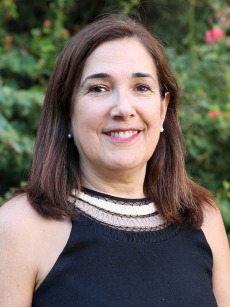
Jennifer Culbertson is an Associate Professor at the University of Edinburgh, where she has been a faculty member since 2014 when she took up a Chancellor's Fellowship, later being promoted to Reader (equivalent to Associate Professor) in 2018. She is a founding member of the Centre for Language Evolution at Edinburgh and maintains an active research program in experimental linguistics and cognitive science. Dr. Culbertson obtained her PhD in Cognitive Science from Johns Hopkins University in 2010, with her dissertation receiving the Robert J. Glushko Prize for Outstanding Dissertations in Cognitive Science in 2011. Her primary research investigates how languages are shaped by learning and use, with particular focus on grammatical structures (like word order) and morphological categories (gender and person systems). She employs experimental and computational methods to explore how typological universals arise from properties of the human cognitive system. Her work bridges theoretical linguistics, cognitive science, and language evolution, examining the cognitive constraints that influence linguistic patterns across diverse languages and learning contexts. She frequently uses artificial language learning paradigms to isolate specific cognitive mechanisms underlying language structure. Analysis of her recent publications reveals a consistent focus on cognitive biases in linguistic structure, particularly in word order and morphological systems. Her research increasingly incorporates cross-population studies (including work with autistic learners) and developmental perspectives to understand how language patterns emerge across different populations and throughout the lifespan. She examines how simplicity principles, communicative efficiency, and statistical learning shape linguistic structure. Dr. Culbertson's scientific contributions have been recognized with several prestigious awards: Robert J. Glushko Prize for Outstanding Dissertations in Cognitive Science (2011) ERC Starting Grant Young Academy of Europe membership (2019) Her research has been supported by over €2 million in funding from the ESRC and ERC. While specific advisees aren't mentioned in the provided text, her active publication record with numerous co-authors suggests she mentors graduate students and early-career researchers. Her work has significant implications for understanding language universals, language acquisition, and the cognitive foundations of linguistic structure. As a founding member of the Centre for Language Evolution at Edinburgh, Dr. Culbertson collaborates with an interdisciplinary team investigating the biological, cognitive, and cultural foundations of human language. Her research often intersects with psychology, cognitive science, and computational linguistics, contributing to a comprehensive understanding of language as both a cognitive and social phenomenon.
Dr. Burcu Demiray is a researcher at the Department of Psychology, University of Zurich, leading a team focused on real-life cognitive activities in the context of healthy longevity. Her interdisciplinary work integrates smartphone sensing, experience sampling, and machine learning to analyze real-life audio, speech, and text data. She is also developing e-learning concepts for Generation 65+ to combat ageism and enhance digital literacy. Education: Not explicitly detailed in the provided text. Research Interests: Healthy cognitive aging and psychological well-being. Automated semantic analysis of real-life conversations. Machine learning applications in gerontology and memory studies. Digital health interventions and ambient audio monitoring. Publications Trends: Focus on naturalistic observation studies using smartphone sensing and wearable devices. Development of machine learning models for reminiscence and memory function detection. Analysis of gender differences in daily communication and cognitive aging. Scientific Awards: No specific awards mentioned. Labs/Teams: Affiliated with the Healthy Longevity Center at UZH and the Digital Society Initiative (DSI) Community Health.
Saptarashmi Bandyopadhyay is a Tenure-Track Assistant Professor of Computer Science at the City College of New York and the Graduate Center at the City University of New York (CUNY). Her research focuses on Artificial Intelligence Agents and Autonomous Decision Making, with special emphasis on Multi-Agent Reinforcement Learning, Multi-Agent Imitation Learning, and related paradigms. She has established significant collaborations with leading institutions including Google DeepMind, Carnegie Mellon University, Oxford University, and MIT. Dr. Bandyopadhyay received her PhD from the University of Maryland, College Park, where she was advised by Professor John Dickerson and Professor Tom Goldstein. Prior to that, she graduated from Penn State in 2020 with a thesis on Multimodal Computer Vision in Medical Domain advised by Prof. William Evan Higgins. Her research expertise spans multiple domains of AI including Multi-Agent Systems, Reinforcement Learning, Imitation Learning, and Multimodal Perception. She specializes in developing AI agents for applications in climate conservation, economic systems, and AI safety. Her work integrates techniques from computer vision, natural language processing, and robotics to create more robust and explainable AI systems that can operate effectively in complex, real-world scenarios. Current work includes improving explainable AI, developing Multimodal LLM/VLM/Robotic Agents, and creating libraries to speed up Multi-Agent evolutionary training with JAXMARL. Analysis of Dr. Bandyopadhyay's publication record reveals a clear progression from foundational work in medical imaging and natural language processing toward increasingly sophisticated multi-agent AI systems. Her recent publications demonstrate a strong focus on Multi-Agent Reinforcement Learning frameworks like JAXMARL, with applications spanning from supply chain orchestration to climate conservation. The interdisciplinary nature of her work is evident in publications spanning computer vision, NLP, and multi-agent systems conferences including AAAI, NeurIPS, AAMAS, EMNLP, and ACL. DoGood Fellow (2022) UMD Dean's Summer Fellow (2021) Dr. Bandyopadhyay has been actively involved in securing research funding from major agencies including NSF, NIH, DoD, and ARL. She served as the lead PhD student RA in a DoD project for Multi-Agent Explainable AI to improve AI trustworthiness. Her service to the academic community includes membership on program committees for major conferences including IJCAI 2024, KDD 2024, ACL 2024, and AAMAS 2023-2024. She has also created the AI Agents Seminar Series at UMD in 2022 with over 1,000 participants from six continents. Currently, Dr. Bandyopadhyay leads research on improving explainable AI, developing Multimodal LLM/VLM/Robotic Agents, and creating libraries to speed up Multi-Agent evolutionary training with JAXMARL. Her lab collaborates prominently with researchers from Google DeepMind, Carnegie Mellon University, Oxford University, University of Sheffield, Waymo, Meta AI, and MIT, with special focus on Dr. Jakob Foerster's and Dr. Robert Loftin's groups.
Professor Jennifer Hay is a Professor of Linguistics in the Faculty of Arts at the University of Canterbury, New Zealand, where she has been employed since July 2000. She serves as Director of the New Zealand Institute of Language, Brain and Behaviour and is actively involved in collaborative interdisciplinary research projects within the institute. Professor Hay's primary research interests focus on New Zealand English, sociophonetics, laboratory phonology, and morphology. Her work explores how language varies and changes across speakers and contexts, with particular attention to the relationship between speech production and perception. She investigates how social factors influence linguistic patterns and how listeners adapt to different accents and speech styles. Her research combines laboratory methods with corpus-based analysis to address theoretical questions about language structure and use. Her publication record demonstrates consistent contributions to understanding language variation, especially in New Zealand English. Recent work examines vowel covariation, the influence of music on speech perception, and the implicit knowledge of Māori among non-Māori speakers. She has published over 280 scholarly works, with numerous publications in high-impact journals including Language, Journal of Phonetics, and Laboratory Phonology. Rutherford Discovery Fellowship (2010) - $1,000,000 to fund research on Episodic Word Memory (2011-2016) Founding Member, Association for Laboratory Phonology (2010) Fellow of the Center for the Advanced Study of the Behavioral Sciences, Palo Alto Professor Hay actively supervises numerous graduate students, with recent projects focusing on topics such as language variation in Christchurch schools, audience design in police shows, loanword phonology, and the perception of nonbinary speech. She has secured multiple competitive grants from the Royal Society of New Zealand, including current funding for projects on Māori word categories, implicit grammar learning, and vowel sequences in te reo Māori through 2028. As Director of the New Zealand Institute of Language, Brain and Behaviour, Professor Hay leads an interdisciplinary team of researchers investigating language processing, acquisition, and variation. Her collaborative approach has fostered partnerships across linguistics, psychology, and cognitive science to advance understanding of how language works in the human mind and society.
Larry M. Hyman is Distinguished Professor of Linguistics at University of California, Berkeley, specializing in phonological theory and African language studies. His research analyzes tone systems, Bantu morphophonology, and Niger-Congo historical linguistics. Research focuses on tonal patterns in Bantu languages, morphotactic structures, and historical development of African tone systems. Recent work examines Tiania tonology, Luganda noun phrase prosody, and Runyankore verb morphology. Publications demonstrate methodological rigor in phonological analysis and language documentation, contributing to theoretical understanding of tone, prosody, and morphological complexity in understudied languages. Editorial contributions include honor volumes and theoretical studies advancing autosegmental phonology and morphological analysis.
Sonia Colina is a Regents Professor and holds a dual affiliation with the Department of Speech, Language and Hearing Sciences (College of Science) and the Second Language Acquisition and Teaching (SLAT) program at the University of Arizona. She is a leading scholar in Spanish phonology (Optimality Theory, syllable structure) and Translation Studies, particularly focusing on translation pedagogy and healthcare translation. Her research bridges linguistic theory and practical applications, such as improving healthcare access for limited-English-proficient populations through translation mediation and community health initiatives. Dr. Colina has authored influential works like *Fundamentals of Translation* (2015) and *Syllable Structure in Spanish* (2009), and co-edited volumes such as *The Handbook of Spanish Phonology*. She has directed NIH-funded projects, including the Oyendo Bien initiative using community health workers to address hearing loss among border populations and a collaboration on Spanish/English text simplification with the Department of Management Information Systems. Her research interests span translation quality assessment, bilingual phonological acquisition, and the role of surface/semantic features in medical text simplification. As Director of the National Center for Interpretation, she advances interpreter training and standards in healthcare and legal settings. She is a past president of the American Translation and Interpreting Studies Association (ATISA), contributing to the professionalization of translation studies. In grants and collaborations, Colina emphasizes interdisciplinary partnerships, such as integrating linguistics with audiology and public health. Her work highlights translational research that enhances language accessibility and equity in healthcare systems.
Matthew Gordon is a Professor of Linguistics at the University of California, Santa Barbara (UCSB), within the College of Letters and Science. His research focuses on phonetics, phonology, prosody, and linguistic typology, with a particular emphasis on understudied languages such as Estonian, Chickasaw, Koasati, Kabardian, and others. He holds a Ph.D. from UCLA (1999) and has published extensively on topics including speech rhythm, tone-stress interactions, and prosodic structures in morphologically complex languages. Education: 1999 Ph.D., University of California, Los Angeles Research Interests: Acoustic and articulatory phonetics Phonological typology and universals Prosodic systems (stress, intonation, rhythm) Documentation of endangered and understudied languages Experimental methods in phonetics Key Projects: Typological aspects of speech rhythm Prosody in languages with complex morphology Croatian pitch accent analysis Estonian quantity and stress systems Teaching: Linguistics 20: Language and Linguistics Linguistics 106/206: Introduction to Phonetics Linguistics 111/211: Introduction to Phonology Linguistics 220: Prosody Linguistics 221A: Field Methods His work emphasizes empirical approaches to phonological systems, often integrating acoustic analysis, perceptual experiments, and fieldwork with Indigenous and minority language communities.
Dr. Jason Pallant is a Senior Lecturer at RMIT University’s School of Economics, Finance and Marketing. His research focuses on the impact of emerging technologies on customer experience, with a particular emphasis on retail innovation, augmented reality, data privacy, and omnichannel strategies. He has authored over 20 peer-reviewed studies and consults for major retailers and industry associations globally. Academic Role: Senior Lecturer in Marketing Research Interests: Marketing Technology, Retail Strategy, Customer Experience Design Industry Engagement: Director, Knowledge Enablement at The Lumery (2023–2024) Awards: Recognized on ReThink Retail’s Global Top Retail Experts list (2023, 2024) His teaching includes postgraduate marketing research and development of new programs in Marketing Technologies. He advises on retail industry awards and has presented at conferences in Australia, Europe, and North America. Pallant’s work bridges academic research and industry practice, emphasizing practical applications of emerging technologies in retail environments.
Gaja Jarosz is a Professor & Chair of Graduate Admissions in the Department of Linguistics at the University of Massachusetts Amherst, located in the Integrative Learning Center (ILC N410). She holds a PhD in Cognitive Science from Johns Hopkins University and a BA in Mathematics and Social Thought from Washington University in St. Louis. Her research focuses on phonological theory, computational linguistics, and language acquisition, particularly how sound systems and their acquisition can be modeled computationally. She develops formal systems informed by phonological theory and grounded in statistical learning, exploring hidden phonological structure, lexical-grammatical interactions, and learning biases. Since 2015, her work integrates experimental methods with computational modeling. Her publications span computational phonological learning, parametric stress systems, and experimental studies of phonological acquisition. Notable contributions include analyzing Polish phonotactics, stress learning mechanisms, and the role of distributional cues in word segmentation. She co-founded the Society for Computation in Linguistics (SCiL) and organizes conferences like ACL and SCiL workshops. Her research is supported by grants (not explicitly listed) and involves collaborations with scholars like Aleksei Nazarov, Joe Pater, and J. Alex Johnson. She contributes to software tools (e.g., NECPhon) and has taught courses on phonology and computational linguistics.
Dr. Elizabeth Johnson serves as Professor of Psychology at the University of Toronto Mississauga (UTM), holding the Canada Research Chair in Spoken Language Acquisition. She is cross-appointed to the Graduate Department of Linguistics and directs the University of Toronto's Tri-Campus Graduate Program in Psychology, leading interdisciplinary research on language acquisition through the Child Language and Speech Studies (CLASS) Lab in UTM's Communication, Culture and Technology Building. Her academic foundation includes a B.A. in Brain and Cognitive Sciences from the University of Rochester (with a Take Five program in Developmental Biology & Evolution), followed by M.A. and Ph.D. degrees in Psychological & Brain Sciences from Johns Hopkins University. She completed postdoctoral training at the Max Planck Institute for Psycholinguistics and spent semesters at MIT's Speech Group during her doctoral studies. Dr. Johnson's research examines how perceptual, cognitive, and social mechanisms enable children's rapid language mastery, with emphasis on speech perception, multilingual development, accent processing, and infant speech segmentation. Her work bridges developmental psychology, linguistics, and speech sciences to investigate topics including audio-visual speech perception, word-learning heuristics, prosody acquisition, and voice recognition—all contextualized within UTM's linguistically diverse community. Analysis of her recent publications reveals intensifying focus on real-world applications of language acquisition research, particularly voice assistant technology for children, pandemic impacts on language development, and sociolinguistic factors in educational settings. Her work increasingly explores accent variation effects across development and the cognitive mechanisms underlying talker recognition. Dr. Johnson's scientific recognition includes: Canada Research Chair in Spoken Language Acquisition She actively mentors graduate researchers: PhD Students: Emily Shroads (June and David Scott Fellowship recipient) Recent PhD Graduates: Priscilla Fung (SSHRC Postdoctoral Fellow), Madeleine Yu Undergraduate Support: NSERC USRA (Christopher Khalaf), SSHRC UTEA (Gabriella Di Maio, Alexandra Maracz) Research Funding: SSHRC Insight Grants, NSERC Discovery Grants The CLASS Lab functions as an interdisciplinary hub collaborating with UTM's Developmental Science Cluster, Centre for Biological Communication Systems, and Infant and Child Studies Centre. Its community-engaged research leverages linguistic diversity in the Greater Toronto Area to translate foundational science into practical applications for child development and educational technology.
Dr. Antje Strauß is a Researcher at the Department of Linguistics, University of Konstanz, where she serves as Principal Investigator for a DFG-funded project on theta oscillations and prelexical abstraction since October 2018. Her work bridges speech processing, auditory cognition, and neural oscillations, with a focus on lexical and sublexical mechanisms in noisy environments. PhD in Neural Oscillatory Dynamics of Spoken Word Recognition (2011–2014, Max Planck Institute) Magistra Artium in German Philology and Philosophy (2004–2010, Albert Ludwig University) Her research explores how brain rhythms like alpha and theta oscillations support auditory selective inhibition, speech segmentation, and predictive processing. She has pioneered studies on cued speech applications for enhancing speech-in-noise perception and developed the Fharvard corpus—a phonemically-balanced resource for audiology research. Recent publications highlight her expertise in neural oscillations, auditory perception, and speech-in-noise intelligibility. Collaborative work spans institutions like CNRS, MPI CBS, and Freiburg Institute for Advanced Studies. Post-doctoral fellow at Zukunftskolleg, University of Konstanz (2016–2018) Post-doctoral fellow at CNRS, GIPSA-lab (2015–2016) She contributes to peer review for journals including Journal of Neuroscience , Cortex , and PLOS Biology , and maintains memberships in the Society for the Neurobiology of Language, European Society for Cognitive Psychology, and related organizations.
Dr. Silke Hamann is a researcher at the University of Amsterdam, Faculty of Humanities, Department of Linguistics. Her work bridges phonology and phonetics, focusing on the emergence of phonological features, perceptual cues in segmental contrasts, and the interaction of phonology with orthography and language acquisition. Current projects: diachronic loanword adaptation, congenital amusia's impact on speech perception, Bantu languages (with Nancy Kula and Laura Downing), Catalan studies (with Francesc Torres-Tamarit) Research interests span synchronic/diachronic phonology, phonetic perception, computational modeling of phonological acquisition, and cross-linguistic analysis of retroflex consonants. Her publications analyze phenomena in Korean, Japanese, Bantu languages, German, Portuguese, and Slavic languages, with recurring themes of cue weighting, phonological constraints, and orthographic influence. Recent articles highlight her focus on creaky voice diagnostics, loanword phonotactics, congenital amusia, and Bantu intonation systems. Collaborations with Nancy Kula (Bantu) and Francesc Torres-Tamarit (Catalan) underscore her international research network.
R. Manmatha is an Adjunct Professor in the College of Information and Computer Sciences at the University of Massachusetts Amherst and a Principal Scientist at Amazon A9 since 2013. His academic journey includes a Ph.D. in Computer Science from University of Massachusetts Amherst (1997), an M.S. in Electrical Engineering from University of Hawaii (1986), and a B.Tech in Electrical Engineering from Indian Institute of Technology Kanpur (1983). Research Interests Manmatha's work spans Computer Vision , Information Retrieval , and Document Analysis . Key projects include: Developing Vision-Language Models for GUI grounding and OCR-free document understanding Creating Word Spotting techniques for historical manuscripts like George Washington's papers Advancing Image Retrieval through statistical and relevance models Building Meta Search systems using score distribution analysis Optimizing Diffusion Transformers for text-to-image generation Scientific Contributions His research has led to numerous publications in conferences like SIGIR , CVPR , and ICDAR , focusing on: Automatic Image Annotation using cross-media relevance models Scale Space Techniques for handwritten manuscript segmentation Alignment Methods for document-groundtruth generation Indian Language Document Search via locality-sensitive hashing Transformer-based architectures for multimodal and document tasks Advising & Collaborations Manmatha has mentored students including Jiwoon Jeon , Shaolei Feng , Toni Rath , Jamie Rothfeder , and Nitin Srimal . He co-founded Snaptell (acquired by Amazon) and contributed to Amazon's mobile search technology. Labs & Teams He leads the Multi-media Indexing and Retrieval (MIR) group at the Center for Intelligent Information Retrieval (CIIR) , focusing on non-textual information indexing through ASCII conversion and direct content analysis.