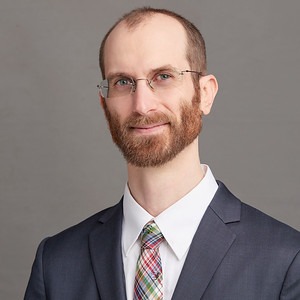
Daniel Klein is a Professor in the Computer Science Division at the University of California at Berkeley , affiliated with the Berkeley Artificial Intelligence Research Lab (BAIR) and the Berkeley Natural Language Processing Group . His research focuses on statistical natural language processing, including unsupervised learning, syntactic parsing, information extraction, and machine translation, with applications in historical linguistics and AI.
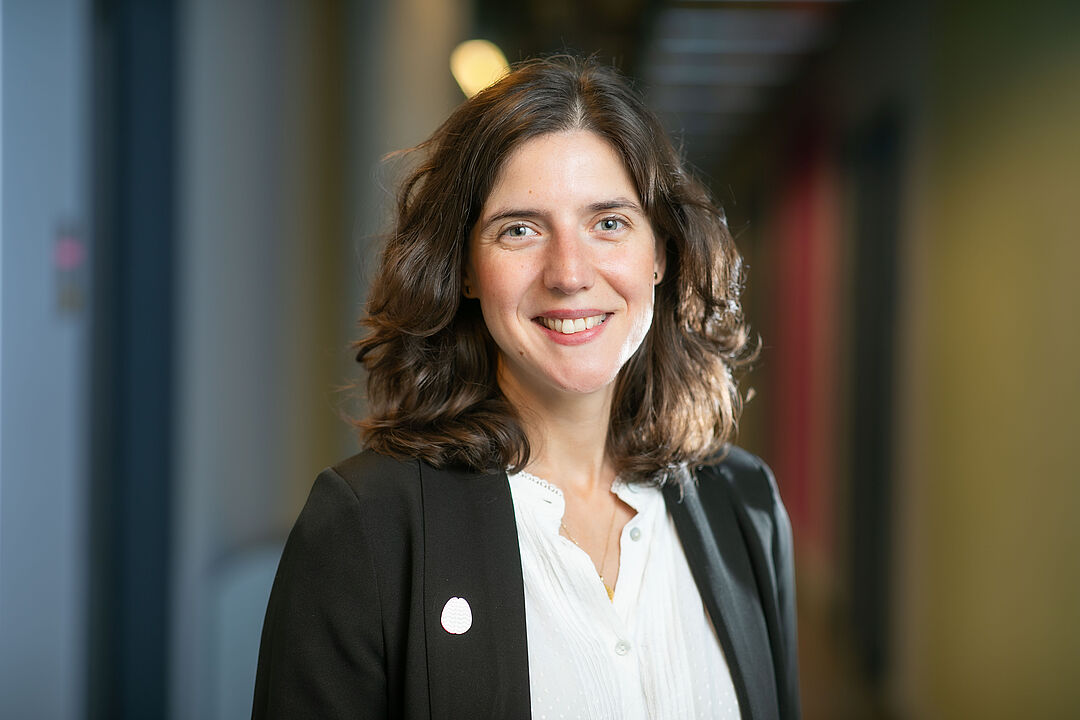
Fatma Deniz is a Full Professor (W3) of Computer Science at Technische Universität Berlin, supported by the Berlin Equal Opportunities Program. She leads the Chair of Language and Communication in Biological and Artificial Systems, and is a member of the Berlin Bernstein Center for Computational Neuroscience. Her roles include membership in TU Berlin's Executive Board and the Berlin University Alliance Steering Committee. She holds a Ph.D. (Dr. rer. nat.) from TU Berlin and a Diploma in Computer Science from Technische Universität München, with research training at Caltech and postdoctoral work at UC Berkeley. Her research focuses on understanding neural mechanisms of language processing, integrating computational neuroscience, cognitive science, and artificial intelligence. Key areas include semantic representation dynamics, cross-modal neural alignment, and language learning in bilingual contexts. She has pioneered studies showing the brain's invariant semantic processing across reading and listening modalities. Her grants include an ERC Starting Grant (2023-2028) for studying language learning shifts and a NSF-BMBF CRCNS grant on bilingual representations. She co-edited The Practice of Reproducible Research: Case Studies in Data Science (UC Press, 2017) and contributed to foundational work on reproducible data science methodologies. She has advised projects in neuroimaging, AI ethics, and computational linguistics, and collaborates with institutions like UCSF and the German Academic Exchange Service. Her lab explores neural correlates of language through fMRI, MEG, and machine learning techniques.
Jeeyeon Kim is a Lecturer in the Department of Management and Marketing at La Trobe Business School, La Trobe University. Prior to this, she served as an Assistant Professor at National Sun Yat-sen University in Taiwan. Her research focuses on digital marketing, omnichannel retailing, social media/influencer marketing, and digital healthcare. She holds a PhD and MA from Yonsei University, South Korea, and has held visiting roles at Yonsei University and IE University. Her work emphasizes empirical data analysis and statistical modeling to address marketing challenges. Jeeyeon has secured multiple research grants, including AUD 82,500 from Taiwan's Ministry of Science and Technology (MOST) for projects on big data-driven marketing and digital transformation. She also coordinates grants with Yonsei University and AACSB initiatives. Her editorial roles include serving on the Asia Marketing Journal and Korean Scholars of Marketing Science boards. Her research spans topics such as virtual influencers' impact on social media, omnichannel strategies, and healthcare consumer behavior. Teaching awards include the 'Outstanding Course Teaching Award' and 'Excellent Mentor Award.' She actively reviews for journals like the Asian Pacific Journal of Marketing and Logistics and conferences like the Global Fashion Management Conference.
California Polytechnic State UniversityUnited States
Kelly Bennion serves as an Associate Professor in the Psychology and Child Development Department at California Polytechnic State University. Her research examines how real-life variables—such as emotion, stress, physiological arousal, and sleep—affect memory encoding and consolidation using behavioral experiments, eye tracking, polysomnography, and neuroimaging. She investigates how sleep selectively enhances memories for emotionally salient or future-relevant information in ecologically valid contexts. (78 words) Her educational background includes: Ph.D. and M.A. in Psychology (Cognitive Neuroscience concentration) from Boston College Ed.M. in Mind, Brain, and Education from Harvard Graduate School of Education B.A. in Psychology and Spanish (summa cum laude, Phi Beta Kappa) from Middlebury College Dr. Bennion's work focuses on memory prioritization mechanisms during sleep-wake cycles, particularly how emotional arousal and physiological stress modulate consolidation. She explores real-world applications including educational strategies and mental health interventions, emphasizing the interaction between cortisol levels and sleep-dependent memory processing. Her multi-method approach bridges laboratory findings with naturalistic memory phenomena. (92 words) Analysis of her 2020-2025 publications reveals three dominant research streams: (1) sleep's role in enhancing emotional and future-relevant memories through selective consolidation, (2) cross-episode memory integration via semantic relatedness and surprise mechanisms, and (3) interdisciplinary extensions into public health (postpartum interventions) and environmental toxicology (bisphenol A effects). Her methodology increasingly combines behavioral metrics with physiological monitoring to capture memory dynamics in complex scenarios. (68 words) Dr. Bennion actively mentors undergraduate researchers, evidenced by student co-authorships on publications including Jackson (2019) on school shooter perceptions. While specific grant details aren't provided, her sophisticated research infrastructure implies substantial external funding. She teaches core psychology courses including Research Methods, Biopsychology, and Memory, emphasizing hands-on methodology training. Her laboratory maintains advanced capabilities for sleep monitoring, eye tracking, and neuroimaging to investigate memory consolidation across physiological states. (76 words)
Marlene Behrmann is the Thomas S. Baker University Professor of Psychology and Cognitive Neuroscience at Carnegie Mellon University (CMU), affiliated with the Dietrich College of Humanities and Social Sciences. She leads the Behrmann Lab, which moved to the University of Pittsburgh in 2023. Her research focuses on visual cognition, object recognition, and neural mechanisms of perception, with a particular emphasis on face and word recognition. Behrmann holds a B.A. and M.A. in Speech and Hearing Therapy and a Ph.D. in Psychology from the University of Toronto. She is a leader in her field, recognized by her induction into the National Academy of Sciences (2015) and the American Academy of Arts and Sciences (2019). Her work combines neuropsychological studies of patients with brain damage, neuroimaging, and computational modeling to explore visual processing. Recent research highlights include studies on dorsal-ventral pathway interactions, functional reorganization post-hemispherectomy, and autism-related sensory processing differences. Behrmann has advised numerous graduate students and postdocs, contributing to their academic and professional development. Key awards include her National Academy of Sciences membership and American Academy of Arts and Sciences fellowship. Her lab collaborates widely, publishing in top journals like Cerebral Cortex , PNAS , and Trends in Cognitive Sciences . She also engages in translational research to improve interventions for perceptual and cognitive disorders.
Dr. Silvana Deilen is a Researcher at the Institute for Translation Studies & Technical Communication within the Faculty of Language and Information Sciences at the University of Hildesheim. She joined the university in 2023 after working as a Research Associate at Johannes Gutenberg University Mainz from 2018-2024. Her primary research focus centers on accessible communication, particularly in the areas of Easy Language and Plain Language translation, with special emphasis on cognitive aspects of translation processes and AI-assisted translation technologies. Dr. Deilen earned her B.A. in Multilingual Communication from Cologne University of Applied Sciences (2012-2015), followed by an M.A. in Specialized Translation from the same institution (2015-2018). She completed her doctoral studies (Dr. phil.) in Translation Studies at Johannes Gutenberg University Mainz (2018-2021) with summa cum laude distinction, supervised by Prof. Dr. Silvia Hansen-Schirra and Prof. Dr. Arne Nagels. Her research interests span multiple interconnected domains within translation and communication accessibility. A significant portion of her work examines the cognitive processing of compound words in Easy Language, utilizing eye-tracking methodologies to investigate how visual segmentation affects reading behavior and cognitive load. She has pioneered research on AI-assisted translation for health communication, particularly focusing on how large language models can support the creation of accessible health information. Her work bridges theoretical translation studies with practical applications in healthcare, government communication, and digital accessibility. Dr. Deilen's publication record reveals a clear trajectory toward increasingly sophisticated integration of technology and accessibility. Her recent work shows strong emphasis on evaluating AI systems like ChatGPT for translation tasks, developing editorial workflows for AI-assisted translation of health information, and investigating cognitive aspects of compound translation. The interdisciplinary nature of her research connects linguistics, cognitive science, health communication, and artificial intelligence, demonstrating how translation studies can address real-world accessibility challenges. 2014 & 2016: PROMOS Scholarships 2018-2021: Doctoral Scholarship from Gutenberg Young Researchers College 2020: Best Student Paper Award at Swiss Conference on Barrier-free Communication 2023: Award for Outstanding Dissertation from Johannes Gutenberg University Mainz 2023: Multiple research grants from University of Hildesheim, Wort & Bild Verlag, and Niedersachsen Zukunftsdiskurse 2025: DAAD Postdoctoral Research Grant Dr. Deilen actively collaborates on significant research projects including the KI-GesKom project (AI-Supported Health Communication in Plain Language), which receives funding from the state of Niedersachsen. She works closely with Prof. Dr. Ekaterina Lapshinova-Koltunski, Prof. Dr. Christiane Maaß, and Sergio Hernández Garrido as part of the Research Center for Easy Language. Her work with the Apotheken Umschau demonstrates practical application of research, translating health information into accessible formats for people with communication limitations. Dr. Deilen also contributes to the academic community as a program chair and scientific committee member for international conferences including UCCTS 2025 and Translation in Transition 2024.
Arto Anttila is an Associate Professor in the Department of Linguistics at Stanford University and holds an Adjunct Professor (dosentti) position in General Linguistics at the University of Helsinki. His research spans multiple linguistic subfields with particular focus on the interfaces between phonology, syntax, and prosody. Dr. Anttila's research interests include phonology, morphology, syntax, metrics, and language variation. His work often explores how phonological constraints interact with syntactic structures and how variation manifests across different linguistic domains. He has made significant contributions to Optimality Theory, MaxEnt grammar, and probabilistic approaches to phonology. His recent publications demonstrate a strong focus on metrical patterns, stress systems, syllable structure, and the relationship between prosody and syntax. Anttila frequently collaborates with researchers like Giorgio Magri, Adams Bodomo, and Ryan Heuser, examining phenomena across diverse languages including English, Finnish, and Dagaare (an African language). Anttila has developed several computational tools for linguistic research, including CoGeTo (Convex Geometry Tools for constraint-based phonology), MetricalTree (for English phrasal stress prediction), Prosodic (for automatic metrical scansion), T-Order Generator, and OTOrder. These tools reflect his interest in the mathematical and computational aspects of linguistic theory.
Jisun An is an Assistant Professor at the Luddy School of Informatics, Computing, and Engineering, Indiana University Bloomington (IUB), leading the Social Data and AI (SODA) Lab. Previously, she held positions at Singapore Management University (SMU) and the Qatar Computing Research Institute (QCRI). She earned a Ph.D. in Computer Science from the University of Cambridge (2015), supported by EPSRC, and received the Google European Scholarship. Her research focuses on computational social science, leveraging NLP and machine learning to analyze social media, political communication, health informatics, and journalism. Education: Ph.D. in Computer Science (University of Cambridge, 2015). Notable roles include Associate Editor of EPJ Data Science and PC member for conferences like ICWSM, ACL, and AAAI. She co-organized the News and Public Opinion (NECO) workshop (2016-2020). Teaching includes courses on Performance Analytics and Computational Social Science. Research highlights include studies on media attention patterns, user engagement, hate speech detection, and public health campaigns. Her work bridges interdisciplinary gaps, combining theoretical foundations with practical computational methods. Recent projects explore discursive power in media systems and predictive modeling of collective behavior. Awards: Google European Scholarship Key Projects: Discursive Power in Media, Precision Public Health Campaigns, and Algorithmic Bias Analysis Labs/Teams: SODA Lab at IU, previously contributed to QCRI's research initiatives
Dubravko Radic serves as Professor of Service Management at the University of Leipzig's Faculty of Business and Economics since 2009, while simultaneously holding the position of Deputy Head of the Price and Service Management group at the Fraunhofer Center for International Management and Knowledge Economics IMW since 2013. His academic career spans multiple institutions including the University of Wuppertal where he completed his habilitation, and the University of Frankfurt am Main where he earned his doctorate in statistics and econometrics. Doctorate (Dr. rer. pol. summa cum laude): Johann Wolfgang Goethe-Universität Frankfurt a.M. (2004) Habilitation: Bergische Universität Wuppertal (2009) Diplom-Volkswirt: Johann Wolfgang Goethe-Universität Frankfurt a.M. (1999) Research Stay: University of California Davis (2008) Professor Radic's research centers on the intersection of empirical methods and business management, with particular emphasis on service pricing modeling, applied microeconometrics, and social interactions in service contexts. His work bridges theoretical econometric approaches with practical business applications, especially in the healthcare sector where he has led multiple Fraunhofer IMW projects including ASARob, NurMut, and ATMoSPHÄRE. His research methodology combines quantitative modeling with real-world case studies to address strategic and operational decisions in service organizations. His recent publications demonstrate a consistent focus on discrete choice modeling, game theory applications in marketing, and service innovation frameworks. The 2025 paper "Discrete Games in Marketing Research" presented at the Global Marketing Conference in Hong Kong exemplifies his approach of applying advanced econometric techniques to practical marketing problems, particularly in digital service contexts. His work shows an evolving trajectory from foundational service management concepts toward increasingly sophisticated modeling of strategic interactions in service markets. Professor Radic has extensive experience advising major corporations including Metro AG, Lilly Deutschland, IMS Health, Berlin Chemie, and Augustinum gGmbH. His practical projects at Fraunhofer IMW focus on translating academic research into actionable business solutions, particularly in healthcare digitization and service innovation. He has led the TRAIN@MINE project developing training tools for Vietnam's mining sector and contributed to studies on Big Data applications in health insurance. At the University of Leipzig, he leads research activities through the Institute for Service and Relationship Management, supervising multiple research projects that connect academic inquiry with industry applications. His team collaborates with international partners including the University of California Davis, University of Maryland, Northwestern University, and the Technion Israel Institute of Technology, creating a robust research ecosystem focused on service management innovation.
Swiss Federal Institute of Technology in LausanneSwitzerland
Martin Rajman is a Senior Scientist at École Polytechnique Fédérale de Lausanne (EPFL) with multiple affiliations across the institution. He holds positions in the School of Computer and Communication Sciences (SIN - Teaching, SCI IC MR Group, SSC - Teaching) as well as in the Vice Presidency for Strategic Development (VPS Artificial Intelligence) and the Vice Presidency for Academic Affairs (SNAI Administration). He serves as the Executive Director of Nano-tera.ch, a large Swiss Research Program funding collaborative multi-disciplinary projects in Health and the Environment. Rajman's research spans the intersection of artificial intelligence, natural language processing, and information retrieval. His work demonstrates a consistent focus on developing practical applications of computational linguistics and machine learning techniques. Early in his career, he contributed significantly to syntactic parsing, stochastic language models, and vector space representations for text. More recently, his research has expanded into deep learning applications for 3D reconstruction, empathetic conversational agents, and distributed analytics systems. His publications reveal a trajectory from foundational NLP research toward increasingly applied and interdisciplinary work connecting AI with healthcare, environmental monitoring, and human-computer interaction. Analysis of his recent publications (2015-2024) shows a clear evolution toward more applied AI research with strong interdisciplinary connections. While maintaining his core expertise in natural language processing and information retrieval, his work has expanded into computer vision, healthcare applications, and sustainable computing. The publications demonstrate increasing collaboration across disciplines, with applications in medical imaging, mental health support systems, environmental monitoring, and human-centered AI. His leadership role in the Nano-tera.ch program reflects this interdisciplinary approach, connecting computing research with real-world challenges in health and environmental contexts. Rajman has mentored several PhD students including Ailomaa Marita, Eckard Emmanuel, Melichar Miroslav, and Veselý Martin. His research has been supported through the Nano-tera.ch program, which has funded more than 100 research projects with over 95 million CHF in public funding. He has also managed more than 20 European projects during his tenure as Director of the EPFL Global Computing Center. As Executive Director of Nano-tera.ch, Rajman leads a significant research initiative connecting EPFL with national and international partners. His work bridges academic research with industry applications, notably through collaborations with eBay on product ranking technology and with Elsevier on article recommendation systems. His leadership extends to managing large-scale research programs while maintaining an active research agenda and mentoring the next generation of computer scientists.
Fabrizio Falchi is a researcher at the Artificial Intelligence for Media and Humanities (AIMH) Lab of the Institute of Information Science and Technologies (ISTI) within Italy's National Research Council (CNR). He also maintains an associate position at the Biorobotics Institute of Scuola Superiore Sant'Anna. His work focuses on developing advanced multimedia retrieval systems, with the VISIONE platform being his most notable contribution, which has won international competitions including the Video Browser Showdown in 2024 and placed second in 2023. Falchi's educational background includes: Ph.D. in Information Engineering from University of Pisa (Italy) Ph.D. in Informatics from Faculty of Informatics of Masaryk University of Brno (Czech Republic) M.B.A. from Scuola Superiore Sant'Anna in Pisa His research spans deep learning, convolutional neural networks, deep features extraction, similarity search algorithms, distributed indexing systems, multimedia information retrieval, computer vision applications, and peer-to-peer systems. Falchi has made significant contributions to fine-grained visual understanding, cross-modal retrieval (particularly image-text matching), and robustness of deep learning systems against adversarial attacks. His work demonstrates a strong focus on practical applications of these technologies, particularly in video retrieval systems and safety monitoring solutions. Analysis of Falchi's recent publications reveals a strong focus on video and image retrieval systems, with the VISIONE platform being central to his work. His research shows increasing emphasis on fine-grained understanding in computer vision, cross-modal retrieval, and addressing practical challenges like cross-resolution face recognition. Recent work demonstrates innovation in making these systems more efficient through techniques like knowledge distillation (ALADIN) and leveraging virtual worlds for training data. His publications consistently bridge theoretical advances with practical applications in surveillance, safety monitoring, and multimedia search. Falchi's work has received significant recognition: Best paper award at CBMI 2024 for 'Is ClLIP the main roadblock for fine-grained open-world perception?' VISIONE 2024 won the Video Browser Showdown competition in Amsterdam VISIONE obtained second place at Video Browser Showdown 2023 in Bergen Best Paper Award for 'Learning Safety Equipment Detection using Virtual Worlds' at CBMI 2019 Falchi collaborates extensively with researchers at ISTI-CNR, particularly within the AIMH Lab. His work on VISIONE involves collaboration with Giuseppe Amato, Paolo Bolettieri, Fabio Carrara, Claudio Gennaro, Nicola Messina, Lucia Vadicamo, and Claudio Vairo. As co-chair of Ital-IA 2023, the 3rd National Conference on Artificial Intelligence, he plays an active role in the academic community. He is a member of ACM (since 2012), the Computer Vision Foundation, the Italian Association for Computer Vision Pattern Recognition and Machine Learning (CVPL), and the CINI Lab on Artificial Intelligence and Intelligent Systems. Falchi is a key member of the Artificial Intelligence for Media and Humanities (AIMH) Lab at ISTI-CNR, where he leads research on video retrieval systems. The lab has developed the award-winning VISIONE platform, which combines multiple scientific results in content-based video retrieval. His team focuses on developing systems that enable users to search for target videos using textual prompts, drawing objects and colors, or images as query examples. The lab's work demonstrates strong interdisciplinary collaboration, bridging computer science with practical applications in media, safety monitoring, and urban environments.
Andrew M. Olney is Professor in both the Institute for Intelligent Systems and Department of Psychology at the University of Memphis. His work bridges artificial intelligence, cognitive science, and education, with a primary focus on natural language interfaces for learning. His educational background includes a Ph.D. in Computer Science from the University of Memphis (2006), an M.S. in Evolutionary and Adaptive Systems from the University of Sussex (2001), and a B.A. in Linguistics with Cognitive Science from University College London (1998). Dr. Olney's research centers on intelligent tutoring systems and natural language processing applications in education. His specific interests include vector space models, dialogue systems, unsupervised grammar induction, and computational representations of meaning. He has made significant contributions to conversational intelligent tutoring systems and task-oriented natural language interfaces, with particular emphasis on dyadic interaction and engagement in learning contexts. Analysis of his recent publications reveals a consistent focus on leveraging AI for educational enhancement, particularly through automated content creation, question generation, and adaptive learning systems. His work spans multiple disciplines including computer science, cognitive science, linguistics, and education, demonstrating strong interdisciplinary integration. Scientific Awards and Recognition: Best Paper Award, Proceedings of Empowering Education with LLMs (2023) Associate Editor, International Journal of Artificial Intelligence in Education (Impact Factor 4.9) Dr. Olney has been actively involved in mentoring graduate students and securing research funding. He has served as Principal Investigator on $6M of federal grants within a total of $18M in federal grant funding. His service includes former editorship of the Journal of Educational Data Mining (2017-2022) and former leadership roles as Director/Associate Director of the Institute for Intelligent Systems (2006-2017). He currently coordinates both the Cognitive Science Graduate Certificate and Undergraduate Minor in Cognitive Science at the University of Memphis. His BrainTrust project, funded by the NSF, addresses the knowledge engineering bottleneck for intelligent tutoring systems through innovative approaches to virtual student simulation and knowledge representation.
Kourosh Davoudi is an Associate Professor of Computer Science at Ontario Tech University's Faculty of Science. He holds a PhD in Computer Science from York University with a focus on Machine Learning and Data Mining. Prior to joining Ontario Tech in 2019, he was a postdoctoral research fellow at the University of Waterloo's Department of Management Sciences. His research interests span Natural Language Processing, Deep Learning, Reinforcement Learning, Graph Mining, and Machine Learning. He actively supervises graduate students in these areas and teaches courses such as Data Mining and Artificial Intelligence. His research emphasizes practical applications of AI techniques in areas like outbreak detection, sentiment analysis, and automated grading systems. Recent work includes innovations in neural document segmentation, vision-language models, and hybrid outbreak detection using social media data. His publications consistently address challenges in algorithm design, explainable AI, and domain-specific NLP applications. Dr. Davoudi has contributed to conferences such as COLING, EMNLP, and IEEE transactions, focusing on interdisciplinary applications of machine learning. His work bridges theoretical advancements with real-world problems in healthcare, education, and social media analysis.
Jed Elison is the Irving B. Harris Professor of Child Development and Distinguished McKnight University Professor at the University of Minnesota’s Institute of Child Development. His research focuses on developmental social neuroscience, structural brain development, and early autism detection. BA in Psychology and English (2005), University of Utah PhD in Psychology (2011), University of North Carolina-Chapel Hill Postdoc in Social Neuroscience (2013), California Institute of Technology Elison’s work examines how attentional orienting drives early cognitive and social development using eye tracking and neuroimaging (MRI, DWI). Key areas include autism , emerging psychopathology , and white matter microstructure . Recent studies model longitudinal trajectories in ASD and explore social-emotional competence. His 2025 articles address infant brain imaging datasets, gesture-vocabulary relationships in autism, and adaptive functioning in corpus callosum agenesis. Collaborative work spans Developmental Science , Pediatrics , and Autism Research . Irving B. Harris Professor of Child Development Distinguished McKnight University Professor Elison advises PhD students in the Cognition and Neurodevelopmental Studies (CNS) Lab, collaborating with Dr. Megan Swanson. The CNS Lab investigates infant brain-behavior associations, particularly in high-risk populations like those with corpus callosum agenesis or congenital CMV . Techniques include MRI , EEG , and behavioral assessments.
Dr. Vanitha Swaminathan serves as the Thomas Marshall Professor of Marketing and Associate Dean for Research and Strategic Initiatives at the University of Pittsburgh's Katz Graduate School of Business, while also directing the Center for Branding. Her leadership focuses on enhancing institutional brand identity, fostering industry research partnerships, and advancing distinctive excellence in education and scholarship. Her academic credentials include: PhD in Business Administration, University of Georgia MBA, XLRI Jamshedpur, India BA in Economics, University of Madras Dr. Swaminathan's pioneering research examines branding in hyperconnected environments, with emphasis on consumer-brand relationship dynamics, digital brand engagement frameworks, and pandemic-era consumption patterns. She has developed foundational theories for understanding brand strategy in digital ecosystems and co-authored the seminal textbook Strategic Brand Management with Kevin Lane Keller. Her publication trajectory reveals consistent innovation across three interconnected domains: digital branding evolution (40% of recent work), consumer behavior in crisis contexts (30%), and financial-brand equity linkages (30%). This interdisciplinary approach bridges marketing theory with practical business applications through rigorous methodological frameworks. Her distinguished accolades encompass: Fellow of the American Marketing Association (2024) University of Pittsburgh Provost’s Award for Excellence in Doctoral Mentoring (2025) Lehmann Best Paper Award (twice) Journal of Advertising Best Paper Award ACC-ALN Fellow designation (2024) American Academy of Advertising Best Paper Award (2006) University-wide Excellence in Teaching and Research Awards (2018-2019) As an academic advisor, she has mentored doctoral researchers including Christian Hughes (recipient of the Answers in Action Grant), while securing substantial research funding through industry partnerships with Fortune 500 companies. Her consulting portfolio spans EA Sports, Hershey, P&G, and GlaxoSmithKline, translating theoretical insights into actionable brand strategies. Through the Center for Branding, which she founded and directs, Dr. Swaminathan has established Pittsburgh as a hub for digital branding innovation, launching specialized courses and cross-disciplinary initiatives that merge academic rigor with industry relevance in the rapidly evolving marketing landscape.